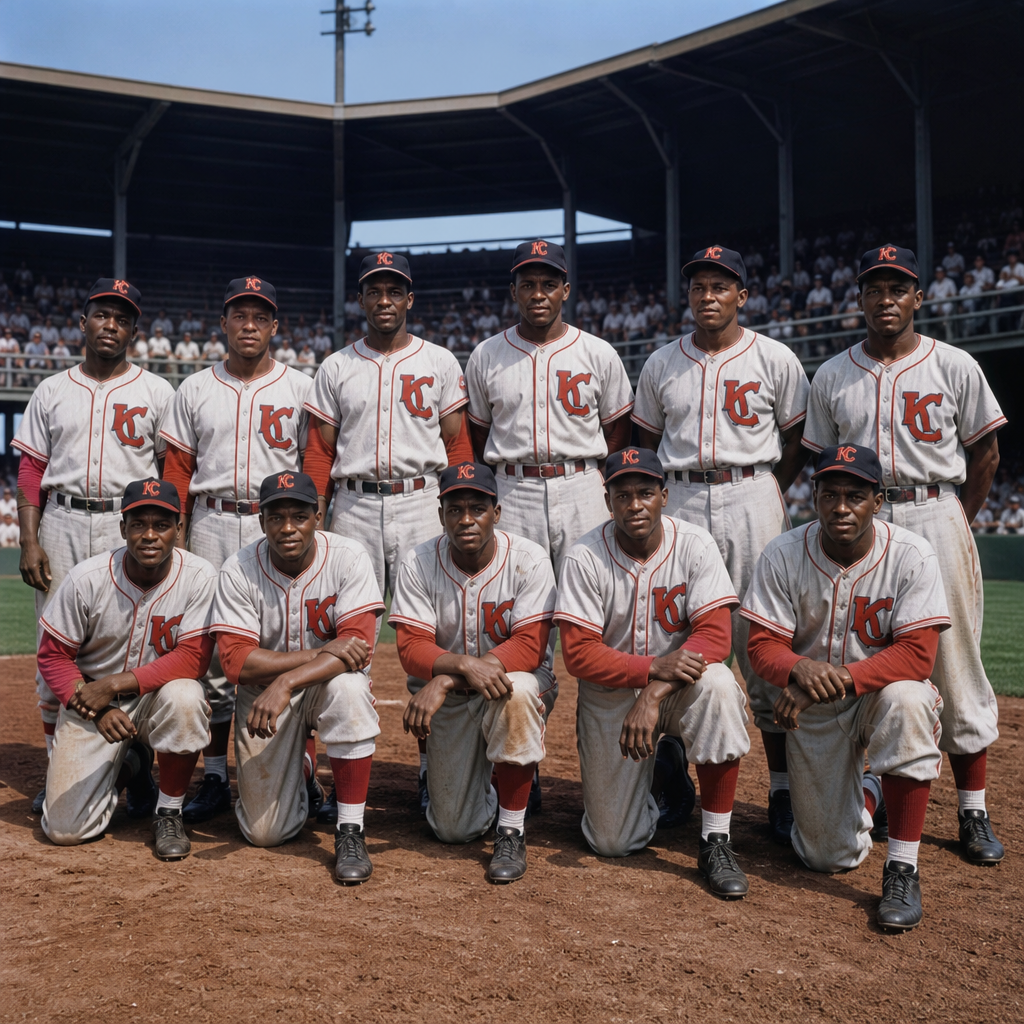
The Kansas City Monarchs stand at the center of any serious discussion of Negro Leagues teams because they combined longevity, competitive excellence, business discipline, and player development on a scale few clubs in baseball history could match. Founded in 1920 as a charter member of the Negro National League organized by Rube Foster, the Monarchs became far more than a successful franchise. They were a durable institution that connected barnstorming baseball, segregated professional leagues, wartime travel, regional fan culture, and the eventual integration of Major League Baseball. When historians, researchers, and lifelong fans ask which Negro Leagues franchise built generations of stars, the Kansas City Monarchs are usually the first answer.
Understanding the Monarchs also helps define the broader Negro Leagues landscape. The term “Negro Leagues” refers to the network of Black professional baseball leagues and independent clubs that operated primarily from the late nineteenth century through the mid-twentieth century, shaped by racial exclusion from organized white baseball. These leagues were not a single permanent entity. They included several major circuits, such as the first Negro National League, the Eastern Colored League, the Negro American League, and numerous independent powers. Teams rose and fell with economic conditions, ownership stability, and access to ballparks. Against that unstable background, the Monarchs became a model of continuity. They won championships in multiple eras, developed elite talent repeatedly, and remained visible even as many rivals folded, relocated, or faded from national attention.
This matters because the story of the Monarchs explains how Black baseball sustained excellence under unequal conditions. The franchise produced Hall of Famers, pioneered entertainment-driven promotion, and created opportunities for players who were denied access to the majors until Jackie Robinson broke baseball’s color line in 1947. In my experience working through Negro Leagues records, newspapers, and box scores, the Monarchs appear again and again at turning points: league formation, postseason play, barnstorming tours, military-era scheduling, night baseball exhibitions, and the migration of Black stars into integrated baseball. To understand famous baseball teams in America, you cannot treat the Monarchs as a side note. They are a hub franchise, and they also provide the clearest entry point for understanding how Negro Leagues teams operated, why they mattered locally and nationally, and how their influence still shapes the game.
Why the Kansas City Monarchs became the defining Negro Leagues franchise
The Monarchs became the defining Negro Leagues franchise because they paired strong ownership with flexible operations and relentless talent acquisition. J. L. Wilkinson, a white promoter with deep experience in baseball logistics, co-founded and ran the club with unusual administrative rigor for the era. He scheduled aggressively, protected the team’s brand, and invested in innovations that made the Monarchs commercially resilient. Unlike teams that depended entirely on league gate receipts, the Monarchs thrived through a combination of league play and barnstorming. That dual structure mattered. League schedules could be disrupted by weather, finances, or travel constraints, but a club that could draw crowds on the road had a buffer against collapse.
The franchise also built a recognizable identity. Fans associated the Monarchs with polish, speed, depth, and showmanship. They were known for clean uniforms, disciplined play, and broad geographic reach. Wilkinson is often credited with helping popularize portable lighting for night baseball exhibitions, allowing the Monarchs to stage games in places and at times that increased attendance. That was not a gimmick detached from baseball quality. It was a practical solution to segregation-era economics. Many Black fans worked long hours and could attend only at night. By bringing high-level baseball to wider audiences, the Monarchs expanded both revenue and cultural visibility.
Most important, they kept finding stars. Great Negro Leagues teams often centered on one extraordinary generation, but the Monarchs produced several. Early standouts included José Méndez, Bullet Rogan, and Dobie Moore. Later came stars such as Hilton Smith, Willard Brown, Satchel Paige, and Jackie Robinson, who spent 1945 with the club before joining the Brooklyn Dodgers organization. This continuity is why the Monarchs serve as the ideal hub when covering Negro Leagues teams broadly. They connect the dead-ball style Black baseball of the 1920s, the traveling superteams of the 1930s, and the integration-era transition of the 1940s better than any other franchise.
Championship culture, roster building, and the Monarchs pipeline
The Monarchs won because they built complete rosters rather than relying only on headline names. Their championship teams emphasized run prevention, athletic middle infield play, deep pitching, and lineup balance. In the 1920s, Bullet Rogan was the franchise’s foundational force, a true two-way star long before the modern game revived that idea. Rogan was both an ace pitcher and a middle-of-the-order hitter, giving Kansas City strategic flexibility that opponents struggled to match. Dobie Moore anchored the infield and was widely regarded as one of the finest shortstops in Black baseball. José Méndez, already a legendary Cuban pitcher, provided leadership and tactical intelligence as both manager and player.
What made the Monarchs unusual was their ability to replace stars without collapsing. When one core aged, left, or declined, another emerged. That is the hallmark of a developmental pipeline. The club scouted relentlessly across Black baseball networks, semi-pro circuits, local sandlots, and winter leagues. They evaluated players not only for tools but for travel durability, professionalism, and adaptability. A Negro Leagues roster had to withstand long bus rides, inconsistent fields, frequent doubleheaders, and pressure to entertain as well as win. The Monarchs selected for all of it.
| Era | Key Monarchs Stars | Why They Mattered |
|---|---|---|
| 1920s | Bullet Rogan, José Méndez, Dobie Moore | Established the club as an early dynasty with elite pitching, defense, and leadership |
| 1930s | Chet Brewer, Newt Allen, Ted “Double Duty” Radcliffe | Kept the team nationally relevant during unstable league years and heavy barnstorming |
| 1940s | Satchel Paige, Hilton Smith, Willard Brown, Jackie Robinson | Powered championships and linked the franchise directly to baseball integration |
The 1942 Negro World Series title remains one of the franchise’s clearest statements of sustained excellence. Behind Paige, Smith, Brown, and a deep supporting cast, the Monarchs defeated the Homestead Grays, another historic power, in a matchup that showcased the very best of Black baseball. That series is a useful reminder for modern readers: Negro Leagues championships were not symbolic achievements. They were fiercely contested titles involving sophisticated teams, major fan bases, and high-level strategic baseball. The Monarchs earned theirs repeatedly because they planned like an elite organization.
The Monarchs in the wider world of Negro Leagues teams
As a hub for Negro Leagues teams, the Monarchs must be placed alongside other major franchises. The Homestead Grays, Pittsburgh Crawfords, Chicago American Giants, Newark Eagles, Birmingham Black Barons, and Indianapolis Clowns all occupy essential places in Black baseball history. Each reveals a different dimension of the Negro Leagues. The Grays represented sustained star power around Josh Gibson and Buck Leonard. The Crawfords assembled perhaps the most dazzling concentration of talent ever seen, including Gibson, Oscar Charleston, Paige, and Judy Johnson. The American Giants under Rube Foster set the early standard for organized Black professional baseball. The Eagles illustrated East Coast strength and championship ambition. The Black Barons became famous in part through a teenage Willie Mays. The Clowns blended baseball with entertainment and later served as a developmental stop for future stars like Hank Aaron.
Yet the Monarchs intersect with nearly all of those stories. They competed against the Grays in championship settings, shared stars with barnstorming circuits that also featured Crawfords talent, inherited organizational lessons from the Foster era, and remained active long enough to feed integrated baseball directly. If you are mapping the Negro Leagues teams subtopic, the Monarchs are the connective tissue. They provide chronology, geography, and personnel links across the broader field.
They also represent the Great Plains and Midwest dimension of Black baseball, which can be overlooked when discussions focus only on Chicago, Pittsburgh, or the East Coast. Kansas City was a major Black baseball city with strong fan support, rail access, and a central location for travel. That made the Monarchs both a local institution and a national traveling attraction. Their schedule often blended home dates with long exhibition swings through small towns, military bases, and regional markets that major league clubs rarely served. This is one reason their legacy extends beyond Kansas City itself. Communities across the country saw the Monarchs in person, sometimes as the first elite professional team ever to visit.
Satchel Paige, Jackie Robinson, and the road to integration
No account of the Monarchs is complete without Satchel Paige and Jackie Robinson, the two figures who most clearly tie the franchise to baseball’s national transformation. Paige joined the Monarchs in multiple stretches and became their biggest attraction. His actual workload, exact statistics, and barnstorming totals are difficult to pin down because Negro Leagues recordkeeping was incomplete and exhibition baseball formed so much of the calendar. Still, the essential point is beyond dispute: Paige was a dominant pitcher, a transcendent draw, and one of the central celebrities in American sports. With his control, speed variation, and theatrical confidence, he helped the Monarchs convert skill into ticket sales in city after city.
Jackie Robinson’s time with Kansas City was brief, but historically enormous. In 1945, before Branch Rickey signed him to the Brooklyn organization, Robinson played shortstop for the Monarchs. He did not spend years there, and the team was not the sole maker of his career, but the Monarchs gave him a visible platform in top-level Black professional baseball. More importantly, his Monarchs stint places the franchise directly at the hinge point between segregated and integrated baseball. When readers study Negro Leagues teams to understand integration, this is one of the clearest paths: the Monarchs developed and showcased players who were fully prepared for the major leagues long before white baseball opened the door.
The integration story also includes loss. As Major League organizations began signing Black stars, Negro Leagues teams lost marquee talent without receiving compensation comparable to a modern transfer system. The Monarchs were better positioned than many clubs to survive, but even they were affected. Integration was morally necessary and transformative, yet it weakened the business base of Black-owned and Black-supported baseball institutions. Any balanced history of the Monarchs should acknowledge both truths at once.
Legacy, preservation, and why the Monarchs still matter
The Kansas City Monarchs still matter because they embody excellence under exclusion and because their history corrects the old, false idea that Black baseball was somehow secondary in quality or importance. Research by historians, the Negro Leagues Baseball Museum in Kansas City, the Seamheads Negro Leagues Database, and Major League Baseball’s recognition of Negro Leagues records has helped bring sharper public understanding. That work shows the Monarchs were not simply a colorful precursor to integrated baseball. They were one of the great professional sports franchises of their era, full stop.
Preserving this legacy requires specificity. It means naming the players beyond Robinson and Paige. It means remembering Bullet Rogan as one of baseball’s greatest all-around talents, recognizing Hilton Smith as an elite pitcher too often overshadowed by his teammate’s charisma, and understanding Willard Brown as a devastating hitter whose power translated anywhere. It means teaching fans that Negro Leagues teams operated within structural barriers but still built scouting systems, tactical identities, and loyal followings. It also means linking team history to place. Kansas City’s baseball memory includes not only major league narratives but also Paseo YMCA meetings, local Black press coverage, and neighborhoods that treated Monarchs games as civic events.
For readers exploring famous baseball teams, the Monarchs are the essential hub for Negro Leagues teams because their story contains the full architecture of the subject: league founding, championship success, player development, barnstorming entrepreneurship, wartime adaptation, and the bittersweet transition into integrated baseball. Start with the Monarchs, then branch outward to the Grays, Crawfords, American Giants, Eagles, Black Barons, and Clowns. You will see a richer, more accurate map of baseball history. If you want to understand how talent endured, communities gathered, and stars were made despite exclusion, study the Kansas City Monarchs first, and keep going from there.
Frequently Asked Questions
Why are the Kansas City Monarchs considered one of the most important franchises in Negro Leagues history?
The Kansas City Monarchs are widely regarded as one of the defining franchises in Negro Leagues history because they combined sustained winning, long-term stability, and extraordinary player development in a way few clubs ever matched. Established in 1920 as a charter member of Rube Foster’s Negro National League, the Monarchs were present at a foundational moment in Black professional baseball and remained relevant across multiple eras of the game. While many teams experienced brief peaks or struggled to survive the economic pressures of segregation-era baseball, Kansas City built a durable institution with a reputation for organization, discipline, and professionalism.
Their importance also comes from how effectively they bridged different chapters of baseball history. The Monarchs thrived in the formal Negro Leagues structure, but they were also major participants in barnstorming, which helped expand their reach far beyond Kansas City. That made them not just a local team, but a national symbol of Black baseball excellence. Fans across the country knew the Monarchs name, and players understood that wearing the uniform meant joining one of the sport’s most respected organizations.
Just as significant was the franchise’s role in producing elite talent. The Monarchs did not simply collect stars; they helped shape them. Over time, the club became associated with players who would define Negro Leagues greatness and, in some cases, become central figures in the integration of Major League Baseball. Because of that combination of competitive success, operational longevity, and influence on baseball’s larger racial and institutional history, the Monarchs occupy a uniquely important place in the story of American sports.
What made the Monarchs so successful over such a long period of time?
The Monarchs’ long-term success was rooted in more than talent alone. They were known for operating with a level of business discipline and organizational consistency that gave them a major advantage. In an era when Black baseball teams often had to navigate unstable league structures, uneven finances, discriminatory travel conditions, and limited access to quality facilities, the Monarchs developed a reputation for professionalism. That helped them remain competitive year after year, even as rival clubs rose and fell.
On the field, they consistently emphasized fundamentals, depth, and adaptability. The Monarchs were not dependent on a single generation of stars; they continually refreshed the roster with capable players who could step into larger roles. That matters because Negro Leagues baseball was constantly affected by player movement, financial pressures, military service, and eventually the pull of integrated organized baseball. A franchise that wanted to endure had to think beyond one great season, and the Monarchs did exactly that.
They also benefited from a culture that valued development and opportunity. Young players could grow within a serious baseball environment, learn from established veterans, and prove themselves in high-level competition. Barnstorming further sharpened the club, exposing players to different opponents and conditions while building the team’s national profile. In practical terms, the Monarchs succeeded because they were well-run, talent-rich, and resilient. In historical terms, they succeeded because they understood how to survive and excel within a system designed to limit Black institutions at every turn.
Which notable players are most closely associated with the Kansas City Monarchs?
The Monarchs are associated with a remarkable list of players, but the most famous name is often Jackie Robinson, whose time with the club in 1945 linked the franchise directly to the breaking of Major League Baseball’s color barrier. Although Robinson’s stay with the Monarchs was relatively brief, it remains historically significant because it placed him within one of Black baseball’s premier organizations just before his move into white organized baseball transformed the sport forever.
Another towering figure is Satchel Paige, whose pitching brilliance and charisma made him one of the most celebrated athletes in American baseball history. Paige’s association with the Monarchs helped elevate the team’s national stature, and the team in turn gave him a major stage. His dominance on the mound embodied the showmanship and competitive excellence that made the Monarchs must-see baseball for countless fans. Buck O’Neil is another essential Monarchs figure, remembered not only as a player and manager but also as one of the game’s most important ambassadors and interpreters of Negro Leagues history.
The franchise is also tied to stars such as Hilton Smith, Willard Brown, and Ernie Banks, among others, depending on the era being discussed. What makes the Monarchs special is not simply that they had famous names, but that they repeatedly produced or showcased players who mattered at the highest level of the game. Their roster history reflects the full arc of Black baseball: elite Negro Leagues competition, national fame through barnstorming, and eventual influence on the integrated major leagues. That is why discussions of legendary Monarchs players quickly become discussions about the broader history of baseball itself.
How did the Kansas City Monarchs help develop generations of baseball stars?
The Monarchs earned their reputation as a franchise that built generations of stars because they created an environment where talent could be identified, refined, and tested against strong competition. In many ways, they functioned as both an elite team and a developmental institution. Young players entering the Monarchs system were exposed to high expectations, experienced leadership, and a baseball culture that treated excellence as the standard. That kind of structure was crucial in the Negro Leagues, where formal player development pipelines did not look like the later farm systems associated with Major League Baseball.
The club’s continuity gave prospects something many Black teams could not always provide: a stable platform for growth. Players learned from veterans, adapted to demanding travel schedules, and gained valuable exposure through league play and barnstorming tours. Competing in front of varied crowds and against a wide range of opponents accelerated development and forced players to mature quickly. Those experiences helped prepare Monarchs talent not just for immediate success, but for larger roles in the evolving baseball world.
Their developmental impact also extended beyond statistics and wins. The Monarchs taught professionalism, confidence, and adaptability in a segregated sports economy that required Black athletes to be exceptional simply to gain recognition. When integration began to reshape the baseball landscape, players with Monarchs backgrounds were often especially well-prepared because they had already proven themselves under pressure and in highly visible settings. That legacy is a major reason the franchise is remembered not merely as a winner, but as a builder of baseball careers across multiple generations.
What is the lasting legacy of the Kansas City Monarchs in American baseball history?
The lasting legacy of the Kansas City Monarchs is that they stand as one of the clearest examples of Black excellence, leadership, and innovation in American sports during the segregation era. They were not a footnote to Major League Baseball history; they were a central force in baseball history overall. Their success challenged racist assumptions about Black athletes, Black ownership, and Black institutions by proving, over decades, that a Negro Leagues franchise could be disciplined, profitable, admired, and consistently elite.
The Monarchs also occupy a key place in the story of baseball integration. Because they developed and showcased players capable of starring anywhere, they helped expose the injustice of the color line. When Major League teams finally began signing Black players, the Monarchs were among the organizations whose talent had made that exclusion impossible to defend. In that sense, their legacy is tied both to what they achieved within segregated baseball and to how they influenced the end of that segregation.
Today, the Monarchs are remembered as a franchise that connected community pride, championship ambition, and historic change. Their story helps modern audiences understand that the Negro Leagues were not secondary or symbolic operations, but deeply competitive and culturally significant institutions. For historians, fans, and anyone studying the development of American sports, the Monarchs represent continuity, excellence, and the power of a team to shape generations far beyond its own era.