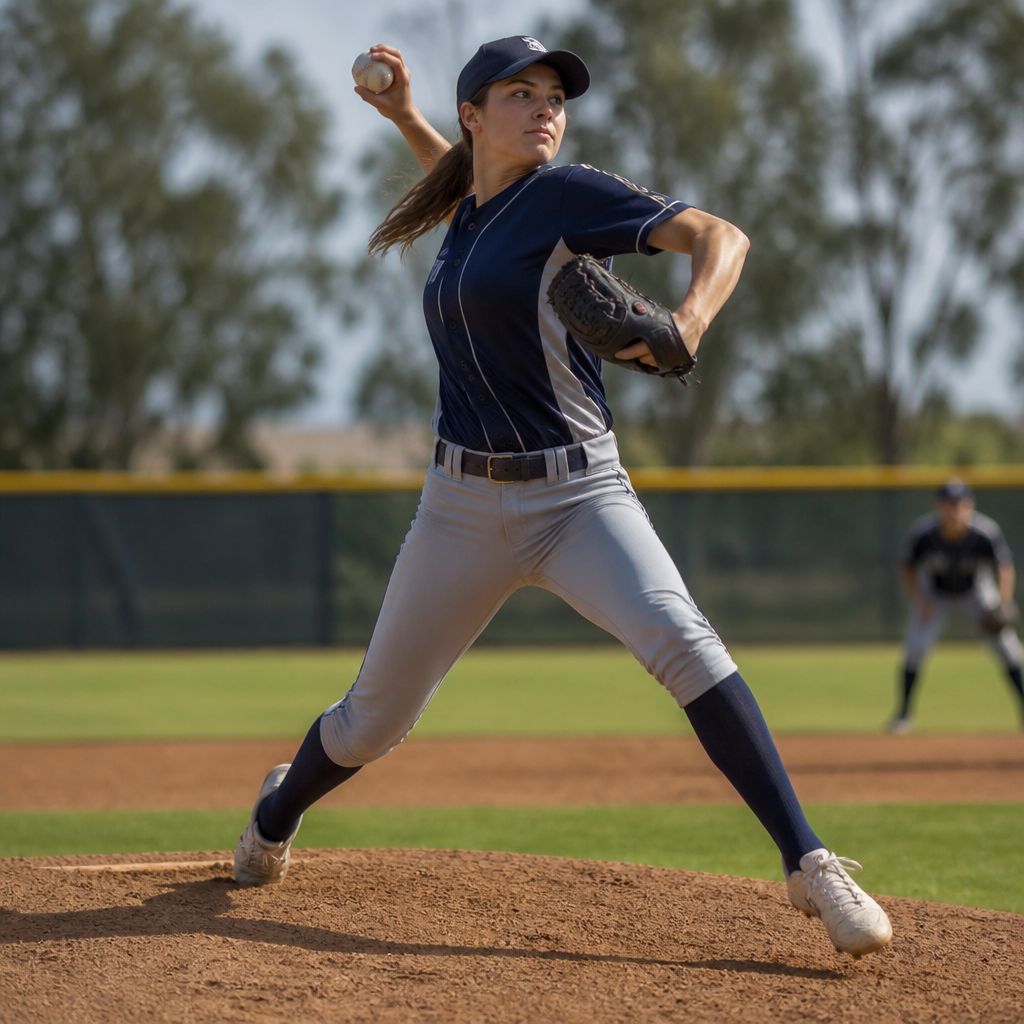
Women on the mound have always challenged baseball’s assumptions, and the history of female pitchers in baseball is far richer, older, and more influential than most fans realize. A female pitcher is any woman or girl who takes the mound in organized baseball rather than softball, from barnstorming teams and industrial leagues to high school programs, college clubs, independent leagues, and professional showcases. That distinction matters because baseball pitching mechanics, mound distance, roster structures, and cultural barriers differ sharply from softball, even when public conversation often blurs the two. I have worked with baseball archives, scorecards, and coaching staff notes long enough to see the same pattern repeat across eras: women were rarely absent from baseball; they were more often omitted from its mainstream retelling. Understanding that history is important for anyone studying women in baseball because pitching sits at the center of strategy, visibility, and authority on the field. The pitcher touches every play, controls tempo, and becomes the symbolic face of competition. When women pitch in baseball, they do more than occupy a position. They force leagues, scouts, journalists, and governing bodies to answer practical questions about access, development, eligibility, and evaluation. This article serves as a hub for that broader story, tracing the pioneers, the turning points, the international growth of women’s baseball, and the modern pipeline that is slowly, unevenly, creating more opportunities for girls and women to pitch at meaningful levels.
Early pioneers and the forgotten record
The earliest history of female pitchers in baseball is fragmented because newspapers often treated women’s games as novelty acts, but the record is clear enough to establish a real lineage. In the late nineteenth and early twentieth centuries, women played on town teams, semipro clubs, and traveling barnstorming rosters where the best players were expected to pitch as well as hit. Pitching was not a ceremonial role. It required durability, command, and the ability to face male and female opponents under uneven conditions. Lizzie Arlington is one of the most cited early examples. In 1898, she reportedly appeared for the Reading Coal Heavers of the Atlantic League, making her the first woman known to play in men’s minor league baseball. The surviving accounts are brief and sometimes embellished, yet her appearance matters because it proves that women on the mound were not merely performing in segregated exhibitions. They were crossing directly into organized men’s baseball structures.
Another foundational figure was Jackie Mitchell, the teenage left-hander who signed with the Chattanooga Lookouts in 1931. Her famous strikeouts of Babe Ruth and Lou Gehrig in an exhibition for the New York Yankees are still debated by historians because exhibitions can involve staged moments. Even so, the event endures for a reason. Mitchell had real pitching training from Dazzy Vance according to many accounts, and the spectacle exposed how threatening a female pitcher seemed to baseball’s gatekeepers. Commissioner Kenesaw Mountain Landis voided her contract soon after, declaring baseball too strenuous for women. That language reveals the era’s bias more than any athletic truth. The point is not whether Mitchell would have sustained a major professional career under fair conditions. It is that organized baseball authorities moved quickly to close a door once a woman was seen standing on the mound in a legitimate baseball context.
During the same broad period, touring teams such as the Bloomer Girls employed women who pitched, hit, and traveled extensively against local men’s clubs. Historians must read these sources carefully because some rosters included men playing under aliases, and reporting was inconsistent. Still, these teams kept women’s baseball visible and gave female pitchers competitive innings at a time when formal pathways barely existed. The lesson from the early era is simple: women pitched whenever they had access to games, but the institutions controlling records, leagues, and legitimacy often minimized what happened.
War years, professional leagues, and what changed
The All-American Girls Professional Baseball League, founded in 1943, is often remembered for its hitters and dramatic wartime origin, but pitching was central to its evolution. The league began with underhand pitching closer to softball, then gradually shifted toward overhand baseball mechanics as it moved the mound farther back and enlarged the ball. That gradual transition matters in any history of female pitchers because it created a generation of women adapting toward true baseball-style delivery under professional pressure. Players such as Sophie Kurys are remembered primarily for speed and offense, while pitchers like Jean Faut and Connie Wisniewski anchored teams through command, stamina, and tactical intelligence. Faut in particular became one of the league’s great aces, posting dominant earned run averages and proving that women’s professional baseball could produce elite pitchers capable of carrying championship clubs.
Yet the league also illustrates a recurring complication. Because the AAGPBL mixed baseball and softball elements, later commentators sometimes treated it as evidence adjacent to baseball rather than fully inside baseball’s history. That is too narrow. From a developmental standpoint, the league gave women high-level professional repetitions, coaching, travel schedules, scouting attention, and public visibility unmatched by most women’s baseball environments before or since in the United States. It normalized the image of a woman controlling a game from the circle or mound, reading hitters, changing speeds, and pitching deep into contests. Those habits transferred into later women’s baseball culture even after the league folded in 1954.
Outside that league, the postwar decades were difficult. As boys’ baseball became increasingly institutionalized through Little League, school teams, American Legion, and college feeder systems, girls were often pushed toward softball by policy rather than preference. That diversion narrowed the number of female pitchers staying in baseball through adolescence. In practice, the issue was not talent scarcity. It was opportunity scarcity. When a girl with arm talent is told at age ten or twelve that the baseball path effectively ends, the long-term pitching pipeline shrinks for decades.
Barriers, rules, and the pipeline problem
The modern history of female pitchers cannot be understood without examining structural barriers. Pitching development depends on years of specialized instruction, inning management, strength training, catcher familiarity, and regular competition against advanced hitters. Boys who remain in baseball usually receive that support through school programs, travel ball, private lessons, and showcase ecosystems. Girls who want to pitch baseball often must assemble the same development patchwork on their own, sometimes while being the only female player on a roster. I have seen coaches embrace that challenge and others quietly redirect it, praising a player’s athleticism while steering her toward softball because they assume it will be easier administratively. That assumption is one of the biggest hidden barriers in women’s baseball.
Title IX in the United States improved athletic access broadly after 1972, but it did not create robust girls’ baseball systems. In many schools, softball became the official avenue for female diamond-sport participation. Legally and culturally, that distinction mattered. A school could claim opportunity existed while baseball remained male coded in practice. Court cases involving girls seeking places on boys’ baseball teams occasionally opened access, but isolated wins did not automatically create dedicated female baseball development. Similar patterns appeared internationally. Without a full ladder from youth leagues to elite adult competition, many promising female pitchers left baseball not because they lacked velocity or command, but because the next team, coach, or league was simply unavailable.
| Barrier | How it affects female pitchers | Practical consequence |
|---|---|---|
| Limited youth baseball access | Fewer mound innings during key skill-building years | Slower command and velocity development |
| Softball redirection | Players are moved out of baseball despite interest | Narrower long-term baseball pitching pipeline |
| Lack of girls’ teams | Few same-age competitive environments | Irregular scheduling and weaker talent clustering |
| Showcase and scouting gaps | Less visibility to colleges and pro evaluators | Fewer advancement opportunities |
| Cultural bias | Skills judged through novelty rather than performance | Higher scrutiny and shorter margin for error |
These barriers are not theoretical. They affect workload planning, mechanics, and confidence. A pitcher who gets only scattered innings cannot develop sequencing the way a regular starter does. A player who constantly changes teams may never build consistent battery chemistry with a catcher. A girl who is treated as a symbol instead of a prospect faces pressure that male peers rarely experience. That is why the history of female pitchers is inseparable from the history of baseball infrastructure.
International growth and modern milestones
The strongest modern advances for female pitchers have often come through international women’s baseball rather than domestic professional leagues. The Women’s Baseball World Cup, organized by the World Baseball Softball Confederation, created a recurring elite competition where female pitchers could be evaluated in a true baseball environment against national-team lineups. Japan, Canada, the United States, Australia, Hong Kong, Chinese Taipei, Venezuela, Cuba, and other nations have contributed important arms and expanded the global standard of play. Japan in particular has set the benchmark for player development, tactical discipline, and pitching depth. Watching Japanese women’s baseball programs makes one fact obvious: when girls receive sustained coaching, repetition, and institutional support, they produce polished pitchers with command, movement, and game management equal to the expectations of serious baseball at any level.
One of the most important individual milestones belongs to Eri Yoshida, the knuckleball pitcher who signed with the Kobe 9 Cruise of Japan’s Kansai Independent League in 2008. Nicknamed the Knuckle Princess, Yoshida became internationally known because she entered a professional men’s league environment, then later pitched in North America for independent teams and developmental circuits. Her career did not instantly transform the sport, but it had real significance. The knuckleball gave her a pitch-design path that neutralized some velocity disadvantages, and her visibility forced media and scouts to discuss female pitching in technical baseball terms rather than novelty headlines alone.
In the United States, Ila Borders remains a landmark figure. A left-handed pitcher, Borders played college baseball at Southern California College and then pitched professionally in independent leagues during the late 1990s and early 2000s, including with the St. Paul Saints and Duluth-Superior Dukes. She logged real innings in professional men’s baseball, handled relentless attention, and demonstrated that command, competitiveness, and emotional resilience matter as much as spectacle. More recently, women such as Kelsie Whitmore have continued that line, appearing in independent professional baseball and helping keep the idea of women pitching professionally in front of fans who might otherwise assume the door is closed.
Other milestones are less famous but equally important: girls pitching in Little League Baseball and reaching televised regional or World Series stages, women’s national teams building pitching staffs with specialized relievers and starters, and collegiate club baseball programs giving female pitchers regular innings. Each milestone adds evidence. Women do not need permission from history to pitch baseball. They need systems that let them keep doing it.
How female pitchers are evaluated today
A serious evaluation of female pitchers should use the same baseball criteria applied to any pitcher: velocity relative to level, command within and beyond the strike zone, movement profile, pitchability, durability, recovery, deception, fielding, and competitive response with runners on base. In my experience, the most useful shift occurs when coaches stop asking whether a female pitcher can compete and start asking how she wins. Some win with location and advanced changeups. Some rely on breaking-ball shape. Some survive through unusual timing, angle, or a plus knuckleball. The evaluation language should be concrete, not sentimental.
At younger ages, command and repeatable mechanics usually matter more than raw velocity, especially because many female baseball pitchers have had fewer uninterrupted years of mound work. Strength training can improve force production, but gains come fastest when the pitcher also has consistent innings and quality throwing programs. Tools such as Rapsodo, TrackMan, and high-speed video are helpful because they replace assumption with data. A coach can measure induced vertical break, spin efficiency, release height, and extension rather than guessing what makes a player effective. That matters for female pitchers who have historically been judged through anecdote. Objective metrics make development clearer and bias harder to hide.
There are also tactical realities. Because female pitchers often arrive from nontraditional pathways, they may face varied competition and irregular schedules. That can produce unusual strengths, such as superior adaptability or advanced pitch sequencing learned from constantly proving themselves. It can also create workload concerns if a player is overused because she is the only reliable arm on a team. Best practice mirrors broader pitcher care standards from organizations like Major League Baseball’s Pitch Smart program: track pitch counts, monitor rest, build arm strength gradually, and avoid showcase overuse. Development is not served by making a trailblazer throw every inning.
Why this history matters now
The history of female pitchers in baseball matters now because the sport is finally at a point where visibility, data, and international competition can reinforce one another instead of operating in isolation. Girls can watch footage, connect with women’s baseball organizations online, attend development camps, and find examples from multiple countries rather than a single celebrated pioneer. Researchers can recover box scores and newspaper archives that challenge the myth that women never pitched serious baseball. Coaches can point to named precedents, from Lizzie Arlington and Jackie Mitchell to Jean Faut, Ila Borders, Eri Yoshida, and Kelsie Whitmore, when advocating for roster spots or training resources.
This subtopic also works as a hub because female pitchers connect nearly every miscellaneous area within women in baseball: youth participation, media framing, independent leagues, national teams, rules access, biomechanics, player development, and historical preservation. If you want to understand women’s baseball at a structural level, study the mound. It reveals where opportunity exists, where it breaks down, and where reform will have the greatest impact. The essential takeaway is straightforward. Women have pitched baseball for more than a century, often well, often under pressure, and often without the institutional support routinely given to male players. The future of female pitchers will depend less on proving possibility and more on building continuity: teams, coaching, competition, and scouting that last. If you are shaping a program, covering the sport, or guiding a young player, start by treating female pitchers as baseball pitchers. Then give them the innings, instruction, and respect that history has too often denied.
Frequently Asked Questions
What is the difference between a female pitcher in baseball and a softball pitcher?
A female pitcher in baseball is a woman or girl who pitches under baseball rules, on a raised mound, with baseball-specific mechanics, distances, roster structures, and game strategies. That distinction is essential because baseball and softball are separate sports, even when outsiders casually group them together. In baseball, pitchers work from an elevated mound, deliver overhand or sidearm, manage a different ball size and seam profile, and operate within a tactical environment shaped by pickoff moves, lead-offs, longer throwing distances, and a distinct rhythm between pitcher, catcher, and hitter. Softball pitching, by contrast, is typically underhand and takes place from a flat circle at a much shorter distance, creating very different movement patterns, timing, and physical demands.
When discussing the history of female pitchers in baseball, the conversation is not simply about women participating in a broad category of bat-and-ball games. It is specifically about women competing in a sport that for generations was culturally labeled male, even though women have been taking the mound in organized baseball for far longer than many fans realize. That includes barnstorming teams, factory and industrial leagues, school programs, semipro clubs, international competition, independent circuits, and professional exhibitions. Recognizing the baseball-specific context gives these athletes proper credit for mastering a role that has long been treated as one of the sport’s clearest symbols of authority, strategy, and competitive control.
Have women really pitched in organized baseball throughout history?
Yes, and that is one of the most important points in any serious history of female pitchers in baseball. Women on the mound are not a modern novelty or a recent publicity idea. They have appeared across multiple eras and levels of organized play, often in environments that were poorly documented or dismissed by the mainstream baseball establishment. In the late nineteenth and early twentieth centuries, women played on barnstorming clubs and exhibition teams that traveled widely, proving both entertainment value and athletic ability. As baseball expanded through local leagues, workplace teams, and regional circuits, women found opportunities to pitch in industrial leagues, town teams, and community-based organizations where skill could outweigh convention, at least temporarily.
The record becomes even richer when viewed beyond Major League Baseball. Girls and women have pitched in youth baseball, high school programs, adult amateur leagues, international women’s tournaments, and independent baseball settings. Some gained national attention because their presence on the mound challenged assumptions so directly, while many others competed with far less publicity but just as much significance. The reason many fans think this history is sparse is not because women were absent; it is because their stories were underreported, treated as exceptions, or excluded from the central version of baseball history. Once the lens widens, it becomes clear that female pitchers have been part of organized baseball for generations, helping shape the game’s social and cultural story even when official institutions failed to fully recognize them.
Why has the history of female pitchers in baseball been overlooked for so long?
The history has often been overlooked because baseball institutions, media coverage, and public memory have traditionally centered men’s leagues as the default version of the sport. When women pitched in baseball, they were frequently framed as curiosities rather than competitors, or they were discussed only in novelty terms instead of as athletes with skill, training, and baseball intelligence. That pattern affected who got written about, whose statistics were preserved, and which stories were treated as historically important. In many cases, women competed in local, semiprofessional, or nontraditional settings where recordkeeping was inconsistent, making it easier for later historians to miss or minimize their contributions.
Another factor is the tendency to collapse women’s baseball and softball into one conversation, which obscures the specific challenge of pitching in baseball itself. Once girls were increasingly steered toward softball as the accepted path, many people assumed women in baseball had disappeared altogether. In reality, participation continued, but often with fewer institutional supports and less visibility. There is also a broader cultural issue: pitching is one of baseball’s most mythologized roles, associated with leadership, power, and control of the game. For that reason, a woman on the mound has often unsettled traditional ideas about who belongs at the center of baseball action. Recovering this history requires digging into newspapers, oral histories, league archives, school records, and community memory, all of which reveal a much deeper tradition than the standard narrative suggests.
Who are some notable female pitchers in baseball history?
Several women stand out as landmark figures, though the full history extends far beyond a handful of famous names. Toni Stone is often remembered primarily as an infielder in the Negro Leagues, but her career helps illustrate the broader reality of women competing in men’s baseball spaces at a high level. Ila Borders is one of the most widely recognized modern examples of a woman pitching professionally in men’s baseball, thanks to her work in independent leagues during the 1990s. Her career drew major national attention because she was not appearing as a ceremonial figure; she was taking the ball in competitive games and demonstrating that a woman could handle the demands of professional pitching.
Mamie “Peanut” Johnson, though best known as a pitcher in the Negro Leagues rather than Major League-affiliated systems, is especially important in this history because she excelled in one of baseball’s most competitive and socially significant environments. Her success challenged both gender and racial barriers at once. More recently, women such as Eri Yoshida have brought international attention to the subject by pitching professionally in independent leagues and men’s professional baseball contexts. Across youth, amateur, and international women’s baseball, many other pitchers have built impressive résumés without becoming household names. That matters because history is not only made by the most publicized pioneers. It is also made by the countless women who earned innings, developed arsenals, faced hitters, and kept showing that baseball’s mound has never belonged exclusively to men.
Why does the history of female pitchers in baseball matter today?
It matters because history shapes what current players, coaches, scouts, and fans believe is possible. When people learn that women have been pitching in baseball for more than a century, the conversation changes from “Can women do this?” to “Why have so many people ignored the evidence that they already have?” That shift is powerful. It reframes female pitchers not as anomalies but as participants in a long, resilient tradition. For girls who want to stay in baseball rather than being pushed automatically toward softball, that historical knowledge provides legitimacy, role models, and a sense of continuity. For the sport itself, it broadens the story of who baseball has been for and who has helped sustain it.
This history also matters because it reveals how talent pathways are created or restricted. Female pitchers in baseball have often succeeded despite limited access to coaching, scouting, competitive opportunities, and institutional support. Understanding that helps explain why visibility alone is not enough; meaningful inclusion requires development systems, roster opportunities, media coverage, and respect for women’s baseball as baseball. On a cultural level, women on the mound challenge one of the sport’s oldest assumptions: that the game’s most strategically important position is naturally male. The historical record says otherwise. By taking that record seriously, fans gain a more accurate understanding of baseball’s past and a more expansive view of its future.