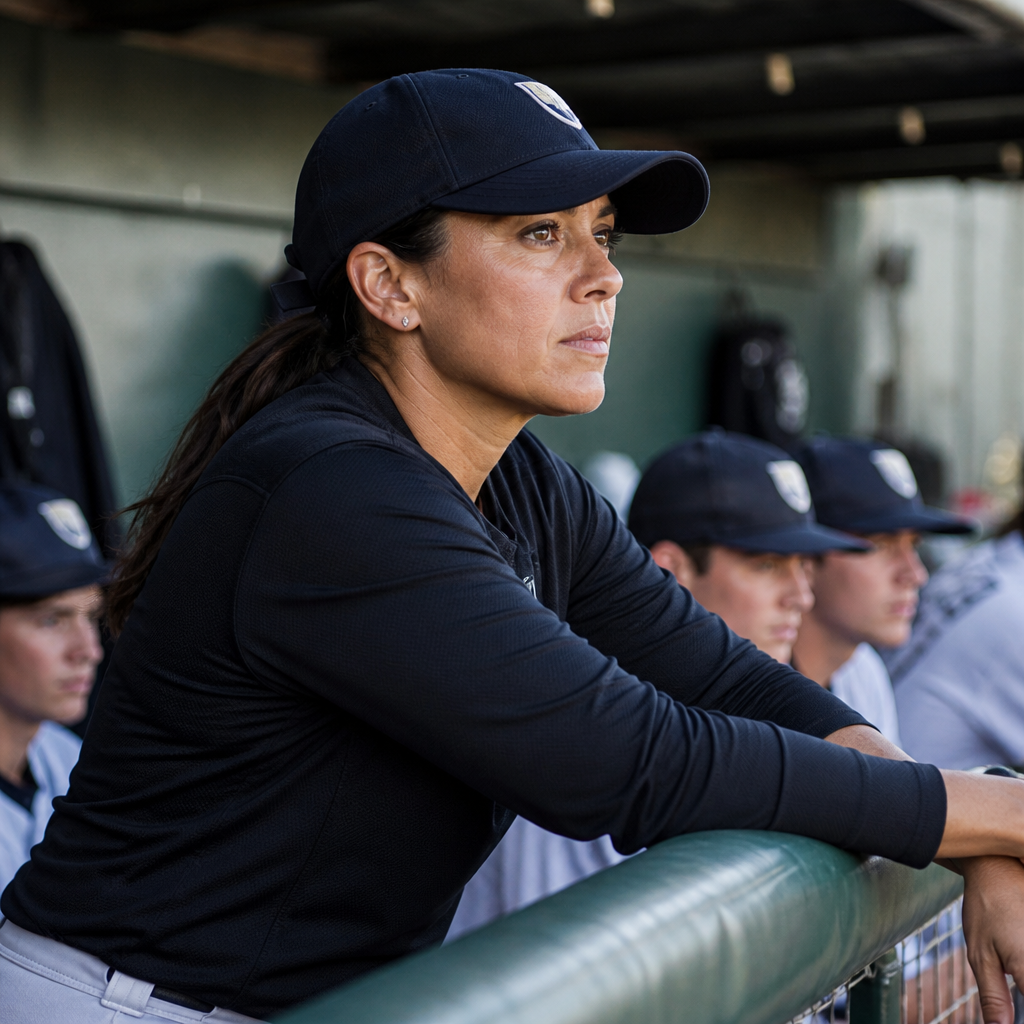
Women in the dugout have changed baseball by proving that coaching expertise is built on preparation, communication, and tactical insight, not gender. In baseball, a coach may lead hitting instruction, pitching development, defense, baserunning, analytics, or overall clubhouse culture, while a manager coordinates strategy and in-game decisions. For decades, those roles were treated as male territory across Major League Baseball, Minor League Baseball, college programs, and international leagues. That assumption is now being dismantled by women who have earned positions in professional dugouts, front-facing coaching staffs, and player development departments. This shift matters because coaching shapes careers, team performance, and the sport’s talent pipeline. When women coach baseball visibly and successfully, they expand who is seen as qualified to teach the game. I have watched this change move from novelty to legitimate institutional progress, and the difference is measurable in hiring patterns, media coverage, and player acceptance. This hub article explains the pioneers, the milestones, the barriers, and the practical reasons women in baseball coaching are becoming a permanent part of the sport’s future.
How women entered baseball coaching
Women have long worked around baseball as owners, scouts, executives, trainers, and educators, but coaching access lagged because clubs often hired through closed networks of former male players. The first cracks appeared when women built credibility in player development, strength training, biomechanics, medicine, and analytics. That matters because modern coaching staffs are interdisciplinary. A coach today might use high-speed video, bat sensor data, TrackMan ball-flight readings, and individualized skill plans rather than relying only on anecdotal wisdom. Women who mastered these tools created an entry point that old gatekeepers found harder to dismiss. In practice, many early hires came through roles such as bullpen catcher, guest instructor, development coach, or minor league coordinator before moving into full dugout responsibilities.
One of the clearest milestones came in 2020, when Alyssa Nakken became the first woman to coach on the field in a Major League Baseball regular-season game with the San Francisco Giants. That was not a ceremonial moment. Nakken had already worked in baseball operations and player development, and the Giants under Gabe Kapler were deliberate about building a broader coaching model. Another landmark arrived with Rachel Balkovec, who developed a strong reputation in strength and conditioning, hitting development, and minor league instruction before becoming the first woman to manage a Minor League Baseball team, the Tampa Tarpons, in 2022. These appointments were historically significant because they moved women from advisory spaces into roles tied directly to lineup preparation, player evaluation, and competitive decision-making.
Key pioneers and why their work matters
Several women stand out because they changed the hiring imagination of baseball organizations. Justine Siegal became the first woman to coach for an MLB club when she served as a guest instructor with the Oakland Athletics in 2015. Her work through Baseball For All also addressed a core structural problem: girls interested in baseball, not softball, often lacked access to sustained development and credible coaching. Siegal’s influence is larger than one dugout appearance because she helped create the social and developmental infrastructure that future coaches and players need.
Rachel Balkovec’s path is equally important because it demonstrates the value of specialization and persistence. She studied kinesiology, worked in strength and conditioning with organizations including the St. Louis Cardinals and Houston Astros, and later expanded into hitting instruction with the New York Yankees. Players and coaches responded because her feedback improved performance. In baseball, credibility lasts when instruction translates to cleaner swing decisions, better bat paths, more consistent contact quality, and repeatable routines. Balkovec’s career shows that women can progress through the same evidence-based standards that define good coaching for anyone else.
Alyssa Nakken’s significance lies in visibility inside the major league dugout. The Giants trusted her with base coaching duties during a regular-season game, placing her in one of baseball’s most public teaching positions. That visual mattered. So did Bianca Smith, hired by the Boston Red Sox in 2021 as a minor league coach, becoming the first Black woman to coach in professional baseball. Smith’s hiring expanded the conversation beyond gender and highlighted how race, access, and representation intersect in baseball employment. These figures are pioneers not because they are exceptions forever, but because they made future hires easier, less controversial, and more normal.
The roles women now hold in the dugout and on staff
Women in baseball coaching do far more than symbolic work. On modern staffs, responsibilities are highly specific and often measurable. A hitting coach may design machine work, swing-decision training, and advance reports on opposing pitchers. A defensive coach may position infielders using spray-chart data, train first-step reads, and coordinate cutoff communication. A baserunning coach may teach leads, secondary breaks, slide technique, and jump timing. Development coaches bridge practice design and game preparation, making sure organizational plans are actually executed. In my experience, the strongest staffs are not built around one loud authority figure. They are built around specialists who communicate clearly and earn trust through consistency.
Women have also advanced through adjacent baseball pathways that feed dugout jobs. Many began in strength and conditioning, sports science, biomechanics, mental skills, or player development operations. That is not a workaround; it reflects how baseball really works now. Organizations such as the Yankees, Giants, Red Sox, Cubs, and Cardinals increasingly connect on-field instruction to performance departments. Coaches review heat maps, chase rates, vertical approach angle, spin efficiency, pop time, and recovery data. When a coach can translate those metrics into simple, actionable cues, players listen. That translation skill is one reason women have been able to gain traction despite legacy bias.
| Pioneer | Notable Milestone | Why It Matters |
|---|---|---|
| Justine Siegal | First woman to coach for an MLB club as a guest instructor with Oakland in 2015 | Opened a visible pathway and built grassroots baseball access through Baseball For All |
| Alyssa Nakken | First woman to coach on the field in an MLB regular-season game in 2020 | Normalized women’s presence in the major league dugout |
| Rachel Balkovec | First woman to manage a Minor League Baseball team in 2022 | Proved women can hold full competitive leadership roles, not only support positions |
| Bianca Smith | First Black woman to coach in professional baseball in 2021 | Expanded representation and challenged multiple barriers at once |
Barriers that still shape women’s coaching careers
Progress does not mean the barriers have disappeared. Baseball remains a relationship-driven industry, and informal hiring can reproduce old assumptions. Many women still face questions male candidates are rarely asked: whether players will listen, whether the clubhouse will accept them, or whether they have “enough” playing experience. That last point deserves scrutiny. Plenty of excellent male coaches did not have long major league careers, and many of the best instructors in the sport are valued for observation, planning, communication, and adaptability more than playing pedigree. Holding women to a stricter version of credibility is bias, not meritocracy.
There are also practical obstacles. The baseball calendar is demanding, with spring training, long minor league bus trips, frequent relocation, and modest pay at lower levels. Those conditions discourage many candidates, not only women, but they hit harder when the profession already feels less welcoming. Harassment, isolation, and tokenization remain real concerns. Some clubs have improved by setting clear conduct standards, assigning mentors, and integrating women fully into staff workflows instead of treating them as symbolic hires. That integration matters because players can quickly identify whether an organization truly supports a coach or is merely managing public relations.
Why players and organizations benefit from women coaches
The strongest argument for women in baseball coaching is not public image. It is performance. Good coaches help players make better decisions under pressure, refine mechanics, build routines, and process failure. Women who have succeeded in the dugout have done so because they add value in these exact areas. Players respond to coaches who are prepared, honest, and specific. If a coach can explain why a hitter’s attack angle is producing too many harmless fly balls, or why a pitcher’s release timing is flattening the fastball, gender becomes irrelevant very quickly.
Organizations benefit in broader ways too. Wider hiring pools increase the chance of finding excellent teachers. Diverse staffs often communicate differently and challenge stale assumptions about instruction. I have seen clubs improve when they stopped hiring replicas of the same former player profile and instead assembled staffs with mixed strengths: one elite communicator, one data translator, one defensive tactician, one cultural stabilizer. Women strengthen that mix. They also help younger athletes see baseball as a place where authority can look different, which matters for long-term participation, especially among girls who want to stay in the game.
The developmental pipeline from youth baseball to pro dugouts
If baseball wants more women coaches, the pipeline must start early. Girls who play baseball rather than being diverted automatically to softball need regular competition, qualified instruction, and visible role models. Programs such as Baseball For All, USA Baseball initiatives, college internships, and team fellowship opportunities help, but the pipeline is still thin compared with established male networks. A future major league coach may first appear as a youth instructor, travel-ball assistant, video coordinator, strength coach, or graduate assistant. Building that path requires intentional recruiting and retention, not just celebrating firsts after they happen.
Education is another key factor. Many successful coaches now blend formal study with on-field experience. Degrees in kinesiology, biomechanics, sport psychology, education, and analytics can be powerful assets. So can certifications in strength and conditioning or data tools used by clubs. Yet coursework alone is not enough. The best coaching candidates spend years learning how to run efficient drills, give feedback without overloading players, structure practice around transfer, and adjust plans during slumps. Women who gain those reps at the amateur and developmental levels will continue pushing deeper into professional baseball.
How this hub connects the wider women in baseball story
Women in the dugout sit at the crossroads of the entire women in baseball conversation. Coaching connects to players, scouts, executives, umpires, ownership, media coverage, and youth participation. When a woman earns trust in the dugout, it weakens the outdated idea that baseball authority belongs only to men. That cultural change affects hiring elsewhere. A club willing to employ women as coaches is often more open to women in research and development, player development leadership, amateur scouting, and field operations. The dugout is visible, but its significance reaches into the whole institution.
As a sub-pillar hub, this topic naturally leads readers toward related subjects: the women who played professional baseball, the executives who reshaped organizational strategy, the pioneers in umpiring and scouting, and the grassroots programs building future talent. Coaching is the practical center because it touches development every day. It is where ideas become habits, where data becomes action, and where inclusion becomes normal only if competence is recognized consistently. That is why women in baseball coaching deserve attention not as a side story, but as a central measure of how seriously the sport is evolving.
Women in the dugout are no longer isolated novelties; they are part of baseball’s modern coaching landscape. The pioneers who broke through did so by mastering player development, earning trust, and proving their value in measurable ways. From Justine Siegal and Alyssa Nakken to Rachel Balkovec and Bianca Smith, each milestone widened the profession’s definition of who belongs in a baseball uniform with authority. Their impact extends beyond symbolism. Better hiring expands talent, improves instruction, and strengthens the sport’s future.
The central lesson is straightforward. Baseball coaching is a craft grounded in teaching, planning, observation, and adaptation. Women who demonstrate those skills can lead hitters, guide defenders, manage players, and shape club culture as effectively as any man. Barriers still exist, especially in hiring networks and developmental access, but the direction of change is clear. More organizations now understand that excellence comes from competence, not convention.
For readers exploring the broader women in baseball topic, use this hub as a starting point. Follow the connected stories about players, executives, scouts, and grassroots builders, and pay attention to how each path feeds the next generation of coaches. If you support baseball at any level, advocate for open hiring, visible opportunities, and serious investment in the pipeline. That is how pioneers become a permanent part of the game.
Frequently Asked Questions
Why is the presence of women in baseball coaching considered such an important milestone?
The growing presence of women in baseball coaching matters because it challenges one of the sport’s longest-standing assumptions: that authority in the dugout belongs only to men. For generations, baseball culture treated coaching, managing, player development, and clubhouse leadership as male-only spaces, even though the skills required for those jobs have never been tied to gender. Effective coaches succeed because they can teach mechanics clearly, study tendencies, communicate under pressure, prepare athletes mentally, and make sound tactical decisions. When women entered those roles and performed at a high level, they exposed how arbitrary those old barriers really were.
It is also an important milestone because coaching influences every layer of the game. A coach may oversee hitting plans, defensive positioning, pitching development, baserunning, advance scouting, analytics integration, or team culture. A manager then brings those pieces together in game strategy and day-to-day leadership. When women are included in those conversations, baseball broadens its talent pool and benefits from more perspectives, teaching styles, and problem-solving approaches. That does not just symbolize progress; it can improve player development and organizational decision-making in practical ways.
Just as importantly, visibility creates opportunity. When players, front offices, and fans regularly see women in uniforms, leading drills, running meetings, and contributing to strategy, the idea of who belongs in baseball begins to change. Young women interested in the sport gain proof that there is a pathway beyond playing, and young men learn to respect expertise based on performance rather than stereotype. In that sense, women in the dugout are not simply participating in baseball history—they are helping redefine the standards by which baseball leadership is recognized.
What roles do women in baseball coaching typically hold, and how do those jobs affect a team?
Women in baseball coaching can hold many of the same positions as their male counterparts, and each role has a direct impact on team performance. Some work as hitting coaches, helping players improve swing decisions, bat path, timing, and approach against specific pitchers. Others focus on pitching development, where responsibilities can include pitch design, bullpen planning, mechanical adjustments, and communication between pitchers and catchers. Defensive coaches may work on footwork, positioning, pre-pitch preparation, and situational awareness, while baserunning coaches emphasize reads, jumps, aggressiveness, and decision-making. In modern baseball, women have also contributed in strategy-heavy areas such as analytics, advance scouting, player development coordination, and mental performance.
These jobs matter because baseball success is built on details. A coach is not just offering generic motivation; they are identifying what a player needs to improve and finding the best way to teach it. One athlete may respond to video breakdown and biomechanical data, while another may need simple cues and repetition on the field. Coaches also serve as translators between departments, connecting analytics staff, front-office objectives, trainers, and players in a way that makes information useful rather than overwhelming. That ability to turn knowledge into action is one of the most valuable traits any coach can have.
Women in these positions also shape team culture. A strong coach helps establish accountability, trust, routine, and professionalism across a long season. They may run early work, prepare game plans, lead one-on-one conversations, reinforce standards, and help athletes manage failure—something that is inevitable in baseball. Whether at the Major League, Minor League, college, or international level, the core responsibility is the same: improve players and help the team compete more effectively. The women who have succeeded in those roles have done so by demonstrating the same mix of preparation, communication, and baseball intelligence demanded of any elite coach.
What challenges have women faced in breaking into baseball coaching, and how have they overcome them?
Women entering baseball coaching have often faced both visible and invisible barriers. The obvious challenge has been exclusion from opportunity. For decades, many organizations simply did not imagine women as candidates for on-field leadership roles, regardless of their experience or knowledge. That meant fewer interviews, smaller professional networks, and limited access to the traditional pipelines that often lead to jobs in player development and coaching. In many cases, women had to prove themselves repeatedly before being granted the kind of trust that male peers were more likely to receive automatically.
Another major challenge has been credibility bias. Because baseball has such a strong culture of tradition, some players, executives, or fans initially questioned whether a woman could command a room, teach advanced strategy, or handle the pressure of a competitive clubhouse. Those doubts were not rooted in the actual demands of coaching, but in long-held stereotypes about who is supposed to hold authority in the sport. Women who entered the dugout often had to navigate scrutiny that went beyond normal job performance, knowing their work might be judged as representing more than just themselves.
They have overcome these obstacles primarily through excellence, persistence, and relationship-building. Coaches earn respect in baseball by making players better, being well prepared, communicating clearly, and helping teams win small battles every day. Women who have advanced in the profession have done exactly that: arriving with expertise, mastering their responsibilities, adapting to player needs, and consistently contributing value. Support from progressive organizations, mentors, and front offices willing to hire based on skill rather than habit has also been crucial. Over time, each successful woman in a coaching role has made it easier for the next one, not by asking for lowered standards, but by meeting and often exceeding the existing ones.
How have women coaches changed the way baseball teams think about leadership and strategy?
Women coaches have helped expand baseball’s understanding of leadership by reinforcing a simple but powerful truth: authority in the dugout comes from competence, clarity, and trust, not from fitting an old image. Baseball has long prized experience and decisiveness, but modern coaching increasingly values emotional intelligence, adaptability, collaboration, and the ability to personalize instruction. Women working in coaching and player development have highlighted how effective leadership often depends on reading personalities, delivering information in the right way, and creating an environment where athletes can absorb feedback without shutting down.
That shift is especially important in today’s game, where strategy is more complex and information-rich than ever before. Coaches are expected to work with video analysis, biomechanics, matchup data, defensive alignments, recovery planning, and individualized development goals. Success now depends less on volume or tradition and more on processing information and applying it clearly. Women who have thrived in these roles have shown that modern baseball leadership is fundamentally interdisciplinary: part teacher, part strategist, part communicator, and part culture-builder. Their presence has helped organizations focus more on those core functions and less on outdated assumptions about who can perform them.
They have also influenced team thinking by broadening the range of voices involved in decision-making. Diverse staffs can challenge stale habits, ask better questions, and improve how ideas are tested. That does not mean every woman coach leads in the same style, but it does mean baseball benefits when hiring is based on knowledge and effectiveness rather than convention. In practical terms, women coaches have contributed to sharper development plans, stronger communication systems, and a more modern definition of what a baseball leader looks like. Their impact is not only symbolic—it is strategic.
What does the future look like for women in baseball coaching?
The future for women in baseball coaching appears broader, deeper, and more normalized than in the past, though continued progress will depend on sustained commitment from the sport. The biggest change is that women are no longer viewed solely as exceptions or one-off breakthroughs. As more organizations hire women into developmental, analytical, and on-field coaching roles, the conversation is shifting from whether women belong in baseball leadership to how more of them can advance through the system. That is a significant cultural evolution, because real progress happens when presence becomes routine rather than remarkable.
In the years ahead, growth will likely come from stronger pipelines. That includes internships, player development apprenticeships, college coaching opportunities, international tournament experience, analytics and scouting roles, and mentorship networks that help women gain the same kind of exposure and professional seasoning long available to men. As clubs continue investing in technology, individualized instruction, and integrated performance departments, the sport will need coaches who can teach, connect departments, and adapt quickly. Those demands align directly with the strengths many pioneering women have already demonstrated.
There is also reason to expect that women will continue moving into higher-visibility and higher-authority roles, including more prominent positions on professional staffs and potentially more managerial opportunities over time. That progression will not happen simply because baseball wants to appear inclusive; it will happen because organizations are increasingly aware that limiting the coaching pool makes them less competitive. The future, then, is not just about representation for its own sake. It is about baseball becoming smarter in how it identifies leadership talent. If that trend continues, women in the dugout will be seen not as a novelty, but as a natural and valuable part of the game’s competitive future.