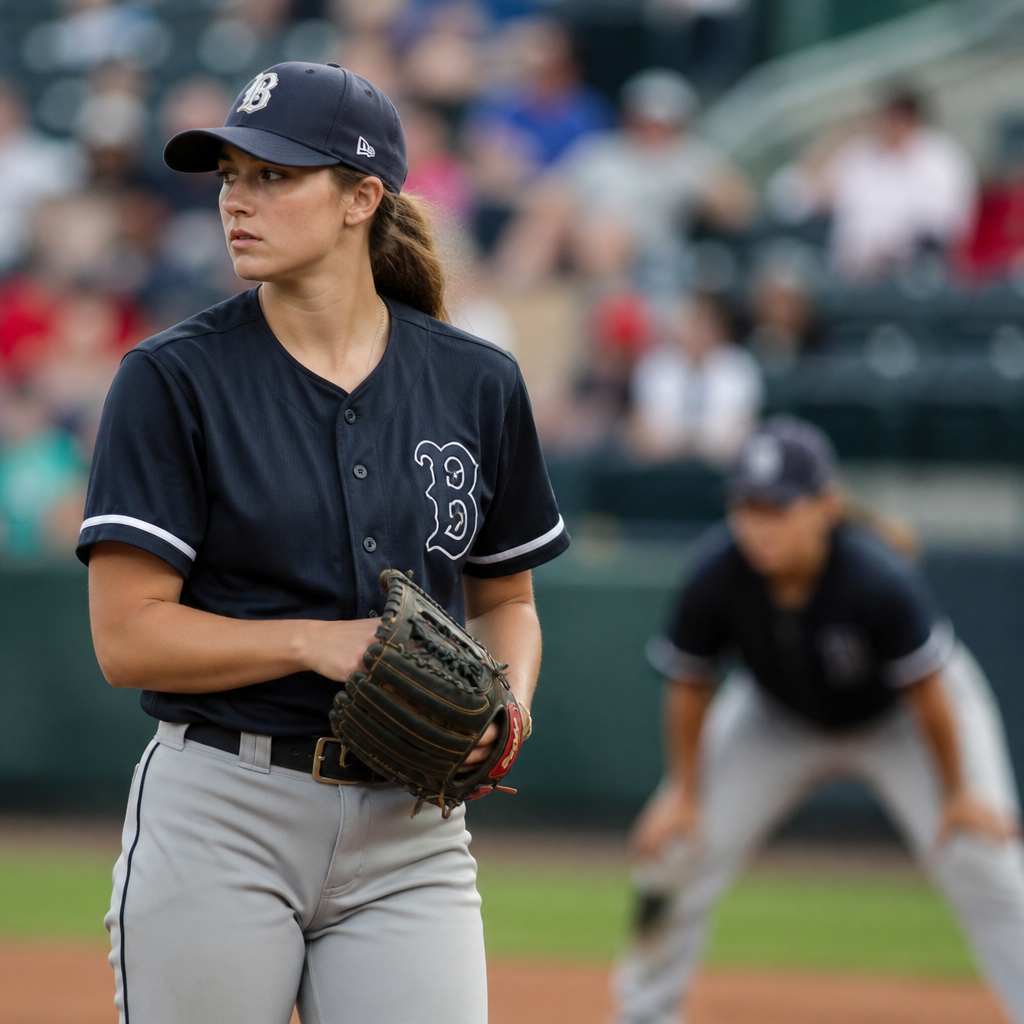
Baseball has long sold itself as a national pastime built on merit, numbers, and tradition, yet the struggles of women in baseball show how access to the game has never been distributed evenly. When people talk about women in baseball, they often mean players, but the topic is broader: it includes coaches, scouts, executives, umpires, broadcasters, trainers, and the girls trying to stay in the sport once youth leagues become segregated. In this miscellaneous hub, the key question is simple: what barriers have women faced across the baseball world, and why do those barriers still matter today?
The answer begins with definition. “Women in baseball” refers to female participation in baseball itself, not softball alone, although softball has often been presented as the default alternative for girls. That distinction matters because baseball and softball differ in field dimensions, pitching motion, strategic rhythms, development pathways, and cultural expectations. Over years of covering and studying this space, I have seen the same pattern repeat: girls are welcomed into baseball early, praised when they excel, then quietly redirected as competition intensifies and institutions become less flexible. The struggle is not lack of ability. It is a system designed around assumptions about who belongs.
Those assumptions affect every level of the sport. At the grassroots level, many girls lose roster spots, access to quality coaching, or age-appropriate competition. At the amateur level, there are fewer established pipelines, limited scholarships tied specifically to baseball, and uneven recognition from governing bodies. At the professional level, the obstacles widen into hiring bias, media stereotyping, and the scarcity of women in visible decision-making roles. Even when progress occurs, women are frequently treated as exceptions rather than standard participants in the baseball ecosystem.
This subject matters for reasons beyond fairness. Baseball narrows its own talent pool when girls and women are pushed out, and organizations weaken themselves when leadership pipelines exclude qualified people. Research across sports management and business repeatedly shows that diverse staffs make better decisions, identify overlooked talent, and engage broader audiences. For baseball, which competes for youth participation and cultural relevance, inclusion is not cosmetic. It is operational. Understanding the curveballs and challenges women face is essential for anyone interested in the future of the game, from parents and players to leagues, colleges, and Major League Baseball clubs.
How History Shaped the Modern Struggle
Women have always been part of baseball’s history, but the record is fragmented because institutions rarely preserved their stories with the same seriousness given to men. The All-American Girls Professional Baseball League, founded in 1943, remains the most widely known example, yet it is often misunderstood as a wartime novelty rather than evidence of sustained demand and elite female play. Earlier still, women played on barnstorming teams, in industrial leagues, and on local clubs. Black women, in particular, faced layered exclusion due to both racism and sexism, with figures such as Toni Stone, Mamie Johnson, and Connie Morgan proving their skill in the Negro Leagues while receiving only a fraction of the recognition they deserved.
That historical erasure has modern consequences. When a sport lacks visible lineage, each new generation appears to arrive without precedent. I have seen young players light up simply by learning that women have pitched, scouted, coached, broadcast, and run baseball operations before them. Representation is not symbolic trivia; it creates legitimacy. Without historical continuity, gatekeepers can claim female participation is too unusual to support, and the burden falls again on women to justify their presence rather than on organizations to justify exclusion.
Professional baseball’s formal barriers also shaped the current landscape. In 1952, organized baseball effectively banned women from signing minor league contracts, a policy not overturned until decades later. Legal and cultural shifts eventually opened doors, but the damage lingered in scouting habits, player development structures, and public perception. Baseball still carries residue from a period when women were deliberately classified as outsiders.
The Youth Baseball Pipeline Problem
The biggest challenge for many female players appears long before adulthood: staying in baseball after childhood. In tee-ball and early Little League divisions, girls often play alongside boys with minimal issue. Problems emerge around ages eleven to fourteen, when physical development varies, competition intensifies, and social pressure increases. Families are frequently steered toward softball, sometimes gently and sometimes bluntly, even when the player wants baseball. Because there are fewer girls’ baseball teams, parents must travel farther, spend more, and work harder to find suitable competition.
This pipeline problem has several practical dimensions. Coaches may lack experience developing female players because so few remain in the system. Tryouts can become vulnerable to bias when evaluators compare girls not to objective standards but to assumptions about strength or durability. Equipment and facilities may be organized around boys’ teams first, leaving girls with inconvenient schedules or lower-priority fields. In school settings, girls can legally try out for baseball in many areas, but policy access does not guarantee cultural acceptance. I have heard players describe being tested more harshly, benched more quickly after mistakes, and expected to prove toughness in ways boys are not.
The result is attrition. A talented twelve-year-old may still love baseball, yet the accumulated friction becomes exhausting. This is why dedicated girls’ baseball events matter. Programs supported by USA Baseball, Baseball for All, and regional academies provide not only reps but also peer community, high-level coaching, and evidence that a future in the sport is possible. The lesson is clear: interest is not the issue. Infrastructure is.
Common Barriers Across Roles in Baseball
Women face different obstacles depending on their role, but the patterns overlap enough to map clearly.
| Role | Main Barrier | Real-World Effect |
|---|---|---|
| Player | Limited teams and scouting visibility | Fewer chances to face elite competition or be evaluated consistently |
| Coach | Assumptions about authority and technical knowledge | Harder hiring path, especially in competitive boys’ or men’s programs |
| Scout/Executive | Old-network hiring and travel demands without support | Slow advancement and underrepresentation in decision-making rooms |
| Umpire | Harassment and isolation in male-dominated crews | Higher dropout rates despite strong performance |
| Broadcaster | Appearance-focused scrutiny and credibility challenges | Public abuse and narrower margin for error on air |
These barriers are reinforced by a familiar catch-22. Because there are few women in certain roles, organizations label women “inexperienced.” But because organizations hesitate to hire them, women cannot accumulate the same conventional experience. Breaking that cycle requires intentional development pathways, not passive statements about opportunity.
Players, Performance, and the Myth of Incompatibility
One persistent misconception is that baseball and women are naturally incompatible at higher levels. That claim ignores both evidence and context. Baseball performance is not a single trait; it is a combination of bat speed, pitch recognition, command, reaction time, mechanics, tactical awareness, and position-specific skill. Physical differences can influence outcomes, especially at the highest velocities, but those differences do not justify broad exclusion from developmental opportunities. Plenty of baseball roles reward anticipation, precision, and decision-making as much as raw force.
Examples matter here. Kelsie Whitmore became the first woman to sign with an MLB Partner League team, the Staten Island FerryHawks, and later pitched in the Atlantic League. Ayami Sato, the Japanese right-hander often cited as one of the best female baseball players in the world, has dominated international women’s baseball with command and movement that translate across environments. Women have also appeared in college men’s baseball, independent leagues, and professional development settings. These cases do not mean barriers have vanished. They show the argument of automatic impossibility is false.
Development science also challenges simplistic assumptions. Velocity gaps can be addressed partly through strength training, mechanics, nutrition, and individualized programming, areas where girls have historically received less baseball-specific support. When investment is unequal, outcomes cannot be treated as pure proof of innate limits. Good evaluation asks a better question: what could this athlete become with comparable coaching, competition, and repetition?
Coaching, Front Office Careers, and Clubhouse Culture
Some of the most visible advances for women in baseball have come off the field. Alyssa Nakken became the first woman to coach on the field in a Major League Baseball game with the San Francisco Giants. Rachel Balkovec became the first woman to manage an affiliated minor league team with the New York Yankees organization. Kim Ng’s tenure as general manager of the Miami Marlins was another landmark, not because women suddenly became qualified for baseball operations, but because one finally reached a role long blocked by convention.
From my experience reporting on sports workplaces, milestone hires can be both meaningful and misleading. They prove entry is possible, but they can also hide how narrow the pipeline remains. Women in coaching and operations still describe being mistaken for support staff, excluded from informal networking, or judged more on communication style than tactical quality. Clubhouse culture matters here. A woman with deep knowledge of pitch design, biomechanics, or advance scouting should not need to spend extra energy establishing basic credibility before her ideas are heard.
The strongest organizations treat inclusion as a systems issue. They standardize hiring criteria, create mentorship structures, define reporting channels for misconduct, and evaluate leaders partly on staff development. Baseball already relies heavily on process in player development, sports science, and analytics. Applying that same rigor to workforce development is not political; it is competent management.
Media Coverage, Stereotypes, and the Cost of Visibility
Media attention can open doors, but it often arrives with distortions. Women in baseball are frequently framed as novelty stories, inspirational sidebars, or symbols of firsts rather than professionals doing demanding work. That framing narrows public understanding. A coach becomes “the woman coach” before she becomes a coach with expertise in hitting plans, defensive positioning, or player communication. A broadcaster’s wardrobe may receive more discussion than her command of Statcast trends or roster construction.
Visibility also creates an uneven burden. When one woman reaches a high-profile role, she is often treated as representative of all women in baseball. Men rarely carry that collective weight. The scrutiny extends online, where harassment can be relentless. Social platforms amplify abuse that ranges from patronizing comments to explicit threats. For employers, this is not just a public relations issue. It affects retention, performance, and mental health.
Better coverage is possible and increasingly common. Outlets that analyze women in baseball through performance, policy, labor structures, and development pathways give audiences a fuller picture. The most useful stories answer concrete questions: What role does this person hold? What skills does the job require? What measurable impact has she had? That style of coverage normalizes competence instead of sensationalizing presence.
What Real Progress Looks Like Next
Progress in women’s baseball will not come from a single breakthrough. It requires coordinated fixes across participation, hiring, funding, and storytelling. Youth leagues should preserve baseball pathways for girls instead of treating softball redirection as neutral. Schools and colleges need transparent tryout standards and trained evaluators. Governing bodies should expand girls’ baseball tournaments, coaching education, and international competition. Professional clubs can widen candidate pools for baseball operations, coaching, and umpiring by pairing recruitment with retention support.
Measurement matters. Organizations should track how many girls stay in baseball year to year, how many women are hired into technical roles, and where advancement stalls. What gets measured gets managed. The same logic applies to media and sponsorship. Brands that support women’s baseball consistently, not just during milestone moments, help build stable ecosystems around camps, showcases, and national teams.
For readers using this page as a hub, the main takeaway is straightforward: the struggles of women in baseball are interconnected. History shapes perception, perception influences opportunity, opportunity affects performance, and performance then gets used to justify the original assumptions. Breaking that loop demands deliberate action from leagues, clubs, families, educators, and fans. If you care about the future of baseball, follow the women doing the work, support the programs expanding access, and keep asking who still gets left out.
Frequently Asked Questions
What are the biggest struggles women face in baseball today?
The biggest struggles women face in baseball are not about passion, talent, or commitment. They are mostly about access, visibility, and opportunity. Baseball has traditionally been organized in ways that favor boys and men from an early age, which means many girls encounter barriers long before professional pathways even become relevant. A common turning point happens in youth sports, where girls are subtly or directly pushed toward softball once leagues become more competitive, more segregated, or more traditional in their expectations. That shift can interrupt development, reduce playing time against strong competition, and send the message that baseball is not really meant for them.
Beyond the field, the challenges extend into coaching, scouting, officiating, front-office leadership, media, and player development. Women often enter these spaces under heightened scrutiny, with their credentials questioned more aggressively than those of male peers. In many cases, they are expected to prove basic competence before they are allowed to contribute, while men are more often assumed to belong. Networking can also be harder because baseball has long relied on closed circles, informal mentorship, and relationship-based hiring, and those systems historically excluded women.
There is also a visibility problem. Because women in baseball have been underrepresented for so long, many fans still treat their presence as unusual rather than normal. That can create a cycle in which limited representation leads to limited acceptance, and limited acceptance leads to fewer opportunities. The result is not one single obstacle but a layered system of challenges: fewer entry points, less institutional support, persistent bias, and narrower advancement paths. For many women in baseball, the struggle is not just getting in the door. It is being allowed to stay, grow, lead, and be seen as part of the game’s future.
Why do so many girls leave baseball as they get older?
Many girls leave baseball as they get older because the structure of the sport often makes staying difficult. In early childhood, girls may be welcomed into coed baseball environments, but as players age, competition intensifies and opportunities often narrow. At that stage, families, coaches, and leagues may begin steering girls toward softball, even when those girls want to continue playing baseball. Sometimes that pressure is direct, and sometimes it comes through logistics: fewer teams willing to roster girls, fewer coaches committed to developing them, fewer tournament opportunities, and fewer examples of older girls still playing baseball at a high level.
Social pressure matters too. As girls move into adolescence, they may become more aware of being treated as exceptions. They can face doubts from coaches, teammates, opponents, or even spectators who assume they do not belong. That kind of environment makes baseball emotionally harder to stay in, especially when every mistake feels magnified. A boy who struggles may be seen as developing. A girl who struggles may be seen as confirming a stereotype. Over time, that double standard wears people down.
Practical development issues also play a role. Elite baseball often depends on travel teams, showcases, private instruction, and year-round competition. If girls are excluded from those pipelines or included only marginally, they lose critical reps and exposure. That does not mean they lack ability. It means they are developing in a system not built with them in mind. When girls leave baseball, it is often described as a personal choice, but that explanation can be incomplete. In many cases, it is more accurate to say they are squeezed out by a sports culture that offers limited support for their continued participation.
Are women only struggling as players, or do these issues affect other baseball careers too?
These issues affect nearly every area of baseball, not just playing careers. Women working as coaches, managers, scouts, analysts, trainers, broadcasters, executives, and umpires often face versions of the same structural problem: they are entering institutions shaped by decades of male dominance. That means they may have fewer mentors, fewer role models, fewer informal career connections, and fewer chances to move from entry-level work into real authority. In baseball, where advancement often depends on trust, reputation, and longstanding networks, exclusion can happen quietly but powerfully.
For coaches and instructors, one challenge is credibility bias. Women may be asked to repeatedly demonstrate knowledge that would be assumed in male colleagues. For scouts and front-office professionals, barriers may include limited access to key assignments, resistance in traditional baseball spaces, or slower promotion despite strong performance. Female umpires and broadcasters often deal with public scrutiny that is not only professional but personal, with criticism focusing on their presence rather than their work. Even when women achieve visible roles, they may still be treated as symbolic hires instead of experienced professionals with valuable insight.
The broader point is that baseball is an ecosystem. If women are blocked in one part of that ecosystem, it affects the whole sport. A lack of female coaches reduces mentorship for girls. A lack of women in leadership affects hiring and policy decisions. A lack of women in media shapes how stories are told and whose experiences are centered. So while players often get the most attention, the struggles of women in baseball are much broader. They reflect who gets to participate, who gets to make decisions, and who gets recognized as an authority in the game.
How does baseball culture contribute to the challenges women face?
Baseball culture contributes to these challenges because it often celebrates tradition without fully examining who that tradition has historically served. The sport prides itself on continuity, hierarchy, and unwritten rules, and while those qualities can create identity and loyalty, they can also preserve exclusion. When a culture is built around the idea of “how things have always been done,” change is frequently treated as disruption rather than progress. For women, that can mean encountering resistance not because they are unqualified, but because their presence forces institutions to rethink old assumptions.
One of the most persistent cultural issues is the belief that baseball is naturally a male space. That belief shows up in small ways and large ones: in who gets encouraged to play, who gets leadership roles, who gets the benefit of the doubt, and whose expertise is questioned. It can shape facility access, training opportunities, locker room dynamics, hiring decisions, and even media coverage. In some cases, women are welcomed publicly but marginalized privately, praised as milestones while still being excluded from the same developmental support that male peers receive.
Cultural change in baseball also tends to happen slowly. Because the sport is so tied to nostalgia and legacy, people sometimes confuse inclusion with abandoning tradition. In reality, expanding opportunities for women does not weaken baseball’s identity. It strengthens it by making the game more honest, more competitive, and more accessible. The challenge is not simply changing rules or adding programs. It is changing assumptions. Until baseball culture consistently treats women as part of the sport rather than an exception to it, many of the same barriers will continue to reappear in different forms.
What would make baseball more accessible and equitable for women in the future?
Making baseball more accessible and equitable for women requires more than symbolic gestures. It requires durable structural change. The first step is creating clearer and more consistent pathways for girls who want to keep playing baseball as they age. That means supporting coed participation where appropriate, building girls’ baseball programs where needed, expanding tournament and development opportunities, and ensuring that talented players are not forced out simply because the system has no place for them. Access to coaching, training, competition, and visibility has to be intentional, not accidental.
At the professional and institutional level, baseball needs stronger hiring, promotion, and retention practices for women across all roles. Teams and organizations should invest in mentorship, leadership development, and transparent advancement standards so that women are not dependent on informal networks that have historically excluded them. Representation matters, but retention matters just as much. It is not enough to hire women into isolated positions. They need support, authority, fair evaluation, and real opportunities to influence the game.
Media and storytelling also play an important role. When coverage of women in baseball focuses only on novelty, it reinforces the idea that they are outsiders. More useful coverage highlights expertise, persistence, and the normal reality that women belong in baseball spaces. Education at the youth level matters too. Coaches, league organizers, and parents can help by challenging assumptions early and making sure girls are not discouraged from pursuing baseball if that is the sport they love.
Ultimately, a more equitable future for women in baseball depends on moving from exception to expectation. The goal is not to make room for a few standout women while leaving the rest of the system unchanged. The goal is to build a game where girls and women can enter, develop, compete, work, lead, and thrive without constantly having to justify their presence. That kind of change would not only benefit women. It would make baseball itself stronger, deeper, and more inclusive.