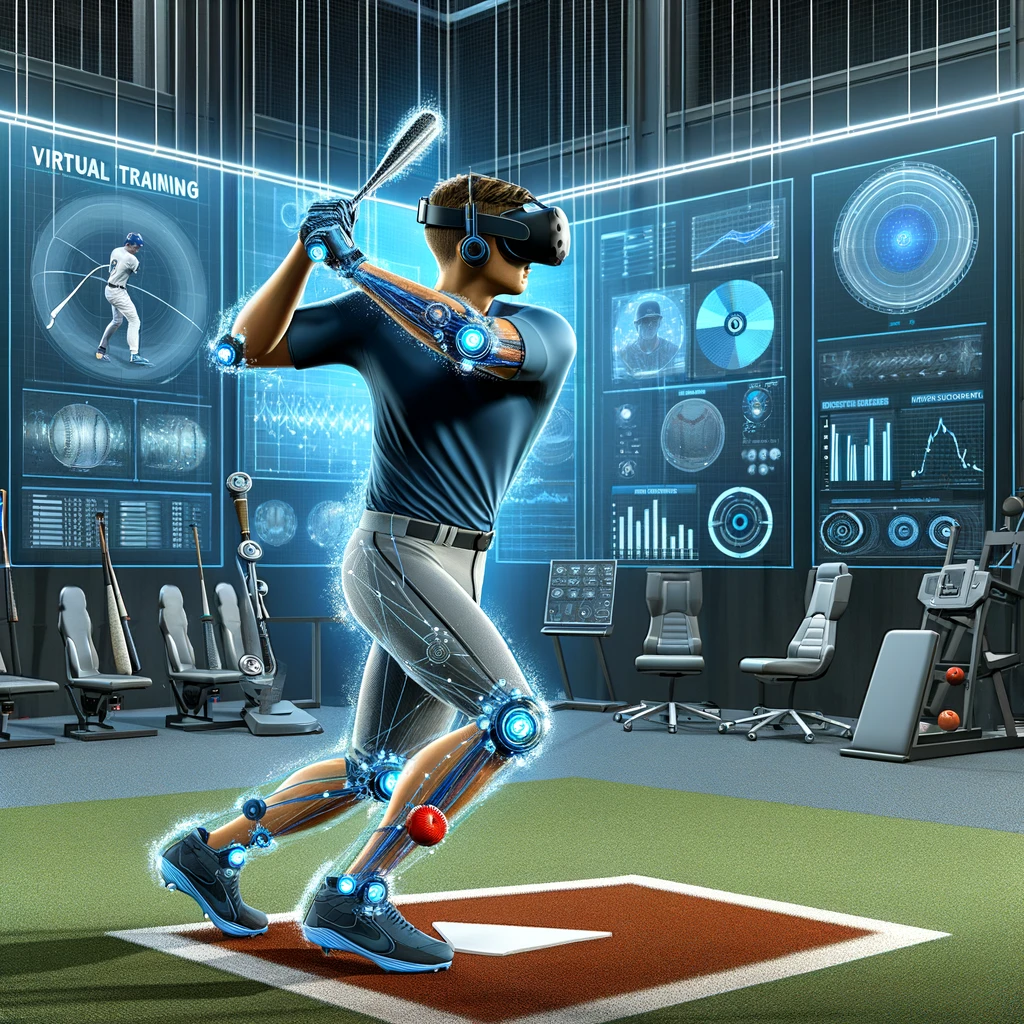
The Evolution of Baseball Training
Baseball, often revered as America’s pastime, has experienced a technological revolution that is changing the very fabric of athlete training and development. This transformation, driven by advancements in virtual reality (VR), artificial intelligence (AI), and data analytics, is not just a fleeting trend but a substantial shift in how baseball athletes prepare, train, and evolve.
Virtual Reality: A Game Changer in Batting Practice
One of the most significant innovations in baseball training is the incorporation of VR into batting practice. Virtual reality technology enables players to experience highly realistic simulations of in-game pitching, offering a plethora of benefits over traditional batting practice. This technology allows players to face a wide range of pitches and styles, far beyond what a single pitcher could offer.
Immersive Experience
Through VR headsets, batters step into a virtual batting box where they face digital recreations of actual pitchers. This immersive experience replicates the visual and timing challenges of real-life batting, allowing players to practice against the specific pitch styles and speeds they will encounter in actual games.
Personalized Feedback
VR technology provides immediate and detailed feedback on each swing. It analyzes bat speed, swing path, and point of contact, offering insights that are not easily observable in a traditional setting. This data-driven approach enables players to make precise adjustments to their techniques.
AI and Machine Learning: Tailoring Player Development
Artificial Intelligence and machine learning are at the forefront of personalized player development. AI algorithms analyze vast amounts of data, including player performance, opponent tendencies, and situational statistics, to provide customized training programs for each athlete.
Predictive Analytics
AI systems can predict how a player’s performance might evolve under different training scenarios. By modeling various outcomes, coaches can make informed decisions about player development, focusing on areas that need improvement.
Enhanced Scouting and Strategy
AI also aids in scouting and strategy formulation. By analyzing data from thousands of games, AI can identify patterns and tendencies in opponents, providing teams with strategic insights that were previously unattainable.
Wearable Technology: Real-Time Performance Monitoring
Wearable technology has become a staple in modern baseball training. Devices like smartwatches, sensor-equipped clothing, and even smart baseballs provide real-time data on an athlete’s physical performance and biomechanics.
Biomechanical Analysis
These wearables can track a player’s movements, offering insights into their biomechanics during pitching, batting, and fielding. This analysis helps in identifying potential areas of risk for injuries and suggests corrective measures.
Conditioning and Health Monitoring
Wearable tech also plays a crucial role in conditioning and health monitoring. By tracking metrics like heart rate, sleep patterns, and recovery rates, these devices help optimize an athlete’s training regimen and prevent overtraining.
The Role of Simulation Software in Defensive Training
Simulation software has revolutionized defensive training in baseball. Through detailed 3D modeling, players can experience game-like scenarios, improving their decision-making skills and reaction times.
Virtual Repetitions
Defensive players can take thousands of virtual repetitions to hone their skills. This repetition is crucial in developing muscle memory and improving reaction times to various game situations.
Strategy and Positioning
Simulation software also assists in teaching strategy and positioning. Players learn optimal positioning for different plays, understanding the dynamics of the game more deeply.
Augmented Reality: Enhancing Fan Experience and Player Interaction
Augmented reality (AR) is not just a tool for training; it’s also enhancing the fan experience. AR applications allow fans to access real-time stats, player information, and game analysis, creating a more engaging and interactive experience.
Interactive Training
AR is also used in interactive training sessions where players can engage with virtual elements superimposed in their real environment, adding a new dimension to their training routines.
Challenges and Ethical Considerations
Despite these advancements, the integration of technology in baseball training presents challenges. The cost of implementing these technologies can be high, potentially widening the gap between well-funded and less affluent teams. Moreover, there are concerns about data privacy and the ethical use of player performance data.
The incorporation of virtual training and advanced technologies in baseball is not just changing how athletes train; it’s redefining the limits of their abilities. As these technologies continue to evolve, they promise to unlock new potentials in player performance, coaching strategies, and even fan engagement, heralding a new era in baseball’s storied history.

The Future of Baseball Training
Integration of Emerging Technologies
As we look to the future, the integration of emerging technologies like augmented reality (AR) and virtual reality (VR) in training and gameplay will continue to evolve. The potential for AR and VR to create even more immersive and interactive training experiences is immense. Imagine a pitcher practicing against a virtual lineup of the world’s best batters or a fielder simulating game-winning catches under high-pressure scenarios. These technologies will not only refine the skills of players but also prepare them mentally for high-stakes situations.
Enhancing Mental Training and Focus
The mental aspect of baseball, often as critical as physical prowess, is also benefiting from these technological advancements. VR can simulate pressure situations, helping players improve their focus and mental resilience. This aspect of training is crucial, especially in a sport where split-second decisions and mental toughness can be the difference between winning and losing.
Customized Training Programs
The future of baseball training is also moving towards more personalized and customized programs. With AI and machine learning’s capability to analyze individual player data, training can be tailored to address specific strengths and weaknesses. This level of customization not only enhances player performance but also helps in reducing the risk of injuries by focusing on preventive exercises and proper workload management.
Data-Driven Decision Making
Data-driven decision-making will continue to be a significant factor in baseball. With more sophisticated data collection methods and analytical tools, teams can make more informed decisions regarding player health, training methods, and in-game strategies. This reliance on data not only enhances the performance but also adds a new dimension to how the game is understood and played.
Challenges in Implementation
While the future is bright, the implementation of these technologies is not without challenges. Ensuring equitable access to these tools, protecting player privacy, and maintaining the essence of the sport are crucial considerations. Balancing technological advancement with the traditional aspects of baseball will be key to preserving the game’s integrity while embracing innovation.
Preparing for a Tech-Driven Era
As baseball enters this new, tech-driven era, players, coaches, and organizations must be prepared to adapt. Embracing these changes, while also being mindful of their implications, will be essential for the continued growth and evolution of the sport. The potential for these technologies to transform baseball is limitless, and their integration will undoubtedly write a new chapter in the history of this beloved sport.
Conclusion
Virtual training and advanced technology in baseball represent more than just a shift in training methods; they symbolize the sport’s evolution in the 21st century. By harnessing the power of VR, AI, and data analytics, baseball is setting a precedent for how sports can leverage technology for enhanced performance and engagement. As we continue to witness these advancements unfold, one thing is certain – the future of baseball is here, and it’s more exciting than ever.
This comprehensive look at the innovations and changes in baseball training illustrates a sport that is not only embracing the future but is also at the forefront of technological integration in sports. “Virtual Training: A New Frontier for Baseball Athletes” offers a glimpse into how these advancements are reshaping the way athletes prepare and how the game is played, promising a thrilling and innovative future for baseball enthusiasts and players alike.
Frequently Asked Questions
1. What is virtual training in baseball and how does it work?
Virtual training in baseball utilizes cutting-edge technology such as virtual reality (VR), artificial intelligence (AI), and data analytics to enhance the training regimens of athletes. VR headsets are often used to simulate realistic game scenarios, allowing players to practice their reactions and decision-making skills without stepping onto a physical field. AI algorithms help analyze player performance, identifying strengths and areas for improvement with precision. Meanwhile, data analytics draw from a wide range of game data to provide insights into performance trends, helping players and coaches make data-driven decisions to elevate their training program. This blend of technologies is fine-tuning player preparation in an unprecedented way, making training both more efficient and more effective.
2. How does virtual reality specifically benefit baseball players during batting practice?
Virtual reality is profoundly impactful during batting practice as it allows players to face virtual representations of diverse pitchers and who can throw in various styles and speeds, simulating real gameplay conditions. Since the player is fully immersed in a 360-degree baseball environment, they can practice their hand-eye coordination and timing against pitch types that are typically challenging to replicate outside of live games. Not only does VR allow them to visualise pitches from MLB-level pitchers, but it also enables players to repeatedly face these virtual pitchers without the physical wear and tear that accompanies traditional batting practice. As a result, players can refine their skills in a safer, controlled setting, effectively shortening the learning curve associated with high-level pitching.
3. In what ways does AI contribute to modern virtual baseball training?
AI enhances virtual baseball training by offering sophisticated analysis and feedback driven by big data. Machine learning models gather data from a player’s past performances, predicting possible future outcomes and tailoring training plans to suit the needs of individual players. AI technology aids in predicting pitch sequences, opponent strategies, and potential performance under certain conditions. Furthermore, it assesses biomechanical data, highlighting inefficiencies in a player’s swing or pitch mechanics, which would be otherwise challenging for the human eye to detect. This insight enables athletes to make real-time adjustments in their technique and strategy, allowing for continuous improvement and a competitive edge over their opponents.
4. What are the potential drawbacks or limitations of relying on virtual training in baseball?
While virtual training offers a host of advantages, there are some limitations to consider. Firstly, the technology and equipment required for VR, AI, and advanced analytics can be costly and may not be accessible to all players or teams. Additionally, while VR and AI can simulate many aspects of the game, it’s not a perfect substitute for real-life gameplay experience, particularly in terms of replicating the stress, pressure, and unpredictability of live games. Moreover, over-reliance on technology could lead to neglecting essential aspects of the sport that demand human intuition and teamwork, such as communication and chemistry. Thus, while virtual training is a powerful tool, it should be used in conjunction with traditional training methods to offer a comprehensive preparation strategy.
5. How can younger players or amateurs access virtual training tools for baseball?
While professional teams often have greater access to advanced virtual training tools, the democratization of technology has made it increasingly accessible to younger players and amateurs. Many companies are developing affordable VR setups and mobile apps designed explicitly for aspiring athletes. These platforms provide customizable hitting and pitching simulations that are not only engaging but also educational, helping budding players hone their skills from home. Moreover, some community centers and sports academies offer programs incorporating these technologies, giving wider accessibility to baseball enthusiasts in various regions. Online forums and resources can also connect players with virtual training tools, providing guidance and support as they integrate these technologies into their training regimen, opening doors for athletes at all levels to benefit from technological advancement.