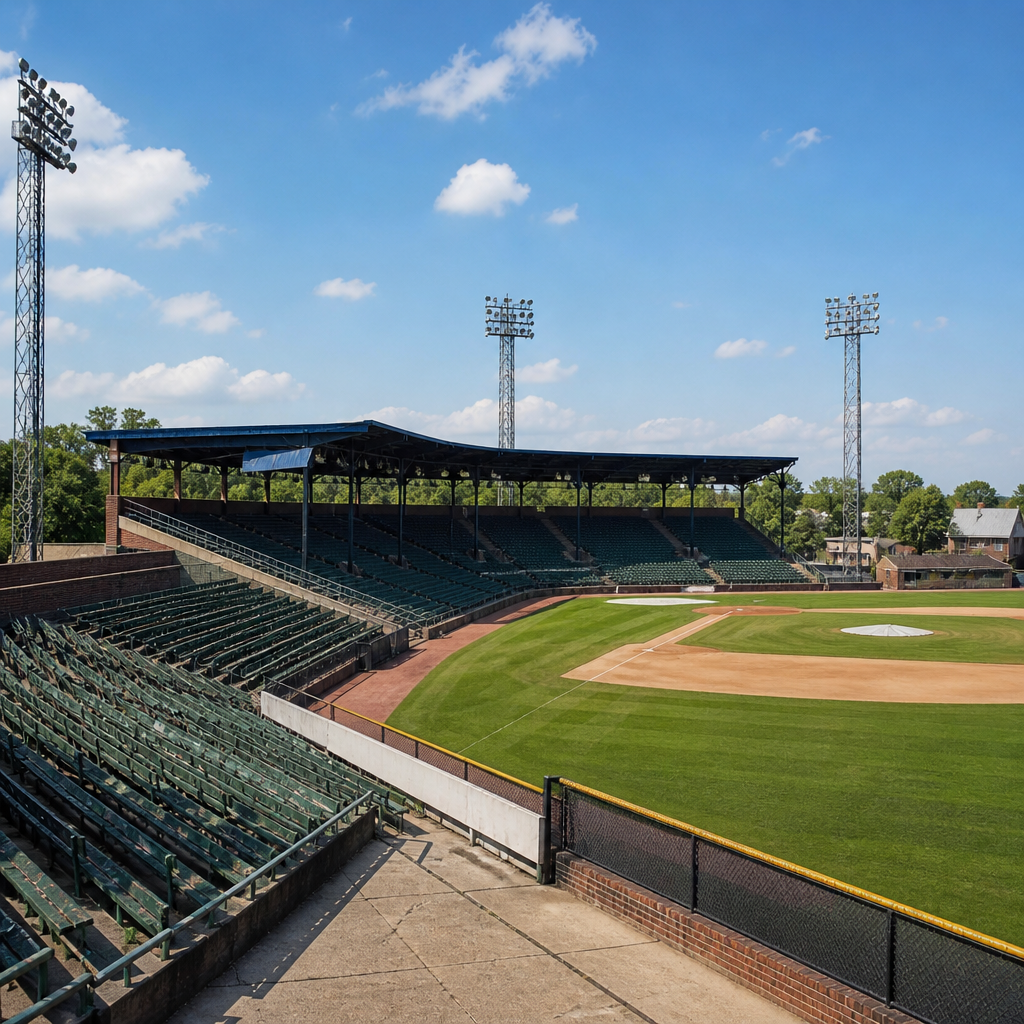
Hamtramck Stadium stands as one of the most important surviving landmarks in American baseball, linking the Detroit Stars, the Negro National League, and the broader story of Black enterprise, segregation, and athletic excellence. For readers exploring iconic ballparks, this site matters not simply because games were played there, but because so few Negro Leagues ballparks remain with their historic identity intact. Hamtramck Stadium, located near the Detroit city line in present-day Hamtramck, Michigan, opened in 1930 as the home field for the Detroit Stars and later hosted other Negro Leagues clubs, barnstorming teams, and community events.
To understand Hamtramck Stadium, it helps to define two key ideas. First, the Negro Leagues were a network of professional Black baseball leagues and independent clubs that flourished during the era of racial segregation, especially from the 1920s through the 1940s. Second, a surviving Negro Leagues park means more than a field on an old map. It refers to a place where the physical structure, location, and documented historical function still allow visitors and researchers to connect directly with the original experience. In that sense, Hamtramck Stadium is rare. Many Negro Leagues teams rented major league parks, municipal fields, or temporary venues that were later demolished, heavily altered, or stripped of context.
This article serves as a hub for the full subject of Negro Leagues ballparks by using Hamtramck Stadium as the central case study. In my experience researching historic stadiums, the biggest mistake people make is treating these parks as side notes to major league history. They were not side notes. They were commercial stages for elite athletes, gathering places for Black communities, and symbols of determination in cities where opportunity was restricted by law, custom, and economics. Hamtramck Stadium matters because it preserves that layered history in a way photographs and box scores alone cannot. It also helps explain how Negro Leagues ballparks functioned: who built them, why they were needed, how teams used them, and what their survival tells us today.
For anyone building a deeper understanding of iconic ballparks, Hamtramck Stadium is an essential starting point because it connects architecture, sports history, civil rights history, and preservation in one place.
The Detroit Stars and the rise of Negro Leagues baseball in Detroit
The Detroit Stars were one of the founding franchises of the Negro National League in 1920, the circuit organized by Rube Foster that gave Black professional baseball a more formal structure. Detroit was a logical market. During the Great Migration, the city drew Black workers seeking industrial jobs, and that population growth created an audience for high-level Black baseball. The Stars quickly became one of the league’s recognized clubs, known for strong play and notable talent including Hall of Famer Norman “Turkey” Stearnes, one of the greatest power hitters and all-around players in baseball history.
Before Hamtramck Stadium existed, the Stars played at Mack Park in Detroit. That earlier home was significant, but it was also vulnerable. A fire in 1929 damaged Mack Park and disrupted the club’s operations at a moment when stable facilities mattered enormously. Teams in the Negro Leagues often faced uncertain lease terms, scheduling conflicts with white-owned venues, and uneven revenue conditions. A dependable ballpark could improve gate receipts, team identity, and fan loyalty. That context explains why a purpose-built site like Hamtramck Stadium represented more than a relocation. It was an operational upgrade and a statement of permanence.
The Detroit Stars themselves reflected the strengths and pressures common across Negro Leagues baseball. On the field, clubs featured elite competition that major league segregation kept out of the white majors. Off the field, ownership groups had to navigate travel costs, weather, league instability, and the constant need to book profitable dates. Ballparks were central to that business model. A team with a reliable home ground could schedule league games, exhibitions, doubleheaders, and special events with fewer compromises. In Detroit, that need converged with local support to create Hamtramck Stadium in 1930.
Why Hamtramck Stadium is so rare among Negro Leagues ballparks
Hamtramck Stadium is rare because dedicated Negro Leagues venues seldom survived the twentieth century. Many clubs did not control their own parks. They played in major league stadiums on off-days, leased municipal diamonds, or moved among multiple sites. That pattern was practical but fragile. Once neighborhoods changed or land values rose, the physical evidence often disappeared. Even when a field remained open, grandstands were replaced, orientation shifted, and the link to Negro Leagues history faded from public memory.
By contrast, Hamtramck Stadium retained enough of its original setting and structure to preserve historical meaning. The stadium’s wooden grandstand and steel supports give it a distinct period character, and the location remains directly tied to the Detroit Stars era. Preservationists have long emphasized integrity of location, design, materials, feeling, and association. Hamtramck Stadium meets those tests more convincingly than most comparable sites. It is therefore frequently cited alongside Kansas City’s remaining baseball landmarks and Birmingham’s Rickwood Field when discussing places where Black baseball history can still be experienced spatially, not just read about.
Its rarity also comes from chronology. Built in 1930, Hamtramck Stadium arrived during the mature years of organized Negro Leagues play, after the first wave of league formation but before full integration transformed the professional landscape. That timing means the park belongs to the era many fans most associate with Negro Leagues excellence: structured league competition, star-centered promotion, and large urban crowds. As a result, the stadium is useful not only as a local landmark but as a representative site for interpreting how Black baseball worked nationwide.
How the ballpark was built and what its design reveals
Hamtramck Stadium was constructed through local initiative, with involvement from figures connected to the Detroit Stars and the surrounding community. Accounts of the financing and exact administrative arrangements vary across sources, which is common in Negro Leagues documentation, but the basic point is clear: the ballpark emerged from a serious effort to create a stable home for Black professional baseball in the Detroit area. That alone distinguishes it from countless temporary grounds used by traveling clubs.
Architecturally, the stadium was practical rather than ornate. Its most recognizable historic feature is the grandstand, a long wooden seating structure supported by a steel frame. This combination was typical of many early twentieth-century parks that needed to balance cost, capacity, and speed of construction. The design prioritized sightlines, shade, and concentrated seating near home plate, where paying spectators most wanted to be. The field orientation and modest scale reflected neighborhood realities rather than monumentality.
In preservation work, modesty should never be mistaken for insignificance. I have found that smaller historic ballparks often reveal operational truths better than famous cathedrals of the major leagues. At Hamtramck Stadium, the physical fabric tells a story about constrained budgets, local craftsmanship, and the economics of Black baseball. It was designed to host paying crowds efficiently, withstand repeated use, and support a club that needed every available revenue stream. The park’s form matches its function.
What fans experienced at a Negro Leagues park
A game at Hamtramck Stadium was not only a sporting event. It was a social gathering, a commercial occasion, and a display of Black excellence in an era that systematically denied equal access to institutions. Fans came to see top players, but they also came to participate in community life. Vendors sold food. Music and conversation filled the stands. Local pride mattered. In cities like Detroit, attendance at a Negro Leagues game could express both leisure and identity.
The atmosphere at Negro Leagues ballparks was often shaped by flexible scheduling. Doubleheaders were common, and teams mixed league contests with exhibitions against independent clubs, semipro teams, or barnstorming opponents. Owners had to maximize dates because financial margins were thin. For spectators, that could mean extraordinary value: multiple games, star appearances, and promotional variety in a single afternoon. For players, it meant heavy workloads and frequent travel, with little of the infrastructure white major leaguers enjoyed.
Hamtramck Stadium also reminds us that these parks served mixed purposes over time. Beyond the Detroit Stars, the field hosted additional Black teams and local events. That pattern was typical. A successful park had to be active, bookable, and adaptable. It lived not just through a pennant race but through constant community use.
| Feature | Hamtramck Stadium example | What it shows about Negro Leagues ballparks |
|---|---|---|
| Primary tenant | Detroit Stars in 1930 | Teams sought stable home fields to strengthen revenue and identity |
| Structure | Wooden grandstand with steel support | Cost-conscious design was common and often locally executed |
| Scheduling | League games plus exhibitions and community use | Ballparks needed flexibility to stay financially viable |
| Location | Neighborhood setting near Detroit and Hamtramck | Urban accessibility helped teams draw working-class crowds |
| Legacy | Rare surviving Negro Leagues venue | Most comparable parks were demolished or heavily altered |
Hamtramck Stadium in the wider map of Negro Leagues ballparks
As a hub topic, Negro Leagues ballparks must be understood as a diverse landscape rather than a single architectural type. Some teams rented major league venues, as the Kansas City Monarchs and others often did under varying arrangements. Some played in municipally owned parks. Some used purpose-built grounds that later vanished. Others shifted between locations depending on date availability, promoter relationships, and expected gate size. This is why surviving sites are so valuable: they anchor a history that was physically dispersed.
Hamtramck Stadium helps organize that larger map. It sits in the category of purpose-built or strongly identified home parks for Black professional baseball, which makes it especially useful for comparison. Contrasting it with larger shared venues shows how differently teams operated across markets. In a rented major league park, a Negro Leagues club might benefit from bigger capacity but remain secondary in scheduling. In a dedicated venue like Hamtramck Stadium, the team gained autonomy, branding, and routine, though usually on a smaller budget. That tradeoff shaped everything from maintenance to ticketing strategy.
Other important Negro Leagues ballpark stories belong in the same conversation: Hinchliffe Stadium in Paterson, New Jersey; Rickwood Field in Birmingham, Alabama, where the Birmingham Black Barons played; and the surviving landscapes associated with clubs in Kansas City, Indianapolis, and Chicago. Each site illustrates a different relationship between Black baseball and urban space. Hamtramck’s importance is that it offers a rare northern industrial example tied directly to one of the original Negro National League markets.
Preservation, restoration, and what visitors should notice today
Historic ballparks survive only when communities decide they matter enough to save. Hamtramck Stadium faced long periods of neglect, the fate of many Black heritage sites that lacked consistent funding or political support. Preservation required documentation, advocacy, municipal action, and restoration planning. Those efforts gained momentum because historians, residents, and baseball advocates recognized the site’s national significance, not merely its local nostalgia.
When restoration work is done well, the goal is not to make a stadium look brand new. The goal is to stabilize historic materials, retain defining features, and make the site usable without erasing age. At Hamtramck Stadium, that means paying attention to the grandstand, framing systems, seating character, field context, and interpretive signage. Visitors should notice scale first. The park feels intimate. They should also notice how close the structure brings spectators to the action, a reminder that early baseball architecture often created a direct relationship between crowd and field.
Equally important is what the site teaches beyond aesthetics. A restored Negro Leagues ballpark is evidence. It proves that Black baseball built institutions, attracted paying audiences, and produced places worthy of preservation under the same standards applied to any celebrated sports venue. If you visit Hamtramck Stadium after reading more broadly on Negro Leagues ballparks, you see not an outlier but a survivor.
Hamtramck Stadium deserves its place among iconic ballparks because it preserves a chapter of baseball history that the built environment too often erased. As the former home of the Detroit Stars and one of the few surviving Negro Leagues parks, it offers something rare: a direct physical connection to the athletes, fans, and entrepreneurs who sustained Black professional baseball during segregation. That connection is why this stadium matters far beyond southeastern Michigan.
As a hub for Negro Leagues ballparks, the key lesson is clear. These venues were not interchangeable backdrops. They shaped team finances, fan culture, scheduling, and civic identity. Some were rented cathedrals, some were municipal compromises, and a few, like Hamtramck Stadium, became enduring homes with enough historic integrity to tell the full story. Understanding that range helps readers make sense of related sites such as Hinchliffe Stadium and Rickwood Field, and it clarifies why so many important places were lost.
For anyone studying the Detroit Stars, Black baseball, or historic stadium preservation, Hamtramck Stadium is the right place to begin. Explore the connected stories of other Negro Leagues ballparks, compare how each site functioned in its city, and, if possible, visit surviving venues in person. Seeing the space changes your understanding of the game.
Frequently Asked Questions
Why is Hamtramck Stadium considered so historically important?
Hamtramck Stadium is historically important because it is one of the very few surviving ballparks with a direct, meaningful connection to the Negro Leagues, and specifically to the Detroit Stars, one of Black baseball’s most significant franchises. Its value goes well beyond architecture or local nostalgia. The stadium serves as a physical link to an era when Black athletes, entrepreneurs, and communities built their own institutions in response to segregation and exclusion from white-controlled Major League Baseball. In that context, a surviving venue like Hamtramck Stadium becomes rare evidence of how Black baseball functioned as both sport and business.
What makes the site especially powerful is that so many Negro Leagues parks were demolished, heavily altered, or stripped of the features that tied them to their original purpose. Hamtramck Stadium still allows visitors and historians to connect place with story. It helps explain how teams such as the Detroit Stars drew crowds, created civic pride, and offered a stage for elite talent during a period when Black players were denied equal access to the mainstream professional game. For anyone studying American sports history, civil rights, urban history, or the development of Black enterprise, Hamtramck Stadium is not just a surviving field. It is a rare landmark that preserves the lived reality of the Negro Leagues in a way documents alone cannot.
What was the connection between Hamtramck Stadium and the Detroit Stars?
Hamtramck Stadium is closely tied to the legacy of the Detroit Stars, a charter member of the Negro National League and one of the most prominent Black baseball teams in the Midwest. The Stars represented Detroit’s place in the rise of organized Black professional baseball, and their story reflects the larger growth of the Negro Leagues as a major cultural and commercial force in the early twentieth century. The stadium is important because it became part of the physical landscape connected to that legacy, helping preserve the memory of a team that played a major role in Black baseball history.
The Detroit Stars were known for drawing strong fan support and showcasing top-level talent at a time when segregation forced Black clubs to operate in a separate baseball world. Their success was not only athletic. It also demonstrated the organizational skill, business leadership, and community investment that sustained Negro Leagues teams. Hamtramck Stadium helps modern audiences understand that the Stars were not a historical footnote, but a serious professional club in a thriving baseball ecosystem. When people visit or read about the stadium today, they are really encountering the broader story of the Detroit Stars: a team that embodied competitive excellence, racial resilience, and the determination to build something lasting in an unequal society.
How does Hamtramck Stadium help tell the broader story of the Negro Leagues?
Hamtramck Stadium helps tell the broader story of the Negro Leagues because it places national history into a real, local setting. The Negro Leagues were not just collections of teams and statistics. They were institutions created within a segregated America, where Black owners, players, managers, and fans built an alternative baseball world with its own stars, rivalries, and economic structures. A surviving stadium makes that world easier to understand. It shows that these teams were not operating on the margins in any cultural sense. They were central to the communities that supported them and were part of a serious, highly organized sporting tradition.
The stadium also reveals how Black baseball intersected with larger themes in American history. It reflects the realities of racial exclusion, but it also highlights self-determination, entrepreneurship, and community pride. Negro Leagues teams often became symbols of possibility and achievement, proving that Black excellence could flourish despite legal and social barriers. Hamtramck Stadium stands as evidence of that achievement. It reminds readers and visitors that the Negro Leagues were not simply a prelude to integration; they were a major chapter in their own right. By preserving a place where this history unfolded, the stadium helps keep alive the stories of players, promoters, and fans who shaped American baseball from outside the white major leagues.
What makes Hamtramck Stadium rare compared with other historic baseball sites?
Hamtramck Stadium is rare because there are so few surviving Negro Leagues ballparks that still retain a clear, traceable historic identity. Many important sites associated with Black baseball were lost to demolition, redevelopment, neglect, or major alterations over time. Even where games were once played, the original setting is often difficult to recognize today. That makes Hamtramck Stadium especially valuable. It offers something increasingly uncommon: a tangible, place-based connection to Negro Leagues history that has not been completely erased by time.
This rarity matters for more than preservation alone. Baseball history in the United States is often told through famous Major League parks, statues, and heavily documented landmarks. Negro Leagues history, by contrast, has had far fewer surviving structures to anchor public memory. Hamtramck Stadium helps correct that imbalance. It gives historians, preservationists, and fans a site through which to interpret the accomplishments of Black teams on their own terms. Its survival means that the story of the Detroit Stars and the Negro National League can be explored in an authentic environment rather than only in archives, museums, or written accounts. In that sense, the stadium’s rarity is exactly what makes it so important: it is one of the few places where this history still feels physically present.
Why should baseball fans and history travelers visit or learn about Hamtramck Stadium today?
Baseball fans and history travelers should care about Hamtramck Stadium because it offers a deeper, more complete understanding of American baseball than a focus on Major League landmarks alone. Visiting or learning about the stadium adds essential context to the sport’s history by highlighting the players, teams, and communities that thrived despite exclusion from the segregated baseball establishment. It is a place where fans can appreciate not just the game itself, but the determination and creativity that built an entire professional sports culture under unequal conditions.
The site is also meaningful because it connects sports history with broader American themes such as race, migration, urban identity, and community institution-building. For travelers interested in historic ballparks, Hamtramck Stadium stands apart as more than an old field. It is a reminder that baseball has always reflected the country around it, including its injustices and its acts of resilience. For readers of an article about the Detroit Stars and rare surviving Negro Leagues parks, that is the central takeaway: Hamtramck Stadium matters because it preserves a chapter of baseball that is foundational, not peripheral. Whether someone approaches it as a fan, a preservation-minded traveler, or a student of history, the stadium offers a powerful encounter with a past that still shapes how the game is remembered today.