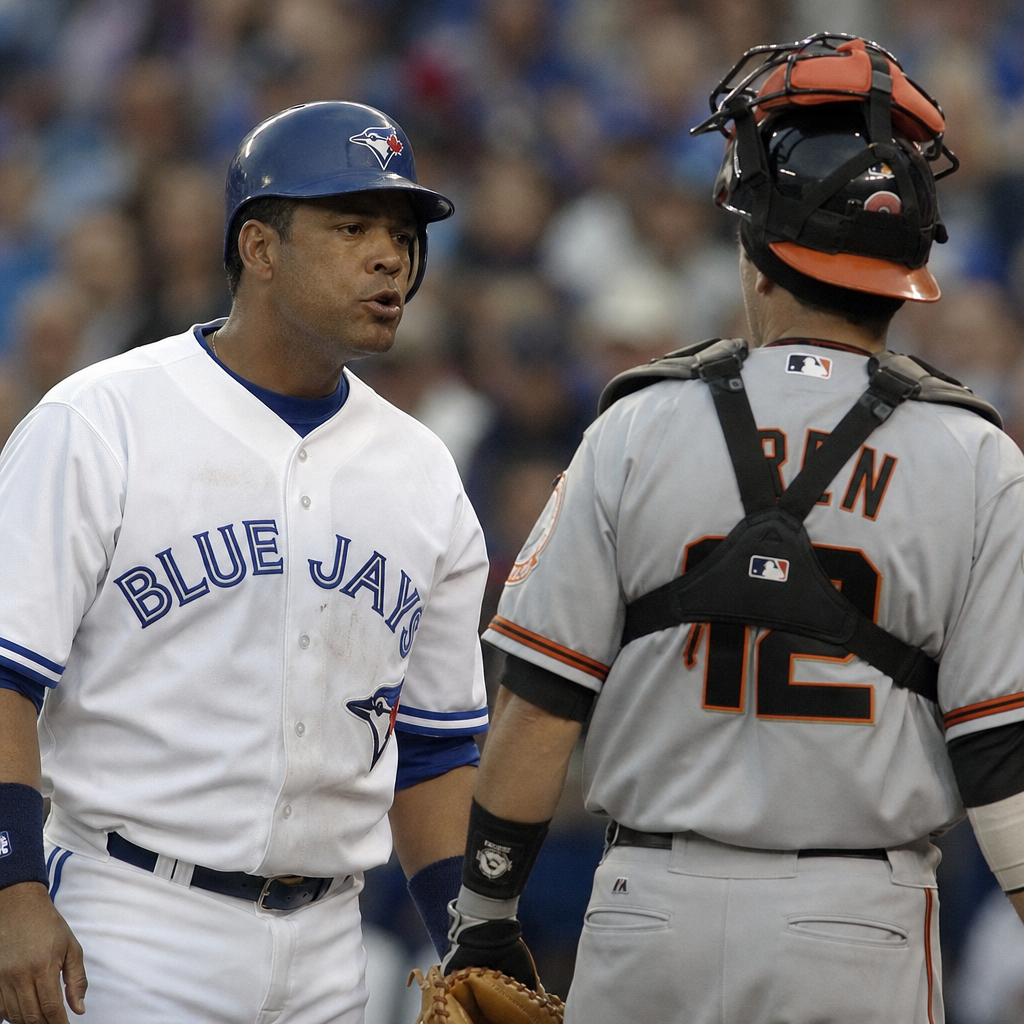
The Roberto Alomar spitting incident remains one of baseball’s most discussed ethical flashpoints because it compressed anger, authority, sportsmanship, race, reputation, and league discipline into a few unforgettable seconds. In 1996, during a heated game between the Baltimore Orioles and Toronto Blue Jays, star second baseman Roberto Alomar argued a called third strike with veteran umpire John Hirschbeck and then spit in Hirschbeck’s face. The act was immediate, visible, and impossible to explain away as gamesmanship. Even in a sport accustomed to bench-clearing arguments, that crossed a clear moral line. When people ask why the Roberto Alomar spitting incident still matters, the answer is simple: it forces baseball to confront what respect actually means when pressure is highest.
To understand the incident as more than a sensational moment, it helps to define ethics in baseball. Ethics concerns the standards that govern fair conduct, respect for opponents and officials, accountability for harm, and the duties players owe to the game itself. Rules tell participants what is allowed; ethics asks what conduct preserves legitimacy and trust. Baseball has always depended on a fragile bargain. Players may challenge calls, managers may protect their teams, and umpires may enforce order, but every participant is expected to honor basic human dignity. Spitting at an umpire is therefore not merely a violation of decorum. It is a form of humiliation, a bodily act of contempt, and a rejection of the structure that allows competition to function.
This article treats the Alomar episode as a hub for the broader “Miscellaneous” side of baseball scandals and controversies. Not every controversy fits neatly into gambling, steroids, sign stealing, labor disputes, or on-field violence. Some cases expose hidden tensions around authority, media narratives, apologies, discipline, and memory. I have worked on sports ethics analyses where the hardest task was not stating what happened, but explaining why one incident becomes a lasting reference point while dozens of others fade. The Alomar case persists because it sits at the intersection of celebrity privilege and institutional integrity. It also arrived at a moment when Major League Baseball was still repairing public trust after the 1994 strike, making questions of conduct especially sensitive.
Any serious evaluation must also acknowledge context without confusing context for excuse. Hirschbeck had reportedly recently suffered profound personal grief after losing a son to adrenoleukodystrophy, a rare genetic disease. Reports from the period also describe tensions over remarks Alomar believed Hirschbeck made about his family. That background helps explain emotion inside the confrontation, but it does not alter the central ethical fact. Baseball allows appeal, protest, and even ejection. It does not allow dehumanizing retaliation. The enduring value of revisiting the Roberto Alomar spitting incident is that it teaches how professional sports organizations should judge behavior: by examining provocation, power, consequences, and repair together rather than isolating one dramatic act from the system around it.
What happened on the field and why it became a defining controversy
The incident occurred on September 27, 1996, in Toronto. Alomar, then one of the game’s premier players, took a called third strike from Hirschbeck and immediately turned to argue. The exchange escalated. Alomar then spat at Hirschbeck, and the umpire lunged toward him as others intervened. The game itself became secondary. Television replay magnified the moment, newspapers carried it nationally, and the event entered baseball memory almost instantly. In ethical terms, this was a textbook case of symbolic injury. The target was not only Hirschbeck the individual, but also the authority of the umpiring profession, which depends on compliance even when calls are disputed.
League discipline followed. Alomar received a five-game suspension at first, though the penalty became entangled with the postseason and public criticism. Many observers thought the punishment was too light given the severity and visibility of the act. That reaction is important because discipline in sports has two functions: to penalize the wrongdoer and to communicate standards to everyone else. When a sanction appears modest compared with the offense, the institution risks signaling that talent alters accountability. In controversy management, that is often where reputational damage deepens. Fans can accept mistakes; they are less forgiving when they sense preferential treatment for stars.
The case also became defining because of Alomar’s stature. He was not a fringe player. He was an elite second baseman, a future Hall of Famer, and one of the sport’s most dynamic all-around talents. Scandals involving celebrated figures always carry extra weight because institutions have more incentive to protect them and audiences have more reason to remember them. I have seen this pattern repeatedly across sports governance: the bigger the star, the greater the pressure to frame an incident as isolated, emotional, or uncharacteristic. That may be true, but ethical review must still ask whether status affected process, punishment, and public messaging.
Why spitting carries unique ethical and cultural weight in sports
Not all unsportsmanlike conduct is judged equally, and spitting occupies a particularly severe category. In many cultures, spitting at a person signifies disgust, degradation, and domination. It is more intimate and more insulting than profanity because it uses the body as an instrument of contempt. In baseball, where arguments with umpires have long been part of the theater, participants understand an informal ladder of escalation. A player can stare, complain, slam equipment, or get ejected. Spitting jumps outside that ladder. It is why the Roberto Alomar spitting incident still feels different from countless famous ejections involving Earl Weaver, Lou Piniella, Billy Martin, or Bobby Cox.
There is also a public-health dimension that seems even clearer today than it did in 1996. Modern sports leagues are far more attentive to bodily fluids, contagion, and workplace safety. Contemporary conduct policies in many leagues explicitly punish spitting incidents harshly because they create both physical risk and degrading working conditions. Major League Baseball’s later health and safety protocols, especially those discussed during communicable disease planning, reinforced a principle that should have been obvious all along: bodily acts directed at another person can never be treated as ordinary competitive emotion.
Ethically, intent matters but does not erase impact. A defender of Alomar might argue that the act emerged from a split second of rage rather than a considered desire to cause harm. That distinction can matter in criminal law or employment arbitration, yet sports ethics evaluates foreseeable meaning. Any veteran player knows exactly how spitting at an umpire will be received by teammates, fans, league officials, and the broader public. The act communicates that the target is beneath normal standards of respect. That is why apologies after such incidents must address humiliation directly, not merely say emotions got the best of someone.
Authority, labor, and the fragile role of umpires
Umpires occupy a peculiar role in baseball. They are central to every contest, yet ideally invisible. Their authority must be decisive enough to keep the game moving, but restrained enough to avoid becoming the story. That makes them frequent targets of frustration. Players, managers, broadcasters, and fans often treat umpire criticism as part of baseball culture, and sometimes the criticism is justified. Strike-zone inconsistency, poor replay administration, and confrontational personalities can all inflame tensions. Still, no credible ethics framework can treat those frustrations as permission for abuse. Officials are workers performing a difficult, publicly scrutinized job. Respect for labor includes respect for officials.
The Alomar-Hirschbeck confrontation exposed this labor issue with unusual clarity. Umpires are not symbolic obstacles; they are human beings employed to apply the Official Baseball Rules under intense pressure. When a player spits on an umpire, the message to every official is that the workplace may tolerate degradation if the offender is famous enough. That is corrosive. It weakens morale, undermines union confidence, and forces the league office to choose between defending its officials and managing star talent. Similar tensions appear in other miscellaneous controversies, from managers making personal accusations about officiating integrity to fans hurling objects at referees. The common thread is institutional duty to protect authority figures from humiliation while also holding them to professional standards.
| Ethical question | Why it matters in baseball | Alomar incident example |
|---|---|---|
| Respect for persons | Competition requires opponents and officials to be treated as human beings, not targets | Spitting turned an argument over a strike call into personal degradation |
| Proportional discipline | Penalties shape future behavior and public trust | Debate over the suspension raised concerns about star treatment |
| Workplace safety | Leagues must protect employees from abusive conduct | An umpire was exposed to bodily fluid during a dispute |
| Repair and apology | Reconciliation requires acknowledgment of harm, not image management alone | Later apologies mattered because the humiliation was personal and public |
Media framing, public memory, and the burden of star legacy
One reason this incident became a permanent part of baseball ethics discussions is media framing. Controversies survive when they produce memorable images, sharp moral contrast, and unresolved debate. The image here required no technical explanation. A superstar spat at an umpire. That simplicity made it portable across television, radio, newspaper columns, and later internet retrospectives. Yet the surrounding story was more complex. Coverage included Hirschbeck’s personal tragedy, Alomar’s account of what provoked him, the league’s disciplinary choices, and the eventual gestures toward reconciliation. Because several narratives coexisted, the case kept returning whenever commentators discussed sportsmanship, authority, or Hall of Fame legacy.
Legacy matters because baseball is unusually archival. The sport treasures records, plaques, anniversaries, and reputational storytelling. Alomar’s career achievements were immense: 12 All-Star selections, 10 Gold Gloves, multiple Silver Sluggers, and major contributions to postseason contenders. His Hall of Fame election in 2011 showed that voters ultimately judged the spitting incident as serious but not disqualifying within the standards then applied. That decision itself raises an ethical question relevant to miscellaneous scandals: how should baseball weigh character against performance when honoring greatness? There is no single formula, but institutions should at least state what conduct they consider disqualifying, rather than improvising standards after public backlash.
Public memory later changed again as Alomar faced additional allegations unrelated to the 1996 incident, leading Major League Baseball to place him on the ineligible list in 2021 after an investigation into sexual misconduct. That later development does not rewrite the original event, but it does alter how many people interpret earlier warnings about conduct and accountability. In my experience, reputational histories are cumulative. A single controversy may look isolated until later facts reveal a broader pattern of entitlement or boundary failure. Ethical analysis should therefore remain open to revision when new, credible information emerges.
Lessons for baseball’s broader landscape of miscellaneous controversies
As a hub topic, miscellaneous baseball controversies includes incidents that resist easy categorization but reveal the sport’s values under stress. The Roberto Alomar spitting incident belongs here because it is ultimately about standards, not strategy. It offers practical lessons for teams, leagues, and fans evaluating any future scandal. First, intent and provocation should be investigated, but they cannot overshadow visible harm. Second, discipline must be timely and proportionate. Third, apologies should be concrete, naming the act and its effect. Fourth, institutions must avoid ambiguity that appears to reward stars. Fifth, remembrance matters. If baseball wants to teach sportsmanship credibly, it cannot sanitize its own history.
These lessons apply beyond umpire-player disputes. Consider clubhouse harassment cases, conflicts between players and media, fan interference episodes, reckless celebrations that injure others, or discriminatory language on the field. Each may seem unrelated, yet all test the same ethical architecture: respect, accountability, fairness, and repair. Baseball has improved some mechanisms over time. Replay review reduced certain arguments over calls. standardized conduct investigations improved fact gathering. Public relations staffs now coordinate apology language and community outreach faster than in the 1990s. But process alone is not enough. A sport earns trust when people believe standards apply consistently from rookie ball to Cooperstown.
For readers exploring the wider scandals and controversies landscape, this case is a useful anchor because it demonstrates how one moment can implicate governance, labor relations, media narratives, fan culture, and historical memory at once. That is exactly why sub-pillar hub pages matter. They connect incidents that are not identical but are ethically related. If you are mapping baseball controversies comprehensively, place the Alomar case alongside articles on ejections gone too far, officiating disputes, player misconduct investigations, Hall of Fame character debates, and league discipline precedents. The common question is never just what happened. It is what baseball chose to tolerate, punish, forgive, and remember.
The Roberto Alomar spitting incident endures because it clarified a boundary baseball cannot afford to blur. Competitive passion is part of the sport’s identity, but contempt for another person’s dignity is not. The episode showed how quickly a single act can overshadow elite performance, challenge a league’s disciplinary credibility, and shape a player’s legacy for decades. It also demonstrated that ethical judgment in baseball must consider context without surrendering standards. Provocation may explain emotion. It does not excuse degradation.
For anyone studying scandals and controversies in baseball, this incident offers a durable framework. Ask what harm occurred, who held power, whether punishment matched the offense, how repair was attempted, and what memory the sport preserved afterward. Those questions travel well across the miscellaneous category because they cut through sensationalism and focus on institutional values. Baseball is strongest when its leaders, players, and fans insist that talent never places someone above basic respect. Use this case as a starting point, then explore the connected controversies that reveal how the game defines accountability in practice.
Frequently Asked Questions
What exactly happened in the Roberto Alomar spitting incident?
In 1996, during a game between the Baltimore Orioles and the Toronto Blue Jays, Roberto Alomar became furious after a called third strike and argued with home plate umpire John Hirschbeck. In the middle of that confrontation, Alomar spit directly in Hirschbeck’s face. The moment was shocking because it crossed a line that even intense baseball arguments rarely approach. Players and umpires regularly disagree, sometimes loudly, but physical or deeply personal acts of disrespect carry a different ethical weight. This was not simply a complaint about balls and strikes; it was an act that instantly transformed a routine in-game dispute into a major moral and disciplinary controversy.
What made the incident so enduring was how quickly it forced everyone involved in baseball to confront bigger questions. The act was public, emotional, and impossible to dismiss as a misunderstanding. It happened in front of teammates, officials, fans, and cameras, which meant the league had to respond not only to protect game authority but also to defend the standards of conduct expected at the professional level. The incident remains widely remembered because it was both a personal confrontation and a symbolic test of baseball’s values.
Why is the Alomar incident considered such a major ethical issue in baseball history?
The incident is considered a major ethical flashpoint because it brought several sensitive issues together at once: anger, respect for authority, sportsmanship, personal dignity, race, reputation, and league discipline. Baseball has always allowed a certain amount of emotion, and arguments between players and umpires are part of the sport’s culture. But spitting on an umpire moved the situation beyond competitive frustration into a realm of humiliation and violation. Ethically, that matters because it challenged the basic expectation that even intense disputes must remain within boundaries of human respect.
It also exposed how sports ethics are not just about written rules. They are about what a league implicitly teaches players, fans, and young athletes regarding acceptable behavior under pressure. A star player’s actions carry outsized influence, and when a well-known figure acts in a way that is openly degrading toward an official, the sport has to decide what kind of example it is willing to tolerate. The Alomar incident still resonates because it serves as a case study in how one impulsive act can threaten trust in fairness, professionalism, and mutual respect across an entire sport.
How did Major League Baseball respond, and was the punishment seen as appropriate?
Major League Baseball responded by suspending Roberto Alomar and fining him, signaling that the league viewed the incident as a serious breach of conduct rather than a routine argument. The discipline was important because it reaffirmed the principle that umpires must be protected from abusive conduct, especially conduct that is degrading and personal. League action in cases like this is not only about punishing one player; it is about preserving order, maintaining the authority of officials, and setting a visible standard for everyone else in the game.
Whether the punishment was appropriate has been debated ever since. Some observers believed the league needed to come down hard because the act was so extreme and public. Others argued that discipline should take into account the emotional intensity of the moment, the player’s broader record, and the possibility of remorse. That tension is common in sports ethics: should punishment focus mainly on deterrence, or should it also leave room for context and rehabilitation? In Alomar’s case, the discussion has lasted because the incident involved not just rule-breaking, but a very public violation of dignity. Even people who disagree about the exact severity of the penalty tend to agree that baseball had no realistic option other than strong disciplinary action.
Did the incident involve broader issues beyond sportsmanship, including race and personal context?
Yes, and that is one reason the event remains so complicated in historical memory. In the aftermath, it became known that umpire John Hirschbeck was dealing with profound personal grief related to his son’s illness and loss, which added emotional depth to how the confrontation was understood. At the same time, discussions around the incident also touched on racial dynamics, public perception, and how quickly narratives form around conflict between authority figures and star athletes. These factors did not excuse what happened, but they did shape how people interpreted motive, emotion, and response.
From an ethical standpoint, this matters because major sports controversies rarely exist in a vacuum. Public judgment is often influenced by identity, power, prior reputation, and media framing. In the Alomar incident, many people saw not only a player and an umpire in conflict, but also a larger struggle over fairness, respect, and interpretation. That complexity is part of why the incident continues to be discussed in articles, classrooms, and debates about conduct in sports. It reminds us that while individual accountability is essential, ethical analysis becomes richer and more honest when it acknowledges the broader human and social context surrounding a highly charged event.
What lessons does the Roberto Alomar spitting incident offer about ethics in baseball today?
The clearest lesson is that competitive intensity never eliminates the obligation to respect other people’s dignity. Baseball is emotional by nature, and players are expected to care deeply, respond quickly, and perform under pressure. But ethical maturity in sports means understanding that frustration does not justify dehumanizing conduct. The Alomar incident remains powerful because it shows how a split-second decision can overshadow talent, damage relationships, and permanently alter public legacy. In that sense, it is a warning about the cost of losing emotional control in a setting where every action carries symbolic weight.
It also teaches that leagues, teams, and players all share responsibility for ethical culture. Rules matter, but so do norms, mentorship, leadership, and accountability. When baseball responds firmly to misconduct, it sends a message that excellence is not measured only by performance statistics, but also by character and restraint. For modern readers, the incident remains relevant because today’s sports environment is even more visible, immediate, and scrutinized than it was in 1996. The core principle has not changed: great players are remembered not just for how well they play, but for how they treat opponents, officials, and the game itself when emotions are at their highest.