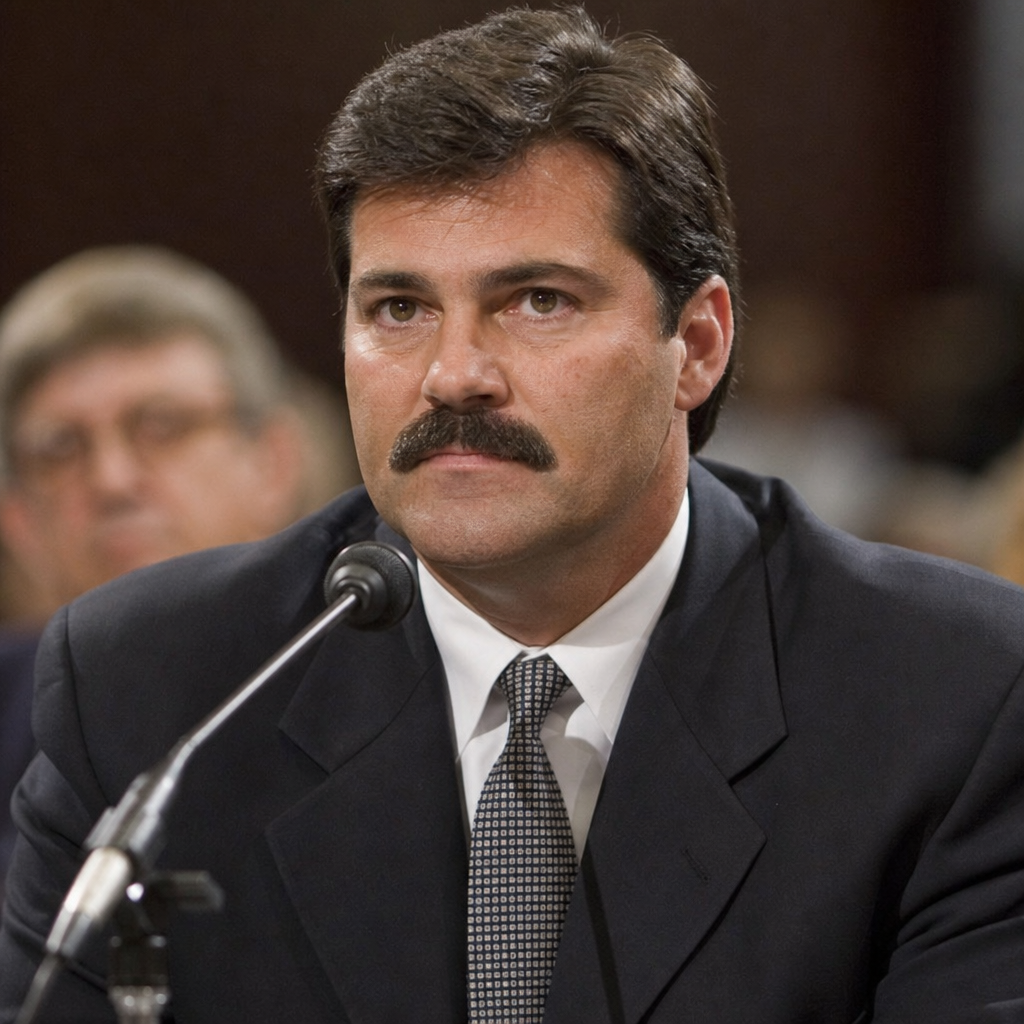
Rafael Palmeiro’s steroid testimony remains one of baseball’s clearest examples of how a Hall of Fame caliber career can be recast by a single moment of public certainty followed by damaging contradiction. In discussions of scandals and controversies, the Palmeiro case sits at the intersection of performance-enhancing drugs, congressional spectacle, media accountability, and the fragile bond between athlete and fan. The phrase “steroid testimony” refers specifically to his 2005 appearance before Congress, when he denied ever using steroids, and to the later fallout after he tested positive under Major League Baseball’s drug policy. For readers exploring miscellaneous sports controversies, this story matters because it is not only about one player’s failed test. It shows how reputation works, how institutions react under pressure, and how one event can reorder an entire legacy that once appeared secure.
Before the controversy, Palmeiro had built a résumé that looked historically significant by any conventional baseball standard. He finished his career with 3,020 hits and 569 home runs, a combination reached by only a tiny group of players. He was a four-time All-Star, won multiple Gold Gloves, and spent productive years with the Chicago Cubs, Texas Rangers, and Baltimore Orioles. I have reviewed many steroid-era cases, and Palmeiro’s is uniquely striking because the numbers alone would normally make the debate simple. A player with 500 home runs and 3,000 hits was once considered an automatic Hall of Fame selection. After the testimony and suspension, that assumption vanished. His case became a warning about how context can overpower achievement.
The broader significance of the Rafael Palmeiro steroid testimony also lies in timing. Baseball in the early 2000s was under intense scrutiny after years of growing suspicion about performance-enhancing drugs. Fans, reporters, and lawmakers wanted direct answers, and many believed the sport had failed to police itself. Congress stepped in partly because baseball had cultural importance and partly because public outrage had become impossible to ignore. Palmeiro entered that room as a respected veteran, not as an obvious villain. His denial carried weight precisely because he appeared credible, calm, and emphatic. When the later positive test emerged, the story expanded beyond one violation. It became a symbol of denial in an era when the public increasingly suspected that many stars were not being fully honest.
The congressional testimony that defined the scandal
On March 17, 2005, Rafael Palmeiro testified before the House Committee on Government Reform during hearings on steroid use in Major League Baseball. The hearing included several high-profile players, but Palmeiro’s appearance became the enduring image because of his forceful statement: “I have never used steroids. Period.” He delivered those words while pointing his finger, a visual that television replayed for months. In crisis communication terms, this was not a narrow denial or a carefully limited legal answer. It was absolute language, offered in a formal setting, before elected officials, under oath. That distinction matters because absolute claims leave no room for reinterpretation after contradictory facts appear.
The hearing itself was a product of baseball’s credibility crisis. Reports had linked elite players to substances such as anabolic steroids, human growth hormone, and designer compounds connected to investigations like BALCO. Although Palmeiro was not the central figure in every prior report, his testimony placed him directly inside the public reckoning. He framed himself as both clean and offended by the suspicion surrounding players of his era. For many viewers, that was persuasive at the time. He was a veteran near the end of a distinguished career, and he spoke with the confidence of someone expecting his record to withstand scrutiny. In scandal history, that initial confidence often becomes part of the downfall.
What made the testimony so powerful was not merely the denial but the contrast between setting and persona. Congress gave the event institutional gravity, while Palmeiro’s reputation gave the denial emotional force. Fans were not listening to an anonymous player. They were watching a likely Cooperstown candidate defend his integrity in front of the nation. That combination turned a routine controversy into a moral drama. Later, when commentators revisited the hearing after the suspension, the finger wagging became shorthand for certainty undone by evidence. Even people who did not follow baseball closely recognized the clip. Few sports controversies produce a single image so durable that it can summarize an entire collapse of trust.
The positive test and immediate fallout
In August 2005, only months after the congressional hearing, Major League Baseball announced that Palmeiro had received a ten-day suspension after testing positive for stanozolol, an anabolic steroid also associated with Ben Johnson’s infamous Olympic disqualification in 1988. The timing devastated his credibility. Had the positive result arrived years later, the public response would still have been harsh, but the proximity to his testimony made the contradiction unavoidable. This was not an abstract allegation from rumor or leaked documents. It was an official violation under baseball’s negotiated testing program. The league’s announcement transformed a disputed issue into a defining scandal almost overnight.
Palmeiro denied intentional use after the suspension and suggested that he may have been exposed through a vitamin B-12 injection administered by teammate Miguel Tejada. That explanation never fully persuaded the public, partly because it arrived after his unequivocal congressional statement and partly because contaminated supplement or injection defenses are notoriously difficult to verify after the fact. In anti-doping practice, strict liability is the governing principle in many settings: athletes are responsible for substances in their bodies regardless of intent. Major League Baseball’s public debate did not always use that exact terminology, but the common-sense interpretation was similar. Fans asked a simple question: if he never used steroids, why did an official test detect one?
The immediate baseball consequences were severe. The suspension interrupted his season with the Orioles, damaged clubhouse dynamics, and overshadowed his final months in the majors. It also effectively ended his pursuit of 600 home runs, a milestone that would once have been celebrated as a capstone. Instead, every mention of his statistics now carried an asterisk in the minds of many observers. Media coverage shifted from career appreciation to investigative retrospectives. In practical terms, Palmeiro became an example used whenever commentators discussed the costs of categorical denial. The scandal did not simply add controversy to his record; it reorganized how that record was interpreted by voters, historians, and fans.
Why the testimony mattered more than the test
Many players of the steroid era faced allegations, leaked evidence, or confirmed violations, yet Palmeiro’s case remains distinct because the testimony amplified the later test. A positive result alone damages a player, but public denial under oath changes the moral dimension of the story. People can debate rehabilitation after a rules violation. They are less forgiving when they believe they were directly misled. In my experience analyzing sports scandals, audiences usually separate misconduct into two categories: the act itself and the cover story. The cover story often causes longer reputational harm because it speaks to character, not just competitive advantage.
That helps explain why Palmeiro’s Hall of Fame support collapsed. Voters were not evaluating only 569 home runs, 3,020 hits, and years of production. They were judging whether the player had been honest about the central controversy of his era. The Baseball Writers’ Association of America has never applied a perfectly consistent standard in steroid-era voting, but honesty, contrition, and certainty have all influenced outcomes. Palmeiro debuted on the Hall of Fame ballot in 2011 and received only 11 percent of the vote, far below the 75 percent needed for induction. He later fell off the ballot entirely. For a player with his raw accomplishments, that result would have been almost unthinkable before 2005.
The lesson extends beyond baseball. In any public controversy, a definitive statement raises the stakes. If later facts disprove it, the original denial becomes evidence in its own right, replayed endlessly as proof of deception. That is why the Rafael Palmeiro steroid testimony remains more memorable than many other positive tests. Fans do not just remember a suspension. They remember the certainty, the finger point, and the reversal. The event became a case study in how narrative works: one vivid scene can define public memory more strongly than a statistical record built over twenty years.
Career legacy before and after the scandal
To understand the scale of Palmeiro’s fall, it helps to compare how his career looked before and after August 2005.
| Legacy factor | Before suspension | After suspension |
|---|---|---|
| Hall of Fame outlook | Strong candidate based on 500-plus home runs and 3,000 hits | Support collapsed; never came close to election |
| Public image | Consistent star, durable run producer, respected veteran | Symbol of steroid-era denial and damaged credibility |
| Media framing | Career totals, longevity, offensive production | Congressional testimony, failed test, disputed explanation |
| Historical placement | Elite first baseman in milestone company | Example of how scandal can overwhelm achievement |
Before the scandal, Palmeiro’s profile was built on durability and accumulation, but not in a dismissive sense. Longevity at that level is a baseball skill. He recorded at least 38 home runs in nine consecutive seasons from 1995 through 2003, a remarkable stretch of sustained power. He also drove in more than 100 runs in multiple seasons and was one of the game’s most reliable middle-of-the-order hitters. When I look back at coverage from the late 1990s and early 2000s, he was rarely framed as a flashy celebrity. He was viewed more as a dependable producer whose excellence was easy to take for granted.
After the suspension, that dependable image dissolved. The scandal encouraged a re-reading of his statistics through the lens of suspicion, and baseball fans became far more willing to treat once-automatic milestones as conditional. This shift was not unique to Palmeiro, but his case accelerated it because the testimony created such a clean before-and-after contrast. A player who had appeared steady, almost understated, became associated with one of the era’s loudest credibility failures. That is why his story belongs in a miscellaneous scandals hub. It touches ethics, public institutions, media narratives, anti-doping policy, and the instability of sports memory all at once.
What the Palmeiro case reveals about baseball’s steroid era
The Palmeiro controversy reveals three important truths about baseball’s steroid era. First, testing programs matter, but timing and transparency matter just as much. Major League Baseball’s early drug policies were widely criticized as reactive and uneven, which allowed suspicion to grow faster than trust. Second, milestone statistics lost their automatic authority once fans believed chemical enhancement might be widespread. Third, legacy debates are never only about evidence; they are also about narrative, remorse, and whether the public feels manipulated. Palmeiro’s case included all three factors, which is why it remains such a durable reference point.
It also demonstrates how hard it is to separate individual responsibility from structural failure. MLB, the players union, team officials, media outlets, and fans all operated in an environment where home run totals soared and scrutiny lagged. That does not excuse a positive test or misleading testimony, but it does explain why the scandal resonated beyond one person. Palmeiro became a vessel for anger about a broader era. Similar patterns appear in other controversy categories, from sign-stealing to recruiting violations: one figure often absorbs public frustration with a whole system. Understanding that dynamic helps readers place this episode within the larger landscape of sports scandals and controversies.
Another lasting lesson is that redemption requires more than denial or ambiguity. Some athletes recover part of their reputation by offering clear explanations, accepting consequences, and engaging openly with criticism. Palmeiro never found a version of that path that changed the consensus. His insistence that he did not knowingly take steroids may still have supporters, but it failed to overcome the combination of official testing and his earlier categorical statement. For researchers, fans, and students of sports culture, that makes the case especially valuable. It is not just a steroid story. It is a credibility story, a governance story, and a reminder that in modern sports, public testimony can become as important as on-field performance.
The Rafael Palmeiro steroid testimony endures because it captures the exact point where achievement, denial, and evidence collided in public view. His career numbers remain extraordinary, and any honest account should acknowledge that he was one of the most productive hitters of his generation. Yet the positive test after his congressional denial changed the way those achievements are discussed, archived, and remembered. In scandal analysis, this is the central takeaway: legacy is never secured by statistics alone. It depends on trust, and trust can disappear faster than a record book changes.
As a hub topic within miscellaneous scandals and controversies, Palmeiro’s story connects to larger themes that appear across sports and public life. Institutions act when self-policing fails. Media images can define a narrative for decades. Absolute denials carry exceptional risk. And once credibility breaks, later explanations face a much higher burden of proof. Those themes make this case useful not only for baseball fans but for anyone studying reputation, accountability, and crisis management. The scandal still matters because it explains how public memory is formed: one contradiction, clearly documented, can outweigh years of excellence.
If you are building a deeper understanding of sports controversies, use the Palmeiro case as a starting point for comparing other steroid-era disputes, governance failures, and reputation collapses. It offers a concise framework for judging how facts, institutions, and storytelling interact. Read related controversy profiles with the same question in mind: what changed public trust, and why? That approach will help you move beyond headlines and understand how fallen stars are made.
Frequently Asked Questions
What does “Rafael Palmeiro steroid testimony” specifically refer to?
The phrase refers to Rafael Palmeiro’s highly publicized appearance before a U.S. congressional hearing in 2005, when Major League Baseball’s steroid era was under intense national scrutiny. During that testimony, Palmeiro delivered one of the most memorable denials in sports history, forcefully telling lawmakers that he had never used steroids, period. The moment resonated because it was not a vague or carefully hedged statement. It was direct, emphatic, and delivered in a formal setting designed to project seriousness, honesty, and accountability. That made the testimony much more than a routine public relations response. It became a defining public claim tied to his personal credibility.
What gives the testimony lasting significance is what happened afterward. Months later, Palmeiro was suspended after testing positive for a banned substance, creating an immediate and dramatic contradiction between his words and the official result. Whether people focus on the test itself, the fairness of the process, or Palmeiro’s explanations, the central issue remains the same: a public declaration of innocence made under the brightest possible spotlight was followed by evidence that many fans, journalists, and historians saw as devastating. That sequence is why the phrase “Palmeiro steroid testimony” still carries so much weight in conversations about baseball, trust, and scandal.
Why did Rafael Palmeiro’s testimony become such a major turning point in his legacy?
Palmeiro already had the statistical profile of an all-time great hitter, with milestone totals that would normally place a player in overwhelmingly positive historical company. He was known for durability, consistency, and elite production over a long career. On paper, his resume looked like the kind that should lead to uncomplicated Hall of Fame admiration. But legacy in sports is not built only on numbers. It also depends on narrative, timing, public memory, and whether fans believe the player represented the game honorably. Palmeiro’s testimony altered that narrative in a dramatic way because it shifted attention from achievement to credibility.
The reason it became such a turning point is that the contradiction felt personal to the public. Many sports controversies involve rumors, leaked reports, or murky allegations. Palmeiro’s case felt clearer because people remembered the testimony itself. The image of him insisting he had never used steroids became inseparable from the later suspension. As a result, his career was no longer discussed simply as a Hall of Fame caliber body of work. It became a cautionary example of how one moment of absolute certainty, followed by damaging contradiction, can redefine everything that came before it. In the public imagination, the suspension did not just raise questions about performance-enhancing drugs; it called into question the truthfulness of one of baseball’s most famous denials.
How did the positive test affect public trust in Rafael Palmeiro and in baseball more broadly?
For Palmeiro personally, the positive test severely damaged trust because it struck at the heart of his public credibility. Fans can sometimes forgive mistakes, especially when an athlete is candid or remorseful. What is harder to overcome is the perception that the public was misled in a deliberate and high-profile way. Palmeiro’s testimony was so emphatic that the later suspension created an impression, fair or unfair, that he had not simply been caught in a scandal but had publicly vouched for something that many people no longer believed. That made the fallout deeper than a typical rules violation. It became a credibility crisis.
For baseball, the case reinforced the idea that the steroid era was not just a story about chemistry or competitive advantage. It was also a story about institutional trust. Fans were already questioning whether the sport had looked the other way for too long, whether media coverage had been too soft in the years when home run totals were soaring, and whether officials were acting only after public pressure became impossible to ignore. Palmeiro’s case intensified those concerns because it played out in a way that seemed to confirm the worst fears of skeptics: denials could be forceful, official, and memorable, yet still collapse under scrutiny. In that sense, the controversy became a symbol of how fragile the relationship between athlete, league, media, and fan can be once confidence is broken.
Did Rafael Palmeiro’s explanations after the suspension change how people viewed the case?
Palmeiro did offer explanations after the positive test, including suggestions that he may have unknowingly taken a banned substance. Those explanations matter because they show the case was not universally interpreted in exactly the same way. Supporters have sometimes argued that the story is more complicated than a simple confession-versus-exposure framework and that uncertainty about intent should leave room for nuance. In any sports controversy involving drug testing, questions can emerge about chain of custody, contamination, supplement use, and the difference between knowingly cheating and negligently consuming something prohibited.
Even so, those explanations did little to fully restore his standing with the broader public. The main reason is that public memory tends to crystallize around the strongest, simplest contrast: a categorical denial followed by a suspension. Once that image took hold, nuance struggled to compete with the power of the narrative. For many observers, the issue was no longer just whether every detail had been resolved to everyone’s satisfaction. It was that the suspension made his earlier testimony look fundamentally unreliable. In scandals of this magnitude, explanations often arrive too late and carry less emotional force than the original public claim. That is why, despite debate over details, the dominant historical interpretation of the Palmeiro case remained deeply damaging.
How has the Palmeiro steroid testimony influenced discussions about the Hall of Fame, media coverage, and athlete accountability?
Palmeiro’s case has become central to Hall of Fame debates because it illustrates how voters weigh character, integrity, and public trust alongside statistics. His numbers alone place him in rare company, which makes his exclusion or diminished support especially revealing. The case shows that for many voters, the steroid era is not judged only by production on the field but by how players handled scrutiny, denial, and accountability. In Palmeiro’s situation, the testimony itself became part of the evaluation. Voters were not simply reacting to a failed test; they were reacting to a failed test after one of the most famous denials in baseball history. That distinction matters because it helps explain why his candidacy became so much more complicated than a spreadsheet of elite totals would suggest.
The case also influenced media discussions in lasting ways. It prompted renewed criticism of how aggressively reporters had covered performance-enhancing drug suspicions before the congressional spectacle made the issue unavoidable. More broadly, it became a reference point for how media narratives can elevate a player’s words into a defining public record and then revisit those words when new facts emerge. Finally, in terms of athlete accountability, Palmeiro’s testimony remains a powerful reminder that public certainty can be risky when later evidence may undercut it. In modern sports culture, where statements are instantly archived and endlessly replayed, his case stands as a lasting example of how quickly reputation can shift from respect to suspicion, and how difficult it is to rebuild trust once a contradiction becomes part of history.