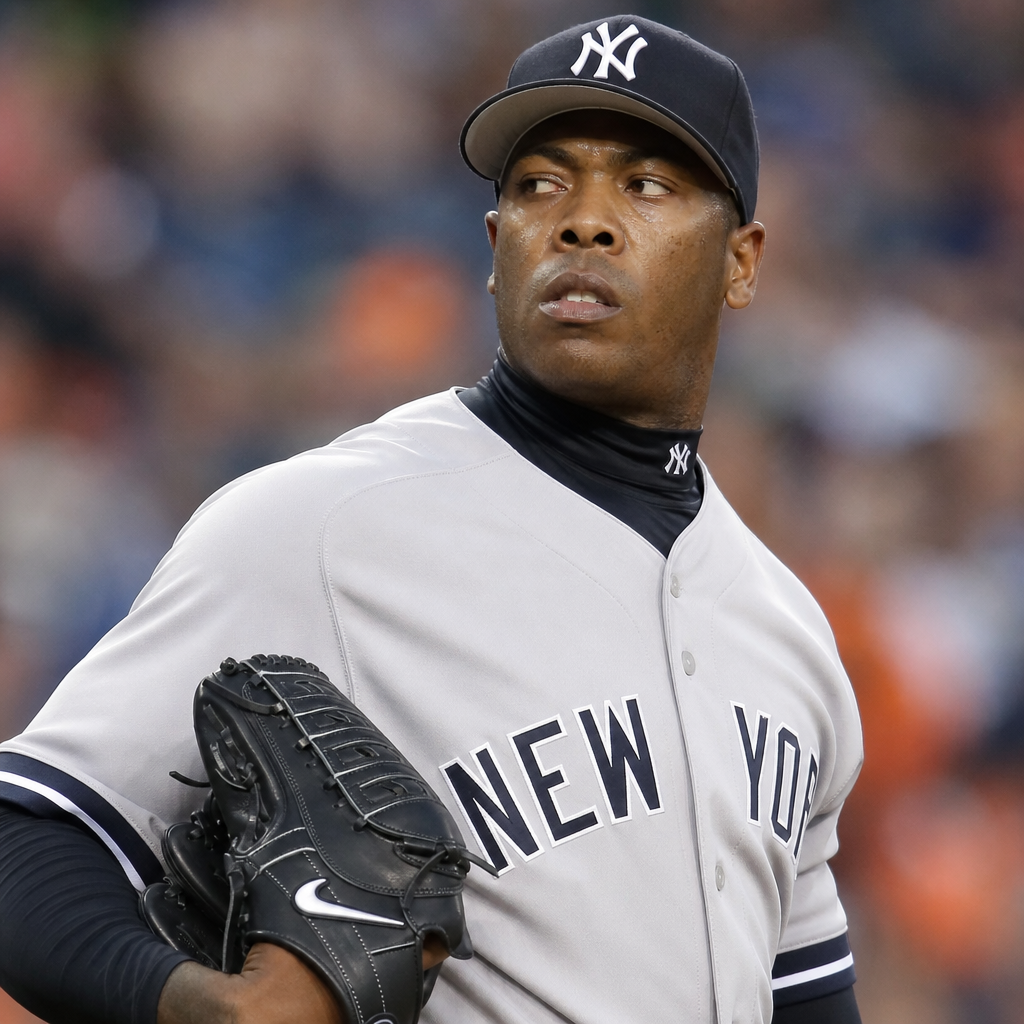
The Aroldis Chapman suspension forced Major League Baseball to confront domestic violence in a way the sport had long avoided. In 2016, Chapman became the first player disciplined under MLB’s Joint Domestic Violence, Sexual Assault and Child Abuse Policy, receiving a 30-game suspension without pay after an incident involving his girlfriend in Florida and allegations that he discharged a firearm in his garage. The case mattered beyond one closer and one penalty. It established how the league would investigate off-field abuse, how clubs would weigh talent against risk, and how fans, sponsors, and journalists would judge baseball’s moral credibility. For a sport that often protects tradition, this was a modern accountability test.
Domestic violence, in this context, refers to a pattern or act of abuse involving an intimate partner or family member. In professional sports, the issue is complicated by celebrity status, uneven criminal outcomes, collective bargaining rules, and the difference between legal guilt and league discipline. MLB’s policy does not require a criminal conviction to impose a suspension. That distinction is essential. Prosecutors may decline charges because witnesses will not cooperate or because the burden of proof is high, yet a league can still find that conduct violated its standards after an independent investigation. I have worked through enough crisis cases in sports communications to know that this gap between courtroom results and workplace discipline is where public confusion usually begins.
Chapman’s suspension also sits inside a broader “Miscellaneous” branch of baseball scandals and controversies, where some incidents do not fit neatly into categories like gambling, performance-enhancing drugs, or sign stealing. Domestic violence cases often overlap with firearm incidents, alcohol use, police response, public relations failures, and labor questions. That makes this topic a hub by nature. Readers looking into Chapman usually end up asking related questions: What exactly happened? Why was he suspended if no charges were filed? How does MLB’s policy work? Were other players punished similarly? Did teams continue to reward accused players? This article answers those questions directly and uses Chapman as the anchor for understanding how domestic violence cases operate across MLB.
The subject matters because league policy shapes behavior, but enforcement shapes trust. If a sport creates a domestic violence policy and then applies it inconsistently, the policy becomes branding rather than protection. If teams treat suspensions as temporary inconveniences and continue acquiring elite players with minimal consequences, the market sends another message entirely. Chapman’s career after the suspension, including a trade to the Chicago Cubs and a major free-agent contract with the New York Yankees, exposed that tension. The league could punish misconduct, yet the industry could still value fastballs over accountability. Understanding the Chapman suspension therefore means understanding both the policy and the business incentives around it.
What happened in the Aroldis Chapman case
On October 30, 2015, police in Davie, Florida, responded to a disturbance at Chapman’s home. According to investigative records and later reporting, the incident involved Chapman, his girlfriend, and other people at the house. Authorities examined allegations that Chapman had choked his girlfriend and found evidence that he fired eight gunshots in his garage. Prosecutors ultimately declined to file criminal charges, citing insufficient evidence, including conflicting accounts and a lack of cooperation. That prosecutorial decision did not end the matter for MLB. The league conducted its own investigation under the domestic violence policy negotiated with the Players Association in August 2015.
In March 2016, Commissioner Rob Manfred suspended Chapman for 30 games without pay. Chapman denied harming his girlfriend but accepted the suspension and did not appeal. That detail is important because the absence of an appeal avoided a public evidentiary fight and let MLB establish an early enforcement precedent. Manfred stated that Chapman’s use of a firearm and the circumstances of the incident justified discipline, even without criminal charges. From a policy standpoint, the league was not judging only a discrete allegation of assault; it was assessing dangerous conduct within a domestic setting. For clubs and agents, that was a signal that MLB would interpret the policy broadly enough to cover behavior that threatened safety even when criminal law did not produce a conviction.
The baseball consequences were immediate. Chapman had been traded from the Cincinnati Reds to the Los Angeles Dodgers in a proposed deal before the allegations surfaced, and the Dodgers backed away after reviewing the situation. He was then traded to the Yankees, who accepted the competitive upside and the suspension risk. That sequence remains one of the clearest examples of how front offices price controversy. One organization decided the uncertainty was too costly; another saw a discounted elite reliever. In practical terms, domestic violence cases in MLB do not remain moral debates for long. They become transaction questions, contract questions, clubhouse questions, and brand questions.
How MLB’s domestic violence policy works
MLB’s Joint Domestic Violence, Sexual Assault and Child Abuse Policy took effect in 2015 after years of pressure on professional leagues to create formal standards. The policy applies to players, managers, and certain employees, and it allows the commissioner to place an individual on administrative leave during an investigation in some circumstances. Most importantly, discipline can be imposed regardless of whether the accused is arrested or convicted. The standard is not the criminal burden of proof beyond a reasonable doubt. It is a workplace and league-governance standard, informed by investigators, interviews, law enforcement material, medical evidence when available, and other corroboration.
The policy also includes treatment, evaluation, and education components. Those sections get less attention than suspensions, but they matter. A serious domestic violence framework cannot rely only on punishment after headlines erupt. It needs ongoing intervention, confidential reporting pathways, and collaboration with experts in trauma and abuse prevention. MLB partnered with outside specialists, including the Futures Without Violence organization, to shape education and response. In my experience, these partnerships are the difference between a policy written for press releases and a policy designed for use. Investigators and league officials need guidance on victim safety, coercive control, delayed reporting, recantation, and the many reasons a survivor’s account may evolve over time.
| Player | Year of MLB discipline | Suspension length | Key context |
|---|---|---|---|
| Aroldis Chapman | 2016 | 30 games | First player suspended under the policy; no criminal charges filed |
| Jose Reyes | 2016 | 51 games | Pled no contest to a reduced charge after an incident in Hawaii |
| Hector Olivera | 2016 | 82 games | Arrested after an alleged hotel incident in Washington, D.C. |
| Roberto Osuna | 2018 | 75 games | Administrative leave preceded suspension after assault charge in Canada |
| Sam Dyson | 2021 | 162 games | Longest MLB domestic violence suspension at the time |
The table shows that Chapman’s 30 games were only the starting point. As the policy matured, MLB imposed longer penalties in other cases, suggesting the league grew more comfortable asserting disciplinary power. Still, suspension length has never followed a simple formula. Facts differ, evidence differs, prior conduct differs, and negotiated outcomes differ. Critics argue inconsistency weakens deterrence. Defenders say a case-by-case process is necessary because abuse rarely presents identical fact patterns. Both points are true. The challenge for MLB is to explain enough reasoning to preserve legitimacy while protecting privacy and legal interests.
Why the Chapman suspension became a landmark precedent
Chapman’s case became a landmark because it was the first practical test of a new rule in a high-profile setting involving an elite player. He was not a fringe roster piece. He was one of the game’s most dominant closers, famous for triple-digit velocity and central to pennant-race planning. When a league disciplines a superstar, it communicates whether the policy has real force. Had MLB declined to act because prosecutors did not file charges, the domestic violence policy would have started as symbolic language. By suspending Chapman, Manfred established that the commissioner’s office would independently assess conduct and accept backlash from teams, fans, and the union.
The precedent also reshaped front-office due diligence. Teams had to build more robust background investigations, not only checking legal records but also gathering local reporting, interviewing knowledgeable sources, and assessing how sponsors and fan bases might react. I have seen clubs in other controversies treat reputation review as a final communications step. Domestic violence cases do not allow that shortcut. Baseball operations, legal, human resources, security, and public relations all need to be involved early, because the cost of getting it wrong is not merely bad coverage. It can include employee safety concerns, sponsor discomfort, and long-term damage to a club’s stated values.
Another reason the case remains central is the contradiction it exposed. Chapman served his suspension, was traded to the Cubs, helped them win the 2016 World Series, then returned to the Yankees on a five-year contract worth $86 million. That arc demonstrated that punishment and reward can coexist seamlessly in professional sports. For advocates, this was proof that league discipline alone cannot solve the underlying problem. For labor-minded observers, it was evidence that once a player serves a collectively bargained penalty, teams remain free to evaluate his future on performance. The discomfort lies precisely there: accountability in MLB has often been procedural, while consequences in the marketplace remain limited for exceptional talent.
Broader MLB domestic violence cases and recurring patterns
Chapman’s suspension makes more sense when viewed alongside other MLB cases. Jose Reyes received a 51-game suspension after an incident in Hawaii involving his wife. Hector Olivera was suspended 82 games after an alleged assault in a hotel. Roberto Osuna was placed on administrative leave and then suspended 75 games after being charged in Toronto; he was later traded while the case remained unresolved. Sam Dyson received a 162-game suspension after MLB investigated allegations from a former partner. The names and details differ, but several patterns repeat: legal outcomes vary widely, league investigations move on their own timeline, and clubs continue making baseball decisions during incomplete public information.
Another recurring pattern is language management. Teams often describe acquisitions or retention decisions with phrases like “due diligence,” “second chance,” and “we are comfortable with the information we gathered.” Those words sound measured, but they rarely answer the central public question: what conduct is a team willing to tolerate in exchange for wins? When organizations fail to speak plainly, fans assume the answer is “quite a lot.” That skepticism is earned. In case after case across sports, public statements emphasize process while avoiding moral clarity. The better practice is specific acknowledgment of harm, explanation of safeguards, and concrete support for prevention programs rather than vague references to learning and growth.
Media coverage has improved, but it still struggles with framing. Early reports in sports often centered roster impact before victim impact. Headlines asked who would close games, not how abuse allegations fit into baseball culture. That has changed somewhat as reporters with investigative experience and trauma-informed methods have shaped the beat. Even so, euphemisms remain common. Calling a domestic violence case a “distraction” minimizes the issue. It is not a distraction from baseball. It is a workplace, safety, and governance matter that baseball must confront directly.
What teams, fans, and the league should learn
The clearest lesson from the Aroldis Chapman suspension is that policy only matters when enforcement is credible, transparent enough to be understood, and paired with prevention. MLB deserves credit for creating a structure that does not depend on criminal convictions, because domestic violence cases often fail to produce courtroom outcomes for reasons unrelated to whether abuse occurred. But discipline after the fact is the minimum standard. Teams need mandatory education that treats abuse as more than anger control, stronger reporting channels for partners and family members, and hiring practices that align security, legal, and baseball operations. They should also be honest that talent has historically distorted judgment. You cannot correct a problem while pretending incentives are neutral.
For fans, the benefit of understanding this case is clarity. Chapman’s suspension was not just a historical first. It was a case study in how modern MLB handles misconduct that sits outside the foul lines yet directly affects the sport’s legitimacy. It showed why no-charge outcomes do not end league scrutiny, why clubs make conflicting choices under similar facts, and why suspension length alone does not measure accountability. If you are exploring baseball scandals and controversies, this hub topic matters because it connects law, labor, ethics, media, and team-building in one difficult subject. Keep reading across the broader subtopic, compare cases, and judge organizations by what they do, not only by what they say.
Frequently Asked Questions
What was the Aroldis Chapman suspension, and why was it such a significant moment for Major League Baseball?
The Aroldis Chapman suspension refers to the 30-game unpaid suspension issued by Major League Baseball in 2016 after an investigation into an incident involving Chapman and his girlfriend in Florida, along with allegations that he fired a handgun multiple times in his garage. The punishment was historically important because Chapman became the first player disciplined under MLB’s Joint Domestic Violence, Sexual Assault and Child Abuse Policy. That made the case much larger than one star closer or one offseason controversy. It marked the first real test of whether the league’s newly created policy had meaningful consequences.
The significance of the case was also cultural. For years, professional sports leagues, including MLB, were criticized for not responding clearly or consistently to allegations of domestic violence. Chapman’s suspension forced baseball to move from vague public statements to actual enforcement. It showed that the league was willing to act even in a case without a criminal conviction, relying instead on its own investigation and the standards laid out in the collectively bargained policy. In that sense, the suspension helped define MLB’s authority, its disciplinary process, and the expectations placed on players off the field.
Why did MLB suspend Chapman if he was not criminally convicted?
One of the most important things to understand about the Chapman case is that MLB’s disciplinary system is separate from the criminal justice system. A criminal case requires proof beyond a reasonable doubt and depends on prosecutors deciding to file charges. A league investigation, by contrast, is about whether a player violated the standards of conduct established by MLB and the players’ union in their domestic violence policy. That policy gives the commissioner the power to investigate allegations and issue discipline even when no criminal conviction occurs.
In Chapman’s situation, prosecutors did not pursue criminal charges, but MLB still reviewed the incident and concluded that discipline was warranted. This distinction mattered because it established that the league would not treat the absence of charges as the end of the matter. MLB was signaling that player conduct could still trigger punishment when it raised serious concerns about violence, intimidation, or safety. For many observers, that was a major shift. It meant baseball was trying to create a workplace and public standard that did not depend entirely on the criminal courts, which often do not produce convictions in domestic violence-related cases for a variety of legal and evidentiary reasons.
What did the Chapman case reveal about MLB’s domestic violence policy?
The Chapman suspension revealed that MLB’s Joint Domestic Violence, Sexual Assault and Child Abuse Policy was designed to give the league broad investigative and disciplinary power. Before this policy existed, baseball lacked a clearly defined structure for responding to these kinds of allegations. The Chapman case demonstrated that the commissioner’s office could conduct its own inquiry, gather information independently, and impose a suspension without waiting for a courtroom outcome. It also showed that there was no automatic formula for punishment; the league would evaluate the facts of each case individually.
Just as importantly, the case highlighted that the policy was intended to be more than symbolic. Policies often receive attention when they are announced, but their true meaning becomes clear only when they are enforced. Chapman’s 30-game suspension became the first benchmark, setting a reference point for later cases involving other players. It also sparked debate about consistency, transparency, and proportionality. Critics and supporters alike began asking how MLB would compare future incidents, whether similar conduct would lead to similar penalties, and how much explanation the league owed the public. In that way, the Chapman case did not settle the issue of domestic violence in baseball; it opened a new era of scrutiny around how the league would handle it going forward.
How did the suspension affect Aroldis Chapman’s career and public image?
Professionally, Chapman remained an elite relief pitcher, but the suspension immediately reshaped the conversation around him. Instead of being viewed only as a dominant closer with a triple-digit fastball, he became associated with one of the most serious disciplinary cases in recent MLB history. The timing mattered as well. The incident and suspension affected trade discussions and public perception during a critical period of his career. Teams still valued his talent, but any move involving Chapman now carried reputational questions alongside baseball considerations.
Public image is often more complicated than statistics, and that was certainly true here. Some fans focused on his return to the field and his performance, while others saw the case as a lasting reminder of the seriousness of domestic violence allegations in sports. The suspension did not end his career, but it did permanently change the context in which people discussed it. For many, Chapman’s name became tied not just to saves and velocity, but also to the broader issue of accountability for athletes accused of violent off-field behavior. That dual legacy is a big reason the case is still discussed years later.
Why does the Aroldis Chapman suspension still matter in discussions about domestic violence in MLB?
The Chapman suspension still matters because it was a turning point in how baseball publicly and institutionally dealt with domestic violence. First cases under new policies often become the standard by which everything else is measured, and that is exactly what happened here. Journalists, fans, advocates, and league officials have continued to reference Chapman’s 30-game suspension when discussing later disciplinary decisions. It became the first major example of how MLB would balance its investigative authority, its public image, the rights of players, and the seriousness of abuse-related allegations.
It also matters because the issues raised by the case are far from resolved. Questions about consistency in discipline, the transparency of league investigations, support for victims, and the limits of commissioner power remain central to conversations about domestic violence in professional sports. Chapman’s case showed that MLB could no longer avoid the subject or treat it as a private matter outside the boundaries of the game. Whether people believe the penalty was too harsh, too lenient, or appropriately measured, the suspension undeniably changed the league’s approach. It remains a key reference point for understanding how MLB began confronting domestic violence in a more formal, visible, and accountable way.