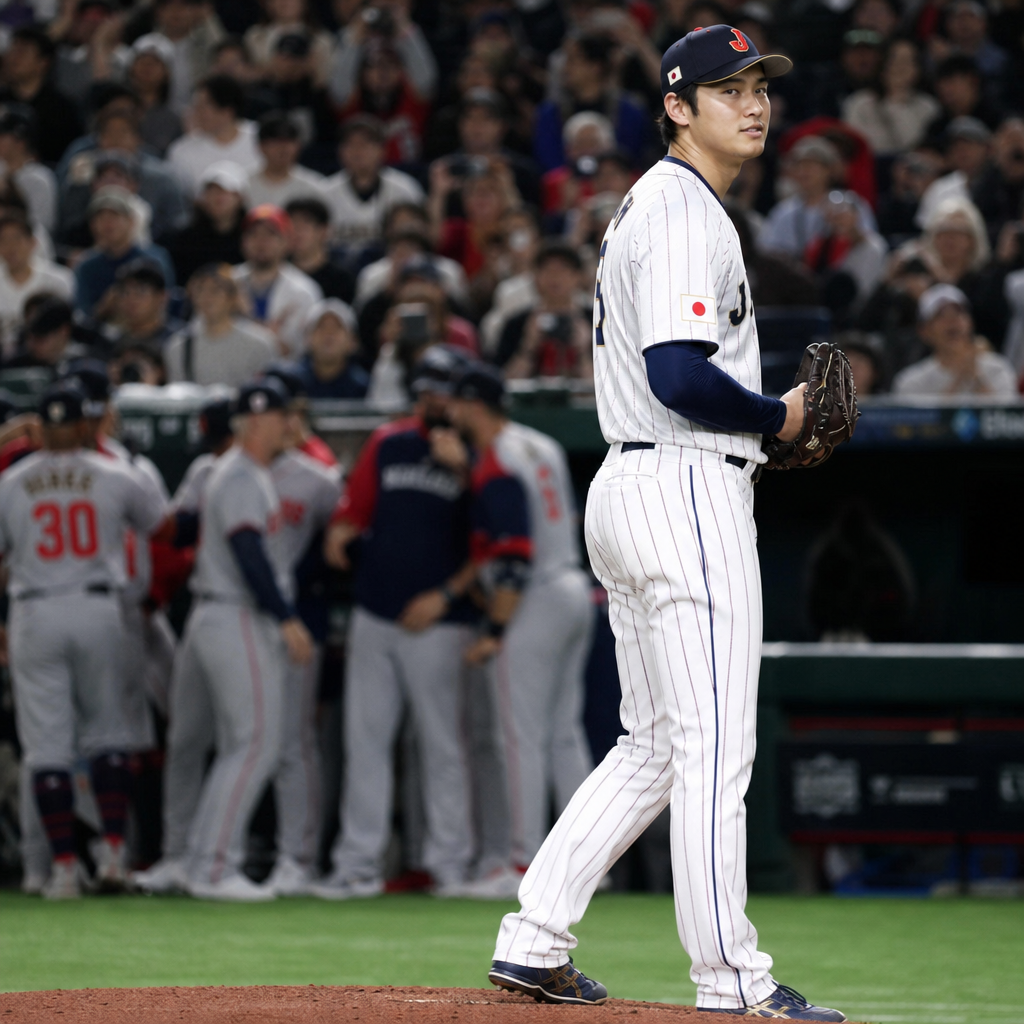
The MLB’s Japanese player posting system controversy sits at the intersection of labor rules, international baseball economics, club strategy, and player freedom. For fans, it can look like a technical transfer mechanism; for teams and players, it is a gatekeeping structure that determines who may negotiate, when, and at what cost. In plain terms, the posting system is the agreement that governs how players under contract in Nippon Professional Baseball, Japan’s top professional league, can move to Major League Baseball before they qualify for unrestricted international free agency. It matters because Japanese stars have become central figures in the global game, and every posting case raises the same basic questions: who owns the value created by elite talent, how much leverage should a club have over an individual player’s career, and whether the current system fairly balances compensation with opportunity.
I have worked through posting rules, release windows, and transfer fee calculations in practical baseball analysis, and the controversy is not abstract. A posting decision can reshape a franchise in Japan, alter an MLB offseason, and define a player’s earning power for years. The system has changed several times because earlier versions produced obvious distortions. Most famously, the sealed-bid format used for years rewarded the Japanese club with a transfer payment disconnected from the player’s actual contract value, while limiting the player to negotiating with only one MLB team. Critics argued that this constrained the market for talent. Supporters answered that Japanese clubs develop players, absorb risk, and deserve compensation when a star leaves before reaching domestic free agency. Both claims contain truth, which is why the dispute persists.
Understanding the controversy also requires defining a few key terms. Posting is not the same as normal MLB free agency. An MLB free agent can negotiate openly with all clubs once contract restrictions expire. A posted NPB player, by contrast, enters the MLB market only after his Japanese club chooses to make him available under the current agreement between MLB and NPB. International amateur signing rules do not apply because posted players are professionals. Service time also matters. Players who come over at age 25 or older and with six or more seasons in a recognized foreign professional league are generally exempt from MLB international bonus pool restrictions; younger players can be treated much more like capped international signees, which dramatically lowers initial earnings. That age-and-service threshold has shaped several controversial cases.
As a hub within baseball scandals and controversies, this topic belongs under miscellaneous because it overlaps labor rights, antitrust-style market concerns, posting fee disputes, hidden incentives in roster management, and uneven power between leagues. It is not a cheating scandal, but it is undeniably a governance controversy. To evaluate it properly, you need the history, the mechanics, the flashpoints, and the reforms. You also need to see why each side believes it is acting rationally. Japanese clubs are not villains for wanting compensation, MLB teams are not irrational for seeking cost certainty, and players are not greedy for wanting access to a true market. The controversy survives because all three positions are economically coherent while remaining morally and competitively in tension.
How the posting system works and why it exists
The posting system exists because NPB and MLB needed a formal bridge between separate leagues with separate contracts. Without one, MLB clubs could attempt to lure players under contract in Japan, and NPB clubs would lose stars without compensation. Under the current framework, an NPB team voluntarily posts a player. Once posted, the player has a defined negotiating window with all 30 MLB clubs. If he signs, the MLB club pays a release fee to the Japanese club based on the contract’s value. If he does not sign, he returns to his NPB team.
The rationale is straightforward. NPB clubs invest in scouting, coaching, medical care, and player development. Many stars reach MLB-caliber performance while still under team control in Japan. A transfer fee recognizes that investment. In principle, that is common across global sports. The controversy begins with the degree of control. Because the Japanese club chooses whether to post a player, it can delay access to MLB even when a player has already proved he belongs in the majors. That tension has defined the public debate around stars such as Hideo Nomo, Daisuke Matsuzaka, Masahiro Tanaka, Shohei Ohtani, Yoshinobu Yamamoto, and Roki Sasaki.
The system also exists because MLB and NPB are not fully equal bargaining partners. MLB generates far more revenue overall, while NPB offers a high-level domestic market with strong fan loyalty and long-standing club rights. The posting mechanism is therefore a political compromise as much as an economic one. It allows talent flow without declaring open season on contracts in Japan. In practice, however, every compromise creates edge cases, and those edge cases have produced the most criticism.
The old sealed-bid era and why it drew so much criticism
The earlier version of the system, introduced in 1998, used a blind bidding process. MLB teams submitted sealed bids for the exclusive right to negotiate with a posted player. The highest bidder won that right, and if the player signed, the Japanese club received the posting fee. If no contract was reached, no fee was paid and the player returned to Japan. This method was intended to create compensation while avoiding a free-for-all. Instead, it often created inefficiency and distrust.
The core problem was exclusivity. A posted player could negotiate with only one MLB club, not the whole market. That gave the winning team unusual leverage because the player faced a stark choice: accept that club’s offer or return to Japan. Meanwhile, the Japanese team cared primarily about maximizing the posting bid rather than maximizing the player’s contract. The incentives were misaligned from the start.
Daisuke Matsuzaka’s move from the Seibu Lions to the Boston Red Sox in 2006 became the signature example. Boston paid a posting fee of more than $51 million just for negotiation rights, then signed Matsuzaka to a six-year contract worth $52 million. Seibu received a massive windfall, while the player earned roughly the same amount as the transfer payment. Critics said the structure diverted too much of the player’s market value to the club. Supporters countered that Seibu had developed a national star and deserved compensation. Even then, the optics were difficult to defend because the bid functioned like a private toll booth attached to a player’s career move.
| Era | Main Mechanism | Who Held Leverage | Main Criticism |
|---|---|---|---|
| 1998 to 2013 | Highest sealed bid won exclusive negotiating rights | NPB club and winning MLB club | Player had no open market and contract value was suppressed |
| 2014 to 2017 | Posting fee cap with all interested MLB teams allowed to negotiate | Player gained more market access | Cap limited compensation to Japanese club |
| 2018 to present | Release fee tied to percentage of MLB contract value | Player and NPB club share upside more evenly | Club still controls whether player is posted at all |
The sealed-bid system also encouraged irrational bidding behavior. Teams could overpay for exclusivity out of fear that a rival might land a premium starter or hitter. Because bids were hidden, there was no transparent price discovery. That made it possible for Japanese teams to receive outsized payments unrelated to the actual baseball value of the player’s MLB deal. It also made failures awkward. If a team won negotiation rights with a large bid and then could not reach a contract, the process looked both adversarial and wasteful.
Reforms, improvements, and the limits of those fixes
In response to mounting criticism, MLB and NPB revised the system after the 2013 season. The new version capped the posting fee at $20 million and allowed any MLB team willing to pay that amount to negotiate with the player. This immediately solved one major problem: exclusivity disappeared, and players could finally test a broader market. Masahiro Tanaka benefited from that environment in 2014, signing a seven-year, $155 million contract with the New York Yankees while his former club, the Rakuten Eagles, received the capped $20 million fee.
That reform was significant, but not perfect. Japanese clubs disliked the hard cap because it limited compensation for truly elite players. If Tanaka was worth much more than a $20 million release fee, Rakuten had little reason to celebrate the change. From the player’s perspective, however, the revised framework was clearly fairer because competitive bidding moved from the transfer fee to the actual contract.
The current agreement, adopted before the 2018 season, attempts to split the difference. The release fee is now a percentage of the guaranteed value of the MLB contract, with additional percentages for bonuses and options. That means the NPB club receives more when the player signs a bigger deal, which better aligns incentives. Yoshinobu Yamamoto’s move to the Los Angeles Dodgers illustrated the new logic. His 12-year, $325 million contract generated a very large release payment for the Orix Buffaloes, while still allowing the player to negotiate freely across the market.
Yet the biggest limitation remained untouched: the player still needs his Japanese club to post him. If the team refuses, there is no MLB negotiation window. That retained club veto power is the heart of the modern controversy. The fee formula may be cleaner, but the question of personal autonomy remains unresolved.
The player freedom debate: age, service time, and delayed careers
The most emotionally charged controversies involve players who want to leave earlier than their clubs prefer. Under NPB rules and the MLB-NPB agreement, many stars do not gain a realistic path to MLB until years after they first establish major league ability. Teams in Japan often argue that they relied on those players as franchise anchors and that early exits would undermine roster stability and fan trust. Players argue that a short athletic prime should not be governed by club paternalism.
Shohei Ohtani’s move after the 2017 season showed how age and service rules complicate the issue. Because he came to MLB before turning 25 and before meeting the service threshold, he was subject to international bonus pool limits and signed with the Los Angeles Angels for far less than his open-market value. Hokkaido Nippon-Ham Fighters posted him anyway, prioritizing his MLB ambition. That decision was widely praised as player-friendly. It also highlighted how unusual such cooperation can be. Most clubs would prefer a star to wait until he can command a full market contract, especially when the release fee depends on that contract size.
Roki Sasaki has become a modern test case because his talent is obvious, his age is young, and his potential MLB earnings depend heavily on timing. When a transcendent pitcher cannot choose his destination freely despite being one of the best arms in the world, critics see restraint of trade. Defenders see an agreed structure that protects NPB from becoming a developmental feeder with no control over elite talent.
Why the controversy matters beyond individual stars
The posting system matters beyond headline names because it shapes the relationship between two major baseball economies. If rules are too restrictive, players may seek unconventional exits, as Hideo Nomo effectively did in 1995 by exploiting a contract loophole through retirement from NPB reserve status. That move exposed how brittle the old order was. If rules are too permissive, NPB clubs fear being stripped of stars before fans can build lasting attachments. Neither league wants a system that rewards legal workarounds over transparent governance.
There is also a competitive balance issue. Wealthier MLB clubs are often better positioned to absorb large contracts and associated release fees, especially for top-tier posted players. That does not automatically make the system unfair, but it does concentrate access to premium international talent among teams with financial flexibility. For smaller-market MLB clubs, the cost of acquisition can be prohibitive. For NPB clubs, meanwhile, the release fee can become a significant financial event, especially when reinvested in facilities, scouting, or debt service.
As a hub topic under miscellaneous controversies, the posting system connects to broader baseball questions: how leagues regulate labor mobility, how transfer rules create hidden winners and losers, and how international cooperation can still leave players with limited agency. The current model is better than the old sealed-bid era because it ties compensation to contract value and permits open negotiation. It is still controversial because consent is incomplete at the point that matters most: the player’s ability to enter the market at all. If you are tracking baseball governance, labor disputes, or international roster building, this is one controversy worth following closely.
Frequently Asked Questions
What is MLB’s Japanese player posting system, and how does it actually work?
The posting system is the formal process that allows a player under contract with a Nippon Professional Baseball club to pursue a move to Major League Baseball before qualifying for unrestricted international free agency. In practical terms, it functions as a negotiated bridge between NPB and MLB. A Japanese club must first decide to “post” the player, which opens a limited negotiating window with MLB teams. During that window, the player can speak with interested clubs, evaluate contract offers, and decide whether to sign. If he reaches an agreement with an MLB team, the Japanese club receives a posting fee tied to the value of the MLB contract. If no deal is reached within the allowed period, the player typically remains with his NPB team under his existing contract structure.
What makes the system controversial is that it is not a standard open-market free agency model. The player’s opportunity to move depends first on his Japanese club’s willingness to post him, meaning the team controls the timing of access to MLB. Even after posting, the player’s market is shaped by league rules, financial thresholds, and a compressed negotiation period. Supporters argue that this creates order, compensates NPB clubs for losing star talent, and preserves the health of Japanese baseball. Critics counter that it limits player autonomy by making international movement contingent on club approval rather than on the player’s own labor rights. That tension is at the center of nearly every debate about whether the system is fair, modern, or in need of reform.
Why is the posting system considered controversial instead of just a normal transfer process?
The controversy comes from the fact that the posting system is not merely a transaction mechanism; it is a gatekeeping labor structure. In most fan-facing explanations, it can sound like a simple transfer rule, but the deeper issue is who controls a player’s career choices. A player may be good enough for MLB and willing to leave, yet still have no path to negotiate unless his NPB club agrees to post him. That means the employer, not the player, often dictates the timing of global market access. For critics, that is the core problem: the system can delay earnings, reduce leverage, and limit freedom of movement for elite talent during prime years.
There is also controversy around how the economics are distributed. NPB clubs can receive substantial posting fees when a player signs in MLB, which gives teams a financial incentive to structure decisions strategically. At the same time, the player may have only a narrow window to negotiate and may enter MLB under age-related or service-time-related conditions that affect his bargaining power. Fans sometimes see the system as a compromise that benefits all sides, but many analysts point out that the balance is uneven. The Japanese club gets control, MLB gets access to talent through a predictable framework, and the player gets opportunity only after clearing institutional barriers. That imbalance is why the posting system is regularly discussed not just as a baseball rule, but as a debate about labor rights, cross-border governance, and the price of player mobility.
How do posting fees and MLB contract rules affect a Japanese player’s market value?
Posting fees can significantly shape negotiations because they add an additional cost layer for the MLB team beyond the player’s salary. Even when a posting fee is formula-based rather than a direct blind-bid payment, it still changes how front offices calculate total acquisition cost. A club is not evaluating only the contract itself; it is evaluating the contract plus the fee owed to the NPB team. That can influence how aggressive teams are willing to be, how they structure offers, and whether smaller-market organizations decide to participate seriously. In other words, a player’s market value is not determined solely by talent and projected performance, but also by the transaction architecture surrounding his move.
MLB roster and labor rules can complicate things further, especially for younger players who may fall under international bonus pool restrictions or who arrive before they can access the full freedom of a traditional major league free agent. In those cases, a posted player may be globally coveted yet unable to command a contract that reflects his true on-field value because league rules cap or constrain what teams can offer. That is one of the sharpest criticisms of the system: a player can create immense competitive and commercial value but enter MLB through a route that suppresses compensation relative to his worth. From a labor perspective, that raises obvious questions about fairness. From a business perspective, it shows how procedural rules can be just as important as talent evaluation in determining what a player ultimately earns.
Why don’t Japanese players just wait for international free agency instead of going through the posting system?
Some do wait, but waiting can come at a very high cost. International free agency generally offers a cleaner path because the player is no longer dependent on his NPB club’s consent to negotiate with MLB teams. In that scenario, he can enter the market with more leverage and, depending on age and service conditions, potentially secure a contract closer to full market value. The problem is timing. Reaching true free agency may require many years of service in Japan, and by then a player may be older, have more mileage on his arm or body, and have missed the chance to enter MLB during his athletic peak. For elite players, the difference between moving at 25 versus 30 can have major consequences for career earnings, performance trajectory, and long-term legacy.
That is why the posting system remains so important despite its flaws. It creates a path for players who do not want to wait until unrestricted free agency, but that path comes with compromises. A player may gain earlier access to MLB, yet surrender some leverage because he is entering under rules shaped by club permission and league agreements. This creates a difficult tradeoff: stay longer in Japan and retain the possibility of a freer market later, or leave earlier through a controlled system that may reduce financial upside but accelerate major league opportunity. The controversy exists in that tradeoff itself. Players are often forced to choose not between good and bad options, but between delayed freedom and restricted access.
Could the posting system be reformed, and what changes do critics usually propose?
Yes, the system could be reformed, and many proposals focus on shifting more control toward players while still recognizing the legitimate interests of NPB clubs. One common idea is to create more objective eligibility standards so that players can trigger posting rights after a certain number of service years or after meeting predefined contractual benchmarks, rather than relying almost entirely on club discretion. That would reduce the perception that teams can block or delay careers for strategic reasons. Another proposal is to expand or redesign the negotiation window so posted players have more time to assess the market, conduct meetings, and negotiate without the pressure of an artificially compressed timetable.
Critics also argue for compensation models that are more transparent and less distortive to bidding. If the goal is to reward NPB clubs for developing talent, then the system should do so without unnecessarily depressing player salaries or discouraging MLB teams from making full-value offers. Some suggest standardized transfer compensation that is easier to predict; others favor structures that reduce the degree to which the player’s contract size drives the posting payout. There are also broader labor-rights arguments for creating a framework in which players have a clearer, collectively understood path to international mobility. Ultimately, reform discussions are about balancing three competing priorities: protecting NPB’s competitive and financial interests, preserving MLB’s access to top Japanese talent, and respecting the player as the central economic actor rather than the last stakeholder to gain meaningful control. That balance has never been easy, which is exactly why the posting system remains one of the most debated mechanisms in international baseball.