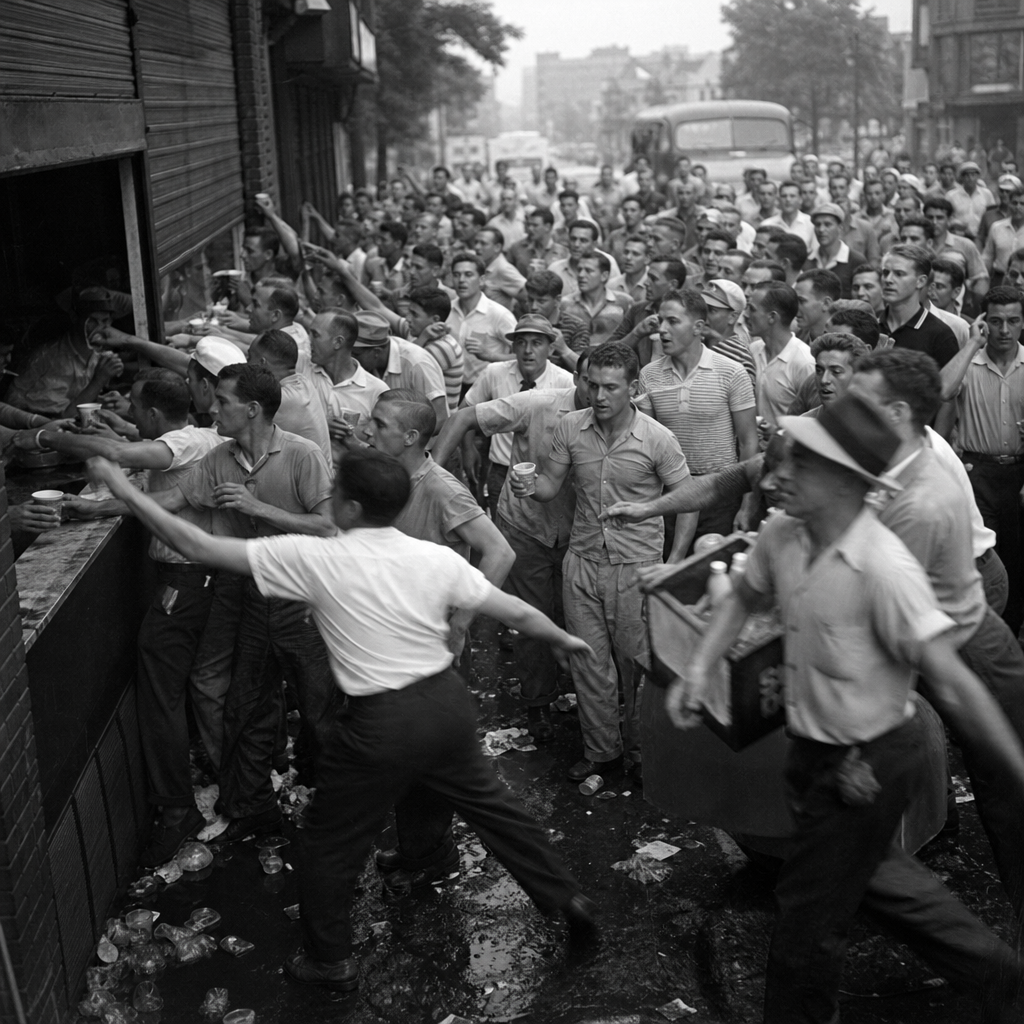
Ten-Cent Beer Night remains one of the most infamous promotions in American sports history, a case study in how a seemingly clever marketing idea can spiral into disorder when crowd dynamics, alcohol, and rivalry collide. Held on June 4, 1974, at Cleveland Municipal Stadium during a game between the Cleveland Indians and the Texas Rangers, the event was designed to boost attendance with cups of beer sold for just ten cents. Instead, it produced a riot, a forfeited game, and a permanent place in baseball lore. For anyone exploring scandals and controversies in sports, this episode matters because it links business decisions, fan behavior, stadium security, and league governance in one unforgettable night.
The phrase Ten-Cent Beer Night refers specifically to that Indians promotion, but its significance reaches beyond a single game. It illustrates how promotions can misread audience incentives, how a charged atmosphere can be intensified by recent grievances, and how teams underestimate risk when short-term revenue pressure overrides basic crowd management. I have worked with sports history archives and event case studies long enough to know that the most revealing controversies are rarely random. They emerge from a chain of decisions. In Cleveland, those decisions included cheap alcohol, loose purchase limits, a tense rematch with Texas, and an already frustrated fan base in a city that often felt overlooked by the national sports conversation.
Understanding the incident also helps frame the broader “Miscellaneous” branch of scandals and controversies. Not every sports scandal involves gambling, doping, or corruption in the front office. Some are operational failures. Some are public relations disasters. Some expose weaknesses in policy that only become obvious after a breakdown. Ten-Cent Beer Night belongs in that category. It is a hub topic because it connects to fan violence, disastrous promotions, stadium safety standards, alcohol policy, team liability, and the lasting reputational impact of one night gone wrong. If you want to understand why modern teams place such strict controls on alcohol sales and crowd security, this is one of the clearest historical starting points.
What Happened on Ten-Cent Beer Night
On June 4, 1974, the Cleveland Indians hosted the Texas Rangers at Municipal Stadium, a massive venue that could feel cavernous during losing seasons. To draw fans, the club offered beer for ten cents a cup. Promotions of this kind were not unheard of in the 1970s, when teams experimented aggressively to fight weak attendance, but Cleveland’s execution was dangerously permissive. Reports from the night indicate that initial limits on the number of beers per purchase were easy to evade, especially because fans could send different people back to concession stands repeatedly. The result was predictable intoxication on a very large scale.
The game itself unfolded in a hostile atmosphere shaped by bad blood from a prior series in Texas. A week earlier, Rangers manager Billy Martin had criticized Cleveland fans, and a brawl between the clubs had sharpened emotions. By the time the rematch started in Ohio, many in the crowd were already primed for confrontation. As alcohol consumption increased, fans ran onto the field intermittently, threw objects, and harassed players. None of this stopped the game early enough. Security was inadequate for the size and mood of the audience, and the disorder kept escalating rather than being contained.
The breaking point came in the ninth inning. With the score tied 5–5, a fan rushed into the outfield and interacted with Rangers outfielder Jeff Burroughs, leading Texas players to believe he might be attacked or stripped of his cap. Rangers players, some carrying bats, moved onto the field to defend Burroughs. Cleveland players then came out as well, some trying to protect the Rangers from the crowd and others reacting to the chaos. Fans poured onto the field in greater numbers. At that stage, the umpires had no viable path to continue. The game was forfeited to Texas because Cleveland could not provide a safe playing environment.
Why the Promotion Became a Disaster
The simplest answer is cheap beer, but that alone is incomplete. Ten-Cent Beer Night became a disaster because multiple risk factors stacked together. The team discounted alcohol to an extreme level, hosted a high-emotion opponent shortly after a bench-clearing brawl, and operated in a stadium with limited modern crowd-control systems. Promotional pricing removed a natural brake on consumption. Sparse and inconsistent enforcement removed another. Once intoxication spread through sections of the stadium, each disturbance normalized the next one. In crowd psychology, visible misconduct lowers the social cost of imitation. That pattern was obvious throughout the evening.
Another major factor was the era itself. Seventies sports promotions often leaned into spectacle without the structured event-operations planning expected today. Modern teams use incident command protocols, surveillance coverage, trained alcohol compliance staff, and centralized communication between security, concessions, and law enforcement. Cleveland did not have that framework in place at the level required for a volatile game. Municipal Stadium was enormous, making it difficult to control scattered disruptions before they coalesced. When fans repeatedly entered the field earlier in the game without decisive consequences, it signaled that boundaries were soft.
It is also important to understand the local context. The Indians were not a strong draw at the gate, and promotions were a practical tool to move tickets. A struggling club in a harsh baseball market can be tempted to overcorrect with gimmicks. I have seen this pattern in many sports-business retrospectives: attendance pressure encourages aggressive offers, then operations teams are expected to absorb the risk. In Cleveland’s case, the promotion did bring fans in, with more than 25,000 attending, but the event design effectively subsidized unruly behavior. A good promotion increases attendance while preserving control. This one increased attendance and weakened control at the same time.
The Night in Sequence: A Clear Timeline
Several details from the evening are often remembered as legend, so a direct timeline helps separate drama from structure. Early in the game, fans were already visibly intoxicated, and some ran onto the field. Others threw firecrackers, cups, and debris. The Rangers, aware of the crowd’s mood, grew increasingly agitated. Cleveland players were dealing not only with the game but also with an environment that was steadily becoming less professional and more chaotic. Umpires kept the contest going despite warning signs that would likely prompt a delay or suspension today.
| Stage | What Happened | Why It Mattered |
|---|---|---|
| Before first pitch | Recent Rangers-Indians tensions carried into Cleveland | The crowd already had an emotional target |
| Early innings | Cheap beer flowed freely and intoxication became obvious | Alcohol lowered inhibitions and increased volatility |
| Middle innings | Fans entered the field and threw objects repeatedly | Security failed to reestablish order |
| Ninth inning | A fan approached Jeff Burroughs in the outfield | Texas players believed immediate intervention was necessary |
| Final collapse | Players and fans flooded the field | Umpires forfeited the game to Texas |
That sequence matters because it shows the riot was not caused by one isolated stunt. It was cumulative. Every unchecked incident made a final breakdown more likely. Contemporary accounts differ on some small details, including exact levels of danger in individual fan-player interactions, but they agree on the core facts: the atmosphere was deteriorating for hours, and the game should never have reached a conventional ending. The forfeit was the last administrative step in a control failure that had begun long before the ninth inning.
Key Figures, Teams, and Decisions
The two clubs involved gave the story its emotional charge. Billy Martin, then managing the Rangers, was already known for confrontational baseball. His comments about Cleveland fans after the prior series inflamed local sentiment. Rangers players arrived expecting hostility, not a routine road game. The Indians, meanwhile, were operating under ownership and promotional pressures common to struggling franchises. General manager Phil Seghi had approved creative attendance tactics, and this one backfired on a national stage.
Players became central characters once the field invasion intensified. Jeff Burroughs was the focal point of the final confrontation in the outfield. Texas teammates responded instinctively, fearing for his safety. Indians players such as Tom Hilgendorf and others were drawn into the melee, with some accounts noting that Cleveland players helped shield Rangers personnel from fans, an often overlooked detail that complicates the easy narrative of team-versus-team chaos. In reality, professionals from both dugouts were suddenly confronting a crowd emergency rather than simply a baseball conflict.
Umpire crew chief Nestor Chylak made the decisive ruling by awarding the game to Texas. That decision aligned with baseball’s basic obligation to protect players and officials when the home club cannot maintain order. The forfeit was not symbolic. It was an operational judgment that the contest could not continue safely. Looking back, the key decision-makers were not only the people on the field in the ninth inning but also the executives who approved the promotion without adequate safeguards. That is the true center of responsibility in this controversy.
Immediate Fallout and Long-Term Impact
The immediate fallout was severe embarrassment for Cleveland and a national media storm for Major League Baseball. Ten-Cent Beer Night quickly became shorthand for the excesses of 1970s sports promotions, often invoked alongside Disco Demolition Night as an example of event planning gone disastrously wrong. The Indians lost more than a game. They lost control of the public narrative. Instead of being known for an attendance boost, the club became associated with drunkenness, fan disorder, and administrative negligence.
Its long-term impact is even more important. Stadium alcohol policies across professional sports grew more cautious over time, with purchase limits, cut-off innings, ID checks, designated vendor training, and larger security footprints becoming standard practice. Not all of those changes trace solely to this one night, but Ten-Cent Beer Night is routinely cited as a foundational lesson. It demonstrated that alcohol sales are not just a concession issue; they are a safety, legal, and reputational issue. Teams now model crowd behavior more carefully because of cases like this.
For the broader scandals and controversies landscape, the event is a useful reminder that some of the most consequential sports failures are preventable. No hidden conspiracy was required. No criminal mastermind engineered the outcome. A poor risk assessment, a combustible context, and weak controls were enough. That makes the story unusually valuable as a hub topic under miscellaneous controversies. It connects to modern debates about fan conduct, invasive promotions, security staffing, liability exposure, and how franchises balance entertainment with duty of care.
Lessons for Modern Sports, Events, and Fan Culture
Modern clubs can learn several direct lessons from Ten-Cent Beer Night. First, promotions must be designed with behavioral incentives in mind. If a discount encourages overconsumption, the operational plan must become stricter, not looser. Second, rivalry and recent conflict matter. A harmless giveaway on one date can be reckless on another if the opponent, media narrative, or fan mood raises volatility. Third, visible enforcement is essential. Fans watch how quickly boundaries are defended. If one field incursion is tolerated, others become more likely.
There is also a deeper cultural lesson. Fans often describe old-school stadium environments as freer and more entertaining, but freedom without structure can quickly turn dangerous for players, staff, and spectators. The best live events feel energetic while still being tightly governed behind the scenes. That balance is not accidental. It comes from staffing plans, alcohol service controls, ejection protocols, camera coverage, and coordination with police and medical teams. When those systems work, nobody notices. When they fail, the event itself becomes the story.
Ten-Cent Beer Night endures because it is funny only at a distance and alarming up close. The image of ten-cent beer sounds like a punchline, yet the actual outcome involved fear, injury risk, and a competitive contest ending in forfeit. That contrast is why the incident still deserves serious attention. If you are exploring sports scandals and controversies, use this case as a lens for the entire miscellaneous category: not every debacle is rooted in cheating. Some begin with a promotion, a crowd, and a failure to respect how fast order can collapse. Read related controversy case studies with that framework in mind, and the patterns become unmistakable.
Frequently Asked Questions
What was Ten-Cent Beer Night, and why was it organized?
Ten-Cent Beer Night was a promotional event held on June 4, 1974, at Cleveland Municipal Stadium during a game between the Cleveland Indians and the Texas Rangers. The basic idea was simple: beer would be sold for just ten cents a cup in an effort to attract more fans to the ballpark. At the time, teams regularly experimented with eye-catching promotions to boost attendance, and discounted concessions were seen as a practical way to fill seats. For a franchise trying to generate excitement and increase turnout, the offer sounded like a clever and relatively harmless marketing move.
What made the promotion so disastrous was not the idea of discounted beer alone, but the environment in which it took place. The game came during a period of heightened tension between the Indians and Rangers, and the crowd already had a combustible edge. Large quantities of cheap alcohol, minimal restraint, and an emotionally charged rivalry created conditions that quickly spiraled out of control. In hindsight, Ten-Cent Beer Night became a textbook example of how sports promotions can fail when organizers underestimate crowd behavior, alcohol consumption, and the intensity of the event surrounding the promotion.
Why did Ten-Cent Beer Night turn into chaos?
The chaos resulted from a combination of factors rather than a single moment. First and most obvious was the unlimited availability of extremely cheap beer. Selling alcohol for ten cents a cup encouraged rapid and excessive drinking, and as the night progressed, intoxication spread throughout the stadium. Reports from the game describe fans streaking onto the field, throwing objects, disrupting play, and increasingly testing the limits of stadium security. What might have started as rowdy behavior gradually became something far more dangerous as the crowd lost its sense of restraint.
Another major factor was the already tense relationship between the two teams and their fans. The Rangers and Indians had recent bad blood, and that hostility carried into the stadium. With emotions already elevated, the alcohol acted like fuel on a fire. By the later innings, incidents in the stands and on the field were feeding one another, creating a feedback loop of agitation. Security was not equipped to manage a crowd that large and that intoxicated, and once fans began storming the field in greater numbers, order effectively collapsed. The game ended in a forfeit when officials determined that conditions were no longer safe for players or staff.
What exactly happened during the game on June 4, 1974?
As the evening unfolded at Cleveland Municipal Stadium, the crowd became increasingly unruly. Fans had come in large numbers, drawn by the promotion, and many took full advantage of the ten-cent beer pricing. Disorderly behavior began relatively early, with isolated incidents such as fans running onto the field and objects being tossed from the stands. Those moments were warning signs, but the game continued as the atmosphere kept deteriorating. Instead of calming down, the crowd grew more emboldened as the drinking continued and the game itself became more emotionally charged.
By the late innings, the situation reached a breaking point. A confrontation involving Rangers outfielder Jeff Burroughs and a fan became one of the sparks that triggered the final collapse. When Rangers players moved to protect Burroughs and more spectators poured onto the field, the scene rapidly turned into a full-scale melee. Players armed themselves with bats in self-defense, fans swarmed the field, and stadium personnel could no longer restore control. Umpires ultimately awarded the game to the Rangers by forfeit because the Indians were unable to provide a safe playing environment. The night was no longer about baseball; it had become one of the most notorious crowd-control failures in sports history.
What was the aftermath of Ten-Cent Beer Night for Major League Baseball and the Cleveland Indians?
The immediate aftermath was embarrassment, scrutiny, and a major public relations disaster for the Cleveland Indians and for baseball more broadly. A game ending in a riot and forfeit was shocking even in an era when promotions could be looser and stadium security less sophisticated than it is today. The event instantly became national news and cemented itself as a symbol of promotional excess. For the Indians, it was a deeply damaging moment that overshadowed the team on the field and became part of the franchise’s historical identity, whether it wanted that distinction or not.
In the longer term, Ten-Cent Beer Night helped reshape the way teams and leagues thought about alcohol sales, security planning, and fan management. While it was not the sole reason for later policy changes, it became one of the most frequently cited cautionary tales in sports business. Teams became more careful about drink promotions, limits on alcohol sales, and the need for stronger security presence and contingency planning. The night also entered baseball folklore, remembered not just because it was wild, but because it exposed how quickly entertainment can turn hazardous when organizers fail to account for human behavior in a high-stakes, high-emotion environment.
Why is Ten-Cent Beer Night still remembered as one of the most infamous moments in sports history?
Ten-Cent Beer Night endures in public memory because it combines all the elements of an unbelievable sports story: a bargain-basement promotion, a heated rivalry, drunken fans, on-field invasions, and a game ending in forfeit. It sounds almost too absurd to be real, yet it happened on a Major League Baseball field in front of thousands of spectators. That combination of spectacle and failure makes it especially memorable. It is not just a funny or bizarre anecdote from the past; it is a vivid example of how quickly crowd entertainment can become crowd disorder.
It also remains relevant because the lessons from that night still apply. Modern teams, stadium operators, and event planners continue to balance fan engagement with public safety, and Ten-Cent Beer Night is often invoked as the classic case of what happens when that balance is badly misjudged. The story lives on in documentaries, retrospectives, sports journalism, and discussions about the strangest promotions ever attempted. More than a historical curiosity, it has become a permanent reference point in conversations about sports culture, marketing risk, alcohol policy, and the unpredictable psychology of large crowds.