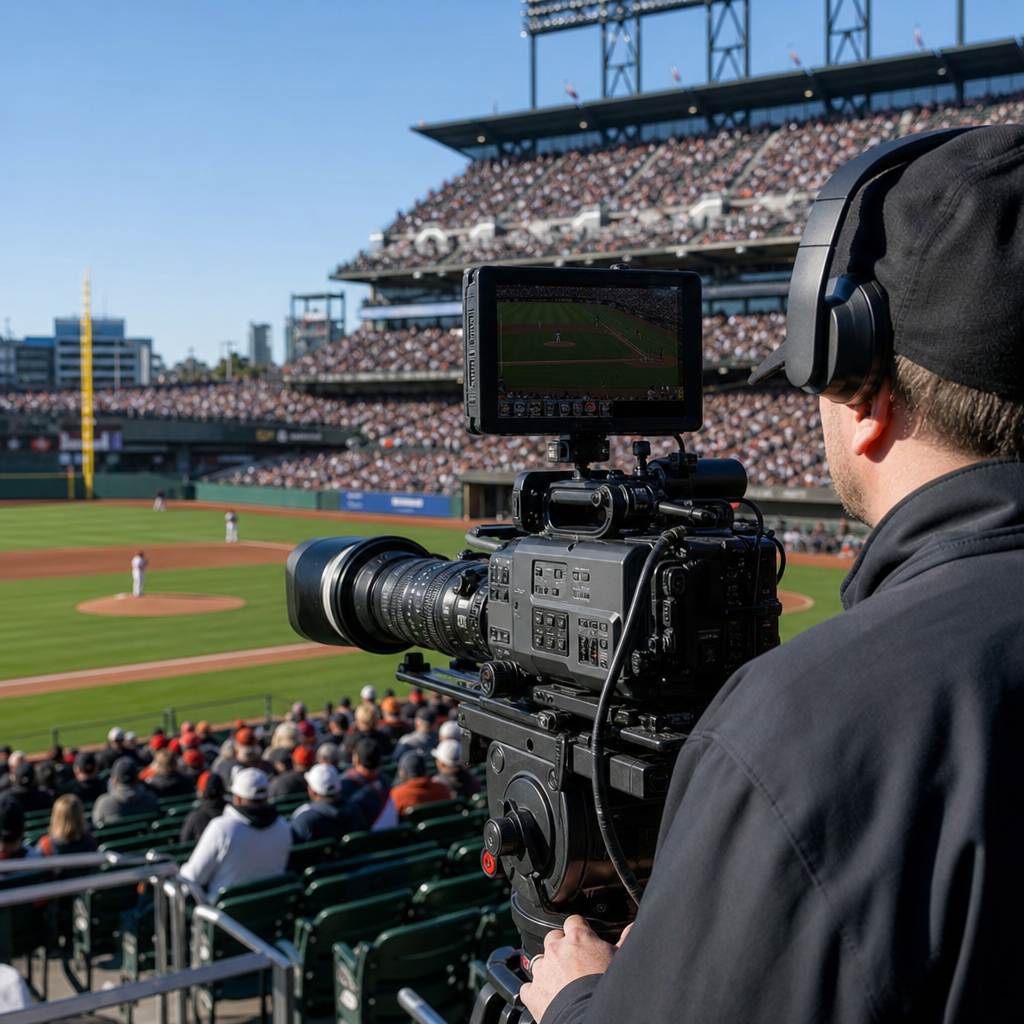
Baseball videography has evolved from a novelty used to capture a few memorable innings into a core part of how the sport is taught, scouted, broadcast, marketed, and understood. In this context, baseball videography means the recording, analysis, distribution, and creative presentation of baseball action through moving images, whether on film, broadcast cameras, smartphones, high-speed training systems, or automated multi-angle platforms. I have worked with coaches, media crews, and player development staff who rely on video every day, and the shift has been dramatic: what once served as documentation now drives decision-making across every level of the game. This matters because modern baseball is shaped as much by what can be seen, slowed down, tagged, and shared as by what happens in real time on the field.
The evolution of baseball videography mirrors the broader evolution of baseball innovation. Early footage preserved legends and gave fans a visual record. Television turned games into regular national events and changed camera language. Analog coaching tape brought replay into dugouts and training rooms. Digital systems made every pitch searchable. High-speed capture exposed swing mechanics and pitch grips that the naked eye could never isolate. Cloud platforms connected amateur players to recruiters and allowed front offices to study opponents in hours rather than weeks. Today, AI-assisted cameras, biomechanical overlays, and instant clip delivery have made baseball videography both a performance tool and a storytelling engine. As a hub topic within innovations and changes in baseball, videography stands out because it touches talent evaluation, injury prevention, fan engagement, officiating review, and the economics of the sport all at once.
From film reels to television broadcasts
The earliest phase of baseball videography was not really about coaching or analytics; it was about preservation and spectacle. Newsreel cameras in the early twentieth century captured brief, edited moments from major events, including World Series highlights and appearances by stars such as Babe Ruth and Lou Gehrig. The footage was limited by bulky equipment, short film capacity, and expensive processing, but it established the first moving-image archive of baseball. Even in those constrained conditions, camera operators learned to prioritize the pitcher-batter confrontation, crowd reaction, and close plays at the bases. Those choices still shape baseball coverage now.
Television transformed baseball videography from archival record into a recurring public experience. By the 1950s and 1960s, televised games brought consistent camera placements, live switching, and announcer-driven visual storytelling into homes. Center-field cameras eventually became essential because they gave viewers a direct look at pitch trajectory and hitter timing. High-home angles clarified defensive positioning. Slow-motion replay, first used selectively and then routinely, changed how fans and broadcasters interpreted close plays and swing mechanics. In practical terms, television created the visual grammar of baseball: the sequence of wide shot, pitcher release, contact, fielding angle, replay, and reaction shot. That grammar still informs youth livestreams, regional sports coverage, and social clips.
Broadcast growth also changed the business of baseball. More games on television increased sponsor value, expanded player visibility, and helped teams build regional identities. Iconic moments became repeatable assets rather than memories dependent on eyewitness accounts. For historians and scouts, the rise of televised archives also created a comparative record. Mechanics, tempos, and strategic tendencies could now be revisited years later. That was the first major step toward using baseball videography as evidence rather than entertainment alone.
The coaching tape era and the rise of video for player development
The next major leap came when video moved behind the scenes. By the 1980s and 1990s, VHS camcorders and portable tape systems made it realistic for coaches to record bullpens, batting practice, and games for instructional review. The image quality was modest, and editing was cumbersome, but the impact was enormous. A hitter no longer had to rely only on verbal feedback such as “stay closed” or “get on plane earlier.” A coach could rewind the tape and show exactly when the front side flew open or when the barrel lagged behind the hands. For pitchers, stride length, arm slot, head stability, and follow-through suddenly became visible and teachable in a repeatable format.
In my experience, this era established one of the most important truths in baseball instruction: video does not replace coaching language, but it makes coaching language credible. Players often feel one thing and do another. Tape exposed that gap. College programs and professional organizations began building libraries of player clips to compare healthy mechanics against periods of reduced command, lower exit velocity, or recurring discomfort. Even before advanced analytics matured, video review became a practical diagnostic tool.
Scouting changed too. Amateur tournaments, showcases, and recruiting visits generated a growing catalog of player footage that could be mailed or hand-delivered. That sounds inefficient now, but at the time it expanded access. A recruiter who could not attend every event in person could still evaluate swing path, foot speed, catcher exchange, or pitcher tempo. The limitations were obvious: inconsistent angles, selective editing, and no universal tagging system. Still, this phase made baseball videography central to development and talent identification, not just public viewing.
Digital capture, tagging, and searchable baseball video
Digital video turned baseball videography into infrastructure. Once teams and schools moved from tape to file-based recording, everything became faster: capture, storage, duplication, sharing, and retrieval. Software platforms such as Hudl, Synergy, and later baseball-specific systems allowed coaches to tag events by inning, pitch type, hitter, count, result, and defensive alignment. Instead of scrubbing through an entire game to find one at-bat, a staff member could pull every two-strike slider a pitcher threw to left-handed hitters in minutes.
That searchability changed baseball operations at every level. Opponent prep became more precise because coaches could isolate bunting tendencies, first-pitch swing rates, secondary leads, and catcher blocking patterns. Player development became more individualized because instructors could compare a current series with footage from spring training or from the previous season. Front offices increasingly paired video with stat-based models, allowing decision-makers to validate whether the numbers matched visible changes in posture, sequencing, or movement efficiency.
Digital systems also made collaboration easier. A hitting coach in one affiliate could annotate clips and share them with coordinators elsewhere in the organization. Parents of youth players could review tournament footage the same night. Recruiting services could embed clips directly into profiles. This was the stage when baseball videography stopped being a department and became a connected workflow.
| Era | Primary Technology | Main Use | Key Limitation |
|---|---|---|---|
| Newsreel/Film | Film cameras and reels | Archiving major moments | Limited footage and delayed processing |
| Television | Live broadcast cameras | Fan viewing and replay | Few angles and limited access for teams |
| Analog coaching | VHS camcorders | Mechanical review | Manual searching and poor image quality |
| Digital platforms | File-based cameras and software | Tagging, scouting, sharing | Data management burden |
| Modern integrated systems | High-speed, cloud, AI cameras | Development, analysis, media distribution | Cost, privacy, and interpretation complexity |
High-speed video, biomechanics, and pitch design
The most significant technical breakthrough in modern baseball videography has been high-speed capture. Standard broadcast frame rates can show broad movement, but they cannot fully reveal wrist position at release, seam orientation, bat path through the zone, or the exact instant the front heel plants. High-speed cameras from companies such as Edgertronic and Phantom changed that. At hundreds or thousands of frames per second, coaches and analysts can inspect details that once required guesswork.
Pitch design is one clear example. When a pitcher tries to reshape a slider or create a seam-shifted wake effect, analysts use high-speed video to examine finger pressure, wrist angle, and seam presentation at release. Combined with ball flight data from TrackMan, Rapsodo, or Hawk-Eye, the footage helps explain why one grip produces more horizontal break, later movement, or better spin efficiency. Hitting instruction has seen a similar shift. Slow-motion and high-speed clips can show whether a batter’s barrel enters the zone too steeply, whether the rear hip stalls, or whether the head drifts forward against velocity.
Biomechanics departments now pair synchronized video with force plates, motion capture markers, and wearable sensors. That integration matters because video alone shows what happened, while biomechanical systems help explain why it happened. For example, a pitcher whose arm slot drops late in outings may not simply be “getting tired.” Video and kinetic data might reveal reduced lead-leg stability or altered trunk rotation timing. Used well, baseball videography supports injury mitigation and more efficient movement. Used poorly, it can encourage overcorrection. That is an important tradeoff: better visuals do not automatically mean better coaching. Interpretation remains the decisive skill.
Automated cameras, streaming, and access across all levels
Another major chapter in the evolution of baseball videography is automation. Systems such as Pixellot and GameChanger now allow games to be streamed and recorded with minimal onsite production. Some setups use fixed panoramic cameras and software tracking to follow the ball automatically. Others combine scoring input with clip generation so every hit, strikeout, or scoring play becomes a shareable highlight within minutes. This has changed youth, high school, college, and independent baseball as much as the major leagues.
Access is the biggest benefit. Families can watch road games remotely. Small colleges can showcase players to recruiters without expensive broadcast crews. Travel-ball organizations can deliver video libraries to players who are trying to build recruiting profiles. For underserved regions, lower production costs can widen exposure. I have seen players gain serious attention because a coach could immediately review complete game footage rather than rely on a short skills montage.
Automation does have drawbacks. AI tracking can lose the ball on unusual trajectories, misframe rundown plays, or flatten the sense of pace that a skilled human operator would capture more naturally. Constant recording also raises privacy and consent questions, especially for minors. Still, automated streaming has done something historically important: it democratized baseball videography. Video is no longer reserved for televised leagues or well-funded programs. It is becoming a baseline expectation of participation in organized baseball.
Baseball videography as storytelling, branding, and fan experience
Not all baseball videography is analytical. Some of its most visible evolution has happened in storytelling and brand building. Teams now produce cinematic mini-documentaries, mic’d-up practice segments, clubhouse features, drone stadium footage, and vertical social clips designed for phones. The purpose is not only to show what happened but to shape how fans emotionally understand players, teams, and moments. A walk-off home run can exist as a broadcast clip, a slow-motion social highlight, a behind-the-dugout reaction angle, and a short documentary sequence by the next morning.
Major League Baseball Advanced Media helped standardize digital distribution and made searchable clips a normal part of fan behavior. Statcast-era broadcasts then went further by layering visual data onto live video: exit velocity, launch angle, sprint speed, catch probability, and defensive alignment graphics. These additions changed what fans look for. Viewers no longer watch only for outcome; they watch for process and measurable context. That has influenced youth players too, who increasingly learn the game through mixed formats of highlights, instruction, and data-driven overlays.
For organizations, strong video storytelling supports sponsorships, ticket sales, and player marketability. For media departments, the challenge is authenticity. Audiences quickly detect overproduced content that feels detached from the realities of the game. The best baseball videography still respects baseball’s rhythms: anticipation between pitches, body language after failure, and the cumulative tension of a long inning. Technology expanded the toolkit, but the core craft remains knowing where meaning lives in a baseball moment.
The future of baseball videography
The future of baseball videography will be defined by integration, speed, and context. More systems will merge video with tracking data, biomechanical models, and automated transcription so a coach can ask for every inside fastball swing from the last month and receive clips, metrics, and notes instantly. Real-time feedback during training will become more common, with tablets and field displays showing synchronized multi-angle video seconds after a rep. Computer vision will improve event tagging, posture recognition, and defensive positioning review without requiring large support staffs.
At the same time, the human element will become more valuable, not less. Better cameras cannot decide which mechanical change a player can actually own under game pressure. More footage does not guarantee better scouting if evaluators chase visual noise. Ethical guardrails will matter too, especially around data ownership, youth athlete consent, and the line between development monitoring and surveillance. The programs that benefit most from modern baseball videography will be the ones that connect technology to clear teaching priorities.
The central lesson is simple: baseball videography evolved from recording the game to actively shaping the game. It now influences instruction, recruiting, health, broadcasting, and fan connection in one continuous system. For anyone studying innovations and changes in baseball, this is the hub concept to understand, because many other advances flow through video before they reach players or audiences. If you want to follow where baseball is headed next, start by examining how the sport is being filmed, analyzed, and shared today, then explore the related innovations linked from this hub.
Frequently Asked Questions
1. How has baseball videography changed from its earliest days to the modern game?
Baseball videography has gone through a dramatic transformation. In its earliest form, moving images of baseball were limited, expensive, and largely documentary in nature. Film was used sparingly to preserve highlights, capture famous players, or record major events, but it was not yet a practical day-to-day tool for coaching, scouting, or player development. Access was limited, footage was difficult to review quickly, and the process of recording, storing, and sharing visual material required significant time and resources.
As broadcast television expanded, baseball videography became more structured and influential. Multiple camera angles, replay systems, and improved production techniques changed how fans experienced the game. Viewers could now see not only the result of a pitch or swing, but also the pace, tension, and mechanics behind each moment. This era helped establish video as a storytelling medium, not just a recording method. Broadcasters began using camera placement, slow motion, zoom, and commentary-driven replay to explain strategy and build emotional connection.
The digital era accelerated everything. Once video moved from film and tape to digital files, baseball organizations gained the ability to record more, review faster, and distribute footage instantly. Coaches no longer had to wait for processing or manually search through reels. Scouts could compare players across games and seasons. Players could review mechanics shortly after an at-bat, bullpen session, or defensive rep. Teams at every level, from youth programs to professional organizations, started treating video as a routine part of preparation.
Today, baseball videography is deeply integrated into nearly every part of the sport. High-speed cameras capture fine movement details in pitching and hitting mechanics. Automated systems track full games from multiple angles. Mobile devices allow immediate capture and feedback on the field, in batting cages, and during practice. Editing software, cloud platforms, and performance-analysis tools make it possible to organize clips by pitch type, count, swing outcome, defensive situation, or player tendency. What once served mostly as a record of memorable moments now functions as a technical, educational, strategic, and creative engine for the sport.
2. Why is videography now considered essential for coaching and player development in baseball?
Videography is essential in modern baseball coaching because it gives players and coaches something invaluable: objective visual feedback. Baseball is a sport built on repeatable movements and split-second decisions, and many of the most important details happen too quickly to evaluate accurately with the naked eye alone. A hitter may feel balanced in the box but discover on video that the front side is flying open. A pitcher may believe the delivery is consistent, yet frame-by-frame review might reveal timing differences that affect release point, command, or arm health. Video closes the gap between what an athlete feels and what is actually happening.
This matters because baseball development depends on precision. Small changes in posture, hand path, lower-half sequencing, stride direction, glove-side stability, or first-step reaction can have major effects on performance. Video allows those details to be isolated, replayed, slowed down, compared over time, and discussed clearly. Instead of coaching from memory or impression, instructors can teach from evidence. That makes communication more effective and often speeds up learning because athletes can see the exact movement pattern they need to correct or repeat.
Another reason videography is so valuable is that it supports individualized development. Every player moves differently, and the best coaches do not simply teach one universal model. Video helps identify what is unique about a player’s delivery, swing, defensive setup, or baserunning style. From there, coaches can distinguish between traits that are efficient and traits that are limiting performance. This allows development plans to become more personal, specific, and measurable.
Videography also improves retention and accountability. Players can review clips between sessions, compare old footage with current mechanics, and track progress over time. Coaches can build libraries of key examples, both good and bad, to reinforce concepts. In many baseball environments, video has become part of a larger feedback loop that includes analytics, biomechanics, and on-field results. Used well, it is not just a correction tool. It becomes a teaching archive, a progress tracker, and a way to make development more consistent across a season or an entire career.
3. What role does baseball videography play in scouting and recruitment?
Baseball videography plays a major role in scouting and recruitment because it expands visibility, improves evaluation, and creates a more complete picture of a player. In the past, scouts often had to rely heavily on in-person looks, word of mouth, box scores, and limited written reports. While live evaluation is still extremely important, video has made the scouting process more efficient and far more scalable. A recruiter can now review a player’s swing, arm action, defensive movements, body control, and game awareness before ever stepping onto a field.
For amateur players, especially those outside traditional recruiting hotspots, video can be a critical opportunity tool. A well-produced clip package can introduce a player to college coaches, travel-ball programs, scouts, and development staff who otherwise may never see that athlete compete. This has broadened access significantly. Players from smaller schools, remote areas, or less publicized leagues can still present credible visual evidence of their ability. In that sense, videography has helped democratize exposure.
At the same time, evaluators use more than just highlight reels. Serious scouting depends on context, and strong baseball video provides that context. Full at-bats, full innings, defensive sequences, catcher receiving, mound presence, baserunning decisions, and reactions between plays all matter. Scouts want to see how tools play in real baseball situations. They study timing, athleticism, competitiveness, adaptability, and consistency. Video allows repeated review of these traits, which is especially useful when comparing multiple players or revisiting a prospect over time.
Modern scouting departments also benefit from the organizational side of videography. Footage can be tagged, archived, and shared across departments. Cross-checkers, analysts, and player development personnel can all review the same clips and contribute different perspectives. A recruiter may notice athletic actions, a hitting coordinator may focus on bat path and adjustability, and an analyst may connect visual tendencies with performance data. That collaboration makes evaluations deeper and more reliable. In today’s game, baseball videography is not just a supplement to scouting. It is one of the foundational tools that helps identify talent, verify observations, and support recruiting decisions.
4. How has baseball videography changed the way fans experience the sport?
Baseball videography has reshaped the fan experience by making the game more immersive, more educational, and more emotionally engaging. Earlier generations of baseball coverage often gave fans a relatively fixed view of the action. While that still captured the basic rhythm of the game, modern videography allows viewers to experience baseball from many more angles and with much more nuance. Center-field cameras, dugout perspectives, overhead views, super slow motion, on-field audio integration, and high-definition close-ups have all changed how fans see and interpret what is happening.
This evolution has made the sport easier to understand at a deeper level. Fans are no longer limited to simply watching outcomes. They can see pitch movement in detail, observe how a hitter tracks the ball, watch a fielder’s first step, or understand how positioning influences a defensive play. Replay packages and telestrator-style breakdowns help explain strategy and mechanics in real time. That added visual clarity has made baseball more accessible to casual viewers while also giving dedicated fans richer material to analyze and appreciate.
Videography has also transformed baseball into a stronger storytelling medium. Modern coverage captures facial expressions, dugout interactions, crowd reactions, bullpen routines, and behind-the-scenes preparation. Those details create narrative continuity and emotional texture. A game is no longer just a sequence of pitches and outs; it becomes a human story built around pressure, adjustment, routine, personality, and momentum. This is especially important in an era when teams, leagues, and media outlets are constantly trying to deepen fan connection across social media, streaming platforms, and digital content channels.
Short-form video has further expanded baseball’s reach. Clips of defensive gems, pitching overlays, swing breakdowns, mic’d-up moments, and historical comparisons circulate far beyond the live broadcast window. Fans can engage with baseball throughout the day, not just during the game itself. In practical terms, videography has helped baseball remain visually relevant in a crowded media environment. It supports live entertainment, education, marketing, and community-building all at once, making the sport more dynamic and more shareable than ever before.
5. What technologies are shaping the future of baseball videography?
The future of baseball videography is being shaped by a combination of automation, higher capture quality, smarter analysis tools, and faster distribution. One of the biggest developments is the rise of automated camera systems that can track games without requiring a full manual production crew. These systems make it easier for schools, facilities, amateur organizations, and development programs to record practices and games consistently. That means more footage, more accessibility, and more opportunities for review at levels of the sport that previously lacked robust video resources.
High-speed and high-resolution cameras are also pushing baseball videography forward. They reveal details that standard video can miss, including ball rotation, bat-ball contact timing, finger position at release, and subtle movement inefficiencies. For player development, that level of clarity