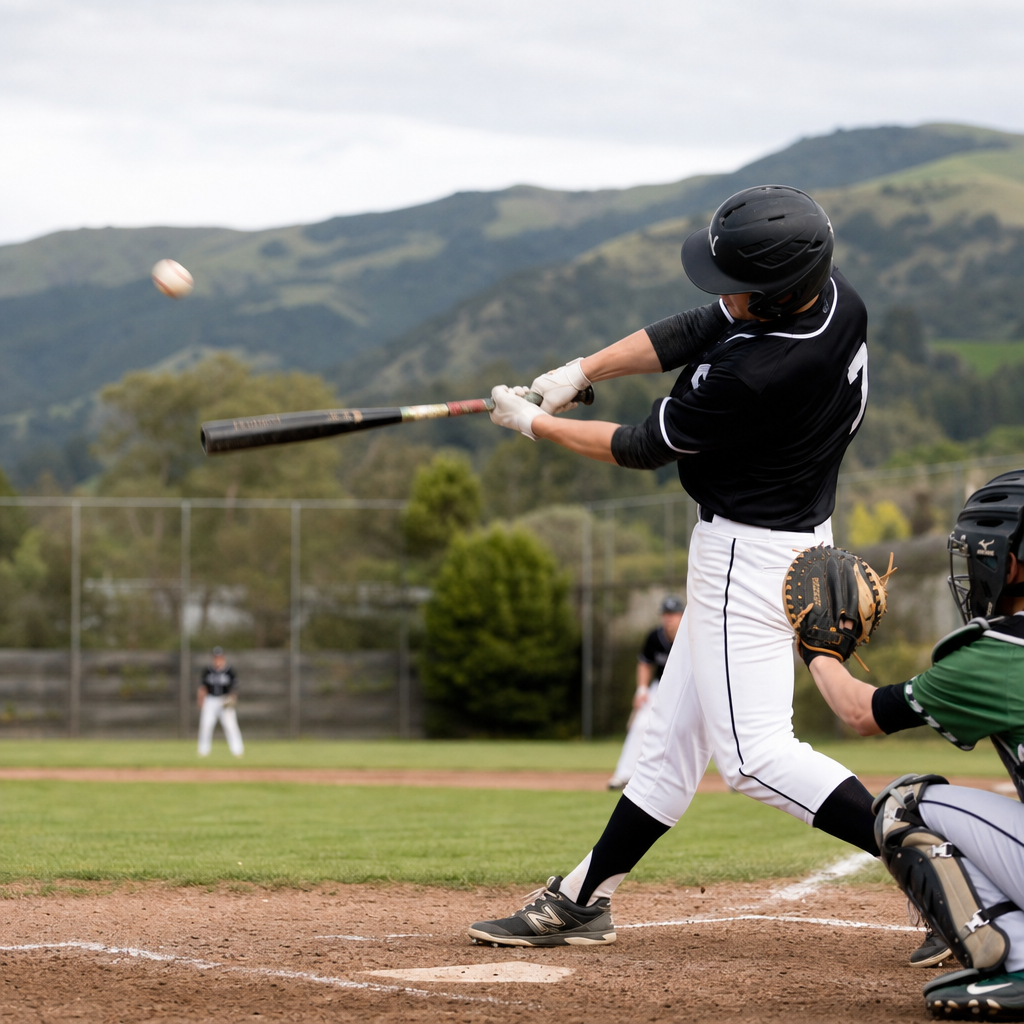
Baseball in New Zealand has long existed at the edge of the national sporting conversation, yet its steady growth makes it one of the most interesting stories in international baseball. When people ask how baseball reached New Zealand, the answer involves migration, military contact, school sport, community volunteers, and the global pull of Major League Baseball. In this context, “spread” means more than participation numbers. It includes club formation, coaching standards, diamond construction, youth pathways, media visibility, and the emergence of Kiwi players who can compete abroad. “Kiwis at bat” captures both the literal act of New Zealanders playing baseball and the broader idea of a country stepping into a sport not traditionally associated with its sporting identity.
This matters because New Zealand has one of the world’s most crowded sports markets. Rugby union dominates culture and sponsorship, cricket occupies summer, netball and football have deep roots, and basketball has surged. For baseball to grow there, it must solve practical problems that established baseball nations often take for granted: access to suitable fields, trained scorers, enough game volume, and clear development pathways. I have worked on international baseball content and youth development analysis for years, and New Zealand consistently stands out as a case where small structural gains produce visible results. A new diamond, a coach-education clinic, or one successful academy link can reshape an entire region.
New Zealand baseball also matters beyond its borders. For the wider international game, it is a useful model of how baseball can develop in a non-traditional market without trying to displace local sporting loyalties. Instead, the sport grows by finding strategic openings: schools that need summer activity, families looking for alternatives to rugby contact, athletes crossing over from cricket, and communities attracted by baseball’s mix of individual skill and team strategy. As a hub article under International Baseball, this guide covers the miscellaneous but essential parts of the New Zealand story: origins, governance, grassroots growth, facilities, talent pathways, overseas links, obstacles, and what needs to happen next.
How baseball first took root in New Zealand
Baseball’s presence in New Zealand can be traced to informal exposure rather than one dramatic founding moment. American cultural influence in the twentieth century, including wartime contact in the Pacific and later media imports, introduced the game visually before it was widely organized. In practical terms, softball arrived earlier and secured a much stronger national base. That mattered because softball fields, administrators, and family familiarity created the first environment in which baseball could borrow space and attention. In many regions, early baseball activity depended on people who had seen the game abroad, migrants from baseball-playing countries, or local enthusiasts determined to start clubs from scratch.
The modern era of baseball in New Zealand emerged when scattered local efforts became governed, scheduled, and visible. Once regional associations started running regular competitions, the sport moved from novelty to sustainable community activity. That shift is always decisive in emerging baseball countries. Casual interest is common; consistent fixtures are rare. New Zealand’s baseball organizers learned quickly that parents stay engaged when there is a credible season structure, age-group progression, and a recognizable governing body. The country’s geography made that harder than in densely populated baseball nations, because travel between cities raises costs and limits the number of opponents available for regular competition.
Another important early factor was crossover from softball and cricket. Softball supplied throwing mechanics, field awareness, and volunteer networks. Cricket supplied bat-ball instincts, patience, and acceptance of summer competition formats. But baseball also had to differentiate itself. The overhand pitching, lead-offs, tactical baserunning, and glove work create a distinct skill set. In New Zealand, successful clubs usually explained those differences clearly instead of marketing baseball as simply another version of softball. That helped attract athletes interested in a fresh challenge rather than a duplicate experience. The result was slow but real rooting of the sport, especially in urban centers where population density supports league formation.
Who runs the game and how the structure works
The spread of baseball in New Zealand depends heavily on governance, and this is where many casual observers underestimate the issue. A sport grows not only because people enjoy playing it, but because someone sanctions competitions, trains coaches, certifies umpires, manages insurance, and communicates with schools and local councils. Baseball New Zealand has served as the national body tasked with steering these responsibilities. In emerging baseball systems, the national federation often has to do more with fewer staff than equivalent organizations in established sports, making prioritization essential. Development officers, regional volunteers, and club committees become the real engine of expansion.
At ground level, the sport usually operates through a layered structure: national leadership, regional associations, clubs, and school or youth programs. That sounds standard, but each layer must function for growth to be real. I have seen countries where national teams exist but club baseball is thin; that creates visibility without depth. New Zealand’s better periods of growth have come when grassroots scheduling matched national ambition. If a child enters teeball or machine-pitch, there must be an Under-12 or Under-14 option later, then a competitive youth environment, then either senior club baseball or an overseas development route. Without that ladder, retention falls sharply in the teenage years.
Governance also shapes credibility with external partners. Councils want evidence that field investment will be used. Schools want child-safety procedures and structured coaching. International partners want organized event delivery. Good administration is therefore not a back-office concern; it is a growth strategy. New Zealand baseball has benefited when it presents itself as disciplined, development-focused, and realistic about scale. That means setting achievable competition calendars, publishing representative team pathways, and maintaining ties with the WBSC and regional baseball bodies. In smaller sporting markets, trust grows when the federation delivers the basics reliably year after year.
Grassroots growth, schools, and the role of families
Grassroots baseball in New Zealand succeeds when the game is made easy to enter. Entry barriers matter enormously in non-traditional baseball countries. If families believe they need expensive gear, specialist knowledge, or long travel commitments from day one, they choose another sport. The clubs that expand most effectively simplify the first experience: loan gloves, short introductory sessions, modified games, and visible communication with parents. Baseball’s learning curve can appear steep because newcomers must understand force plays, strikes, outs, and batting order rules. Smart development programs teach those through play rather than long explanation. That approach is especially effective in primary-school settings.
Schools are central because they provide what baseball otherwise lacks in New Zealand: concentrated access to young participants. Taster sessions, after-school programs, and teacher-supported PE modules introduce baseball to children who may never have watched a full game. In my experience, school clinics work best when they emphasize throwing, catching, hitting off a tee, and simple base-running games before moving toward formal innings. The objective is confidence. Once a child makes clean contact and fields a ground ball successfully, the sport feels accessible. That moment often determines whether a family later commits to club registration and weekend competition.
Families are equally important because baseball is volunteer-intensive. Someone lines fields, keeps score, drives carpools, organizes uniforms, and helps with canteens. In countries where baseball is not yet culturally embedded, parents become ambassadors as much as supporters. New Zealand clubs that retain players usually create a strong family environment rather than focusing only on elite outcomes. Barbecues, junior prizegivings, social media updates, and clear progression plans all matter. Parents want to know what the season looks like and where the sport can lead. If they understand both the weekly commitment and the long-term opportunity, they are much more likely to stay involved.
| Growth area | Why it matters in New Zealand | Practical example |
|---|---|---|
| School clinics | Introduces baseball to children before other sports lock in their time | Six-week primary program using tees, soft balls, and rotating stations |
| Club culture | Retention depends on parent trust and social belonging | Family days, beginner equipment pools, clear season calendars |
| Youth competition | Teenagers stay when games are regular and age-appropriate | Under-15 interclub schedule with pitch-count rules |
| Coach education | Player enjoyment and safety rise with better instruction | Weekend clinics on throwing progressions and practice design |
| Regional collaboration | Small player pools need shared planning to create viable leagues | Combined tournaments between nearby cities |
Facilities, equipment, and the challenge of building diamonds
Facilities are one of the biggest constraints on baseball’s spread to New Zealand. Unlike sports that can adapt to almost any open space, baseball needs dimensions, surfaces, fencing, backstops, bullpens, storage, and safe dugout areas to function properly at competitive levels. Many New Zealand baseball communities have relied on shared venues, multipurpose parks, or softball infrastructure. That arrangement is useful in the short term but creates compromises. Base paths, mound specifications, outfield fences, and scheduling priority all affect the quality of training and games. A sport cannot consistently raise standards if it rarely controls its own playing environment.
Equipment access is the second part of the same problem. Gloves, bats, catcher’s gear, helmets, bases, tees, portable screens, and pitching machines are manageable costs for established clubs, but they can be a major burden for emerging ones. The most successful New Zealand programs usually solve this collectively rather than leaving families to figure it out alone. Shared starter kits, donated gear, sponsor-backed team equipment, and phased purchasing keep entry manageable. That matters because baseball must compete with sports that feel cheaper and more familiar. If a beginner can try the game without a large upfront expense, sign-up rates improve significantly.
Local government relationships therefore become strategically important. Councils often control the land, maintenance budgets, and booking priorities that shape baseball’s future. The most persuasive case for a dedicated or upgraded diamond is not simply that baseball deserves one, but that the field will support youth activity, community events, and regional tournaments. Evidence helps: registration growth, school partnerships, representative teams, and projected usage hours. In international development work, I have repeatedly seen one well-maintained venue transform an area. It becomes a visual anchor, a coaching site, a tournament host, and proof that the sport is serious. New Zealand is no exception.
Talent pathways from local clubs to overseas opportunities
For many young players, the question is straightforward: where can baseball take me if I stay with it? In New Zealand, the answer increasingly includes representative baseball, academy training, overseas tournaments, college recruiting, and in rare cases professional interest. That pathway remains narrower than in Japan, Korea, or Australia, but it is more real than many assume. The emergence of New Zealand-born players in professional systems has had an outsized symbolic effect. One successful athlete can validate years of local volunteer effort because families suddenly see that elite progression is possible from a New Zealand starting point.
The pathway usually begins with strong club coaching and regional selection, then moves toward national age-group teams and exposure events. International tournaments are crucial because they show Kiwi players the tempo, pitching quality, and tactical sharpness required beyond the domestic environment. The jump can be eye-opening. Players who dominate locally often learn that advanced baseball demands more than raw athleticism. It requires pitch recognition, command, repeatable defensive mechanics, strength training, and routine. That lesson is valuable. Countries that improve quickly are those where young athletes understand early what the international standard actually looks like.
Overseas links matter because New Zealand’s player base is too small to generate every development opportunity internally. Australian competitions, United States college pathways, private academies, and showcase events all expand what is possible. The tradeoff is that travel and relocation are expensive, and not every talented player can access them. That is why domestic development quality still matters so much. A player needs sound foundations before an overseas coach will invest attention. New Zealand’s best long-term strategy is to produce more players who arrive abroad technically prepared, physically conditioned, and tactically literate. Quantity is limited; readiness cannot be.
Media visibility, cultural fit, and the future of Kiwi baseball
Baseball’s cultural challenge in New Zealand is not hostility; it is competition for attention. Most New Zealanders already have strong sporting loyalties, and media space is limited. That means baseball must be easy to discover and easy to understand. Broadcast access to MLB, highlight clips, social media storytelling, and local news coverage all help bridge the gap between a distant global sport and a neighborhood club. The most effective messaging does not pretend baseball will replace rugby or cricket. Instead, it presents baseball as a complementary option: strategic, family-friendly, globally connected, and welcoming to late starters as well as high-level athletes.
Cultural fit improves when baseball is framed through familiar strengths. Cricket players understand hand-eye coordination, strike-zone discipline, and the value of repeated skill practice. Rugby and softball athletes often bring explosiveness, toughness, and team habits. Coaches who recognize these crossover assets recruit more effectively. At the same time, baseball should not be diluted into another sport’s language. New Zealand players develop faster when coaches teach baseball on its own terms, including situational defense, pitch sequencing, baserunning reads, and data-informed training. Modern tools such as Blast Motion, Rapsodo, and video analysis are no longer luxuries; they are part of credible player development.
The future of baseball in New Zealand depends on disciplined expansion. The goal is not uncontrolled growth, but durable growth. That means more school entry points, stronger regional leagues, better diamonds, more qualified coaches and umpires, and clearer links to international opportunity. The biggest benefit is broader than baseball itself: the sport adds choice to New Zealand’s athletic landscape and opens a route into a truly global game. For readers exploring International Baseball or this Miscellaneous hub, New Zealand is a case worth following closely. Watch the clubs, support local programs, and track Kiwi players abroad, because this baseball story is still being written.
Frequently Asked Questions
How did baseball first reach New Zealand?
Baseball arrived in New Zealand through a mix of overseas influence rather than one single founding moment. As with many sports that traveled across the Pacific, the game was introduced through migration, visiting sailors, military contact, and returning New Zealanders who had encountered baseball abroad. American cultural influence in the twentieth century also mattered, especially as films, radio, later television, and eventually the internet made the sport more visible. While rugby remained the dominant code in New Zealand life, baseball quietly found footholds in schools, local communities, and recreation programs where people were open to trying something different.
Its early development was uneven, which is important to understand. Baseball did not explode nationally in the way it did in some other countries. Instead, it spread through pockets of enthusiasm: a teacher starting a school team, a volunteer organizing local games, or a community club adapting shared sporting space for diamonds. That kind of grassroots growth may seem modest, but it created the foundation for the sport’s long-term survival. In New Zealand, baseball’s history is best seen as a gradual layering of influences that turned a niche pastime into a developing national sport.
Why has baseball grown slowly but steadily in New Zealand?
Baseball’s growth in New Zealand has been shaped by competition from deeply established sports, especially rugby, cricket, netball, and football. In a country with limited population and strong sporting traditions, any emerging game has to compete for players, facilities, coaches, funding, media attention, and family time. That reality helps explain why baseball remained on the edge of the national sporting conversation for many years. However, slow growth should not be mistaken for failure. In many ways, the sport’s steady rise is more meaningful because it reflects durable community effort rather than a short-lived trend.
One of the main reasons for its continued expansion is that baseball offers something distinct. It combines individual skill development with team tactics, provides clear pathways for youth learning, and connects local players to a truly global sport. The visibility of Major League Baseball has also helped. Young New Zealand players can now watch elite competition, follow international stars, study technique online, and imagine a future in the game in ways that were not possible for earlier generations. At the same time, local volunteers, parents, and coaches have kept the sport alive by building clubs, improving training standards, and creating welcoming environments for beginners. That combination of international inspiration and local commitment has been crucial to baseball’s steady spread.
What does the “spread” of baseball in New Zealand actually include?
When people talk about baseball spreading in New Zealand, they mean much more than a rise in player numbers. Participation is important, but the real story is broader and more structural. Spread includes the creation of clubs, leagues, and school programs; the development of coaches and umpires; the construction or adaptation of diamonds; and the establishment of systems that allow players to progress from beginner to representative levels. It also includes cultural recognition: the point at which baseball becomes familiar enough that families, schools, and local councils begin to treat it as a legitimate part of the sporting landscape.
That wider definition matters because a sport becomes sustainable only when its support systems grow alongside interest. A few enthusiastic players are not enough if there are no trained coaches, no competition schedule, and no suitable fields. In New Zealand, baseball’s spread has therefore been a story of infrastructure and knowledge as much as enthusiasm. Each new club, clinic, volunteer network, and youth development initiative strengthens the sport’s base. Over time, these pieces build credibility, and credibility encourages further growth. That is how a fringe sport starts becoming a lasting one.
What role have schools, clubs, and volunteers played in developing baseball in New Zealand?
Schools, clubs, and volunteers have been the backbone of baseball’s development in New Zealand. In a sport without the automatic institutional support enjoyed by larger codes, local organizers have often had to create opportunities from scratch. Schools have introduced young players to the game through physical education, taster sessions, and interschool competition, giving baseball its most important entry point: first exposure. For many children, picking up a glove or swinging a bat at school is the beginning of a longer journey into club competition and representative pathways.
Clubs then provide the structure needed to turn curiosity into commitment. They organize training, run competitions, maintain equipment, and create a sense of belonging that keeps players involved year after year. Volunteers make all of this possible. Parents line fields, coaches teach fundamentals, committee members handle administration, and community supporters help secure facilities and funding. In emerging sports, volunteers do far more than assist; they effectively serve as the sport’s engine room. In New Zealand baseball, that has been especially true. The growth of the game has depended on people willing to invest time, energy, and belief long before the sport received broad recognition. Their work has helped transform baseball from an occasional novelty into a real community-based sporting option.
What is the future of baseball in New Zealand?
The future of baseball in New Zealand appears promising, provided the sport continues to build patiently and strategically. The strongest opportunities lie in youth development, coaching quality, regional expansion, and stronger links to international competition. As more children encounter baseball through schools and community programs, the talent pool widens. As coaching standards improve, players develop better fundamentals earlier. As facilities become more reliable and purpose-built, clubs can offer a better playing and training experience. These are practical signs of progress, and they matter more in the long run than short bursts of publicity.
There is also a broader cultural opportunity. Baseball fits well within a global sports environment where streaming, social media, and international tournaments make once-distant games feel accessible. New Zealand players and fans can now connect to the sport’s worldwide ecosystem far more easily than in the past. That visibility can inspire participation, attract sponsors, and strengthen the legitimacy of domestic programs. Still, future success will depend on continued grassroots work. Baseball is unlikely to replace New Zealand’s traditional sporting giants, but it does not need to. Its real opportunity is to become a well-organized, respected, and increasingly visible part of the country’s sporting identity. If current trends continue, the story of baseball in New Zealand will be one of sustained, meaningful growth rather than sudden transformation.