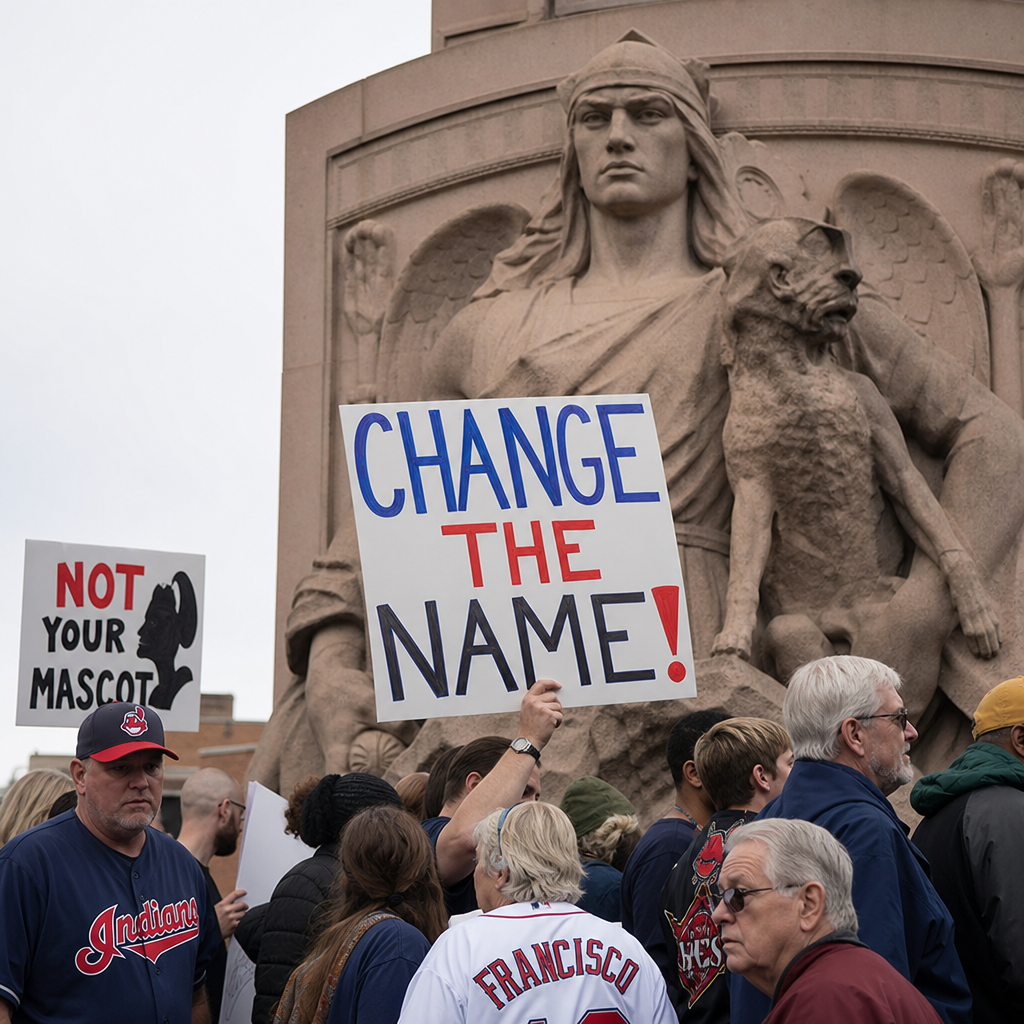
The Cleveland team name change became one of the most closely watched identity disputes in American sports because it sat at the intersection of history, branding, fan loyalty, race, and business. For decades, the franchise known as the Cleveland Indians carried a name and visual identity that many fans treated as tradition, while Native activists, scholars, and civic leaders argued that the brand reduced Indigenous people to a mascot. When the club adopted the name Cleveland Guardians in 2021, the move did more than replace a word on uniforms. It forced a public reckoning over who gets to define heritage, how organizations respond to social pressure, and what a team owes to the city it represents.
In practical terms, the Cleveland team name change refers to the decision by Major League Baseball’s Cleveland franchise to retire the Indians name after the 2021 season and rebrand as the Guardians. The controversy includes several connected issues: the long debate over Native American imagery in sports, the specific legacy of the Chief Wahoo logo, the economics of rebranding, legal disputes over trademarks, and the emotional reaction of supporters who saw the old name as part of family memory. As someone who has worked on brand transitions and public-facing messaging, I can say Cleveland’s case stands out because every choice carried symbolic weight. A name was never just a name here.
This subject matters beyond baseball. Cleveland became a case study for universities, high schools, and pro franchises evaluating whether inherited mascots still fit modern standards. It also showed how pressure builds over time. The name did not change because of a single protest or a single social media cycle. The shift followed years of demonstrations on Opening Day, sustained criticism from Native groups, media scrutiny, sponsor expectations, and a broader cultural reassessment that accelerated after 2020. Understanding the Cleveland team name change helps explain how institutions balance continuity with accountability, and why sports controversies often reveal deeper conflicts about national identity.
How the Cleveland Name Controversy Developed
The roots of the Cleveland controversy stretch back generations. The Indians name had been used since 1915, and the club’s most polarizing symbol, Chief Wahoo, became widely recognized in the mid twentieth century. Supporters often argued that the branding honored Native people, but that defense weakened as more Indigenous voices explained that caricatured imagery and race-based team names do not operate as neutral tributes. Chief Wahoo in particular drew criticism because its exaggerated grin, bright red skin, and cartoon style fit the long history of racial caricature in American advertising and entertainment.
Public protests in Cleveland were not new. For years, demonstrators gathered outside the ballpark on Opening Day, arguing that Native identities were not costumes or mascots. The team gradually responded in limited ways before the full renaming. In 2018, the franchise removed Chief Wahoo from on-field uniforms, a significant step because Major League Baseball had become increasingly uncomfortable with the logo’s visibility during national broadcasts and postseason coverage. Yet the Indians name remained, which meant the central dispute never disappeared. In my experience, partial brand corrections can reduce immediate pressure, but they also clarify the unresolved issue. Cleveland reached exactly that point.
The broader social climate mattered. After the murder of George Floyd in 2020, many institutions reviewed symbols previously defended as tradition. Within that atmosphere, team owner Paul Dolan announced that the club would examine its name. That wording was careful and strategic. Organizations often frame change as a review first, especially when they need time to test reactions from fans, corporate partners, employees, and league officials. By July 2021, the new name Cleveland Guardians was announced, and the franchise emphasized local relevance, pointing to the Guardians of Traffic statues on the Hope Memorial Bridge near Progressive Field.
Why the Old Name Became Untenable
The central reason the old name became untenable is straightforward: a large and persistent group of Native advocates said it caused harm, and the cultural legitimacy of ignoring that claim steadily eroded. Research on Native mascots has repeatedly found negative effects on how Indigenous people are perceived and on how Native youth experience representation. The American Psychological Association called for the retirement of American Indian mascots, symbols, images, and personalities in schools in 2005, citing harmful psychological, educational, and social effects. While a professional baseball club is not a school, the logic applies. Repetition normalizes stereotype.
Another reason was institutional pressure. Leagues, broadcasters, sponsors, and civic partners increasingly calculate reputational risk. A club can keep a controversial identity only while enough stakeholders decide the backlash is manageable. That threshold changed. By the late 2010s and early 2020s, brands wanted distance from imagery likely to trigger national criticism. Even before the full rename, removing Chief Wahoo signaled that the most visible symbol had become a liability. Once the logo was judged indefensible, the franchise’s argument for the Indians name became harder to sustain because the club had already admitted that at least part of the brand architecture was unacceptable.
Fan sentiment was more divided than headline arguments suggested. Some supporters were genuinely attached to the old name through family history, radio memories, and iconic moments from players such as Bob Feller, Jim Thome, and Omar Vizquel. Others accepted the need for change but worried that a new identity would feel generic or disconnected from baseball history. Those concerns were real, yet they did not outweigh the central point: if a team identity depends on a group’s racialized depiction, tradition is not a sufficient defense. Sports brands evolve all the time. What made Cleveland difficult was not the mechanics of rebranding, but the emotional transfer from one era to another.
How the Guardians Brand Was Built
The Cleveland Guardians name was not chosen at random. It referenced the city’s Art Deco Guardians of Traffic statues, eight massive figures installed on the Hope Memorial Bridge in the 1930s. That choice mattered because successful rebrands usually anchor themselves in local geography, architecture, or civic mythology. Instead of reaching for a broad abstract concept, the club selected a symbol with visible, place-based meaning. In brand strategy terms, that created stronger narrative continuity. The team could say it was leaving behind a harmful identity while still embracing something distinctly Cleveland.
The rollout combined nostalgia and modernization. The team kept familiar colors, retained the block C as part of its visual system, and introduced a winged G baseball mark intended to evoke motion and bridge iconography. That was a classic transition tactic. When a franchise changes its name, it often preserves some visual elements to avoid alienating customers who may already be resisting the decision. The objective is not to erase the past completely, but to make the new system recognizable enough that merchandise, broadcasts, stadium graphics, and digital assets feel connected on day one.
The rebrand was not universally praised. Some designers criticized the winged G logo as too busy, and some fans felt Guardians sounded more like a minor league or arena football name than a century-old MLB brand. Those objections illustrate an important truth about naming: even justified change does not guarantee instant affection for the replacement. New names gain legitimacy through repetition, winning seasons, player attachment, and civic ritual. In practice, fans often judge a name less harshly after they hear a broadcaster call a dramatic ninth inning under that identity for a season or two. Time is one of the strongest branding tools available.
Key Controversies Within the Broader Debate
The Cleveland team name change also became a hub for several overlapping controversies that still shape discussion. Each issue helps explain why this case belongs in any broad review of sports scandals and controversies.
| Issue | Why it mattered | Cleveland example |
|---|---|---|
| Native representation | Raised ethical questions about stereotyping and who gets to define honor | Longstanding protests against Indians and Chief Wahoo |
| Tradition versus harm | Tested whether fan memory should outweigh objections from affected groups | Supporters defended history; critics said history was not harmless |
| Commercial risk | Forced sponsors and leagues to assess reputational exposure | MLB and partners were increasingly uncomfortable with Chief Wahoo |
| Rebrand execution | Showed how difficult it is to replace an iconic identity without losing equity | Retention of colors and local civic symbolism in Guardians rollout |
| Legal conflict | Demonstrated that naming rights and trademarks can complicate transitions | A roller derby team challenged the Guardians name announcement |
The legal dispute deserves attention because it showed that cultural controversy can quickly become an intellectual property problem. Shortly after the baseball club announced Guardians, the Cleveland Guardians roller derby organization asserted prior use of the name. The sides eventually reached a coexistence agreement, but the episode was a reminder that modern rebranding requires more than public approval. Teams must clear trademarks, domain strategy, merchandising rights, and league licensing pathways before a launch can stabilize.
There was also the question of whether change came too late. Critics argued that the franchise had years of warnings and acted only when outside pressure became impossible to ignore. That critique is fair. In reputation management, delayed action often makes an organization look reactive rather than principled. Yet late change can still matter. Once a high-profile club alters course, it influences norms elsewhere. Cleveland did not lead the wider movement, but its decision added momentum to it.
What Cleveland Means for Sports Identity and Civic Memory
Cleveland’s transition matters because sports teams are public institutions in everything but legal form. They are private businesses, yet cities invest them with symbolic meaning through stadium subsidies, local media attention, and intergenerational loyalty. When such an institution changes its name, people often react as if a piece of civic memory is being revised. That reaction is understandable. The challenge is separating memory from endorsement. Fans can still remember 1948, 1995, 1997, or the 2016 pennant without insisting that every element of the old identity remain frozen in place.
From a broader industry perspective, the Cleveland team name change demonstrated that identity is not static. A sports brand is a living system that includes language, visuals, rituals, and values. If one part of that system conflicts with contemporary standards, the pressure does not disappear by appealing to the past. It intensifies as more audiences gain a voice. Teams that ignore this dynamic usually lose control of the narrative. Teams that address it directly have a chance to redefine themselves on their own terms, even if the process is uncomfortable and imperfect.
The most useful lesson is practical. Organizations facing similar debates should consult affected communities early, audit the full brand architecture, test legal availability before public rollout, and explain the reasons for change in plain language. Cleveland showed what happens when a franchise waits too long, but it also showed that a locally grounded replacement can work. The Guardians identity is now part of the city’s sports vocabulary, and each season makes it more normal.
The Cleveland team name change was never only about baseball, and that is why it remains such an important controversy. It brought together questions of race, history, commerce, law, design, and civic belonging in one highly visible decision. The old name lasted for generations, but longevity did not resolve the underlying criticism. Instead, it magnified the eventual reckoning. By adopting Guardians, the franchise accepted that tradition must sometimes yield when a public identity causes avoidable harm.
For readers following scandals and controversies across sports, Cleveland serves as a useful hub case because it connects so many recurring themes: institutional delay, symbolic politics, stakeholder pressure, fan backlash, and the hard mechanics of rebranding. It shows how a team can preserve city pride without preserving every inherited symbol. If you are exploring this subtopic further, use Cleveland as the reference point for understanding why sports identity debates rarely stay confined to the field. They become arguments about who belongs, whose voice counts, and what a community chooses to celebrate next.
Frequently Asked Questions
Why did Cleveland change its team name from Indians to Guardians?
Cleveland changed its team name because the old identity had become the focus of a long-running debate about race, representation, and the role of Native imagery in sports. For many years, supporters of the former name argued that it reflected history and tradition. However, Native activists, historians, educators, and many civic voices maintained that the name and associated branding turned Indigenous identity into a mascot rather than treating Native people as living communities with real cultures, histories, and political identities. As public attitudes shifted across the United States, pressure grew on professional sports organizations to reconsider names and symbols that many people saw as demeaning or outdated.
The decision was also influenced by a broader cultural reckoning in sports and entertainment, where organizations were increasingly expected to align their branding with contemporary social values. Cleveland had already moved away from some of its most controversial imagery, but critics argued that removing a cartoon logo without addressing the team name itself did not resolve the larger issue. Ultimately, the franchise concluded that keeping the old name was creating division, distracting from the team, and placing the organization on the wrong side of an important social conversation. The move to Guardians was intended to establish a new identity that was locally rooted, more inclusive, and better suited for the future of the club and its fan base.
Why was the old Cleveland team name considered controversial?
The controversy centered on the fact that the former name referred to Indigenous identity in a sports context, where Native people were often represented through stereotypes, simplified imagery, or symbolic caricatures. Critics argued that this kind of branding does not honor Native communities in any meaningful way. Instead, it can flatten diverse peoples and nations into a single commercial image for entertainment. Scholars and activists have long pointed out that these portrayals contribute to misunderstanding, normalize racial stereotyping, and reinforce the idea that Indigenous people belong to the past rather than the present.
The debate was not only about intent, but about impact. Many fans may have believed the name was respectful or harmless because it had been around for generations. But opponents emphasized that longevity does not eliminate harm. A tradition can still be exclusionary or offensive, especially when the people being represented say the depiction is inaccurate or degrading. That is why the issue became so emotionally charged: one side often framed the name as heritage, while the other framed it as a public symbol of marginalization. The controversy endured for decades because it involved more than branding. It raised deeper questions about who gets to define respect, how culture is commercialized, and whether sports traditions should change when they conflict with evolving social standards.
How did fans and the public react to the Cleveland Guardians name change?
Public reaction was mixed, which is typical when a storied franchise changes a long-established identity. Some fans welcomed the new name immediately, seeing it as a necessary and overdue step that allowed the organization to move forward with greater cultural sensitivity. Others appreciated that Guardians kept the “G” and much of the team’s visual color continuity, making the transition feel less abrupt while still signaling a new era. Many civic observers also liked that the new name drew inspiration from Cleveland itself, especially the city’s iconic Guardians of Traffic statues, which gave the rebrand a local, architectural, and historical connection.
At the same time, there was clear resistance from portions of the fan base who felt attached to the former name through family memories, generational loyalty, and emotional association with the team’s past. For these fans, the change was often experienced not simply as a branding update but as a loss of continuity. Some saw it as a response to outside pressure rather than an organic decision. Over time, however, reactions became more nuanced. In many cases, the conversation shifted from whether the change should have happened to how effectively the new identity represented Cleveland and how well the club could build fresh traditions around it. That pattern is common in sports rebranding: initial pushback can be intense, but sustained team performance, community engagement, and repeated exposure often help normalize the new name.
What does the name “Guardians” mean, and why was it chosen?
The name “Guardians” was chosen because it ties the franchise to a recognizable piece of Cleveland’s civic identity. It references the Guardians of Traffic statues on the Hope Memorial Bridge near downtown Cleveland, monumental Art Deco figures that symbolize progress, transportation, and civic pride. By selecting a name rooted in local architecture and public symbolism, the organization aimed to create an identity that belonged specifically to Cleveland rather than one built around a racialized mascot tradition. This gave the franchise a chance to preserve a sense of seriousness, strength, and history while avoiding the cultural controversies attached to the previous name.
From a branding perspective, “Guardians” also offered practical advantages. It is distinctive, visually adaptable, and flexible enough to support logos, uniforms, marketing, and storytelling. It carries themes of protection, resilience, and stewardship, all of which fit naturally into sports language. Just as importantly, it allowed the organization to pivot toward a brand that could be celebrated for what it says about the city rather than debated for what it says about a marginalized group. That local grounding matters because successful team identities usually work best when they feel authentic to place. In this case, the club tried to replace a divisive national controversy with a civic symbol that Cleveland could claim as its own.
What does the Cleveland team name change reveal about identity and sports culture in America?
The Cleveland name change reveals that sports identities are never just about logos, uniforms, or merchandise. They are deeply connected to memory, place, politics, and cultural values. Teams often become symbols through which communities tell stories about themselves, and that is why changing a name can feel so consequential. In Cleveland’s case, the debate showed how a franchise can become a battleground for larger American questions: how to handle inherited traditions, how to respond when those traditions are challenged, and how institutions balance nostalgia with social responsibility. The issue drew so much attention precisely because it exposed the emotional power of sports branding and the difficulty of separating fan attachment from broader cultural meaning.
It also demonstrates how sports organizations increasingly operate within a public environment where brand decisions are judged not only by financial performance but by ethical and social standards. Leagues, sponsors, media outlets, and community stakeholders now play a greater role in shaping what is considered acceptable. Cleveland’s shift from Indians to Guardians illustrates that identity in modern sports is negotiated, not fixed. Teams can no longer assume that long-standing names are immune from reexamination simply because they are familiar. Instead, they must consider how their identities resonate across different audiences, especially those historically misrepresented or excluded. In that sense, the Cleveland controversy is not just one team’s story. It is part of a wider transformation in American sports, where legacy brands are being asked to reflect present-day understandings of dignity, representation, and belonging.