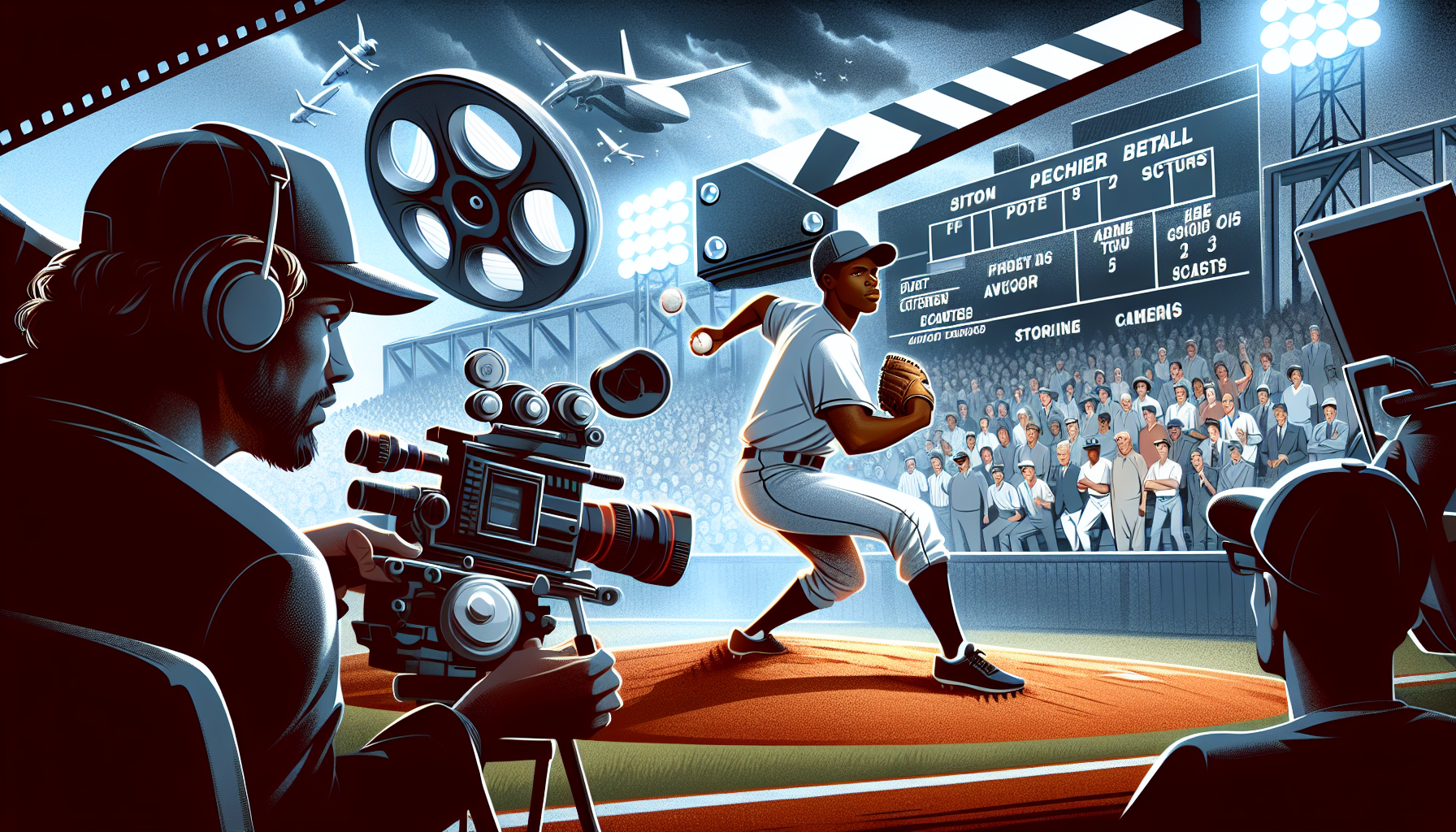
Baseball has always been more than a sport on screen; it is a visual language that filmmakers use to express memory, ambition, failure, community, and national identity. “The Art of the Game: Visual Depictions of Baseball in Film” sits at the center of the broader “Baseball in Literature and Film” conversation because movies have given the game some of its most enduring images: the empty diamond at dusk, the chalked baseline before first pitch, the dust cloud at home plate, and the lonely outfielder framed against a vast sky. When we talk about visual depictions of baseball in film, we mean the full set of artistic choices that shape how the game looks and feels, including cinematography, production design, editing, costume, lighting, sound-image interplay, and the symbolic use of ballparks, uniforms, bats, gloves, and scoreboards. These choices matter because baseball is uniquely cinematic. Its measured pace allows directors to build tension through framing and timing, while its geometry gives camera crews clean lines, fixed points, and meaningful spatial relationships. Over years of studying sports cinema and working with film analysis across genre and period, I have found that baseball films consistently reward close visual reading. A mound visit can reveal hierarchy. A close-up on pine tar can signal ritual. A wide shot of an empty stadium can say more about loss than a speech ever could. This hub article surveys the miscellaneous visual traditions that define baseball on film and connects the themes, techniques, and recurring motifs that readers can explore further across this subtopic.
Why Baseball Translates So Powerfully to the Screen
Baseball works in film because the sport is built around anticipation, pause, and release. Unlike basketball or hockey, where continuous motion often dictates rapid cutting, baseball lets the camera dwell on faces, gestures, and distances. Directors can hold on a pitcher staring in for the sign, a batter tightening his grip, or a runner edging off first, and the audience immediately understands that something consequential is about to happen. That visual patience creates drama without requiring explanation. It also gives filmmakers room to layer emotion into the image. In The Natural, for example, the game is photographed with mythic grandeur, using golden light and heroic compositions to elevate Roy Hobbs into a near-legendary figure. In Bull Durham, the visual approach is earthier and more intimate, emphasizing worn locker rooms, humid Southern nights, and the texture of minor league life. In Moneyball, baseball is often shown through institutional spaces such as offices, tunnels, and video rooms, reflecting a shift from romantic spectacle to analytical systems thinking. Each film presents the same sport differently because the visual treatment defines what baseball means within that story.
Another reason baseball films endure is that the field itself functions as a ready-made symbolic stage. The infield diamond suggests order and strategy. The foul lines imply boundaries between control and chaos. The outfield wall becomes a literal and emotional horizon. Filmmakers use these fixed visual elements to express abstract ideas. A centered shot from behind the pitcher can emphasize isolation and responsibility. A low-angle image of stadium lights can make a moment feel transcendent or oppressive, depending on the color palette and score. Because most viewers already know the basic rules of baseball, directors do not have to spend every scene clarifying action. They can instead invest in mood, iconography, and visual metaphor. That efficiency is one reason baseball imagery has remained so durable in American film culture, from studio-era biopics to contemporary independent dramas and documentaries.
Core Visual Motifs in Baseball Cinema
Certain images recur across baseball films because they capture the game’s emotional architecture quickly and clearly. One of the most common is the ballpark as sacred space. In Field of Dreams, the diamond carved out of Iowa farmland is not simply a field; it is a threshold between everyday life and the realm of memory, regret, and reconciliation. The film’s soft lighting, cornfield framing, and deliberate camera movement turn the setting into a visual argument that baseball can reconnect fractured generations. Another recurring motif is the uniform as identity. Clean major league whites communicate aspiration and public image, while scuffed minor league jerseys often signal precarious labor and fading dreams. Costume design matters in baseball movies because uniforms erase some individuality while heightening role, rank, and belonging.
Hands are another crucial visual element. Directors repeatedly show fingers gripping seams, batters adjusting gloves, catchers flashing signs, and players rubbing dirt into their palms. These details communicate craft. Baseball is a sport of repeated fine motor actions, so close-ups on hands can reveal nerves, expertise, superstition, or age. In films centered on pitching, such as For Love of the Game, the camera often isolates the ball in the pitcher’s hand to underscore control and vulnerability at once. Dust and dirt also carry expressive weight. A clean uniform early in a film can become stained over time, marking labor and conflict. Sliding dust clouds add kinetic energy to a game that otherwise unfolds in measured beats. Even the scoreboard is a meaningful visual object. Old manual scoreboards evoke tradition and human scale, while electronic boards can imply commercialization, media pressure, or modern spectacle.
| Visual motif | What it signifies | Representative film example |
|---|---|---|
| Empty field at dawn or dusk | Memory, possibility, solitude | Field of Dreams |
| Close-up of hands and equipment | Craft, ritual, pressure, repetition | For Love of the Game |
| Stadium lights and wide sky | Myth, scale, public scrutiny | The Natural |
| Worn locker rooms and buses | Labor, class, minor league realism | Bull Durham |
| Front-office interiors and monitors | Data, bureaucracy, modern strategy | Moneyball |
Cinematography, Editing, and the Geometry of Play
The best baseball films understand that camera placement must respect the geometry of the sport. A baseball field is a network of angles, baselines, and zones of responsibility, so visual coherence matters. When a director cheats geography too aggressively, the audience may still follow the drama, but the play loses credibility. Strong baseball cinematography usually balances three perspectives: the subjective view of a player in the moment, the observational view that clarifies game situation, and the expressive view that interprets emotion. Ron Shelton’s Bull Durham leans into character-centered framing, often using medium shots and conversational staging to locate baseball within daily life. Barry Levinson’s The Natural prefers painterly compositions and dramatic backlighting, turning athletic action into iconography. Sam Raimi’s For Love of the Game uses tighter isolation and point-of-view transitions to place the viewer inside Billy Chapel’s mental focus.
Editing style is equally important. Baseball can be shown with classical continuity editing, where each cut preserves spatial logic, or with heightened montage that compresses time and magnifies emotion. Both approaches can work, but they serve different ends. A full at-bat shown with clear pitch-by-pitch progression emphasizes tactical intelligence and suspense. A montage of swings, catches, train rides, and newspaper headlines can convey a whole season’s rise or decline in seconds. Documentaries such as Ken Burns’s Baseball use archival stills, slow pans, and voiceover to create historical reflection rather than immediate game action, proving that visual depictions of baseball are not limited to live-play recreation. Sound-image synchronization also matters. The crack of the bat, the pop of the mitt, the scrape of spikes, and the hum of a crowd often shape memory as much as the image itself. In practice, filmmakers frequently heighten these sounds in postproduction to make the physical contact and silence of baseball feel more vivid than natural hearing would allow.
Ballparks, Landscapes, and Production Design
Production design determines whether a baseball film feels lived in or synthetic. Ballparks are not interchangeable backdrops; each one carries class, region, era, and institutional history. A jewel-box urban stadium with steel trusses and tight foul territory creates a different visual mood than a sprawling suburban complex or a rural sandlot. In period films, accuracy in signage, seat color, scoreboard mechanics, advertising, and dugout layout does more than satisfy detail-oriented viewers. It anchors the story in a believable baseball world. A League of Their Own succeeds partly because its production design captures wartime textures, from train stations and uniforms to small-town fields and women’s league promotional imagery. The visual environment reminds viewers that baseball is embedded in social history, not floating above it.
Landscape is especially significant in baseball cinema because the sport often stands in for a relationship between people and place. Rural settings tend to support themes of nostalgia, inheritance, and myth. Urban settings often emphasize ambition, ethnicity, labor, and media attention. Sandlots and neighborhood lots signal improvisation and access; immaculate professional fields signal aspiration and exclusion. I have repeatedly found that when filmmakers want to communicate baseball as democratic, they show informal play spaces with uneven grass, chain-link backstops, and mixed-age participants. When they want to present baseball as institution, they foreground gates, tunnels, locker rooms, press areas, and surveillance-like views from high in the stands. Production design therefore becomes thematic argument. The condition of the field, the width of the concourse, and the wear on a glove all tell the audience what kind of baseball world they are entering.
Myth, Memory, and National Identity on Film
Few sports carry as much mythic freight in American cinema as baseball. Filmmakers use its visual vocabulary to explore the national past, often blending historical memory with selective idealization. This tendency can produce moving art, but it also deserves scrutiny. The Natural presents baseball through luminous, almost Arthurian imagery, turning the sport into a stage for destiny and redemption. Field of Dreams uses apparition, pastoral imagery, and circular movement through the corn to portray baseball as a healing force tied to fathers, sons, and unfinished emotional business. These films endure because they understand how to make baseball look like collective memory: softened edges, glowing light, and ritualized entrances onto the field.
At the same time, baseball films that engage race, gender, and labor often complicate that nostalgia. 42 visualizes exclusion and pressure through crowd hostility, dugout separation, and framing that isolates Jackie Robinson within both open field space and constricting social space. A League of Their Own counters masculine baseball iconography by showing women athletes not as novelty figures but as competitors whose visual presentation includes exertion, bruises, tactical intelligence, and comic vitality. These examples matter for a hub article because the “miscellaneous” category should not mean minor. It should mean connective. Visual depictions of baseball in film are never just about sports action. They are also about who gets seen, how institutions shape visibility, and which versions of the past a culture chooses to picture and repeat.
The Contemporary Baseball Film and Where to Explore Next
Contemporary baseball cinema is more fragmented than the classic studio-era cycle, but that diversity is valuable. Recent films and series mix nostalgia with skepticism, blending traditional game imagery with analytics, media saturation, and changing ideas about fame. Moneyball is the clearest example. Its most important baseball images are often not home runs or diving catches but fluorescent hallways, trade-call offices, player evaluation footage, and the uneasy distance between numbers and bodies. The visual shift reflects a real change in how professional baseball is managed. Front offices rely on TrackMan, Statcast-derived interpretations, biomechanical analysis, and high-speed video, and contemporary screen stories increasingly absorb that reality. Even when a film remains emotionally attached to older baseball symbolism, it now operates in the shadow of data, branding, and round-the-clock commentary.
For readers using this piece as a sub-pillar hub, the next step is to follow these visual threads into more focused studies. Explore articles on baseball biopics to see how filmmakers visualize real players differently from fictional heroes. Read deeper on women in baseball film, race in baseball cinema, documentary representations of Negro Leagues history, and the design of fictional versus historical ballparks. Compare major league narratives with minor league films to understand how class and infrastructure change the look of the sport. Revisit key titles with the image muted for a few minutes and watch only framing, movement, color, and gesture; then replay the scene with sound to notice how much meaning the visuals already carried. The central lesson is simple: baseball movies last not because they record games, but because they turn the sport’s spaces, tools, and rhythms into visual storytelling. If you want to understand baseball in literature and film more fully, start by looking harder at what the camera is actually showing you, then continue through the connected articles in this hub.
Frequently Asked Questions
Why is baseball such a powerful visual subject in film?
Baseball lends itself to cinema because the sport is already rich in shape, rhythm, space, and ritual. A baseball field is immediately recognizable, with its geometric lines, open outfield, and carefully marked infield creating a visual order that filmmakers can use in highly expressive ways. Unlike faster, more crowded sports, baseball also has long pauses built into the action. Those pauses give directors time to frame a player alone at the plate, a pitcher set against a wide sky, or a silent dugout waiting for a turning point. In visual storytelling, those moments matter because they allow emotion to gather on screen.
Film has repeatedly used baseball imagery to communicate ideas that reach far beyond the scoreboard. The empty diamond at dusk can suggest memory, loss, or the passing of an era. A chalked baseline before the first pitch can symbolize possibility, discipline, and ritual. Dust rising at home plate can evoke conflict, effort, and the physical cost of competition. Even the lonely outfielder, separated from the action for long stretches, can become a visual metaphor for isolation, patience, or private hope. These are not just sports images; they are cinematic symbols.
Baseball also carries a strong cultural and historical identity, especially in American film. Because the game is so often associated with childhood, community, family tradition, and national mythology, directors can use baseball settings to evoke a shared emotional vocabulary almost instantly. Audiences often understand what a backyard catch, a minor league field, or a packed grandstand means before a character even speaks. That combination of visual clarity and emotional resonance is exactly why baseball remains one of the most enduring sports subjects in film.
How do filmmakers use baseball imagery to express themes like memory, ambition, failure, and community?
Filmmakers often rely on baseball as a visual language because the sport naturally mirrors many of life’s most meaningful emotional experiences. Memory is one of the most common themes. A ballpark can function like a memory space, where the present and the past seem to overlap. Soft lighting, slow camera movement, empty stands, and lingering shots of worn gloves or weathered fences can turn the field into a place where characters revisit childhood dreams, family relationships, or moments of personal regret. In this way, baseball in film becomes less about a game in progress and more about what the game represents over time.
Ambition is expressed through repetition, ritual, and individual focus. Directors often show a batter adjusting his stance, a pitcher gripping the seams, or a player training alone at dawn. These details emphasize discipline, aspiration, and the desire to measure oneself against pressure. Because baseball isolates players at crucial moments, the camera can intensify ambition by focusing on a single face before a pitch, a swing, or a throw. The field becomes a stage where private determination is made public.
Failure is equally central to baseball’s cinematic power. Few sports make failure so visible or so routine. A strikeout, an error, a dropped fly ball, or a missed opportunity at the plate can be filmed in ways that feel devastatingly personal. Directors often use silence, crowd reaction, or a delayed cut to emphasize emotional fallout. Baseball’s structure allows failure to linger, which gives filmmakers a way to explore shame, resilience, and the long emotional shadow of disappointment.
Community emerges through wider shots and shared rituals: fans rising together, teammates gathering on the mound, families in the bleachers, children imitating players in neighborhood lots. Baseball in film often connects the individual story to a larger social world. It can represent local pride, generational continuity, immigrant experience, racial history, and the bonds formed around a common space. That is part of what makes baseball such a valuable subject in the broader conversation about literature and film: it connects personal emotion to collective identity in a visually immediate way.
What are some of the most iconic visual motifs associated with baseball movies?
Baseball films return again and again to a set of visual motifs because those images carry both dramatic force and symbolic depth. One of the most enduring is the empty field, especially at dawn, sunset, or under stadium lights after the crowd has left. This image can suggest nostalgia, unfinished dreams, mortality, or the idea that the game endures beyond any one player. It is simple, quiet, and deeply cinematic.
Another iconic motif is the chalked baseline or freshly prepared infield before the game begins. This image often symbolizes order, anticipation, and the ceremonial nature of baseball. Before the first pitch, everything appears possible. Filmmakers use this visual moment to establish emotional stakes, because the untouched field can represent innocence, hope, or the beginning of a new chapter.
The dust cloud at home plate is also a classic baseball image in film. It introduces motion, impact, and ambiguity all at once. A close play at the plate can be shot so that the dust briefly obscures the action, heightening drama while also turning the moment into something almost mythic. Likewise, the crack of the bat paired with a long tracking shot into the outfield has become one of the signature visual and sonic pleasures of baseball cinema. The suspended flight of the ball allows tension, beauty, and anticipation to coexist in a single shot.
Other recurring motifs include the dugout as a space of waiting and reflection, the bullpen as a zone of preparation and anxiety, and the lone outfielder framed against a vast sky or fence line. That last image is especially powerful because it transforms athletic positioning into emotional symbolism. The player may be part of a team, but visually he appears solitary. In baseball films, that solitude can stand for longing, maturity, burden, or the quiet dignity of endurance.
How does the visual style of baseball films differ from the way other sports are portrayed on screen?
Baseball films often look and feel different from movies about sports like football, basketball, or boxing because baseball unfolds in a more measured and episodic rhythm. Other sports tend to emphasize speed, collision, and constant motion, which leads filmmakers toward rapid editing, tight framing, and kinetic camera work. Baseball, by contrast, allows for stillness. Its action is burst-based rather than continuous, and that gives directors room to compose more deliberate images and build tension through anticipation rather than nonstop movement.
This slower structure encourages filmmakers to pay close attention to space. In baseball movies, the distance between pitcher and batter, the long reach of the outfield, and the separation between players are all visually meaningful. Wide shots can communicate loneliness, scale, or the weight of expectation. Close-ups of hands, eyes, cleats, or the ball itself can make tiny gestures feel monumental. Because so much depends on a single pitch or swing, baseball cinema often magnifies detail in a way that feels almost meditative.
There is also a strong relationship between baseball films and nostalgia-inflected visual design. Period settings, natural light, pastoral landscapes, wooden bleachers, vintage uniforms, and small-town ballparks all contribute to the sport’s distinct cinematic identity. Even when a baseball film is contemporary, it often draws on visual traditions associated with memory and myth. This does not mean every baseball movie is sentimental, but it does mean the sport often invites a reflective style that differs from the urgency found in many other sports narratives.
Perhaps most importantly, baseball films frequently balance spectacle with introspection. The game provides dramatic action, but the visual emphasis is often on what players think and feel between moments of action. That inward quality is one reason baseball has remained so significant in film history: it gives directors a way to combine athletic drama with character study, symbolism, and atmosphere.
Why does baseball in film matter within the larger discussion of “Baseball in Literature and Film”?
Baseball in film matters because movies have given the game some of its most memorable and widely shared cultural images. Literature can describe the emotional texture of baseball with enormous depth, but film adds the power of immediate visual embodiment. The viewer sees the late-afternoon light across the infield, the scuffed ball in a pitcher’s hand, the grandstand holding its breath, and the solitary figure in the outfield waiting under a high fly. These images do not simply illustrate stories about baseball; they shape how audiences imagine the game itself.
Within the broader “Baseball in Literature and Film” conversation, cinema plays a unique role by translating themes long explored in writing into a visual and communal medium. Novels, essays, and poems have treated baseball as a metaphor for time, national identity, fatherhood, loss, race, labor, and aspiration. Film extends that tradition by making those metaphors visible. It turns abstract themes into concrete cinematic moments that can be remembered across generations. A single shot of a worn field or a player stepping into the batter’s box can carry the emotional density of pages of prose.
Film also broadens the audience for baseball’s symbolic meanings. Not every viewer comes to a baseball movie as a devoted fan, but many still respond to the imagery because the visual language is so accessible. The field, the uniform, the crowd, the silence before the pitch, and the eruption after contact all communicate instantly. That accessibility helps explain why baseball films often become touchstones in discussions of American storytelling, memory, and identity.
Ultimately, baseball in film matters because it shows how a sport can become art without losing its physical reality. The game remains