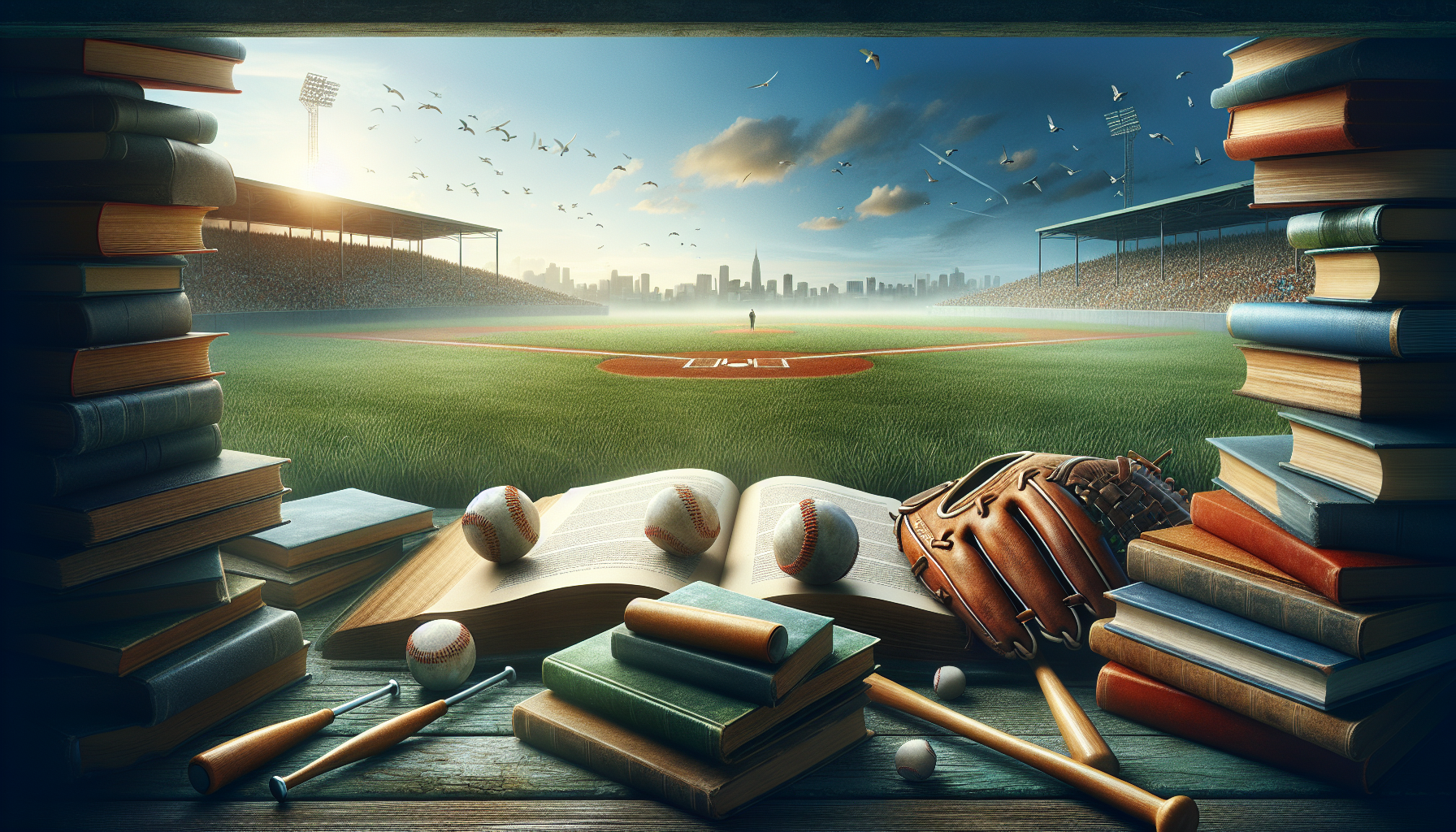
Baseball has long occupied a peculiar place in literature, where a game built on statistics, labor, failure, and routine is transformed into a stage for memory, innocence, longing, and national identity. When writers romanticize baseball, they do not simply describe innings and box scores; they turn the diamond into a symbolic landscape where fathers and sons reconcile, small towns preserve their myths, and ordinary people glimpse permanence in a changing world. In practical terms, romanticized baseball literature refers to fiction, memoir, poetry, and criticism that present the sport as more than competition, framing it as an emotional language for hope, loss, belonging, and time itself. That idea matters because baseball in literature and film has shaped how generations understand the sport, often more powerfully than the sport’s actual history.
I have worked through baseball novels, sports memoirs, classroom anthologies, and adaptation studies for years, and one pattern appears consistently: the books that endure are rarely the most technically precise accounts of the game. They are the works that make baseball feel like a moral drama. This miscellaneous hub for baseball in literature and film gathers that broader tradition. It covers the recurring themes, landmark texts, major authors, common symbols, and cultural tensions that explain why baseball keeps returning as a romantic object in American writing. It also addresses a necessary balance: literature has idealized baseball, but the strongest writing often does so while acknowledging exclusion, commercialization, racial injustice, and disappointment. Understanding that tension is the key to reading baseball literature well.
Why baseball lends itself to romantic literature
Baseball is unusually suited to literary treatment because its structure creates reflection. Unlike sports governed by a running clock, baseball pauses constantly. A pitch, a lead off first, a visit to the mound, a batter stepping out: each interruption opens space for narration and memory. Writers can dwell on anticipation rather than continuous motion. That stop and start rhythm resembles prose itself, with its sentences, pauses, and interior turns. It is one reason baseball produces more memorable novels and essays than many faster sports. The game also unfolds over a long season, allowing authors to connect single moments to years of desire, habit, and regret.
The field’s geometry contributes to the effect. The diamond is simple, symmetrical, and symbolic. Home plate suggests origin, the bases imply pilgrimage, and the return home completes a narrative arc. Even readers who know little about the infield fly rule understand the emotional clarity of a runner trying to get home safely. Literary critics have long noted that baseball’s language already sounds metaphorical: sacrifice, error, steal, home run, strikeout. Those terms invite moral and emotional interpretation. In Bernard Malamud’s The Natural, for example, Roy Hobbs is not just a hitter with a gifted swing; he is written as a damaged hero pursuing redemption in a world that keeps testing whether talent can survive corruption.
Baseball also supports romanticism because failure is built into excellence. A hitter who succeeds three times in ten is a star. That statistical truth gives writers a ready framework for stories about resilience, aspiration, and human limitation. In literature, baseball becomes a way to talk about life without reducing life to easy victories. A player can do almost everything right and still line out. A team can dominate for months and lose in October. That mix of skill and uncertainty helps explain why baseball fiction often feels wistful rather than triumphant. Even celebratory books carry an awareness that glory is temporary and that every season ends.
Classic works that turned baseball into myth
Several canonical books established the romantic vocabulary that later writers still use. The Natural by Bernard Malamud, published in 1952, is one of the clearest examples. Drawing on mythic structures, Malamud presents baseball as a realm of temptation, fate, and flawed heroism. Roy Hobbs arrives with near supernatural promise, yet the novel refuses to make talent morally sufficient. The story romanticizes the game’s grandeur while warning that baseball myths can conceal weakness and vanity. That duality has influenced decades of sports fiction and its film adaptation fixed many of its images in popular culture.
W. P. Kinsella’s Shoeless Joe, the novel that inspired Field of Dreams, intensified baseball’s association with memory and spiritual longing. Its famous premise, a farmer hearing a voice and building a ballfield in his corn, works because baseball is treated as a bridge between the living and the dead. The novel and film are not realistic in any ordinary sense, yet they feel emotionally true to readers because baseball has been cast as the repository of unresolved family feeling. When people ask why baseball literature so often returns to fathers and sons, this is the answer: the game offers ritual, inheritance, and a language for affection that many characters otherwise cannot speak.
Roger Angell, perhaps the finest baseball essayist in American letters, romanticized the sport differently. In collections such as The Summer Game and later essays for The New Yorker, he elevated everyday observation. Angell did not need supernatural plots. He found wonder in a pitcher working out of trouble, in a pennant race changing tone over a week, in the way fans hold private histories inside public games. His prose gave baseball literature authority because it proved that the romance of the sport could emerge from close reporting rather than fantasy. Donald Hall, A. B. Giamatti, Bart Giamatti’s essays, and other literary voices similarly treated baseball as a serious subject worthy of elegant thought.
Major themes that define baseball romanticism
The first recurring theme is nostalgia. Baseball writing often imagines the past as more coherent than the present, whether that past is a childhood summer, a vanished ballpark, or a pre television local culture built around scorecards and radio calls. Nostalgia gives baseball literature emotional force, but it also creates distortion. Many works mourn what has been lost while overlooking who was excluded from those supposedly simpler eras. Strong baseball literature uses nostalgia carefully. It invites yearning while leaving room for critique.
The second major theme is innocence. Baseball is repeatedly cast as a child’s game preserved inside adult life. That does not mean the sport is innocent in reality; gambling scandals, segregation, labor disputes, and steroid controversies disprove that. Rather, literature uses baseball to stage the desire for innocence. In memoirs and novels alike, the first glove, the first catch with a parent, and the first game attended become primal scenes. The game promises a temporary return to uncomplicated feeling, even when the story ultimately shows that such purity cannot last.
The third theme is community. Baseball literature romanticizes crowds, neighborhoods, and local identity. A team can represent a borough, a mill town, an immigrant district, or a family tradition passed from one generation to the next. This is why books about the Brooklyn Dodgers, the Red Sox, the Cubs, or small town teams resonate beyond the standings. The emotional claim is not just that baseball entertains; it is that baseball gives people a shared narrative. When literature succeeds here, it captures how a game can make strangers feel historically connected.
| Theme | How literature presents it | Representative example |
|---|---|---|
| Nostalgia | The past appears intimate, slower, and emotionally legible | Shoeless Joe and many memoirs of childhood fandom |
| Innocence | Baseball becomes a refuge from adult compromise | Early coming of age baseball stories and youth recollections |
| Community | Teams symbolize neighborhoods, families, and civic memory | Writing on Brooklyn Dodgers fandom and local ballparks |
| Redemption | Failure on and off the field can be answered through play | The Natural and many comeback narratives |
| Time | The long season mirrors aging, endurance, and mortality | Roger Angell’s essays on pennant races and endings |
Poetry, essays, and the language of reverence
Romanticized baseball is not limited to novels. Poetry has often been the purest vehicle for elevating the game because poets can compress the sport’s stillness and suddenness into image and rhythm. Marianne Moore’s “Baseball and Writing” famously links the craft of composition to the game’s disciplined unpredictability. The poem is brief, but its comparison is exact: both baseball and writing reward alertness, technique, and timing. That connection matters because it shows baseball entering literature not merely as subject matter but as a model for artistic practice.
Essays have been even more influential. Roger Angell, Donald Hall, and John Updike transformed baseball journalism into literary art by insisting on precision. Updike’s “Hub Fans Bid Kid Adieu,” his account of Ted Williams’s final game in 1960, remains essential because it demonstrates how a reported event can become ceremonial. Updike records facts, but he arranges them so that Williams appears at once physical and legendary, a body moving through an ending larger than itself. The essay helped codify a central principle of baseball literature: exact detail creates, rather than weakens, romance.
That principle explains why baseball essays are still assigned in literature and nonfiction classes. They teach scene construction, voice, pacing, and the use of public events to explore private feeling. They also reveal how reverence can coexist with scrutiny. A great baseball essay does not worship blindly. It notices the cheap seats, the bad coffee, the strange bounce of a grounder, the moral ambiguity of fandom, and the business surrounding the spectacle. Because the best writers keep one foot in realism, the moments of lyricism land harder. Readers trust the romance because it is earned through observation.
Film adaptations and the widening of the baseball myth
Any hub on baseball in literature and film must account for adaptation, because cinema has amplified literary baseball romanticism for mass audiences. Field of Dreams, adapted from Shoeless Joe, is the best known case. The film sharpened the father son storyline, simplified some of the novel’s stranger metafictional elements, and delivered one of the most quoted endings in sports cinema. Its success fixed a durable image in cultural memory: baseball as a place where grief can become visitation. Many viewers who have never read baseball fiction still inherit its literary assumptions through that film.
The Natural underwent a similar transformation. Malamud’s novel is darker and more morally severe than Barry Levinson’s 1984 adaptation, which turns Roy Hobbs into a more conventionally redemptive figure. The movie’s famous stadium light sequence, accompanied by Randy Newman’s score, is a masterclass in visual romanticism. Yet comparing the novel and film is instructive. Literature often preserves ambiguity better; film often intensifies emotional resolution. Together they show how baseball myths evolve when transferred across media.
Other films reinforce themes first shaped in prose, including Bull Durham, A League of Their Own, and The Sandlot. While not all are direct literary adaptations, each uses story patterns literature established: baseball as memory, apprenticeship, local culture, and the testing ground of identity. For readers exploring this miscellaneous hub, that crossover matters. Baseball romanticism is not confined to bookshelves. It circulates between novels, poems, essays, screenplays, and popular quotation, creating a shared cultural script about what the game means.
The limits of romanticism: race, labor, money, and myth
Romanticized baseball literature is powerful, but it can mislead if read uncritically. The biggest limitation is that idealization often smooths over conflict. For decades, stories celebrated pastoral ballparks and timeless summers while underplaying segregation and the Negro Leagues. Any serious account must place writers such as August Wilson, who centered Black baseball history in works like Fences, alongside celebratory mainstream narratives. Likewise, books on Jackie Robinson, Satchel Paige, and Negro League communities complicate the idea that baseball was ever a universally shared democratic space. The romance cannot be honest unless it includes who had to fight for entry.
Labor is another neglected dimension. Baseball literature often frames the sport as pure play, yet professional baseball has always been work. The reserve clause bound players for decades, free agency battles reshaped power, and minor league life has frequently meant low pay, unstable housing, and relentless travel. Writers who know the game well understand that romance and labor coexist uneasily. A perfectly lit stadium can obscure the economic machinery behind it. When literature admits that tension, it becomes richer and more believable.
Commercialization creates a similar challenge. Corporate naming rights, broadcast deals, legalized sports betting partnerships, and algorithm driven front offices have changed the texture of fandom. Some readers treat this as evidence that baseball’s literary romance is obsolete. I do not agree. The romance persists, but contemporary writers must earn it under new conditions. A credible modern baseball essay cannot pretend money is absent. It has to show how wonder survives inside business rather than outside it.
How to use this hub within baseball in literature and film
This miscellaneous page works best as a central guide to the subtopic. If you are building a broader understanding of baseball in literature and film, start here for the major patterns, then move into more focused articles on baseball novels, baseball poetry, film adaptations, memoir and nonfiction, Negro Leagues literature, children’s baseball books, and father son narratives. The purpose of a hub is not to replace those deeper pages but to connect them, giving readers a conceptual map before they explore specific authors, texts, or themes.
Use the framework from this article when reading any baseball story. Ask what kind of romance the work creates. Is baseball presented as memory, moral testing, local identity, escape, or historical witness? Ask also what the work leaves out. Does it acknowledge race, class, labor, gender, or commercialization? Those questions help separate shallow sentiment from lasting literary achievement. In my experience, the most rewarding baseball writing is not the most nostalgic. It is the writing that understands why nostalgia is attractive and then presses beyond it.
Baseball has been romanticized in literature because its form, language, and history invite writers to turn a game into a meditation on time, family, community, and desire. The best works, from The Natural and Shoeless Joe to Roger Angell’s essays and influential film adaptations, do more than praise the sport. They reveal why baseball has served as a national metaphor and why readers keep returning to it when they want stories about loss, renewal, and belonging. Just as important, the strongest literature resists easy myth by confronting exclusion, labor, and money alongside beauty.
For anyone exploring baseball in literature and film, that is the central benefit of this hub: it gives you the vocabulary to recognize how the game has been idealized and the critical perspective to judge when that idealization deepens truth rather than obscuring it. Read outward from these themes into the novels, poems, essays, and films linked across this subtopic. The more examples you compare, the clearer it becomes that baseball’s literary power has never depended only on what happened on the field. It depends on what writers persuaded readers the field could mean. Start with that question, and the entire landscape of baseball storytelling opens up.
Frequently Asked Questions
Why has baseball been so easy for literature to romanticize?
Baseball lends itself to romantic treatment because the game already carries a built-in language of pause, anticipation, repetition, and memory. Unlike faster sports that emphasize constant motion, baseball unfolds in moments: the pitcher set on the mound, the batter waiting, the crowd holding its breath, the long silence before action. That structure gives writers room to attach meaning to what is happening. A single pitch can become a test of character, a fly ball can trigger a flood of childhood memory, and an inning can stand in for an entire stage of life. In literature, this makes baseball more than a sport; it becomes a reflective space where emotion and symbolism can accumulate.
Writers also romanticize baseball because the game is deeply tied to American cultural mythology. The ballpark can represent continuity, the small town can stand for a vanishing innocence, and the season itself can mirror cycles of loss, renewal, and hope. Literature often transforms the diamond into a place where people search for meaning in a changing world. Fathers and sons reconnect through catch, old grievances soften in the glow of nostalgia, and ordinary routines take on a ceremonial quality. Even the game’s failures strike a literary chord: baseball is a sport where great players fail often, so it naturally supports stories about resilience, longing, imperfection, and grace. That emotional and symbolic richness is exactly what encourages romanticized portrayals.
What themes do authors usually emphasize when they romanticize baseball in literature?
The most common themes are memory, innocence, family, national identity, and the desire for permanence. In many literary works, baseball functions as a bridge between past and present. A character may remember a childhood game, a local field, or a parent’s voice at the ballpark, and those details become a way of preserving something time has threatened to erase. This is one reason baseball often appears in fiction as a repository of memory. It is not just a game people once played or watched; it is a container for lost summers, vanished neighborhoods, and versions of the self that can only be recovered through recollection.
Another major theme is reconciliation, especially between generations. Baseball literature frequently stages emotional repair through simple acts: playing catch, listening to radio broadcasts, attending a game together, or passing down stories about teams and players. These scenes may appear modest, but that modesty is part of the romance. The game’s everyday rituals allow writers to dramatize love, regret, loyalty, and forgiveness without making them feel forced. Baseball also often carries the weight of national symbolism. Authors use it to explore ideas about America itself: who belongs, what traditions endure, and how collective myths are formed. At the same time, romanticized literature often highlights the tension between the ideal and the real. The beauty of the game exists alongside labor, exclusion, commercialism, and disappointment, which gives the romance a bittersweet depth rather than a purely sentimental one.
How does romanticized baseball literature differ from writing that focuses on the sport’s realism?
Romanticized baseball literature is less concerned with technical precision than with emotional and symbolic resonance. Realist writing about baseball may focus on strategy, mechanics, statistics, clubhouse dynamics, labor conditions, contracts, race, injury, or the grind of the long season. Those elements do not disappear in romanticized works, but they are often reframed so that the game points beyond itself. A doubleheader is not just physically exhausting; it becomes a measure of endurance and devotion. A dusty field is not merely a location; it becomes sacred ground. A crowd is not only a collection of spectators; it becomes a temporary community bound by hope, memory, and ritual.
The difference, then, is not simply factual accuracy versus imagination. It is a matter of emphasis. Realist baseball writing tends to insist that the sport is work, and often difficult work at that. Romanticized baseball writing accepts that reality but asks why people continue to invest the game with such feeling. It explores why a box score can evoke grief, why a home run can feel redemptive, or why a fading ballpark can seem like a monument to a disappearing world. In the best literature, these two modes often overlap. A writer may acknowledge the routines, failures, and business realities of baseball while still presenting the game as a site of wonder. That balance is what gives many baseball stories their lasting power.
Why do fathers, sons, and small-town settings appear so often in baseball literature?
These motifs recur because they give writers a familiar but emotionally flexible framework for exploring continuity, inheritance, and loss. The father-son dynamic is especially central because baseball is often imagined as a game passed down rather than simply learned. A parent teaches a child how to grip a ball, keep score, or understand the rhythm of a game, and those lessons come to symbolize something larger: affection expressed indirectly, values transmitted through ritual, and emotional bonds sustained by shared attention. Literature returns to this relationship again and again because baseball offers a believable setting for difficult feelings that might otherwise remain unspoken. Characters who cannot openly discuss love, disappointment, aging, or regret may still be able to stand beside each other in a yard or in the bleachers and feel those things intensely.
Small-town settings serve a similar purpose. In literary terms, they allow baseball to be linked with local identity, communal memory, and resistance to modern fragmentation. The town field, the summer league, and the familiar grandstand become images of a world where people still gather around common rituals. Writers romanticize these spaces because they appear to preserve meanings that seem endangered elsewhere: neighborliness, continuity, rootedness, and shared belief. Of course, these settings are often idealized, and literature can use that idealization either sincerely or critically. Sometimes the small town is presented as a haven; other times it is shown as a myth people cling to because they fear change. Either way, baseball helps make that tension visible by turning local scenes into emotionally charged symbols.
Does romanticizing baseball ignore the sport’s harder realities, such as failure, labor, and exclusion?
It can, but the strongest literature usually does not ignore those realities so much as place them in tension with the game’s beauty. Baseball is inherently shaped by failure. Even elite hitters make outs far more often than they succeed, and entire seasons are built from repetition, fatigue, and disappointment. That fact actually helps literature romanticize the game in a convincing way, because baseball’s beauty is not based on perfection. It is based on persistence, patience, and the belief that meaning can still emerge from routine and setback. A writer can show a player’s exhaustion, a minor leaguer’s obscurity, or a fan’s grief over a losing season and still frame baseball as profound. In many cases, the romance becomes more persuasive precisely because it is earned against hardship.
That said, baseball’s literary mythology has sometimes softened or overlooked serious historical realities, including racial exclusion, economic inequity, exploitation, and the gap between national ideals and lived experience. Contemporary readers are right to notice that tension. Romanticized baseball narratives can become shallow when they treat the game only as innocence and nostalgia. But they become much richer when they acknowledge who was excluded from that innocence and whose labor sustained the myth. The most compelling baseball literature understands that the game is both symbolic and material, both dream and institution. It can stand for memory, family, and national longing while also revealing the limits of those very ideas. Rather than canceling the romance, that complexity deepens it and makes the literature more honest.