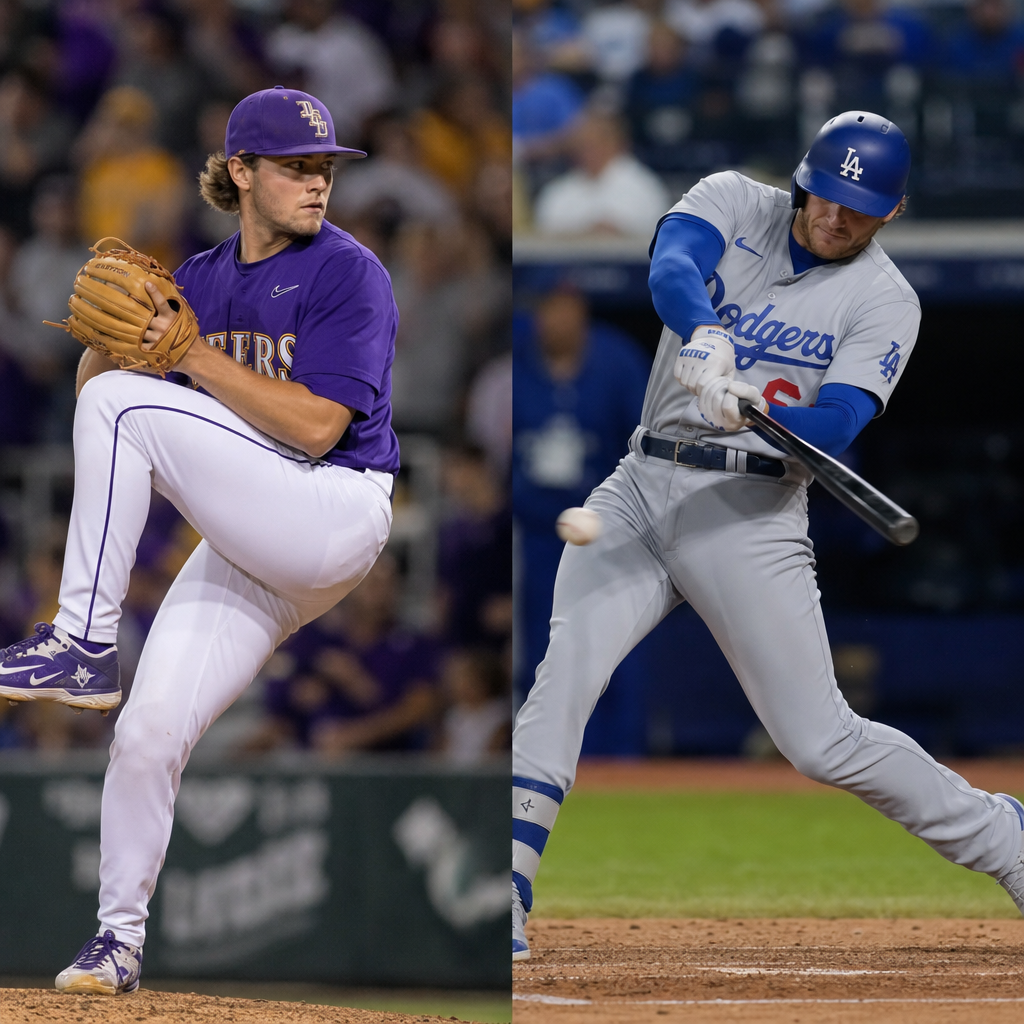
For many baseball players, the journey from college ball to the majors is less a straight ladder than a long evaluation process shaped by performance, projection, health, timing, and fit. College baseball refers to NCAA, NAIA, and junior college competition, where players develop against structured schedules, wood-bat summer leagues, strength programs, and high-level scouting coverage. The majors, by contrast, represent the final tier of professional baseball, where only a small fraction of amateurs arrive and even fewer stay. Understanding the player’s path matters because fans often see draft day or a big league debut as the main milestones, while the real separating factors usually appear much earlier: command of the strike zone, physical durability, adaptability, and the ability to improve inside a professional development system.
I have worked with college programs, spoken with scouts at regionals, and watched players with bigger tools fail while less flashy players moved steadily because they handled routine parts of the job better. That gap between talent and progression is the core of this topic. A college star is not automatically a professional prospect, and a prospect is not automatically a future major leaguer. Coaches, crosscheckers, analysts, and player development staff all ask the same practical questions: Can the hitter control swing decisions against velocity and spin? Can the pitcher recover every fifth or sixth day? Does the player defend a premium position well enough to keep a path open? Those answers determine whether a college career becomes a professional one.
This hub article covers the full pipeline under the minor leagues and college baseball umbrella, including recruitment, roster building, the MLB draft, minor league assignments, developmental benchmarks, setbacks, and alternative routes. It is designed to connect the miscellaneous questions readers usually have: how scouts really evaluate college players, why some juniors sign and some seniors return, what happens in rookie ball and Double-A, why the transfer portal changed roster management, and how NIL, biomechanics, data, and medical screening now shape decisions. If you want a plain-language guide to how a player moves from campus fields to big league stadiums, start here.
How college baseball prepares players for pro ball
College baseball gives players a more advanced competitive environment than most high school schedules, which is why clubs often prefer experienced college prospects, especially in the early rounds. The college game exposes hitters to mature pitching plans, travel demands, video review, strength training, and pressure games in conference play, regionals, and summer leagues such as the Cape Cod League. For pitchers, colleges provide structured workloads, pitch design tools like Rapsodo and TrackMan, and coaching that can sharpen a usable breaking ball or changeup. For position players, college offers hundreds of defensive reps and enough plate appearances to reveal whether performance is skill based or merely streak driven.
That said, college baseball is not a uniform product. A power-conference Friday starter facing SEC or ACC lineups is evaluated differently from a dominant arm in a lower-visibility conference, because context matters. Scouts normalize performance by looking at competition level, park factors, age, body type, and translatable traits. A hitter posting a .360 average with wood-bat success, elite exit velocity, and strong chase rates is more convincing than one who piles up numbers against weaker pitching without controlling the zone. The same principle applies to pitchers. A 2.50 ERA helps, but clubs care more about strikeout rate, walk rate, fastball shape, release characteristics, and whether the arsenal can miss bats against professional hitters.
Summer baseball often serves as a bridge between the college season and pro projection. The Cape Cod League remains the best-known proving ground because top college hitters use wood bats and face premium arms in a scout-heavy environment. Success there does not guarantee draft status, but it answers a key question: how much of a player’s production survives when equipment changes and the talent level rises? I have seen evaluators become more confident in a player after one summer of strong swing decisions and reliable defense than after an entire spring of loud box-score production.
Scouting, recruiting, and draft evaluation
The player’s path usually starts with recruiting, but recruiting and drafting are not the same exercise. College coaches build classes around immediate roster needs, long-term upside, academics, and budget realities tied to scholarships. Professional scouts build draft boards around projected major league value, signability, and organizational fit. A shortstop may be a cornerstone recruit because he can help win conference games right away, yet profile as a utility prospect in professional baseball if his arm strength or impact at the plate is limited. Conversely, a raw but explosive athlete can be a modest college contributor and still interest pro clubs because the tools suggest more growth.
Modern evaluation blends live scouting with data. Scouts still watch body control, timing, competitiveness, and how a player responds after failure. But they now pair those observations with objective markers: bat speed, exit velocity, hard-hit rate, contact quality, vertical break, induced vertical break, spin efficiency, extension, and sprint speed. Medical reviews and biomechanical assessments also matter. A pitcher with premium stuff and a history of elbow trouble is discussed differently from one with slightly lesser velocity but a cleaner movement pattern and durable frame.
The draft itself adds strategic complexity. Players with remaining eligibility have leverage because they can return to school, enter the transfer portal, improve stock, or use NIL opportunities to stay in college. Seniors generally have less leverage, though standout senior signs still earn meaningful bonuses when clubs value performance and need polished depth. After the 2020 reduction to 20 rounds, teams became more selective, and undrafted free agency turned into a real pathway for players who fit developmental models but lacked draft-day momentum.
| Stage | What evaluators look for | Common outcome |
|---|---|---|
| High school recruiting | Tools, athleticism, projectability, academics | College commitment or early pro interest |
| College performance | Production, role, durability, competition level | Scouting follow list or draft board rise |
| Summer leagues | Wood-bat results, elite competition, adaptability | Validation of pro traits |
| Pre-draft process | Medicals, analytics, makeup, signability | Draft selection or priority free agent deal |
| Early pro ball | Adjustment speed, routine, skill translation | Promotion, role change, or release risk |
One of the most misunderstood parts of the draft is signability. Fans often assume the best player available should always be selected, but clubs operate within bonus pools, depth charts, and risk models. If a college junior with first-round talent seeks an overslot bonus, a team may pass unless the rest of its board can support that spending strategy. This is why draft position and talent level are related but not identical. The journey from college ball to the majors often begins with being chosen by an organization that has both the patience and the plan to develop a player correctly.
Life in the minor leagues after signing
After signing, the player enters the most demanding phase of the path: professional development. The minor leagues are designed to test whether amateur performance can survive against better execution, denser schedules, and constant adjustment. Players move through complexes, rookie-level environments, Single-A, High-A, Double-A, and Triple-A, though not always in a straight sequence. The biggest jump in my experience is often to Double-A, where mistakes get punished quickly and fringe tools stop hiding behind athleticism. A hitter who could dominate college pitching on bat speed alone now faces arms that can land secondary pitches in fastball counts. A pitcher who overmatched college lineups with velocity now sees disciplined hitters spoil tough pitches and wait for mistakes.
Daily routine changes as much as competition. Players must manage travel, recovery, nutrition, individualized lifting plans, video sessions, and position-specific work while performing almost every day. Organizations measure everything they can: swing decisions, contact point, chase rate, pitch usage, location consistency, and workload tolerance. Promotions are not simply rewards for a hot month. Clubs want evidence that the underlying process supports sustainable performance. For example, a hitter with a modest batting average but improved on-base skills, better swing decisions, and strong contact against velocity may be promoted ahead of a player with a higher average built on poor underlying indicators.
Role changes are common. A college shortstop may move to second base or center field if arm strength or actions fit better there. A starter may become a reliever if command stalls or the fastball-slider combination plays up in shorter outings. These moves are not always setbacks. Many major leaguers reached the top because an organization narrowed their role and let the strongest skills carry more weight. The key is fit. Development is rarely about preserving an amateur identity; it is about creating a realistic major league profile.
Development tools, setbacks, and alternative paths
Player development is now far more technical than it was a decade ago. Most organizations use high-speed video, force plates, bat sensors, motion capture, and ball-tracking systems to identify efficient movement patterns and pitch characteristics. Pitch design sessions can turn an average college breaking ball into a sharper sweeper or tighten a cutter that misses barrels. Hitting labs help players understand attack angle, bat path, and contact quality. The best systems do not chase data for its own sake. They connect information to game decisions, helping players understand why a change works and when to trust it under pressure.
Setbacks are part of nearly every path. Injuries are obvious, especially for pitchers dealing with shoulder fatigue, forearm issues, or UCL damage. But developmental setbacks can be quieter: a hitter loses confidence after failing against spin, a converted reliever struggles to warm up on back-to-back days, or a top college ace needs months to adapt to pro-ball strike zones and sequencing. Mental skills coaching has become important because baseball’s evaluation system is relentless. Slumps are public, promotions are selective, and roster churn is constant. Players who build routines, accept feedback, and separate results from process usually move more steadily.
Alternative routes also matter in this hub topic. Junior college remains a valuable option for players needing playing time, academic recovery, or another year of physical growth before entering Division I or pro ball. The transfer portal has reshaped roster construction by allowing players to move toward better opportunity, though it also increases competition for spots. Independent leagues, the MLB Draft League, and winter ball can revive careers for players released from affiliated ball or overlooked in the draft. Not every future major leaguer follows the same map. Some need three years in a power conference; others need a reinvention after being cut.
Another major shift is NIL. While NIL does not turn college baseball into a direct equivalent of professional salaries, it has changed return-to-school decisions for draft-eligible players. A projected mid-round pick with unfinished development may decide that another college season, plus meaningful NIL support and improved draft stock, offers a better long-term outcome than signing immediately. Organizations know this, and negotiations now account for a player’s real alternative options instead of assuming every drafted player wants to leave school at once.
What separates future major leaguers from the rest
The clearest separator is not raw talent alone but the combination of a carrying tool and consistent adjustment ability. For hitters, that often means strike-zone control paired with enough impact to punish mistakes. For pitchers, it means at least one bat-missing weapon plus command that can survive stronger lineups. Defensively, players who stay at premium positions keep more pathways open. Catchers who can receive, throw, and manage a staff have value even when the bat develops slowly. Center fielders and shortstops can reach the majors with lighter offensive output than left fielders or first basemen because defensive scarcity matters.
Durability is another separator that fans underestimate. Organizations need players available enough to build skill over a full season. A brilliant college arm who cannot sustain workload is harder to project than a slightly less explosive pitcher who takes the ball consistently. The same goes for position players. A hitter who posts average numbers over 130 games may create more professional confidence than one who produces a standout line over 40 games and misses long stretches.
Finally, major league pathways favor players who improve on purpose. They can explain what pitchers are trying to do to them, how they prepare, and what adjustment they made after a rough series. In clubhouses and back fields, development staff notice that level of ownership quickly. The journey from college ball to the majors rewards athletes who turn information into action.
The path from college baseball to the major leagues is competitive, uneven, and deeply shaped by context, but it is not random. College programs build foundations through competition, training, and exposure. Scouts translate college performance into professional projection by weighing tools, data, health, and signability. The minor leagues then test whether those strengths hold up under a longer season, better opponents, and constant adjustment. Along the way, players face role changes, injuries, transfer decisions, NIL choices, and alternate routes that can delay progress or create a better fit.
For readers exploring the broader minor leagues and college baseball landscape, this hub should anchor the miscellaneous questions that surround the player’s path. The main takeaway is simple: reaching the majors requires more than being good in college. It requires translatable skills, durability, self-awareness, and an organization capable of developing what is already there. If you are following a prospect, evaluating a program, or planning your own route through amateur baseball, use these benchmarks to judge progress realistically and keep exploring the connected topics in this sub-pillar.
Frequently Asked Questions
How does a player typically move from college baseball to the major leagues?
The path from college baseball to the major leagues usually begins with sustained performance at the amateur level, but it does not end with being a good college player. Athletes in NCAA, NAIA, and junior college programs are evaluated on a broad set of factors that include on-field production, physical tools, baseball instincts, consistency, health history, and long-term projection. Scouts and front offices are not simply asking whether a player is dominating college competition; they are trying to determine how that player’s skills will translate against increasingly advanced professional pitching and hitting. That is why the journey often feels less like climbing a simple ladder and more like passing through a series of evaluations.
For many players, the next major checkpoint is the MLB Draft, where organizations select players they believe can develop within their professional system. Once drafted and signed, a player typically enters the minor leagues, where development becomes even more structured and more demanding. Position players may need to adjust to better velocity, sharper breaking balls, more advanced defensive schemes, and a longer season. Pitchers often work on refining command, improving secondary pitches, managing workload, and building routines that support durability over time. Even highly regarded college players usually need to prove themselves at multiple minor league levels before receiving a major league opportunity.
What makes this process challenging is that advancement is rarely based on statistics alone. A hitter can post strong college numbers yet struggle if professional pitchers exploit weaknesses in swing decisions or bat path. A college pitcher may have elite strikeout totals but still need to improve command, pitch efficiency, or recovery between outings. Organizations also consider timing and fit. A player’s path can be influenced by the club that drafts him, the depth chart at his position, the organization’s development philosophy, and whether injuries create or delay opportunities. In other words, getting from college ball to the majors requires talent, but it also requires adaptability, health, continued growth, and the right circumstances.
What do MLB scouts look for in college players?
MLB scouts look for a combination of present ability and future potential. In the college game, performance matters because it shows that a player can compete in a structured, high-level environment, but scouting goes beyond the box score. Evaluators want to know how a hitter produces his results, not just how many hits or home runs he has. They study bat speed, swing mechanics, plate discipline, pitch recognition, contact quality, approach with two strikes, and how well the hitter handles velocity and off-speed pitches. They also pay close attention to whether the player can make adjustments during an at-bat, over the course of a weekend series, and throughout a full season.
For pitchers, scouts study velocity, command, movement, pitch shape, deception, delivery, athleticism, and durability. A fastball in the low-to-mid 90s may draw attention, but it becomes much more valuable when paired with location, life, and a complementary breaking ball or changeup. Scouts also evaluate whether a pitcher can repeat his mechanics, hold velocity deep into outings, handle adversity, and stay healthy under a demanding workload. In the modern game, underlying indicators such as spin characteristics, extension, release consistency, and how a pitch plays against hitters can matter almost as much as traditional radar-gun readings.
Beyond tools and performance, scouts care deeply about makeup. That includes competitiveness, coachability, work ethic, emotional control, preparation, and response to failure. College baseball exposes players to travel, pressure, role changes, and high-expectation environments, so teams use that setting to learn how a player handles the daily demands of development. A prospect with strong physical ability but poor habits may be viewed as a risk, while a slightly less toolsy player with a strong track record of adjustment and professionalism can climb quickly. Ultimately, scouts are trying to answer one central question: does this player have the ability and mindset to keep improving against better competition?
Why do so many successful college players never reach the majors?
This is one of the most important realities of baseball development: excelling in college is impressive, but the gap between amateur success and major league impact is enormous. College baseball includes many excellent players, yet only a small percentage will ever appear in a major league game. One reason is that the professional pipeline becomes more selective at every stage. A player who was a star on campus may enter pro ball and immediately face opponents with better stuff, sharper game plans, greater physical maturity, and years of advanced development still ahead of them. The standard rises quickly, and previous success does not guarantee future progression.
Another major factor is skill translation. Some players thrive in college because their current tools are advanced enough to beat amateur competition, but those same tools may not separate them in pro baseball. A hitter who punished mistakes in college may struggle when pitchers locate quality fastballs on the edges and spin breaking balls for strikes. A pitcher who overmatched college hitters with one dominant offering may find that professional hitters can adjust unless he develops a more complete arsenal. The higher the level, the more weaknesses are exposed, and the more adjustment becomes necessary.
Health and durability also play a huge role. Baseball development takes years, and injuries can interrupt or completely change a player’s path. Even minor setbacks can cost valuable reps, delay promotions, or alter how an organization views long-term potential. Timing matters too. A player may perform well but be blocked by organizational depth, or he may be developing in a system that prioritizes different traits than the ones he currently offers. In some cases, the difference between reaching the majors and falling short is very small: a missed development window, a swing change that does not stick, a loss of velocity, or the inability to adjust quickly enough. That is why the journey is best understood as a long, uncertain process rather than a predictable progression.
How important are summer leagues, junior college, and different college levels in a player’s development?
They are very important because player development does not happen in just one setting. College baseball includes multiple pathways, and each can contribute meaningfully to a player’s growth and visibility. NCAA programs often provide high-level competition, advanced facilities, structured strength and conditioning, detailed coaching, and broad scouting exposure. NAIA programs can offer strong competition and significant development opportunities as well, especially for players who may have been overlooked earlier in their careers. Junior college baseball is especially valuable for players who need more reps, academic flexibility, physical development, or an additional chance to raise their recruiting and draft profile. For many athletes, junior college serves as a bridge rather than a detour.
Summer leagues are another major piece of the evaluation process. Wood-bat leagues, in particular, give scouts useful information because they can show how hitters perform without the benefits some aluminum-bat environments may provide. These leagues often gather top players from different conferences and regions into one competitive setting, allowing evaluators to compare prospects more directly. For hitters, wood-bat summer performance can highlight bat speed, barrel control, strike-zone judgment, and power that is more likely to translate professionally. For pitchers, it offers another look at stuff, command, workload management, and how their arsenal plays against quality opposition.
Just as important, different levels and experiences can reveal how a player responds to change. A prospect may begin at a junior college, transfer to a four-year program, then strengthen his profile in a summer league. Another may develop steadily at an NAIA school and force scouts to pay attention through performance and tools. Organizations do not evaluate a player solely by the logo on his jersey; they evaluate how his skills project. The level of competition matters, but so do growth trajectory, age, athletic development, and evidence that the player can adapt. In that sense, there is no single “correct” road from college ball to pro baseball. What matters most is whether the player keeps improving in environments that test and reveal his major league potential.
What can college players do to improve their chances of reaching the majors?
College players can improve their odds by focusing on complete development rather than chasing short-term visibility alone. Performance is important, but major league organizations want players whose games are built to hold up against stronger competition. For hitters, that means developing a repeatable swing, controlling the strike zone, recognizing pitches early, making quality swing decisions, and learning to do damage without sacrificing contact ability. For pitchers, it means building command, sharpening secondary pitches, improving delivery efficiency, understanding how to attack hitters, and maintaining arm health through intelligent preparation and recovery. Players who treat development as a daily process tend to give themselves the best chance.
Physical preparation is another key area. Pro baseball places heavy demands on strength, mobility, endurance, and durability, so college players benefit from structured training, nutrition, sleep habits, and recovery routines. It is not just about getting bigger or throwing harder. It is about building a body that can withstand a long season and support skill development. The same goes for defensive versatility and athleticism. A position player who can handle multiple spots, run well, and contribute in different ways may create more opportunities for himself in a professional system than a player with a narrower profile.
Equally important are maturity and consistency. Scouts and development staffs notice players who prepare well, respond to coaching, make adjustments, and compete with steadiness over time. Baseball is a game of failure, and the players who move forward are often the ones who can handle adversity without losing