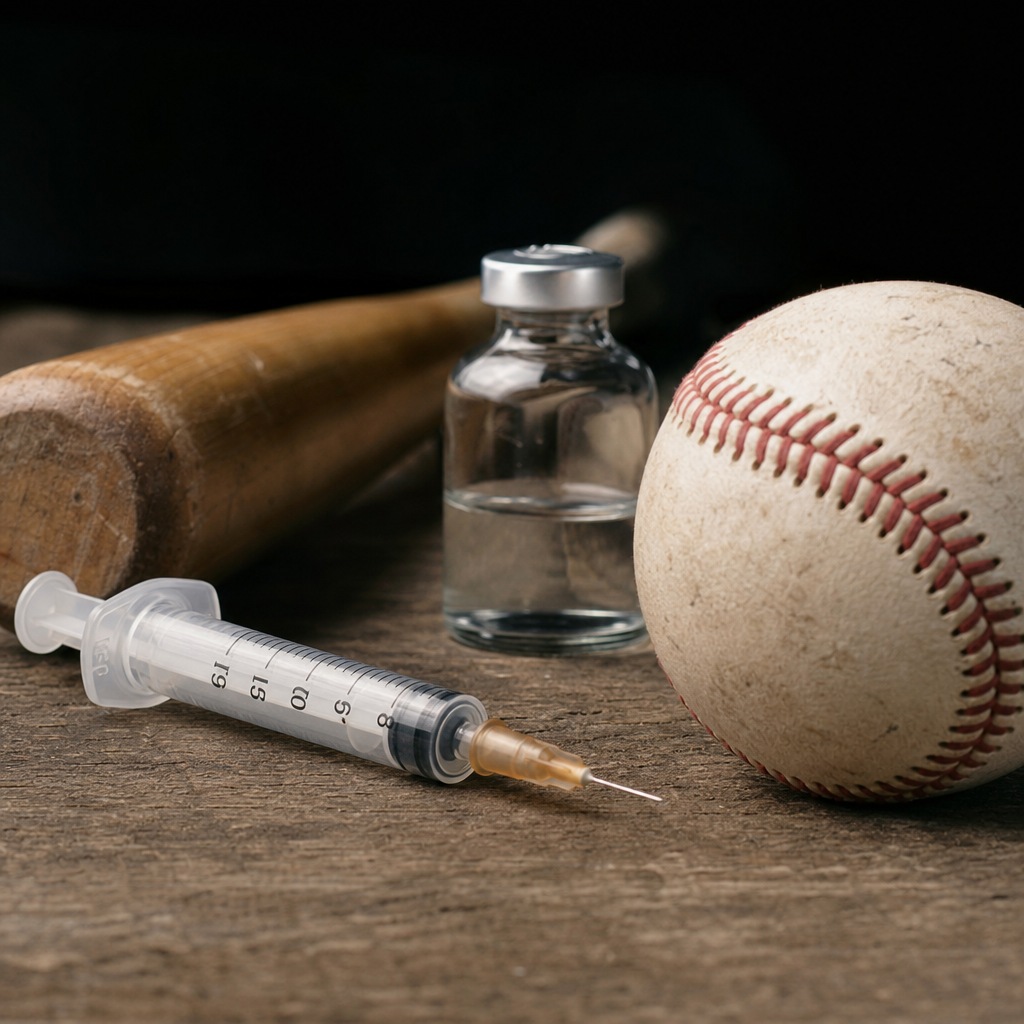
The HGH scandal in baseball exposed a problem that had been hiding in plain sight: while public attention focused on anabolic steroids, human growth hormone moved through clubhouses, training circles, and recovery programs with far less scrutiny. In baseball, HGH refers to synthetic human growth hormone, a substance designed to mimic the naturally occurring hormone produced by the pituitary gland. Doctors prescribe it for specific medical conditions, but athletes have pursued it for different reasons, usually hoping for faster recovery, lean muscle gains, and an edge during the long grind of a major league season. That distinction matters, because the baseball HGH scandal was never just about one banned substance. It revealed weaknesses in testing, gaps in labor agreements, pressure from performance expectations, and a culture that rewarded results long before it asked hard questions about how those results were achieved.
When I have worked through baseball drug timelines and disciplinary records, one pattern stands out: HGH became central precisely because it was harder to detect and easier to rationalize. Players and trainers often described it less like a classic bulking drug and more like a recovery tool, which softened the stigma in some circles even though league rules prohibited its non-medical use. Baseball’s hidden drug problem therefore sits at the intersection of science, enforcement, and incentives. Fans want clean competition. Teams want healthy, productive rosters. Players want careers that survive injuries, roster churn, and declining performance. HGH entered that pressure system as a substance that promised benefits while exploiting uncertainty. Understanding the scandal means understanding why baseball remained vulnerable even after steroid headlines, congressional hearings, and formal policy reforms appeared to force a reckoning.
This hub article examines the miscellaneous side of baseball’s performance-enhancing drug controversies by focusing on HGH as both a symbol and a case study. It covers what HGH is, why players believed it helped, how baseball testing evolved, which investigations shaped public understanding, and why enforcement remained imperfect. It also explains the difference between rumor, evidence, and discipline, a distinction often lost in sports debate. Because this page serves as a hub within scandals and controversies, it connects the larger themes that recur across related cases: secrecy, institutional delay, medical gray areas, and reputational damage that extends beyond any individual suspension. If you want a clear account of baseball’s hidden drug problem, start here, because the HGH scandal shows how modern sports controversies grow from technical details that leagues ignore until those details become impossible to contain.
What HGH Is and Why Baseball Players Wanted It
Human growth hormone is a peptide hormone that regulates growth, cell repair, and metabolism. In legitimate medicine, endocrinologists use synthetic HGH to treat children with growth disorders and adults with confirmed hormone deficiencies. In baseball, however, the attraction came from a belief that HGH could speed tissue repair, reduce recovery time, and support training intensity across a 162-game season. That distinction is important because many players were not chasing cartoonish muscle growth. They were looking for durability, especially after soft-tissue injuries, surgeries, or the normal wear that affects power, bat speed, and throwing strength. Clubhouse conversations often framed HGH as modern recovery support, but under league drug rules, unauthorized use remained performance enhancement.
The scientific evidence has always been more limited than athlete folklore suggested. Research has shown that HGH can alter body composition, but evidence for major improvements in strength, power, or baseball-specific performance is much weaker than many users assumed. That gap between belief and proof did not reduce demand. In elite sports, perception drives behavior almost as much as data. If a veteran thinks a substance helps him get back on the field two weeks sooner, preserve explosiveness late in the year, or secure one more contract, the incentive is obvious. Baseball created ideal conditions for that logic because the sport values availability as much as peak output. A player who can play 145 games instead of 110 may transform his market value even without dramatic changes in raw skill.
How the Baseball HGH Scandal Took Shape
The HGH scandal did not explode in one single moment. It developed in layers. First came the broader steroid era, which normalized the idea that banned pharmaceutical enhancement had spread far beyond isolated outliers. Then came investigations, leaked testimony, and public reporting that pointed toward HGH as the next frontier. The Balco investigation remains the most famous performance-enhancing drug scandal in baseball, but it also mattered because it taught players, suppliers, and trainers that anti-doping systems often lag behind evolving drug use. Once leagues improved steroid testing, attention naturally shifted toward substances that were harder to identify with confidence.
Baseball’s labor structure also shaped the timeline. Major League Baseball could not simply impose every testing measure it wanted; many rules required negotiation with the MLB Players Association. That slowed implementation and produced compromise language. For years, urine testing did not effectively address HGH, because reliable blood testing was the key method for direct detection. The delay created a practical loophole. A substance could be banned on paper yet difficult to catch in practice. That mismatch fed skepticism among fans and gave players room to believe the risk of discipline was manageable.
The scandal sharpened further when federal investigations and clinic cases exposed supply networks rather than just isolated users. The Biogenesis case, tied to Miami-area anti-aging operator Anthony Bosch, became a major turning point. Although Biogenesis involved multiple substances, HGH was part of the broader concern because records, sourcing, and player links suggested a marketplace built around recovery claims and performance enhancement. The league’s eventual suspensions, including the high-profile case of Alex Rodriguez, showed that MLB was increasingly willing to use documentary evidence and non-analytic proof, not just positive tests, to punish violations. That was a crucial shift in baseball’s hidden drug problem: enforcement no longer depended entirely on catching a substance in an athlete’s sample.
Testing, Detection, and Why Enforcement Was So Difficult
HGH testing has always been more complex than standard screening for many other banned substances. Synthetic HGH is chemically similar to naturally produced hormone, and the body processes it within a relatively short detection window. Early anti-doping systems therefore struggled to distinguish legitimate physiology from artificial use. In practical terms, a player could believe he had a reasonable chance to use HGH strategically and avoid a positive result. That belief, whether fully accurate or not, undermined deterrence.
MLB eventually introduced blood testing for HGH in the 2013 season, becoming the first major North American professional sports league to do so under a collectively bargained program. That was a meaningful policy milestone, but it did not solve every problem. Blood testing is more invasive logistically, requires strict chain-of-custody protocols, and still captures only a limited window of direct use. Anti-doping programs therefore rely on a broader toolkit: intelligence gathering, shipping records, witness cooperation, therapeutic use documentation, and longitudinal monitoring. In my experience reviewing anti-doping frameworks across sports, that broader network matters far more than fans assume. A modern drug case is often built like a financial investigation, with patterns and corroboration, not just one lab result.
| Challenge | Why It Mattered in Baseball | League Response |
|---|---|---|
| Short detection window | Players believed timing use could reduce chances of a positive test | Added blood testing and expanded investigative methods |
| Natural hormone overlap | Harder to separate synthetic HGH from normal biological levels | Used specialized laboratory protocols and expert review |
| Labor negotiations | Testing changes required agreement with the players’ union | Phased in policy revisions through collective bargaining |
| Supply networks | Clinics and intermediaries could distribute substances discreetly | Pursued non-analytic evidence such as records and testimony |
Even with stronger testing, enforcement remained uneven because not every user is caught, not every allegation is provable, and not every medical treatment is illegitimate. Anti-aging clinics often marketed hormone therapies in language that blurred wellness, treatment, and enhancement. That ambiguity helped users justify conduct while complicating league investigations. The result was a public environment full of suspicion but not always full of proof. That distinction remains essential when evaluating baseball controversies honestly.
Major Cases, Investigations, and the Damage to Trust
No account of the HGH scandal in baseball is complete without the Mitchell Report, Biogenesis, and the long aftershock of the steroid era. Former Senator George Mitchell’s 2007 report did not solve the issue, but it documented how deeply performance-enhancing drug use had penetrated the sport and how weak institutional oversight had been. By itself, the report focused more heavily on steroids and clubhouse sourcing than on HGH alone, yet it changed the baseline. After that, every unexplained late-career surge, rapid injury return, or clinic connection raised immediate public suspicion about hormones and related substances.
Biogenesis escalated those suspicions into direct league action. MLB pursued evidence aggressively, suspended multiple players, and demonstrated a willingness to litigate discipline if necessary. Alex Rodriguez received a 162-game suspension after the 2013 season, the longest non-lifetime ban under the joint drug agreement at that time. Ryan Braun, previously central to another PED controversy involving a successfully challenged test and later admission of wrongdoing, accepted a suspension connected to Biogenesis. These cases damaged trust because they confirmed what many fans feared: the problem had not ended when baseball claimed reform. It had evolved.
The trust issue extended beyond stars. Fringe roster players, minor leaguers, and aging veterans all operated under incentives that could make HGH appealing. For a superstar, enhancement might preserve legacy and earnings. For a player fighting to stay on a 40-man roster, it might mean the difference between a major league paycheck and release. That economic pressure is one reason the scandal should never be reduced to celebrity morality tales. It was structural. Baseball’s employment model, long season, injury attrition, and statistical transparency all encouraged players to seek any marginal edge that seemed survivable from a risk standpoint.
Why HGH Became Baseball’s Hidden Drug Problem
HGH earned its reputation as baseball’s hidden drug problem because it fit the sport’s culture better than many people realized. Baseball prizes routine, recovery, and incremental advantage. Players spend months managing soreness, fatigue, inflammation, and small performance declines that can reshape careers. A substance associated with healing and regeneration therefore blended into existing needs more easily than one associated purely with bulk. In clubhouse logic, a player was not always “cheating to dominate.” He might have seen himself as trying to stay functional in a sport that punishes physical decline daily. That self-justification does not excuse rule breaking, but it explains why HGH conversations could move quietly through training networks.
Another reason the problem stayed partially hidden was image management. Teams rarely benefit from publicizing internal suspicions unless forced by evidence. Agents protect clients. Teammates often avoid direct accusations without airtight proof. Media coverage also tended to focus on the biggest names, which left the impression that PED use was a scandal of stars rather than an ecosystem involving suppliers, consultants, physicians, and marginal players. The real lesson is broader: hidden drug problems persist when institutional incentives favor silence, partial enforcement, and selective outrage.
There is also a medical literacy problem. Fans hear “hormone” and often assume either miracle effects or harmless treatment. The truth is narrower and more serious. Unauthorized HGH use can carry health risks, including edema, joint pain, insulin resistance, and complications from unregulated dosing or contaminated supply chains. The scandal therefore involved both fairness and player welfare. Baseball was not just policing competitive integrity; it was confronting a black-market medical culture that could exploit athletes under pressure.
What This Means for Baseball’s Broader Controversy Landscape
The HGH scandal remains a useful hub topic because it connects to nearly every miscellaneous controversy in modern baseball: disputed medical ethics, uneven punishment, labor tension, media leaks, clinic scandals, and the constant battle between innovation and regulation. It also shows why simple narratives fail. Testing alone is not enough. Public shame alone is not enough. Even strict penalties are limited if detection lags behind new methods or if players view chemical risk as smaller than career risk. Effective anti-doping requires credible science, negotiated authority, independent collection procedures, intelligence-led investigation, and a culture that treats recovery claims with skepticism when money and performance are involved.
For readers exploring the wider scandals and controversies category, the main takeaway is that miscellaneous cases often reveal the deepest institutional truths. HGH was not as visually obvious as the home run spikes of the steroid era, but that made it more instructive. It showed how a league can ban conduct yet struggle to police it, how athletes can rationalize enhancement through recovery language, and how public confidence can erode even in the absence of constant positive tests. Baseball learned that hidden problems are often the most corrosive because they blur evidence, rumor, and policy into one ongoing credibility fight.
If you are building a fuller understanding of baseball scandals, use the HGH story as a lens for evaluating every future controversy. Ask what incentives existed, what detection tools were available, who controlled the evidence, and whether the public narrative matches the documented facts. That approach leads to better judgment than outrage alone. The HGH scandal was never just about one hormone. It was about the systems that allowed a banned advantage to survive in a sport determined to say the right things before it was fully ready to do the hard ones. Continue through the rest of this hub to see how those same patterns surface across baseball’s other controversies.
Frequently Asked Questions
What is HGH, and why did it become part of baseball’s drug problem?
HGH, or human growth hormone, is a synthetic version of a naturally occurring hormone produced by the pituitary gland. In legitimate medicine, it is prescribed to treat specific growth-related disorders and other diagnosed conditions under close medical supervision. In baseball, however, HGH became controversial because players and trainers viewed it as a way to support recovery, reduce downtime, and potentially gain a physical edge without attracting the same immediate attention that anabolic steroids had already drawn.
What made HGH especially significant in baseball’s drug history was how easily it fit into the culture of performance maintenance. Baseball is a long, grinding sport with a demanding schedule, frequent travel, repetitive motion injuries, and constant pressure to stay on the field. In that environment, a substance marketed or rumored to improve healing, support muscle preservation, and help players bounce back faster could spread quietly through clubhouses and private training networks. Unlike steroids, HGH was often discussed less in terms of dramatic muscle gain and more in terms of recovery and durability, which made it easier for some people to rationalize its use.
The scandal exposed a broader issue: baseball’s performance-enhancing drug problem was never limited to the substances fans already recognized. HGH represented a hidden layer of the same win-at-all-costs mindset. It showed that even as the public conversation centered on steroids, other drugs were circulating in ways that were harder to detect, easier to deny, and more deeply embedded in the sport’s day-to-day competitive pressures.
Why was HGH harder to police than anabolic steroids in Major League Baseball?
HGH was harder to police for several reasons, and the biggest was science. For many years, detecting synthetic human growth hormone was far more complicated than detecting many anabolic steroids. HGH occurs naturally in the body, which meant testing had to distinguish between normal hormone levels and the use of a synthetic version. That made enforcement more technically difficult and gave players, trainers, and suppliers more confidence that the drug could be used with a lower risk of being caught.
There was also a timing issue. Some forms of HGH testing were limited by narrow detection windows, meaning the substance might only be identifiable for a relatively short period after use. In practical terms, that made year-round monitoring and intelligent testing strategy essential. Without strong testing protocols, frequent collection, and aggressive investigative follow-through, the chances of catching misuse were lower than many fans assumed.
Just as important, HGH often moved through informal networks rather than obvious public channels. It could be discussed in the language of recovery, anti-aging treatment, injury rehab, or wellness support. That blurred the lines and created plausible deniability. A player linked to HGH might not fit the stereotype of someone trying to bulk up dramatically, which made suspicion less immediate. Taken together, the scientific limitations, the gray areas in how the drug was described, and the private ways it circulated all helped keep baseball’s HGH problem hidden longer than it should have been.
What did players believe HGH could do for performance and recovery?
Players and those around them were often drawn to HGH because of claims that it could help the body recover more efficiently from the wear and tear of a major league season. Baseball players deal with chronic soreness, soft-tissue strain, joint stress, fatigue, and repetitive-use injuries over many months. In that context, even the perception that HGH might speed healing or help maintain conditioning could be enough to make it attractive. Some believed it could support lean muscle retention, improve training output, and make it easier to withstand the physical toll of everyday competition.
It is important, though, to separate clubhouse belief from proven effect. HGH has long carried a reputation in sports that goes beyond what evidence consistently supports in healthy adult athletes. Some users may have treated it as a miracle recovery tool, while in reality the performance benefits were often overstated, misunderstood, or mixed together with the effects of other substances and training methods. In many doping cases, drugs are not used in isolation, and that makes it difficult to determine what HGH alone was truly doing versus what athletes hoped it would do.
Even so, perception can be just as powerful as proof in a competitive environment. If players believe their rivals are recovering faster or extending careers with pharmaceutical help, the pressure to keep up becomes intense. That is part of what made HGH so dangerous to the integrity of the sport. It was not only about measurable outcomes; it was about the belief that modern performance enhancement had moved beyond obvious steroid use and into a more concealed, medically framed world of chemical advantage.
How did the HGH scandal affect baseball’s reputation and the way fans viewed the sport?
The HGH scandal deepened public distrust because it suggested baseball’s drug problem was more sophisticated and more widespread than many people wanted to believe. By the time HGH became a major point of concern, fans had already endured years of controversy surrounding steroids, home run records, player denials, congressional hearings, and damaged legacies. Learning that another substance had been circulating with less scrutiny made it seem as though the sport had not fully confronted its culture of enhancement at all. Instead, it looked like the problem had simply evolved.
For fans, that created a new kind of skepticism. Suspicion no longer focused only on dramatic physique changes or record-breaking power numbers. It extended to injury comebacks, career resurgences, unusually durable stretches, and late-career improvement. That broader suspicion was harmful because it put a cloud over both guilty and innocent players. Once trust is broken, every remarkable achievement becomes vulnerable to doubt, and every success story invites questions about what happened behind the scenes.
The scandal also affected how baseball talked about accountability. It forced the league, the union, the media, and the public to recognize that performance-enhancing drug use was not just about cheating in the narrow sense. It was about institutional blind spots, incomplete enforcement, and a culture that sometimes rewarded results more than transparency. In that way, the HGH controversy did not merely tarnish individual reputations. It challenged the credibility of the sport’s entire effort to police itself and restore competitive integrity.
What changed in baseball after the HGH scandal, and did it solve the problem?
After the HGH scandal gained attention, baseball faced pressure to strengthen its drug policies, improve testing, and show that it was taking modern performance-enhancing substances seriously. Over time, the league and the players’ association moved toward more comprehensive drug programs that included HGH testing, tougher penalties, and broader monitoring. That mattered because it signaled an acknowledgment that older anti-doping systems were not enough for a changing landscape in which performance enhancement was becoming more medically sophisticated and harder to detect.
These changes helped, but they did not eliminate the underlying issue entirely. Anti-doping policy is always a moving target. As testing improves, methods of evasion also evolve. New substances, masking strategies, questionable therapeutic claims, and private sourcing networks can all complicate enforcement. In other words, the lesson of the HGH era is not that one policy fix can permanently solve the problem. The lesson is that vigilance has to be continuous, scientific, and supported by a culture that discourages shortcuts rather than quietly tolerating them.
Perhaps the most lasting impact of the scandal is that it widened the conversation. Baseball could no longer treat doping as a problem defined only by classic steroid narratives. The HGH controversy forced a more realistic view of how athletes seek advantage: through recovery aids, hormone-related substances, and methods that may seem less visible than traditional doping but can still undermine fairness. So while the sport made meaningful progress, the scandal remains a reminder that drug problems in baseball do not disappear simply because they become less obvious.