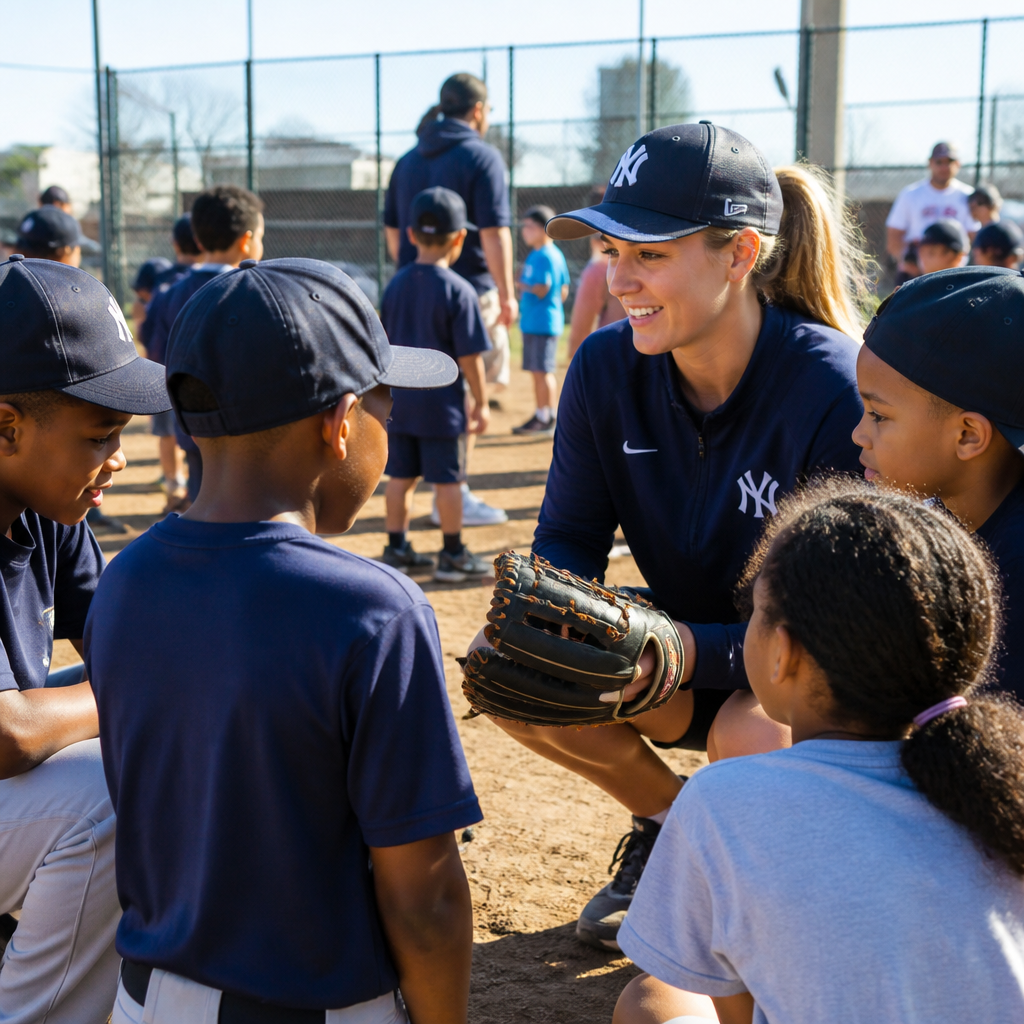
Women in baseball community outreach have shaped how the sport connects with neighborhoods, schools, families, and underserved groups, yet their contribution is often treated as a side note instead of a central force. In practical terms, community outreach in baseball means the organized programs teams, leagues, nonprofits, and player foundations use to serve the public beyond the field. It includes youth clinics, literacy campaigns, health screenings, school visits, fundraising events, equipment drives, military appreciation projects, and partnerships with local charities. When women lead or sustain these efforts, they influence not only participation in baseball but also trust in the institutions around it.
This matters because baseball’s long-term health depends on community relevance as much as wins and losses. Attendance, youth engagement, volunteer pipelines, sponsorship support, and public goodwill all grow when outreach is credible and consistent. In my experience working around sports programming and civic partnerships, the most effective outreach operations are rarely powered by celebrity alone. They are built by people who can manage logistics, listen to families, coordinate schools, understand local needs, and turn a one-day event into a repeatable program. Women across baseball have done that work for decades as executives, foundation directors, educators, athletic trainers, scouts, broadcasters, alumni, and volunteers.
The phrase women in baseball community outreach covers a wide range of roles. Some women work inside Major League Baseball clubs or Minor League front offices, designing strategic initiatives tied to education, inclusion, and public health. Others operate through independent organizations such as Baseball For All, local Girls with Game chapters, Little League support networks, or municipal recreation departments. Former players from the All-American Girls Professional Baseball League built a historical bridge by visiting schools and preserving baseball heritage. Current leaders expand that legacy through mentorship, grantmaking, and access programs that help girls see themselves in the sport.
The role of women in baseball community outreach is therefore both visible and structural. It is visible in clinic instruction, speaking events, fundraising galas, and social media campaigns. It is structural in budget planning, community needs assessments, safeguarding policies, partnership agreements, volunteer management, and program evaluation. Understanding that full picture helps readers, parents, teams, and aspiring professionals see why this area deserves focused attention within the broader women in baseball conversation.
How Women Built the Community Side of Baseball
Women have long sustained baseball’s civic identity, even when formal recognition lagged behind their impact. In the early and mid twentieth century, women often organized auxiliary groups, booster clubs, charity events, and youth activities surrounding amateur and professional teams. Those roles were sometimes framed as supportive rather than strategic, but in practice they created the public-facing habits that modern outreach departments now formalize: event planning, donor cultivation, family engagement, and educational programming. During and after the All-American Girls Professional Baseball League era, many former players became ambassadors who visited schools, spoke at museums, and helped younger audiences understand baseball as a cultural institution rather than just a men’s profession.
That historical continuity matters because outreach succeeds when it carries legitimacy. Women who preserved stories, coordinated local programs, and advocated for girls’ participation made baseball feel accessible in communities that did not automatically see a place for everyone. Their work also challenged a narrow definition of baseball expertise. Teaching a child how to grip a ball is one form of expertise. Building a partnership with a school district, writing a small grant, or creating a safe clinic environment is another. Modern clubs increasingly recognize that community impact depends on both kinds of knowledge.
Leadership Roles in Modern Baseball Outreach
Today, women contribute to baseball outreach through several professional pathways. Community relations directors manage charitable calendars, signature programs, and cause partnerships. Foundation executives oversee fundraising, grant distribution, and impact reporting. Player engagement specialists connect athletes with service projects that align with local priorities. Youth development coordinators run clinics, camps, and school initiatives. Communications staff make sure those efforts are explained clearly to fans, media, and sponsors. In many organizations, women hold overlapping responsibilities, especially in minor league settings where departments are lean and flexibility is essential.
The best outreach leaders combine operational discipline with social awareness. They know how to build a run-of-show, coordinate transportation, check safeguarding requirements, secure interpreters, and set measurable goals. They also understand that communities do not need symbolic appearances as much as they need continuity. For example, a single back-to-school event can generate positive photos, but a season-long reading challenge with classroom visits, incentives, and tracked outcomes has greater educational value. Women leading these programs often excel because they treat outreach as relationship management rather than publicity inventory.
Major League clubs offer useful examples. Team foundations regularly support youth baseball and softball access, hospital visits, military family programming, and neighborhood improvement projects. While many initiatives are branded around the club, women behind the scenes typically handle partner selection, due diligence, compliance, and execution. At the grassroots level, women running municipal or nonprofit baseball programs often make the difference between a clinic that looks inclusive on paper and one that actually reaches girls, low-income families, and first-generation participants.
Core Outreach Programs and What Makes Them Effective
Baseball community outreach usually clusters around education, health, access, and belonging. Education programs include reading rewards, STEM activities tied to ballpark operations, and school assemblies about teamwork or perseverance. Health programs can involve vision screenings, mental health awareness campaigns, nutrition education, and adaptive sports access. Access programs address fees, transportation, uniforms, and equipment. Belonging initiatives focus on representation, anti-bullying, heritage celebrations, and spaces where girls feel invited to participate as players and fans.
Women often strengthen these programs by identifying barriers that standard sports marketing misses. A family may love baseball yet still skip a clinic because registration forms are confusing, transportation is limited, or parents assume the event is mainly for boys. An experienced outreach leader adjusts for those realities by simplifying sign-up, partnering with schools or community centers, scheduling at practical times, and featuring women coaches or speakers. Those details are not cosmetic. They directly affect attendance, retention, and trust.
| Outreach area | Typical program | How women often add value | Practical result |
|---|---|---|---|
| Youth access | Equipment drive and free clinic | Targeted school partnerships and parent communication | Higher participation from underserved families |
| Education | Reading incentive challenge | Curriculum alignment and teacher coordination | Better classroom adoption and repeat engagement |
| Health | Community wellness day | Cross-sector coordination with hospitals and nonprofits | Broader services beyond baseball instruction |
| Inclusion | Girls baseball showcase | Role-model visibility and safe-program design | Improved confidence and retention for girls |
| Heritage | Museum or alumni event | Storytelling that links history to current participation | Stronger local identity and media interest |
Girls Baseball, Representation, and the Power of Invitation
One of the clearest ways women influence baseball outreach is through girls baseball advocacy. For years, many girls who wanted to play hardball were redirected toward softball, regardless of their preference. Outreach led by women has helped correct that assumption by creating clinics, tournaments, and mentorship opportunities designed specifically for girls who want baseball pathways. Organizations such as Baseball For All have demonstrated that when girls are invited intentionally, provided instruction, and given visible role models, demand is real and sustained.
Representation matters because participation decisions are often made before a child can articulate them. If a girl attends a clinic and sees only male coaches, male examples, and messaging aimed at boys, she receives a subtle signal about belonging. If she meets women coaches, former players, front office leaders, or broadcasters who speak concretely about baseball careers, the sport becomes imaginable. Community outreach is where that imagination starts. It is often the first place a family encounters baseball outside television or schoolyard stereotypes.
Effective invitation also requires precision. Generic language about inclusion is weaker than explicit messaging that girls are welcome to play baseball, volunteer, learn scoring, explore sports medicine, or consider front office careers. Women leading outreach tend to understand that difference because many have navigated those barriers personally. They know that clarity, not just good intention, expands access.
Partnerships, Measurement, and Long-Term Impact
Strong baseball outreach depends on partnerships with schools, libraries, parks departments, health systems, youth clubs, and community-based nonprofits. Women frequently serve as the connective tissue among these institutions because outreach work rewards patience, follow-through, and fluency across sectors. A team may supply brand power and facilities, but a school district provides student access, a hospital provides licensed expertise, and a local nonprofit provides neighborhood credibility. When these relationships are coordinated well, the result is more durable than a stand-alone event.
Measurement is equally important. The right metrics go beyond vanity numbers like impressions or giveaway totals. Useful measures include repeat attendance, program completion rates, number of first-time participants, equipment retention, parent satisfaction, volunteer conversion, and school partner renewal. For educational programs, literacy benchmarks or attendance trends may matter more than ticket redemptions. For girls baseball initiatives, the key indicators may be return participation, progression into leagues, and coach development. Experienced women in outreach roles tend to insist on these distinctions because they have seen how easy it is for feel-good events to receive praise without producing lasting change.
There are limits and tradeoffs. Outreach budgets can tighten when team revenues drop. Staff may be asked to do more with fewer people. Players’ schedules, liability requirements, and transportation gaps can constrain ambition. Still, well-led programs adapt. They focus on consistency, trusted partners, and formats that communities can realistically use. If your organization wants stronger baseball community outreach, start by listening locally, funding what works, and putting qualified women in positions where they can lead strategy, not just execution.
Women in baseball community outreach make the sport more welcoming, more credible, and more useful to the people it hopes to serve. Their role spans history, program design, education, health, access, storytelling, and evaluation. They preserve baseball’s connection to neighborhoods while also expanding who gets to belong within the game. That is not a peripheral contribution. It is one of the reasons baseball continues to matter beyond the scoreboard.
For readers exploring the wider women in baseball landscape, this miscellaneous hub is the place to connect those moving parts. Community outreach links naturally to girls baseball development, front office careers, nonprofit leadership, representation in media, and historical preservation. Seen together, those topics show a simple truth: when women shape baseball’s public mission, the sport reaches farther and serves better. Use this page as a starting point, then dive into related articles, local programs, and team foundations to see where that impact is happening near you.
Frequently Asked Questions
Why are women so important to baseball community outreach?
Women have been central to baseball community outreach because they often help design, organize, and sustain the programs that connect the sport to everyday community needs. While public attention frequently focuses on players, coaches, and front-office leadership, women working in outreach, education, nonprofit partnerships, youth development, marketing, and event coordination are often the people building relationships with schools, families, neighborhood groups, and local service organizations. Their work helps baseball function as more than a game by turning it into a platform for mentorship, literacy, wellness, inclusion, and civic engagement.
In many cases, women also bring long-term relationship-building skills that are essential to successful outreach. Community trust is not created through one event alone. It grows through consistency, listening, follow-up, and cultural awareness. Women in baseball outreach roles have frequently led that process, making sure programs are relevant to the people they serve rather than simply promotional activities attached to a team or league. That can mean coordinating youth clinics in underserved areas, helping families access equipment support, organizing school visits, planning fundraising events, or connecting baseball resources to broader needs like health education and safe after-school opportunities.
Just as important, women have helped broaden the definition of who belongs in baseball spaces. Their leadership has often pushed outreach efforts to become more family-centered, more educational, and more inclusive of girls, women, and communities that may not always see themselves represented in the sport. So when discussing the role of women in baseball community outreach, it is most accurate to view their contribution not as supplemental, but as foundational to how baseball builds lasting public impact.
What kinds of community outreach programs do women in baseball typically lead or support?
Women in baseball community outreach are involved in a wide range of programs that extend the sport’s influence beyond the field. These programs often include youth baseball and softball clinics, school reading initiatives, mentorship programs, equipment drives, food and holiday donation campaigns, health and wellness events, fundraising efforts for local causes, and appearances that bring players or team representatives into direct contact with the public. In team settings, women may serve as community relations directors, foundation staff members, nonprofit coordinators, communications leaders, or volunteer organizers who oversee both strategy and execution.
For example, a youth clinic may look simple from the outside, but it usually depends on extensive planning behind the scenes. Someone has to coordinate the site, recruit volunteers, communicate with parents, secure transportation or supplies, manage registration, ensure safety protocols, and make the event accessible to children from different backgrounds. Women often play a leading role in those responsibilities, which means they are not just supporting outreach administratively; they are shaping whether the program succeeds and whether families feel welcomed.
They also frequently support education-based outreach, such as literacy campaigns or school partnerships, where baseball is used as a tool to encourage reading, attendance, and confidence. In health-focused programs, they may help organize screenings, wellness fairs, or awareness events tied to issues that affect local communities. In fundraising and nonprofit work, women often serve as the bridge between baseball organizations and charitable partners, helping align the visibility of the sport with real community needs. Taken together, these efforts show that women contribute across every phase of outreach, from concept development to on-the-ground impact.
How have women changed the way baseball connects with neighborhoods, schools, and families?
Women have helped shift baseball community outreach from a narrow public-relations function into a more human-centered and community-responsive effort. One of the biggest changes they have influenced is a stronger emphasis on relationships rather than one-time appearances. Effective outreach is not just about showing up in a neighborhood with team branding. It is about understanding what schools, families, and local organizations actually need, then designing programs that are useful, respectful, and sustainable. Women have often been at the center of that listening process.
In neighborhoods, this has meant helping baseball organizations work more closely with local leaders, recreation centers, and grassroots groups instead of relying only on top-down event planning. In schools, women have strengthened ties through literacy programs, attendance incentives, student recognition efforts, and classroom visits that connect baseball to learning and personal development. For families, they have often helped make outreach more accessible by thinking through practical barriers such as cost, scheduling, transportation, language, and whether an event feels welcoming to parents and siblings as well as children.
Another important change is the expansion of outreach priorities. Women have helped bring greater attention to issues like inclusion, representation, health, education, and family engagement. That broader lens matters because communities do not experience baseball in isolation. They experience it alongside concerns about opportunity, safety, identity, and support. By recognizing that reality, women have helped baseball outreach become more relevant and more effective. Their influence can be seen in programs that serve the whole community, not just current athletes, and in efforts that treat baseball as a tool for connection, growth, and belonging.
Why is the work of women in baseball outreach often overlooked?
The work of women in baseball outreach is often overlooked because much of it happens behind the scenes and outside the most visible parts of the sport. Media coverage tends to prioritize games, player performance, executive decisions, and headline-making moments. Community outreach, by contrast, is usually quieter, more collaborative, and less tied to the spotlight. Within that already underreported space, women’s contributions can be further minimized when their leadership is framed as support work rather than strategic work, even when they are the ones directing partnerships, setting goals, solving logistical challenges, and maintaining long-term community trust.
Another reason is that sports history has often been told through a narrow lens that centers on what happens on the field. That approach can leave out the people who shape the culture, accessibility, and public value of the game. In baseball, women have frequently done exactly that through outreach and service efforts, yet their impact may be dismissed as secondary because it does not fit traditional ideas of authority in sports. The result is an incomplete story, one that celebrates baseball’s community presence without fully crediting the people who helped create it.
Recognizing this oversight matters for more than fairness. It also improves how the sport understands its own success. Community outreach does not run effectively by accident. It depends on leadership, communication, emotional intelligence, organization, and accountability. When women’s roles in that process are made visible, baseball gains a more accurate picture of how trust is built and how meaningful engagement happens. It also opens the door for more women and girls to see community leadership in baseball as a legitimate and influential path.
How can baseball organizations better support and recognize women in community outreach?
Baseball organizations can better support and recognize women in community outreach by treating this work as a core part of the sport’s mission rather than an optional add-on. That starts with giving outreach departments adequate funding, staffing, decision-making authority, and long-term institutional support. When women leading outreach are included in strategic planning, community engagement becomes more effective because the people closest to public needs are helping shape organizational priorities. Support also means creating clear leadership pathways so that women in outreach roles are not limited to execution but can advance into senior positions where they influence policy, partnerships, and culture.
Recognition is equally important. Teams, leagues, and nonprofits should publicly highlight the achievements of women who develop successful programs, build strong partnerships, and expand access to baseball in meaningful ways. That can include internal recognition, media storytelling, award programs, leadership panels, and more direct attribution in campaign materials and public communications. Too often, the organization receives praise while the individuals driving the work remain invisible. Changing that practice helps correct the record and signals that outreach leadership is respected expertise.
Organizations can also strengthen support by investing in professional development, mentorship, inclusive hiring, and data collection that measures community impact. When women have access to training, advancement, and visible authority, outreach programs tend to become stronger and more sustainable. Finally, baseball should continue creating spaces where women’s perspectives shape how the sport serves neighborhoods, schools, families, and underserved groups. That is not just a matter of representation. It is a practical strategy for building outreach efforts that are credible, inclusive, and deeply connected to the communities baseball hopes to reach.