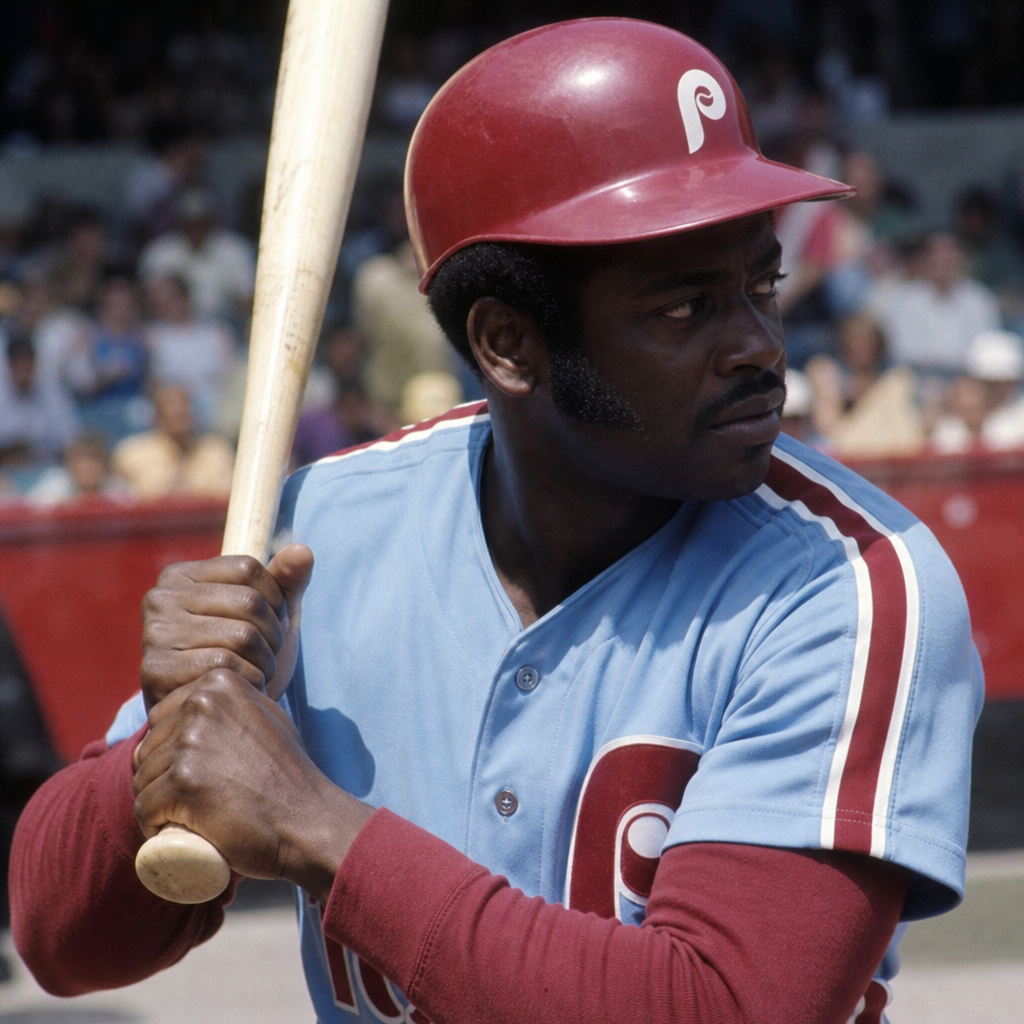
Dick Allen remains one of baseball’s most fascinating player profiles because his story combines Hall of Fame caliber production, relentless controversy, and a lasting debate about how greatness should be measured. For anyone exploring legendary players, Allen stands at the intersection of statistics, scouting, clubhouse dynamics, race, media treatment, and franchise history. He was not merely a slugger with prodigious power. He was a uniquely gifted hitter whose peak performance rivaled the best of his era, a star shaped by the intense pressures of Philadelphia, and a public figure whose reputation often obscured his actual value on the field. Understanding Allen requires defining a few key ideas: offensive rate statistics such as OPS+ and weighted production, positional flexibility, and historical context, especially the racial climate of the 1960s and 1970s. When those pieces are considered together, Allen’s legacy becomes more complete and more compelling.
I have worked through Allen’s career the way serious baseball researchers often do: by moving beyond old headlines and into game logs, era-adjusted metrics, contemporary reporting, and the testimony of teammates and opponents. That process changes the picture. Allen was the 1964 National League Rookie of the Year, a seven-time All-Star, an MVP, and one of the most feared right-handed hitters in baseball. He led leagues in on-base percentage, slugging percentage, OPS, extra-base hits, total bases, and home runs despite playing in a run environment far lower than today’s game. He also moved between third base, first base, left field, and other positions while dealing with injuries, front-office disputes, fan hostility, and openly racist abuse. This article serves as a hub for player profiles by showing how to evaluate a legendary player from every angle: talent, production, context, strengths, flaws, and long-term influence.
Who Dick Allen Was and Why His Profile Matters
Born Richard Anthony Allen in 1942 in Wampum, Pennsylvania, Allen signed with the Philadelphia Phillies and reached the majors in 1963 before breaking out spectacularly in 1964. That rookie season was not just impressive; it was transformational for the Phillies lineup. Allen hit .318 with 29 home runs, 13 triples, 91 runs batted in, and a .939 OPS, extraordinary numbers in a pitching-dominant era. He also played third base under difficult conditions and nearly pushed Philadelphia to a pennant before the club’s famous late-season collapse. Even in that disappointment, Allen emerged as a franchise-level offensive force.
His profile matters because he forces a deeper question than many stars do: how should a player be remembered when elite performance collides with uncomfortable narratives? Traditional measures make the case quickly. Allen finished with 351 home runs, a .292 batting average, a .378 on-base percentage, and a .534 slugging percentage. Adjusted for era and ballpark, his 156 OPS+ means he created offense at a rate 56 percent better than league average across a long career. That places him in rare company. Advanced systems also support him strongly. Baseball Reference credits him with roughly 58 wins above replacement despite defensive challenges and a career shortened by injuries and conflict. In plain terms, Allen hit like an inner-circle superstar during his best years.
Yet his player profile is not only statistical. It is also historical. Allen came to prominence in Philadelphia at a time when Black stars frequently endured treatment from fans and media that would be recognized today as openly discriminatory. He dealt with taunts, isolation, and criticism that often framed assertiveness as attitude and self-protection as selfishness. The nickname issue alone is telling: he preferred “Dick,” but much of the press insisted on “Richie,” a small but revealing sign of how little control he was granted over his own image. To study Allen is to study how baseball institutions shaped public memory.
The Hitting Peak: Why Pitchers Feared Him
The quickest answer to what made Allen special is this: he hit the baseball harder and farther than almost anyone alive, and he paired that power with real strike-zone judgment. Scouts, pitchers, and teammates consistently described his bat speed as elite. He generated towering home runs without selling out completely for loft, and he drove pitches to all fields. In an era before launch-angle vocabulary, Allen still produced the ideal batted-ball mix for damage: authority, carry, and enough selectivity to force pitchers into mistakes.
His 1972 season with the Chicago White Sox is the cleanest example of his offensive excellence. Allen hit .308/.420/.603 with 37 home runs and won the American League MVP. Context matters here. The American League as a whole was not exploding offensively, and White Sox Park did not erase the difficulty of facing top pitching staffs. Allen led the league in home runs, on-base percentage, slugging percentage, OPS, OPS+, walks, and total bases while carrying a club that nearly won the division. That season was not a sentimental award; it was a dominant performance by the league’s best hitter.
He was similarly devastating in other years. In 1966, he posted a 174 OPS+. In 1969, split between Philadelphia and St. Louis, he produced a 173 OPS+. In 1974, back with the Phillies, he hit 32 home runs with a 158 OPS+. These marks matter because OPS+ neutralizes era and park effects, allowing a clearer comparison across baseball history. A hitter consistently living in the 150 to 170 range is not just very good. He is operating at an MVP level. Allen did that repeatedly.
| Season | Team | Key Output | Why It Stands Out |
|---|---|---|---|
| 1964 | Phillies | .318, 29 HR, .939 OPS | Rookie of the Year during a pennant race |
| 1966 | Phillies | 40 HR, .632 SLG, 174 OPS+ | Established himself as a premier power hitter |
| 1972 | White Sox | .308/.420/.603, 37 HR, MVP | Led league in most major rate categories |
| 1974 | Phillies | 32 HR, 141 RBI, 158 OPS+ | Middle-of-order force for a rising contender |
One reason Allen’s numbers resonate with modern analysts is that they hold up under stricter evaluation. His walk rates were strong. His isolated power was elite. His extra-base-hit totals were massive relative to his era. He was not compiling empty totals in offense-friendly conditions. He was creating runs efficiently in a period shaped by lower scoring, larger ballparks, and strong pitching. If a front office today saw Allen’s batted-ball authority, plate discipline, and adjusted production, it would build a lineup around him immediately.
Philadelphia Pressure and the Cost of Context
Allen’s early years with the Phillies cannot be understood without confronting Philadelphia’s environment. He arrived after a minor league stop in Little Rock, Arkansas, where integration brought ugly racist harassment, including threats and abuse severe enough to leave permanent emotional scars. Those experiences followed him into the majors. In Philadelphia, media scrutiny was intense, and fan hostility could turn personal quickly. Booing poor play is one thing. What Allen faced often went far beyond baseball performance.
That pressure shaped both his public image and his relationship with the organization. Allen clashed with management, objected to unfair portrayals, and became a lightning rod for a franchise uneasy with his independence. Reports of lateness or tension in the clubhouse were magnified, while the daily burden he carried was minimized. Over time, a self-reinforcing cycle emerged: Allen distrusted the press, the press covered him as volatile, and fans absorbed that version of him. It is one of the clearest examples in baseball history of context distorting a player profile.
The Phillies also moved Allen around defensively, often in ways that exposed his weaknesses. He began at third base, a demanding position where footwork, reaction time, and throwing consistency are constantly tested. Allen had a strong arm and athletic ability, but he was not a natural long-term third baseman, especially while handling immense offensive expectations and external pressure. Defensive miscues became another easy storyline. Later transitions to first base and the outfield suited him better, but by then much of the reputational damage had already been done.
When people ask why Allen remained controversial despite obvious talent, the answer is not one thing. It was race, city pressure, management conflict, injury frustration, and a baseball culture that often punished players who resisted being controlled. That does not mean every criticism was invented. Allen could be difficult, and several managers found him hard to manage. But balanced analysis requires proportion. Plenty of stars have been moody, stubborn, or confrontational. Few had those traits interpreted through such a hostile lens while still producing at an elite level.
Strengths, Weaknesses, and the Full Player Profile
A comprehensive player profile should identify exactly what Allen did well and where his value was limited. His greatest strength was middle-of-the-order offense of the highest grade. He punished fastballs, adjusted to off-speed pitching, and worked counts enough to maintain a strong on-base percentage. He was especially dangerous in leverage moments because pitchers had difficulty exploiting a clear hole. He could pull the ball with authority, but he was not merely a dead-pull slugger. That matters when projecting sustainability, because all-field power is harder to neutralize.
Allen also brought athleticism unusual for a power hitter of his build. Early in his career he ran well enough to leg out triples and contribute on the bases. He was not a base-stealing specialist, but he was not a station-to-station slugger either. That broader athletic profile helped him survive positional moves and stay impactful when he was not at absolute peak power.
The limitations were real. His defense drew poor marks, particularly at third base. Modern defensive metrics for his era are imperfect, but the consensus from observation and available data is that he cost runs in the field. Durability was another issue. Allen played through significant injuries, including leg problems and hand issues, and his availability fluctuated. He reached 150 games only once. That matters in Hall of Fame discussions because value lost to missed time still counts as lost value, no matter how brilliant the rate production was.
There is also the challenge of separating style from substance in clubhouse assessments. Some teammates loved Allen and praised his humor, honesty, and leadership. Others saw inconsistency or distance. That mixed record is important. Legendary players do not need to be sanitized to be appreciated accurately. Allen’s profile becomes stronger, not weaker, when it includes the difficult parts alongside the brilliance.
Teams, Turning Points, and Legacy Debates
Allen’s career moved through Philadelphia, St. Louis, Los Angeles, Chicago, and Oakland before returning to Philadelphia, and each stop added a different layer to his legacy. With the Cardinals in 1970, he rebounded after a difficult ending with the Phillies and reminded the league how dangerous he remained. With the Dodgers in 1971, he hit extremely well in a partial season. In Chicago, he became the franchise’s most feared hitter since Minnie Miñoso’s prime and nearly drove the White Sox to a division title in 1972. His return to the Phillies in 1975 connected him to a rising contender whose fan base had begun, slowly, to reassess him.
The largest debate around Allen concerns Cooperstown. Supporters argue that his peak was so dominant, and his context so difficult, that his candidacy should be stronger than traditional milestone voters allowed. Critics point to missed games, defensive shortcomings, and a career total of 351 home runs rather than the flashier numbers associated with obvious sluggers. The fairest judgment is that Allen sits in the gray area where peak value, era adjustment, and historical treatment matter enormously. By modern standards, his case is serious and credible.
His broader legacy reaches beyond plaques and voting results. Allen represents a model for how player profiles should be written: not as flat summaries of awards and totals, but as layered studies of skill, environment, and memory. He also remains a touchstone in conversations about how Black stars were covered in twentieth-century baseball. That part of the story is not separate from the baseball story. It is central to it.
For readers exploring legendary players, Allen offers the clearest possible lesson: greatness is sometimes obvious in the batter’s box and obscured everywhere else. Start with the evidence. Watch the production relative to era. Note the MVP season, the monster slugging percentages, and the years in which he was one of the best hitters in the sport. Then add the human context that shaped how he was seen. Do that, and Dick Allen emerges not as a puzzle, but as a powerful, complicated star whose legacy deserves careful, honest study. If you are building your own player profiles hub, use Allen as the standard for depth: measure the numbers, investigate the conditions, and follow where the full record leads.
Frequently Asked Questions
Why is Dick Allen considered one of the most talented and debated players in baseball history?
Dick Allen is considered one of baseball’s most gifted and debated figures because his career sits at the crossroads of elite performance and complicated public perception. On pure ability, Allen was extraordinary. He combined immense raw power with quick hands, bat speed, plate discipline, and the kind of offensive presence that changed how pitchers approached an entire lineup. At his best, he was not simply very good for his era; he was one of the most dangerous hitters in the sport. Advanced metrics, traditional statistics, and testimony from players and scouts all support the idea that his peak was Hall of Fame caliber.
What makes Allen so debated is that the conversation around him never stayed only on the field. His career unfolded during a turbulent period in American life and in Major League Baseball, especially around race, media framing, and player-management conflict. In Philadelphia in particular, he became a lightning rod. Some critics labeled him difficult or controversial, while supporters argued that he was misunderstood, unfairly targeted, and judged more harshly than comparable white stars. That tension between performance and reputation has shaped his legacy for decades.
Allen’s story also raises larger questions about how greatness should be measured. Should voters and historians prioritize peak value over longevity? How much should clubhouse narratives matter when they are filtered through hostile media environments? How do race and regional expectations shape the reputations of star athletes? Allen remains central to those debates because he forces baseball fans to look beyond easy labels. His legacy is not simple, but that complexity is exactly why he remains so important.
How good was Dick Allen at his peak, and what made him such a dangerous hitter?
At his peak, Dick Allen was one of the most fearsome offensive players in baseball. He hit for average, power, and on-base ability at levels that compare favorably with many more celebrated sluggers. He was capable of driving the ball to all fields, punishing mistakes, and changing a game with one swing. Unlike one-dimensional power hitters, Allen brought a more complete offensive profile. He did not just hit home runs; he also drew walks, created pressure on pitchers, and consistently produced run value at an elite rate.
What made Allen especially dangerous was the explosiveness of his bat and the efficiency of his production. He did not need a long build-up or an extended hot streak to take over a series. Pitchers knew that even a small mistake could leave the park, and his presence often forced opponents to pitch differently to the hitters around him. His best seasons were not empty stat lines built on volume alone. They reflected true dominance, the kind that showed up in park-adjusted and era-adjusted measurements as well as in the impressions he left on opponents.
Allen also played in difficult hitting environments at times, which strengthens the case for just how great he was. Evaluating his numbers requires context, and when that context is applied, his offensive value becomes even more impressive. Many modern analysts view him as a player whose peak has aged extremely well under advanced evaluation. In other words, the more carefully the record is studied, the stronger the argument becomes that Allen was one of the very best hitters of his generation.
Why was Philadelphia such a complicated and important part of Dick Allen’s legacy?
Philadelphia was both the launching point of Dick Allen’s stardom and the source of many of the pressures that complicated his public image. He arrived with immense talent and quickly established himself as a franchise-level force, but he also entered a city and an organization that could be intensely demanding, volatile, and, at times, openly hostile. The expectations placed on him were enormous, and the atmosphere around the Phillies often magnified every conflict, rumor, and misunderstanding.
Allen’s experience in Philadelphia cannot be separated from the racial climate of the era. Black players across baseball often faced harsher scrutiny, but Allen’s situation was especially charged because he became a highly visible star in a city with a contentious sports culture and a media environment that could be unforgiving. Incidents that might have been minimized for other players were frequently amplified in his case. Supporters have long argued that much of the criticism directed at Allen reflected bias as much as baseball judgment, and that his reputation suffered because he did not conform to the public’s preferred model of a superstar.
At the same time, Philadelphia mattered because it revealed the full scope of Allen’s impact. He was not a peripheral figure; he was central to the team’s identity, to fan debate, and to the broader conversation about talent, personality, and race in sports. The city helped shape how he was remembered, for better and worse. When people discuss Allen today, Philadelphia is usually at the center of the story because it was where his brilliance was most visible and where the pressures surrounding him were most intense.
Did controversy unfairly overshadow Dick Allen’s accomplishments?
In many ways, yes. Dick Allen’s controversies often received so much attention that they obscured the magnitude of what he accomplished on the field. Public discussion of his career frequently leaned on words like difficult, divisive, or disruptive, yet those labels were often presented without enough context. Baseball clubhouses in that era were full of internal friction, management disputes, and media exaggeration. Allen’s conflicts became defining in part because he was a star and in part because he was covered through a lens shaped by race, expectation, and confrontation.
That does not mean every disagreement or incident should be dismissed. Allen was a strong personality, and strong personalities can create tension. But the historical question is whether those tensions were weighed too heavily compared with his production. For many observers, the answer is clearly yes. His elite offensive numbers, MVP-level peak, and lasting influence as a feared middle-of-the-order hitter should have anchored his legacy more firmly than they did for years. Instead, reputation often got in the way of fair evaluation.
As baseball analysis has become more rigorous and more aware of historical bias, Allen’s career has been reassessed in a more balanced way. That reassessment tends to emphasize two truths at once: he was a complex figure, and he was also an exceptional player whose achievements deserve greater recognition. The controversy is part of his story, but it should not be the whole story. When viewed with perspective, Allen’s accomplishments stand out far more clearly than the noise that once surrounded them.
What is Dick Allen’s lasting legacy in baseball, and why does his story still matter today?
Dick Allen’s lasting legacy is that of a transcendent talent whose career forces baseball to confront how it defines greatness. He matters because he represents more than one category of baseball history. He is part of the conversation about Hall of Fame standards, part of the discussion about peak versus longevity, part of the record of how Black stars were covered and judged, and part of the evolution of modern statistical analysis. Few players occupy so many important historical intersections at once.
His story still matters because it reminds fans and historians that numbers do not exist in a vacuum. Statistics are essential, and in Allen’s case they are powerful evidence of excellence, but legacy is also shaped by environment, personality, media treatment, and institutional memory. Allen’s career shows how a player can be both extraordinarily productive and persistently misunderstood. That lesson remains relevant in any era when athletes are reduced to simplified narratives rather than examined in full.
Perhaps most importantly, Allen endures because the debate around him has substance. This is not nostalgia for a colorful character alone. It is an ongoing effort to evaluate a player whose performance was genuinely elite and whose public reception reveals a great deal about baseball culture. For readers exploring legendary players, Allen is essential because his life in the game opens the door to bigger questions about fairness, context, and recognition. That is the mark of a lasting legacy: not just that a player was memorable, but that his career continues to challenge how the sport understands itself.