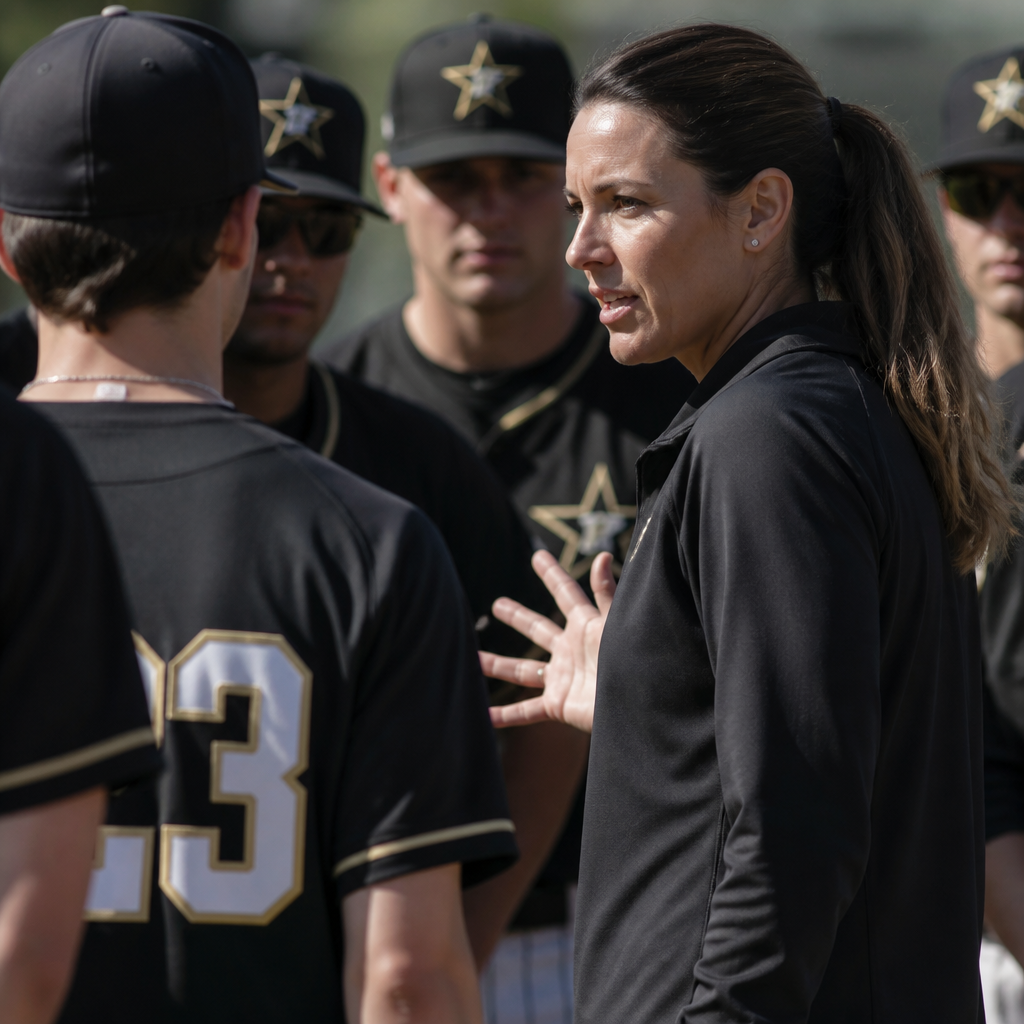
Women at the helm of college baseball programs represent one of the most important shifts in modern athletics because leadership in baseball has long been treated as male territory even though coaching, player development, recruiting, operations, and program building are not inherently gendered skills. In college baseball, a “program” includes far more than the head coach’s lineup card. It covers recruiting pipelines, strength and conditioning coordination, travel logistics, compliance, fundraising, academic support, analytics, alumni relations, media responsibilities, and long term culture. When women lead inside that system as head coaches, assistant coaches, operations directors, athletic trainers, analysts, recruiting coordinators, and administrators, they influence both daily performance and the sport’s future talent structure. I have worked with college programs on content, research, and communications projects, and the pattern is clear: when decision makers broaden who gets to lead, they widen the pool of baseball intelligence available to players. This matters for competitive reasons, institutional reasons, and cultural reasons. Competitive, because baseball rewards preparation and information more than stereotype. Institutional, because colleges are judged on inclusion, hiring quality, athlete development, and public credibility. Cultural, because visibility changes what players, parents, and young coaches believe is possible. A hub article on women leading college baseball programs should therefore do three jobs at once: explain where women already lead, identify the barriers that still shape hiring and advancement, and point readers toward the connected topics that define this growing part of the game.
The phrase women in baseball leadership can mean several different roles, and precision matters. A head coach controls the competitive direction of the program. An assistant coach may specialize in hitting, pitching, defense, baserunning, or recruiting. A director of operations handles travel, scheduling, paperwork, meals, budgeting support, and communication systems that keep a season functioning. Strength coaches, sports medicine staff, player development personnel, and video or analytics coordinators also shape results, even if they are not in the dugout giving signs. At the college level, the NCAA framework, conference rules, admissions standards, scholarship limits, and transfer portal realities all affect what leadership looks like in practice. For readers exploring women in baseball, this miscellaneous hub is useful because the story does not fit one lane. It includes breakthrough hires, long serving pioneers, women coaching men’s teams, women building baseball infrastructure from support roles, and women administrators creating hiring pathways that did not previously exist. It also overlaps with softball, professional baseball, youth baseball, and athletic department governance, since coaching careers often move across those spaces. Understanding the landscape requires looking at the whole ecosystem rather than a single headline hire.
Where women currently lead in college baseball
Women already serve across college baseball in ways that range from visible to overlooked. The most newsworthy cases are women hired as assistant coaches for NCAA baseball teams, particularly at Division I programs where staffing is highly scrutinized and media exposure is greater. In recent years, schools such as the University of Pennsylvania and others have drawn attention for adding women to baseball coaching staffs, not as ceremonial hires but as people with defined responsibilities in player development and recruiting. Beyond headline roles, many women work in baseball operations, sports performance, athletic training, nutrition, video coordination, and administrative support. These positions are not peripheral. Ask any head coach during conference play whether travel planning, scouting report preparation, pitcher workload tracking, or rehab coordination affects wins, and the answer is immediate. It does.
The clearest way to understand women leading college baseball programs is to separate symbolic visibility from operational influence. A woman may not hold the title of head coach yet still direct key performance systems. For example, an operations leader can reduce travel friction, standardize communication, and improve recovery windows on road trips, all of which affect player readiness. A recruiting coordinator can reshape a roster over two or three classes by identifying undervalued athletes and building trustworthy relationships with families. An analyst with command of TrackMan, Synergy, Rapsodo, Blast Motion, and video tagging can turn raw data into hitter plans and pitcher usage decisions. In practice, leadership is often distributed. The strongest programs recognize that baseball knowledge lives in multiple roles, and they give those roles authority instead of treating them as support labor detached from strategy.
Why representation in baseball leadership matters
Representation matters in college baseball leadership because players learn not only through instruction but through the structure of authority around them. When athletes see women evaluating mechanics, running meetings, making in-game decisions, coordinating recruiting strategy, and setting behavioral standards, they absorb a more accurate understanding of expertise. That has immediate consequences for team culture. It reduces the novelty factor that too often follows women in baseball spaces and shifts attention toward competence, preparation, and communication. It also affects the pipeline. Student managers, interns, graduate assistants, analytics assistants, and former players who want careers in sports look for evidence that advancement is realistic. Visible women leaders provide that evidence.
There is also a practical talent argument that athletic departments ignore at their own expense when they hire narrowly. Baseball is a sport obsessed with gaining marginal advantages: one more accurate scouting read, one better bullpen routine, one more efficient travel process, one stronger recruiting relationship in a talent rich region. Excluding women from consideration shrinks the candidate pool in a game where information and detail often separate winners from the middle of the standings. In my experience reviewing program case studies, the teams that benefit most from broader hiring are usually not chasing symbolism. They want better communicators, better organizers, more precise evaluators, and staff members who can connect with athletes in different ways. That is not a diversity slogan. It is a roster management reality.
Common barriers and how they show up in hiring
The barriers women face in college baseball are rarely stated as direct exclusion anymore, but they remain embedded in assumptions about experience, fit, and credibility. Hiring committees may say they want baseball experience while defining that phrase narrowly around previous men’s college coaching titles, even when a candidate has equivalent or stronger development experience from professional baseball, collegiate summer leagues, softball, private instruction, player development labs, or high level operations work. Informal networks also matter. Many baseball hires still move through recommendations from existing coaches, scouts, and athletic department contacts. If those networks have historically been male dominated, women can be judged as “unconventional” candidates even when their résumés are excellent.
Another barrier is the way unpaid or low paid entry roles shape the pipeline. Baseball careers often begin through internships, volunteer coaching, seasonal operations jobs, and graduate assistant positions that demand relocation and unstable income. That structure filters out many capable people, including women who may already face skepticism about belonging in the sport. There is also a visibility problem. When women lead from support positions, their impact may be credited upward to the head coach rather than recognized as leadership in its own right. Colleges can address these barriers through structured job descriptions, transparent compensation, skills based interviewing, broader search outreach, and performance evaluations tied to measurable outcomes rather than old assumptions about who “looks like” a baseball coach.
How successful programs evaluate leaders
The best college baseball programs evaluate leaders by output, not stereotype. They ask whether a coach improves swing decisions, command profiles, defensive positioning, recruiting hit rates, academic accountability, and team cohesion. They examine whether operations are organized, communication is crisp, and athletes actually retain instruction. Baseball lends itself to evidence based staff evaluation because so much can be tracked. Coaches can review first pitch swing rates, chase rates, strike throwing percentages, velocity maintenance, recovery timelines, roster retention, class balance, graduation outcomes, and recruiting conversion by territory. Leadership quality is visible when systems improve over time.
| Leadership area | What strong programs measure | Why it matters |
|---|---|---|
| Recruiting | Commitment conversion rate, academic fit, roster balance by class | Builds sustainable talent pipelines |
| Player development | Velocity gains, swing decisions, defensive consistency, injury availability | Turns raw talent into production |
| Operations | Travel efficiency, schedule accuracy, compliance completion, communication speed | Reduces avoidable performance disruption |
| Culture | Retention, punctuality, academic standing, behavioral standards | Protects long term program stability |
| Game preparation | Scout quality, opponent tendencies, bullpen planning, lineup readiness | Improves decision making under pressure |
This kind of evaluation is important for women in baseball because it replaces vague judgments with observable performance. A staff member who builds better scouting packets, improves recruiting communication, or helps pitchers increase strike efficiency is delivering baseball value. That contribution does not become more or less real based on gender. Programs that institutionalize clear metrics are more likely to retain talented women because expectations are legible and advancement can be defended with evidence. That matters in an industry where informal reputation still drives many hiring decisions.
Examples, pathways, and adjacent roles worth following
Readers looking for the broader women in baseball landscape should track both direct coaching examples and adjacent pathways. Some women enter college baseball after working in professional baseball player development, scouting, analytics, or operations. Others come from softball backgrounds with deep expertise in movement instruction, game planning, or recruiting administration, then adapt that experience to baseball environments. Still others build credibility through summer leagues, academies, private training facilities, or campus roles such as student manager, bullpen coordinator, or video assistant. There is no single model. That is exactly why this topic belongs in a hub article rather than a narrow profile piece.
Several connected subtopics deserve attention. One is the distinction between title and influence; readers should explore articles on directors of operations, analysts, and coordinators because many baseball careers start there. Another is the role of athletic directors and university leadership in hiring women for men’s sports. Without administrative support, even strong head coaches may default to familiar networks. A third is the connection between media coverage and legitimacy. When coverage treats every hire as a novelty story, it can unintentionally freeze women as exceptions instead of professionals. Better reporting explains actual responsibilities, credentials, and outcomes. Finally, readers should watch the effect of technology. As baseball becomes more data intensive, the sport rewards staff members who can translate information into teachable plans. That shift can weaken old gatekeeping habits because performance analysis is easier to verify than clubhouse mythology.
What colleges can do next to expand women’s leadership
Colleges that want more women at the helm of baseball programs do not need abstract commitments; they need process changes. First, write job postings around real competencies: recruiting evaluation, player development, analytics fluency, operations management, communication, and compliance literacy. Second, distribute openings beyond traditional baseball circles to professional organizations, coaching associations, and sports performance networks where qualified women already work. Third, compensate entry and midlevel roles fairly enough that talented candidates can stay in the field long enough to build a track record. Fourth, create mentorship structures that include not only advice but sponsorship, meaning senior leaders actively recommend women for assignments, conference speaking roles, and future jobs.
Fifth, normalize women’s authority inside the program once they are hired. That means clear role definition, public backing from the head coach and athletic department, and visible inclusion in meetings, travel, recruiting strategy, and player communication. Sixth, measure results and tell accurate stories about them. If a staff member improves defensive preparation or streamlines the transfer portal evaluation process, that should be documented in annual reviews and institutional communications. Seventh, build internal links between baseball and the wider athletic department. Strength coaches, compliance officers, sports medicine leaders, and administrators often help determine whether a new hire succeeds. When the whole department treats women in baseball as standard, not experimental, retention improves. Over time, those choices create the most valuable outcome of all: a normal hiring environment where the question is not whether women belong in college baseball leadership, but which candidate is best prepared to help the program win and operate well.
Women at the helm of leading college baseball programs are not a side story within the sport. They are part of how baseball is being modernized, professionalized, and made smarter at the collegiate level. The central lesson from this miscellaneous hub is straightforward. Leadership in baseball should be understood as a network of high impact roles, from head coach to operations director to analyst to recruiter, and women are already proving their value across that network. The evidence for broader inclusion is practical, not merely symbolic: deeper candidate pools, stronger communication, sharper organization, better player support, and more credible institutions. The obstacles are also clear: narrow definitions of experience, closed hiring networks, underpaid entry paths, and media habits that overemphasize novelty. None of those barriers are inevitable if colleges adopt better hiring and evaluation systems.
For readers building expertise in women in baseball, use this page as your hub. From here, go deeper into profiles of specific coaches, articles on baseball operations careers, analysis of women in professional baseball development roles, and coverage of hiring policy in college athletics. If you work in an athletic department, review your own baseball staffing process and ask where assumptions still drive decisions. If you are a coach, administrator, player, or parent, share examples of women leading effectively and support programs that evaluate talent fairly. College baseball gets better when leadership opens to everyone who can do the work well.
Frequently Asked Questions
Why is the rise of women leading college baseball programs such an important development in modern athletics?
The growing presence of women leading college baseball programs matters because it challenges one of the oldest assumptions in sports: that baseball leadership is naturally a male role. In reality, the core responsibilities that shape a successful program—recruiting, player development, culture building, staff management, compliance oversight, fundraising, travel coordination, and long-term planning—are not gender-specific skills. They are leadership skills. When women step into these positions, they do more than fill a title. They demonstrate that baseball expertise and executive capability are not limited by gender, and that programs benefit when hiring decisions are based on vision, organization, communication, and performance rather than outdated expectations.
This shift is also important because a college baseball program is much bigger than what happens during nine innings. The public often focuses on the head coach’s in-game decisions, but sustainable success comes from the infrastructure behind the scenes. Strong programs require year-round recruiting relationships, efficient operations, academic support coordination, strength and conditioning alignment, donor engagement, roster management, and clear internal standards. Women in leadership roles are helping redefine what baseball authority looks like by excelling across this full spectrum of responsibilities. Their success broadens opportunity for future coaches, administrators, and support staff while encouraging institutions to think more seriously about merit, inclusion, and the long-term health of the sport.
What does “leading a college baseball program” actually involve beyond coaching games?
Leading a college baseball program involves managing an entire athletic ecosystem, not just making lineup cards or calling pitches. At the center of the job is program building: establishing a clear identity, setting standards for accountability, and creating systems that support both performance and player development. That includes recruiting athletes who fit the culture, overseeing practice design, coordinating with strength and conditioning staff, monitoring academic progress, and ensuring the team functions effectively day to day. A leader must also manage assistant coaches, define staff roles, evaluate performance, and keep everyone aligned around shared goals.
Beyond the field, the responsibilities expand even further. College baseball leaders often work closely with compliance offices to make sure recruiting and eligibility rules are followed. They help organize travel, monitor budgets, communicate with athletic administrators, and participate in fundraising efforts that can directly affect facilities, scholarships, and operational resources. They may also serve as public representatives of the program in alumni events, community outreach, and donor meetings. In that sense, leading a program is part coach, part teacher, part operations manager, part strategist, and part executive. That broader reality is one reason the success of women in these roles is so significant: it highlights that elite baseball leadership depends on a wide range of competencies, many of which have nothing to do with traditional stereotypes about who “looks” like a baseball coach.
What challenges do women face when leading college baseball programs?
Women who lead college baseball programs often face challenges that go beyond the normal pressures of winning games and managing athletes. One of the biggest barriers is credibility bias. Because baseball has historically been framed as a male domain, women in leadership may be judged more quickly, questioned more often, or expected to prove their expertise in ways that male counterparts are not. That can show up in hiring decisions, media coverage, interactions with fans, donor perceptions, or even everyday professional dynamics. In some cases, women may need to navigate assumptions about authority, communication style, or baseball knowledge before their work is evaluated on its actual merits.
There are also structural challenges. Access to established mentoring networks, career pipelines, and informal professional circles can influence advancement in college athletics, and those systems have not always been equally open to women in baseball. Resource allocation can present another hurdle, especially when leaders are trying to build or reshape programs while also confronting skepticism. Yet these obstacles also make their success especially meaningful. Women who thrive in college baseball leadership roles often do so through a combination of preparation, strategic clarity, relationship-building, and consistent results. Their presence not only strengthens their own programs but also helps normalize women’s authority in baseball, making it easier for the next generation to enter the field with fewer barriers and more visible pathways to leadership.
How do women leaders influence recruiting, player development, and team culture in college baseball?
Women leaders can have a major impact on recruiting, player development, and culture because those areas depend heavily on communication, evaluation, trust, organization, and consistency. In recruiting, effective leaders identify more than physical tools; they assess character, coachability, academic fit, competitiveness, and how a player will contribute to the larger environment of the program. Women leading baseball programs often bring strong relationship-based approaches to recruiting, which can help establish trust with athletes and families while presenting a clear vision for development. Recruits and parents want to know how a program is run, how players are supported, and whether the staff has a plan. Strong leadership answers those questions in a convincing and structured way.
In player development, influence comes from building systems that help athletes improve over time. That means aligning coaching instruction with strength programs, recovery protocols, analytics, mental performance support, and academic expectations. Team culture is shaped by the standards leaders reinforce every day: how players communicate, how they respond to adversity, how responsibility is handled, and what kind of environment is created inside the clubhouse. Women leaders contribute significantly in these areas by emphasizing accountability, clarity, and holistic development. Their impact often extends beyond mechanics or tactics to include emotional maturity, discipline, and long-term growth. In a college setting, where players are still developing as students and adults, that kind of leadership can be just as valuable as technical baseball instruction.
What does the future look like for women at the helm of college baseball programs?
The future looks increasingly promising, though continued progress will depend on whether institutions commit to expanding opportunity in a meaningful way. As more women succeed in visible baseball leadership roles, the conversation shifts from novelty to normalization. That matters because sustainable change happens when women are no longer treated as exceptions, but as fully legitimate candidates for coaching, operations, recruiting, and administrative leadership across the sport. Colleges that recognize this trend early may gain a competitive advantage by widening their talent pool and building staffs based on skill, adaptability, and strategic fit rather than habit or tradition.
At the same time, progress will require more than symbolic support. Athletic departments must invest in equitable hiring practices, mentorship, professional development, and clear advancement pathways. Media coverage also plays a role by framing women’s leadership in baseball as substantive and influential rather than unusual for its own sake. Over time, greater representation can reshape how athletes, fans, administrators, and future coaches understand authority in the sport. The long-term significance is not just that more women may lead college baseball programs, but that college baseball itself may become stronger, smarter, and more inclusive because leadership is being defined by competence and vision instead of narrow historical assumptions.