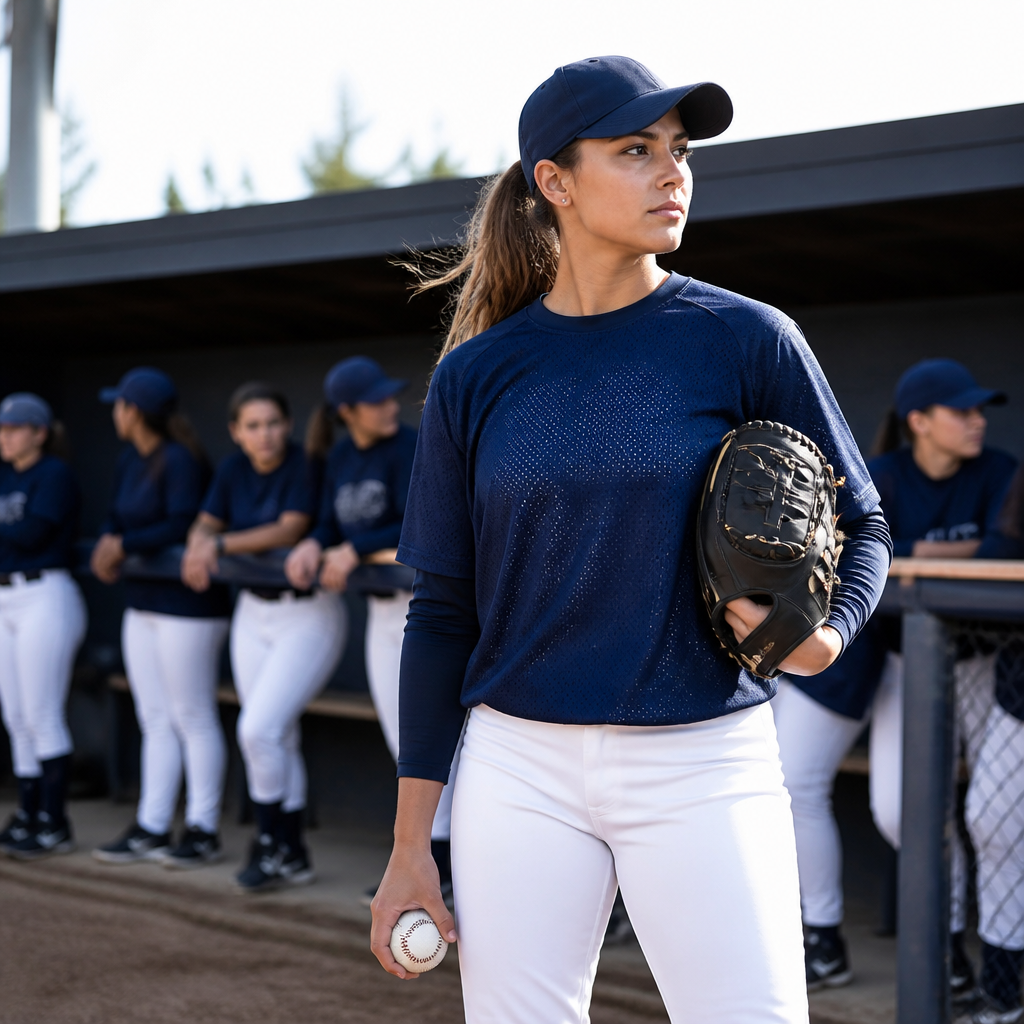
Empowering female athletes in college baseball requires more than celebration of rare success stories; it demands a practical understanding of how women enter, stay in, and influence a sport that has long been organized around men’s teams. In college baseball, “female athletes” can include women rostered in baseball-specific roles, women competing in club or developmental programs linked to campuses, and crossover athletes building baseball skills alongside softball or other sports. The term also covers pitchers, catchers, utility players, bullpen arms, practice contributors, and two-way athletes pursuing competitive opportunities wherever institutions permit them. This matters because college sports shape visibility, coaching pipelines, scholarship access, media narratives, and the long-term legitimacy of women in baseball. I have worked with baseball programs and athlete development plans where the biggest obstacle was rarely talent alone; it was information gaps, institutional habits, and a shortage of connected pathways. A strong hub article on women in college baseball must therefore address recruiting realities, eligibility questions, training demands, campus culture, safety, leadership, and the growing ecosystem of support. When colleges understand these pieces clearly, they can move from symbolic inclusion to durable opportunity. When athletes and families understand them, they can make better decisions, ask sharper questions, and build careers with intention rather than improvisation.
College baseball remains a complicated space because the NCAA sponsors baseball for men, while women more commonly compete in softball, club baseball, summer baseball, or national women’s baseball programs. Yet that structural fact does not erase women from the baseball pipeline. It increases the importance of planning. Female baseball athletes often need to navigate mixed competition, nontraditional recruiting routes, private development networks, and campus organizations that were not originally designed with them in mind. At the same time, colleges increasingly value student-athletes who expand program identity, strengthen community engagement, and model resilience. That creates real openings, but only for institutions willing to match interest with policy, coaching competence, and resources. The hub nature of this topic is important: “miscellaneous” does not mean minor. It means the issues are cross-cutting and often decisive, touching everything from equipment fitting and throwing workload management to compliance, housing, travel, and mental performance. Understanding these practical details is how female athletes stop being treated as exceptions and start being supported as competitors.
Understanding the College Baseball Pathway for Women
The first question many families ask is simple: can a woman play college baseball? The practical answer is yes, but the route depends on the school, division structure, roster needs, and whether the opportunity sits in varsity baseball, club baseball, developmental squads, or independent campus competition. In my experience, the athletes who make progress fastest are the ones who separate the romantic idea of “making history” from the daily process of earning innings, repetitions, and trust. Coaches evaluate velocity, bat speed, transfer times, command, footwork, baseball IQ, and emotional steadiness under pressure. They do not keep players solely for symbolic value when roster spots are tight. That reality is demanding, but it is also empowering because it gives athletes controllable targets.
For women pursuing college baseball, the pathway usually starts with proof of baseball-specific performance against strong competition. Tournament film, verified metrics, live at-bat video, and references from recognized instructors matter. So do objective benchmarks. A pitcher may need command of multiple offerings, not just one standout pitch. A catcher needs pop time, receiving skill, leadership presence, and durability. A middle infielder needs first-step quickness and dependable internal clock, not just flashy glove work. Women who come from softball backgrounds can transition, but they must account for different mound distance, arm slot demands, baserunning patterns, cutoffs, relays, and bat path tendencies. Colleges respond better when that transition is framed as a development plan rather than a vague aspiration.
The most successful college pathway conversations also acknowledge alternatives. Some athletes will find their best fit in club baseball while building toward national team selection, graduate opportunities, coaching, sports medicine, or baseball operations. Others may compete in softball while remaining active in baseball training and women’s baseball events. A good hub page should normalize these layered paths, because advancement in women’s baseball has rarely followed one straight institutional ladder.
Recruiting, Eligibility, and Roster Reality
Recruiting for female athletes in college baseball is less standardized than recruiting in softball, which means self-advocacy becomes part of the job. Athletes should build a concise skills profile with measurable data, recent video, academic information, and a targeted outreach list. Coaches want clarity. A message that explains position, current competition level, metrics, academic interests, and why the program is a fit works better than a generic note about passion. If there is game footage against high-level boys’ travel, men’s amateur, or elite women’s baseball competition, include it. If there are verified testing numbers from tools such as Rapsodo, TrackMan, Blast Motion, Pocket Radar, or a trusted performance facility, include those too. Specificity reduces uncertainty, and uncertainty often limits opportunity.
Eligibility and roster management also matter. NCAA, NAIA, and club systems all operate differently, and athletes must confirm timelines for amateur status, transfer rules, enrollment status, and participation permissions. Some schools may support women trying out for baseball while also maintaining clear roster standards; others may not have any established process at all. That is why direct communication with compliance offices and coaching staffs is essential. I have seen promising situations derail because assumptions replaced documentation. Athletes should ask whether tryouts are open, what evaluation criteria are used, whether travel roster limitations apply, and what insurance, medical clearance, and practice participation rules govern nontraditional cases. Those are not awkward questions. They are the basic infrastructure of informed participation.
| Area | What Athletes Should Confirm | Why It Matters |
|---|---|---|
| Recruiting | Coach contact process, video preferences, measurable benchmarks | Improves fit and reduces vague interest |
| Eligibility | Association rules, enrollment status, transfer and amateur requirements | Prevents disqualification or lost seasons |
| Roster | Tryout standards, travel squad limits, redshirt options | Clarifies realistic playing opportunities |
| Support | Strength staff access, athletic training, equipment provisions | Shows whether inclusion is operational, not symbolic |
Roster reality can be hard to hear, but it protects athletes from poor decisions. A program that praises diversity while offering no clear development reps is less useful than a club or smaller program willing to provide innings, instruction, and honest feedback. Playing time, not optics, drives development.
Training Demands and Performance Development
Empowerment in college baseball is inseparable from high-level training. Female athletes need the same performance standards applied to any serious baseball player, with individualized programming based on movement quality, injury history, experience, and role demands. The best strength and conditioning plans prioritize rotational power, lower-half force production, sprint mechanics, deceleration, shoulder integrity, and recovery capacity. For throwers, workload tracking is nonnegotiable. Acute spikes in throwing volume create avoidable risk, especially during transitions from showcase events to team practices or from softball patterns to baseball patterns. Good programs monitor intent level, total throws, mound exposure, high-stress pitches, and recovery markers, not just appearances in games.
Skill development must also be baseball-specific. Hitters need to train pitch recognition, timing variability, plate discipline, and contact quality, not merely swing aesthetics. Pitchers need command under fatigue, tunneling awareness, hold mechanics, and pickoff timing. Catchers need receiving drills that transfer to game speed, not endless blocking reps with no context. In my work around player development, the athletes who separated themselves were usually the ones with organized feedback loops: bullpen data, video review, coach notes, and a written plan for the next two weeks. Empowerment is not an abstract feeling; it often looks like a calendar, a throwing log, and a clear answer to “what am I improving right now?”
Nutrition, sleep, and recovery deserve equal attention. College athletes frequently under-fuel, especially during travel-heavy periods, and female athletes can be underserved when sports nutrition guidance is built around generic team assumptions rather than individual needs. Adequate protein intake, hydration, iron awareness, and recovery meal timing support both health and output. Athletic trainers and performance staff should treat these factors as part of competitive readiness, not optional wellness add-ons.
Campus Culture, Leadership, and Psychological Safety
Talent can open a door, but campus culture determines whether female athletes can stay, contribute, and lead. In male-dominated baseball environments, the difference between inclusion and isolation often comes down to ordinary daily behaviors: how coaches communicate, how teammates handle conflict, how locker room logistics are managed, and whether respect is enforced consistently. A psychologically safe environment does not mean low standards. It means athletes can ask questions, report concerns, compete for roles, and receive feedback without being reduced to stereotypes or novelty. Programs that get this right establish expectations early, apply conduct policies consistently, and solve logistical issues before they become trust problems.
Leadership opportunities are especially important. Female athletes in college baseball should not be framed only as pioneers; they should be positioned as contributors with tactical value. Captains, battery leaders, bullpen organizers, peer mentors, and community ambassadors all influence program culture. I have seen teams respond strongly when a woman on staff or on the field was given real authority rooted in competence rather than token visibility. That authority can reshape younger players’ assumptions about who belongs in baseball. It also improves team standards because credibility grows when everyone is accountable to the same details.
Mental performance support matters here as well. Female athletes navigating college baseball often carry extra visibility, which can create pressure that male teammates do not experience in the same way. Sport psychologists, performance coaches, and trusted assistants can help athletes manage scrutiny, identity stress, and perfectionism. The goal is not to make women “tough enough” for difficult environments; it is to build environments where toughness can be applied to competition instead of unnecessary social friction.
Institutional Support, Equipment, and Opportunity Beyond the Field
Real empowerment is visible in budgets, staffing, and systems. Colleges that support female baseball athletes well do several concrete things: they provide properly fitted equipment, ensure equitable access to athletic training and strength facilities, document participation procedures, and connect athletes to academic advising that understands travel and workload demands. Equipment is more important than many administrators realize. Ill-fitted gloves, protective gear, cleats, or catcher’s equipment can affect comfort, confidence, and injury exposure. The same is true for uniform planning, travel housing, and privacy arrangements. These are not side issues. They are operational markers of whether a program has moved from improvisation to professionalism.
Off the field, female athletes in college baseball benefit from opportunities in coaching, analytics, player development, media, and administration. A hub article under women in baseball should treat these areas as part of the same empowerment story because college is often where career trajectories begin. Student managers who learn Synergy, TrackMan reporting, spray chart analysis, biomechanical review, or recruiting operations can become invaluable baseball professionals. Athletes sidelined by injury can still build resumes through bullpen charting, scouting preparation, youth camp instruction, or social content strategy. That matters because representation in baseball grows not only through roster spots, but also through decision-making roles.
Schools should also connect athletes with external organizations, women’s baseball events, alumni mentors, and summer competition options. Those links expand visibility and help athletes avoid the dead-end feeling that can come from being the only woman in a local baseball setting. Networks sustain careers. They also help institutions learn from others instead of reinventing every process in isolation.
Building a Stronger Future for Women in College Baseball
Empowering female athletes in college baseball is ultimately about building repeatable pathways, not one-off exceptions. The colleges making the biggest difference are the ones that combine honest evaluation with genuine support. They tell athletes exactly what level is required, then provide the tools to reach it. They coordinate coaches, compliance staff, trainers, and academic support rather than leaving athletes to navigate contradictions alone. They recognize that women in baseball may arrive through different routes, but they still need the same essentials every serious athlete needs: instruction, measurable standards, safety, development reps, and respect.
For athletes and families, the key takeaway is to pursue clarity over assumption. Ask direct questions about roster opportunity, eligibility, evaluation criteria, travel expectations, and development planning. Collect objective performance data. Build baseball-specific skills against strong competition. Seek programs that can explain how support works in practice, not just in principle. For colleges, the charge is equally straightforward. If you want to empower female baseball athletes, design systems that make participation workable and progression visible. That means better communication, better infrastructure, and better leadership habits.
This page serves as a hub because the miscellaneous issues surrounding women in college baseball are often the issues that decide outcomes. Recruiting, training, culture, logistics, career development, and institutional support all connect. When those connections are strong, female athletes are not merely accommodated; they are positioned to compete and lead. Use this hub as a starting point, then explore each linked subtopic in depth, assess your program or pathway honestly, and take one concrete step today to expand opportunity in women’s baseball.
Frequently Asked Questions
What does “empowering female athletes in college baseball” actually mean?
Empowering female athletes in college baseball means creating real, lasting access to participation, development, and leadership within a sport that has historically been structured around men’s teams. It is not limited to applauding a few breakthrough stories or treating women in baseball as exceptions. Instead, it involves recognizing that female athletes may engage with college baseball in several ways: as players in baseball-specific roles, as participants in club or developmental programs connected to campuses, or as crossover athletes sharpening baseball skills alongside softball or other sports. Empowerment happens when these athletes have meaningful opportunities to train, compete, improve, and be taken seriously by coaches, administrators, teammates, and institutions.
In practical terms, empowerment includes access to quality coaching, strength and conditioning, game reps, recruiting visibility, mentorship, and fair evaluation based on ability rather than assumptions about gender. It also includes a campus culture where women in baseball are not treated as novelties, but as athletes with legitimate competitive goals. That can mean better tryout pathways, clearer roster policies, stronger support systems, and more intentional inclusion in baseball development environments. At its core, empowerment is about replacing symbolic inclusion with structures that help female athletes enter the game, stay in it, and influence its future.
How can colleges create more opportunities for women who want to play or develop in baseball?
Colleges can create more opportunities for women in baseball by widening the entry points into the sport instead of relying on a single traditional varsity pathway. Because women may arrive with different competitive backgrounds, schools should think beyond standard roster models and build baseball ecosystems that support multiple levels of participation. That can include open and transparent tryouts, club baseball programs, instructional squads, developmental training groups, fall skill clinics, and partnerships with local or national women’s baseball organizations. These options matter because they give athletes chances to be seen, trained, and evaluated over time rather than dismissed after one short tryout.
Institutions should also examine how they communicate opportunity. If a school says it supports inclusion but provides no clear information about baseball access for women, many athletes will assume there is no real pathway. Athletic departments, club sports offices, and coaching staffs can help by publishing participation options, eligibility information, contact points, and examples of available baseball development resources. Colleges that are serious about growth can also invest in camps, showcase events, and cross-training opportunities for athletes transitioning from softball or other sports. When schools combine visibility, infrastructure, and consistent coaching support, they make it far more realistic for female athletes to pursue college baseball instead of treating the idea as unlikely from the start.
What are the biggest challenges female athletes face in college baseball?
The biggest challenges are usually structural, cultural, and developmental rather than purely athletic. Structurally, there are limited established pathways for women in baseball at the college level, especially compared with sports that already have clear women’s teams and recruiting systems. That means many athletes must piece together their own route through club programs, private training, showcases, and informal networks. Culturally, female baseball players often face skepticism before they even step on the field. They may be judged more on assumptions about what women can do in baseball than on actual performance, which creates additional pressure to prove themselves constantly.
Another major challenge is retention. Even when women gain access to baseball environments, staying in those spaces can be difficult if they lack consistent reps, mentorship, peer support, or confidence that the program values their long-term development. Some athletes also navigate crossover expectations, particularly if they have softball backgrounds and are adapting to baseball-specific mechanics, timing, or strategy. None of these barriers are insurmountable, but they do require intentional support. The most effective response is not to frame female athletes as needing special treatment, but to remove avoidable obstacles and give them the same developmental seriousness that any committed athlete would need to succeed.
How can coaches support female athletes in college baseball effectively?
Coaches support female athletes most effectively when they combine high standards with fair, individualized development. That starts with evaluation based on skill, potential, and work ethic rather than preconceptions. A coach who assumes a female athlete is less capable before assessing her movement, baseball IQ, mechanics, and competitiveness is already limiting the player’s chance to grow. Good coaching in this area is not about lowering expectations. It is about applying the same performance-minded lens used with any athlete while understanding that some players may come from nontraditional baseball pathways and may need structured opportunities to translate their tools into baseball-specific success.
Support also means being intentional about communication, reps, and trust. Female athletes in male-dominated baseball settings often notice quickly whether they are being genuinely developed or merely accommodated. Coaches can make a major difference by explaining roles clearly, offering actionable feedback, creating skill progression plans, and ensuring athletes receive meaningful chances to compete and improve. Mentorship matters as well. When coaches connect players to role models, alumni, women in baseball organizations, or supportive training communities, they help reduce isolation and strengthen retention. The best coaching environments are those where female athletes are challenged, respected, and integrated into the baseball culture as serious contributors.
Why does female participation in college baseball matter for the future of the sport?
Female participation in college baseball matters because it expands the talent pool, strengthens the sport’s culture, and helps baseball evolve into a more inclusive and sustainable game. When women are given real opportunities to participate and develop, baseball benefits from more athletes, more perspectives, and more innovation in how players are trained and supported. College sports often serve as a bridge between youth participation and lifelong involvement in athletics, so college baseball has an outsized role in determining whether female players can continue in the sport beyond high school or early developmental stages.
It also matters symbolically and institutionally. Visibility at the college level signals to younger athletes, families, and coaches that baseball is not automatically closed to women. That changes how girls train, what goals they set, and whether they see baseball as part of their future. Over time, increased participation can influence everything from recruiting and club growth to coaching pipelines and leadership representation in the sport. In other words, empowering female athletes in college baseball is not just about serving a small group of current players. It is about shaping a healthier, broader future for baseball itself, where access and excellence are not limited by outdated assumptions.