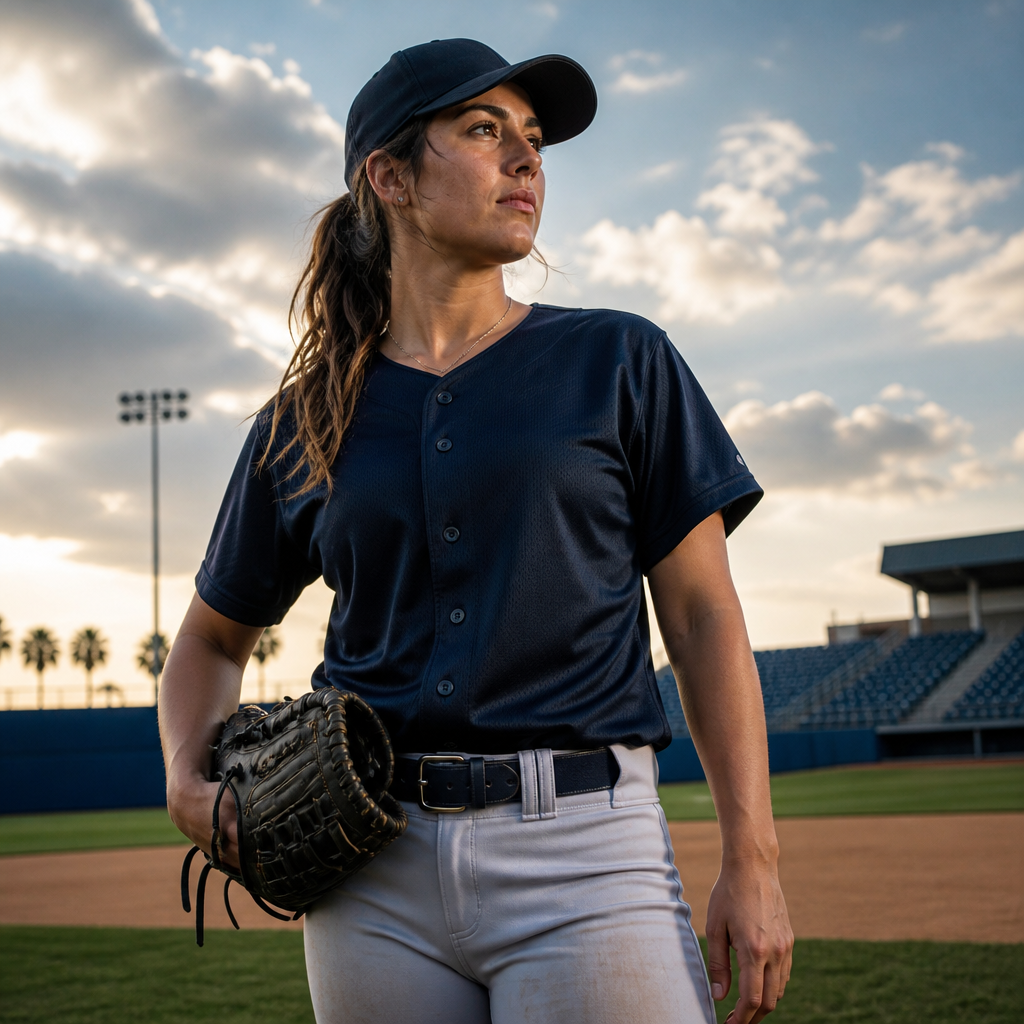
Women in baseball have always been part of the game, but their contributions are too often treated as side notes instead of the foundation of a durable legacy. In this hub article, legacy means more than historical memory; it includes participation, leadership, visibility, policy change, coaching pathways, fan culture, business influence, and the stories that help the next generation imagine a place on the field. When I have worked on baseball content and development programs, the biggest mistake I have seen is reducing the conversation to one league, one era, or one inspirational anecdote. The real picture is broader and more useful. Women in baseball includes players, coaches, scouts, front office leaders, broadcasters, umpires, owners, trainers, analysts, and advocates who have shaped how the sport is played and understood.
This matters because baseball is an ecosystem. If girls can play but cannot find coaches, they stall. If women can work in operations but never reach decision-making roles, progress remains cosmetic. If history celebrates a few exceptions without changing present-day structures, the sport repeats old barriers. A strong legacy is built when participation pathways, professional opportunities, media coverage, and institutional support reinforce one another. That is why a hub approach is valuable. Readers looking for women in baseball history, modern leadership, youth development, equality in sports, baseball jobs, or role models need a page that connects the major themes clearly and practically.
Baseball itself has evolved through integration, labor reform, international expansion, and data-driven decision making. Women have been part of each shift, even when records were incomplete or recognition lagged. The All-American Girls Professional Baseball League is important, but it is not the whole story. Earlier pioneers such as Lizzie Murphy played against men in exhibition settings. Toni Stone, Mamie Johnson, and Connie Morgan broke barriers in Negro Leagues baseball. In more recent decades, figures such as Kim Ng, Alyssa Nakken, Rachel Balkovec, Bianca Smith, Jen Pawol, and Jessica Mendoza have changed public expectations about who belongs in baseball spaces. Their milestones matter not only as firsts, but as proof that competence was never the issue; access was.
For a miscellaneous hub under women in baseball, the goal is comprehensive orientation. That means linking the past to the present, explaining where opportunities are growing, naming the remaining obstacles, and showing how schools, teams, leagues, and families can help build a lasting pipeline. Legacy is not inherited automatically. It is built through repetition, investment, and visibility. The sections below map the key areas that define women in baseball today and explain why each one deserves sustained attention from fans, educators, executives, and community leaders.
History Is the Base Path, Not a Footnote
Any serious discussion of women in baseball starts with history, because the current landscape makes more sense when readers understand how exclusion and participation developed at the same time. Women played baseball in the nineteenth century, appeared on barnstorming teams, and drew crowds long before modern diversity initiatives. Lizzie Murphy became one of the most famous early players, known for her power and her ability to hold her own in exhibition games with male professionals. During the 1940s and 1950s, the All-American Girls Professional Baseball League created a rare large-scale professional platform for women players in the United States. It was commercially significant, regionally popular, and culturally influential, even though it also imposed gendered rules around uniforms, etiquette, and public presentation.
History also requires correcting common omissions. Toni Stone became the first woman known to play regularly as a professional in the Negro Leagues, joining the Indianapolis Clowns in 1953. Mamie Johnson and Connie Morgan followed with substantial impact of their own. Their stories reveal how race and gender intersected in baseball, shaping who was seen, who was paid, and who was remembered. In my experience, when organizations teach this wider history instead of repeating a single familiar chapter, girls and women immediately see more than a symbolic place in the game. They see precedent. That shift matters because precedent creates legitimacy, and legitimacy supports opportunity.
Players, Development, and the Missing Pipeline
The central question many families ask is simple: where can girls play baseball, not softball, as they grow older? The honest answer is that opportunities exist, but the pipeline remains inconsistent by region, funding, and awareness. Youth baseball often accepts girls in early age groups, yet participation narrows as competition intensifies and social pressure pushes girls toward softball. That pressure is not always hostile; sometimes it is framed as practical advice because softball has more established school and college pathways. Still, the result is the same: baseball loses talented athletes before they can fully develop.
Building a stronger pipeline requires intentional structure. Organizations such as Baseball for All have shown what targeted support can do by creating tournaments, clinics, identification opportunities, and community visibility for girls who want baseball-specific development. Internationally, the Women’s Baseball World Cup organized by the World Baseball Softball Confederation has provided an elite competitive stage since 2004, proving that women’s baseball has global depth. Japan, Canada, the United States, Chinese Taipei, Venezuela, and other countries have all contributed to that competitive ecosystem. The lesson is straightforward. Talent does not appear only when institutions approve it; talent appears first, and institutions must respond with coaching, reps, facilities, travel budgets, and clear competitive ladders.
| Area | What builds legacy | Common barrier | Practical response |
|---|---|---|---|
| Youth participation | Girls stay in baseball beyond early ages | Pressure to switch sports | Create girls baseball teams and clinics |
| Elite competition | National and international events | Few visible pathways | Support tournaments and national teams |
| Coaching access | Qualified mentors and repetition | Shortage of trained staff | Fund coach education and hiring |
| Leadership roles | Women in decision-making jobs | Hiring bias and thin networks | Use structured recruitment and promotion |
Real development is rarely glamorous. It is batting practice, defensive reps, throwing programs, nutrition education, strength work, and game experience repeated over years. That is why showcase moments should never be confused with systems. A legacy is durable only when girls can move from recreation to travel ball to high-level instruction to national exposure without being treated as exceptions at every stage.
Women in Coaching, Scouting, and the Front Office
One of the most important shifts in modern baseball has taken place off the field. Women now hold visible roles in coaching, player development, analytics, biomechanics, operations, and executive leadership. Kim Ng’s appointment as general manager of the Miami Marlins in 2020 was historic because it put a highly qualified executive at the top of baseball operations after decades of near misses across major sports. Her career had already included senior roles with the Chicago White Sox, New York Yankees, Major League Baseball, and Los Angeles Dodgers. The milestone mattered, but the deeper lesson was about preparedness meeting a long-delayed opportunity.
Coaching milestones have been equally meaningful. Alyssa Nakken became the first full-time female coach in Major League Baseball and later the first woman to coach on the field in a regular-season MLB game. Rachel Balkovec became the first woman to manage a minor league affiliate when she led the Tampa Tarpons. Bianca Smith became the first Black woman to coach professional baseball when hired by the Boston Red Sox organization. These are not ceremonial positions. They involve game planning, player communication, technical instruction, scheduling, performance review, and credibility earned in competitive environments.
Scouting and front office work also matter because they shape who gets signed, developed, promoted, and retained. Modern baseball operations rely on video, TrackMan, Hawk-Eye, biomechanics, medical data, and probabilistic models, but decisions still depend on communication and judgment. Teams that broaden their hiring pools gain access to more perspectives and more talent. The tradeoff is that representation alone does not fix culture. Women hired into baseball roles still report issues around isolation, tokenization, and uneven mentoring. The practical response is structured onboarding, transparent promotion criteria, and leadership accountability tied to retention, not only recruitment.
Media, Storytelling, and Why Visibility Changes Outcomes
Visibility is not a superficial issue in baseball; it is an economic and developmental force. When women in baseball are covered consistently, not only during milestone moments, the sport gains sponsors, audience familiarity, and proof of concept for future investments. Broadcasters and analysts such as Jessica Mendoza have changed how audiences hear the game by bringing high-level insight to national coverage. Women journalists, producers, and content strategists have expanded the frame further, documenting amateur tournaments, international competition, labor issues, and development stories that might otherwise be ignored.
Good storytelling does three jobs at once. First, it preserves history accurately. Second, it helps current participants attract resources. Third, it normalizes women’s presence in baseball so that the next breakthrough feels expected instead of shocking. In practical terms, teams, schools, and leagues should document women’s baseball with the same seriousness applied elsewhere: player bios, statistics, archived video, local media outreach, and clear seasonal coverage. I have seen small programs change dramatically once they had usable photos, game reports, and shareable narratives. People support what they can see, understand, and follow over time.
What Still Blocks Progress
Despite real gains, several barriers continue to limit women in baseball. The first is pathway fragmentation. A talented girl may find a youth team, then lose access to age-appropriate competition, then struggle to find advanced coaching, then hit another wall at school or college level. The second is perception. Many people still assume baseball for girls is temporary or novelty-driven, even when evidence shows sustained interest and international competition. The third is resource inequality. Fields, travel funding, equipment, and staffing often favor established boys’ programs or softball alternatives.
There are also institutional issues. Hiring systems in baseball have historically relied on networks, recommendations, and insider familiarity. That can disadvantage highly qualified candidates who were kept out of traditional pipelines in the first place. Standards are important, but informal gatekeeping is not the same thing as quality control. Another obstacle is the overreliance on firsts. Celebrating a first woman in a role is necessary, yet it can create the illusion that the work is finished. Legacy begins after the first hire, first cap, first game, or first promotion. It becomes real when seconds, thirds, and entire cohorts follow.
How Organizations Can Build a Lasting Legacy
Schools, local leagues, MLB clubs, independent teams, and community groups can all take concrete steps. Start with access. Offer girls baseball clinics, girls divisions where numbers support them, and coed options where they do not. Train coaches to develop players without steering them elsewhere by default. Track participation data so dropout points become visible. Provide equipment support and travel subsidies for families who need them. If an organization runs baseball, it should ask a basic question every season: what specifically did we do that made the sport easier for girls and women to enter, stay in, and advance?
Next, build leadership intentionally. Job descriptions should focus on actual competencies, not assumptions about who has always held the role. Interview slates should be broad, and mentoring should be formal enough to survive staff turnover. Partner with established organizations, national governing bodies, and local educators. Use credible standards for coaching and safety, including SafeSport-informed practices where relevant, concussion protocols, and strength programming suited to age and workload. Finally, celebrate success with precision. Honor history, publish metrics, and tell detailed stories. Legacy grows when values become habits, and habits become systems.
Women in baseball are not asking the sport for a symbolic corner of its history. They are helping define its future through play, leadership, analysis, coaching, and institution building. The strongest legacy comes from connecting those roles instead of isolating them. History gives legitimacy, development creates opportunity, leadership changes policy, and storytelling makes progress visible enough to sustain. Taken together, those pieces form a hub readers can return to whether they want to understand pioneers, current professionals, youth pathways, or the practical mechanics of inclusion.
The clearest takeaway is that women in baseball succeed when the game stops treating participation as an exception and starts treating it as infrastructure. That means better pipelines for players, more deliberate hiring, stronger media coverage, and more complete historical memory. It also means acknowledging tradeoffs honestly. Progress is real, but it remains uneven by geography, budget, and institutional will. The good news is that the solutions are not mysterious. They are measurable, repeatable, and already visible in organizations that have chosen to act.
If you want to help build a legacy, start close to home. Support a girls baseball clinic, read and share women’s baseball coverage, document local history, ask leagues about access, and advocate for qualified women in baseball roles. Legacy is built one roster, one hire, one season, and one story at a time.
Frequently Asked Questions
Why does the idea of legacy matter so much when talking about women in baseball?
Legacy matters because it shifts the conversation away from treating women in baseball as occasional exceptions and toward recognizing them as essential contributors to the sport’s past, present, and future. When people hear the word “legacy,” they often think only of history, but in baseball it should mean something much broader: who gets to play, who gets hired to coach, who is visible in leadership, who influences business decisions, who feels welcomed as a fan, and whose stories are preserved and repeated. A true legacy is not built by one celebrated moment alone. It is built when participation grows, pathways stay open, and young players can clearly see that there is a place for them in the game.
That broader definition is especially important because women’s contributions have too often been framed as inspiring side stories rather than part of baseball’s core identity. A legacy-based approach corrects that. It asks whether organizations are creating lasting structures, not just short-term attention. Are girls and women being recruited, supported, promoted, and retained? Are their achievements documented with the same seriousness as everyone else’s? Are they shaping the sport at every level, from youth development to front offices to media and community engagement? Those are the questions that turn recognition into something durable.
In practical terms, legacy also helps baseball communities think long term. It encourages investment in coaching education, mentorship, scholarship opportunities, equitable facilities, and leadership pipelines. It reminds teams, leagues, and local programs that visibility alone is not enough. If the next generation cannot access the same doors that were opened by pioneers before them, then the legacy remains incomplete. Building a legacy means making sure women in baseball are not remembered only for breaking barriers, but for helping define what the game becomes next.
How have women contributed to baseball beyond playing on the field?
Women have shaped baseball in far more ways than the public conversation usually acknowledges. While playing is one important part of the story, women have also influenced the game as coaches, instructors, executives, scouts, broadcasters, owners, advocates, historians, entrepreneurs, and community builders. Their impact can be seen in player development programs, youth outreach, operational leadership, policy reform, fan engagement, and the storytelling that preserves baseball culture across generations. When the conversation stays focused only on whether women have played, it misses how deeply they have already helped build and sustain the sport.
In coaching and instruction, women have expanded what effective baseball leadership looks like. They have worked directly with athletes on skills development, game strategy, conditioning, and mental preparation, often while challenging outdated assumptions about who is seen as credible in baseball spaces. In front offices and administrative roles, women have influenced hiring, marketing, analytics, community relations, sponsorship strategy, and long-term organizational planning. In media and communications, they have helped determine which stories are told, which achievements receive attention, and how baseball connects with broader audiences.
Women have also played a major role in changing baseball culture itself. They have pushed institutions to think more seriously about inclusion, access, safety, and representation. They have helped create development programs for girls, advocated for better pathways into baseball careers, and challenged the tendency to treat female participation as unusual rather than normal. Even fan culture has been shaped by women through advocacy, content creation, local organizing, and generational loyalty to teams and communities. Taken together, these contributions show that women are not participating at the edges of baseball. They are helping shape the game’s systems, values, and future direction.
What are the biggest barriers to building a lasting legacy for women in baseball today?
One of the biggest barriers is the gap between visibility and infrastructure. It is possible for women in baseball to receive attention through special events, feature stories, or milestone moments, yet still lack the systems that make long-term progress possible. A lasting legacy requires more than celebration. It requires consistent investment in participation pathways, hiring practices, coaching opportunities, mentorship, funding, and institutional support. Without that foundation, progress can look impressive from a distance while remaining fragile in reality.
Another major barrier is the persistence of narrow assumptions about where women “fit” in baseball. Even when women are welcomed in theory, they are often still treated as newcomers in spaces they have helped shape for generations. That mindset affects everything from who gets recommended for leadership roles to whose expertise is taken seriously in player development, scouting, operations, and strategy. It can also influence whether girls are encouraged to stay in baseball or redirected elsewhere before their ambitions have a chance to grow. These cultural signals matter because they shape confidence, access, and belonging over time.
There are also structural barriers tied to resources and representation. In many areas, girls and women have fewer baseball-specific opportunities, fewer visible role models, and fewer clear ladders into coaching, administration, or professional influence. Coverage can be inconsistent, historical recognition can be incomplete, and advancement often depends on individuals pushing through systems that were not designed with them in mind. To build a durable legacy, baseball organizations have to do more than applaud pioneers. They need to examine policies, create measurable access points, fund development, and make inclusion part of normal operations rather than a one-time initiative. That is how legacy moves from symbolic to sustainable.
What can teams, leagues, and baseball organizations do to support women and strengthen their long-term impact?
Teams, leagues, and organizations can start by treating women’s inclusion as a core baseball issue rather than a separate public-relations topic. That means building intentional pathways at every level of the sport: participation, coaching, officiating, scouting, leadership, content, and business operations. Organizations should evaluate where women are currently present, where they are underrepresented, and what specific obstacles prevent advancement. From there, they can create targeted plans that include recruitment, mentorship, professional development, equitable access to facilities and resources, and transparent criteria for hiring and promotion.
Coaching and leadership pipelines are especially important. If organizations want a stronger legacy, they need to invest in certification opportunities, apprenticeships, shadowing experiences, and development programs that help women grow into visible baseball decision-making roles. Youth programs should also be designed to keep girls connected to baseball over time, not just introduce them to the sport once. Retention matters just as much as access. That includes creating environments where players, coaches, and staff feel respected, taken seriously, and able to imagine a future in the game.
Storytelling is another major part of the solution. Organizations should document and amplify the contributions of women not as occasional features, but as part of baseball’s ongoing narrative. That includes celebrating current leaders, preserving local and national history, and making sure the next generation sees examples of women succeeding across baseball roles. Strong policy also matters. Clear expectations around inclusion, reporting structures, accountability, and equitable opportunity help turn good intentions into standard practice. When organizations combine investment, visibility, and structure, they do more than support women in the moment. They help build the kind of legacy that endures.
Why is storytelling so important to the future of women in baseball?
Storytelling is important because it shapes who feels seen, who feels invited, and who is remembered as part of the sport. In baseball, stories do more than entertain. They teach communities what the game values. If women’s contributions are minimized, fragmented, or treated like footnotes, that absence sends a message that they are outside the game’s main tradition. On the other hand, when stories about women in baseball are told with depth and consistency, they expand the public understanding of who belongs in baseball and who helps define its future.
Good storytelling also creates continuity between generations. Young players and aspiring coaches do not just need access to opportunities; they need examples that make those opportunities feel real. Seeing women represented as athletes, instructors, executives, analysts, and changemakers helps turn possibility into belief. It shows that baseball is not a closed story already written by someone else. It is a living sport with room for new leadership, new voices, and new models of success. That kind of narrative power can influence participation just as much as any single program or initiative.
Just as importantly, storytelling protects legacy from being erased or oversimplified. It preserves the work of pioneers, highlights the efforts of current leaders, and creates a fuller record for the future. Strong stories can influence public support, attract investment, inspire policy change, and challenge outdated assumptions that still limit opportunity. In that sense, storytelling is not separate from progress; it is one of the mechanisms that makes progress possible. When baseball tells the truth about women’s role in the game, it strengthens the sport itself and gives the next generation a clearer, more confident place to begin.