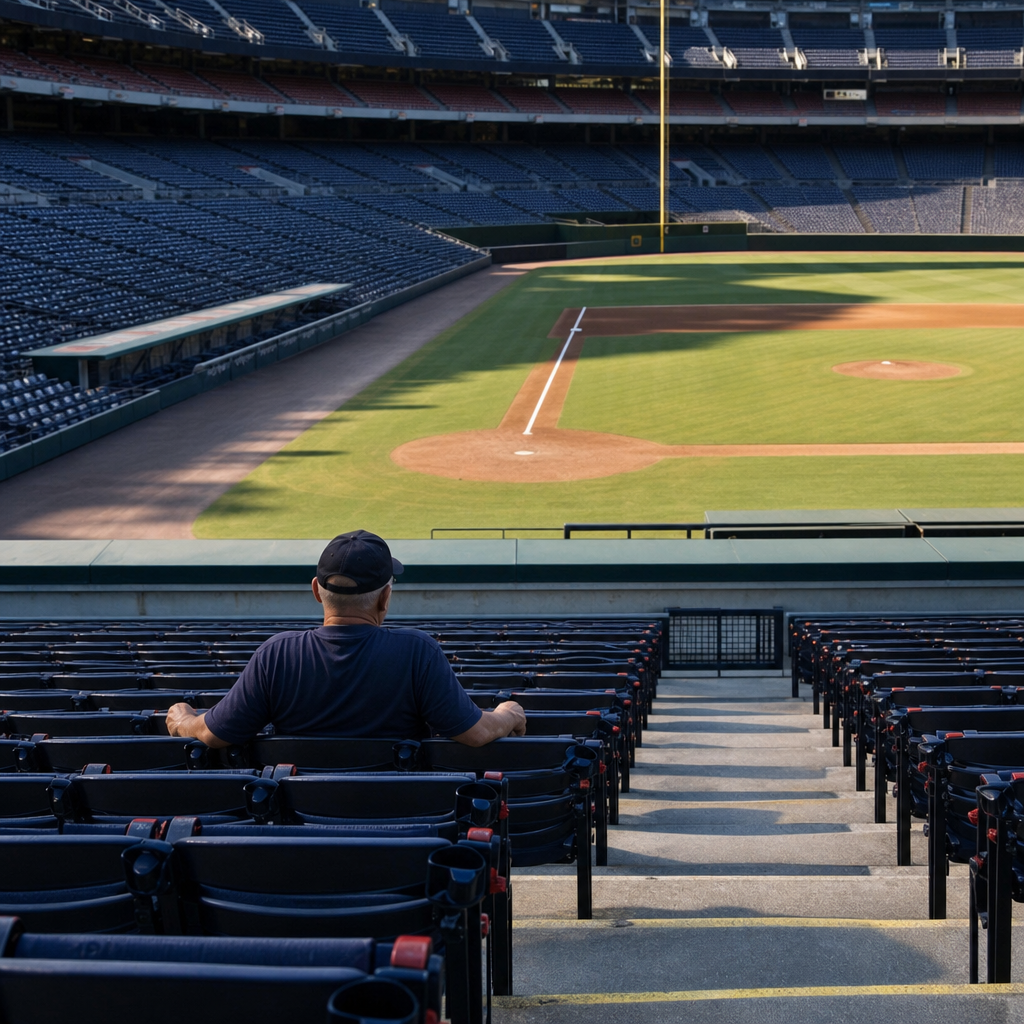
The Great Baseball Strike of 1994 remains one of the most consequential labor disputes in American sports because it canceled the World Series, froze a historic season in place, and permanently changed how fans, owners, and players understood Major League Baseball. In practical terms, the strike began on August 12, 1994, when members of the Major League Baseball Players Association stopped work after negotiations with club owners collapsed over salary controls, revenue distribution, and the future of free agency. A “season lost” does not simply mean games disappeared from the schedule. It means television contracts were disrupted, stadium workers lost income, postseason races were abandoned, and iconic storylines—most famously the Montreal Expos’ championship chase and Tony Gwynn’s pursuit of .400—were left unresolved. I have covered labor disputes and sports governance long enough to know that 1994 cannot be reduced to a single argument about greedy players or stubborn owners. It was the product of decades of mistrust dating back to earlier strikes in 1972, 1981, and 1990, combined with rapidly rising salaries, uneven local revenues, and an ownership group determined to impose a new economic system. Understanding the 1994 baseball strike matters because it explains the business structure of modern baseball, the bitterness that shaped the late 1990s, and the controversies that still define conversations about competitive balance, payroll gaps, and labor power across the sport.
Why the 1994 baseball strike happened
The immediate cause of the 1994 baseball strike was a breakdown in collective bargaining between Major League Baseball owners and the MLB Players Association, led by executive director Donald Fehr. Owners wanted a salary cap tied to a broader plan for revenue sharing. Players viewed that proposal as a direct attack on free-market salary growth and a rollback of hard-won labor rights established after the reserve clause era ended. At the center of the fight was a basic question: who should control baseball’s expanding wealth? Large-market clubs argued they generated income through local television deals, attendance, and sponsorships. Small-market owners argued the system made sustained competition impossible without stronger redistribution. The players accepted that revenue disparities existed, but they did not trust owners’ financial claims and saw a cap as the true objective.
That distrust was earned. Baseball labor relations had been adversarial for years, and both sides came into 1994 expecting a prolonged fight. Owners had previously colluded against free agents in the mid-1980s, a fact established in arbitration rulings that awarded players more than $280 million in damages. Players remembered that episode clearly. When owners insisted their latest proposals were necessary for the health of the sport, union leadership did not take those assurances at face value. In my experience reviewing labor disputes, once one side believes the other has manipulated the market before, compromise becomes far harder because every proposal is interpreted as a strategic trap rather than a practical fix.
What was at stake for players and owners
The salary cap proposal threatened the core of the players’ bargaining identity. Since the Messersmith-McNally decision in 1975 and the rise of free agency, players had fought to replace unilateral club control with market competition. A cap would limit that market by setting an upper boundary on payroll growth, even if individual salaries remained negotiable within the system. Players believed that once a cap existed, owner discipline would harden around it and salaries would stagnate. Owners, meanwhile, argued that payroll inflation was outpacing revenues for many clubs and that competitive imbalance would worsen if the richest teams continued to spend aggressively. Those arguments were not entirely invented. Revenue inequality was real, especially before the later explosion of centralized digital income and more modern luxury-tax structures.
Still, owners made a strategic mistake by framing the issue around “cost certainty” while struggling to produce transparent, unified evidence that the entire industry required a cap to survive. Some clubs were genuinely worried about losses. Others were profitable but disliked the direction of salary growth. That mixed picture weakened the owners’ public case. Fans could see wealthy franchises spending heavily while hearing simultaneous claims of economic distress. The players were also vulnerable in the court of public opinion, because athletes with multimillion-dollar contracts are easy to portray as privileged. But in labor terms, the dispute was not about whether stars earned too much. It was about whether management could impose systemwide restraints that fundamentally altered the labor market.
The season that was slipping away
What made the 1994 baseball strike uniquely painful was the quality of the season already underway. By August, multiple compelling races had developed, and several franchises were writing rare success stories. The Montreal Expos held the best record in baseball at 74-40, built around Pedro Martínez, Ken Hill, Marquis Grissom, Larry Walker, Moisés Alou, and a deep, athletic roster that fit Olympic Stadium perfectly. The Expos had never won a World Series, and many observers believed 1994 was their best chance in franchise history. The strike ended that possibility without resolution, and because financial pressures led Montreal to lose key players afterward, the interruption became part of the franchise’s long decline and eventual relocation to Washington.
Individual milestones were also in play. Tony Gwynn was batting .394 for the San Diego Padres and making a credible run at becoming the first hitter since Ted Williams in 1941 to finish a season at .400. Matt Williams of the San Francisco Giants had 43 home runs and was chasing Roger Maris’ then-National League-relevant benchmark pace. The Cleveland Indians were rising behind a loaded young core in their first season at Jacobs Field. The New York Yankees led the American League East and were positioned for their first postseason appearance since 1981, a potentially major turning point for the franchise before the late-1990s dynasty fully formed. When the strike canceled the remainder of the schedule on September 14 and then wiped out the postseason, those stories became baseball’s most famous unfinished sentences.
Key dates and turning points
The sequence of events shows how a labor standoff became a historic rupture rather than a temporary stoppage. Negotiations had been tense for months before the walkout, but once players struck on August 12, momentum shifted toward endurance rather than compromise. Owners canceled games in stages, hoping financial pressure would force the union back to terms closer to management’s framework. The union believed owners were willing to sacrifice the season to secure a cap, so it refused to blink. By early September, the cancellation of the rest of the regular season was becoming realistic. On September 14, acting commissioner Bud Selig announced the formal end of the season and postseason. The World Series was canceled for the first time since 1904 and the first time because of labor conflict.
| Date | Event | Why it mattered |
|---|---|---|
| June 1994 | Owners advanced salary cap and revenue-sharing proposals | Set the conflict around system control, not a minor economic tweak |
| August 12, 1994 | Players began the strike | Regular-season games stopped immediately |
| September 14, 1994 | Season and postseason canceled | Ended pennant races and erased the World Series |
| December 1994 | Owners approved use of replacement players for 1995 | Escalated the dispute and hardened public criticism |
| March 31, 1995 | Judge Sonia Sotomayor issued injunction | Restored prior labor terms and helped end the strike |
| April 2, 1995 | Players voted to return | Opened the path to a shortened 1995 season |
The legal fight and the road back
The strike did not end because one side suddenly persuaded the other. It ended because legal pressure altered the bargaining landscape. Owners attempted to move forward with replacement players for spring training in 1995, a tactic that had worked in other sports contexts but carried serious reputational risks in baseball. The National Labor Relations Board argued that owners had committed unfair labor practices by unilaterally implementing terms before bargaining to impasse. Federal judge Sonia Sotomayor granted a preliminary injunction on March 31, 1995, effectively restoring the previous agreement’s conditions until lawful bargaining resumed. That decision was decisive. It removed the owners’ leverage at a critical moment and allowed regular major leaguers to return for a shortened 144-game season.
The legal dimension matters because it demonstrates that the dispute was not only a public relations battle or an economic standoff. It was also a contest over bargaining procedure under federal labor law. Baseball’s antitrust history often gets more attention, but labor law proved more immediately important here. Once the injunction came down, owners could no longer credibly force a new system through replacement labor and unilateral implementation. In practical terms, the court reset the field closer to where the union wanted it. That did not solve every economic issue in baseball, but it prevented the introduction of a salary cap and preserved the basic structure of free agency. Later collective bargaining agreements would address revenue sharing and competitive balance in different ways, but 1994-95 established a durable line the union would not let owners cross.
How fans, cities, and the game were damaged
The damage from the 1994 baseball strike went well beyond missed box scores. Fans felt betrayed because baseball had positioned itself as a daily civic ritual, not just an entertainment product. When the season ended without a champion, many people interpreted it as proof that the sport’s leadership had lost sight of its public trust. Attendance dropped sharply when play resumed in 1995, and television ratings suffered. In several markets, the strike accelerated long-term cynicism. Montreal was hit especially hard because the Expos lost momentum, ticket demand, and eventually roster continuity. Local businesses around stadiums, from concession suppliers to parking operators, also absorbed real losses that rarely appear in headline summaries of the strike.
Clubhouse relationships were affected too. Veteran players had to explain the union’s position to younger teammates and marginal roster members who could less easily afford a long stoppage. Front offices faced scouting, budgeting, and fan-engagement problems with no clear end date. Broadcasters were left filling airtime with speculation instead of games. Even baseball card companies and memorabilia markets felt the disruption, because absent postseason moments and frozen statistics altered demand patterns. When I look back at 1994 as a hub topic within sports scandals and controversies, that breadth is what stands out. This was not a single bad decision or one infamous incident. It was a systemic breakdown that touched labor, law, media, franchise stability, and public confidence all at once.
Legacy within baseball’s wider controversies
The great irony of the 1994 baseball strike is that it helped create conditions for the sport’s complicated rebound later in the decade. Baseball returned in 1995 still wounded, but the home run chase of 1998, featuring Mark McGwire and Sammy Sosa, brought renewed attention and emotional energy. That recovery, however, came with its own controversy because the era’s performance-enhancing drug problem would later overshadow many of the achievements that helped restore fan interest. In that sense, 1994 sits at the center of a broader “Miscellaneous” web of baseball controversies: labor warfare, ownership credibility, franchise instability, financial inequality, and the cultural pressure that can push a sport toward unhealthy shortcuts in pursuit of relevance.
The strike also influenced how later commissioners, owners, and union leaders approached negotiations. Since 1995, baseball has avoided another work stoppage that canceled regular-season games, not because conflict disappeared, but because the cost of repeating 1994 became too obvious to ignore. The luxury tax, expanded revenue sharing, and more sophisticated national media economics offered alternatives to a hard salary cap. None of those tools fully solved competitive balance, and payroll disparities remain a live issue, but they demonstrated that baseball could adjust its system without detonating the calendar. For readers exploring scandals and controversies across the sport, the 1994 strike belongs near the top of the list because it exposed the fragility of baseball’s institutions. The main lesson is clear: when trust collapses between labor and management, the sport itself becomes the casualty. To understand modern baseball, start here, then follow the connected stories of free agency, collusion, steroid-era credibility, and franchise finance.
Frequently Asked Questions
What caused the Great Baseball Strike of 1994?
The Great Baseball Strike of 1994 was driven by a deep labor conflict between Major League Baseball team owners and the Major League Baseball Players Association. At the center of the dispute were proposals related to salary controls, revenue sharing, and the overall balance of financial power in the sport. Owners argued that the game’s economic system was unstable and that rising player salaries, combined with uneven team revenues, were creating long-term competitive and financial problems. Players, however, saw the owners’ proposals—especially any form of salary cap or cap-like restriction—as a direct threat to free agency and to gains the union had fought for over decades.
The tension did not appear overnight. Labor relations in baseball had been contentious for years, with earlier strikes and lockouts establishing a pattern of mistrust. By the summer of 1994, negotiations had broken down to the point where the players walked out on August 12. What made this dispute so consequential was not just the issues on the table, but how fundamental they were. This was a fight over who would shape the economic future of the sport: ownership seeking more cost certainty and structural control, or players defending an open market system that rewarded performance and bargaining power. In that sense, the strike was about far more than one season—it was about the identity of modern baseball.
Why was the 1994 baseball strike such a historic turning point?
The 1994 strike stands apart because it led to something many fans once thought unthinkable: the cancellation of the World Series. Baseball had survived previous labor disputes, but this one erased the sport’s championship for the first time in 90 years. That single fact transformed the strike from a business disagreement into a cultural rupture. The World Series is not just a postseason event; it is one of baseball’s central traditions, a symbolic finish line that connects each season to the sport’s history. When it disappeared, fans felt the loss in a way that was immediate and deeply personal.
It was also historic because the strike froze one of the most compelling seasons in recent memory. Several teams were in remarkable positions, and multiple player storylines had captured national attention. The Montreal Expos had the best record in baseball and looked like legitimate World Series contenders. Tony Gwynn was chasing a .400 batting average, something almost mythical in the modern era. Matt Williams was making a serious run at Roger Maris’s home run benchmark. When the strike ended the season, those stories were left unfinished, which only intensified the sense that baseball had lost more than games—it had lost a living piece of history.
Beyond the immediate damage, the strike permanently altered the relationship between fans and the game. Many people came away believing that both sides had put money ahead of loyalty, tradition, and the emotional investment of the public. Attendance and public trust suffered, and baseball had to spend years trying to rebuild its connection with fans. That is why the 1994 strike is remembered not just as a labor stoppage, but as a defining break in the sport’s modern history.
How did the strike affect the 1994 season, teams, and individual players?
The practical effect of the strike was abrupt and severe. When players stopped work in mid-August, the regular season came to an immediate halt, and because no agreement was reached in time, the remainder of the season and the entire postseason were canceled. That meant no playoffs, no league championships, and no World Series. For teams that had spent months building momentum, the ending was especially cruel. Clubs with realistic championship hopes suddenly had no chance to prove themselves on the field, and franchises in breakthrough moments were denied a potential place in baseball history.
The Montreal Expos are the most famous example. In 1994, they were widely viewed as one of the best teams in baseball and had a genuine shot at winning the franchise’s first World Series. Instead, their season ended without resolution, and many historians still see that lost opportunity as one of the most painful “what if” stories in the sport. Other contenders, including the New York Yankees and Chicago White Sox, were also left suspended in strong positions, which added to the frustration and sense of incompleteness surrounding the year.
For players, the damage was equally significant. Tony Gwynn was batting .394 when the strike hit, raising real questions about whether he might have become the first player since Ted Williams to hit .400 over a full season. Matt Williams had 43 home runs and was chasing a potentially historic total. Pitchers, hitters, and award contenders across the league saw their best statistical campaigns cut short. Some players lost momentum they never fully regained, while others lost rare chances to achieve milestones that could have reshaped how their careers are remembered. In short, the strike did not merely pause a season—it permanently interrupted legacies, pennant races, and one of the most intriguing competitive years baseball had seen in decades.
How was the 1994 baseball strike resolved, and what changed afterward?
The strike was not resolved quickly, and that prolonged uncertainty made the damage worse. Negotiations dragged on for months, with owners and players remaining divided over core economic issues. Eventually, the impasse ended not because of a dramatic handshake agreement at the height of the dispute, but through a combination of legal pressure and labor strategy. In early 1995, U.S. District Judge Sonia Sotomayor issued an injunction that effectively restored the previous labor terms and forced the owners to abandon their plan to implement certain changes unilaterally. That ruling was a turning point because it reopened the path to starting the season under the existing system.
Baseball resumed in 1995, but it did so in a shortened season and under a cloud. The return of games did not immediately restore public trust. Fans had watched an entire World Series vanish, and many were still angry at both ownership and the union. Over time, however, Major League Baseball did stabilize. New labor agreements eventually created a more durable framework, and while labor tensions did not disappear, the sport avoided another strike of similar scale. Revenue sharing became a larger part of the game’s economic structure, and the luxury tax emerged as an important alternative to a strict salary cap, reflecting the ongoing effort to balance payroll inequality without directly overturning the union’s resistance to hard spending limits.
The strike’s long-term legacy is that it reshaped the business of baseball even as it damaged the sport’s emotional bond with many supporters. It forced both sides to reckon with how much was at stake when negotiations fail. The lesson was clear: baseball’s economic system could evolve, but if labor warfare overshadowed the game itself, everyone paid a price—including the fans who had no seat at the bargaining table.
Why do fans and historians still talk about the Great Baseball Strike of 1994 today?
People still discuss the 1994 strike because it sits at the crossroads of sports, labor history, and cultural memory. It was not simply a work stoppage; it was a moment when baseball’s image as the national pastime was seriously shaken. Fans remember where they were when they learned the season was ending without a World Series, and historians continue to revisit the strike because it exposed underlying tensions that had been building in professional sports for years: who profits, who has leverage, and how much damage a labor fight can do to a game built on tradition and public affection.
It also remains a powerful topic because of the unanswered questions it left behind. Would the Expos have won it all? Could Tony Gwynn have hit .400? Would Matt Williams have threatened the home run records of his era? Those unfinished stories keep the 1994 season alive in public imagination. Unlike many historical debates, this one can never be settled on the field. That unresolved quality gives the strike a lasting emotional pull and makes it a natural subject for documentaries, books, and retrospective analysis.
Finally, the strike matters today because it changed how fans interpret baseball’s modern era. For many, it marked the end of a more innocent relationship with the sport and the beginning of a more business-conscious understanding of how baseball operates. Even when the game recovered in attendance and popularity, the memory of 1994 remained a warning sign. It reminded everyone that baseball is both a cherished pastime and a major industry—and when those two realities collide, the consequences can be historic.