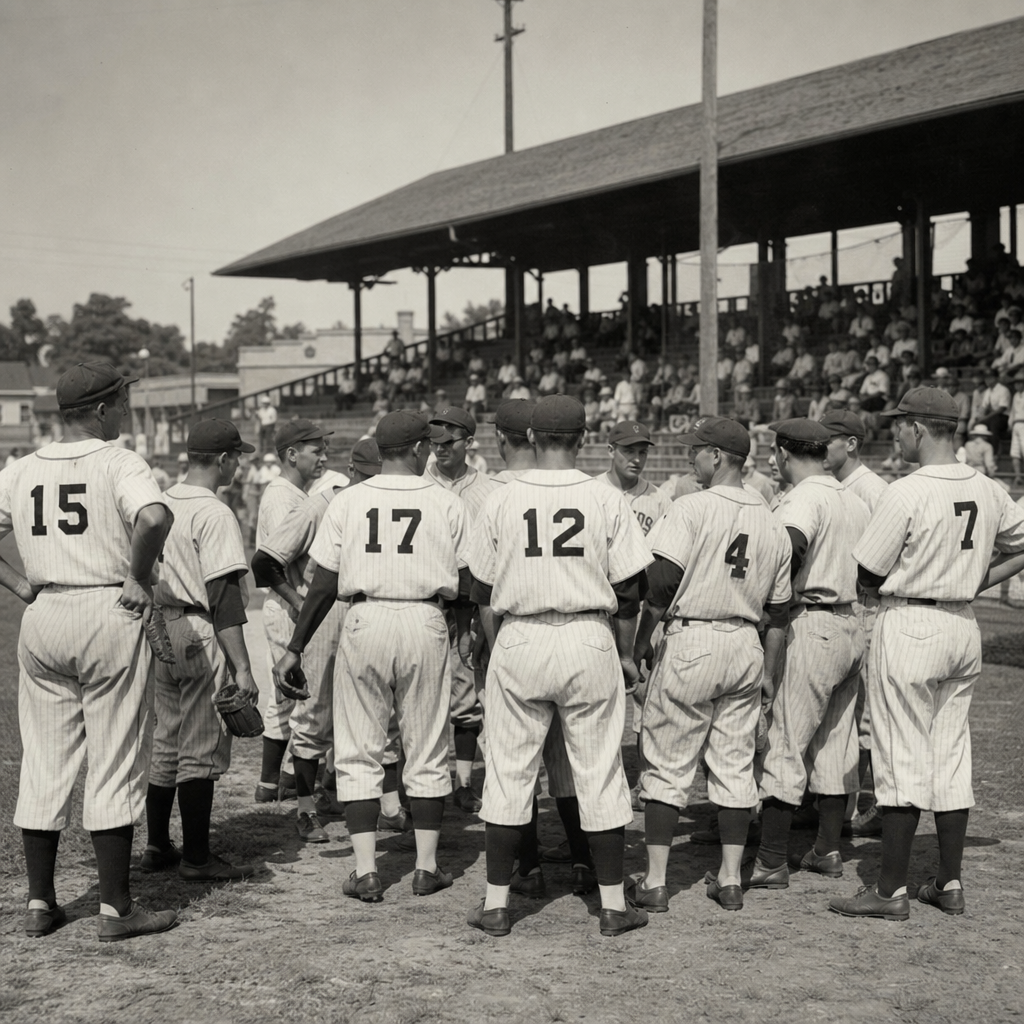
Minor league baseball has always been more than a feeder system for the majors. Across small cities, industrial towns, and regional capitals, historic minor league teams created civic identity, launched baseball innovations, and preserved local traditions long before national television turned the sport into a coast-to-coast spectacle. When we talk about historic minor league teams that made an impact, we are talking about clubs whose influence reached beyond wins and losses into economics, race relations, stadium culture, player development, and the way communities understood themselves.
The term minor league refers to professional baseball leagues operating below Major League Baseball, traditionally classified by level, market size, and player development role. Historic teams in this context are not merely old franchises. They are clubs that changed the sport, introduced future stars, endured unusual social conditions, or left a legacy that still shapes fan memory, team branding, and local baseball history. Some existed for decades; others burned brightly for only a few seasons yet altered the course of a city or a league. As someone who has worked through old media guides, attendance ledgers, and franchise histories, I have learned that impact is rarely measured by championships alone.
This topic matters because the minor leagues are where baseball became intimate. Fans could sit close enough to hear infield chatter, know players by name, and watch future Hall of Famers before fame arrived. Minor league clubs also mirrored American change. Textile centers, railroad hubs, mining towns, and postwar suburbs each supported teams that reflected their era. Understanding these clubs gives readers a better grasp of baseball history as a whole, especially within the broader world of Minor Leagues and College Baseball. This miscellaneous hub brings together the standout teams, themes, and patterns that explain why old minor league clubs still matter today.
The Newark Bears and the power of big-city minor league baseball
The Newark Bears are one of the clearest examples of a minor league team with major historical significance. Playing in the International League, especially during the 1930s and 1940s, Newark operated in a market large enough to support elite talent yet distinct enough to maintain its own baseball identity. Under Yankees affiliation, the Bears became a pipeline for players who were effectively major league ready. In practical terms, this made Newark games a preview of baseball’s future, not a second-rate substitute for the majors.
The 1937 Newark Bears are often cited among the greatest minor league teams ever assembled. Featuring players such as Charlie Keller and Joe Gordon, the club dominated with a level of depth rarely seen below the majors. Historians still point to that roster when discussing whether certain minor league champions could have competed with lower-tier major league clubs of the same era. That question itself shows the Bears’ stature. They changed how executives and fans thought about top-level minor league quality.
Newark also illustrates a larger truth: before postwar television and franchise relocation transformed the landscape, some minor league teams were central urban institutions. Their schedules, newspaper coverage, and attendance figures made them part of everyday civic life. For readers exploring related stories under this subtopic, Newark connects naturally to articles on legendary rosters, Yankees farm system history, and the economics of prewar baseball cities.
The Baltimore Orioles of the International League set the standard
Long before the modern major league Orioles became Baltimore’s signature club, the city’s International League Orioles established a benchmark for sustained minor league excellence. From the late nineteenth century through multiple later eras, Baltimore repeatedly fielded influential teams, but the early twentieth-century Orioles under manager Jack Dunn remain especially important. Dunn had a gift for identifying talent, signing raw players, and building competitive clubs that were both profitable and respected.
Babe Ruth’s early professional development is one reason Baltimore’s club remains central to baseball history. Dunn signed Ruth as a teenager, and although Ruth quickly moved on, his path through Baltimore demonstrates how minor league organizations once discovered and shaped talent outside today’s formalized draft and academy systems. The Orioles were not simply waiting rooms. They were operating laboratories for scouting, training, and baseball judgment.
Baltimore’s success also reflected strong front-office discipline. Well-run minor league clubs depended on relationships with local business leaders, newspaper support, and careful roster management. In my experience reviewing franchise histories, the teams remembered longest are usually the ones that connected player development to civic credibility. Baltimore did that consistently. It is a useful hub example because it links to broader discussions of scouting history, franchise continuity, and how cities used baseball to build prestige.
The St. Paul Saints and Minneapolis Millers defined the American Association
If one rivalry captures the cultural weight of historic minor league baseball, it is St. Paul versus Minneapolis. The Saints and the Millers were not just neighboring clubs. They were institutional symbols for the Twin Cities, carrying class, geography, and civic pride into every series. In the American Association, both teams played at a level that often rivaled major league quality, particularly in the first half of the twentieth century.
The Minneapolis Millers became famous for producing and hosting elite talent, including future stars who used the high-level competition as a bridge to the majors. The St. Paul Saints matched that influence with strong attendance and a reputation for entertainment and local attachment. These clubs mattered because they made minor league baseball feel essential rather than provisional. Fans cared deeply about standings, player movement, and bragging rights, not merely about who might reach the big leagues.
One reason this rivalry deserves hub treatment is that it touches many miscellaneous themes at once: urban competition, transportation-era scheduling, neighborhood ballparks, and the social role of recurring summer rituals. Their legacy also extends into modern branding. The current Saints consciously draw on that historic identity, proving that old minor league names still carry economic and emotional value. That continuity helps explain why revived brands often succeed when they respect authentic local history instead of inventing nostalgia from scratch.
The Montreal Royals changed baseball forever
No historic minor league team had a greater social impact than the Montreal Royals. In 1946, the Royals became the club for which Jackie Robinson played before breaking Major League Baseball’s color barrier with the Brooklyn Dodgers in 1947. That single season gave Montreal a permanent place in baseball history, but reducing the story to one player undersells the team’s role. The Royals and their city provided a proving ground under extraordinary pressure.
Robinson’s success in Montreal mattered because it demonstrated, in visible daily terms, that integrated professional baseball could function, win, and draw support. The environment was not free of racism, but compared with many American cities of the time, Montreal offered a less openly hostile setting. That gave Dodgers executive Branch Rickey an essential case study in both competitive and social integration. The Royals won the International League pennant and the Little World Series, showing that the issue was never baseball ability. It was the system that had excluded Black players.
For anyone building topical depth in Minor Leagues and College Baseball, the Royals connect directly to race and sport, Dodgers development history, and the international character of baseball. Their impact was not symbolic alone. It changed roster construction, scouting territory, and the moral direction of the professional game.
Teams that anchored communities through identity, innovation, and endurance
Many historic clubs made their mark less through singular fame and more through durable local influence. The Toledo Mud Hens are the best-known example. Their nickname became nationally recognizable, helped later by popular culture, but the team’s true significance lies in longevity and community attachment. Toledo repeatedly supported professional baseball through economic shifts, league restructuring, and changes in affiliation, making the Mud Hens a model for resilient minor league identity.
The Durham Bulls offer another kind of impact. Before the film and long before modern Triple-A prominence, the Bulls represented the tobacco-era South and the complicated intersection of labor, race, and regional business. Their later revival shows how a historic team can bridge memory and reinvention. Similarly, the Buffalo Bisons became synonymous with strong attendance and stable support, proving that a minor league team could function as a flagship civic asset even without major league status.
| Team | League or Era | Primary Impact | Why It Still Matters |
|---|---|---|---|
| Newark Bears | International League, 1930s-40s | Elite talent concentration | Model of high-level urban minor league baseball |
| Baltimore Orioles | International League, early 1900s | Scouting and player development | Early proof of minor league organizational power |
| Montreal Royals | International League, 1946 | Integration and social change | Central chapter in Jackie Robinson’s path |
| St. Paul Saints | American Association | Regional rivalry and fan culture | Historic brand revived with authenticity |
| Toledo Mud Hens | Multiple eras | Longevity and local identity | Proof that minor league heritage has commercial value |
Other clubs belong in this conversation as well. The Omaha Royals, Louisville Colonels in their minor league phases, and Rochester Red Wings all became known for stability and developmental value. The Pacific Coast League’s Los Angeles Angels, San Francisco Seals, and Hollywood Stars also deserve special mention because, before westward major league expansion in 1958, they operated in markets that often treated their teams as major attractions. Joe DiMaggio’s rise with the Seals remains one of the strongest examples of a minor league city rallying around a transcendent prospect.
When comparing these teams, a clear pattern emerges. The most impactful clubs usually combined three traits: a strong sense of place, a recognizable baseball function, and a story that could be passed between generations. That is why this miscellaneous hub should not be read as a random collection. It is a framework for understanding how teams become historic. Some transformed the sport. Some preserved baseball in difficult markets. Some gave cities a language of belonging that survived long after players left town.
What made historic minor league teams truly influential
Several factors consistently separated ordinary clubs from truly influential historic minor league teams. First was market fit. Successful teams matched ticket prices, stadium access, and promotional style to local habits. Railroad towns favored predictable schedules. Factory cities depended on weekend crowds and holiday doubleheaders. Teams that understood those rhythms lasted longer and built deeper loyalty.
Second was ballpark experience. Historic venues such as Baltimore’s Oriole Park, Newark’s Ruppert Stadium, and Toronto’s Maple Leaf Stadium created settings where fans felt ownership. Good sightlines, streetcar access, and neighborhood placement mattered as much as roster quality. In archival reporting, attendance often rose not only when clubs won, but when parks were accessible and socially central.
Third was affiliation strategy. As farm systems expanded after Branch Rickey’s innovations, the best minor league teams balanced development with competitiveness. A club that served only as a player shuttle rarely built fan devotion. The strongest organizations found ways to win while still preparing talent for the next level.
Finally, influence depended on memory. Teams survived in public consciousness through scorecards, local radio voices, reunion events, and revived branding. That is why old minor league history remains such fertile ground for readers. It offers baseball stories with names, places, and consequences people can still trace today. To explore this subtopic fully, readers should move next into team-specific histories, classic ballpark features, Negro League intersections, and the relationship between college baseball regions and minor league support. Together, those stories show the same truth: reviving the past is not nostalgia for its own sake. It is a way to understand how baseball took root, how communities shaped the game, and how historic minor league teams made an impact that still defines the sport. Start with the teams above, then follow the threads into the wider history of Minor Leagues and College Baseball.
Frequently Asked Questions
What made certain historic minor league teams so influential beyond the baseball field?
Historic minor league teams mattered because they often stood at the center of community life in ways that major league clubs could not. In many small cities, mill towns, railroad hubs, and state capitals, the local ballclub was one of the few institutions that brought together workers, business owners, families, and civic leaders on a regular basis. These teams were not just entertainment. They helped shape local identity, gave residents a shared source of pride, and created traditions that could last for generations. A successful or beloved minor league club could define how a town saw itself, especially in places that lacked major cultural institutions or national visibility.
Their influence also extended into economics and urban development. Ballparks drew foot traffic to nearby restaurants, bars, shops, and hotels, and game days could become a reliable part of the local business rhythm. Team ownership groups and city officials frequently viewed baseball as a way to promote civic growth, attract visitors, and showcase a community’s ambitions. In some cases, a team’s presence helped justify public investment in transportation, stadium improvements, and neighborhood development. Even when the financial scale was modest compared with the majors, the local impact could be significant.
Just as important, many historic minor league teams served as laboratories for baseball culture itself. They introduced fans to future stars, experimented with promotions, and adapted the game to regional tastes long before sports marketing became a formal industry. Some clubs were tied to breakthroughs in racial integration, while others helped preserve styles of play and fan traditions unique to their area. That combination of community meaning, economic importance, and cultural innovation is what made many historic minor league teams influential long after their records were forgotten.
How did historic minor league teams help shape civic identity in their communities?
Minor league teams often became symbols of the cities they represented. Unlike major league franchises, which usually operated in large media markets and spoke to broad regional audiences, minor league clubs were deeply rooted in local routines and local personality. Their nicknames, logos, uniforms, and ballpark customs often reflected regional industries, geography, or folklore. A team in a factory town might embody blue-collar grit, while a club in an agricultural center might celebrate harvest traditions or local history. Over time, these details helped create a strong bond between the community and the team.
This identity-building role was especially powerful in places going through social or economic change. During periods of industrial expansion, migration, war, or downturn, a baseball team could provide continuity. Fans returned to the same ballpark, cheered the same colors, and passed along stories from one generation to the next. That continuity mattered. It gave people a sense that their town had a cultural life worth preserving and celebrating. In many communities, memories of historic minor league teams remain part of local storytelling even decades after the clubs folded, relocated, or changed leagues.
Teams also created public rituals that reinforced belonging. Opening Day parades, holiday doubleheaders, pennant races, and weekend games became communal events where residents saw neighbors, coworkers, and local officials all sharing the same experience. Those moments built a sense of common identity that was larger than the game itself. When people remember a historic minor league team fondly, they are often remembering more than baseball. They are remembering how the club made the city feel visible, connected, and proud.
Why are historic minor league teams important in conversations about race and social change?
Historic minor league baseball occupies an important place in discussions of race because the minor leagues reflected the social realities of the country while also, at times, helping challenge them. In the segregated era, organized baseball often excluded Black players, which led to the growth and cultural importance of Black baseball institutions, including Negro league and independent teams that brought elite talent and deep community meaning to cities across the United States. In many towns, the baseball landscape revealed the line between exclusion and opportunity more clearly than any official speech ever could.
As integration slowly unfolded, some minor league teams and leagues became early testing grounds for change. Their decisions could carry enormous local significance. When a team signed or fielded Black players in a region where segregation remained deeply entrenched, the ballpark became a public space where old rules were visibly contested. Fans, local businesses, newspapers, and civic leaders all had to respond. These moments did not erase discrimination, and many players faced hostility, unequal treatment, and barriers to advancement. But they did mark important steps in baseball’s uneven movement toward inclusion.
Remembering these teams matters because it broadens the history of the sport beyond famous major league milestones. It shows that social change in baseball was not shaped only in big stadiums or national headlines. It also happened in smaller cities, on minor league rosters, and in communities where local decisions had lasting consequences. By studying historic minor league teams through the lens of race, we gain a fuller picture of how baseball both mirrored American inequality and, in certain moments, helped push against it.
In what ways did historic minor league teams contribute to baseball innovation?
Minor league teams have long been engines of experimentation. Because they operated with smaller budgets, closer community ties, and less national scrutiny than major league clubs, they often had the flexibility to try new ideas. Some innovations involved the fan experience, such as creative promotions, themed events, family-friendly entertainment, and local partnerships designed to keep attendance strong. What may seem routine today in sports marketing was often refined in minor league settings, where clubs had to work harder to stand out and make every ticket sale count.
Innovation also appeared on the operational side. Historic minor league teams were part of evolving systems of player development, scouting, travel logistics, and league organization. As baseball expanded across regions, minor league clubs helped shape how talent was identified and moved through the professional ranks. They also served as proving grounds for managers, executives, and playing strategies. While the majors often received credit for broad trends, many of those trends were first tested, adapted, or normalized in the minors.
Perhaps most importantly, historic minor league teams showed that baseball could be local without being small in significance. They demonstrated that a club did not need a major league payroll or national broadcast deal to influence how the game was presented and experienced. Whether through promotional creativity, player development practices, ballpark atmosphere, or regional style, these teams helped define baseball’s adaptability. Their legacy reminds us that innovation in the sport has often come from places outside the spotlight.
Why do so many historic minor league teams remain memorable even after they disappeared or changed?
The lasting memory of historic minor league teams comes from the fact that they were woven into everyday life. For many fans, these clubs were tied to childhood, family rituals, summer routines, and the physical experience of attending a neighborhood ballpark. The sounds, smells, ticket stubs, scorecards, and local radio broadcasts created emotional connections that outlived the team itself. Even if a franchise folded, moved, or rebranded, the memories attached to it often remained deeply personal and collectively shared.
Another reason is that these teams frequently represented eras that communities still look back on with meaning. A historic minor league club might evoke the height of a town’s industrial prosperity, a period of postwar optimism, or a time when local institutions felt more intimate and accessible. In that sense, remembering the team becomes a way of remembering the place. The ballclub serves as a vessel for broader memories about neighborhoods, local businesses, and civic traditions that have changed or vanished over time.
There is also a historical reason these teams endure. Their stories reveal how baseball developed outside the major league spotlight and how much of the sport’s soul was built in local settings. When people revisit historic minor league teams that made an impact, they are not simply indulging nostalgia. They are recognizing that these clubs helped shape economies, identities, and social conversations in ways that deserve serious attention. Their names may not always appear in national headlines, but their imprint on baseball history and community memory remains substantial.