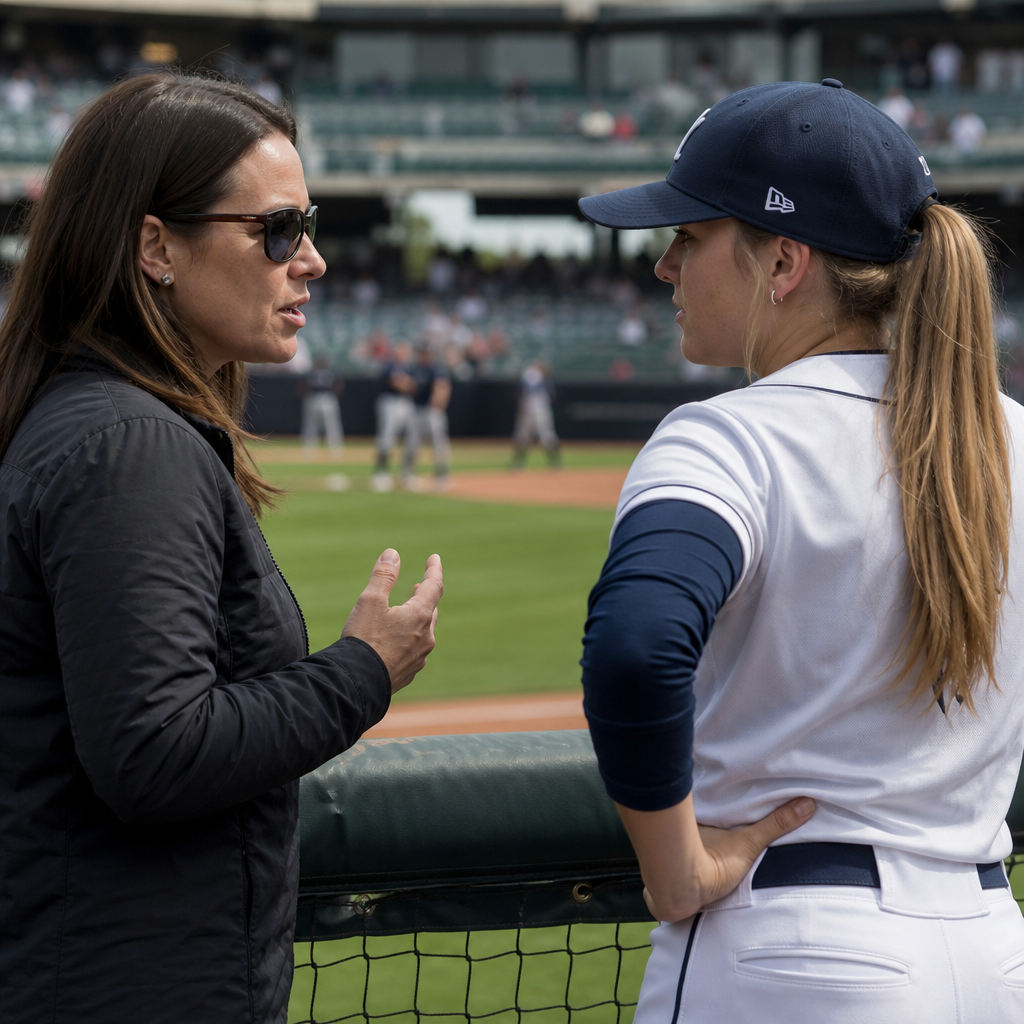
Baseball has long been framed as a men’s game, yet women have shaped it from nearly every angle: as fans, club owners, executives, scouts, broadcasters, coaches, umpires, and players. The phrase “women in baseball” does not describe a single lane. It covers a broad ecosystem of work and influence that stretches from youth diamonds to Major League front offices, from scorekeeping desks to on-field development staffs, and from community advocacy to international competition. When I have built coverage plans around this subject, the first lesson has always been the same: if you look only for women on a big league roster, you miss most of the story.
That broader story matters because baseball is both a sport and an institution. Institutions change through many connected roles, not one symbolic breakthrough. Women buying tickets and shaping fan culture helped sustain clubs financially. Women writing, producing, and broadcasting games affected how the sport was explained and who felt invited into it. Women in operations, analytics, strength training, athletic training, player development, and ownership altered decisions inside the game. At the same time, girls and women playing baseball rather than being redirected exclusively into softball challenged one of the sport’s oldest assumptions.
Defining terms is important. In this article, baseball refers to hardball played under baseball rules, whether in youth leagues, school programs, amateur clubs, professional development systems, or international events. Women’s role refers not only to participation as players, but also to labor, leadership, expertise, and representation around the sport. “From the stands to the field” captures that full journey. It includes spectatorship, media visibility, organizational authority, and direct competitive participation. This hub article maps that miscellaneous but essential landscape so readers can understand how the topic connects across history, business, culture, and performance.
The reason this hub matters now is simple: the pace of change has accelerated. Major League Baseball organizations have hired more women into coaching and baseball operations than at any earlier point. International tournaments have given female baseball players greater visibility. Development programs such as MLB, USA Baseball, and grassroots academies have created more on-ramps for girls who want baseball specifically. At the same time, persistent barriers remain, including limited school teams for girls, uneven funding, cultural skepticism, and the tendency to treat every milestone as an exception instead of evidence of structural progress. Understanding both the gains and the gaps is the only honest way to assess women’s growing role in baseball.
How Women Have Always Been Part of Baseball Culture
Women were never absent from baseball; they were often rendered invisible by how the game was documented. In the nineteenth century, women attended games in significant numbers, and club promoters understood that female spectators could make ballparks seem more respectable to middle-class audiences. By the early twentieth century, women were participating as scorekeepers, writers, and organizers in local baseball communities. During World War II, the All-American Girls Professional Baseball League became the most famous example of women playing high-level organized baseball in the United States, but it was not an isolated anomaly. Barnstorming teams, industrial leagues, amateur clubs, and international competitions also formed part of the record.
One reason this history matters is that it corrects a false narrative. The issue was not that women suddenly became interested in baseball. The issue was that institutions long restricted where that interest could lead. In practical terms, women were encouraged to cheer, keep score, or host baseball-themed civic events, but were often discouraged from pursuing scouting, coaching, player development, officiating, or competitive baseball pathways. Once you examine newspaper archives, Hall of Fame materials, league records, and oral histories, the pattern is clear: participation existed, but recognition lagged. That gap between contribution and acknowledgment still shapes the modern conversation.
Recent historical work has also expanded the record beyond a few familiar names. Effa Manley, co-owner of the Newark Eagles and the first woman inducted into the National Baseball Hall of Fame, showed that women influenced roster building, business operations, and civil rights advocacy inside the sport. Ila Borders demonstrated that women could pitch professionally in men’s independent leagues. Julie Croteau, Maybelle Blair, Justine Siegal, Kim Ng, Alyssa Nakken, Bianca Smith, Rachel Balkovec, and many others represent different kinds of breakthroughs, but each breakthrough sits on older foundations. The best way to read today’s progress is not as a novelty, but as overdue visibility.
Women in Leadership, Operations, and Decision-Making
Some of the most consequential change in baseball has happened away from public view, inside the departments that build organizations. Front offices now rely on integrated systems that combine scouting reports, biomechanics, video analysis, medical information, contract modeling, and performance data. As clubs professionalized these functions, women entered roles that once flowed through narrow old-boys networks. Kim Ng’s hiring as Miami Marlins general manager in 2020 was historic because it put a woman at the top of baseball operations in Major League Baseball, but it also reflected decades of work by women in legal, analytical, administrative, and player personnel roles.
In my experience reviewing baseball organization charts, titles can hide real influence. A coordinator, analyst, director, or assistant general manager may shape draft models, international processes, arbitration preparation, roster construction, or player development strategy. That matters because baseball decisions are rarely made by one executive acting alone. They emerge from layered evaluations and meetings. Women working in research and development, baseball systems, high-performance departments, and pro scouting have therefore affected the game even when headlines focused elsewhere. Once teams accepted that expertise can be measured through results rather than stereotypes, broader hiring became a competitive advantage.
Leadership roles also extend beyond MLB clubs. Minor League Baseball affiliates, collegiate programs, independent leagues, national governing bodies, and youth organizations all influence who gains opportunity. When women serve on boards, run academies, manage travel programs, negotiate sponsorships, or direct tournament operations, they shape the pipeline. Those functions may sound administrative, but they directly affect field access, coaching quality, safety standards, and visibility for young players. Governance is not peripheral to participation. In baseball, the people who approve budgets, staffing, facilities, and schedules determine which ambitions become realistic.
Coaching, Player Development, and On-Field Expertise
The most visible sign of changing attitudes may be the growth of women in coaching and player development. Alyssa Nakken became the first woman to coach on the field in a regular-season Major League game with the San Francisco Giants in 2022. Rachel Balkovec became the first woman to manage a Minor League team when she took over the New York Yankees’ Low-A affiliate, the Tampa Tarpons, that same year. Bianca Smith broke ground in professional coaching with the Boston Red Sox organization. These milestones mattered not because women had never understood hitting, defense, baserunning, or training, but because organizations finally entrusted them with formal authority.
Baseball coaching is specialized work. Hitting instruction includes bat path efficiency, swing decisions, attack angle, timing mechanisms, and pitch recognition. Pitching development includes arsenal design, release consistency, command metrics, workload management, and biomechanics. Defense training covers footwork, pre-pitch positioning, exchange speed, and decision trees by situation. Strength and conditioning staffs coordinate force production, mobility, recovery, and injury prevention. Women now work across all of these areas. Players and clubs care about whether information improves performance. When coaches communicate clearly, build trust, and solve problems, credibility follows.
There are still barriers. Clubhouse culture can be slow to change, and women coaches sometimes face scrutiny that male peers are spared. Access matters too. Many future coaches are former players, yet women have historically had fewer chances to accumulate competitive baseball résumés because school and amateur systems steered them away from baseball. That makes developmental programs especially important. Clinics, internships, apprenticeship models, and certification pathways can widen the pipeline. In practical terms, the sport grows stronger when coaching jobs are filled by the most capable teachers, not by assumptions about who belongs in uniform.
Playing Baseball: Pathways, Obstacles, and Emerging Opportunity
Girls who want to play baseball often encounter the sport’s most direct structural obstacle: access to teams. In many communities, softball is well organized while girls’ baseball options are sparse. Softball is a legitimate sport with its own traditions and elite pathways, but it is not a replacement for baseball if a player wants baseball specifically. The field dimensions, pitching mechanics, ball movement, tactical patterns, and developmental routes differ. For that reason, advocates increasingly argue that girls should not have to treat baseball as temporary before being redirected elsewhere.
Pathways are improving, though unevenly. USA Baseball’s women’s and girls’ programming, including the Women’s National Team and development initiatives, has created clearer benchmarks for competitive players. Internationally, the Women’s Baseball World Cup has offered top-level competition under the World Baseball Softball Confederation. Countries such as Japan, Canada, the United States, Chinese Taipei, Australia, and others have built recognizable women’s baseball programs. Grassroots groups like Baseball For All have also been crucial by organizing tournaments, camps, and support networks that help players find peers, coaches, and exposure.
| Pathway Area | What Exists | Main Challenge | Why It Matters |
|---|---|---|---|
| Youth baseball | Coed Little League and local recreation programs | Girls may be isolated as the only female player | Early repetition builds skills and confidence |
| Travel and showcase events | Regional teams, specialty tournaments, skills camps | Cost and travel limit access | Better competition improves development and visibility |
| School participation | Some girls make boys’ school teams | Few dedicated girls’ baseball teams | School ball offers regular games and community support |
| National team programs | Tryouts, development camps, international play | Limited roster spots and uneven scouting reach | Creates elite goals and validates the pathway |
| Adult competition | Amateur leagues, international events, clinics | No stable major professional league | Keeps players in baseball beyond youth years |
The absence of a long-term professional women’s baseball league in the United States remains a major limitation. Without a visible pro endpoint, the pathway can feel fragmented. Still, that does not mean progress is symbolic only. More girls are identifying as baseball players, more parents are seeking baseball-specific training, and more organizers are building events around that demand. The practical next step is sustained infrastructure: coaching education, regular competition, financial support, and media coverage that treats women’s baseball as a beat, not an occasional feature.
Media, Broadcasting, and the Business of Visibility
Representation in baseball media influences who is seen as knowledgeable. Women have become more prominent as broadcasters, reporters, analysts, producers, and digital creators, changing how the game reaches audiences. Names such as Jessica Mendoza, Melanie Newman, Jenny Cavnar, Alanna Rizzo, Lauren Gardner, and Hazel Mae reflect a wider professional presence across national and regional coverage. Their impact is larger than screen time. They ask questions at press conferences, frame storylines, interpret advanced metrics, and help normalize women as authoritative baseball voices.
Visibility has business effects. Broadcast booths, podcasts, newsletters, and social platforms shape sponsor interest, ticket demand, youth aspiration, and league priorities. When a young girl sees women calling games, breaking down pitch usage, interviewing managers, or hosting studio shows, she receives a direct signal that baseball knowledge is not gendered. Teams have noticed. Clubs now build fan engagement strategies around broader demographics, including women who are not casual spectators but committed consumers of analysis, memorabilia, streaming products, fantasy baseball, and live events.
Still, media progress is uneven. Women in baseball coverage often navigate online harassment, credibility tests rooted in bias, and narrow expectations about presentation. The strongest counterweight is consistent excellence supported by institutional standards. Good baseball media is precise: it explains why a hitter chased a slider off the plate, how a bullpen game affects leverage innings, or what an option year means for roster flexibility. As more women occupy those analytical and storytelling spaces, the sport becomes easier for wider audiences to enter without sacrificing depth.
What This Hub Connects and Where the Sport Goes Next
This miscellaneous hub exists because women’s growing role in baseball cannot be captured by a single profile or milestone. It connects many related subjects: women as players, coaches, executives, owners, broadcasters, historians, trainers, officials, advocates, and fans; girls’ baseball access; the relationship between baseball and softball; international women’s competitions; labor and leadership behind the scenes; and the cultural meaning of belonging in a game that often claimed tradition as a reason to change slowly. Read together, these themes show that baseball evolves when opportunity is repeated, funded, and normalized.
The central takeaway is straightforward. Women are not entering baseball from outside. They are gaining overdue access to roles they have long been prepared to fill, and the sport is better when that access widens. Teams benefit from a larger talent pool in leadership and coaching. Players benefit from more expertise and more inclusive development systems. Fans benefit from richer coverage and a more accurate understanding of baseball history. Young girls benefit most of all because visibility at every level turns interest into a believable pathway. If you are building your knowledge of women in baseball, use this hub as the starting point, then follow each branch deeper and support the programs, leagues, and voices expanding the field.
Frequently Asked Questions
How have women historically contributed to baseball beyond being fans?
Women have influenced baseball for far longer and in far more ways than the traditional public story usually acknowledges. While fan culture has always been a meaningful part of the game, women have also shaped baseball as owners, executives, scouts, statisticians, journalists, broadcasters, coaches, umpires, and players. In different eras, they helped sustain teams financially, organized community support around clubs, documented the sport, and opened pathways for future generations to participate more fully. Some worked in visible leadership positions, while others advanced the game through behind-the-scenes roles such as operations, player development, analytics, and administrative management.
The key point is that women’s presence in baseball has never been limited to one category. Their contributions span the full baseball ecosystem, from youth and amateur levels to professional organizations and international competition. Even when formal opportunities were restricted, women found ways to influence how the sport was taught, covered, promoted, and governed. That history matters because it challenges the idea that women are only recent participants in baseball. In reality, today’s progress builds on decades of persistence, expertise, and labor that helped keep the game growing both on and off the field.
What roles do women hold in modern baseball organizations today?
Today, women work across nearly every department in baseball organizations, and that range is one of the clearest signs of the sport’s evolution. In front offices, women serve as team presidents, general managers, assistant general managers, analysts, legal counsel, operations directors, and player personnel staff. On the baseball side, they contribute as scouts, development specialists, strength and conditioning coaches, mental skills professionals, trainers, and coordinators who help shape player performance systems. In media-facing roles, women are prominent as broadcasters, sideline reporters, play-by-play voices, writers, digital content leaders, and public relations professionals.
Women are also increasingly visible in on-field and game-adjacent positions, including coaching, umpiring, instruction, and player development. At the youth, collegiate, and professional levels, many are leading training environments, evaluating talent, and helping athletes improve mechanics, preparation, and decision-making. Just as important, women are active in baseball’s community and international dimensions through nonprofit leadership, grassroots programming, school partnerships, and national team development. Modern baseball is not simply “making room” for women in one lane; it is becoming more reflective of the reality that the sport requires talent in many forms, and women are contributing expertise across all of them.
Why does greater female representation in baseball matter for the sport as a whole?
Greater female representation matters because it strengthens baseball institutionally, culturally, and competitively. At the institutional level, broader representation expands the sport’s talent pool. Teams and leagues perform better when they can draw from more perspectives, experiences, and skill sets in decision-making, player development, communication, and strategy. Baseball is a complex industry that depends on scouting, data analysis, medical insight, leadership, media literacy, teaching ability, and community trust. Excluding or overlooking qualified women limits the game’s ability to evolve and solve problems effectively.
Culturally, representation changes who feels welcome in baseball spaces. When girls and women see coaches, executives, broadcasters, and officials who look like them, the sport feels more accessible and realistic as a place to belong, not just as a spectator but as a participant and leader. That visibility can influence everything from youth participation to career ambitions. It also helps fans understand that baseball is not owned by one demographic; it is a shared cultural institution. In the long run, a more inclusive baseball environment supports stronger fan engagement, healthier organizational culture, and a more accurate telling of the game’s history and future.
What challenges do women still face in baseball, even as opportunities grow?
Despite meaningful progress, women in baseball still encounter structural and cultural barriers. One of the most common challenges is the burden of proving competence in environments where assumptions about gender can still shape how expertise is received. Women may face extra scrutiny, limited access to informal networks, fewer mentors in senior positions, or pressure to represent more than just themselves in male-dominated spaces. In some cases, the obstacle is not formal exclusion but accumulated bias: being overlooked for advancement, questioned more quickly, or treated as unusual rather than normal within baseball operations.
Another challenge is pipeline development. Opportunities often expand unevenly, which means visibility at the top does not always translate into broad access at entry and mid-career levels. Sustainable change requires not just high-profile hires, but also investment in training, internships, leadership development, fair hiring practices, and workplace cultures that support retention. Women in baseball also benefit from clearer pathways into coaching, officiating, analytics, and player development roles, where experience tends to compound over time. Progress is real, but long-term inclusion depends on systems that make advancement repeatable rather than exceptional.
How can baseball continue creating more opportunities for women at every level?
Baseball can create more opportunities for women by treating inclusion as part of long-term talent development rather than a short-term public relations goal. That starts with building intentional pipelines at the youth, amateur, collegiate, and professional levels. Leagues, teams, and community organizations can expand clinics, mentorship networks, apprenticeships, and internship programs that introduce girls and women to a wide range of baseball careers, including roles that may be less publicly visible, such as analytics, scouting, player development, biomechanics, and operations. The more clearly these pathways are defined, the more likely talented people are to see baseball as a viable career field.
Organizations also need strong hiring and retention practices. That includes evaluating candidates consistently, widening recruiting channels, supporting professional growth, and ensuring workplace environments are respectful and accountable. Visibility matters too: highlighting women already succeeding in baseball helps normalize their presence and gives younger participants concrete examples to follow. Finally, baseball benefits when access is broad at the grassroots level. Affordable youth programs, school partnerships, local coaching opportunities, and community advocacy all help grow the next generation of players and professionals. When the sport invests in women as participants, leaders, and experts across the board, it is not just correcting a gap in representation; it is building a smarter and more sustainable future for baseball.