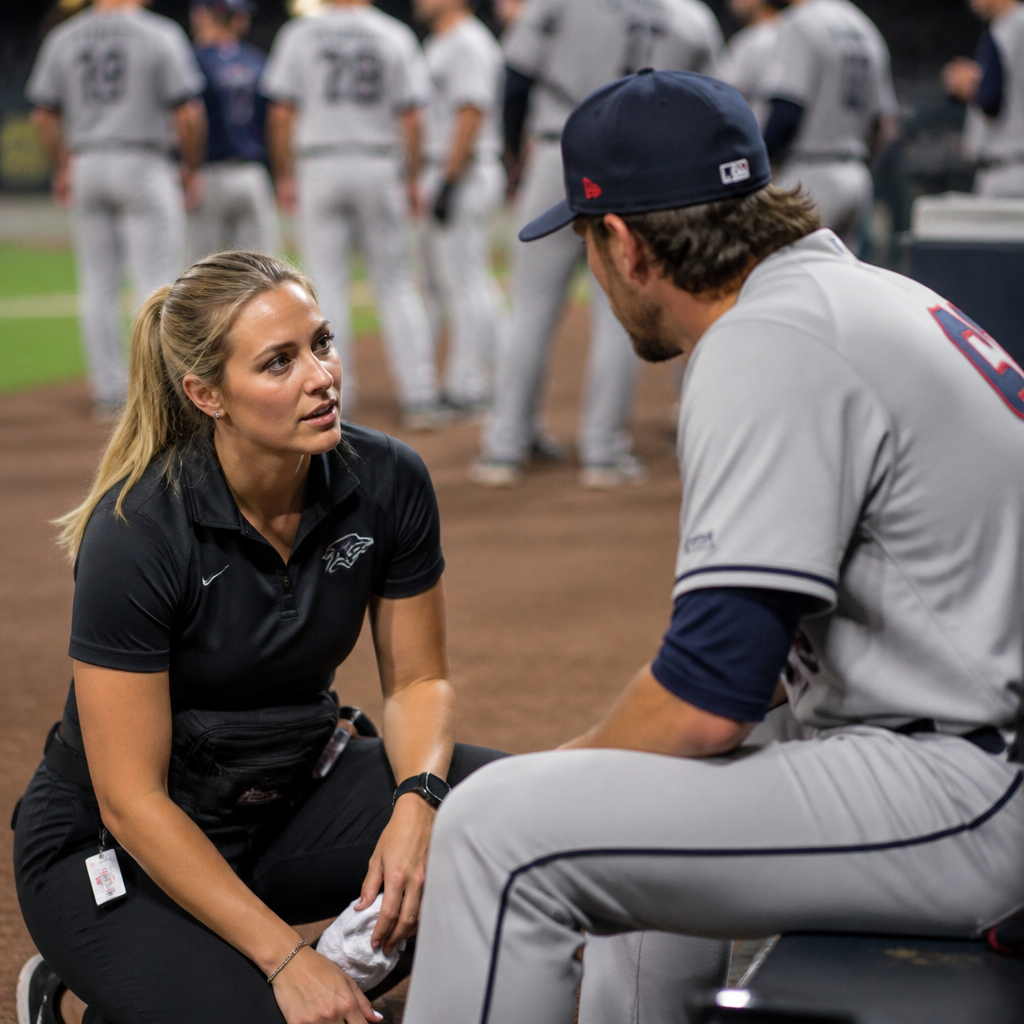
Celebrating female athletic trainers in college baseball means recognizing one of the sport’s most essential, most visible, and still too often overlooked leadership roles. Athletic trainers are licensed healthcare professionals who prevent, assess, treat, and rehabilitate injuries while guiding emergency response, workload management, return-to-play decisions, and daily player wellness. In college baseball, that responsibility spans everything from shoulder overuse and hamstring strains to heat illness, concussion protocols, and post-surgery progression. When women serve in these positions, they are not symbolic additions to the dugout environment; they are medical authorities whose judgment affects player availability, long-term health, and team performance every day.
This matters because college baseball is both physically demanding and culturally traditional. Programs operate through long seasons, frequent travel, strength cycles, throwing progressions, and high expectations from coaches, athletes, administrators, and fans. In my experience covering baseball operations and sports medicine workflows, the athletic trainer is often the person keeping the entire performance system coherent. She may be the first to evaluate a pitcher’s forearm tightness at 6 a.m., the last to leave after postgame treatment, and the calmest voice during an on-field emergency. Female athletic trainers have built credibility in environments that historically skew male, and their presence expands what leadership looks like in baseball while improving standards of care for everyone involved.
As a hub within the broader Women in Baseball topic, this article covers the full miscellaneous landscape around female athletic trainers in college baseball: what the role actually includes, why these professionals matter to athlete health and program success, what barriers still exist, how schools can support them, and which adjacent topics readers should explore next. The goal is practical and comprehensive. If you want to understand how women shape college baseball beyond the lineup card, start with the training room, the dugout rail, the rehab plan, and the trust built between athletes and the medical staff over the course of a season.
What female athletic trainers do in college baseball every day
The public often sees athletic trainers taping ankles or jogging onto the field, but that is a narrow view of a highly technical profession. In college baseball, the athletic trainer manages pre-participation screening, baseline movement assessment, acute injury evaluation, therapeutic exercise, manual therapy, recovery planning, documentation, physician communication, and emergency action procedures. She coordinates with team physicians, strength coaches, sport coaches, nutrition staff, and administrators while staying aligned with state licensure rules, institutional policies, and standards from bodies such as the National Athletic Trainers’ Association and the NCAA. This is clinical work under pressure, not sideline assistance.
A typical week illustrates the scope. Early in the week, an athletic trainer may review throwing volume from weekend games, identify elevated soreness patterns, and modify treatment plans for pitchers. Before practice, she can run shoulder maintenance circuits, inspect hydration readiness during hot weather, and reassess an infielder returning from an oblique strain. During practice, she watches movement quality, responds to foul-ball injuries, and tracks athletes on restricted workloads. Afterward, she handles treatment sessions, enters medical notes, and updates coaches on participation status using clear categories such as full, modified, or out. On travel days, she packs emergency equipment, medications permitted by policy, and rehab tools while preparing for unpredictable conditions.
Female athletic trainers perform these responsibilities while also navigating interpersonal dynamics that shape care. Baseball players may arrive skeptical, guarded, or eager to minimize symptoms to stay in the lineup. Trust is earned through consistency, communication, and clinical accuracy. I have seen the fastest credibility gains come when a trainer explains not only what hurts, but why it hurts, what the next forty-eight hours should look like, and how the decision connects to performance goals. When athletes realize the medical plan is designed to keep them effective over a season rather than simply hold them out, buy-in improves dramatically.
Why representation in the training room and dugout matters
Representation matters in college baseball because visibility changes expectations. When female athletic trainers are integral members of a program, athletes, coaches, recruits, and administrators see women exercising authority in one of the sport’s most trusted positions. That has immediate practical value and broader cultural impact. Practically, it normalizes professional respect based on expertise rather than gender assumptions. Culturally, it helps dismantle the outdated idea that baseball operations, performance, and medical care are naturally male domains.
For athletes, this representation can improve communication. Not every player opens up to every staff member in the same way, and diverse staffing creates more pathways to honest conversations about pain, stress, sleep, mental fatigue, and recovery habits. Many athletic trainers become unofficial translators between players and coaches, turning vague complaints like “my arm feels dead” into actionable observations about workload, soft-tissue irritation, or mechanics-related compensation. Female trainers often excel here because they are forced, by circumstance, to establish trust through precision and professionalism from day one. That sharper communication benefits the whole roster.
Representation also matters for students entering sports medicine. Young women in athletic training programs need to see realistic career paths in baseball, including at the Division I level. A visible female trainer on a college baseball staff tells interns and graduate assistants that they belong in this space and can advance in it. That signal affects hiring pipelines. Over time, more women in these roles means deeper candidate pools, stronger mentorship networks, and better staffing decisions for schools that want the best clinicians rather than the most familiar archetype.
Key challenges female athletic trainers still face
Despite progress, female athletic trainers in college baseball still navigate barriers that their male peers may not encounter as often. The first is credibility testing. Some women report needing to prove competence repeatedly in front of athletes, coaches, parents, or even external medical partners before receiving routine trust. That can show up in subtle ways, such as second-guessing return-to-play calls, or in blunt ways, such as surprise that a woman is leading baseball sports medicine. In a role where fast, respected decisions are critical, these frictions create unnecessary professional drag.
The second challenge is workload and schedule strain. College baseball is relentless: early treatments, long practices, midweek games, weekend series, travel, recruiting events, and summer planning. Athletic trainers already face elevated burnout risk across college sports, and baseball’s rhythm can be particularly demanding because roster size, throwing-related care, and weather variables all increase clinical volume. Women balancing family responsibilities, graduate education, or advancement goals may face additional institutional inflexibility if departments still assume old career patterns rather than designing sustainable staffing models.
A third challenge is the cultural residue of clubhouse gatekeeping. Most college programs are far more professional than popular stereotypes suggest, but informal norms still matter. If a staff environment tolerates dismissive jokes, blurred boundaries, or inconsistent respect, the trainer pays the price first. Strong departments set expectations early: medical staff authority is nonnegotiable, communication must stay professional, and athlete welfare overrides ego. Programs that fail to define that culture force women to spend energy managing avoidable behavior instead of focusing fully on care.
| Challenge | How it appears in college baseball | Best institutional response |
|---|---|---|
| Credibility testing | Repeated questioning of clinical decisions or role authority | Public backing from coaches, clear medical decision protocols |
| Schedule strain | Long seasons, travel, early treatments, limited staffing depth | Assistant coverage, protected time off, realistic caseload planning |
| Cultural gatekeeping | Informal disrespect, stereotypes, weak boundaries | Professional conduct standards and rapid accountability |
| Advancement barriers | Fewer mentors, narrower baseball hiring networks | Structured mentorship and transparent promotion criteria |
How female athletic trainers improve athlete health and team performance
Good athletic training improves availability, and availability is one of the strongest drivers of baseball success. Female athletic trainers contribute directly to this by identifying risk early, reducing preventable downtime, and steering athletes through evidence-based rehabilitation. Shoulder and elbow care are obvious examples. A trainer who notices declining internal rotation, altered scapular control, or unusual post-outing soreness can flag a problem before it becomes a shutdown. That intervention may include modified throwing, manual therapy, strength adjustments, physician referral, or imaging if red flags appear. The win is not simply fewer missed games; it is preserving long-term arm health.
Lower-body management is another major performance area. Hamstring strains, hip irritation, ankle restrictions, and adductor issues can quietly reduce sprint speed, rotational power, and defensive range long before an athlete reports a true injury. Skilled trainers pick up these trends through movement screens, repeated athlete interviews, and observation during warmups. They also influence sleep habits, hydration routines, and recovery compliance, which are boring topics until they become decisive in May. Teams that stay healthier late in the season usually do not get there by accident. They get there because someone built and enforced sound daily processes.
Female athletic trainers also strengthen decision-making discipline. In strong programs, the medical staff provides objective friction against the emotional impulses of competition. A coach wants his closer available; the athlete insists he can push through; the athletic trainer weighs tissue healing, symptom behavior, functional testing, and risk tolerance. That independent voice protects both player and program. It may be unpopular in the moment, but over a season, disciplined medical judgment prevents avoidable setbacks. Championships rarely hinge on one dramatic treatment. More often, they hinge on hundreds of small, correct decisions made before a problem becomes visible to everyone else.
Building better pathways, mentorship, and support across the sport
If college baseball wants more female athletic trainers to enter, stay, and lead, the pathway must be intentional. It starts with education and exposure. Athletic training students should have opportunities to work baseball specifically, not just general clinic assignments. Baseball has its own injury patterns, communication style, and calendar logic. Internships, graduate assistantships, and shadowing experiences help emerging professionals understand that environment early. Schools that rotate students only through familiar placements often narrow the pipeline without realizing it.
Mentorship is equally important. Women entering baseball sports medicine benefit from mentors who can advise on licensure, continuing education, boundary setting, communication with male coaching staffs, and advancement strategy. Those mentors do not all need to be women, but they must understand the realities of the role. Formal mentorship programs through athletic departments, conference associations, or professional organizations can reduce isolation and accelerate growth. The strongest mentorship relationships blend clinical feedback with career sponsorship, meaning someone is willing to recommend a candidate for meaningful opportunities, not just offer encouragement.
Institutional support must move beyond praise into policy. That includes equitable pay, maternity and family-support planning, safe travel procedures, professional development budgets, and staffing levels that reflect baseball’s demands. It also includes modern sports medicine infrastructure: integrated electronic medical records, access to imaging and specialist referral networks, heat illness protocols, and emergency action plan rehearsals. Celebrating female athletic trainers should never stop at appreciation graphics during Women’s History Month. Real respect appears in budgets, titles, staffing charts, and decision-making authority.
As the miscellaneous hub for this subtopic, this page also points readers toward adjacent Women in Baseball conversations worth exploring next: women in front-office baseball operations, female strength and conditioning coaches working with baseball athletes, women in college baseball media and communications, women serving as umpires, and the evolving role of female player-development staff. Together, these topics show that baseball leadership is not confined to the field manager’s office. It stretches across health, performance, administration, storytelling, and athlete support systems.
Recognizing excellence and moving the conversation forward
Celebrating female athletic trainers in college baseball starts with seeing the role clearly: these are medical professionals whose expertise shapes athlete welfare, roster stability, and competitive outcomes. They assess injuries, guide rehabilitation, manage risk, coordinate care, and build trust in one of the most demanding environments in college sports. Their impact is practical and measurable. Healthier athletes practice more consistently, recover more effectively, and make fewer avoidable setbacks. Programs with strong medical cultures perform better because they protect availability over the full season, not just in the next game.
The broader value is cultural. Female athletic trainers expand opportunity within baseball and demonstrate, every day, that authority in the sport comes from competence, composure, and clinical judgment. They also expose where programs still need to improve. If a school wants to honor women in baseball meaningfully, it should examine staffing support, workplace culture, mentorship, advancement, and public recognition. Appreciation is useful, but structure is what changes careers. Better pathways and better policies will do more for the profession than slogans ever could.
For readers using this article as a hub, the next step is simple: keep exploring the many ways women shape baseball beyond the traditional spotlight. Learn how female professionals contribute across player development, analytics, communications, officiating, and sports medicine, and use those examples to advocate for stronger, more inclusive programs at your school or organization. When college baseball recognizes female athletic trainers fully, it does more than celebrate individuals. It makes the sport healthier, smarter, and better led.
Frequently Asked Questions
What does a female athletic trainer do in college baseball?
A female athletic trainer in college baseball does the same highly skilled, high-responsibility work as any certified and licensed athletic trainer: she helps keep players healthy, safe, and available to compete throughout a long and demanding season. That includes injury prevention, daily evaluations, emergency response planning, treatment of both acute and chronic conditions, rehabilitation design, and return-to-play decision support. In a baseball setting, the work often centers on shoulder and elbow overuse, hamstring and groin strains, back issues, ankle sprains, hydration concerns, heat illness prevention, and the constant wear and tear that comes from repetitive throwing, sprinting, sliding, and travel.
Her role is also deeply rooted in observation and communication. Athletic trainers are often the first medical professionals to notice subtle changes in movement quality, fatigue, pain levels, or recovery patterns. They collaborate with team physicians, strength and conditioning staff, coaches, and players to build treatment plans and adjust workloads before small problems become major absences. On any given day, a college baseball athletic trainer may tape ankles, guide pre-practice mobility routines, assess a sore throwing shoulder, manage a pitcher’s recovery after an outing, respond to an in-game injury, and document care for ongoing treatment and compliance purposes.
Just as importantly, athletic trainers help shape the culture of player wellness. They educate athletes on recovery habits, sleep, hydration, nutrition support, and injury reporting. In college baseball, where players may be tempted to play through pain or minimize symptoms, athletic trainers provide the medical judgment and trusted relationships that protect long-term health. Celebrating female athletic trainers means recognizing not only their medical expertise, but also their leadership, consistency, and influence on every aspect of a team’s daily operation.
Why is it important to recognize female athletic trainers specifically in college baseball?
It is important to recognize female athletic trainers specifically because college baseball has historically been a male-dominated environment, and women serving in visible medical and leadership roles have often been undervalued, underestimated, or simply overlooked. Athletic trainers are among the most essential people in the program, yet public attention usually goes to players, head coaches, and game outcomes. Highlighting female athletic trainers helps correct that imbalance and acknowledges the critical impact they have on athlete care, team performance, and organizational trust.
Recognition also matters because representation shapes opportunity. When women are seen and respected as expert healthcare professionals in baseball, it broadens understanding of who belongs in the sport’s leadership structure. Young professionals, students in athletic training programs, and women considering careers in baseball operations, sports medicine, or athlete performance can see a clearer pathway for themselves. Visibility helps challenge outdated assumptions and reinforces that expertise, preparation, and clinical excellence define the role—not gender.
There is also a practical reason this recognition matters. Athletic trainers make decisions that affect player safety, emergency readiness, rehabilitation timelines, and return-to-play clearance. Their authority should be understood and respected across the entire program. Celebrating female athletic trainers publicly reinforces the seriousness of their role and the value of their judgment. In that sense, recognition is not only about appreciation; it is also about professional respect, stronger workplace culture, and the ongoing progress of college baseball as a more inclusive and professionally accountable sport.
How do female athletic trainers help prevent injuries and manage player wellness during the college baseball season?
Female athletic trainers help prevent injuries by combining medical knowledge, sport-specific observation, and proactive daily care. In college baseball, injury prevention is rarely one single intervention. It is a continuous process that includes monitoring workload, identifying movement limitations, managing recovery, treating small issues before they escalate, and educating athletes about what healthy performance actually looks like. Because baseball seasons are long and repetitive, especially for pitchers and position players with high throwing volume, athletic trainers play a central role in spotting early warning signs of overuse.
They may evaluate range of motion in the shoulder and elbow, track soft tissue soreness, assess lower-body tightness that could affect throwing mechanics, and work with strength staff on recovery strategies after games and travel. They also help players handle heat exposure, dehydration risk, fatigue, and cumulative stress from practice, lifting, class schedules, and road trips. A trainer’s daily routine can include pre-practice check-ins, individualized treatment sessions, taping and bracing, manual therapy, recovery protocols, and communication with coaches about whether an athlete is fully ready, limited, or in need of rest.
Wellness management extends beyond injury care. Athletic trainers often become one of the most trusted points of contact for players dealing with physical discomfort, performance anxiety related to injury, and the mental strain of trying to stay on the field. Their ability to build honest relationships matters because athletes are more likely to report symptoms early when they trust the person evaluating them. That trust can prevent more serious injuries and support smarter medical decisions. In college baseball, where daily availability is highly valued, female athletic trainers help teams understand that true durability comes from informed care, not from ignoring pain.
What challenges do female athletic trainers face in college baseball, and why does their leadership matter?
Female athletic trainers in college baseball may face a range of challenges that go beyond the already intense demands of the profession. Athletic training itself requires long hours, constant readiness, detailed medical oversight, and the ability to make high-stakes decisions quickly. In baseball, that workload is amplified by early treatments, long practices, weather-related concerns, travel schedules, and the cumulative nature of repetitive-use injuries. For women in the field, those normal professional demands can be complicated by lingering gender bias, skepticism about authority, and the burden of having to prove expertise in environments where men have traditionally held most visible roles.
Even when progress has been made, female athletic trainers may still encounter assumptions about competence, credibility, or fit within a baseball clubhouse culture. That makes their leadership especially significant. They are not only delivering elite medical care; they are also helping redefine what leadership looks like in the sport. Their presence reinforces that player health decisions belong in the hands of qualified healthcare professionals, and that respect for expertise is essential to a successful program.
Their leadership matters because athletic trainers influence both outcomes and standards. They advocate for appropriate recovery, speak up when return-to-play decisions need caution, and help create a team environment where medical concerns are taken seriously. In many cases, they model calm authority, consistency, and professionalism under pressure. Celebrating female athletic trainers is a way of recognizing resilience, clinical skill, and the everyday leadership required to protect athletes while moving the sport forward.
How can colleges and baseball programs better support and celebrate female athletic trainers?
Colleges and baseball programs can better support and celebrate female athletic trainers by starting with the basics: respect the role, resource the work, and make their contributions visible. Support means ensuring that athletic trainers have appropriate staffing, treatment space, emergency equipment, scheduling support, and direct access to physicians and performance personnel. It also means protecting medical autonomy so that injury evaluations, treatment plans, and return-to-play decisions are guided by healthcare standards rather than competitive pressure.
Programs should also actively foster a professional culture in which female athletic trainers are treated as authoritative members of the leadership team. That includes clear expectations around workplace respect, strong institutional responses to bias or dismissive behavior, and opportunities for advancement, continuing education, and recognition. Coaches and administrators should publicly acknowledge the athletic trainer’s role in team health, athlete development, and season-long performance. When players see that respect modeled from the top, it strengthens trust throughout the program.
Celebration can take many forms, from profile features and award nominations to social media spotlights, conference recognition, and internal appreciation events that highlight the medical expertise behind a team’s success. More importantly, celebration should be grounded in substance rather than symbolism. The best way to honor female athletic trainers in college baseball is to pair recognition with meaningful support: fair compensation, leadership opportunities, inclusion in key decisions, and a visible commitment to their long-term professional growth. When programs do that well, they not only honor outstanding women in sports medicine—they build healthier teams and stronger institutions.