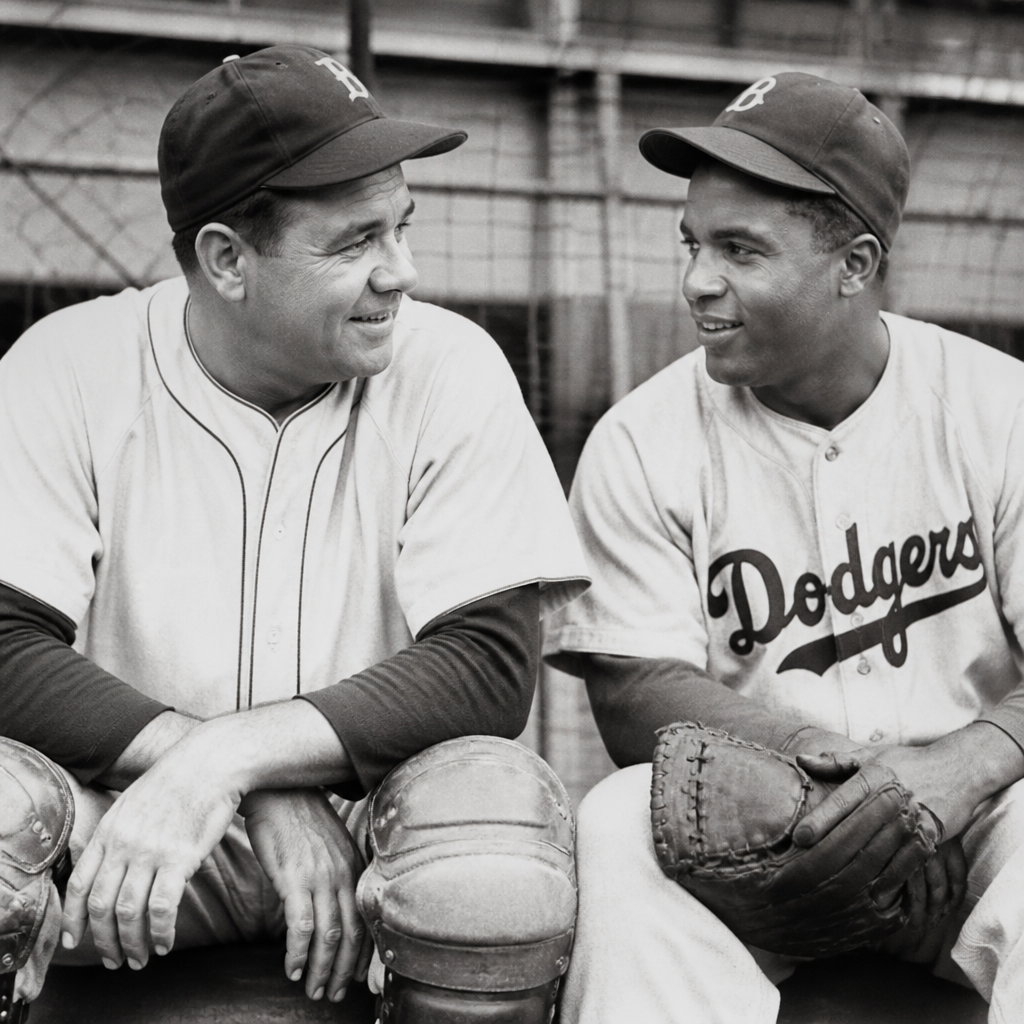
Biz Mackey belongs in any serious conversation about baseball’s greatest catchers because his legacy bridges elite play, tactical innovation, and direct mentorship of the man many fans know as Roy Campanella’s model. In the Negro leagues, where incomplete records have too often obscured brilliance, Mackey built a reputation that teammates, opponents, and later historians described with unusual consistency: he could throw, receive, lead pitchers, switch-hit, and think through a game as well as anyone alive. For a player profile hub under Legendary Players, his story matters not only as biography but as a map of what made great catching in Black baseball so influential long before full integration changed the major leagues.
Calling Biz Mackey merely an underrated catcher sells him short. He was a complete baseball craftsman whose value showed up in every phase of the position. Catching greatness starts with game management, pitch handling, blocking, footwork, and controlling the running game; Mackey excelled at all of it while also producing at the plate. He played across an era defined by unstable league structures, grueling travel, exhibition schedules, and racial exclusion, yet his name remained respected from the 1910s into the postwar years. That durability is one reason this player profile hub should begin with him. If you want to understand the standards later applied to Black catchers, you start with Biz Mackey.
His importance also reaches beyond his own statistics. Negro league numbers, while increasingly better documented through Seamheads and Major League Baseball’s historical integration of Negro leagues into the major league record, still cannot fully capture defensive command or instructional impact. Mackey taught younger players by example and by direct coaching, and his influence on Campanella is one of the clearest through lines in baseball history. Campanella became a Hall of Fame catcher with the Brooklyn Dodgers, but he absorbed key habits from Mackey in Baltimore. That makes Mackey both a legendary player and a transmission point: a star whose methods moved from the Negro leagues into the integrated majors through one of the greatest catchers ever to wear shin guards.
Any comprehensive player profile should answer three basic questions immediately: who was he, what made him great, and why does he still matter now? Biz Mackey was a switch-hitting Negro league catcher, born James Raleigh Mackey in 1897 in Eagle Pass, Texas, who starred for clubs including the Indianapolis ABCs, Hilldale Club, Baltimore Black Sox, and Newark Eagles. He earned praise for arm strength, receiving skill, baseball intelligence, and leadership. He still matters because expert testimony from figures such as Cool Papa Bell and historians of Black baseball places him near the top of the catching hierarchy, and because his mentorship helped shape Campanella, whose success in the majors gave visible proof of Mackey’s methods.
Who Biz Mackey Was and Where His Career Took Shape
Mackey came of age during a period when Black baseball was rich in talent but fragmented in structure. Teams joined and left leagues, barnstormed extensively, and often depended on gate receipts in volatile markets. That environment demanded versatility and resilience. A catcher in that world was more than a defensive specialist; he was a field general, travel-hardened organizer, and often the calmest presence on a roster. Mackey fit that description perfectly. Early in his career, he played in Texas and then moved into more prominent Black baseball circuits, sharpening a reputation that followed him into the top tier of the Negro leagues.
He spent important years with the Indianapolis ABCs and Hilldale, two clubs central to Black baseball history. Hilldale in particular offered a high-visibility stage, and Mackey’s work there helped establish him as a premier catcher of the 1920s. He later played for and managed other notable clubs, including the Baltimore Black Sox and Newark Eagles. These stops matter because they show that his value traveled. Different cities, owners, and rosters kept turning to him because his baseball mind and defensive reliability lifted entire staffs. In my experience studying player development arcs, catchers who earn trust across organizations almost always possess exceptional preparation, and every surviving account of Mackey points in that direction.
Mackey also played internationally, including in Cuba, where Negro league stars often faced strong competition and sharpened their games in winter ball. Cuban baseball was technically sound and intensely competitive, and success there strengthened a player’s standing back home. Mackey’s ability to thrive in multiple contexts supports the case that his reputation was not local nostalgia or one-season noise. He performed against varied opponents, under different styles of play, and remained admired for the same traits everywhere: poised receiving, fast release, accurate throws, and sophisticated game calling.
What Made Biz Mackey a Great Catcher
The cleanest answer is that Mackey combined defensive excellence with offensive competence and uncommon leadership. Many catchers are remembered for one dominant trait. Some throw well but hit lightly. Others hit enough to stay in lineups despite average receiving. Mackey offered the rare full package. Contemporary observers often compared his throwing ability to that of major league star Mickey Cochrane, and some went further, arguing Mackey was better all around. Those comparisons are significant because baseball people of the time did not make them casually. They were using major league language to describe Negro league excellence that segregation kept out of white newspapers and award voting.
Defensively, his mechanics were advanced. Reports consistently highlight his quick transfer, strong and accurate arm, and polished footwork. Those traits matter because stopping the running game starts before the ball leaves the hand. A catcher must present a stable target, receive cleanly, move from crouch to throwing position efficiently, and keep throws on the bag. Mackey did that at a level that made base stealers think twice. Just as important, he handled pitchers well. Great receivers do not simply catch pitches; they build trust, frame rhythm, settle nerves, and know when to challenge or protect a pitcher who is losing command.
Offensively, Mackey was a switch-hitter with a useful bat, not a defense-only placeholder. Complete Negro league seasonal lines remain uneven, but surviving records and contemporary accounts show he could contribute with average, extra-base contact, and situational hitting. For catchers, offensive value has always been context dependent. If a player controls the field, guides the staff, and also lengthens the lineup, he becomes an organizational pillar. That was Mackey’s profile. He was not carried for defense. He was central to winning baseball.
| Trait | Why It Mattered | How Mackey Was Described |
|---|---|---|
| Arm strength | Controlled the running game and cut down extra bases | Fast release, accurate throws, elite deterrent |
| Receiving | Stabilized pitchers and prevented passed balls | Soft hands, poised target, dependable under pressure |
| Game calling | Set strategy pitch by pitch and managed tempo | Smart, calm, respected by veteran pitchers |
| Switch-hitting | Added lineup flexibility and reduced platoon weakness | Useful bat from both sides, not merely defensive value |
| Leadership | Improved team discipline and younger player growth | Teacher, organizer, clubhouse authority |
One nuance matters here: because advanced defensive metrics do not exist for his career in the modern sense, the case for Mackey relies heavily on converging evidence. That evidence includes eyewitness testimony, repeated cross-era comparisons, managerial trust, longevity at a premium position, and visible influence on younger catchers. For Negro league legends, that standard is not a weakness. It is the correct historical method. When independent observers over decades agree on a player’s elite defensive command, historians should take that seriously.
The Negro Leagues Context Behind His Reputation
To evaluate Mackey fairly, you have to place him inside the competitive conditions of Black baseball between the 1910s and 1940s. Schedules were irregular, travel could be punishing, and teams played official league games alongside exhibitions and barnstorming dates that demanded constant readiness. Equipment quality and field conditions were inconsistent compared with the best-funded major league clubs. For catchers, that raised the degree of difficulty dramatically. Handling lively pitchers on rough fields while dealing with packed travel is exhausting work. A catcher who remains excellent in those circumstances is showing a kind of practical mastery that conventional stat lines do not always reveal.
The Negro National League and Eastern Colored League featured high-caliber talent across the diamond, and the catching position was no exception. Mackey stood out in a pool that included serious professionals, not sentimental footnotes. That distinction is important because discussions of Negro league history sometimes flatten everyone into symbols of exclusion. Exclusion was central, but these were also fiercely competitive baseball ecosystems with internal standards. Mackey earned stature inside those standards. Players and managers who had seen the best in Black baseball treated him as a benchmark.
His years with the Newark Eagles reinforced that reputation late in his career. By then, he was not just producing; he was transmitting knowledge. The Eagles became an important organization in Black baseball, and veteran catchers capable of instructing younger talent were invaluable. On clubs like Newark, the catcher’s room was part classroom, part command center. Mackey’s presence helped connect earlier Negro league traditions of defensive polish with the wartime and postwar generation that would soon test integrated baseball’s barriers.
How Biz Mackey Mentored Roy Campanella
This is the most famous chapter of Mackey’s legacy, and it deserves precision. Roy Campanella, later a three-time National League Most Valuable Player and Hall of Fame catcher for the Brooklyn Dodgers, spent time with the Baltimore Elite Giants while still developing. There he encountered Mackey, who served as a veteran model and teacher. Campanella himself acknowledged Mackey’s influence, especially in the craft of catching. When a Hall of Fame catcher points to a predecessor as a formative mentor, that testimony carries real weight.
Mackey taught details that separate athletic catchers from complete ones. He emphasized footwork, receiving position, release efficiency, and the mental side of handling pitchers. Young catchers often focus on throwing hard because arm strength is easy to notice. Veteran instructors know the throw begins with balance, glove-to-hand exchange, and lower-body direction. By all available accounts, Mackey drilled these fundamentals and demonstrated them daily. Campanella absorbed that instruction and translated it into major league excellence. In practical terms, Mackey’s teachings crossed the color line before official integration fully acknowledged their source.
The mentorship also matters symbolically. Black baseball had long produced advanced tactical knowledge, but segregation often prevented white institutions from recognizing where that knowledge originated. Campanella’s success gave mainstream audiences a visible product of methods honed in Negro league clubhouses and bullpens. Mackey was one of the clearest carriers of that expertise. If you trace the genealogy of catching instruction in mid-century baseball, his fingerprints are on one of the position’s most decorated careers.
There is a useful way to frame this for modern readers comparing player profiles. Some legends dominate through numbers, some through championships, and some through legacy passed forward. Mackey checks all three boxes to varying degrees, but his mentorship of Campanella gives him an unusually direct line into baseball’s broader historical memory. It turns an already great player into a foundational figure.
Why Historians Rank Him Among the Best
Serious historians and Negro league researchers routinely place Mackey near the top tier of catchers in Black baseball history, and some rank him with any catcher from any league of his era. That verdict rests on several pillars: longevity, cross-team respect, defensive reputation, offensive usefulness, leadership, and influence on later stars. It also reflects the judgment of people who saw him. Oral history can be fragile, but when testimony is specific and repeated, it becomes a powerful form of evidence. In Mackey’s case, descriptions of his throwing, receiving, and baseball intelligence recur too often to dismiss.
Modern efforts to restore Negro league records have helped, but they have not resolved every gap. That means player evaluation still requires synthesis. The best approach is to combine documented statistics, newspaper accounts, league context, and peer testimony. Using that method, Mackey’s standing remains extremely high. He was not a novelty selection inserted into history after the fact. He was praised in his own time and has held that status through later scholarship.
For a player profiles hub, that is the lasting lesson. Biz Mackey is essential because he shows how baseball greatness can be documented through more than one channel. Box scores matter. So do technique, leadership, and the testimony of players shaped by what they learned from a master. Explore the related Legendary Players profiles with that wider lens, and Mackey’s place becomes unmistakable.
Biz Mackey’s story leaves no serious doubt about his importance. He was a premier Negro league catcher, a switch-hitter who added lineup value, a field general trusted by multiple clubs, and a teacher whose influence reached one of the sport’s most celebrated backstops. When people ask why he matters now, the answer is simple: he helps explain both the excellence of Black baseball before integration and the knowledge that flowed from it into the major leagues. His career proves that catching greatness is measured not only by trophies or surviving numbers but by command, consistency, and the ability to elevate everyone around you.
As this Player Profiles hub expands under Legendary Players, Mackey should be treated as a cornerstone figure. He connects eras, validates the depth of Negro league talent, and provides a clear standard for evaluating complete catchers. If you are building your understanding of baseball history, start with players whose influence extends beyond their own box scores. Biz Mackey is one of them. Continue to the related profiles, compare his career with other elite catchers, and use his example to read the game with sharper historical vision.
Frequently Asked Questions
Why is Biz Mackey considered one of the greatest catchers in baseball history?
Biz Mackey is widely regarded as one of baseball’s greatest catchers because his reputation was built on a rare combination of physical skill, tactical intelligence, and leadership behind the plate. In the Negro leagues, where surviving statistics are often incomplete, Mackey’s greatness is confirmed not just by numbers but by the striking consistency of testimony from teammates, opponents, managers, and historians. He was praised for his throwing arm, his receiving ability, his game-calling, and his command of pitchers, all of which are central to evaluating elite catching. He was also a switch-hitter, which added to his value and made him a more complete player than many catchers of his era.
What makes Mackey especially important in historical conversations is that his excellence was recognized by people who understood the position at the highest level. Catcher is one of baseball’s most demanding roles, requiring strategic thinking, toughness, and the ability to direct the rhythm of a game. Mackey was known as a catcher who could do all of it. He was not merely durable or flashy; he was respected as a complete baseball mind. That kind of praise matters when discussing players from leagues that were not covered with the same statistical detail as the major leagues.
His standing also grows when viewed in context. Negro league stars often had to prove themselves under unstable travel conditions, inconsistent scheduling, and limited media coverage, yet Mackey still emerged with a towering reputation. He became a standard of excellence at catcher, the kind of player other professionals measured themselves against. When historians include him in serious discussions of the greatest catchers ever, they are responding to a body of evidence that goes beyond nostalgia. Mackey earned that place through elite performance, advanced baseball intelligence, and a legacy strong enough to influence future Hall of Fame talent.
What made Biz Mackey so effective defensively as a catcher?
Defensively, Biz Mackey was admired because he brought together all the traits teams want from a catcher and executed them at a high level. He had a strong and accurate throwing arm, which helped control the running game and discouraged opponents from taking extra risks on the bases. But his defensive value went far beyond arm strength. Contemporary accounts regularly emphasize his receiving skills, meaning he handled pitchers smoothly, blocked balls effectively, and gave his staff confidence in difficult situations. Those details are crucial because truly great catchers improve the performance of everyone around them.
Mackey was also known for his baseball instincts and for thinking through the game in real time. Great catching is partly physical and partly cerebral, and Mackey excelled in both areas. He understood hitters, managed tempo, and helped shape strategy inning by inning. Pitchers trusted him because he knew how to guide them through lineups, adjust to pressure, and call games with purpose rather than routine. That ability to serve as an on-field strategist is often what separates a very good catcher from a historically great one.
Another key part of his defensive excellence was leadership. A catcher sees the entire field and acts as the anchor of the defense, and Mackey had the presence to fill that role. He was respected as a field general who could steady a club and bring order to a game. That reputation matters because catchers influence outcomes in ways that are not always captured in surviving box scores. For a Negro leagues player, where full defensive metrics do not exist, repeated first-hand praise from knowledgeable baseball people becomes especially meaningful. In Mackey’s case, those descriptions paint the picture of a catcher whose defense was elite by any era’s standards.
How did Biz Mackey influence Roy Campanella?
Biz Mackey’s influence on Roy Campanella is one of the most important parts of his legacy because it creates a direct line between Negro league excellence and one of the most celebrated catchers in baseball history. Campanella, who went on to become a major league star and Hall of Famer, is often linked to Mackey as both a model and mentor. That relationship matters because it shows that Mackey’s baseball knowledge was not only admired but teachable. He did not simply perform at a high level himself; he passed along the craft of catching to a younger player who would later become a symbol of greatness at the position.
Mackey’s mentorship reportedly covered the subtleties that define top-tier catching: footwork, receiving, handling pitchers, positioning, and the mental side of the game. Catching cannot be mastered through athleticism alone. The best catchers learn how to anticipate, communicate, calm pitchers, and make a staff better. Mackey understood those demands deeply, and Campanella benefited from that understanding. When fans hear that Campanella looked to Mackey, they are hearing more than a sentimental anecdote. They are hearing evidence that one elite catcher recognized another as a source of instruction and example.
This connection also expands Mackey’s historical significance. Even if incomplete records make it harder to quantify every part of his own career, the greatness of the player he influenced helps illustrate the level at which he operated. Campanella’s success does not create Mackey’s reputation, but it reinforces it in a vivid and accessible way. If a future Hall of Famer learned from Biz Mackey, that tells modern readers something essential: Mackey was not just an outstanding player in his own right, but a master of the position whose impact extended into the next generation of baseball history.
Why don’t more fans know Biz Mackey’s name today?
One major reason Biz Mackey is less widely known than some other all-time greats is the historical marginalization of the Negro leagues. For decades, players outside Major League Baseball did not receive the same level of media attention, statistical preservation, institutional recognition, or promotional storytelling. As a result, even legendary Negro league stars were often denied the broad public visibility their talent deserved. Mackey’s career suffered from exactly that problem. He built his reputation in a baseball world where records were less complete and opportunities for mainstream fame were severely limited by segregation.
Another factor is the nature of catching itself. Catchers influence games in many subtle ways that are harder to preserve in the historical record than home runs, batting titles, or pitching wins. A catcher’s value often lives in game management, leadership, receiving, and pitcher development. Those qualities were central to Mackey’s greatness, but they are also the kinds of contributions that can fade if the written record is fragmented. For players in the Negro leagues, that challenge is even greater because fewer full-season statistics, play-by-play details, and defensive records survived in the first place.
Even so, Mackey’s relative obscurity should not be mistaken for uncertainty about his talent. Among historians and serious students of baseball, his standing is strong. As scholarship on the Negro leagues has grown, so has recognition of players like Mackey who were long undervalued in mainstream baseball history. More fans are discovering that some of the game’s finest minds and most complete performers played outside the segregated major leagues. Mackey’s name may not yet be as familiar as it should be, but the historical case for his greatness is substantial, and it continues to gain visibility as baseball history becomes more inclusive and accurate.
What is Biz Mackey’s lasting legacy in baseball?
Biz Mackey’s lasting legacy is that of a complete catcher whose influence reaches beyond his own playing career. He represents excellence in one of baseball’s most complex positions, and he stands as proof that many of the game’s greatest innovators and competitors developed in the Negro leagues. Mackey’s legacy includes his defensive brilliance, his switch-hitting ability, his reputation for game management, and his status as a leader whose understanding of baseball commanded deep respect. He was the kind of player who shaped games directly and shaped other players through instruction and example.
His place in history also matters because it helps correct the traditional baseball narrative. For too long, the story of great catchers focused almost exclusively on major league names, leaving Negro league stars underrepresented despite abundant testimony about their quality. Mackey challenges that imbalance. When historians place him alongside the best catchers ever, they are making a broader point as well: greatness existed across segregated baseball, even when the institutions of the time failed to document it equally. Recognizing Mackey is part of recognizing the full truth of baseball history.
Finally, his mentorship of Roy Campanella gives his legacy a personal and generational dimension. Mackey was not only a star; he was a transmitter of baseball knowledge. That makes his impact unusually enduring. His story connects elite Negro league play, catching as an intellectual craft, and the development of one of the most famous catchers in professional baseball. For modern readers, that combination is powerful. Biz Mackey’s legacy is not simply that he was great in his own era. It is that his greatness continued to echo through the game, influencing how the position was understood and played long after his own days behind the plate ended.