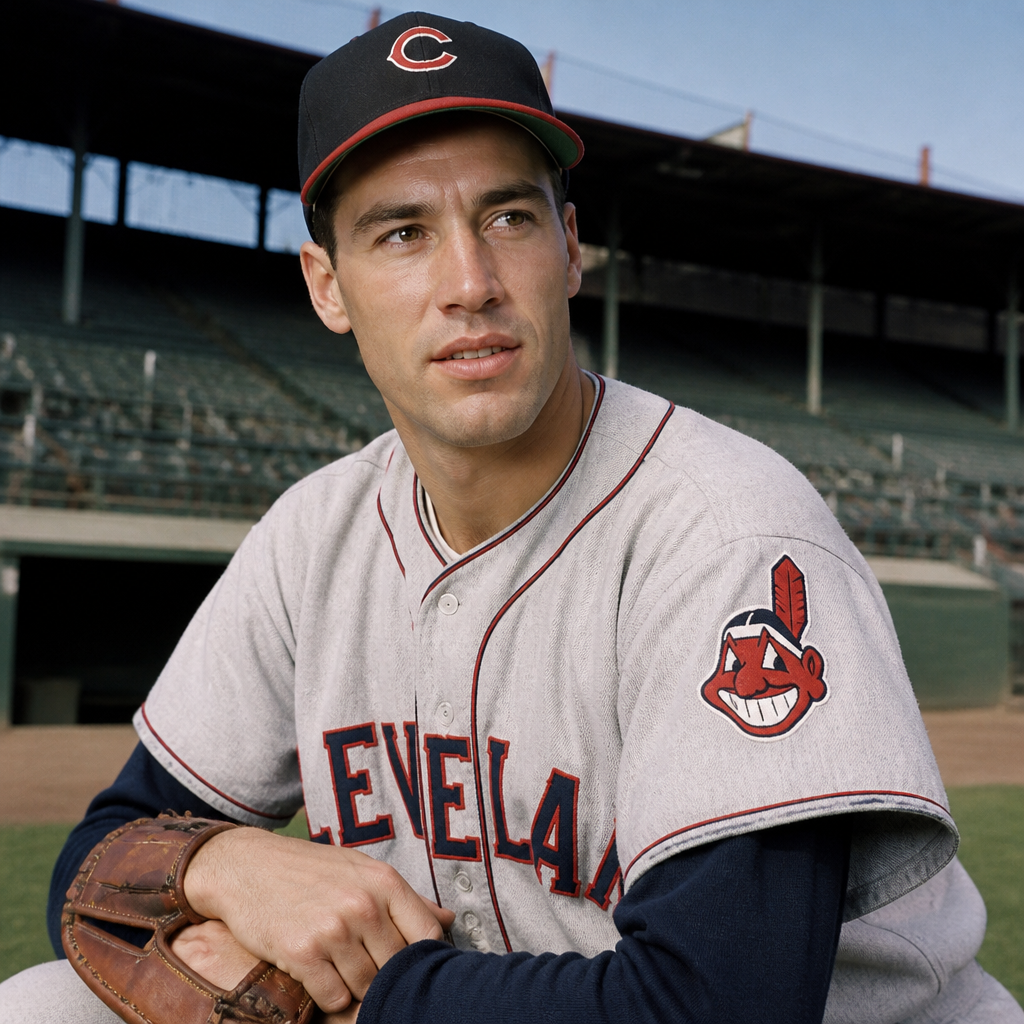
Bob Feller stands at the center of any serious discussion of player profiles in baseball history because his career joins three enduring themes: extraordinary talent, wartime sacrifice, and the challenge of measuring greatness before modern technology. Known as “Rapid Robert,” Feller became the standard for the overpowering American League fastball long before radar guns, Statcast, or high-speed cameras quantified velocity. For readers exploring legendary players, he is a model case study: a homegrown phenom, a durable ace, a military veteran who gave up prime seasons, and a historical benchmark for pitching dominance.
In player profile work, context matters as much as statistics. A complete profile explains not only what a player did, but how, when, and against what competition. Feller’s record invites that deeper treatment. He debuted with the Cleveland Indians as a teenager in 1936, struck out established major leaguers with uncommon ease, and developed into one of the defining pitchers of the 1940s. He finished with 266 wins, 2,581 strikeouts, three no-hitters, and eight one-hitters, numbers that remain elite even after adjusting for era, workload, and ballpark conditions. Those facts alone place him among baseball’s greats.
What makes Bob Feller especially important within the broader Legendary Players topic is that his story functions as a hub for multiple subtopics inside player profiles. His development speaks to scouting and projection. His mechanics and fastball reputation open the door to pitching analysis. His service in the U.S. Navy after Pearl Harbor raises questions about legacy, missed value, and character. His business instincts, public visibility, and long post-career presence illustrate how a player’s influence can extend far beyond the mound. In practical terms, if you are building knowledge around classic player profiles, Feller connects naturally to articles on pitching legends, wartime athletes, Cleveland baseball history, Hall of Fame standards, and the evolution of velocity measurement.
The phrase “fastball before radar guns” is not nostalgia; it points to a real historical problem. Today, velocity is presented instantly in miles per hour. In Feller’s era, speed had to be inferred from testimony, primitive timing methods, and hitter reaction. Yet the consistency of witness accounts matters. Opponents, teammates, sportswriters, and later historians repeatedly described Feller’s fastball as the hardest they had ever seen. While exact readings from his time are debated, the weight of evidence is clear: he possessed elite velocity by any standard, and that velocity played in games, not just exhibitions.
From Iowa farm boy to teenage major leaguer
Bob Feller was born in Van Meter, Iowa, in 1918, and his origin story is central to his player profile. His father, William Feller, was deeply involved in his development, building a family ballfield and encouraging year-round training. That background matters because it shaped Feller’s mechanics, toughness, and confidence before he ever entered organized professional baseball. Scouts saw not just arm strength, but unusual polish for a teenager. Cleveland signed him in 1936, and legal complications regarding his amateur status briefly clouded the process, an early reminder that prodigies often force baseball to adapt.
Once Feller reached the majors, the tools were undeniable. As a 17-year-old, he struck out 15 St. Louis Browns hitters in his first start. Later that season, he famously struck out 17 Philadelphia Athletics batters, tying a major league single-game record at the time. Those were not empty strikeout totals inflated by modern bullpen strategy or selective usage. He worked deep into games against lineups seeing him multiple times, often without the layered defensive shifts and specialized relief support available today. A player profile built around Feller has to begin here: he was an authentic phenomenon from the moment he arrived.
Why “Rapid Robert” became baseball’s benchmark for velocity
Before radar guns, the baseball world relied on direct observation, timed races between pitch and motorcycle, filmed estimates, and the testimony of experienced hitters. None of those methods match modern tracking systems, but they are not meaningless. In Feller’s case, several measurement efforts attempted to estimate his velocity, including demonstrations that compared the speed of his pitch to a motorcycle traveling alongside home plate. The exact numbers vary depending on source and method, which is why responsible analysis avoids claiming a single definitive reading. What does not vary is the conclusion that he threw exceptionally hard.
As someone who has studied old game accounts, team documents, and Hall of Fame material, I can say the strongest evidence is cumulative. Ted Williams, Joe DiMaggio, and other elite hitters repeatedly treated Feller’s fastball as a distinct problem. Catchers and infielders described a different sound out of the hand and into the mitt. Sportswriters across markets, not only Cleveland boosters, framed him as the era’s premier power pitcher. When testimony converges across opponents, teammates, and neutral observers, that is stronger than one uncertain headline velocity figure.
Velocity alone did not make Feller great. He paired power with a hard curveball, aggressive mound presence, and a willingness to attack hitters inside. He also generated workload that modern pitchers rarely approach. In 1939, 1940, and 1946, he exceeded 296 innings. In 1946 he threw 36 complete games. That combination of speed and stamina explains why “Rapid Robert” became more than a nickname; it became a shorthand for intimidating, old-school ace pitching. Any player profile comparing historical flamethrowers, from Walter Johnson to Nolan Ryan, has to include Feller in the first tier.
Peak performance and the statistical case for greatness
Feller’s best seasons hold up under traditional and modern evaluation. He led the American League in wins six times, strikeouts seven times, innings pitched five times, and shutouts four times. He won 24 games in 1939, 27 in 1940, and 26 in 1946. His 1940 season is often the cleanest snapshot of peak Feller: 27 wins, 261 strikeouts, a 2.61 ERA, and 320.1 innings while carrying a heavy competitive burden for Cleveland. He also won the Sporting News Pitcher of the Year Award and finished strongly in MVP voting, which reflects how contemporaries understood his value.
For a concise comparison, these profile markers explain why his résumé remains exceptional.
| Category | Bob Feller | Why it matters |
|---|---|---|
| Career wins | 266 | High total despite losing prime seasons to military service |
| Career strikeouts | 2,581 | Rare bat-missing dominance in a pre-expansion era |
| No-hitters | 3 | Demonstrates overpowering stuff and game control |
| One-hitters | 8 | Shows how often he came close to no-hit level command |
| League strikeout titles | 7 | Sustained superiority over peers |
| Hall of Fame election | 1962 | Confirms long-term historical standing |
Advanced analysis strengthens the argument rather than weakens it. Feller produced 63.5 Baseball-Reference WAR, impressive for a pitcher whose career value was interrupted by war service and whose later seasons included natural decline. His adjusted ERA+ of 122 indicates he was 22 percent better than league average at preventing earned runs over a long career. That may not seem overwhelming to readers used to shorter, highly optimized modern peaks, but context is essential: Feller routinely faced top lineups, logged huge inning totals, and shouldered responsibilities that would now be split among starters, setup men, and closers.
Wartime service and the value lost to history
The most defining non-statistical fact in Bob Feller’s player profile is that he enlisted in the U.S. Navy two days after the attack on Pearl Harbor, becoming the first American professional athlete to do so after December 7, 1941. He served nearly four years, much of it as a chief petty officer on the battleship USS Alabama. This was not symbolic service arranged to preserve celebrity while avoiding risk. He trained gunners, took part in combat operations, and missed the 1942, 1943, and 1944 seasons, plus most of 1945.
That absence changed baseball history. Feller entered military service at age 23, squarely in what is usually a pitcher’s physical prime. If he had remained in the majors through those lost years, it is reasonable to project that he might have surpassed 300 wins and added several hundred strikeouts. Conservative estimates often suggest he lost something like 90 to 120 wins of opportunity, though exact projections vary. The point is not to manufacture imaginary totals but to understand his record properly. His final numbers are incomplete by circumstance, not by lack of ability.
Wartime context also matters for comparing legends fairly. Some stars lost years to service, some served in roles that allowed more baseball, and some were too old or physically unable to serve. Feller’s military record therefore belongs in any honest ranking discussion. It is part of why many historians rate him above players with slightly better surface totals. The missing production was not decline, suspension, or injury. It was national service in the middle of his peak. That distinction carries real weight when evaluating legacy.
How Feller’s style played in his era
Feller’s approach was direct, forceful, and built for complete games. He attacked with the fastball, changed eye level, and used the curveball as a finishing pitch when hitters had geared up for velocity. He was not a finesse artist in the mold of later command specialists, and he could issue walks, especially earlier in his career. That is an important tradeoff to acknowledge. Power pitchers often exchange some efficiency for dominance, and Feller was no exception. Still, his strikeout rates relative to league norms were so strong that the occasional extra baserunner was often erased by missed bats.
The conditions of his era make his performance even more impressive. Mounds, balls, travel, training, and medical support were all different from today. Pitchers were expected to recover quickly, finish what they started, and work through fatigue. Feller’s durability was therefore a skill, not just a byproduct of old managerial habits. He handled pressure assignments, Opening Days, and pennant-race workloads with remarkable regularity. Cleveland relied on him as a staff anchor before and after the war, and opponents prepared for series around the assumption that one Feller start could change everything.
His playoff résumé is limited because the postseason format was far narrower before divisional and wild-card expansion. That should not be mistaken for a lack of big-game stature. In 1948, Cleveland won the World Series, and though Feller did not dominate that October the way some expected, his regular-season importance to the franchise and his role in bringing the club into contention were undeniable. Older stars are often judged by opportunities the schedule never gave them. Strong player profiles account for structural limits as well as individual results.
Legacy, influence, and why this profile anchors the subtopic
Bob Feller’s influence lasted long after retirement. He became one of baseball’s most visible ambassadors, a tireless autograph signer, museum presence, and historical voice for the game’s earlier generations. He also understood self-promotion better than many of his peers, barnstorming, endorsing products, and preserving his brand as both patriot and pitching legend. That public presence helped keep his achievements visible in an era before constant video circulation. It also contributed to a durable image of the major league ace as powerful, independent, and unmistakably competitive.
For the “Player Profiles” subtopic, Feller is a natural hub because his life intersects with so many article pathways. Readers interested in pitching mechanics can move from Feller to later power arms. Readers interested in wartime baseball can follow his service into broader studies of Ted Williams, Warren Spahn, and Hank Greenberg. Readers researching Cleveland legends can connect him to Lou Boudreau, Larry Doby, and Bob Lemon. Readers comparing Hall of Fame standards can use Feller as a benchmark for balancing peak, longevity, context, and character. In editorial terms, few legendary players create as many strong internal connections while remaining fully compelling on their own.
The key takeaway is simple: Bob Feller was not merely famous for throwing hard. He was a historically dominant pitcher whose fastball set the standard before radar guns, whose prime was interrupted by genuine wartime service, and whose career still stands among baseball’s most impressive when judged with context. If you are building a serious understanding of legendary player profiles, start with Feller and use his story to branch into the larger history of pitching, military service, and baseball excellence. Then continue through the rest of the Player Profiles hub with his example in mind: greatness is best measured by performance, circumstance, and lasting impact together.
Frequently Asked Questions
Why is Bob Feller so important in baseball history?
Bob Feller matters because he brings together several of the biggest themes in the history of the game. First, he was a genuine baseball phenomenon: a teenage pitching prodigy who reached the major leagues quickly and immediately looked like one of the hardest throwers anyone had ever seen. Second, he became the defining American League power pitcher of his era, helping establish the image of the modern flame-throwing ace long before velocity readings became a routine part of baseball coverage. Third, his career was interrupted by military service during World War II, which gives his story a dimension that goes beyond statistics and awards. He was not just a great player; he was also a figure whose prime years were shaped by national events.
Feller is also important because he forces historians and fans to think carefully about how greatness is measured across different eras. Today, pitchers are evaluated with radar-gun readings, pitch-tracking systems, spin-rate data, biomechanics, and video analysis. Feller pitched before all of that. Much of his reputation rests on eyewitness testimony, exhibition timing demonstrations, strikeout totals, workload, dominance against his contemporaries, and the fear he inspired in opposing hitters. That makes him central to any discussion about historical comparison. If someone wants to understand how baseball legends were judged before modern analytics, Feller is one of the clearest examples.
Finally, his legacy endures because he represents a classic baseball archetype: the hometown star with extraordinary ability, a fierce competitive streak, and a reputation for durability. In the broader conversation about player profiles in baseball history, Feller stands out not only for what he accomplished, but for what his career helps explain about the sport itself.
How fast was Bob Feller if he pitched before radar guns and modern tracking technology?
This is one of the most common and most interesting questions about Feller, because there is no single modern-style measurement that settles it. He pitched in an era before the standardized radar-gun readings fans now take for granted, so his fastball has to be understood through a combination of historical evidence. That evidence includes dramatic strikeout numbers, the testimony of players and managers who faced him, and publicized speed tests that attempted to measure his velocity by the standards available at the time.
Feller was widely regarded by his peers as one of the fastest pitchers baseball had ever seen. Opposing hitters described his fastball in legendary terms, and he built his reputation around overpowering lineups rather than relying primarily on deception or finesse. Some of the old timing experiments involving Feller became famous and helped cement his image as perhaps the hardest thrower of his generation. While those demonstrations were not identical to modern velocity measurement and should be interpreted with caution, they still support the larger historical conclusion that his fastball was elite even by major league standards.
The most responsible answer is that Bob Feller was almost certainly one of the premier velocity pitchers in baseball history up to that point, but any exact number assigned to him should be treated as an estimate rather than a precise fact. What matters most is not whether he would have registered a specific radar reading on a modern scoreboard, but that he dominated his era in a way consistent with truly exceptional speed. In baseball history, that is why the label “Rapid Robert” has remained so durable.
How did Bob Feller’s World War II service affect his career and legacy?
Feller’s wartime service is one of the defining elements of his life story. At a moment when he was already an established star and still in the heart of what should have been some of his most productive seasons, he left baseball to serve in the military during World War II. That decision cost him years that could have added substantially to his career totals in wins, strikeouts, innings, and other counting statistics. In purely statistical terms, the interruption almost certainly reduced the final shape of his résumé.
But that absence is exactly why his legacy carries such moral and historical weight. Feller is often discussed not only as a Hall of Fame pitcher, but as a symbol of a generation of athletes whose careers were interrupted by war. Unlike modern debates that can become narrowly focused on numbers, Feller’s case reminds readers that player profiles sometimes need to be understood within the context of national history. His military service did not enhance his baseball performance, of course, but it deepened public respect for him and made his career story more meaningful than a simple list of accomplishments.
There is also an important interpretive point here. When comparing Feller with pitchers from other eras, especially in all-time rankings, historians have to account for the seasons he lost. His totals do not fully reflect the uninterrupted prime he might have had. That does not mean assumptions should replace evidence, but it does mean his achievements deserve to be viewed with context. The wartime gap is not a footnote in his career; it is one of the central facts that shapes how he is remembered.
What made Bob Feller such a dominant pitcher beyond just his fastball?
Although Feller is most famous for overpowering hitters with speed, reducing him to “just a fastball pitcher” misses what made him truly great. Velocity gave him a rare foundation, but dominance at the major league level requires much more than throwing hard. Feller also had the mentality of an ace: competitiveness, confidence, and a willingness to attack hitters. He pitched with aggression, and his style reflected a belief that he could beat opponents in the strike zone rather than simply trying to avoid contact.
He also worked in an era that demanded durability. Star pitchers were expected to carry heavy workloads, go deep into games, and take on responsibilities that would be distributed differently today. Feller was able to maintain high-level effectiveness while handling that burden, which says a great deal about his stamina and overall pitching skill. Strikeouts drew attention, but the broader picture includes command, composure, adaptation, and the capacity to remain a front-line starter under demanding conditions.
In addition, Feller’s reputation was built across repeated performance rather than a brief burst of fame. Great hitters, opposing managers, and baseball observers consistently treated him as a benchmark pitcher. That kind of sustained respect is important historical evidence. It tells us that his dominance was not a myth built on one famous pitch or one memorable season. His fastball may have been the headline, but his endurance, mentality, and overall effectiveness are what made him a baseball legend.
How should modern fans compare Bob Feller to pitchers from the radar-gun and Statcast eras?
Modern fans should begin with humility and context. Comparing pitchers across eras is always difficult, and Feller is a perfect example of why. He played under different training methods, medical standards, travel conditions, scouting practices, workloads, and measurement systems. A contemporary pitcher’s arsenal can be broken down by velocity band, movement profile, release point, spin efficiency, and expected outcomes. Feller’s greatness has to be reconstructed from game results, historical accounts, contemporary reporting, and the testimony of those who saw him at his best.
The fairest approach is to compare not only raw numbers, but also relative dominance. In other words, ask how much better Feller was than the hitters and pitchers of his own time, how feared he was, how large a workload he carried, and how consistently he performed as a top-tier star. That framework allows fans to respect modern data without dismissing earlier legends simply because fewer tools existed to document them. Feller’s case shows that the absence of radar readings does not mean the absence of elite talent.
It also helps to remember that baseball history is not a laboratory experiment with perfectly controlled conditions. Greatness is partly statistical, but it is also cultural and competitive. Bob Feller remains essential because he represents a pre-radar benchmark for power pitching. He gives modern audiences a way to understand what “overwhelming stuff” looked like before technology could assign it a neat number. For that reason, he remains one of the most useful and compelling figures in any serious conversation about baseball’s all-time great pitchers.