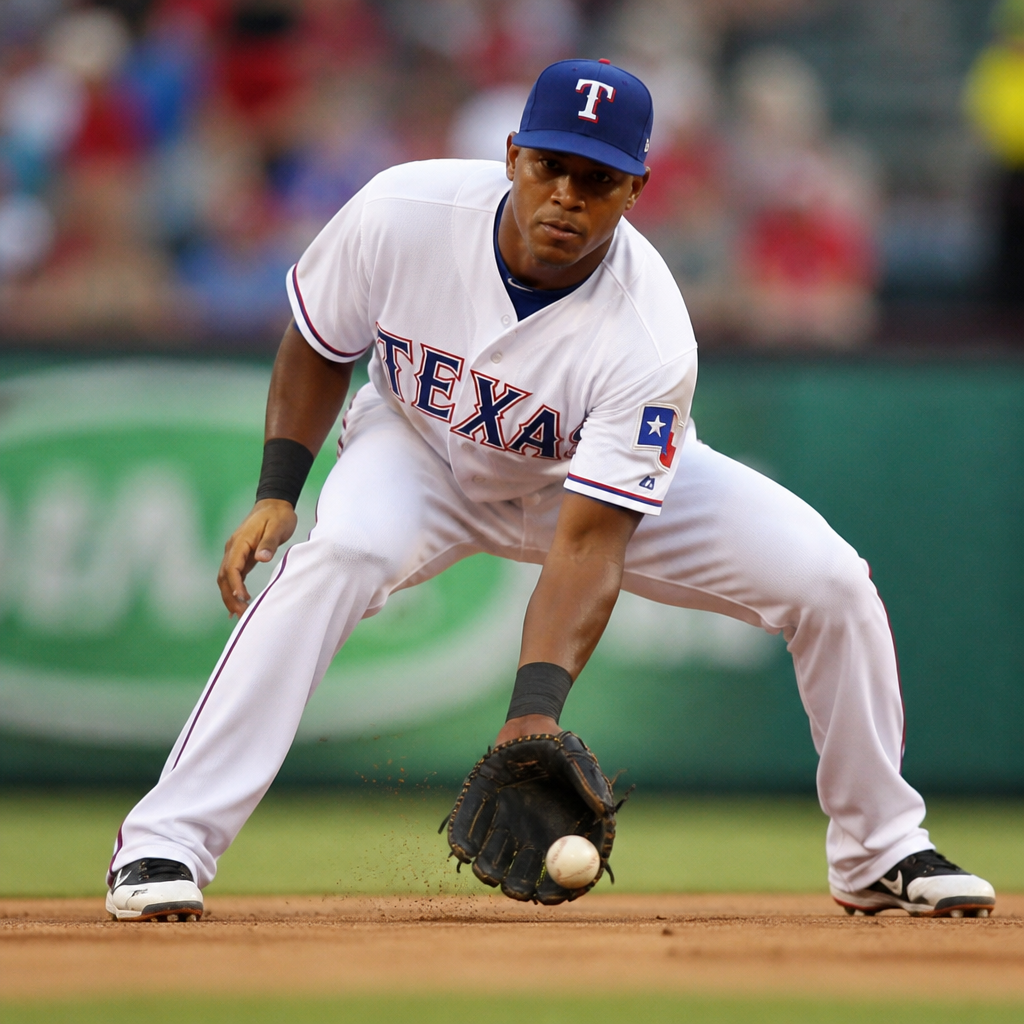
Adrian Beltre stands as one of baseball’s clearest examples of how greatness can be built on defense, durability, and steady excellence rather than constant spotlight. In any serious discussion of player profiles under the broader Legendary Players landscape, Beltre belongs near the front because his career joins rare milestones with a style of play that specialists, teammates, and opponents respected for more than two decades. He was a third baseman first, a middle-of-the-order bat second, and a durable everyday force always.
A player profile aims to do more than recite statistics. It explains how a player won games, why his skills translated across eras and ballparks, and what separates him from peers at the same position. Beltre’s profile matters because third base has historically demanded compromise: teams often accepted either premium defense with light offense or impact offense with limited range. Beltre broke that tradeoff. He provided elite glovework, power, longevity, and eventually 3,000 hits, a benchmark that almost always secures a place among baseball immortals.
Key terms define his case. Defense at third base means reaction time, first-step quickness, arm strength, body control on charging bunts, and the ability to convert hard-hit balls into outs from awkward angles. Durability means more than appearing in many games; it means remaining effective while playing through routine physical wear across 21 major league seasons. The 3,000-hit club is one of baseball’s most exclusive thresholds, reflecting sustained contact skill, health, and adaptation. Beltre reached all three markers at a position with intense physical demands and little margin for error.
I have always viewed Beltre as the kind of player whose value becomes stronger the more closely you watch full seasons rather than highlight reels. The highlights are outstanding, especially the barehand plays and foul-territory catches, but the deeper truth is consistency. Managers could write his name into the lineup, trust him with the most difficult chances on the left side, and expect professional at-bats regardless of venue. That stability gave every club he played for structural value. For a hub article on player profiles, Beltre is an ideal subject because his career touches scouting, player development, analytics, leadership, and Hall of Fame standards.
Why Adrian Beltre’s player profile is central to the Legendary Players hub
Within player profiles, some careers are famous because they were brief peaks, while others are essential because they explain what complete baseball excellence looks like over time. Beltre fits the second category. Signed by the Los Angeles Dodgers as a teenager out of the Dominican Republic, he reached the majors at 19 and played until age 39. That span lets readers trace how a player evolves from toolsy prodigy to franchise anchor to elder statesman. A strong hub page should connect those phases because they answer the common questions readers bring to legendary player research: How good was he at his best, how long did he sustain it, and what made him special beyond counting stats?
Beltre also links naturally to adjacent player-profile themes. He belongs in conversations about the greatest defensive third basemen with Brooks Robinson, Mike Schmidt, Scott Rolen, and Nolan Arenado. He belongs in milestone discussions around 3,000 hits and 400 home runs. He belongs in durability studies beside players who maintained value through age curves that usually reduce mobility and bat speed. For internal topic architecture, his profile can lead readers toward defensive metrics, Hall of Fame standards, all-time third base rankings, Dominican stars, and late-career excellence. Few individual player pages can support that many pathways while staying coherent.
His reputation improved as analysis matured. Early in his career, public attention focused too heavily on batting average and home-run totals. As fielding metrics such as Defensive Runs Saved and Total Zone gained acceptance, Beltre’s defensive impact became easier to communicate to readers who did not watch him daily. The result is a richer modern understanding of his value. He was not merely a slugger with a good glove. He was one of the most complete third basemen ever, and the profile of such a player helps define the standards by which other player profiles are judged.
Defense at third base: why Beltre was historically great
Adrian Beltre’s defense was the foundation of his legend. Third base is often called the hot corner because reaction time is measured in fractions of a second, especially against right-handed pull hitters and modern exit velocities. Beltre excelled there through anticipation, pre-pitch setup, hands soft enough to absorb hard contact, and an exceptionally accurate throwing arm. He could charge slow rollers, backhand balls near the line, start 5-4-3 double plays, and make off-balance throws from foul ground without sacrificing control.
The awards support the eye test. Beltre won five Gold Gloves and two Platinum Gloves, but awards alone understate him because third-base defense was not always evaluated consistently across eras. Advanced numbers help. Baseball-Reference credits him with elite defensive value over his career, and systems such as Defensive Runs Saved consistently rated his best seasons near the top of the position. He converted difficult chances that many third basemen knock down but do not finish. That distinction matters. Preventing extra bases is useful; turning those balls into outs changes innings.
One practical example came during his years with Seattle and Texas, when teams regularly shaded infielders based on hitter tendencies. Beltre could still cover line drives to his left and bunts to his right without looking constrained by positioning. His first step let clubs be more aggressive strategically because they trusted his range. Another example was his comfort fielding from one knee or making barehand pickups on sharply spinning bunts. Those were not tricks. They were repeatable techniques built on balance, hand strength, and instincts refined through thousands of reps.
| Trait | What it looked like on the field | Why it mattered |
|---|---|---|
| First-step quickness | Instant break on hard grounders and line drives | Created outs on balls many third basemen never reached |
| Arm strength and accuracy | Firm throws from deep behind the bag or foul territory | Finished difficult plays without rushing errors |
| Hands and body control | Clean backhands, short hops, barehand plays | Reduced extra pitches and extended innings |
| Instincts | Anticipated bunts, swings, and caroms | Improved team positioning and infield confidence |
| Consistency | High-level defense across decades | Made his value resilient even when the bat fluctuated |
What separated Beltre from merely excellent defenders was longevity at an elite standard. Many third basemen defend well in their twenties and move across the diamond later. Beltre remained a plus defender deep into his thirties. That is rare because lateral movement usually declines before offensive instincts do. He resisted that pattern through preparation and efficiency. He rarely looked hurried, which is often the visual marker of a defender whose physical skills are aging. Even when he lost a small amount of range, his reads and internal clock preserved premium value.
Durability, adjustment, and offensive growth across 21 seasons
Durability is easy to praise and harder to explain. Beltre played 2,933 major league games, collected 11,068 plate appearances, and kept producing through changes in leagues, ballparks, and run environments. He played for the Dodgers, Mariners, Red Sox, and Rangers, adapting from pitcher-friendly settings to more neutral and hitter-friendly contexts. That matters because raw totals can be inflated or suppressed by environment, while sustained performance across several contexts reveals a player whose skills travel.
His offensive story was not linear, which makes it more instructive. Beltre’s 2004 season with Los Angeles, when he hit 48 home runs and finished near the top of the National League MVP voting, first announced his superstar ceiling. Some observers treated that year as an outlier because his immediate follow-up seasons in Seattle were less explosive. That view misses the larger point. In Seattle’s run-suppressing environment, particularly at Safeco Field, Beltre remained productive while continuing to save runs at third. Then, in Boston in 2010 and Texas from 2011 forward, his approach evolved into a more complete hitting package built on contact quality, plate coverage, and selective aggression.
Watching Beltre over those years, I was always struck by how well he handled pitches on the outer half. He could stay through the baseball and drive line drives to right-center, which kept defenses honest and prevented his power from becoming pull-only. He was also unusually dangerous from his knees or after getting fooled, turning compromised swings into hard contact. Those moments looked improvised, but they reflected elite barrel control. His lower half, strong wrists, and balance allowed him to produce power without needing a perfect swing path every time.
Durability also includes pain tolerance and routine. Beltre dealt with the ordinary physical cost of the position: sore legs, hand issues, and the cumulative stress of reacting every inning on hard infield dirt or grass. Yet he continued to post seasons of 150 games or more. That reliability has roster value beyond personal statistics. Managers can construct bullpens, bench roles, and lineup plans differently when a star infielder is available nearly every day. The best ability is not simply availability; it is high-level availability, and Beltre provided exactly that.
The meaning of 3,000 hits and Beltre’s Hall of Fame case
Reaching 3,000 hits answered any remaining question about Beltre’s historical standing. The milestone is not accidental. A player needs early-career opportunity, enough offensive skill to avoid collapse years, and enough health to survive the middle and late stages of a baseball life cycle. Beltre recorded hit number 3,000 in July 2017 with Texas, becoming the 31st player to do it at the time and the first Dominican-born player to reach the mark. For a third baseman, the feat is even more significant because the position exacts daily defensive wear.
The broader résumé is overwhelming. Beltre finished with 3,166 hits, 477 home runs, 1,707 runs batted in, four All-Star selections, five Gold Gloves, and elite career value by Wins Above Replacement. On Baseball-Reference, his WAR total places him among the greatest third basemen ever, comfortably in inner-circle Hall of Fame territory for the position. Counting numbers and advanced metrics agree, which is always a strong sign. There is no need to stretch the case with sentiment. The statistical argument is already conclusive.
Context strengthens it further. Third base historically has fewer universally acknowledged all-time legends than shortstop or center field, partly because the position includes players with shorter defensive peaks or bat-first profiles. Beltre combined both sides of the ball at a championship-caliber level for an unusually long time. He did not need one dominant narrative to justify election. His Cooperstown case rests on every standard evaluators use: peak, longevity, defense, offense, milestones, postseason credibility, and respect inside the game.
Readers often ask whether Beltre was underrated during his career. The fairest answer is yes, for a while, and then no. By his Texas years, the baseball world largely understood his stature. But earlier, many casual discussions framed him as inconsistent because they overemphasized batting average swings and did not fully account for defense or context. Better measurement corrected that. His eventual first-ballot Hall of Fame recognition reflected a mature view of his full value.
Leadership, personality, and what modern players can learn from Beltre
Beltre’s player profile would be incomplete without personality and leadership. He was famously playful, especially in his reactions to teammates touching his head, yet the humor coexisted with exacting standards. Clubhouses value players who can reduce tension without reducing accountability, and Beltre did both. Younger infielders learned from his preparation, positioning, and game awareness. Veteran pitchers trusted him because hard contact to the left side often became an out.
His leadership was practical rather than theatrical. He modeled daily work, embraced the unglamorous part of baseball, and maintained competitiveness without performative speeches. That style matters in player profiles because greatness influences more than box scores. It shapes team culture. Texas, in particular, benefited from having a star whose habits were visible and repeatable. Fans saw the jokes; teammates saw the routine behind them.
For modern players, Beltre offers a clear lesson: complete players age better. Defense, contact skill, adaptability, and conditioning create more pathways to value than one-dimensional power. Prospects studying third-base play should watch how he set his feet, how quickly he exchanged the ball, and how often he let fundamentals make difficult plays look ordinary. Hitters should study how he attacked mistakes but still covered the outer part of the plate. Durability and 3,000 hits were not separate accomplishments from his defense. They were connected results of craft sustained over time.
Adrian Beltre’s legacy is simple to state and difficult to match. He was one of the greatest third basemen in baseball history because he combined elite defense, uncommon durability, and the rare prestige of 3,000 hits. His career shows why player profiles should evaluate the whole athlete: run prevention, offensive adjustment, longevity, and influence on winning. For readers building a stronger understanding of Legendary Players, Beltre is a model case. Explore related player profiles, compare eras, and use his standard when asking what true all-around greatness looks like.
Frequently Asked Questions
Why is Adrian Beltre considered one of the greatest third basemen in baseball history?
Adrian Beltre is considered one of the greatest third basemen ever because his career checks every box that matters: elite defense, rare longevity, major offensive milestones, and sustained value across eras. At third base, a position that demands quick reactions, arm strength, balance, and toughness, Beltre set an unusually high standard for more than two decades. He was not simply good for a long time; he was great for a long time, and that distinction matters. Defensively, he built his reputation as a master of the position, making difficult plays look routine while controlling the infield with instincts, footwork, and one of the strongest and most accurate arms of his generation.
Offensively, Beltre paired that glove work with production that placed him in exceptionally rare company for a third baseman. Reaching 3,000 hits is one of baseball’s clearest markers of sustained excellence, and very few players at any position get there. For a player who spent his career at third base, it is even more meaningful because the position has historically demanded so much physically. He also combined that hit total with significant power, run production, and the ability to contribute in different lineups and ballparks. His career was not defined by one brief peak alone; it was defined by relevance, quality, and adaptability year after year.
What strengthens Beltre’s historical case even more is that he earned respect from every angle. Analysts value his all-around contributions, traditional observers appreciate the milestone totals and highlight-reel defense, and fellow players consistently praised his toughness and consistency. He was a franchise-caliber presence for multiple teams and remained effective well into his late 30s, which is rare for any player and especially rare for a third baseman. When people discuss the all-time greats at the position, Beltre belongs near the top because he blended brilliance with staying power in a way very few players ever have.
How important was Adrian Beltre’s defense to his legacy?
Beltre’s defense was central to his legacy, not a secondary detail. In fact, the surest way to understand his career is to start with the glove. He was one of those rare defenders whose value could be seen by both experts and casual fans. The reflexes, body control, charge on slow rollers, barehand plays, backhand range, and the ability to throw from different arm slots made him a complete defender at third base. He did not just make flashy plays for highlight packages; he prevented runs consistently over many seasons, and that kind of impact is foundational when evaluating greatness.
Third base is one of the most demanding defensive spots on the field because the ball gets there quickly and often violently. A player has to process the hop, set his feet or throw on the move, and do it while handling bunts, rockets down the line, and awkward angles from foul territory. Beltre excelled in all of those areas. His anticipation separated him from many talented defenders. He often appeared to be in the right place before the ball was hit there, which is one of the clearest signs of defensive intelligence. That preparation, combined with physical skill, allowed him to remain elite even as he aged.
His defensive reputation also helped define the shape of his overall greatness. Many star players are remembered primarily for home runs or batting titles, but Beltre became a Hall of Fame-level player because he could dominate a game without needing to do damage at the plate every night. That is a powerful legacy. He gave his teams reliability on every pitch, made pitchers better by turning hard contact into outs, and anchored the infield with confidence and leadership. For Beltre, defense was not decoration on an already strong resume. It was one of the main pillars holding up the entire case for his place among baseball’s legendary players.
What does reaching 3,000 hits say about Adrian Beltre’s career?
Reaching 3,000 hits says that Beltre’s career was built on consistency, adaptability, and extraordinary endurance. The 3,000-hit mark is one of baseball’s most respected milestones because it cannot be reached through a short burst of greatness. A player must perform year after year, stay healthy, adjust to changing pitchers and game styles, and continue producing even as age changes the body. Beltre did all of that. His path to 3,000 hits was not about media hype or one overwhelming narrative season. It was about showing up, competing, and delivering quality at-bats across a remarkably long span of time.
That milestone also highlights the fact that Beltre was more than a power hitter. While he brought run-producing ability and extra-base pop throughout his career, 3,000 hits reflects the depth of his offensive game. He could drive the ball, use the whole field, and make adjustments as needed. He was productive in different uniforms, in different divisions, and in changing offensive environments. For a third baseman, that level of accumulation is especially impressive because the position takes such a physical toll. Maintaining enough health and effectiveness to keep collecting hits while also handling the defensive responsibilities of third base adds another layer of difficulty to the achievement.
Historically, 3,000 hits elevates a player into a very select class, and for Beltre it reinforces how complete his career really was. He was not merely a defender who happened to hit enough to stay in the lineup, nor was he just a slugger who survived because of offensive numbers. He was an impact player on both sides of the ball, and 3,000 hits gives a simple, powerful number that helps summarize years of high-level performance. It tells the story of durability, professionalism, and excellence sustained over time, which is exactly why the milestone carries so much weight in discussions of his legacy.
How did Adrian Beltre maintain such a high level of durability over more than two decades?
Beltre’s durability was one of the most impressive features of his career because it was achieved at a physically punishing position and in a style of play that demanded toughness. Third basemen deal with constant stress on the legs, hips, back, hands, and shoulders. They field sharply hit balls, make explosive lateral movements, and throw from difficult positions on a daily basis. Beltre managed to keep performing through that grind because he combined physical resilience with disciplined preparation and deep baseball instincts. He understood how to play hard without wasting movement, and that efficiency helped preserve his effectiveness as the years passed.
Durability at Beltre’s level is never just about avoiding injury. It is about staying productive while carrying a heavy workload. He did not simply remain active; he remained valuable. That distinction is crucial. Plenty of players compile years, but far fewer continue to influence games on both offense and defense deep into their careers. Beltre’s balanced skill set helped him age well. Because he contributed in multiple ways, he did not have to rely on one fragile trait. If his offensive approach evolved, his defense still traveled. If the league changed around him, his instincts and experience helped him adapt. That broad foundation made long-term excellence possible.
There is also a mental side to durability, and Beltre excelled there too. Players who last that long usually possess strong routines, competitive discipline, and the ability to handle failure without drifting from their process. Beltre’s reputation as a respected veteran reflects that steadiness. He brought professionalism without losing the joy and personality that made him a beloved teammate. Over time, that combination of toughness, skill, and mental balance allowed him to avoid the dramatic collapse that often ends long careers. Instead, he remained a high-level contributor almost to the finish, which is a major reason his career stands out in baseball history.
What makes Adrian Beltre’s legacy unique compared with other legendary players?
Beltre’s legacy is unique because it was built less on constant spotlight and more on undeniable substance. Many legendary players are remembered first for awards, towering peak seasons, or larger-than-life fame. Beltre certainly had star-level accomplishments, but his career feels different because it was anchored in steady excellence and universal respect. He became a baseball icon in a quieter, more durable way: through elite defense, milestone-level offense, consistency across multiple organizations, and a style of play that earned admiration from teammates, opponents, managers, and evaluators alike.
Another part of what makes his legacy distinctive is the order of his strengths. Beltre was a third baseman first in the purest sense. His defensive identity shaped how people understood his greatness, and then the offense elevated that greatness into historic territory. That is not the typical formula for a player who reaches 3,000 hits and compiles a Hall of Fame resume. Usually, those milestone careers are driven primarily by batting headlines. Beltre’s case is more complete and, in some ways, more satisfying because it shows that run prevention, reliability, and craftsmanship can define a superstar just as much as home run totals or MVP campaigns.
His longevity across changing baseball eras also gives his legacy unusual strength. He remained relevant through shifts in offensive environment, analytics, roster construction, and player development, all while holding one of the hardest jobs on the field. Add in his evident love for the game and the respect he inspired through both performance and personality, and you get a career that feels deeply authentic. Beltre did not need constant hype to prove his greatness. The resume,