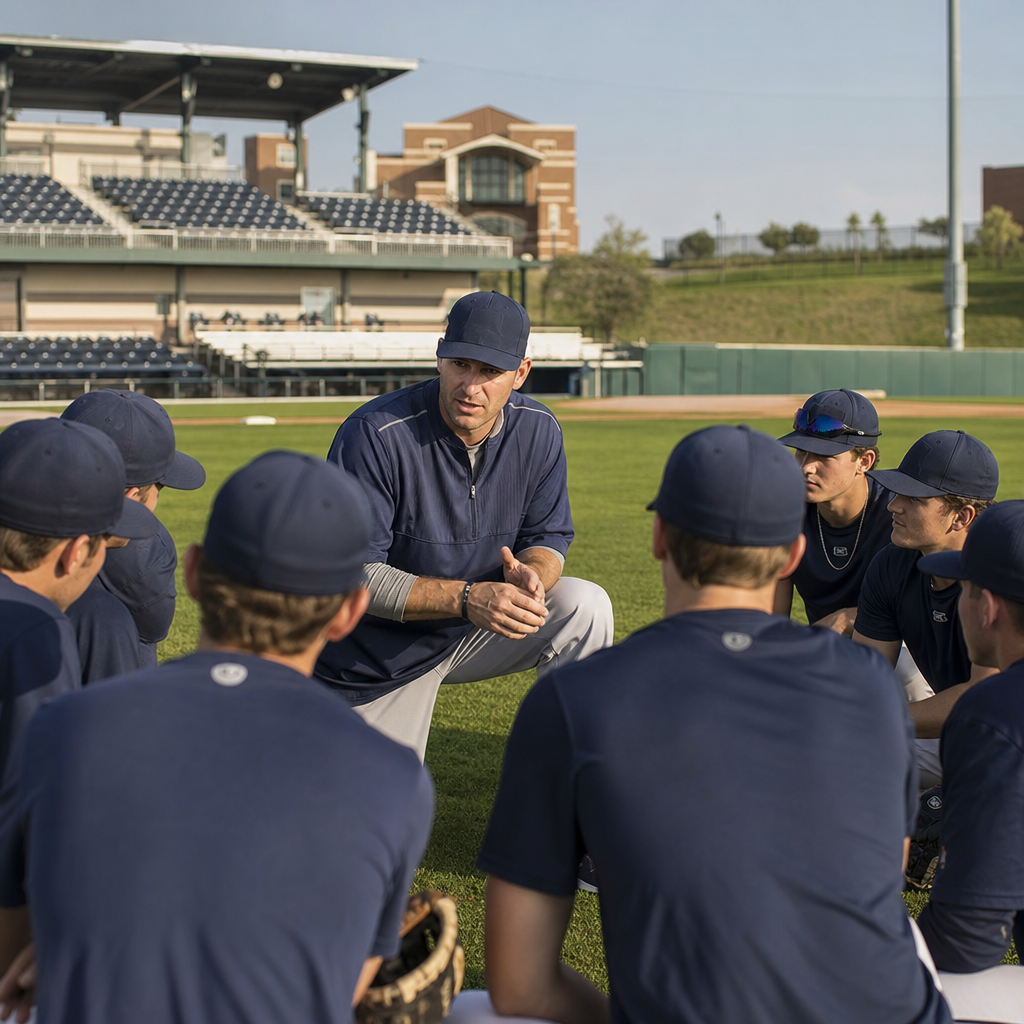
Baseball academies sit at a critical crossroads in player development, but colleges often provide the structure, competition, coaching, and life preparation that truly shape future stars. In this context, a baseball academy usually refers to a private training environment focused on skill acceleration, showcase exposure, and year-round instruction, while college baseball refers to the intercollegiate system governed primarily by the NCAA, NAIA, and NJCAA. I have worked with players and families comparing both routes, and the central question is rarely talent alone. It is whether an athlete needs refinement, maturity, competition volume, academic grounding, or visibility in front of professional scouts. That is why colleges matter so much. They do more than host games on spring weekends. They function as performance laboratories where biomechanics, strength training, scouting feedback, mental skills, nutrition, and daily accountability converge. For players who are not yet physically finished or emotionally ready at eighteen, that environment can transform projection into production. For families trying to understand the wider landscape of minor leagues and college baseball, colleges are also the connective tissue between youth academies, summer leagues, the MLB draft, and professional farm systems. Understanding that role helps athletes make smarter developmental decisions and helps readers see why this miscellaneous hub topic deserves a broad view rather than a narrow recruiting lens.
College programs shape future stars because they combine development with selection pressure. Unlike many academy settings, where training quality can be excellent but competition levels vary, college baseball places players into daily merit-based environments. Lineups are earned. Roles can disappear quickly. Performance is measured publicly through batting data, pitch design metrics, defensive evaluations, and game results against comparable age groups. That matters because projection in baseball is notoriously difficult. A seventeen-year-old throwing eighty-seven miles per hour may become a professional pitcher, but only if velocity, command, durability, and secondary offerings all improve together. Colleges are built to test exactly that progression. They expose strengths, identify flaws, and provide enough repetition to address both. They also create a bridge into the broader ecosystem covered under minor leagues and college baseball: scholarship strategy, transfer decisions, junior college pathways, summer wood-bat leagues, eligibility rules, academic support, and draft leverage. A true hub article has to connect those pieces. Baseball academies may ignite ambition, but colleges frequently turn ambition into sustained performance. The institutions that do this best are not simply recruiting talent; they are building complete athletes who can withstand the demands of professional baseball and, just as importantly, leave the game with education, discipline, and options.
Why colleges became central to baseball development
Colleges became central to baseball development because the professional system no longer needs to sign every raw prospect at eighteen. MLB organizations now value polished players who have faced better competition, accumulated more data, and reduced uncertainty. The 2021 contraction of the affiliated minor leagues intensified that trend by shrinking roster space and increasing the premium on readiness. In practical terms, scouts can watch a Friday night starter in the SEC, ACC, Big 12, Sun Belt, or a strong junior college conference and evaluate him against older, stronger hitters in pressure situations. Position players are assessed not only on tools but on swing decisions, bat speed, defensive versatility, and consistency through a demanding schedule. Colleges deliver those evaluation environments at scale.
That shift does not make academies irrelevant. In fact, many college players arrive after years in private hitting labs, velocity programs, and travel-ball networks. But once on campus, they enter a more integrated system. Strength coaches coordinate with athletic trainers. Pitching coaches interpret TrackMan or Rapsodo data. Analysts review chase rate, contact quality, horizontal movement, and release characteristics. Academic advisors help players stay eligible and organized. This combination matters because baseball development is nonlinear. A player may need to add fifteen pounds of lean mass, redesign a slider grip, improve shoulder mobility, and learn better strike-zone decisions all in the same year. Colleges are uniquely positioned to manage those variables together rather than as disconnected services.
What colleges provide that most academies cannot
The biggest difference between a college program and a standalone academy is ecosystem depth. A quality academy can provide excellent instruction, modern technology, and recruiting guidance, but colleges layer those assets into a full competitive and institutional setting. Players train, practice, travel, study, recover, and compete within one program. That continuity changes development outcomes. When I have seen athletes make major jumps, the change was usually not caused by one lesson or one radar-gun reading. It came from months of aligned feedback from coaches, trainers, analysts, and teammates who saw the player every day.
Consider a right-handed pitcher arriving on campus with a promising fastball but poor strike efficiency. In a college setting, he can undergo motion assessment, mobility screening, workload monitoring, and pitch-shape analysis within the first weeks of fall practice. Coaches may discover that his arm slot suppresses ride but creates sweep potential, leading them to pair a sinker with a harder slider instead of forcing a four-seam model. A nutrition plan supports weight gain, while classroom routines improve sleep and stress management. By spring, the same athlete may move from a showcase arm into a weekend bullpen weapon. That kind of coordinated intervention is difficult for most private academies to match over a full academic year.
| Development area | Typical academy strength | Typical college strength | Why it matters for pro projection |
|---|---|---|---|
| Skill instruction | Specialized lessons, small-group work | Daily applied coaching in team context | Game transfer matters more than isolated drills |
| Technology | High-end sensors and video in premium facilities | Integrated data tied to competition results | Scouts trust performance linked to measurable traits |
| Competition | Showcases and select events | Season-long conference play and postseason pressure | Consistency against strong opponents reduces risk |
| Physical development | Optional training plans | Supervised strength, recovery, and medical support | Durability is a major draft and signing factor |
| Life structure | Limited oversight outside training hours | Academic accountability and daily routine | Maturity influences long-term professional success |
How different college pathways shape future stars
Not all college routes look the same, and that is an essential point for any hub article under minor leagues and college baseball. Division I programs often attract the most attention because of exposure, television coverage, and concentration of draft prospects. Yet Division II, Division III, NAIA, and especially junior college baseball all shape professional players. Junior colleges are often the most misunderstood piece of this system. They can be ideal for late bloomers, players needing academic reset, or athletes who want another draft decision in a shorter window. Many pro scouts value strong junior college performers because they often show rapid growth against mature competition.
Four-year colleges offer a different developmental arc. Players may redshirt, spend a year in reserve roles, then emerge physically and technically in years two and three. This is common with catchers, pitchers, and middle infielders whose defensive skill demands time. Summer leagues accelerate that process. The Cape Cod Baseball League is the best-known example because of its wood-bat format and heavy scout presence, but leagues such as the Northwoods League, Coastal Plain League, and Alaska Baseball League also serve as proving grounds. Colleges are the anchor from which players launch into these seasonal tests. A good academy can help a player get recruited, but colleges create the sequence of competitive checkpoints that professional baseball trusts.
Coaching, analytics, and the modern player-development model
Modern college baseball looks far more like professional development than many fans realize. Over the past decade, leading programs have invested heavily in analytics, sports science, and individualized coaching plans. Hitters now receive reports on swing decisions, blast metrics, contact point consistency, and batted-ball distributions. Pitchers study induced vertical break, spin efficiency, seam-shifted movement, and extension. Defensive alignment is informed by spray charts and video tendencies. None of this replaces traditional baseball knowledge; it sharpens it. Good college coaches know when data clarifies a problem and when a player simply needs reps, confidence, or tactical adjustment.
For example, a left-handed hitter with raw power may post strong exit velocities in practice but struggle in games because his attack angle creates too many high fly balls against velocity. A college staff can identify the issue through video and ball-flight data, then redesign his move to contact without abandoning his power profile. Similarly, a pitcher whose fastball velocity rises from ninety to ninety-four might still fail if his release timing hurts command. Colleges that integrate analysts with on-field instruction produce the best results because players are not drowning in numbers. They receive clear, actionable feedback tied to winning baseball games.
This matters for future stars because professional organizations increasingly draft traits supported by evidence. College programs that track growth carefully help players present a credible developmental record. Scouts want to know whether gains are real, repeatable, and achieved against competition. Colleges provide that context.
The off-field advantages families should not ignore
When families compare baseball academies with colleges, they often focus first on exposure and velocity. That is understandable, but off-field structure deserves equal attention. College baseball teaches time management, resilience, communication, and independence under pressure. Those are not soft extras. They directly affect performance. A player who can manage a class schedule, maintain eligibility, recover after a poor outing, and handle role changes is more likely to survive professional baseball, where failure is constant and support can be inconsistent.
I have seen talented recruits stall because they lacked basic routines around sleep, nutrition, hydration, and academic discipline. College programs can correct those habits. Athletic departments usually provide tutoring, study halls, sports medicine access, and team rules that stabilize daily life. Players also live through adversity in a public setting: slumps, errors, reduced playing time, injury rehab, coaching changes, and transfer decisions. Those experiences prepare them for the minor leagues, where bus travel, roster churn, and performance pressure can overwhelm athletes who were only trained in isolated skill environments.
There is also a risk-management benefit. Very few players reach Major League Baseball, and even fewer stay long enough to build lifetime financial security. A college degree, alumni network, and broader personal development matter. The best college route is not a backup plan to baseball. It is part of building a durable future whether baseball lasts three years or thirty.
Where academies still matter and how they connect to the college hub
A balanced view must acknowledge that academies still play an important role. Many players need specialized offseason work that colleges cannot fully provide in limited practice windows. Private pitching labs may help reshape arsenals. Hitting facilities can offer intensive cage volume during breaks. International academies, particularly in Latin America, remain vital entry points into professional baseball, though their relationship to colleges differs from the domestic U.S. model. Travel-ball academies and showcase organizations also continue to drive recruiting visibility, especially before a player reaches college.
That is why this topic belongs in a miscellaneous hub under minor leagues and college baseball. It touches recruiting economics, training technology, transfer portal strategy, draft timing, eligibility, scholarships, NIL implications, and the widening gap between resource-rich programs and smaller schools. It also connects to practical reader questions: Should a player choose junior college over a private academy year? How important are summer wood-bat leagues? What metrics do scouts trust most from college players? When does transferring help development, and when does it disrupt it? A strong hub page should orient readers to all of those branches while making one point clear: colleges are not merely another stop after academies. They are often the developmental engine that converts scattered talent into professional readiness.
What to evaluate when choosing the right path
The right path depends on the player, not on branding. Families should evaluate coaching continuity, player advancement record, medical support, academic fit, strength infrastructure, roster depth, and honest opportunity to play. Ask where recent pitchers gained velocity, where hitters improved swing decisions, and how many upperclassmen actually developed rather than merely being replaced by recruits. Review transfer outcomes. Study summer placements. Look at conference quality and travel demands. A famous logo means little if the athlete will not receive individualized development or meaningful competition.
Players should also assess themselves realistically. Do they need innings, at-bats, physical growth, academic rehabilitation, or exposure? Junior college may be best for one athlete, a four-year mid-major for another, and a high-resource power conference for a third. The answer is not what looks most impressive online. The answer is what environment will turn current weaknesses into future strengths. That is the real role of colleges in shaping future stars.
Baseball academies can open doors, sharpen tools, and accelerate recruiting, but colleges remain the most complete proving ground for many aspiring professionals. They combine daily competition, advanced coaching, performance data, physical development, academic structure, and emotional maturity in one environment. That combination explains why so many future stars either emerge in college or significantly improve there before entering professional baseball. Within the broader minor leagues and college baseball landscape, colleges connect every major stage: recruiting, roster development, summer leagues, draft evaluation, and eventual transition into the farm system. They also provide something private training alone cannot guarantee: a full-life framework that helps athletes grow as students, teammates, and adults while they pursue elite performance.
The most useful takeaway is simple. Do not treat the academy-versus-college decision as a branding contest. Treat it as a development question. Look for evidence of player growth, not marketing claims. Study how a program handles strength, skill design, recovery, academics, and competition. Ask whether the athlete will be challenged, supported, and seen by the right evaluators at the right time. When those pieces align, colleges do far more than prepare players for the next season. They shape future stars and give them a stronger foundation for whatever comes after baseball. Use this hub as your starting point, then explore each branch of the minor leagues and college baseball journey with the same level of scrutiny.
Frequently Asked Questions
What is the difference between a baseball academy and college baseball in player development?
A baseball academy and college baseball can both play valuable roles in development, but they are built for different purposes. A baseball academy is usually a private training environment designed to accelerate skill growth through year-round instruction, position-specific coaching, strength work, and showcase opportunities. Academies often help players sharpen mechanics, improve measurable tools, and gain visibility with recruiters and scouts. For many families, they are an important step in preparing a player for the next level, especially when the goal is to compete for college roster spots or pursue professional opportunities.
College baseball, however, adds layers that an academy typically cannot fully replicate. In the college setting, player development happens within a structured competitive season, a team-centered environment, and a system of accountability that touches nearly every part of daily life. Athletes are expected to perform in games that matter, manage academics, communicate with coaches, handle failure, adjust to scouting reports, and compete for roles against older and more experienced players. That combination of pressure, repetition, and responsibility is often what shapes raw talent into complete baseball players.
In practical terms, academies often help build the tools, while colleges help test, refine, and translate those tools into performance. A hitter may improve bat speed and swing efficiency at an academy, but college baseball teaches him how to make in-game adjustments over a weekend series. A pitcher may gain velocity in a private program, but college competition forces him to sequence pitches, control emotions, and execute under stress. Families should not think of these paths as automatically competing with one another. In many cases, the strongest development happens when academy training supports a player before college, and the college experience then develops him physically, mentally, and personally into a more complete athlete.
Why do colleges play such a major role in shaping future baseball stars?
Colleges play a major role because they provide a development ecosystem rather than just isolated training. In a college program, players are exposed to consistent coaching, advanced competition, strength and conditioning, medical and recovery support, video analysis, practice planning, and a culture built around performance. That environment creates a steady process of evaluation and improvement. Instead of training for occasional events or showcases, players are working toward lineup spots, pitching roles, conference games, postseason goals, and long-term growth within a demanding system.
Just as important, colleges help players develop habits that extend beyond talent. Future stars are rarely defined by skill alone. They are shaped by routine, discipline, resilience, and the ability to make adjustments over time. College baseball demands early mornings, time management, academic responsibility, physical recovery, communication with coaches, and the mental toughness to handle competition and adversity. Those are not side benefits. They are central to why college baseball has become such an important proving ground for serious players.
From my experience working with players and families, one of the biggest misconceptions is that development is only about mechanics or physical tools. In reality, many athletes have ability, but not all learn how to sustain performance in a high-expectation environment. Colleges help bridge that gap. Players learn how to prepare for a season, respond when they fail, compete for opportunities, and mature as teammates and leaders. That is why colleges often become the place where future stars are truly shaped, even if an academy helped them get noticed in the first place.
Can a baseball academy replace the value of playing college baseball?
For most players, the answer is no. A baseball academy can be extremely helpful, and in some cases it can provide elite instruction, strong exposure, and impressive facilities. It may even be the best environment for a player at a specific stage of growth, especially if he needs intensive skill work or is trying to re-enter the recruiting conversation. But even the best academy usually does not fully replace the developmental value of a college baseball program because the day-to-day demands are fundamentally different.
College baseball places players in meaningful competition where roles must be earned and performance has consequences. Athletes are not simply training; they are preparing to help a team win in a structured season against opponents who are doing the same. Coaches evaluate execution, consistency, adaptability, and trustworthiness under pressure. Players learn how to contribute within a system, how to deal with slumps, how to recover after difficult outings, and how to stay focused while balancing school and life responsibilities. Those experiences are difficult to reproduce in a private training model, no matter how strong the instruction may be.
That said, academies absolutely have a place. They can supplement development, close skill gaps, provide individualized instruction, and help athletes build recruiting momentum. For some players, academy training before college can make the transition into higher-level competition much smoother. The smartest approach is usually not to ask whether one completely replaces the other, but rather to understand what each environment does best. Academies can accelerate preparation and exposure. Colleges often provide the structure, competition, and maturity-building process that turns preparation into real progress.
How should players and families decide between investing in academy training and pursuing the college baseball path?
The best decision starts with clarity about the player’s current level, long-term goals, developmental needs, and personal readiness. Families should evaluate whether the player needs more technical instruction, more game experience, more physical development, or better exposure to college coaches. If an athlete has ability but needs polish in swing mechanics, throwing efficiency, pitch design, or defensive fundamentals, an academy may provide the focused repetition needed to improve those areas. If the player is ready for a more demanding competitive structure and wants the full developmental experience that includes academics, team culture, and college-level accountability, then the college path becomes especially important.
It is also essential to think beyond marketing language and ask practical questions. What does the academy actually provide on a weekly basis? Who are the instructors, and what is their track record with real player development? How often will the athlete compete, and against what level of opposition? On the college side, families should look at coaching stability, player development history, roster composition, academic fit, available support systems, and the likelihood of meaningful opportunities over time. A flashy brand or high-profile facility should never be the sole reason for choosing a path.
In many situations, the right answer is a combination of both. A player may use academy training to improve tools and gain exposure, then enter college baseball where those tools are tested and refined in a more complete environment. Families should remember that the goal is not simply to collect opportunities, but to choose the setting that best supports growth. The strongest decisions are usually made when families focus less on hype and more on honest assessment, fit, development, and the kind of environment that will help the athlete mature both on and off the field.
What do college coaches look for in players coming from baseball academies?
College coaches certainly notice measurable ability, but they are evaluating much more than raw tools. Yes, they pay attention to velocity, bat speed, athleticism, arm strength, body control, and projectability. They also appreciate players who arrive with strong fundamentals and evidence of serious training. A quality academy background can signal that a player has invested in development and has been exposed to instruction, competition, and recruiting settings. That can be helpful, especially in a crowded recruiting landscape.
Still, coaches are usually asking deeper questions. Does the player compete well when the game gets difficult? Can he make adjustments, or does he rely only on talent? Is he coachable? Does he understand routines, preparation, and how to handle failure? Will he fit into a team environment? Many players look good in workouts or showcase settings, but college coaches want to know how that player behaves over time. They are not just recruiting a swing or a fastball. They are recruiting a person who has to function within the culture and demands of a program.
This is where the college shaping process begins even before a player arrives on campus. Coaches value prospects who show maturity, consistency, and a willingness to be developed. A player from an academy who has strong tools and also demonstrates accountability, composure, and competitive instincts will stand out far more than someone who is only polished in isolated drills. Families should understand that exposure may open the door, but readiness helps a player walk through it. The athletes who make the biggest impact are usually the ones who combine academy-developed skill with the mindset and habits that fit the college environment.