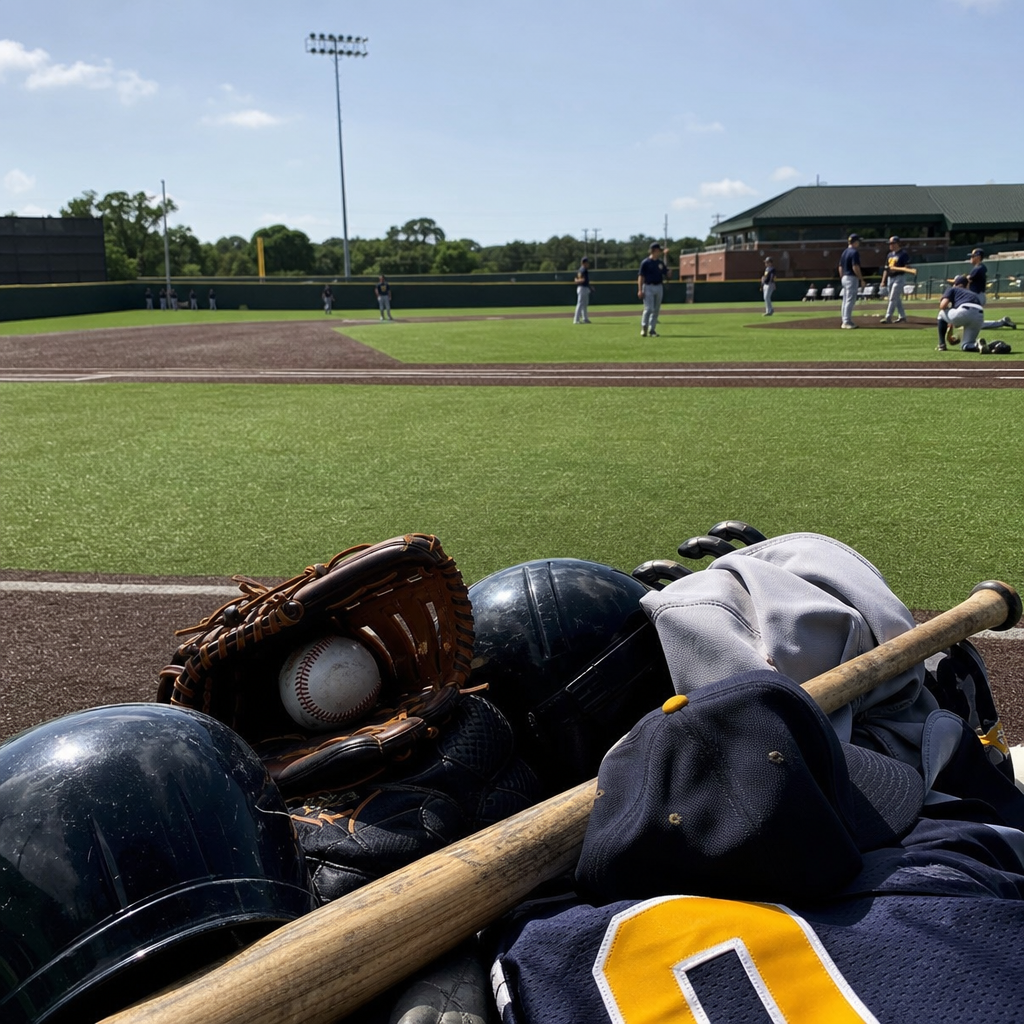
A college baseball program is far more than a roster, a stadium, or a spring schedule. It is an operating system that blends player development, academic management, recruiting strategy, compliance, sports medicine, fundraising, facilities planning, analytics, and daily logistics into one coordinated enterprise. When people ask how college baseball works, they usually mean the games they see on weekends. After years around programs at different levels, I can say the games are only the visible layer. Underneath sits a year-round structure that determines whether a team merely participates or consistently wins, graduates players, and sends them to professional baseball.
Understanding the anatomy of a college baseball program matters for recruits, parents, coaches, administrators, and fans because expectations often clash with reality. A prospective student-athlete may focus on innings, exposure, and draft potential, while a head coach is balancing scholarship equivalencies, transfer portal needs, class schedules, travel budgets, and bullpen workload. An athletic director may care most about retention, academic progress rate, donor engagement, and Title IX alignment. Each stakeholder sees one piece. This article connects the pieces and explains how a program actually functions, from roster construction to player support services.
College baseball also occupies a unique place within the broader baseball pathway. It sits between amateur development and professional evaluation, yet it is not simply a feeder system. The best programs are educational institutions first, competitive enterprises second, and talent accelerators third. That order matters. A healthy program develops players physically and mentally while also delivering a meaningful college experience and a credible degree path. When any one of those priorities dominates completely, the program becomes unstable. To understand the category, you need to understand all of its moving parts.
Program Structure: Leadership, Staff, and Daily Operations
The foundation of any college baseball program is its organizational chart. At the top is the head coach, who sets competitive standards, oversees recruiting, manages the staff, and defines the program’s culture. Assistant coaches usually divide responsibilities across hitting, pitching, recruiting regions, and defensive instruction. At larger schools, directors of operations, player development staff, analysts, strength coaches, athletic trainers, academic advisors, nutrition staff, and video coordinators extend the support system. At smaller programs, the same tasks may be handled by two or three people wearing multiple hats.
In practice, a well-run program depends on clarity more than sheer staff size. I have seen mid-major clubs outperform better funded teams because every player knew who owned each area: throwing progression, class attendance checks, scouting reports, meal logistics, and travel timelines. Daily operations start early and are highly scheduled. Fall practice may include lifting, defensive work, batting groups, classroom sessions, and recovery blocks. In season, the rhythm shifts toward game preparation, opponent scouting, bullpen planning, and academic travel coordination. Programs that look disciplined on game day usually built that discipline through hundreds of ordinary, organized mornings.
Culture is often discussed vaguely, but in baseball it shows up in specific habits. Does the team track hydration? Are pitchers on individualized recovery plans? Is classroom attendance verified? Are swing decisions reviewed on video? Are freshmen taught how to travel, prepare, and communicate? Strong cultures are measurable. Coaches who reduce culture to slogans generally struggle when adversity hits. Coaches who connect standards to behaviors create a stable environment where development can compound over four years, or over two years in the junior college route.
Roster Building, Scholarships, and Recruiting Pipelines
Roster construction is where competitive vision meets hard constraints. College baseball coaches do not recruit in the abstract; they recruit to positional needs, class balance, budget realities, and style of play. A program may want left-handed pitching depth, middle infield speed, or older transfer bats, but whether it can secure those profiles depends on scholarship resources, admissions standards, geography, and conference reputation. NCAA baseball is an equivalency sport, which means coaches divide scholarship money across multiple players rather than giving full scholarships to everyone. That one fact shapes nearly every recruiting conversation.
Recruiting pipelines vary by level. Power conference programs may draw nationally, combining high school prospects, summer league performers, and transfer portal additions. Mid-major programs often recruit regionally first, then expand into undervalued national pockets. Junior colleges rely on a mix of local players, bounce-back transfers, and late bloomers. NAIA and Division III programs can be exceptionally strong fits for players who value immediate opportunity, lower roster congestion, or a specific academic environment. The best-fit program is not always the biggest brand. It is the place where developmental opportunity, financial reality, and role clarity align.
Evaluation has also changed. Traditional in-person scouting still matters, especially for makeup, body language, and game instincts, but technology has sharpened the process. Coaches regularly use TrackMan, Rapsodo, Blast Motion, Synergy, and video platforms to assess bat speed, pitch characteristics, exit velocity, swing decisions, spin efficiency, and strike-throwing profiles. Data, however, does not replace judgment. A pitcher with strong induced vertical break still needs command and a competitive routine. A hitter with high raw exit velocity still needs bat-to-ball skill and zone control. Programs that recruit only measurables often create unbalanced rosters.
| Program Level | Typical Recruiting Focus | Common Roster Advantage | Main Tradeoff |
|---|---|---|---|
| Division I | National high school prospects, portal transfers, summer performers | High exposure, advanced resources, stronger competition | Intense roster pressure and limited playing time for some recruits |
| Division II | Regional prospects, transfers, multi-sport or late-developing athletes | Balanced competition and development opportunities | Fewer resources than top Division I programs |
| Division III | Academic fit, player development, institutional alignment | Strong educational emphasis and clearer roster fit | No athletic scholarships |
| Junior College | Bounce-back players, draft prospects, cost-conscious recruits | Fast pathway to development and transfer opportunities | Shorter player lifecycle and frequent roster turnover |
| NAIA | Flexible pathways, regional and international recruiting | Opportunity for immediate impact and varied scholarship models | Program quality varies widely by institution |
Player Development: Strength, Skill, Analytics, and Mental Performance
Player development is the engine of a college baseball program. Recruiting gets attention, but development determines whether a roster improves. Effective development plans are individualized, not generic. A freshman right-hander might need shoulder care, a velocity build, and a usable changeup. A veteran catcher may need mobility work, receiving refinement, and a lower game-load schedule. A corner outfielder may need swing decisions more than swing mechanics. Coaches who apply the same plan to every athlete usually waste time and lose trust.
Modern development combines several disciplines. Strength and conditioning builds force production, movement quality, and durability through periodized plans. Pitching development uses bullpens, high-speed video, ball-tracking data, and workload monitoring to shape arsenals and protect arms. Hitting development includes bat path analysis, machine training, approach design, and game-planning against pitch types and locations. Defensive instruction covers first-step efficiency, exchange times, footwork, and throw accuracy. Recovery is no longer an afterthought; sleep, hydration, nutrition, soft tissue work, and postgame protocols directly influence output over a long season.
Mental performance is equally important and often misunderstood. It is not motivational speaking. It is training attention, breathing, routine consistency, self-talk, and response to failure. Baseball’s structure guarantees failure, so players need methods to reset between pitches, innings, and games. Some programs use sport psychologists or mental skills coordinators. Others train these habits internally through pre-pitch routines, journaling, and review sessions. The programs that handle pressure best usually normalize mental training long before conference play starts. They make it part of preparation, not an emergency tool used only during slumps.
Academics, Compliance, and the Student-Athlete Reality
Every college baseball program exists inside academic and regulatory systems. That sounds obvious, but many families underestimate how much those systems shape the athlete experience. Class scheduling affects practice windows. Degree progress requirements affect eligibility. Transfer rules affect roster retention. Amateurism rules, institutional compliance policies, and conference standards affect everything from recruiting communication to benefits and travel behavior. A player can be talented enough to help on Sundays and still become unavailable because of an avoidable academic or compliance issue.
The strongest programs build support rather than assuming maturity. Academic advisors monitor course loads, travel conflicts, tutoring needs, and progress toward graduation. Coaches often receive attendance reports and intervene early when habits slip. This matters because baseball’s time demands are deceptive. Fall conditioning, individual work, study hall, treatment, travel, and weekend series can compress a student’s week quickly. Players who arrive expecting a loose schedule often struggle. The successful student-athlete learns time blocking, communication with professors, and preparation before road trips. Those are not side skills; they are part of the job.
Compliance deserves more attention than it gets because it protects both players and programs. Official visits, contact periods, financial aid packaging, transfer eligibility, and name, image, and likeness activity all require precision. Programs that ignore detail put wins and reputations at risk. Good compliance offices are not obstacles. They are risk-management partners that keep recruiting, roster movement, and player support within the rules. In my experience, the healthiest programs treat compliance as part of operations, not as paperwork handed off at the last minute.
Facilities, Budget, and the Business Side of Winning
Facilities influence recruiting, player development, recovery, and revenue, but expensive buildings do not guarantee results. A useful baseball facility solves practical problems: weather interruptions, training efficiency, recovery access, video review space, nutrition flow, and game-day experience. Indoor cages, bullpens, weight rooms, locker rooms, hydrotherapy access, and quality playing surfaces all matter because they increase productive reps and reduce friction. A program in a cold-weather region especially depends on indoor infrastructure to close the practice gap with warm-weather competitors.
Budget shapes everything from staff size to travel quality. Baseball is equipment-heavy and travel-intensive, particularly in multi-game weekend formats. Air travel, bus costs, hotel nights, meals, laundry, analytics subscriptions, and maintenance add up quickly. Then there is scholarship funding, often supported by institutional dollars, donor contributions, and broader athletic department priorities. Programs with strong fundraising operations gain a real advantage because donor support can underwrite locker room upgrades, nutrition plans, technology, and recruiting flexibility. Winning helps fundraising, but fundraising often helps create the conditions for winning first.
The business side also includes ticketing, alumni relations, camps, and community engagement. Youth camps can generate revenue and strengthen local ties. Alumni weekends help donor retention and create mentoring networks for current players. Social media and broadcast exposure support recruiting and sponsor value. None of this is secondary anymore. A modern college baseball program is partly a performance organization and partly a brand operation. Programs that manage both sides effectively are more resilient during coaching changes, losing seasons, and budget pressure.
Competition Pathways, Professional Outcomes, and Hub Topics
College baseball is not one path but several connected pathways. Some players aim for the MLB draft and use college as a development platform. Others seek a roster spot, a degree, and the life skills that come from competing in a demanding environment. Some begin at junior college, rebuild their profiles, and transfer upward. Others thrive at Division II, Division III, or NAIA programs where role clarity and consistent reps accelerate growth. This hub exists because the miscellaneous side of college baseball is often where the biggest decisions are made: transfers, redshirts, summer ball choices, walk-on opportunities, support staff roles, and how programs differ behind the scenes.
Professional outcomes depend on more than raw talent. Scouts value performance, tools, age, projection, medical history, and makeup. A player who learns how to adjust, communicate, recover, and compete over a college season often improves his professional value even before his numbers peak. At the same time, not every good college player becomes a pro, and that is not failure. Strong programs define success broadly: degree completion, personal growth, network building, and preparation for coaching, business, education, or other careers connected to the game.
The anatomy of a college baseball program comes down to alignment. Leadership, recruiting, development, academics, compliance, facilities, and finances must support the same mission. When they do, players improve faster, staff work more efficiently, and the program gains staying power. If you are evaluating schools, follow the structure behind the roster, not just the logo on the jersey. Ask how players develop, how academics are supported, how resources are allocated, and how the staff communicates. Use this hub to explore the wider minor leagues and college baseball landscape, then compare programs with clearer eyes and better questions.
Frequently Asked Questions
What are the main parts of a college baseball program beyond the players and coaches?
A college baseball program is best understood as a coordinated system rather than a team that simply shows up to play games. The roster and coaching staff are the most visible pieces, but behind them is a much larger operational structure that keeps everything moving. That structure usually includes academic support, compliance oversight, recruiting operations, strength and conditioning, athletic training and sports medicine, equipment management, video and analytics, travel coordination, budgeting, fundraising, alumni relations, and facility maintenance. At many schools, administrators and support staff are just as critical to the program’s success as what happens in the dugout.
Each area affects the others. Recruiting influences roster construction, which affects player development plans, which in turn shapes training schedules, scholarship allocation, and long-term program strategy. Academic performance matters because eligibility is non-negotiable. Compliance matters because one mistake in recruiting communication, benefits, or financial aid administration can create major consequences. Sports medicine matters because a talented roster means very little if player health is poorly managed. Even logistics matter more than most people realize, because consistent practice times, organized travel, meal planning, and equipment readiness all support day-to-day performance.
In practical terms, a college baseball program functions like a small business with a competitive mission. It has personnel management, long-range planning, data analysis, budgeting, public-facing communication, and performance evaluation built into its daily work. The best programs are not simply the ones with the most talent. They are often the ones where all these departments work together with clarity and discipline. That is why the anatomy of a college baseball program is so layered: the games are only the final product of an operation that runs year-round.
How does player development actually work inside a college baseball program?
Player development in college baseball is a continuous, individualized process that extends far beyond batting practice and bullpen sessions. Coaches are evaluating each player’s current abilities, physical capacity, baseball intelligence, mental approach, and future projection. From there, they build development plans that often include swing adjustments, pitch design work, defensive refinement, strength gains, mobility work, recovery habits, nutritional guidance, and routine-building. A freshman pitcher, for example, may need mechanical efficiency, added body weight, improved command, and a better understanding of sequencing, while a veteran position player may focus on plate discipline, defensive versatility, and leadership.
This work usually happens in phases. Fall practice often emphasizes evaluation and foundational instruction. The winter period may lean heavily into strength development, throwing progression, and skill repetition. Once spring competition begins, development does not stop, but it shifts to maintenance, game preparation, scouting application, and shorter adjustment cycles. Summer can also be part of the process, whether through summer ball, strength programming, rehab work, or specific offseason assignments. The best programs connect these phases so players are not just working hard, but working with a clear purpose over time.
Modern player development also relies more than ever on technology and communication. Programs may use video breakdown, ball-tracking data, bat sensors, force plates, motion capture, and performance testing to identify what is helping or limiting a player. But tools alone do not develop talent. Good development depends on coaches being able to translate information into actionable instruction. It also depends on buy-in from the athlete. A player improves fastest when he understands why a change is being made, how to measure progress, and how his daily habits connect to long-term performance.
Just as important, development is not purely physical. College baseball requires maturity, time management, emotional control, and the ability to handle failure. Players are learning how to prepare for opponents, compete for roles, respond to slumps, and manage school at the same time. In that sense, player development is really human development under competitive pressure. Strong programs know that if they build better routines, better decision-making, and better self-awareness, better baseball usually follows.
Why are academics and compliance such a big part of how college baseball programs operate?
Academics and compliance sit at the center of college baseball because eligibility is the foundation of participation. A player cannot help a team if he is not academically eligible, and a program cannot function smoothly if it operates outside NCAA, conference, or institutional rules. That makes these areas far more than administrative box-checking. They directly affect roster availability, recruiting strategy, scholarship management, transfer decisions, and the overall credibility of the program.
From the academic side, programs are constantly monitoring class attendance, degree progress, study habits, tutoring needs, travel accommodations, and exam scheduling. Baseball players miss class for road trips, practice early, lift, train, and compete on demanding schedules, so time management becomes a major issue. Coaches and academic advisors work together to help players stay organized and on pace toward graduation while meeting eligibility benchmarks. In strong programs, this support is proactive rather than reactive. They do not wait for a player to struggle badly before stepping in. They build systems that make success more likely from the start.
Compliance is equally important because the rulebook touches nearly every aspect of the program. Recruiting contacts, unofficial and official visits, scholarship limits, transfer rules, practice hours, benefits provided to athletes, NIL-related guidance, camps, tryouts, and amateurism questions can all carry compliance implications. Even well-intentioned mistakes can create violations if staff members are not careful. That is why coaches are often in regular contact with compliance offices and must document processes, ask questions early, and train staff to operate within established rules.
When academics and compliance are handled well, they create stability. Players stay eligible, the institution reduces risk, and coaches can make decisions with confidence. When they are handled poorly, the effects spread quickly. A key player can become ineligible. A recruiting class can be disrupted. Practice structures can be challenged. Administrative scrutiny increases. In short, academics and compliance are not side topics in college baseball; they are structural supports that keep the entire program legitimate and sustainable.
How do recruiting and roster management shape the identity of a college baseball program?
Recruiting and roster management do more than fill out a lineup card. They define what a college baseball program can become over time. Every program has to decide what types of players fit its competitive level, institutional standards, coaching philosophy, and scholarship realities. That means recruiting is not only about identifying talent. It is about projecting development, evaluating makeup, balancing positions, understanding academic fit, and building enough depth to survive a long season. Good recruiting creates options. Poor recruiting creates holes that are difficult to hide once competition begins.
Roster management adds another layer because a program is constantly balancing present needs with future planning. Coaches must think about class distribution, positional redundancy, injury history, player retention, transfer portal movement, draft risk, and scholarship allocation. In baseball, where scholarship money is often divided among many players, those decisions become even more strategic. A staff may believe in a player’s upside, but still has to weigh whether that player fits the broader needs of the roster in two or three years. This is why the strongest programs think in cycles, not just in single recruiting classes.
Recruiting also influences culture. Coaches are trying to identify athletes who can handle the workload, respond to coaching, coexist in a competitive environment, and represent the program well. Talent matters, but reliability, coachability, and consistency matter too. A roster with ability but poor internal chemistry can underperform badly. On the other hand, a well-constructed roster with clear role acceptance and competitive depth often sustains success because the environment reinforces development and accountability.
In today’s landscape, roster management also includes the transfer portal and changing player movement patterns. Programs may use the portal to address immediate needs, add experience, or recover from attrition, but doing so effectively still requires discipline. A program that chases short-term fixes without preserving long-term roster balance can create new problems. Ultimately, recruiting and roster management shape the identity of the program because they determine not only who is on the team, but how the team functions, evolves, and competes from season to season.
What role do facilities, fundraising, analytics, and daily logistics play in a program’s success?
These areas often receive less attention from casual fans, but they have a major impact on whether a college baseball program can operate at a high level. Facilities affect player development, recruiting impressions, health management, and everyday efficiency. A well-designed facility can improve weight room access, recovery space, bullpen organization, batting practice flow, video review, and athlete experience. It also signals institutional commitment. Recruits and families notice whether a program has invested in the environment where players train and compete.
Fundraising is closely tied to that reality because many baseball programs rely on donor support to expand beyond basic operating needs. Scholarships, facility upgrades, technology, travel enhancements, nutrition support, and staff positions may all be influenced by external giving. In many programs, the head coach is not just a baseball instructor but also a relationship builder who helps connect alumni, boosters, and supporters to the program’s long-term vision. That makes fundraising a strategic responsibility, not a ceremonial one. Programs with strong donor engagement often gain practical advantages that improve both development and recruiting.
Analytics have become increasingly important because they help programs make better decisions in training, scouting, player usage, and performance evaluation. Data can inform pitch selection, defensive positioning, swing decisions, opponent tendencies