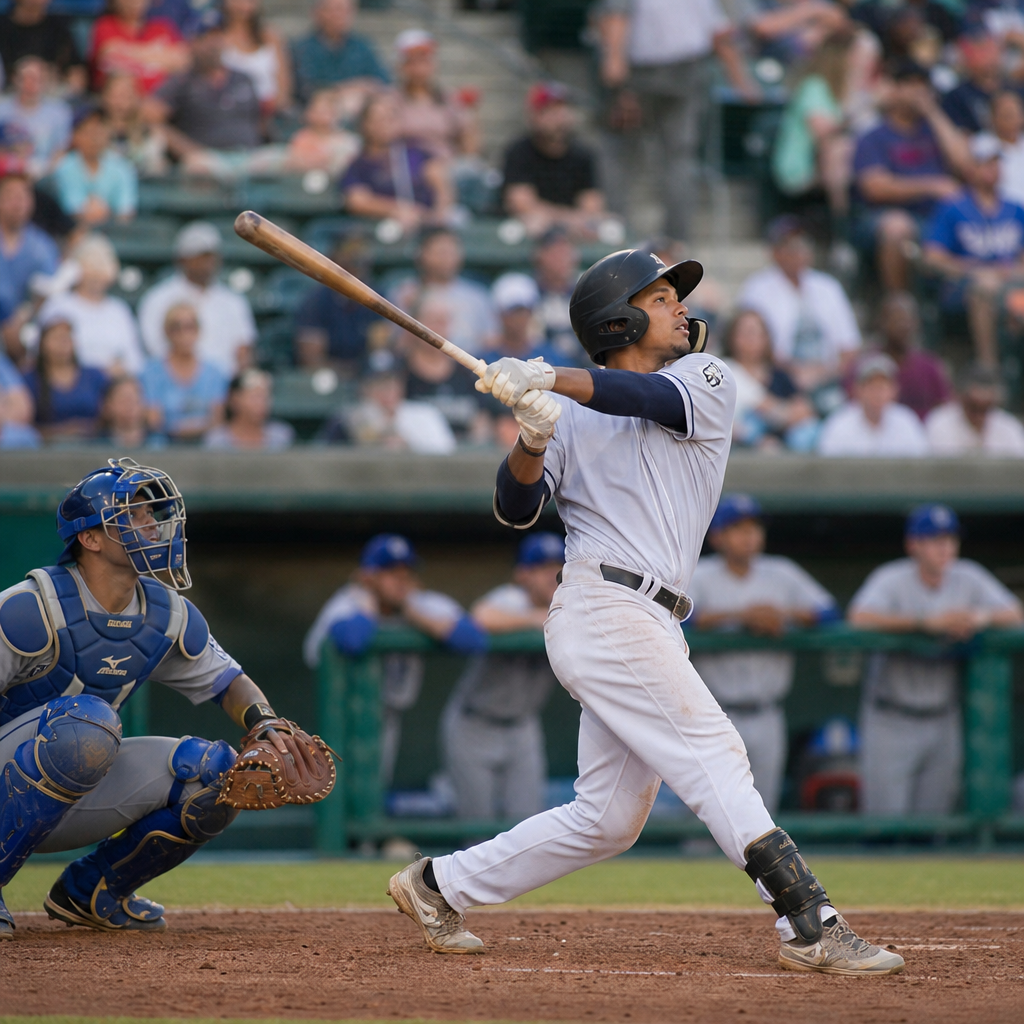
Baseball’s future is built long before a prospect reaches a packed major league stadium. It takes shape on back fields in Arizona, in low-A clubhouses, on buses crossing the Midwest, and in college programs that teach players how to handle failure, adjust mechanics, and compete every day. When people talk about player development, they often focus on draft rankings or top-100 lists, but the real story is broader. Minor leagues and college baseball form an interconnected system that turns raw athletic ability into professional skill, organizational depth, and eventually major league wins. Understanding how that system works is essential for fans, parents, coaches, scouts, and anyone evaluating where the sport is headed.
In practical terms, the minor leagues are baseball’s layered development network, where players progress through levels such as rookie ball, Single-A, High-A, Double-A, and Triple-A. College baseball operates differently, but it serves many of the same developmental purposes: refining tools, increasing competitive maturity, and giving players more game experience before they enter pro ball. Together, these environments shape mechanics, pitch design, swing decisions, defensive versatility, recovery habits, and mental resilience. They also influence labor economics, roster construction, regional fandom, and the overall quality of the major league product. After years of watching player development up close, one pattern stands out: the organizations that build repeatable systems, not just collect talent, are the ones that sustain success.
This hub article covers the miscellaneous but essential topics that define the minor league and college baseball landscape. That includes development pipelines, training methods, coaching technologies, travel demands, roster churn, NIL and transfer effects in college baseball, fan engagement, and the business realities behind affiliations and promotions. If you want a clear guide to how baseball cultivates talent, this is the place to start.
The development pipeline from amateur promise to major league contribution
The baseball development pipeline is not linear, and that is exactly why it matters. A first-round draft pick may reach the majors in two years, while a 12th-round college senior may need five seasons and a position change to become useful organizational depth. International signees often begin younger and require longer physical development. College players usually arrive with more game reps and strike-zone awareness, but they still must adapt to wood bats, denser schedules, and professional scouting reports. The purpose of the system is not simply to rank players. It is to identify what each player must improve, assign an appropriate level, and measure progress against real competition.
In most organizations, player development plans now begin immediately after signing. Hitters receive baseline assessments that include bat speed, swing path, chase rate history, contact quality, and movement screening. Pitchers are evaluated through velocity, spin characteristics, extension, pitch shapes, release consistency, and injury risk markers. Tools such as TrackMan, Hawk-Eye, Rapsodo, KinaTrax, and force plates have changed how quickly coaches can spot traits worth developing. A pitcher once labeled a fringe arm may now be redesigned around a sweeper and a high-carry four-seam fastball. A college infielder with modest power may be reworked into a versatile defender whose contact profile supports a utility role.
What separates effective systems from weak ones is translation. Data only matters if players understand it and can apply it in games. The best affiliates and college programs turn abstract numbers into simple actions: attack the zone north-south, improve swing decisions in hitter’s counts, shorten pre-pitch movement, or build a recovery routine that supports availability. Development is not one breakthrough. It is a sequence of small, measurable improvements.
How coaching, technology, and routine accelerate player growth
Player development has become more sophisticated, but the fundamentals remain recognizable. Good coaching still starts with observation, communication, and trust. The difference today is that instructors can connect what they see with measurable evidence. When I have watched side sessions and batting practice in modern development settings, the biggest shift has not been more information. It has been faster feedback. A pitcher can throw ten breaking balls and immediately review horizontal movement, induced vertical break, release height, and command miss pattern. A hitter can compare attack angle, exit velocity, point of contact, and swing decisions from one cage round to the next.
That feedback loop matters because baseball is a game of delayed rewards. Traditional box scores can hide progress. A pitcher may allow three runs despite executing a new shape that projects well long term. A hitter may go 0-for-4 while consistently hitting balls harder and laying off chase pitches. Development staffs increasingly separate process from outcome, especially at lower levels. That approach helps players avoid overreacting to small samples while still staying accountable.
Routine is just as important as tools. Minor league and college seasons test recovery, nutrition, sleep discipline, and mental consistency. Players who learn how to structure a workday gain a real edge. Typical development blocks include pregame defensive work, individualized cage plans, strength maintenance, mobility sessions, postgame recovery, and video review. For pitchers, throwing schedules are precise: bullpen intensity, long toss distance, weighted ball use, and between-start recovery are mapped to preserve health and build stuff without overloading tissue.
| Development area | Common tools or methods | Why it matters |
|---|---|---|
| Pitch design | TrackMan, Rapsodo, Edgertronic video | Improves pitch shape, deception, and role clarity |
| Hitting decisions | Hawk-Eye, heat maps, machine work | Reduces chase rate and improves quality of contact |
| Strength and recovery | Force plates, sleep tracking, mobility plans | Supports durability across long seasons |
| Defense and movement | KinaTrax, video review, footwork drills | Sharpens first step, positioning, and versatility |
College programs have adopted many of the same methods, though budgets vary widely. SEC and ACC schools often resemble professional environments, with dedicated analytics staff, biomechanics support, and advanced performance kitchens. Smaller programs may rely more on creative coaching and regional recruiting, but they still play a major role in teaching game awareness and competitive toughness. The important point is that technology does not replace coaching. It sharpens it.
The business side of minor leagues and college baseball
Development is the baseball reason minor leagues exist, but economics determine how the system operates. Major league clubs need affiliates to develop players, maintain depth, and rehab injured veterans. Minor league cities need teams to generate local entertainment, seasonal employment, and regional identity. That partnership has always involved tension. Facility standards, travel costs, affiliate agreements, and franchise stability all affect the player experience. The 2020 restructuring of the minors reduced the number of affiliated teams and raised requirements for stadiums, clubhouses, and training spaces. From a player-care standpoint, many changes were overdue. From a community standpoint, contraction removed clubs from markets that had supported the game for decades.
College baseball faces its own financial balancing act. Power conference programs invest heavily in facilities, coaching salaries, recruiting operations, sports science, and NIL support. Mid-major schools must compete with fewer resources while still retaining talent in a transfer-driven environment. Scholarship limits, roster caps, and conference travel shape how programs build teams. In recent years, the transfer portal and NIL opportunities have made roster retention more volatile. A breakout player at a smaller school may move up a level competitively and financially, which can strengthen the sport overall but creates planning challenges for coaches.
These business realities shape baseball’s future as much as radar-gun readings do. A player’s developmental path depends on whether an organization staffs nutrition properly, funds biomechanics, or provides stable housing assistance. A college program’s ability to keep experienced players can determine whether younger prospects develop in competitive lineups or are pushed into roles too early. Talent cultivation is never just about talent.
Why environment, competition, and adversity matter so much
Prospects do not develop in controlled laboratories. They develop while competing, traveling, adjusting, and failing in public. That is why environment matters. Minor league baseball teaches players how to perform under imperfect conditions: long bus rides, inconsistent weather, unfamiliar parks, and frequent roster movement. College baseball introduces pressure in different forms, especially in conference play, rivalry series, and postseason weekends where one outing can change an entire season. Both settings build the adaptability that professional baseball demands.
Adversity is not a side effect of development. It is part of the curriculum. Hitters must learn how to respond when opponents identify a hole in the swing. Pitchers must adjust when velocity dips, command disappears, or a promoted hitter stops chasing the slider. Position players often move around the diamond because versatility increases organizational value. Catchers manage game plans, staff relationships, and physical wear unlike any other position. Relief pitchers may be converted from failed starters, and many successful bench players were once everyday stars in amateur ball. Learning a new role is one of the most important developmental skills in baseball.
Competition level is equally important. Double-A is widely viewed within the sport as a major separator because hitters can punish mistakes and pitchers can execute plans with consistency. Triple-A tests readiness differently, often with older players who understand sequencing and exploit undisciplined approaches. In college baseball, strong conferences create postseason-like pressure for months. Wooden-bat summer leagues such as the Cape Cod League provide another key checkpoint by showing how metal-bat production translates against elite peers. These environments reveal whether performance is real, adaptable, and likely to scale upward.
Scouting, drafting, and the expanding definition of projection
Scouting has become more layered, not less human. Traditional evaluation still matters: body control, bat speed, arm action, athleticism, timing, competitiveness, and how a player reacts after failure. What has changed is the amount of context around those observations. Area scouts, crosscheckers, analysts, and player development personnel now combine in-person reports with batted-ball data, pitch metrics, medical information, and biomechanical indicators. Projection no longer means guessing based only on body type. It means estimating how a player’s current traits can be optimized inside a professional system.
That shift has helped clubs identify undervalued talent. Teams have drafted college hitters with exceptional swing decisions even when surface numbers looked ordinary in pitcher-friendly parks. They have targeted pitchers with unusual fastball traits, low release heights, or breaking balls that profile well after seam-shifted wake adjustments. They have also become more comfortable selecting older players who offer clearer pathways to major league utility. The draft is still about upside, but upside now includes trainability, movement efficiency, and role fit.
For fans following this subtopic, that is why miscellaneous stories around development often become the most revealing. A late-round catcher learning to frame and call better games, a two-way player narrowing into one role, or a transfer improving plate discipline can tell you more about future value than a single radar reading. Baseball’s future is shaped by accumulation, not just headline prospects.
How this hub connects the wider minor leagues and college baseball landscape
This page serves as a starting point for the broader minor leagues and college baseball conversation because the subject is larger than standings, draft dates, or top-prospect lists. To understand the system fully, readers should explore how affiliates are structured, how college conferences produce different player profiles, how recruiting and transfers reshape rosters, and how biomechanics, mental skills training, and injury prevention influence outcomes. Those topics connect directly to what happens in the majors, where front offices depend on steady internal talent to control costs and sustain contention.
The central takeaway is simple. Minor leagues and college baseball shape the future of the sport by turning traits into skills, skills into performance, and performance into durable professional value. They do it through coaching, technology, competition, routine, and constant adjustment. They also do it through infrastructure, funding, and environments that either support or limit growth. If you follow baseball seriously, follow the development path, not just the destination. Explore the related articles in this hub to see how each piece of the system influences the next generation of big league players.
Frequently Asked Questions
Why are the minor leagues so important to baseball’s future?
The minor leagues are essential because they are where potential is transformed into professional readiness. A talented high school or college player may have raw tools, but very few arrive with the physical polish, mental consistency, and game awareness needed to succeed at the major league level. The minor league system gives organizations the time, structure, and daily environment to develop those qualities. Players learn how to handle a long season, make adjustments against better competition, and perform under the pressure of constant evaluation.
Just as importantly, the minors serve as a proving ground for every aspect of a player’s game. Hitters refine swing decisions, plate discipline, and their ability to handle different pitch shapes and velocities. Pitchers build command, develop secondary offerings, and learn how to sequence effectively against more advanced hitters. Defenders improve footwork, positioning, instincts, and internal clock. None of that development happens overnight, and the minor leagues provide the repetition necessary for those gains to become reliable habits.
From an organizational perspective, the minor leagues are the foundation of long-term competitiveness. Teams that consistently produce major league contributors through their farm systems are better positioned to sustain success, control costs, and adapt to roster turnover. In that sense, the future of baseball is not built only through blockbuster signings or draft-day headlines. It is built through years of patient instruction, individualized planning, and day-to-day development in the minor leagues.
How do minor league teams help players develop beyond raw athletic ability?
Player development in the minors goes far beyond speed, strength, or arm talent. Professional organizations now take a comprehensive approach that combines coaching, data, sports science, nutrition, mental skills training, and individualized performance plans. A player may enter pro ball with excellent physical tools, but if he cannot make adjustments, manage failure, or understand how to prepare consistently, those tools may never fully translate. Minor league development is designed to close that gap.
One major area of growth is baseball IQ. Players are taught how to read situations, anticipate plays, study tendencies, and make smarter decisions in real time. A pitcher learns when to attack inside, when to expand the zone, and how to change tempo. A hitter learns to recognize pitch patterns, understand counts, and avoid chasing a pitcher’s plan. These subtleties often separate a prospect with talent from a player who can actually contribute at the highest level.
The mental side is equally important. The minor leagues expose players to failure in a way that few amateur environments do. Even elite prospects struggle, and learning how to respond to slumps, poor outings, travel fatigue, and roster uncertainty is part of becoming a professional. Coaches and coordinators work with players on routines, confidence, resilience, and emotional control. In many cases, the ability to stay composed, keep learning, and compete through adversity becomes just as valuable as any measurable tool.
What role does college baseball play in shaping future major leaguers?
College baseball is a critical part of the development pipeline because it helps players mature before they ever enter the professional system. For many athletes, the college game provides a structured environment to improve physically, sharpen fundamentals, and gain experience against strong competition. It also gives players time to grow into their bodies, refine mechanics, and develop a better understanding of who they are on the field. That extra layer of preparation can make the transition to pro ball smoother and more productive.
Beyond skill development, college baseball teaches habits that matter in professional baseball. Players learn how to manage schedules, handle expectations, work within team systems, and respond to coaching over multiple seasons. Many also experience meaningful pressure in conference races, rivalry games, postseason tournaments, and draft years. Those moments help prepare them for the emotional demands of professional baseball, where consistency and adaptability are constantly tested.
College programs also serve as an evaluation space for scouts and front offices. Organizations are not just looking at statistics; they are studying makeup, competitiveness, coachability, and how players respond to adversity. A college environment can reveal whether a player is simply talented or truly equipped for long-term growth. In that way, college baseball does not replace the minor leagues. It strengthens the overall talent pipeline by sending more prepared, more mature players into professional development systems.
How do players learn to handle failure in the minor leagues and college baseball?
Failure is one of the most important teachers in player development, and both minor league and college baseball force players to confront it regularly. Even great hitters make frequent outs, and even dominant pitchers have outings where command disappears. What matters is not avoiding failure altogether, but learning how to interpret it, respond to it, and improve because of it. That process is central to shaping players who can eventually survive and succeed in the majors.
In practical terms, players learn to handle failure through routine, reflection, and adjustment. Coaches help them separate results from process, which is a crucial lesson in a sport where good swings can still produce outs and quality pitches can still be hit hard. A hitter may go 0-for-4 but still make better swing decisions than the box score suggests. A pitcher may allow runs but show improved command of a changeup. Development staffs teach players to look beneath the surface, identify what is actually improving, and keep building from there.
This mindset becomes especially important over long seasons. In the minors, bus rides, packed schedules, and repeated competition create an environment where there is little time to dwell on a bad game. In college, players often face intense scrutiny and high-pressure moments that test their poise. Over time, athletes learn how to reset quickly, trust their preparation, and stay committed to long-term growth. That ability to manage failure is one of the clearest signs that a player is becoming ready for the next level.
Why should fans pay attention to player development instead of only top prospects and draft rankings?
Top prospects and draft rankings are useful, but they only tell part of the story. Baseball’s future is shaped not just by a handful of highly ranked names, but by the broader development system that helps players improve over time. Many major league contributors were not once considered elite prospects, and many highly touted players needed years of adjustment before they became impact performers. Focusing only on rankings can miss the deeper, more realistic story of how talent actually matures.
Player development reveals the substance behind the headlines. It shows how organizations build pitching depth, create defensive versatility, improve swing decisions, and help players unlock tools that may not have been fully visible at draft time. It also highlights the importance of coaching, infrastructure, and patience. A strong development system can turn overlooked players into valuable major leaguers, while a weak one can stall even gifted athletes. For fans, understanding that process offers a more complete picture of why some teams sustain success and others struggle to build from within.
There is also a human side that makes development worth following. The path through college baseball and the minor leagues is demanding, uncertain, and deeply instructive. Watching players evolve through adversity, refine their games, and earn opportunities gives fans a greater appreciation for what it takes to reach the major leagues. It turns baseball from a story about instant stars into one about growth, persistence, and the long-term cultivation of talent. That is where the future of the sport is truly shaped.