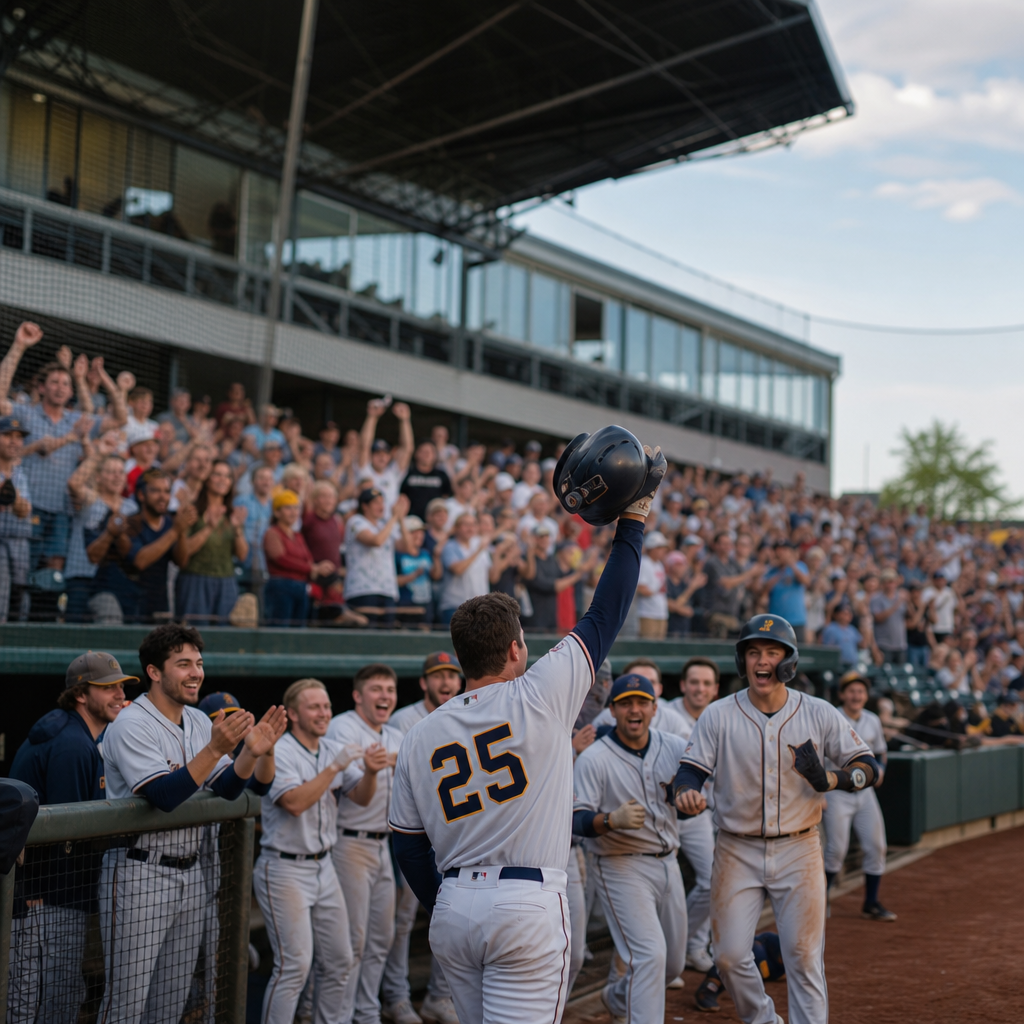
The allure of the underdog has always been central to baseball, but nowhere is it more vivid than in the minor leagues. In this world, bus rides replace charter flights, shared apartments replace luxury suites, and every game can reshape a career. Minor league triumphs are not simply feel-good stories; they reveal how player development works, how communities rally around overlooked teams, and why baseball’s deepest drama often unfolds far from the national spotlight. When people talk about minor league baseball, they usually mean the professional farm system affiliated with Major League Baseball, from Triple-A down through Single-A, along with independent and partner leagues that give players another route to professional relevance.
These leagues matter because they sit at the intersection of performance, opportunity, and survival. I have spent years studying player development systems, following affiliate changes, and talking with coaches, scouts, and front-office staff who know that progress is rarely linear. A top prospect can stall in Double-A, while a late-round draft pick or undrafted free agent can become indispensable through consistency, adaptability, and resilience. That unpredictability is the source of the underdog appeal. Minor league triumphs include pennant runs by overlooked clubs, comeback seasons by players returning from injury, breakthrough performances by roster fillers who become regulars, and the sustained success of organizations that build winning cultures despite limited resources.
As a hub for the broader Minor Leagues and College Baseball topic, this article covers the miscellaneous stories, themes, and structural realities that define underdog success across the developmental landscape. It explains why these victories resonate with fans, what conditions make them possible, and how to evaluate them with more than sentiment. It also connects the local charm of minor league baseball with the larger systems of scouting, analytics, player care, and community identity that shape the sport. If you want to understand why a minor league championship, a comeback season, or an unlikely call-up can feel as meaningful as a major league headline, the answer starts here.
Why underdog stories thrive in minor league baseball
Minor league baseball produces underdog narratives because the environment is built on inequality and uncertainty. Roster status, signing bonus size, draft pedigree, age relative to level, and organizational depth all influence who gets attention. A first-round pick usually receives more development time than a 20th-round selection, and an international signee with a large bonus often enters the system with stronger internal protection than a player signed after the draft. Yet games still have to be played, and baseball remains unusually resistant to hierarchy. A pitcher with a plus changeup and command can neutralize a lineup full of higher-profile hitters. A utility infielder who controls the strike zone can outlast a louder athlete with weaker instincts.
That is why minor league baseball so often rewards persistence. The schedule is long, the travel is tiring, and the margins are thin. In Triple-A and Double-A especially, the players who rise are frequently the ones who adjust fastest to failure. Coaches talk constantly about process: swing decisions, chase rate, first-step reads, pitch shapes, recovery routines, and pregame preparation. These details are less glamorous than prospect rankings, but they decide careers. An underdog triumph often looks simple from the outside, but inside the clubhouse it is usually the product of hundreds of small corrections made over months.
Fans respond to these stories because they feel accessible and honest. Major league stardom can seem distant, but minor league success unfolds in a human scale. You can watch a player struggle in April, tweak his stance in May, heat up in June, and earn a promotion in August. You can follow a manager balancing development priorities with the desire to win now. You can see how a small-market affiliate or independent club creates identity through effort, creativity, and connection to place. The underdog story is powerful in any sport, but in the minors it is visible day by day.
What counts as a minor league triumph
A minor league triumph is broader than a championship trophy. Team titles matter, especially because postseason baseball tests depth, bullpen management, and adaptability, but the most important victories in the minors are often developmental. A catcher improving pitch framing and game calling over a full season, a pitcher returning from Tommy John surgery with restored velocity, or an older hitter learning to handle elite spin in Double-A can represent genuine success even without national attention. In player development, outcome and advancement must be measured together. A player can help his club win while also proving he belongs at a higher level.
Some triumphs are statistical. A reliever trimming his walk rate from 13 percent to 7 percent has changed his professional outlook. A hitter raising his on-base percentage through better zone control becomes more than a batting average line. Organizations increasingly use metrics such as weighted on-base average, strikeout-to-walk ratio, ground-ball rate, vertical break, extension, and sprint speed to measure growth. Those tools matter because underdog players rarely survive on reputation alone. They need evidence that their underlying skill is improving, not just their luck on balls in play.
Other triumphs are structural. Independent leagues such as the Atlantic League and the American Association have become proving grounds for players released by affiliated clubs, and partner-league success can reopen doors. College players who were lightly recruited can use summer leagues, junior college transfers, or graduate seasons to create new professional opportunities. Even front offices and coaching staffs can be underdogs. A farm director who modernizes communication between analytics and on-field staff, or a low-level affiliate that invests in nutrition and recovery, can change the trajectory of dozens of players. In that sense, a minor league triumph is any meaningful success earned without the advantages people expected to matter most.
How overlooked players turn into legitimate prospects
Overlooked players become legitimate prospects through skill specificity, adaptability, and timing. In my experience evaluating farm systems, the under-the-radar players who break through usually do one thing extremely well before they become more complete. A hitter may begin with elite contact ability, a pitcher with unusual deception, or an outfielder with route efficiency and closing speed. Development staffs can build around a carrying tool if the player is coachable and physically durable. The key is translating a narrow strength into a broader major league profile.
Consider the common path of the late-blooming pitcher. He arrives with average velocity but above-average command and feel for a breaking ball. Over a year, the organization improves his lower-half mechanics, adjusts his pitch mix, and uses high-speed video and devices such as TrackMan, Rapsodo, and Hawk-Eye to refine movement and release consistency. Suddenly his fastball plays better because the shape pairs cleanly with his slider, and his chase rate jumps. He has not become a different athlete; he has become a better optimized one. That is a classic minor league underdog triumph.
Hitters often follow a similar pattern. An unheralded corner infielder may start by cutting swing length, improving swing decisions, and learning which zones to attack early in counts. With stronger contact quality and fewer noncompetitive at-bats, he forces the organization to promote him. This is why prospect status should always be treated as provisional. Rankings are useful snapshots, not fixed verdicts. The minors reward players who absorb information quickly and convert it into game performance.
| Underdog path | Typical obstacle | What changed | Result |
|---|---|---|---|
| Late-round college hitter | Limited power projection | Better swing decisions and bat path efficiency | Higher on-base percentage and promotion |
| Released pitcher in an independent league | Inconsistent command | Refined mechanics and simplified pitch mix | Contract with affiliated club |
| Lightly recruited college transfer | Low visibility to scouts | Strong summer-league performance and measurable gains | Draft selection or free-agent deal |
| Defense-first utility player | Weak offensive track record | Improved contact quality and plate discipline | Everyday role and organizational value |
The role of coaches, analysts, and front offices in unlikely success
Underdog triumphs are often framed as individual grit, but baseball development is collaborative. Good organizations reduce noise for players. Hitting coordinators, pitching coaches, strength staff, athletic trainers, mental skills coaches, and analysts all contribute to the breakthrough that fans see as sudden. The best systems do not drown players in information. They identify one or two adjustments with the highest expected impact and communicate them clearly. That discipline is a competitive advantage.
Modern player development depends on integration. Analysts may spot that a pitcher’s induced vertical break dropped after a mechanical change, while the pitching coach notices the altered hand position causing it. The athletic trainer may connect that issue to shoulder fatigue, and the strength staff may adapt the weekly workload. This is what real development looks like: not abstract data worship, but coordinated problem solving. Organizations that do this well can create more underdog winners because they extract value from players other teams overlook.
Front offices also shape triumph through assignments and patience. Promoting a player too fast can break confidence; leaving him too long at a level can stall motivation. Smart clubs calibrate challenge. They ask whether the player is merely surviving or actually mastering the tasks that matter for the next level. Winning affiliates often reflect this judgment. They are not just stocked with talent; they are staffed by people who know when to push, when to stabilize, and when to redefine a player’s role.
Why minor league teams matter to their cities
Underdog success in the minors resonates because these teams belong to communities in a direct way that major league clubs often cannot. Minor league parks are woven into local routine. Families return every summer, businesses sponsor nights at the ballpark, and fans know they may be watching a future major leaguer before the wider baseball world notices. When a minor league team exceeds expectations, the city feels included in the climb. The club’s identity becomes a point of civic pride.
That local connection is especially strong when the team reflects the region’s culture through branding, promotions, and partnerships. Some clubs embrace historic names, food traditions, or industrial heritage. Others build deep relationships with youth baseball programs, schools, and charities. These efforts are not cosmetic. They create fan loyalty that can sustain attendance through affiliate changes, roster turnover, and uneven on-field results. When an underdog team makes a playoff push, the energy in the community is real because people have invested in the club as neighbors, not just consumers.
There is also an economic dimension. Minor league teams support seasonal employment, nearby restaurants, downtown foot traffic, and tourism tied to special events. While they are not economic miracles, well-run clubs can be meaningful local anchors. A surprise winning season amplifies that effect. More importantly, it gives communities a story that feels earned. In an era when professional sports can seem increasingly corporate, minor league baseball still delivers a version of success rooted in place.
College baseball, independent leagues, and the wider underdog pipeline
The minor league underdog story does not begin only after the draft. College baseball and independent leagues are essential parts of the same pipeline, especially for players who develop late or fall outside standard recruiting channels. Junior colleges have long been a lifeline for athletes who need more reps, academic reset options, or time to mature physically. The transfer portal has made movement more visible, but the principle is old: talent development is uneven, and alternate routes matter.
Summer collegiate leagues such as the Cape Cod League, Northwoods League, and Coastal Plain League remain important because they place players in wood-bat environments against concentrated competition. Scouts use these leagues to test whether college production translates beyond metal bats and familiar conference opponents. A player who was lightly recruited out of high school can dramatically alter his profile with one excellent summer. That is underdog progress in its purest form: performance creating visibility.
Independent leagues serve a similar purpose for professionals. They are not backup plans in a trivial sense; they are active labor markets where players continue to refine skills under pressure. MLB organizations sign players from these leagues every year, especially pitchers with one playable major league trait or position players who prove they can handle velocity and defend a premium spot. The broader lesson is clear: baseball advancement is not a single ladder. It is a network of chances, and underdogs survive by using every viable rung.
How fans can follow and appreciate minor league triumphs
Fans who want to appreciate minor league triumphs should watch for development patterns, not just highlight moments. Start with role and age. A 24-year-old repeating High-A is judged differently from a 20-year-old holding his own in Double-A. Then look at indicators beneath the surface. For hitters, walk rate, strikeout rate, isolated power, and performance against same-side pitching reveal more than batting average alone. For pitchers, strike percentage, swing-and-miss rate, home-run suppression, and how often they work ahead in counts provide better context than wins.
Reliable sources help. MLB Pipeline, Baseball America, FanGraphs, team player-development reports, Statcast-style data where available, and local beat coverage all provide useful context. Yet in-person observation still matters. You learn a lot by seeing how a catcher manages tempo, how an infielder positions himself before the pitch, or how a hitter adjusts after a poor at-bat. Minor league baseball rewards attentive fans because the story is often in the details.
The best way to support these underdog stories is simple: show up, follow the affiliates, and stay curious about the players who are not yet famous. Minor league triumphs remind us that baseball’s most compelling victories are often built far from the spotlight, through repeated adjustments, strong local support, and belief sustained longer than outside expectations. For readers exploring the wider world of Minor Leagues and College Baseball, this miscellaneous hub offers the essential lens: if you want to understand the sport’s future and its heart, pay attention to the underdogs, because they reveal how baseball really works.
Frequently Asked Questions
Why are minor league underdog stories so compelling in baseball?
Minor league underdog stories resonate because they strip baseball down to its most human and emotional core. In the minor leagues, players are rarely protected by fame, massive contracts, or guaranteed opportunities. Instead, they are fighting every day to prove they belong, often while navigating long bus rides, modest pay, unfamiliar cities, and the constant uncertainty of roster changes. That reality makes every breakthrough feel earned in a way that is especially powerful for fans. When a lightly regarded prospect has a breakout season or a team with little national attention wins against the odds, it reflects perseverance, adaptability, and belief rather than pure star power.
These stories also reveal a side of the sport that many fans find more authentic and relatable. Minor league players are not distant celebrities; they are often young athletes learning how to handle failure, pressure, and ambition in public. Their triumphs carry the emotional weight of years of work that may or may not lead to the major leagues. That uncertainty is part of the appeal. A walk-off hit in a small stadium, a dominant outing from an overlooked pitcher, or a championship run by a team few outsiders expected to matter can feel deeply meaningful because the stakes are intensely personal. In many ways, the minor leagues preserve the raw drama of baseball, where hope remains fragile and every success feels like it could change a life.
How do minor league triumphs reflect the true process of player development?
Minor league triumphs offer one of the clearest windows into how player development actually works. Development is rarely a straight line, and the minor leagues are where that reality becomes visible. A player may enter professional baseball with impressive tools but still need years of refinement in mechanics, mental approach, conditioning, and situational awareness. Success at this level often comes not from instant dominance, but from adjustment. A hitter might learn to recognize breaking balls more consistently. A pitcher may add a new pitch or improve command. A defender could sharpen footwork and positioning until routine plays become automatic. When those improvements finally translate into winning performances, fans are seeing the result of careful coaching and relentless repetition.
Underdog success in the minors also highlights how development includes resilience as much as skill. Many players struggle at one level, get sent down, return from injury, or enter a season overlooked by prospect rankings. When they rebound and contribute to meaningful team success, it demonstrates that growth in baseball is often uneven and deeply psychological. The minor leagues teach players how to recover from failure, stay prepared, and compete under pressure while their future remains uncertain. That makes triumphs at this level especially significant. They are not just exciting moments on the field; they are evidence that the development system can transform raw potential into dependable performance, often in ways that casual fans do not see until much later.
What role do local communities play in celebrating minor league team success?
Local communities are essential to the energy and meaning of minor league triumphs. Unlike major league franchises, which often operate on a national or even global stage, minor league teams are woven tightly into the daily life of their cities and towns. Fans attend games not only to watch baseball, but to gather with neighbors, support local traditions, and connect with a team that feels accessible. Players may appear at school events, charity functions, and community celebrations, creating a bond that is far more direct than what most fans experience at the highest professional level. When a minor league club makes a surprising run or captures a title, the celebration belongs to the whole community.
That connection gives underdog success added emotional depth. A winning streak or playoff push can energize a town, boost attendance, and create a shared sense of pride around a team that is often overlooked outside its region. Families who have watched players grow over the course of a season feel invested in the outcome, and local businesses often become part of the atmosphere as the team gains momentum. Minor league baseball thrives on intimacy, and that intimacy turns victories into community events rather than distant media storylines. In many cases, the triumph of a minor league underdog reflects not just the effort of the players and coaches, but the loyalty of the people who supported them long before anyone else paid attention.
Why do minor league games often feel more dramatic than games in the national spotlight?
Minor league games can feel more dramatic because the stakes are layered in ways that go beyond the scoreboard. In the major leagues, the focus is usually on championships, standings, and established stars. In the minor leagues, every game also carries career consequences for individual players. A strong week can earn a promotion. A slump can jeopardize a roster spot. A relief appearance, a defensive play, or a clutch at-bat may influence how an organization evaluates a player’s future. That creates a sense of urgency that is hard to replicate. Fans are not just watching a game unfold; they are watching careers evolve in real time.
The setting also heightens the drama. Minor league ballparks are smaller, crowds are closer to the field, and the environment often feels more immediate and personal. There is less distance between effort and reaction. A comeback win, a breakout performance, or a postseason upset can feel especially intense because fans can sense the raw emotion of the players involved. These are athletes chasing a dream under conditions that are far from glamorous, and that context adds weight to ordinary baseball moments. The result is a style of drama that feels less manufactured and more intimate, where the tension comes from ambition, uncertainty, and the knowledge that something meaningful may be happening just outside the national spotlight.
What can fans learn from celebrating minor league triumphs and underdog teams?
Celebrating minor league triumphs teaches fans to appreciate baseball in a fuller and more nuanced way. It shifts attention away from celebrity and toward process, persistence, and growth. Fans who follow underdog teams in the minors gain a better understanding of how success is built: through player development, coaching, small adjustments, and the ability to handle adversity over time. They also see that meaningful baseball is not limited to nationally televised games or famous franchises. Some of the sport’s richest stories unfold in smaller parks, before smaller crowds, among players still trying to earn recognition.
There is also a broader lesson about perspective. Underdog teams remind fans that achievement is not only about reaching the very top, but about overcoming obstacles, creating memorable moments, and inspiring a community along the way. A minor league championship, a late-season surge, or the rise of an overlooked player can embody the values that make baseball enduring: patience, resilience, hope, and belief in improvement. For many fans, that is the heart of the game. By celebrating minor league triumphs, they are not simply honoring unexpected winners; they are recognizing the part of baseball where effort is most visible, dreams are most vulnerable, and the sport’s emotional power is often at its strongest.