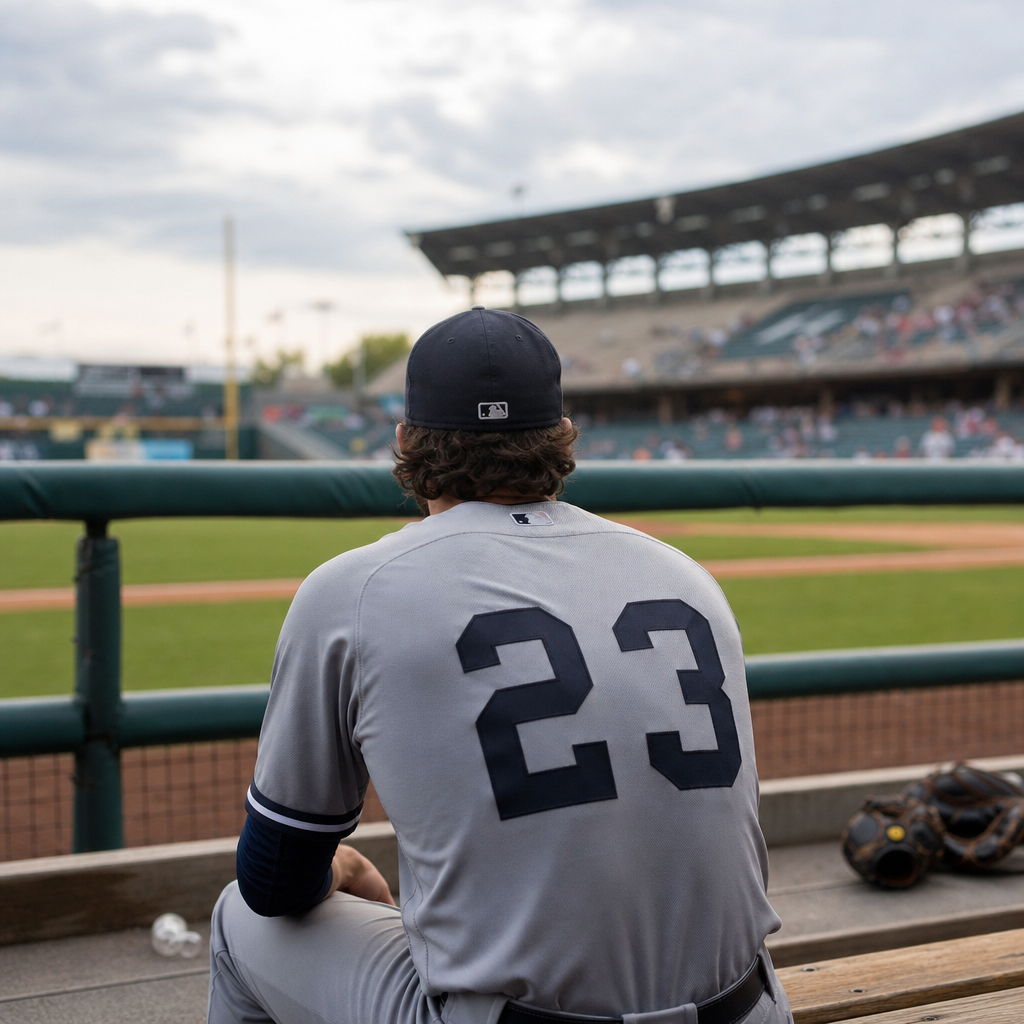
Success looks different when your clubhouse is a cramped bus, your salary barely covers rent, and your future depends on learning through failure in public. In the minor leagues, winning is not measured only by promotions, batting averages, or prospect rankings. It is measured by adaptability, consistency, resilience, and the ability to keep improving when recognition is scarce. That is why life lessons from the minor leagues resonate far beyond baseball. They reveal how people build character in uncertain environments, how teams function under pressure, and how ambition survives routine setbacks.
For readers exploring Minor Leagues and College Baseball, this miscellaneous hub matters because it connects the human side of development with the practical realities of the game. The minor leagues are professional baseball’s training ground, while college baseball often serves as a proving ground for skill, maturity, and draft value. Together, they form an ecosystem where players, coaches, scouts, front-office staff, and families redefine what progress actually means. I have covered and worked around player development conversations long enough to see the same pattern repeatedly: the athletes who last are not always the most naturally gifted. They are often the ones who learn to accept delayed gratification, absorb feedback, and stay useful to a team in changing roles.
Redefining success means replacing a narrow outcome with a broader standard. Instead of asking only, “Did this player reach the majors?” a better question is, “What habits, judgments, and relationships were built along the way?” That shift matters for athletes, parents, and fans because the path is volatile. Injuries, roster crunches, swing changes, transfer decisions, and coaching philosophies can alter a career quickly. Yet those same pressures teach durable lessons about work, identity, leadership, and perspective. This hub article introduces the themes that connect the broader miscellaneous side of minor league and college baseball coverage, so readers can understand not just how players advance, but how the journey itself reshapes the meaning of achievement.
Why the Minor Leagues Change the Definition of Success
The minor leagues force a simple truth into view: performance matters, but circumstances matter too. A player can execute a development plan, improve exit velocity, sharpen swing decisions, and still remain blocked by organizational depth. Another player can post modest numbers while earning trust because he catches well, prepares professionally, and can help pitchers through difficult innings. In that environment, success becomes multidimensional. It includes availability, coachability, role acceptance, and the ability to make sustainable adjustments.
That is one reason minor league baseball teaches lessons that apply off the field. Most people work in systems where promotions are limited, resources are uneven, and results are influenced by factors outside individual control. Players live that reality daily. They learn to focus on controllable inputs: sleep, preparation, recovery, routines, communication, and response to adversity. Organizations increasingly track these details through force plates, bat sensors, high-speed video, TrackMan, Hawk-Eye, and individualized strength plans. Yet the most important takeaway is not the technology itself. It is the mindset the technology supports: improve what you can measure, and stay steady when the larger timeline remains uncertain.
College baseball reinforces this lesson in a different way. A player balancing classes, travel, training, and roster competition learns quickly that talent alone is not enough. The most successful college programs build daily standards around accountability and repeatable habits. Those standards often prepare players for professional baseball better than gaudy statistics do. Readers interested in this subtopic should view the minor leagues and college baseball as connected classrooms for ambition, where pressure reveals values and routine builds identity.
What Players Learn About Failure, Adjustment, and Growth
Failure is the default setting in baseball, and the minor leagues make that impossible to ignore. A hitter who fails seven out of ten times can still be valuable. A pitcher can execute a quality pitch and still give up a bloop single. Over a long season, randomness and skill coexist. The players who endure are the ones who separate outcome from process without becoming detached from accountability. That balance is difficult, and it is one of the sport’s most useful life lessons.
I have seen development staffs explain a rough month with more nuance than fans expect. They are not ignoring the stat line. They are asking better questions. Is the hitter chasing less? Is his contact quality improving? Is the pitcher landing his breaking ball for strikes? Is his fastball shape playing better at the top of the zone? Modern player development values underlying indicators because surface performance can lag behind real improvement. That perspective matters for anyone trying to build a career. Growth often appears in skills before it appears in rewards.
Adjustment is equally central. A college slugger may dominate with raw strength, then enter pro ball and discover that advanced sequencing exposes his timing. A hard-throwing reliever may find that velocity alone is not enough without command and a secondary pitch. The best response is not panic. It is structured adaptation: diagnose the problem, test a change, gather feedback, and repeat. This cycle mirrors effective learning in any profession.
| Challenge | Common Baseball Response | Broader Life Lesson |
|---|---|---|
| Extended slump | Review mechanics, refine approach, trust routine | Do not abandon a sound process because of short-term noise |
| Role change | Learn new responsibilities quickly | Adaptability often creates opportunity |
| Injury setback | Commit to rehab, maintain discipline, rebuild gradually | Recovery requires patience and consistency |
| Unexpected demotion | Accept feedback, target specific improvements | Setbacks can become usable information |
That framework is why life lessons from the minor leagues remain so durable. The game rewards honest self-assessment, not excuses. At the same time, it punishes perfectionism. Players must make peace with being unfinished while still chasing excellence. That is a mature definition of success.
The Hidden Curriculum: Money, Travel, and Daily Discipline
One reason the minor leagues produce grounded perspectives is that the lifestyle strips away fantasy. Even with recent pay improvements, many players still live modestly, share apartments, manage long bus rides, and eat on tight schedules. For years, low wages were one of the most criticized parts of the system, and that criticism was justified. Major League Baseball’s 2022 housing policy improved conditions by requiring clubs to provide housing for most minor leaguers, but the broader lesson remains: professional development often happens under imperfect conditions.
Those realities create a hidden curriculum. Players learn budgeting, time management, recovery discipline, and emotional regulation. A 12-hour overnight trip followed by early work on the field tests more than athletic skill. It tests professionalism. Veterans who survive these environments usually become excellent examples for younger teammates because they know how to function when convenience disappears. They pack intentionally, protect sleep where possible, maintain hydration, and keep routines simple enough to survive travel chaos.
College baseball offers its own version of this education. Scholarship limits, class demands, strength sessions, film review, and weekend series create compressed schedules that expose weak habits quickly. Players who thrive usually learn to plan backwards from game time, prioritize recovery, and communicate with coaches and professors early. Those are ordinary skills, but they become career separators because they support consistency. In both college and the minors, discipline is not glamorous. It is practical. It is the reason one player keeps progressing while another with similar talent stalls out.
Teamwork, Leadership, and Identity Beyond the Stat Line
Baseball is deeply individual in measurement and deeply collective in reality. Every player has a line on the back of a card, but development depends on relationships. Catchers guide young pitchers through bad innings. Utility infielders keep a bench ready. Strength coaches monitor workloads. Athletic trainers preserve availability. Hitting coaches translate complex concepts into one actionable cue. When people talk about clubhouse culture, they often make it sound vague. It is not vague at all. It is the daily accumulation of trust, preparation, honesty, and emotional steadiness.
The minor leagues are especially revealing because players are competing with and depending on one another at the same time. That tension is healthy when managed well. It teaches athletes to hold ambition without becoming selfish. The most respected players I have observed are rarely the loudest. They are the ones who prepare seriously, treat staff with respect, and make teammates better without turning every interaction into self-promotion. Leadership in this setting often looks like credibility, not speeches.
This is also where identity gets tested. If success means only external validation, the minor leagues can feel brutal. Promotions are uneven. Prospect attention is selective. Some players become roster depth despite strong work habits. Others peak early. Building an identity solely around status is unstable. Players who handle the system best tend to anchor themselves in daily standards: being reliable, staying curious, helping the group, and taking pride in craft. That perspective protects mental health and improves performance because it keeps attention on useful action.
For this miscellaneous hub, that point links many related topics under Minor Leagues and College Baseball: player routines, coaching communication, transfer decisions, draft expectations, clubhouse culture, mental performance, and long-term career planning. They all ask the same underlying question: who are you when the game stops rewarding you immediately?
How Families, Coaches, and Fans Can Apply These Lessons
The lessons from the minor leagues are most useful when non-players apply them accurately. Parents should understand that development is uneven and that confidence grows from competence, not constant praise. Coaches should remember that honest feedback works best when it is specific, timely, and tied to a realistic plan. Fans should appreciate that a box score never captures the full developmental picture. A 2-for-4 night can hide poor swing decisions; an 0-for-4 can include excellent at-bats and hard contact. Context matters.
For college players deciding whether to transfer, sign professionally, or remain in school, the best framework is not glamour or impatience. It is fit. Does the environment match the player’s developmental needs? Is there a credible plan for reps, strength gains, pitch design, swing changes, or defensive growth? Strong programs and strong organizations do not promise easy outcomes. They provide structure, language, and measurable checkpoints. That is what serious development looks like.
Readers using this hub should treat success as layered. The top layer is visible achievement: conference honors, promotions, draft position, major league arrival. The deeper layer is capability: resilience, self-awareness, routine, adaptability, and trustworthiness. The deepest layer is perspective: understanding that meaningful careers are built, not granted. Baseball teaches this relentlessly because the game resists entitlement. It rewards preparation, exposes shortcuts, and keeps asking for adjustment.
That is why redefining success through the minor league lens is so valuable. It shifts attention from image to substance. It helps athletes survive uncertainty, helps families set healthier expectations, and helps fans appreciate the intelligence and discipline behind development. Explore the broader Minor Leagues and College Baseball coverage through this hub with that mindset. Look for the stories behind the statistics, the systems behind the performance, and the habits behind the breakthroughs. The numbers matter, but the lessons last longer. When you understand that, you understand the real value of the journey.
Frequently Asked Questions
What does “redefining success” really mean in the context of the minor leagues?
In the minor leagues, success is rarely as simple as a stat line, a promotion, or a highlight reel. For many players, coaches, and staff, success means learning how to grow in an environment where comfort, recognition, and certainty are in short supply. Long bus rides, modest pay, inconsistent facilities, and constant evaluation force people to confront a deeper question: what does progress look like when external rewards are limited? In that setting, success often becomes less about immediate results and more about daily habits, emotional discipline, preparation, and the ability to respond well to setbacks.
That is what makes the minor-league experience such a powerful metaphor for life. Many people spend years working hard without public recognition, trying to improve in careers, relationships, or personal goals that do not offer instant validation. The minor leagues show that meaningful success can be measured by consistency, resilience, coachability, and the willingness to improve one day at a time. A player who learns to adjust after failure, stay committed during uncertainty, and keep showing up with purpose is building a version of success that lasts far beyond baseball. In that sense, redefining success means shifting the focus from applause to growth, from status to substance, and from short-term outcomes to long-term character.
Why do life lessons from the minor leagues resonate beyond baseball?
Life lessons from the minor leagues resonate because the environment strips away illusion and reveals what sustainable growth actually requires. It is easy to talk about perseverance, humility, and hard work in abstract terms, but the minor leagues put those qualities to the test every day. Players often perform under pressure while exhausted, underpaid, overlooked, and uncertain about what comes next. They have to keep improving without guarantees. That reality mirrors experiences many people face outside sports, whether they are building a business, starting over in a new career, supporting a family, or pursuing a goal that takes years to develop.
The lessons are universal because they are rooted in conditions most people recognize: delayed gratification, public mistakes, competition, instability, and the need to keep moving forward without constant encouragement. The minor leagues teach that growth often happens in unglamorous places. They show that discipline matters when motivation fades, that adaptability matters when plans change, and that identity cannot depend entirely on external success. Those are not baseball lessons alone; they are leadership lessons, career lessons, and personal development lessons. That is why stories from the minor leagues often feel so relatable. They remind people that progress is often quiet, uncomfortable, and slow, but still deeply meaningful.
How do the minor leagues teach resilience in a way that applies to everyday life?
The minor leagues teach resilience by making failure visible, frequent, and impossible to avoid. Even talented players experience slumps, errors, demotions, injuries, and difficult stretches where effort does not immediately produce results. What matters is not whether adversity arrives, but how they respond when it does. Players learn to separate one bad game from their long-term identity, to make adjustments without spiraling emotionally, and to continue preparing with intention even when confidence is shaken. That process builds a practical form of resilience, not the motivational kind based on slogans, but the steady kind built through repetition and accountability.
In everyday life, the same principle applies. People face rejection, stalled progress, financial pressure, burnout, and moments when they feel overlooked or behind. The minor-league mindset offers a useful framework: control what you can control, learn from what happened, and return to the work. Resilience is not pretending that disappointment does not hurt. It is developing the capacity to absorb setbacks without losing direction. It is learning to recover, recalibrate, and keep improving. The minor leagues demonstrate that resilience is often built in ordinary moments, through routines, perspective, and persistence. That makes the lesson both relatable and realistic. Most people do not need perfect conditions to grow; they need the ability to continue growing when conditions are imperfect.
What role do adaptability and consistency play in achieving long-term success?
Adaptability and consistency are two of the most important survival skills in the minor leagues, and together they form a powerful model for long-term success in any field. Adaptability matters because circumstances are constantly changing. A player may switch positions, work with a new coach, face stronger competition, recover from injury, or be asked to alter mechanics and routines on short notice. Those who resist change often stall. Those who stay teachable and flexible give themselves a better chance to improve. Adaptability is not about abandoning standards; it is about adjusting intelligently while staying committed to the larger goal.
Consistency is equally important because growth rarely comes from occasional effort. In the minor leagues, the people who endure are often the ones who bring the same professionalism to ordinary days that they bring to important ones. They prepare, recover, study, compete, and repeat, even when no one is watching. That principle applies directly to life outside baseball. Careers are built through reliable habits, not isolated bursts of intensity. Relationships are strengthened by steady presence, not occasional grand gestures. Personal growth happens when people keep doing the right things long enough for the results to compound. The lesson is clear: adaptability helps you respond to change, and consistency helps you stay grounded through it. Together, they create a version of success that is durable, not fragile.
How can someone apply the lessons of the minor leagues to their own definition of success?
Applying the lessons of the minor leagues begins with redefining what progress looks like in your own life. Instead of measuring success only by titles, income, recognition, or major milestones, it helps to ask better questions. Are you becoming more disciplined? Are you handling setbacks with greater maturity? Are you improving your skills, honoring your commitments, and staying focused on what matters even when rewards are delayed? The minor leagues teach that progress is often internal before it becomes visible. That mindset can change how people approach work, ambition, and personal goals.
It also helps to build a routine around controllable actions. In the same way a player cannot control every roster decision or every result on the field, most people cannot control every opportunity, market condition, or outside opinion. What they can control is preparation, effort, attitude, learning, and recovery. Defining success through those daily choices creates a stronger foundation than relying only on external markers. Over time, this approach leads to greater confidence because it is rooted in substance rather than comparison. The deeper lesson from the minor leagues is that success is not just reaching a higher level. It is becoming the kind of person who can endure pressure, embrace growth, and keep moving forward with purpose. That definition is not only more realistic; it is often far more meaningful.