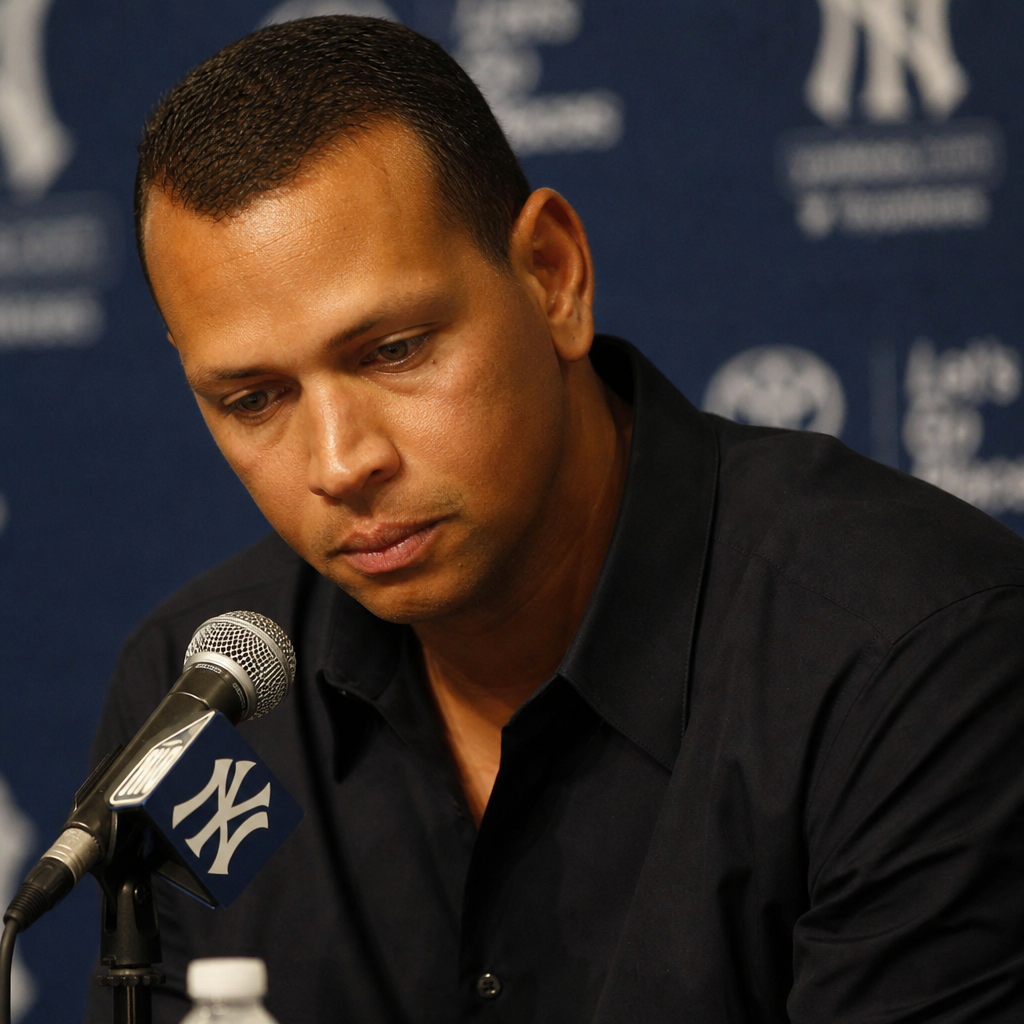
Performance-enhancing drugs have altered careers, records, reputations, and the public’s trust in professional sports, and few stories capture that collision more clearly than Alex Rodriguez’s long descent from baseball icon to cautionary example. In sports, performance-enhancing drugs, often shortened to PEDs, refer to banned substances or methods used to improve strength, recovery, endurance, focus, or body composition beyond what governing rules allow. In Major League Baseball, the PED conversation includes anabolic steroids, testosterone, human growth hormone, stimulants, masking agents, and blood-related manipulation, all regulated through the league’s Joint Drug Prevention and Treatment Program. Rodriguez, widely known as A-Rod, became one of the defining figures in this debate because his case touched nearly every fault line at once: superstar economics, record-book integrity, labor rules, media exposure, and fan disillusionment.
I have worked on sports controversy coverage long enough to know that PED stories are never only about chemistry. They are about incentives. Rodriguez’s arc matters because it shows how the pressures of elite competition can intersect with weak oversight, personal ambition, clubhouse culture, and a public appetite for impossible numbers. He was not a fringe player trying to survive on a roster bubble. He was one of the most gifted shortstops and third basemen ever, a former No. 1 draft pick, a three-time American League Most Valuable Player, and the owner of one of the most lucrative contracts in North American sports. When a player of that stature is linked to PED use, the scandal stops being isolated misconduct and becomes a referendum on an entire era.
This hub article examines A-Rod’s fall from grace as a central case within sports scandals and controversies, while also serving as a broader gateway to the miscellaneous issues surrounding PED use. That includes how MLB testing evolved, why the Biogenesis investigation became so damaging, what his suspension established, how sponsorship and Hall of Fame debates changed, and why this case still shapes how leagues handle cheating, accountability, and image repair. If you want to understand what performance-enhancing drugs did to baseball’s credibility, A-Rod is one of the most important stories to study.
The Rise of A-Rod and the Conditions That Enabled the Scandal
Alex Rodriguez entered professional baseball with immense expectations and, for years, appeared to justify every bit of them. Drafted first overall by the Seattle Mariners in 1993, he reached the majors at 18 and quickly established himself as a rare talent: premium defense at shortstop, elite bat speed, plate discipline, and uncommon power for a middle infielder. By the time he moved through Seattle, Texas, and then New York, he was not simply productive. He was historic. Rodriguez finished his career with 696 home runs, over 3,000 hits, and 2,086 runs batted in, totals that would normally make Hall of Fame induction automatic. Yet the era that amplified those numbers also normalized suspicion.
Baseball in the late 1990s and early 2000s was still living through the aftershocks of the 1994 strike, and offensive explosions helped pull fans back. Home run chases drove television ratings, newspaper sales, and national conversation. Clubs had enormous financial incentives to reward elite production, and players understood that one extraordinary season could reshape a career’s earnings. In that environment, baseball’s anti-doping enforcement lagged badly behind both public concern and common clubhouse knowledge. Formal testing came late. Penalties were initially limited. Human growth hormone testing did not exist for years because there was no validated blood test available under the collective bargaining framework.
That does not excuse individual decisions, but it explains the landscape. Rodriguez later admitted using banned substances from 2001 to 2003 while with the Texas Rangers, saying he felt “an enormous amount of pressure” after signing his 10-year, $252 million contract, a record at the time. That explanation fits what investigators, former players, and league officials have described repeatedly: PED use thrives where performance pressure, money, and uneven detection coexist. Rodriguez was a generational player, but he was also operating inside a system that had not yet imposed credible deterrence.
The First Major Admission and the Damage to Credibility
The first major blow landed in 2009 when Sports Illustrated reported that Rodriguez had tested positive for two anabolic steroids during MLB’s anonymous 2003 survey testing. Those tests were originally designed to determine whether mandatory leaguewide testing should begin, and they were not supposed to identify individual players publicly. The leak was explosive because Rodriguez had long presented himself as cleaner and more polished than other stars associated with the steroid era. He had denied using PEDs in a 2007 interview, and many fans had viewed him as a plausible future home run king untouched by scandal.
Rodriguez responded by admitting that he used substances while in Texas from 2001 through 2003. He said the period involved “loosey-goosey” culture, poor guidance, and personal immaturity. From a crisis-management perspective, the admission was partial, strategic, and insufficient. It addressed a limited timeframe tied to evidence already in circulation. It did not satisfy critics asking whether his explanation covered the full extent of use. In sports scandals, credibility rarely collapses from one act alone; it erodes when statements appear reactive rather than complete. That is exactly what happened here.
The consequences extended far beyond one player. The revelation strengthened the public perception that baseball’s statistical landscape had been chemically distorted. It also made every milestone Rodriguez chased harder to celebrate. Home runs became arguments. Awards became qualifications. Even when he performed well, the conversation moved from achievement to authenticity. In practical terms, that is the enduring cost of a PED scandal: the athlete loses control over the meaning of his own accomplishments.
Biogenesis, MLB’s Investigation, and the Historic Suspension
If the 2009 admission cracked Rodriguez’s reputation, the Biogenesis case shattered it. Biogenesis of America was an anti-aging clinic in South Florida linked to Anthony Bosch, who was accused of supplying banned substances to several professional athletes. Beginning in 2013, MLB pursued records, witnesses, and legal pressure to establish who had obtained PEDs through Bosch and related channels. The investigation was unusually aggressive for the league. MLB filed lawsuits, negotiated with potential sources, and assembled documentary evidence including clinic notes, text messages, payment trails, and testimony.
Rodriguez became the central target because the evidence suggested not only repeated acquisition of banned substances after his earlier admission, but also efforts to obstruct the league’s investigation. Under MLB’s Joint Drug Agreement, penalties are shaped not just by use, but by conduct undermining enforcement. In August 2013, MLB suspended Rodriguez for 211 games, citing multiple violations over multiple years and obstruction. He appealed, which allowed him to keep playing through the remainder of the 2013 season, but arbitrator Fredric Horowitz ultimately reduced the penalty to 162 regular-season games plus the 2014 postseason. It was still the longest non-lifetime suspension ever imposed on an MLB player under the PED program.
The reason this suspension mattered so much is that it marked a turning point in league governance. MLB was signaling that star status would not shield a player from maximal punishment and that sophisticated doping schemes would be pursued beyond a failed drug test. That mattered because anti-doping systems cannot rely only on laboratory positives. Athletes adapt, masking methods evolve, and prohibited substances can be timed around testing windows. Effective enforcement uses non-analytical evidence too, the same principle recognized in global anti-doping practice by the World Anti-Doping Agency.
| Key Moment | What Happened | Why It Mattered |
|---|---|---|
| 2003 survey test | Rodriguez reportedly tested positive during anonymous MLB survey testing | Linked him directly to steroid-era evidence |
| 2009 admission | He admitted PED use from 2001 to 2003 with Texas | Damaged trust and undermined prior denials |
| Biogenesis investigation | MLB tied him to Anthony Bosch and clinic records | Expanded the case beyond earlier admissions |
| 2013 suspension | MLB issued a 211-game ban, later reduced to 162 games | Set a new standard for punishment and deterrence |
How the Scandal Changed His Legacy, the Yankees, and Baseball History
Rodriguez returned in 2015 and, to his credit, produced a strong season at age 39, hitting 33 home runs and posting an .842 OPS. On a narrow baseball level, that comeback was impressive. On a legacy level, it changed very little. By then, the public had already sorted Rodriguez into the category reserved for extraordinary players whose records come with permanent qualifiers. His pursuit of 700 home runs no longer felt celebratory. The Hall of Fame debate shifted from “first ballot” to “should he be excluded entirely,” alongside Barry Bonds, Roger Clemens, and other defining figures of the era.
The New York Yankees also experienced the scandal as an organizational burden. Rodriguez’s contract included milestone marketing implications, luxury-tax considerations, and constant media attention. When the PED case escalated, the Yankees had to navigate legal disputes, public relations strain, and on-field uncertainty tied to one of the sport’s biggest salaries. Teams do not merely employ athletes in scandals; they inherit the operational fallout. Sponsors ask questions, broadcasters reframe coverage, and club leadership must decide whether to defend the player, distance itself, or do both in sequence.
Historically, A-Rod’s case matters because it sits at the intersection of the steroid era and the accountability era. Earlier in baseball’s PED history, stars often benefited from fragmented oversight and ambiguous norms. By the time Rodriguez faced Biogenesis, those conditions had changed. MLB had stronger testing, better investigative coordination, and greater political will to act. His downfall therefore serves as a dividing line. It reminds fans that baseball was not only transformed by drug use, but also by the eventual hardening of enforcement mechanisms designed to restore competitive credibility.
Broader Lessons From the PED Era and Related Miscellaneous Controversies
As a hub within scandals and controversies, the Rodriguez case opens the door to several connected issues that readers should understand. First is the gray market around anti-aging clinics, supplement shops, and “wellness” providers. Many sports doping cases do not begin with a team doctor handing over a syringe. They begin in loosely regulated spaces where testosterone therapy, peptide protocols, or recovery treatments are marketed with medical language that obscures compliance risks. Athletes who outsource judgment to those providers often discover too late that therapeutic framing does not override league rules.
Second is the difference between strict liability and intent. In most anti-doping systems, athletes are responsible for what enters their bodies whether they meant to cheat or not. That standard can appear harsh, but it exists because intent is easy to deny and difficult to prove. Rodriguez’s case was not about contamination or paperwork error; it involved alleged deliberate sourcing and concealment. Still, the broader principle matters for readers exploring miscellaneous PED controversies across sports, from tainted supplements in MMA to therapeutic use disputes in cycling and track.
Third is rehabilitation. Not every athlete linked to PEDs disappears permanently. Some rebuild public standing through transparency, sustained performance under stricter oversight, and credible acknowledgment of harm. Rodriguez partially restored his commercial profile later as a broadcaster and media personality, but the baseball judgment never fully reset. That distinction is important. Public image can recover enough for a second career, while competitive legacy remains unresolved.
Finally, fans should recognize that PED scandals are fundamentally about fairness. Banned substances affect recovery rate, training volume, muscle retention, and resilience over a long season, not just raw home run distance. Even modest artificial gains can reshape roster decisions, contract values, and championships. That is why these controversies persist long after suspensions end. They are disputes over earned advantage, not only broken rules.
What Readers Should Take From A-Rod’s Fall
A-Rod’s fall from grace endures because it compresses the full PED story into one career: brilliance, denial, admission, investigation, punishment, return, and permanent debate. He was talented enough to become one of baseball’s greatest players without scandal, which makes the choices tied to performance-enhancing drugs even more consequential. His case shows that elite ability does not neutralize competitive pressure, and that modern anti-doping systems eventually catch up when evidence accumulates across testing, records, and witness cooperation.
For readers following scandals and controversies, the larger lesson is simple. PED stories are never background noise. They shape league policy, rewrite public memory, and change how every achievement is interpreted. Rodriguez remains essential to this discussion because his career illustrates both the temptations that fueled baseball’s most controversial era and the enforcement response that followed. If you are exploring miscellaneous sports controversies, use this article as your starting point, then continue into related cases involving league discipline, image repair, competitive integrity, and the long shadow of chemically assisted performance.
Frequently Asked Questions
What are performance-enhancing drugs, and why are they such a major issue in professional baseball?
Performance-enhancing drugs, commonly called PEDs, are banned substances or methods used to boost athletic performance beyond what league rules permit. In baseball, that can include drugs intended to increase muscle mass, speed recovery, improve endurance, sharpen focus, or help players withstand the grind of a long season. The issue is so significant because baseball is a sport built on statistics, historical comparison, and public faith in the legitimacy of competition. When PEDs enter the picture, they do not just affect one player’s body or one team’s season. They cast doubt on records, contract value, awards, and the fairness of the game itself.
Major League Baseball has wrestled with PEDs for decades because the incentives are enormous. A slight increase in power, durability, or recovery can translate into better numbers, more playing time, larger contracts, and a longer career. At the same time, fans expect the sport’s achievements to reflect talent, preparation, and legal competition. That tension makes PED scandals especially damaging. They undermine trust not only in individual stars but also in the institutions meant to protect the game. In that sense, the controversy is never just about chemistry or testing. It is about credibility, legacy, and whether the results on the field can still be believed.
Why is Alex Rodriguez’s PED scandal considered one of the defining examples of baseball’s steroid era?
Alex Rodriguez’s story stands out because it involved far more than a single admission or failed test. He was one of the most gifted players of his generation, a superstar with Hall of Fame-level talent, massive contracts, and relentless public attention. Because he was already great, the PED revelations became even more explosive. Fans and analysts were forced to ask not simply whether he cheated, but how those choices reshaped the career of a player who might have been historically elite without them. That question made his case a symbol of the broader uncertainty surrounding baseball’s so-called steroid era.
His scandal also unfolded in stages, which deepened the damage. There were reports linking him to PED use, public denials, later admissions, and then additional controversy tied to investigations and suspensions. Each new development weakened his credibility. Instead of a single moment of disgrace followed by resolution, Rodriguez became a recurring headline in baseball’s long struggle with banned substances. That prolonged descent is why his case is often viewed as a cautionary tale. It showed how PED use can affect every layer of a player’s identity: performance, public image, trustworthiness, and place in the sport’s historical memory.
How did the PED allegations and suspensions affect Alex Rodriguez’s reputation and legacy?
The impact on Rodriguez’s reputation was severe because his baseball accomplishments were never again viewed in isolation. Home runs, awards, contract milestones, and postseason moments all became linked to questions about artificial advantage. For many fans, the issue was not only that he used banned substances, but that his public statements over time made it difficult to trust his version of events. In sports, reputation is shaped as much by perceived honesty as by raw performance, and Rodriguez suffered heavily on that front. Once credibility erodes, every achievement begins to invite skepticism.
His legacy became unusually complicated as a result. On one hand, Rodriguez was undeniably one of the most talented players ever to step onto a baseball field. On the other, PED involvement turned what could have been a relatively straightforward celebration of greatness into an ongoing debate about authenticity and accountability. Hall of Fame discussions, comparisons with other legends, and even casual conversations about his place in history now almost always include the PED issue. That is what makes his fall from grace so instructive. It shows that in modern sports, legacy is not just built by numbers. It is built by trust, and trust can be far harder to recover than a batting average or home run total.
What does A-Rod’s story reveal about the pressure athletes face to use performance-enhancing drugs?
Rodriguez’s case highlights the intense and often uncomfortable reality of elite sports: athletes operate in an environment where performance is constantly measured, compared, monetized, and publicly judged. In Major League Baseball, players compete not only against opponents but against time, injury, expectations, and the economic stakes of their careers. A star player is expected to produce at a high level year after year, often while managing physical wear and tear that most fans never fully see. In that setting, the temptation to seek an edge can become powerful, especially if players believe others may be doing the same.
His story suggests that PED use is rarely just about vanity or greed in a simple sense. It is often connected to fear of decline, pressure to justify contracts, the need to recover quickly, and the desire to remain elite in a brutally competitive system. None of that excuses cheating, but it helps explain why the problem has been so persistent across professional sports. Rodriguez became a high-profile example of what happens when talent, ambition, pressure, and poor decisions collide. His downfall reminds readers that PED scandals are not only about broken rules. They are also about the culture of winning at all costs and the personal compromises athletes may make when success and survival feel inseparable.
How did Major League Baseball respond to PED controversies, and why does A-Rod’s case still matter today?
Major League Baseball responded to years of PED controversy by strengthening its testing programs, increasing penalties, expanding investigative efforts, and working with the players’ union to create a more structured enforcement system. The league gradually moved from a period of loose oversight and public suspicion to a more aggressive stance on deterrence and discipline. Rodriguez’s case became a major test of that system because it involved not just the use of banned substances, but a larger confrontation over evidence, cooperation, discipline, and the league’s authority to protect competitive integrity. His suspension sent a strong signal that MLB was prepared to impose serious consequences on even its biggest stars.
His case still matters because the underlying issues have not disappeared. Fans continue to ask how much trust to place in extraordinary performances, how to judge players from the steroid era, and whether punishment can truly restore confidence in the sport. Rodriguez’s story remains relevant because it sits at the intersection of talent, fame, rule-breaking, and institutional accountability. It serves as a reminder that when a league fails to address PED culture early, the damage can spread far beyond one player. Careers are reinterpreted, records are questioned, and the sport’s moral authority weakens. That is why A-Rod’s fall from grace continues to resonate: it was not just a personal scandal, but a defining chapter in baseball’s larger battle over fairness, truth, and legacy.