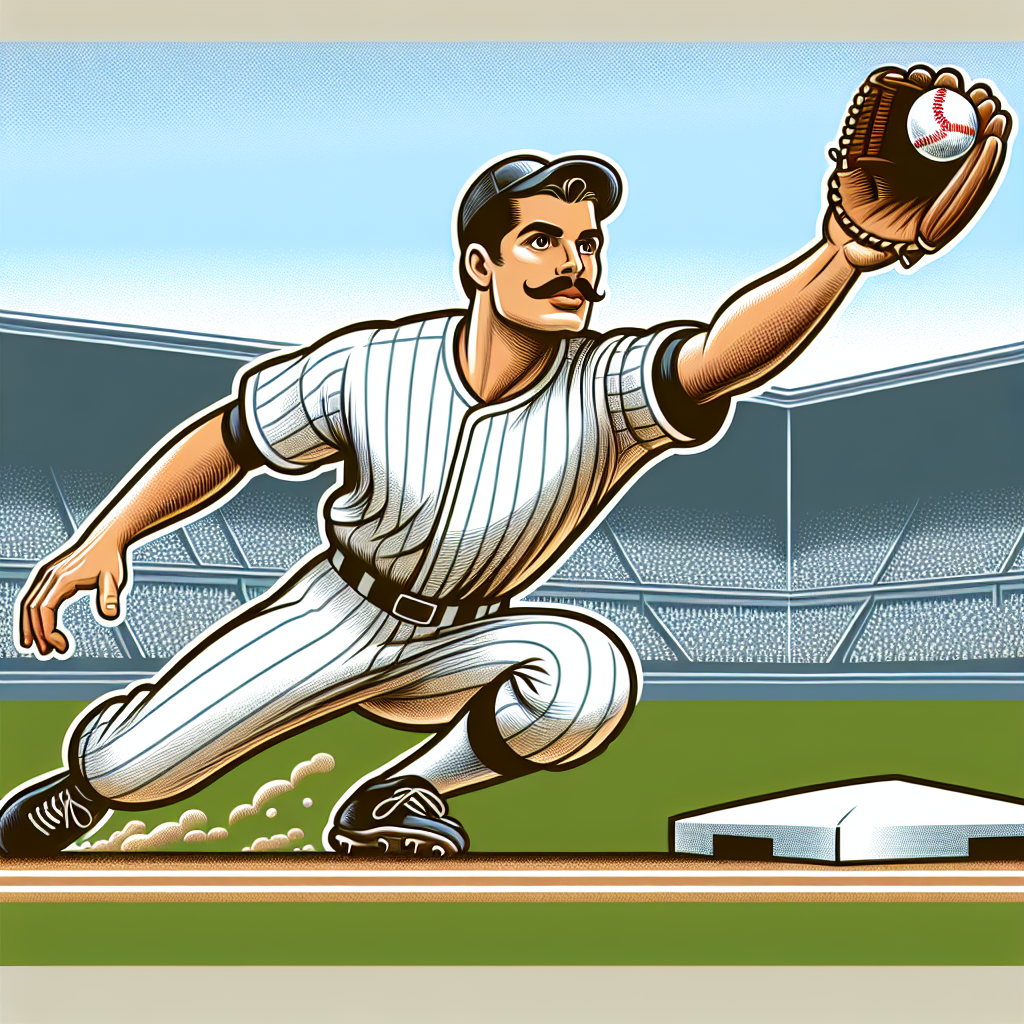
Baseball has a sacred place in American sports culture, with its history rich in legendary players. One name that certainly stands out in the annals of baseball is Keith Hernandez. Renowned for his defensive wizardry and leadership, Hernandez fundamentally altered the role of a first baseman with his unmatched skills. This article delves deep into Keith Hernandez’s career, his astonishing defensive abilities, his batting prowess, and his invaluable on-field leadership, exploring how he etched his name among baseball’s elite players.
Introduction
Keith Hernandez was born on October 20, 1953, in San Francisco, California. From a young age, he displayed an affinity for baseball, a sport that would become his life’s calling. Hernandez’s professional journey began when he was drafted by the St. Louis Cardinals in the 42nd round of the 1971 MLB draft. Little did anyone know at the time that this lowly pick would transform into one of the best first basemen in baseball history. Standing at 6 feet tall and weighing around 195 pounds during his playing days, Hernandez had the perfect build for a stellar defensive presence on the field. His physical form was coupled with an intense competitive spirit and a mind wired for the strategic intricacies of baseball.
During his career, which spanned from 1974 to 1990, Hernandez played primarily for the St. Louis Cardinals and the New York Mets, with a brief stint at the end with the Cleveland Indians. His defensive abilities at first base were nothing short of revolutionary. He ended his career with a .296 batting average, 2,182 hits, 162 home runs, and 1,071 RBIs, impressive statistics that illustrate his well-rounded capabilities. Beyond the numbers, it was Hernandez’s leadership and defensive genius that forever solidified his legendary status.
Defensive Brilliance
Defense is where Keith Hernandez set himself apart from other first basemen. He won 11 consecutive Gold Glove Awards from 1978 to 1988, an enduring testament to his defensive prowess. Keith had a unique approach to playing first base, making him almost an additional infielder. He excelled in fielding bunts and was a master at pivoting to turn double plays, actions typically not expected from a first baseman.
Hernandez’s defensive skill was characterized by extraordinary reflexes, unmatched footwork, and an uncanny ability to predict where the ball was going to be. He had a habit of charging the plate on bunts and fielding the ball with the grace of an elite shortstop, throwing runners out with pinpoint accuracy. This aggressive, proactive style of play transformed the first base position. Keith’s ability to read hitters’ tendencies and positioning himself accordingly made him indispensable to his teams’ defensive schemes.
His defensive contributions extended beyond his physical skills. Hernandez had a keen baseball IQ that allowed him to be a mentor to his fellow infielders and outfielders. He often positioned his teammates, anticipating plays and giving tips on how to handle different situations. His leadership on the field was unparalleled, and his presence significantly improved the defensive efficiency of his teams.
Offensive Contributions
While revered for his defense, Keith Hernandez was no slouch at the plate. His career batting average of .296 speaks volumes about his consistent offensive production. Hernandez had an exceptional eye for the strike zone, ensuring he rarely struck out while frequently drawing walks. Over his career, he accumulated a solid on-base percentage, regularly contributing to his team’s offensive success.
Hernandez’s hitting approach was characterized by consistency and clutch performance. He wasn’t necessarily a home run hitter, but his ability to get on base and drive in runs made him an invaluable asset. His best offensive season came in 1979 when he won the National League MVP award while playing for the St. Louis Cardinals. That season, he posted a .344 batting average, led the league with 48 doubles, and recorded 105 RBIs, proving his mettle as an offensive force.
Moreover, Hernandez’s experience and calm demeanor in pressure situations made him a crucial part of the batting line-up. He had a knack for delivering key hits in crucial situations, making him one of the most respected batters during his era. His balanced approach and adaptability to different pitching styles underlined his batting excellence.
Leadership and Impact on Teams
Keith Hernandez’s leadership qualities were as significant as his playing skills. He was a natural leader both on and off the field, commanding respect and admiration from teammates and opponents alike. Hernandez’s tenure with the New York Mets is often highlighted as a period where his leadership shone brightly. He joined the Mets in 1983, a team then struggling to find its identity. His arrival heralded a new era of success for the franchise.
With Hernandez’s leadership, the Mets transformed into a formidable team by the mid-1980s. The pinnacle of this transformation was the 1986 World Series victory. Hernandez played a massive role in guiding the young Mets team through intense playoff games and the World Series. His calm under pressure, strategic thinking, and ability to inspire his teammates were critical elements in the Mets’ success. His influence extended far beyond the playing field; Keith was known for taking younger players under his wing, teaching them the nuances of the game, and helping them develop their skill sets.
Hernandez’s influence was not restricted to his teammates. His presence altered the opponents’ game plans, as teams had to adapt to his defensive tactics and offensive prowess. Whether it was positioning on bunts or controlling the tempo of the game, Hernandez’s impact was felt by anyone facing him on the field. His leadership also earned him numerous accolades and the reputation of being a true captain, regardless of whether he officially held the title. Post-Playing Career Contributions
After retiring from active play, Keith Hernandez continued to contribute to the sport he loved in various capacities. One of his most notable roles has been as a broadcaster. Hernandez joined the New York Mets television broadcasting team, providing color commentary and expert analysis. His deep understanding of the game and ability to convey insights clearly and engagingly made him a beloved figure in the broadcasting world.
Hernandez’s commentary is appreciated for its frankness and depth. He provides insights that only someone with his experience and expertise can offer. His ability to break down complex plays and strategies makes the game more accessible to casual viewers while offering new angles for seasoned fans. Hernandez’s post-playing career has also involved writing, as he co-authored a few books that provide further insights into his experiences and philosophies around the game.
Beyond broadcasting and writing, Keith Hernandez remains active in community and charitable endeavors. His work often focuses on promoting baseball, youth sports, and other initiatives. Hernandez’s post-playing career demonstrates his ongoing commitment to the game, ensuring that his impact continues to resonate within the baseball community. This enduring presence helps cement his status as not just a former player but a lifelong ambassador of baseball.
Accolades and Legacy
Keith Hernandez’s illustrious career is adorned with numerous accolades that underscore his place among baseball greats. Aside from his 11 Gold Glove Awards and the 1979 MVP, Hernandez was a five-time All-Star and a two-time Silver Slugger Award winner. These awards highlight his all-around excellence in both defensive and offensive aspects of the game.
Hernandez’s contribution to baseball extends beyond his accolades. He redefined what it meant to be a first baseman, setting new standards for defensive play at the position. The effect of his playing style is evident in today’s game, as first basemen are now expected to do much more than just catch throws from other infielders. Hernandez’s aggressive defensive tactics, ability to control the running game, and pitcher’s best friend mentality have become integral aspects of the position.
Moreover, Hernandez’s leadership left an indelible mark on the teams he played for, particularly the New York Mets. His influence was a cornerstone of the Mets’ success during the 1980s, helping create a winning culture that’s still fondly remembered by fans. His legacy is also preserved through his ongoing work in broadcasting, where he continues to educate and entertain baseball fans.
Conclusion
Keith Hernandez’s career in Major League Baseball is a testament to the power of skill, dedication, and leadership. From his revolutionary defensive abilities to his consistent offensive contributions, Hernandez exemplified what it means to be a complete player. His leadership both on and off the field has had a lasting impact on his teammates and the broader baseball community.
Hernandez’s post-playing career has only further cemented his legacy, as he continues to contribute to the game through broadcasting, writing, and various community efforts. His insights and experiences keep enriching the baseball world, making him a valued figure even years after his retirement.
The name Keith Hernandez will forever be associated with excellence in baseball. He not only changed the way first base is played, but he also brought a level of leadership that transformed his teams into champions. For these reasons, Keith Hernandez’s place among baseball’s legends is both well-deserved and enduring.