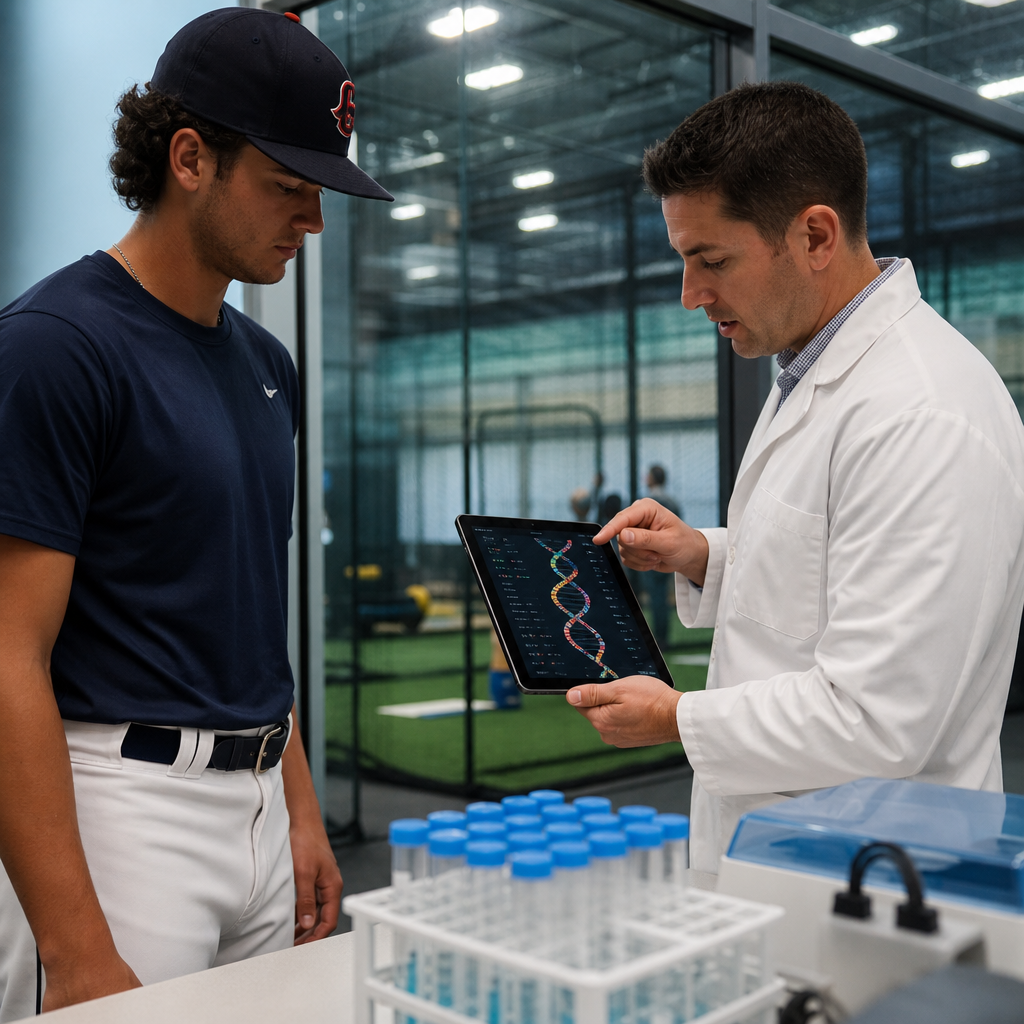
Genomic science is moving from the medical lab into athletic performance, and in baseball player development it now shapes how teams think about projection, injury risk, recovery capacity, and individualized training. In simple terms, genomic science studies DNA and the biological signals that influence how the body builds muscle, manages inflammation, processes stress, and responds to workload. For baseball organizations, where a prospect’s value depends on years of health and gradual skill gains, those insights are strategically important. I have seen player development departments shift from broad, one-size-fits-all programs toward profiles built around biomechanics, sleep data, nutrition logs, and increasingly, genetic information. The result is not a crystal ball, but a more precise framework for making decisions. As baseball enters a period defined by future-facing analytics, predictive modeling, and personalized development plans, genomics sits at the center of the conversation because it promises earlier signals, better interventions, and a clearer understanding of human variability.
The topic matters because player development is baseball’s most expensive long game. Clubs invest millions in scouting, signing bonuses, coaching, medical care, and minor league infrastructure, yet even highly ranked prospects fail for reasons that traditional evaluation misses. A pitcher with ideal mechanics may still break down under repetitive stress. A hitter with elite bat speed may recover slowly from travel and training loads. Genomic science does not replace scouting or performance data, but it can help explain why two players with similar tools respond differently over time. It also raises essential questions about ethics, privacy, consent, and competitive fairness. This article serves as a hub for future gazing and predictive trends within innovations and changes in baseball, connecting genomics to adjacent themes such as wearable technology, machine learning, sports medicine, nutrition, and roster strategy. Understanding genomic science now is less about science fiction and more about preparing for a baseball ecosystem where personalized biology becomes another layer of development intelligence.
What genomic science means in baseball development
In baseball, genomic science refers to the analysis of inherited genetic variation and related biological markers to inform training, recovery, nutrition, and medical decision-making. Teams are not sequencing DNA to find a “baseball gene.” They are looking at how collections of variants may correlate with traits relevant to performance, such as collagen formation, soft tissue resilience, inflammatory response, aerobic adaptation, power expression, and sleep regulation. Commonly discussed genes in sports research include ACTN3, often associated with fast-twitch muscle function, and COL5A1, which has been examined in relation to connective tissue properties. These markers do not determine whether a prospect becomes an All-Star. They provide probabilities and context that can support individualized plans.
That distinction is critical. Baseball performance is polygenic and environmental. Hitting velocity, command, reaction time, and skill acquisition emerge from thousands of interactions among genetics, coaching, repetition, psychology, nutrition, and opportunity. In my experience, the most competent organizations treat genomic inputs as one layer in a larger decision stack. A player’s force-plate outputs, movement screen, throwing mechanics, blood work, prior injury history, and in-game performance still carry more practical weight than a raw genetic report. Genomics becomes useful when it explains response patterns. If a pitcher repeatedly struggles with tissue recovery after high-intensity outings, genetic markers tied to collagen turnover or inflammation may justify changes to throwing volume, strength sequencing, or recovery protocols.
For player development staff, the practical question is straightforward: can genetic information help each athlete tolerate training better and stay on the field longer? The best current use cases sit in prevention and personalization, not prediction of stardom.
How teams can apply genetic insights responsibly
Baseball teams that explore genomics usually focus on four operational areas: injury mitigation, training adaptation, nutrition planning, and recovery design. Injury mitigation is the most immediate application because baseball creates chronic stress on the elbow, shoulder, obliques, hamstrings, hips, and lumbar spine. If testing suggests a player may have lower tolerance for connective tissue loading or slower inflammatory resolution, staff can emphasize workload progression, eccentric strength, manual therapy timing, and rest intervals. This is similar to how clubs already act on asymmetry data from motion capture or fatigue signals from wearable sensors, except the genetic layer may explain why those red flags appear repeatedly.
Training adaptation is another strong use case. Some athletes respond quickly to high-intensity neural work and explosive lifting, while others improve more reliably with moderate volume and longer accumulation phases. Genetic information alone cannot choose a lifting program, but combined with performance testing it can sharpen periodization. A young infielder with favorable power indicators but poor repeated sprint recovery may need lower density in speed sessions. A pitcher with strong endurance markers may handle aerobic base work without sacrificing explosiveness, while another may need a tighter balance between conditioning and arm freshness.
Nutrition and recovery planning are equally relevant. Variants associated with caffeine metabolism, vitamin D processing, lactose digestion, and folate utilization can inform practical choices, especially during the long baseball season. Sleep-related markers may help explain why some players are more sensitive to travel disruption and time-zone changes. Clubs already use Oura, WHOOP, Catapult, force plates, and blood testing to monitor readiness. Genomics does not replace those tools; it adds a baseline layer that remains stable while day-to-day metrics fluctuate.
| Development area | What genomic data may suggest | Practical baseball application |
|---|---|---|
| Soft tissue resilience | Potential connective tissue vulnerability | Gradual throwing progressions, added eccentric work, closer workload monitoring |
| Power adaptation | Higher responsiveness to explosive training | Tailored strength blocks for bat speed, sprint acceleration, and rotational force |
| Inflammation and recovery | Slower recovery from intense load | Longer recovery windows after starts, modified bullpen frequency, targeted nutrition |
| Sleep and circadian rhythm | Greater sensitivity to travel or late games | Adjusted sleep routines, light exposure strategies, recovery planning on road trips |
| Nutrient metabolism | Differences in processing caffeine, vitamins, or carbohydrates | Individualized supplement timing and game-day fueling plans |
The key is responsible use. Genetic findings should trigger better questions, not fixed labels. A prospect should never be downgraded because a report suggests elevated injury susceptibility. The correct response is support, not exclusion.
Where genomics fits within future predictive trends
Genomic science matters most when it is integrated with other predictive systems already changing baseball. Modern player development departments build models from biomechanics, bat-tracking, pitch design data, medical records, sleep monitoring, reaction testing, and historical aging curves. Hawkeye and TrackMan capture ball flight and movement profiles. KinaTrax and markerless motion systems map kinematics. VALD force plates quantify neuromuscular status. Electronic medical records store treatment history. The predictive advantage comes from combining these sources rather than elevating any single one.
This is where future gazing becomes practical. Over the next decade, the strongest baseball organizations are likely to create longitudinal athlete models that begin at signing and update continuously through the minor leagues and majors. Those models will include genomic baseline information, not as destiny, but as a stable reference point. If a pitcher with certain recovery-related markers shows declining force-plate asymmetry, lower shoulder external rotation, and increased command inconsistency, the model can flag elevated injury probability earlier than traditional observation alone. If a hitter’s genomic profile suggests strong power potential but slower muscle recovery, coaches can protect bat speed by altering cage volume and travel-day lift scheduling.
Real-world sports performance already points in this direction. Elite soccer and rugby organizations have used genetic testing vendors for years, though standards and evidence vary widely. In baseball, the likely path is slower and more controlled because the sport values repeatability, long development windows, and medical caution. The most useful predictive trend is not talent identification at age sixteen. It is dynamic risk management across six to eight years of development. Teams want to know which players need different throwing progressions, who can tolerate swing change intensity, and when to intervene before a minor issue becomes surgery.
Limits, ethics, and the need for strong governance
Genomic science in baseball has real limitations, and any serious discussion must address them directly. First, most performance traits are influenced by many genes with small effects, and the published research is stronger in health and disease than in elite sport prediction. Sample sizes in sports genetics are often modest, populations are not always diverse, and findings may not generalize across ethnic backgrounds. Second, correlation does not equal causation. A marker associated with soft tissue injury risk in one study may not carry the same practical value inside a professional baseball population with elite coaching, nutrition support, and medical oversight.
Privacy is the larger issue. Genetic data is uniquely sensitive because it can reveal information not only about the player but also about biological relatives. Any club using genomics needs explicit informed consent, independent medical oversight, secure data governance, and clear rules preventing misuse in contract decisions or promotion pathways. In the United States, the Genetic Information Nondiscrimination Act provides important employment and health insurance protections, but sports contexts can create gray areas around voluntary participation and competitive pressure. A minor leaguer may feel unable to say no if testing is framed as a development opportunity. That is why governance matters as much as science.
There is also a cultural challenge. Baseball clubhouses are built on trust, and trust can be damaged quickly if players believe their biology is being used against them. The best implementation model is player-centered: explain what is being measured, why it matters, who can access results, and how it will improve care. Keep the data inside the performance and medical ecosystem unless the player authorizes broader use. Without those safeguards, genomic science becomes a reputational risk rather than a development advantage.
The next decade of baseball development
Looking ahead, genomic science will likely become one component of a broader precision-development model in baseball. That model will combine genomics, transcriptomics, proteomics, metabolomics, biomechanical analysis, and continuous monitoring to understand how each player responds to stress at multiple levels. In practical terms, a future organization may know not only that a pitcher is fatigued, but whether the fatigue pattern suggests inflammatory overload, nutritional deficit, mechanical compensation, or insufficient recovery between travel and appearances. Genomics helps establish the biological baseline from which those interpretations begin.
The biggest benefit will be more individualized coaching. Instead of generic offseason packets, players will receive development plans that align with their movement profile, injury history, recovery biology, and skill goals. That matters in a sport where careers are built through marginal gains. Adding one mile per hour safely, preserving bat speed through August, or reducing time lost to soft tissue setbacks can change arbitration value and roster stability. For front offices, the strategic edge is not dramatic prediction. It is better resource allocation across hundreds of athletes, each with different needs.
Baseball has always adopted innovation cautiously, then thoroughly once evidence accumulates. Genomic science is on that path now. The smart view is neither blind acceptance nor reflexive skepticism. Teams should pilot carefully, validate internally, protect players rigorously, and connect genetic insights to observable outcomes such as availability, adaptation, and performance consistency. For anyone following innovations and changes in baseball, this topic belongs at the center of future-facing analysis because it links health, technology, forecasting, and human development in one evolving system. Watch how clubs build interdisciplinary models, ask harder questions about consent and standards, and focus on a simple outcome: helping players develop more effectively, more safely, and for longer.
Frequently Asked Questions
What does genomic science actually mean in baseball player development?
In baseball, genomic science refers to the study of how an athlete’s DNA and related biological markers may influence physical development, recovery patterns, injury susceptibility, and responses to training stress. It does not mean teams can “read” a prospect’s future from a saliva sample or identify a perfect player in a lab. Instead, it gives organizations another layer of information about how a player’s body may be predisposed to handle workload, inflammation, soft-tissue stress, muscle adaptation, sleep disruption, and recovery demands over time.
That matters in player development because baseball is a long-horizon sport. Teams are not just evaluating what a player can do today; they are investing in what he may become over several years of instruction, strength training, skill refinement, and health management. Genomic science can help support that process by informing individualized plans. For example, if a player shows biological tendencies associated with slower recovery from intense workloads, a team may adjust throwing volume, lifting frequency, sleep monitoring, or recovery protocols. If another athlete demonstrates traits linked to stronger adaptation to certain power or endurance stimuli, the development staff may structure his training progression differently.
The key point is that genomic science is being used less as a crystal ball and more as a personalization tool. In modern baseball development, it fits alongside biomechanics, strength and conditioning, nutrition, sports medicine, performance analytics, and mental skills support. When used responsibly, it helps teams ask better questions about how to keep players healthy, improve performance more efficiently, and build development plans that reflect the athlete’s biology rather than relying on a one-size-fits-all model.
How can genomic information help teams project injury risk and recovery capacity?
Genomic information can contribute to a more refined understanding of how a player’s body may respond to stress, inflammation, tissue loading, and repair. In baseball, those factors are especially important because the sport places repetitive demands on the shoulder, elbow, hips, hamstrings, core, and lower back. Pitchers and position players alike accumulate thousands of movements over the course of a season, and even minor inefficiencies in recovery can become major problems over time. Genomic science may help identify tendencies related to connective tissue resilience, inflammatory response, oxidative stress, or muscle recovery, all of which can inform how aggressively or conservatively a team manages workload.
That said, genomics does not predict injuries with certainty. Injury risk in baseball is multifactorial. Mechanics, prior injury history, mobility limitations, sleep quality, travel, nutrition, stress, pitching velocity, training age, and overall workload often matter just as much, if not more, than genetics alone. What genomic science can do is improve context. If a player has a biological profile suggesting that he may recover more slowly from repeated high-intensity effort, the staff may space out bullpens, reduce unnecessary volume, or emphasize more active recovery between outings. If another player appears more vulnerable to inflammatory overload, the training and medical teams may monitor markers of fatigue more closely during congested stretches of the season.
Recovery capacity is where this science may be especially valuable. Two players can complete the same workout or throwing session and show very different downstream responses. One may bounce back quickly, while the other may carry residual soreness, tightness, or fatigue for days. Genomic insights can help explain why identical programming does not produce identical outcomes. For development staffs, that means they can better calibrate training dosage, deload weeks, return-to-play timelines, and in-season maintenance plans. The practical goal is not to label a player as fragile or durable, but to build a smarter system around his individual biology.
Can genomic science improve training and performance, or is it mostly about health and medical screening?
It can absolutely influence performance training, although health management is often the most obvious entry point. Baseball development is built on fine margins: adding a little bat speed, preserving arm health through a full season, improving lower-body force production, refining body composition, or helping a player tolerate more skill work without breaking down. Genomic science may provide clues about how an athlete is likely to respond to different training inputs, including strength work, explosive power training, aerobic conditioning, recovery strategies, and nutritional interventions.
For example, some players may adapt well to high-intensity, lower-volume training, while others may need more gradual progression and more recovery between dense work blocks. Some may have biological tendencies that affect how they process inflammation, how efficiently they recover from eccentric loading, or how their bodies respond to stress hormones during a long season. Those differences matter when designing individualized programs for prospects trying to add strength without sacrificing mobility, or for pitchers attempting to increase velocity while protecting the kinetic chain.
Nutrition and recovery are also part of the performance equation. Genomic data may help guide conversations around nutrient timing, hydration, sleep needs, and recovery support strategies. When combined with bloodwork, body composition data, force plate testing, biomechanical assessments, and day-to-day workload tracking, genomic science can help turn broad training philosophies into player-specific plans. In other words, it helps teams move beyond generic development templates and toward precision development. The best organizations are not using genomics in isolation; they are integrating it into a broader performance model that treats each player as an individual with unique strengths, risks, and adaptation patterns.
Are there ethical or privacy concerns with using genomic science on baseball players?
Yes, and those concerns are significant. Genetic information is deeply personal, and in professional sports it raises questions that go well beyond performance. Teams must think carefully about consent, data ownership, confidentiality, interpretation, and how the information may affect a player’s opportunities. A genomic profile could influence decisions about development resources, contract value, roster planning, or medical oversight, so it is essential that organizations establish clear ethical boundaries around how testing is conducted and how results are used.
One major issue is informed consent. Players should understand what is being collected, what the testing can and cannot reveal, who will have access to the results, and whether the data may be retained for future use. They should also know whether participation is optional, how refusal may be handled, and whether they can request deletion or restricted access to their information. Without strong consent standards, genomic testing can drift from a performance tool into a source of mistrust between players and organizations.
Another concern is misuse or overinterpretation. Genetic tendencies are not destiny. A player should not be reduced to a biological probability score or denied opportunity because a test suggests elevated injury sensitivity or slower recovery traits. Good player development is still about coaching, environment, habits, mechanics, and adaptability. Ethical use of genomics requires restraint, scientific literacy, and appropriate oversight from medical and performance professionals. The most responsible approach is to use genomic data as one limited input among many, with strict privacy protections and a strong commitment to protecting the player’s autonomy and long-term interests.
Will genomic science become a standard part of baseball scouting and player development in the future?
It is likely to become more common, but probably in a measured and specialized way rather than as a universal replacement for traditional evaluation. Baseball has already embraced data-heavy systems in scouting, biomechanics, pitch design, bat-tracking, movement screening, and performance monitoring. Genomic science fits naturally into that broader trend toward individualized development and risk management. As testing becomes more accessible and organizations improve their ability to connect biological information with practical training decisions, more teams will explore how genomics can support long-term player investment.
However, its future role will depend on how well teams avoid overpromising. The industry tends to adopt tools quickly when they appear to offer competitive advantage, but genomic science only adds value when interpreted carefully and paired with real operational discipline. A team still needs excellent coaches, strong medical communication, reliable workload monitoring, and a player-centered development process. DNA data alone cannot teach a hitter to recognize spin, help a pitcher repeat his delivery, or create resilience in a clubhouse environment. It can, however, sharpen how those development efforts are paced and personalized.
Over time, the most realistic outcome is that genomics becomes one layer in an integrated athlete profile that includes movement quality, biomechanics, performance trends, medical history, sleep data, nutrition, psychological readiness, and recovery monitoring. In that model, player development becomes more precise, proactive, and individualized. For baseball organizations, that is the real promise of genomic science: not replacing scouting intuition or coaching expertise, but helping teams build smarter, safer, and more tailored development paths for players whose careers depend on both talent and durability.