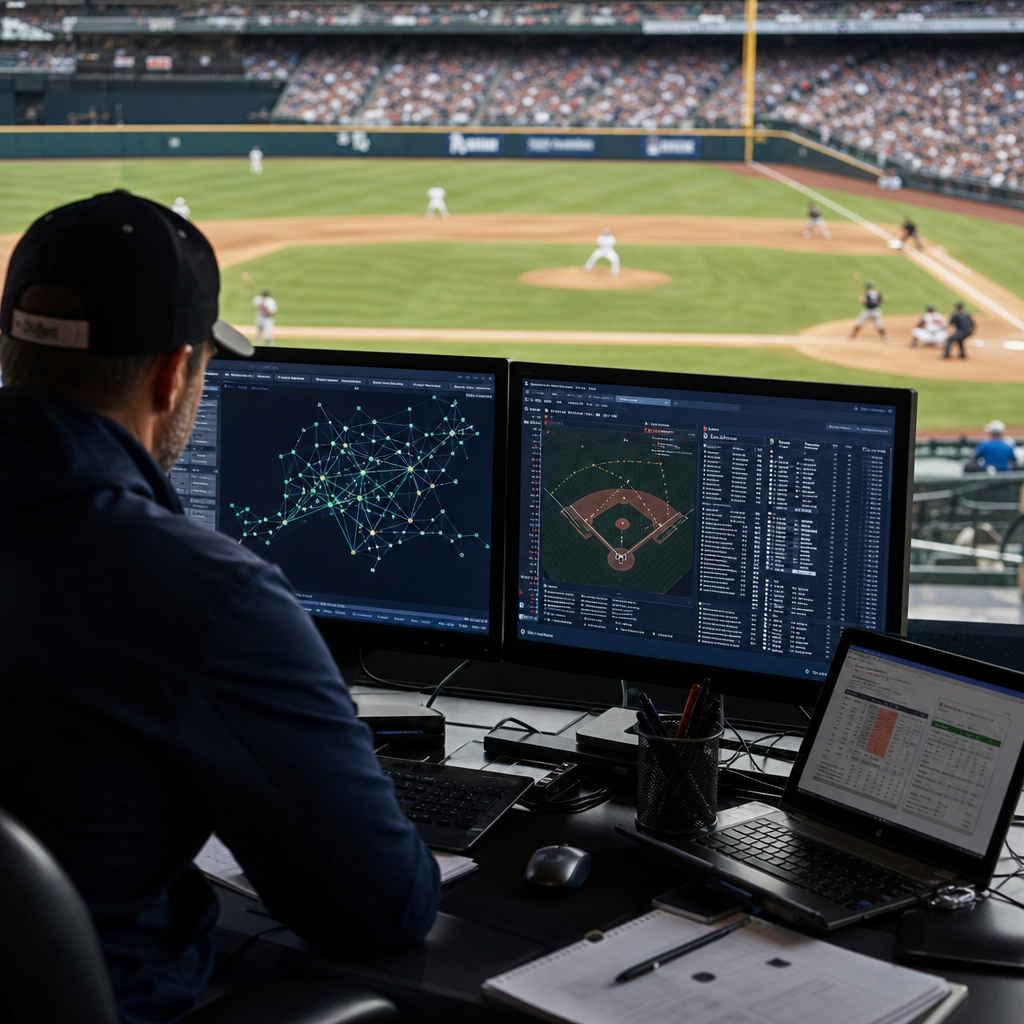
Baseball strategy has always been a contest between observation and probability, but neural networks are changing how clubs combine the two. In baseball strategy formulation, a neural network is a machine learning system that detects patterns across large datasets, then uses those patterns to classify events or predict outcomes such as pitch type, swing decision, defensive positioning, injury risk, or run expectancy. Unlike older linear models that rely on a limited set of assumptions, neural networks can learn nonlinear relationships, interaction effects, and subtle temporal sequences hidden inside pitch tracking, bat tracking, biomechanical, and game-context data.
I have worked with baseball data projects long enough to see the shift firsthand. A decade ago, teams were thrilled to model platoon splits and spray charts with relatively simple regression. Today, organizations can merge Statcast measurements, Hawk-Eye trajectories, minor league video, weather, biomechanics, and historical scouting notes into systems that update recommendations in near real time. That matters because baseball decisions are no longer isolated. A manager deciding whether to bring the infield in is weighing batter tendencies, pitcher command profile, runner speed, expected contact quality, and inning leverage at once. Neural networks are attractive because they can absorb more of that complexity than traditional approaches.
This topic matters beyond front offices because it sits at the center of where baseball is heading. The future of baseball strategy will be shaped by predictive systems that recommend lineups, identify exploitable tendencies, personalize player development, and simulate game states thousands of times before first pitch. For readers following innovations and changes in baseball, neural networks are a hub topic because they connect to scouting technology, wearable sensors, injury prevention, automated player evaluation, and even broadcast analysis. The most important point is not that machines will replace baseball judgment. It is that the best organizations will use neural networks to sharpen judgment, test assumptions, and turn uncertainty into better choices.
What Neural Networks Add to Baseball Strategy
Neural networks matter in baseball because strategy problems rarely behave in tidy, linear ways. A hitter’s chase rate is influenced by count, pitch tunnel, previous pitch sequence, release point consistency, game situation, and fatigue. A conventional model may capture some of those variables, but a neural network is better suited to learning how they interact. In practical terms, that means clubs can estimate not just whether a slider is generally effective, but when a specific slider from a specific pitcher is most likely to generate weak contact against a specific hitter in a specific context.
Teams use several model types for this work. Feedforward neural networks can evaluate broad prediction tasks such as expected swing probability or batted-ball outcome. Recurrent architectures and transformers can analyze sequence data, making them useful for pitch sequencing and at-bat context. Convolutional networks can process video and movement maps, helping identify mechanical changes or defensive tendencies from tracking images. The baseball use case determines the architecture, but the principle is the same: the model learns patterns from examples rather than depending entirely on hand-built rules.
One reason this changes strategy formulation is scale. Coaches can review some video manually, but they cannot personally compare every pitch sequence across an entire league, weighted by count, location, movement shape, batter handedness, and recent performance. Neural networks can. In modern baseball operations, that capability supports pregame planning packets, in-game alerts, and player development reports. The result is not abstract innovation; it is a more detailed answer to practical questions such as where to position an outfielder, when to attack the zone, or which bench bat profiles best against a reliever entering in the seventh inning.
Core Strategic Applications on the Field
The clearest application is pitch calling. Neural networks can analyze catcher setup, prior sequences, batter swing paths, and pitcher command zones to estimate which pitch choice maximizes strike probability, chase probability, or weak contact. This is especially valuable when a pitcher has multiple shapes of fastball or breaking ball and the tradeoff is not obvious from surface results. Some clubs already rely on integrated systems that compare arsenal fit against individual hitters rather than using one generic game plan.
Defensive alignment is another major use. Traditional shifts relied on spray charts and broad tendencies. Neural network systems can forecast contact zones based on pitch location, pitch type, velocity band, hitter timing profile, and game context. Even with shift restrictions, teams can optimize first-step positioning, outfield depth, relay preparation, and pre-pitch fielder movement. The gain may look small on one ball in play, but over a season, converting a handful of extra outs can alter run prevention meaningfully.
Lineup construction also benefits. Rather than ranking hitters by overall production alone, clubs can model lineup order as a dynamic problem involving on-base skill, swing aggression, platoon sensitivity, stolen base value, double-play risk, and opponent bullpen pathways. Neural networks can simulate probable game flows and estimate which batting order creates the most expected runs against a particular opponent. They can also inform pinch-hit choices by considering not only the immediate plate appearance but downstream consequences if the game goes extra innings.
In player development, neural networks help turn data into actionable instruction. If a young pitcher’s arm slot drifts slightly and changes the shape of his sweeper, video and tracking models may catch the shift before coaches can see it consistently with the naked eye. If a hitter’s attack angle changes against velocity above the hands, the model can isolate where contact quality deteriorates. That makes teaching more precise. Instead of telling a player to “stay through the ball,” a coach can show that the issue appears specifically against elevated four-seamers after two low-speed offerings.
How Teams Build Predictive Baseball Systems
Good baseball models begin with data engineering, not magic. Teams pull from Statcast and Hawk-Eye for ball and player tracking, internal biomechanics systems for force and motion markers, scouting reports for categorical observations, medical data for workload context, and historical game logs for outcomes. Those data sources are cleaned, synchronized, and transformed into features. Release point variance, extension, spin axis deviation, swing decision timing, lead distance, and defender route efficiency are the kind of granular inputs that improve model usefulness.
Model training then requires careful labeling. If the question is pitch prediction, the target might be the next pitch type. If the question is run prevention, the target could be expected run value after a strategic choice. Training and validation sets must be separated by time and context to avoid leakage. I have seen otherwise impressive systems fail because they accidentally learned from future information embedded in merged datasets. In baseball operations, avoiding leakage is not an academic detail; it is the difference between a model that helps and one that creates false confidence.
Interpretability also matters. Coaches and players need more than a score. They need reasons they can act on. Many clubs pair neural networks with SHAP values, feature attribution dashboards, or counterfactual analysis to explain why a recommendation changed. If a model recommends more first-pitch changeups to a certain hitter, the staff should know whether that conclusion comes from swing aggression, bat path against arm-side fade, or sequencing vulnerability after glove-side fastballs.
| Strategic Task | Typical Inputs | Recommended Output | Baseball Value |
|---|---|---|---|
| Pitch sequencing | Count, prior pitches, movement profile, hitter swing map | Next pitch type and location probability | More swings and misses, weaker contact |
| Defensive positioning | Pitch plan, hitter tendencies, runner speed, park dimensions | Fielder starting coordinates | Higher out conversion rate |
| Lineup optimization | Platoon splits, on-base skill, slugging zones, bullpen usage | Batting order simulations | Increased expected runs |
| Injury risk monitoring | Workload, biomechanics, recovery data, velocity trends | Risk flag and intervention timing | Improved availability |
Real-World Examples and Emerging Trends
Major League Baseball clubs do not publish every model, but public evidence shows the direction clearly. Statcast transformed how teams evaluate contact quality, and Hawk-Eye expanded that view with higher-resolution tracking of players, bats, and balls. Driveline Baseball and other player development groups have demonstrated how high-speed video, motion capture, and pitch design data can be tied to actionable performance changes. These environments are natural homes for neural networks because they produce the dense, multimodal datasets that such systems handle well.
One emerging trend is personalized strategy. Instead of treating all left-handed pull hitters as one category, teams can build batter-specific decision engines. For example, two hitters may both punish low sinkers, but one struggles if the pitch is preceded by a high fastball while the other adjusts well unless the pitcher shortens the release window. Neural networks are good at finding those individualized conditional patterns. That level of personalization will likely define the next phase of competitive advantage.
Another trend is game-state simulation. Clubs increasingly test strategic options in virtual environments before implementing them on the field. They can simulate stolen base attempts based on pitcher time to plate, catcher pop time, lead distance, and score leverage. They can simulate bullpen chains based on expected platoon matchups across the next nine hitters. Neural networks improve these simulations by supplying better event probabilities than static historical averages.
Broadcast and fan-facing applications will expand as well. Expect more telecasts to explain why an outfielder shaded two steps toward left-center or why a catcher called three consecutive breaking balls. As baseball media becomes more data literate, strategy explanation will become part of the viewing experience. That matters for this future-focused hub because predictive models will influence not only decisions inside clubhouses but also how the sport is taught, watched, and debated.
Limits, Risks, and What the Future Likely Looks Like
Neural networks are powerful, but they are not automatically correct. Baseball datasets can be noisy, biased, or incomplete. Minor league tracking quality varies. Injury labels can be inconsistent. Small-sample player changes can trick a model into overreacting. There is also the risk of optimizing for the wrong objective. A system trained to maximize strikeouts may push pitch usage in a way that increases fatigue or injury risk. Strong organizations put guardrails around models by combining performance staff, analysts, coaches, and medical personnel in the review process.
There is also a communication challenge. Players do not need a lecture on architecture design. They need clear, trusted recommendations delivered at the right time. The best implementations simplify the message without dumbing it down: attack this hitter up and in early because his damage zone opens later; move two steps toward the line because this pitch plan changes his contact direction; cap today’s workload because deceleration metrics and recovery markers are outside baseline. When model output is translated well, adoption improves dramatically.
Looking ahead, baseball strategy formulation will become more continuous, individualized, and adaptive. Systems will update recommendations inning by inning, possibly pitch by pitch, as fresh tracking data arrives. Development plans will be tuned to each athlete’s mechanics and fatigue profile. Amateur scouting models will merge biomechanics with game performance earlier in the pipeline. The strategic edge will come from integration: combining neural networks with domain expertise, strong data governance, and a coaching staff capable of turning prediction into execution.
The potential of neural networks in baseball strategy formulation is therefore practical, not speculative. These systems help teams make better choices about pitch usage, positioning, lineups, player development, and health management because they learn from patterns too complex for manual analysis alone. They do not eliminate uncertainty, and they do not replace baseball knowledge. They make that knowledge sharper. For anyone tracking future gazing and predictive trends in baseball, this is the hub concept to watch because it connects nearly every major innovation now reshaping the sport. Follow the teams, tools, and case studies emerging in this space, and you will understand where baseball strategy is heading next.
Frequently Asked Questions
What makes neural networks different from traditional statistical models in baseball strategy?
Traditional baseball models, such as linear regression or rule-based scouting systems, usually depend on a smaller number of predefined variables and assumptions about how those variables interact. Neural networks work differently. They are designed to process very large datasets and uncover non-obvious relationships between many factors at once, including pitch movement, release point, batter stance, count, game situation, defensive alignment, weather, fatigue indicators, and historical tendencies. That makes them especially valuable in baseball strategy formulation, where decisions are rarely driven by just one variable.
In practice, this means a neural network can recognize patterns that would be difficult for coaches, analysts, or conventional models to isolate manually. For example, it may learn that a hitter becomes more vulnerable to a certain pitch sequence only when a specific arm angle, count pressure, and defensive look are combined. A simpler model might evaluate each factor more independently and miss the interaction. Neural networks are powerful because they can model these layered relationships without requiring analysts to specify every rule in advance.
That does not mean neural networks replace traditional baseball analytics. In most organizations, they complement them. Linear models and interpretable statistics are still useful for explanation, communication, and validation. Neural networks add a deeper pattern-recognition layer that can improve prediction quality in areas like pitch selection, matchup planning, defensive shifts, baserunning risk, and injury prevention. Their real advantage is not just better math, but a better ability to learn from the complexity of the game as it is actually played.
How can neural networks help teams make better in-game strategy decisions?
Neural networks can support in-game baseball strategy by turning live and historical data into probabilities that help coaches and analysts make more informed choices. During a game, teams constantly evaluate whether to challenge a hitter inside, call for a breaking ball in a two-strike count, adjust defensive positioning, attempt a stolen base, or pull a pitcher before fatigue becomes a problem. A well-trained neural network can estimate the likely outcome of each option based on thousands or even millions of comparable situations.
For example, on the pitching side, a neural network can analyze a hitter’s past responses to pitch shapes, locations, velocities, sequencing patterns, and count leverage. It may identify that a batter’s expected contact quality drops significantly after seeing elevated fastballs followed by low breaking balls from a pitcher with a particular release profile. That insight can shape real-time pitch calling. On defense, the same type of system can predict where a ball is most likely to be hit depending on the pitcher, batter, pitch type, and count, allowing teams to optimize positioning before the pitch is thrown.
These models can also improve decision speed. Baseball strategy often depends on small timing windows, and neural networks can summarize complex information quickly enough to be useful in dugout preparation or between innings. Still, the best teams do not treat model output as automatic instruction. They combine it with coaching judgment, player comfort, game flow, health considerations, and scouting context. Neural networks are most effective when they serve as a decision-support tool that sharpens strategy rather than dictating it blindly.
What kinds of baseball data do neural networks use to generate strategic insights?
Neural networks in baseball can use a remarkably wide range of data sources, which is one reason they have become so influential. At the core are pitch-by-pitch and play-by-play datasets that include variables such as pitch type, velocity, spin rate, release point, movement profile, location, count, outs, base state, and result. Teams also feed in batter and pitcher characteristics, including handedness, swing path, chase tendencies, contact quality, platoon splits, and historical performance in comparable situations.
Beyond standard game logs, clubs increasingly rely on tracking and biomechanical data. Systems like high-speed cameras and ball-tracking technology capture how the ball travels and how players move. Neural networks can learn from fielder first-step reactions, route efficiency, bat speed, body positioning, throwing mechanics, and signs of physical stress. This matters because baseball strategy is not only about predicting outcomes, but about understanding why those outcomes happen and how they change under different conditions.
Contextual data also plays an important role. Weather, altitude, travel schedule, rest days, opponent tendencies, park dimensions, and even time through the batting order can all influence strategic recommendations. When these data streams are combined, neural networks can produce insights that are far more situationally aware than older models. The quality of those insights, however, depends heavily on data quality, consistency, and labeling. If the input data is noisy, biased, or incomplete, the recommendations can become unreliable. That is why strong data engineering and domain expertise are just as important as the model itself.
Can neural networks predict injuries and player fatigue well enough to influence roster and game planning?
Neural networks can contribute meaningfully to injury-risk and fatigue forecasting, but it is important to frame their role correctly. They do not predict injuries with certainty, because injuries are influenced by many factors, including biomechanics, workload, recovery, prior health history, stress, and plain randomness. What neural networks do well is identify combinations of warning signs that may signal elevated risk. In baseball strategy formulation, that can be extremely valuable for managing rotations, bullpen usage, defensive workloads, and player availability across a long season.
For pitchers, these systems may analyze pitch counts, velocity changes, spin variations, release-point drift, recovery windows, and historical wear patterns to detect signs of fatigue before they become obvious to the eye. For position players, they may incorporate sprint effort, workload accumulation, swing mechanics, reaction times, and musculoskeletal data. If a model flags that a player’s movement patterns are deviating from his baseline in a way historically associated with reduced performance or higher injury probability, a team may respond by limiting usage, adjusting training, or changing role expectations.
That said, medical and performance decisions should never rely on neural networks alone. The most responsible approach is to combine model output with input from trainers, strength staff, physicians, coaches, and the player. Neural networks are powerful because they can surface hidden risk patterns earlier than traditional review methods, but they are not a substitute for medical judgment. Used properly, they help teams act earlier and more strategically, reducing avoidable strain and improving long-term roster planning.
What are the biggest limitations and risks of using neural networks in baseball strategy formulation?
The biggest limitation is that neural networks can be highly accurate without being easy to explain. In baseball, that creates a practical challenge. Coaches and players need to understand why a recommendation is being made, especially when it affects pitch calling, lineup construction, defensive positioning, or player development. If a model produces a suggestion but cannot offer a clear rationale, it may struggle to gain trust inside the clubhouse. This is why many teams pair neural networks with explainability tools, simpler companion models, and video review to make the findings more actionable.
Another major risk is data bias and overfitting. If a model is trained on incomplete, unbalanced, or overly narrow data, it may perform well on past situations but poorly in new ones. Baseball environments change constantly: hitters alter swings, pitchers add pitches, teams change philosophies, and league-wide trends evolve. A neural network that is not updated and validated regularly can become stale or misleading. There is also a danger of confusing correlation with causation. Just because a model detects a pattern does not mean that pattern should automatically drive strategy without further testing.
Finally, neural networks can create organizational blind spots if they are treated as infallible. Baseball remains a game of adaptation, psychology, health, and human performance under pressure. The best strategic systems recognize that machine learning is a tool, not an oracle. Clubs get the most value when they integrate neural-network insights with scouting, coaching, communication, and player-specific context. When used thoughtfully, neural networks can significantly improve strategic planning. When used carelessly, they can add complexity without delivering real competitive advantage.