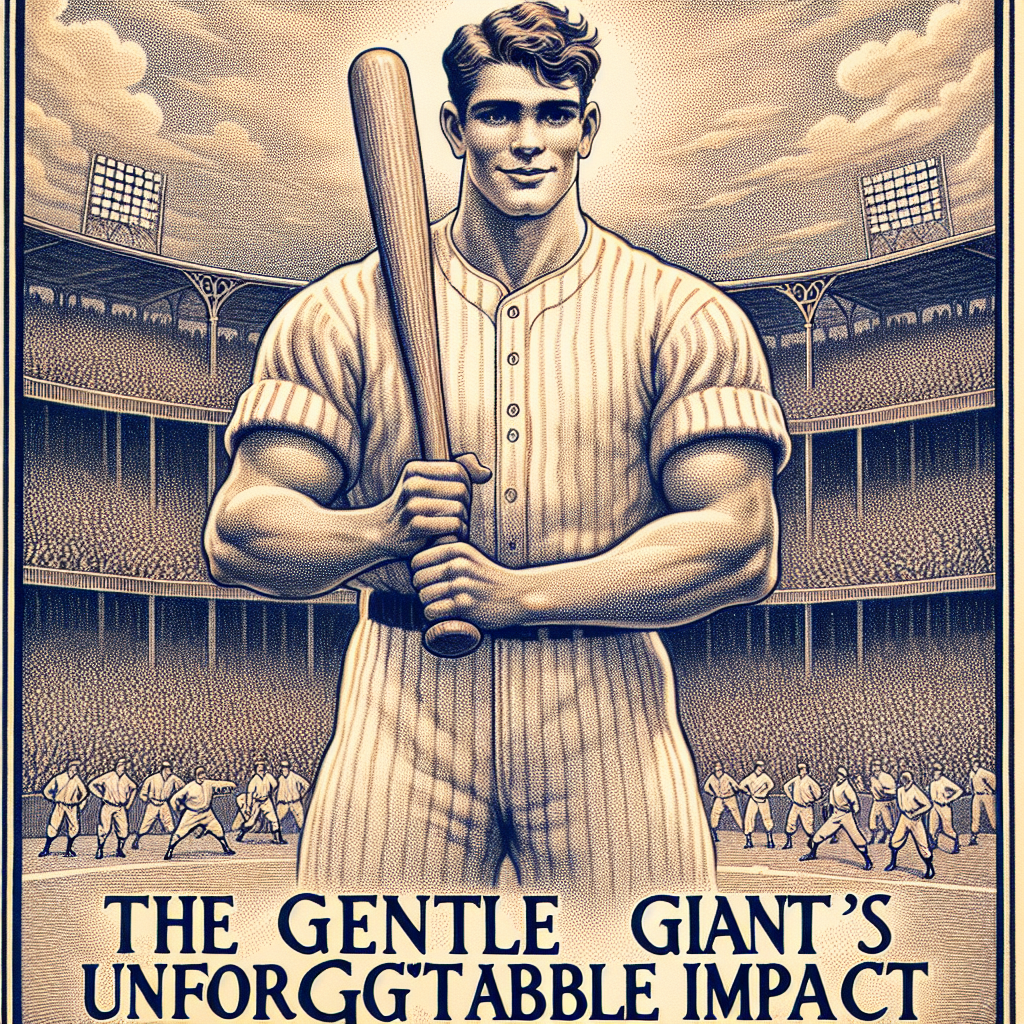
In the pantheon of baseball legends, few players command as much respect and adoration as Gil Hodges, affectionately known as “The Gentle Giant.” Born on April 4, 1924, Hodges left an indelible mark on baseball with a career that spanned from 1943 to 1963. His journey began in the small town of Princeton, Indiana, and took him to the hallowed grounds of Ebbets Field in Brooklyn and later to managing the New York Mets to their first World Series title in 1969. Hodges’ charisma, work ethic, and unyielding commitment to the game transcended the baseball diamond, earning him a place not only in sports history but also in the hearts of fans and teammates alike.
Whether remembered for his prowess as a formidable first baseman or his tactical acumen as a manager, Gil Hodges remains a timeless figure in baseball lore. His contributions to the sport have been celebrated through various accolades and commemorations, yet his impact extends far beyond numbers and trophies. Hodges epitomized the virtues of leadership, perseverance, and humility, traits that endeared him to countless admirers. Despite the passage of decades, the legacy of this gentle giant continues to inspire and resonate with new generations of baseball enthusiasts. As we delve into the life and career of Gil Hodges, we uncover a story of dedication, triumph, and an unwavering passion for America’s pastime.
Early Life and Start in Baseball
Gilbert Ray Hodges was born in Princeton, Indiana, to Charles and Irene Hodges. Growing up during the Great Depression, his family faced economic hardships that would shape his character and work ethic. A gifted athlete, Hodges excelled in multiple sports during his youth, particularly baseball, which became his calling. After graduating from Petersburg High School, he briefly attended Saint Joseph’s College in Rensselaer, Indiana, before enlisting in the Marine Corps during World War II.
Hodges’ military service was marked by valor and bravery, earning him a Bronze Star Medal for his heroism in the Battle of Okinawa. Upon returning to civilian life, he rejoined the Brooklyn Dodgers, who had signed him before the war. In 1947, Hodges made his major league debut as a right-handed hitting catcher, but it was his move to first base in 1948 that unlocked his true potential. This positional change set the stage for Hodges to become one of the most dominant first basemen of his era.
His early years in Brooklyn were marked by rapid growth and adaptation to major league play. A prodigious talent with a strong work ethic, Hodges quickly established himself as a key player for the Dodgers. His blend of power hitting and defensive prowess made him an invaluable asset as the Dodgers competed for National League pennants throughout the late 1940s and 1950s. This foundational period laid the groundwork for what would become a storied and impactful career in baseball.
Prime Years with the Brooklyn Dodgers
The late 1940s and 1950s were a golden era for the Brooklyn Dodgers, and Gil Hodges was at the heart of their success. During this prime period, Hodges became renowned for his powerful bat and stellar defense at first base. He was named to eight consecutive All-Star teams from 1949 to 1956 and won three Gold Glove Awards, demonstrating his dual contributions both at the plate and in the field.
Hodges’ offensive numbers during this period were staggering. He consistently ranked among the league leaders in home runs and RBIs, with his best season arguably coming in 1954 when he hit 42 home runs and drove in 130 runs. His clutch hitting was a key factor in the Dodgers’ numerous pennant races, and his home runs were often game-changers. Remarkably, Hodges was also known for his humility and graceful demeanor, earning him the respect of opponents and teammates alike.
The pinnacle of Hodges’ playing career came in 1955 when the Brooklyn Dodgers finally captured their first World Series title. Although Hodges struggled offensively early in the series, he came through in the clutch by driving in both Dodger runs in the decisive Game 7 against the Yankees. His heroics helped end the Dodgers’ long-standing quest for a championship and immortalized him in the annals of baseball history.

Transition to Managing
After retiring as a player in 1963, Gil Hodges transitioned seamlessly into coaching and then managing. Recognized for his baseball acumen and leadership skills, he was quickly tapped to manage the Washington Senators in 1963. Despite the challenges of managing a struggling franchise, Hodges earned accolades for his fair and disciplined approach, gradually improving the team’s performance and instilling a sense of pride and professionalism.
But it was his move to the New York Mets in 1968 that would define his managerial career. Taking over a team that had long been the laughingstock of the league, Hodges embarked on one of the most remarkable turnarounds in sports history. Known as a meticulous strategist and a motivator par excellence, he instilled a new culture of winning and accountability within the team.
The culmination of Hodges’ managerial prowess came in 1969, a season that would forever be known as the “Miracle Mets” season. Defying all odds, the Mets captured the National League pennant and went on to win the World Series, defeating the heavily favored Baltimore Orioles. Hodges’ leadership was widely credited as the driving force behind this improbable run, setting a new standard for managerial excellence and cementing his legacy as one of the great figures in baseball history.
Legacy and Posthumous Honors
Gil Hodges’ untimely death in 1972 at the age of 47 left the baseball world in mourning. Yet his legacy continues to be celebrated through numerous posthumous honors and recognitions. He was inducted into the New York Mets Hall of Fame in 1982 and the Brooklyn Dodgers’ Hall of Fame in 1983. Hodges’ impact extends beyond statistical accomplishments; he is remembered for his integrity, leadership, and the indelible mark he left on the game.
Many argue that Hodges has been unfairly overlooked for induction into the Baseball Hall of Fame. Despite falling short in various induction attempts through the Baseball Writers’ Association of America and the Veterans Committee, his supporters continue to lobby passionately for his enshrinement. They point to his significant contributions both as a player and manager, and his role in shaping the sport’s history.
Beyond the confines of Cooperstown, Hodges’ legacy lives on through various memorials. Streets, parks, and schools have been named in his honor, reflecting the lasting impact he had on the communities he touched. His family, fans, and former teammates regularly share stories and memories of the gentle giant, ensuring that his contributions to baseball — and his example as a person — continue to inspire future generations.
Conclusion
The story of Gil Hodges is a testament to the enduring power of character, leadership, and dedication. Whether as a hulking figure at first base, a tactical mastermind in the dugout, or a humble hero off the field, Hodges embodied the very best qualities of a baseball player and person. His impact on the game is measured not only in home runs and championships but in the respect and admiration he garnered from all corners of the baseball world.
As fans and historians look back on the rich tapestry of baseball history, Gil Hodges stands out as a figure of immense significance. His contributions during the golden era of the Brooklyn Dodgers and his transformative tenure with the New York Mets are chapters that continue to be celebrated and studied. Hodges’ life and career remain a source of inspiration, illustrating how determination and integrity can leave a lasting legacy.
Ultimately, the gentle giant’s unforgettable impact goes beyond the diamond. Gil Hodges serves as a beacon of what it means to play the game with heart, to lead with wisdom, and to live with conviction. His story will forever be etched in the annals of baseball, reminding us that true greatness is measured not just by achievements but by the way one plays the game and treats others.