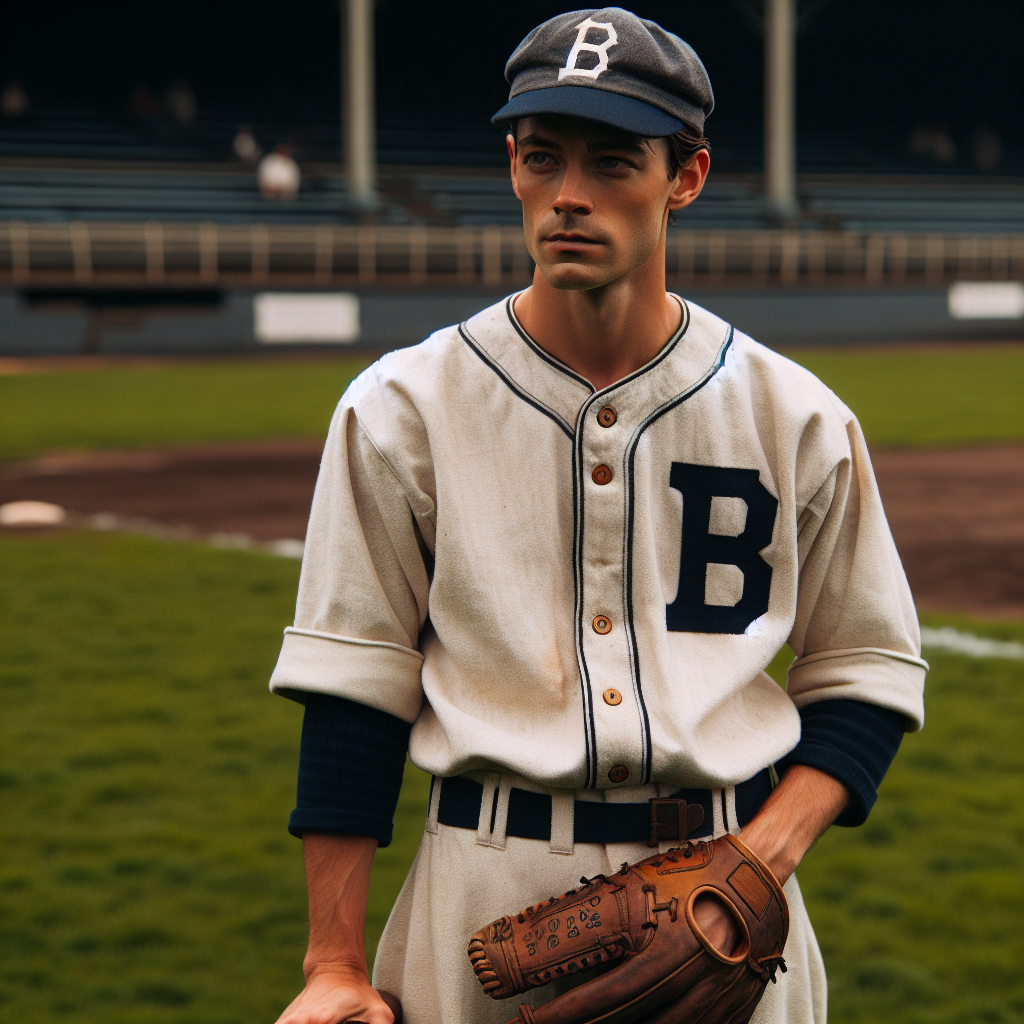
Harold Henry “Pee Wee” Reese, born on July 23, 1918, in Ekron, Kentucky, profoundly impacted the game of baseball during the mid-20th century. Reese’s journey from the small-town streets of Kentucky to the bright lights of Ebbets Field in Brooklyn is a testament to his unparalleled skill, relentless dedication, and unwavering leadership. As the shortstop for the Brooklyn Dodgers, Reese exemplified both on-field excellence and off-field integrity, becoming a figure who was admired not only by fans but also by his teammates and opponents alike.
Known for his small stature but expansive influence, Reese’s nickname “Pee Wee” was a nod to his prowess in marbles, but in the world of baseball, his nickname came to symbolize something much larger: heart, perseverance, and unity. His career in Major League Baseball (MLB) spanned from 1940 to 1958, interrupted only by his commendable service in the United States Navy during World War II.
What set Reese apart from many of his contemporaries was not just his athletic talent but also his moral fortitude. At a time when the sport was grappling with the monumental challenge of integration, Reese emerged as a beacon of hope and change. His front-and-center role with the Dodgers during the breaking of the color barrier, especially his friendship with Jackie Robinson, is a narrative rich with lessons on leadership, courage, and camaraderie.
This article delves into the life and career of Pee Wee Reese, exploring how he became the heart and soul of the Brooklyn Dodgers, his impact on and off the field, and his enduring legacy in the sport of baseball.
Early Life and Career Beginnings
Harold Henry Reese grew up in the tight-knit community of Ekron, a small town that nurtured his early love for sports. Around the age of 18, Reese moved to Louisville to work and pursue his baseball dreams in the Louisville Colonels, a Minor League team at the time. While Reese spent his days working, his evenings were entirely devoted to improving his game, honing the exceptional skills that would soon catch the eyes of Major League scouts.
Reese’s break came when the Boston Red Sox purchased his contract from the Louisville Colonels in 1938. However, the dynamic shortstop never played a game for the Red Sox. Instead, in one of the more fortuitous trades in baseball history, Reese was sent to the Brooklyn Dodgers in 1940. The Dodgers’ organization eagerly welcomed him aboard, recognizing the tremendous potential he brought to their roster. It was with the Dodgers that Reese became a staple of the team’s infield, defining the role of a shortstop with his agile defense and keen game intelligence.
His career was temporarily put on hold as he joined the Navy during World War II, a decision that exemplified the same personal courage he often showed on the field. Despite a three-year hiatus for military service, Reese returned to professional baseball without missing a beat, soon reclaiming his role as the cornerstone of the Dodgers’ defense. His leadership qualities began flourishing, setting the stage for what would become a storied career.
Influence on Jackie Robinson and Baseball Integration
A significant chapter in Pee Wee Reese’s life and career was his bond with Jackie Robinson and his stand against racial segregation in baseball. When Robinson broke the color barrier by joining the Dodgers in 1947, Reese’s support was unwavering. Amid widespread hostility and resistance from many fans and players, Reese made a powerful statement by publicly accepting Robinson as his teammate and friend.
One of the most iconic moments in baseball history occurred during an away game in Cincinnati, where Robinson faced vehement racial abuse from the crowd. Reese, always the leader and friend, walked over to Robinson, placed his hand on his shoulder, and engaged him in conversation. This simple yet profound gesture of solidarity resonated across America, symbolizing a stand against discrimination and for the unity and camaraderie central to the sport.
Though Reese often downplayed his actions, asserting that he did what any decent person should do, his stance was nothing short of revolutionary. It demonstrated a level of respect and equality within a team dynamic, providing Robinson with much-needed support on his groundbreaking but challenging journey. Reese’s actions contributed significantly to easing the integration of African-American players into Major League Baseball and beyond.
His partnership with Robinson forged the foundation of a robust infield and represented a landmark moment in sportsmanship and humanity, impacting generations of players and fans. It carved Reese a place not just in sports history but in the broader narrative of American civil rights.
Playing Style and On-Field Contributions
Pee Wee Reese’s playing style embodied both finesse and tenacity. As a shortstop, Reese was known for his dexterous fielding, quick reflexes, and reliable arm, establishing himself as one of the best defensive players of his era. He had an uncanny ability to anticipate plays, turning potential hits into outs with remarkable consistency.
While his defensive prowess is often lauded, Reese’s contributions as a hitter were also significant. He possessed a solid bat and an astute eye for the game, culminating in a career batting average of .269. Despite not being a power hitter, Reese’s skill in getting on base and scoring runs proved invaluable to the Dodgers’ lineup, especially during crucial games. His base-running acumen and tactical intelligence played a crucial part in many of the team’s successes.
Reese’s career highlights include ten All-Star selections and several World Series appearances, most notably helping the Dodgers clinch their first World Series title in 1955. His leadership on the field was instrumental in guiding the Dodgers through numerous National League pennants and their eventual World Series championship.
Beyond his defensive and offensive stats, Reese was celebrated for his situational awareness and ability to make split-second decisions that often turned the tide of crucial games. His knack for stepping up during high-pressure situations earned him the respect of his peers and the adoration of fans, solidifying his reputation as a baseball legend.
Coaching and Post-Retirement Contributions
After hanging up his cleats in 1958, Pee Wee Reese transitioned seamlessly into coaching and broadcasting, further cementing his influence in the world of baseball. He initially took up the role of a coach for the Dodgers, sharing his wealth of experience and knowledge with younger generations of players. Reese’s guidance proved invaluable to many aspiring athletes, as he emphasized the importance of both skill and character on and off the field.
Reese’s smooth transition into the broadcast booth showcased another facet of his baseball acumen. As a commentator for NBC, he brought games to life with his insightful analysis and engaging storytelling. Reese’s ability to articulate the nuances of the sport, combined with his firsthand knowledge and experience, made him a beloved figure in sports media.
His contributions extended beyond the game itself; Reese was also an influential advocate for the preservation and celebration of baseball history. He believed in honoring the legacies of players who came before him and paved the way for the future of the sport. Reese’s commitment to maintaining the integrity and spirit of baseball earned him numerous accolades and cemented his status as an ambassador of the game.
Beyond the field and the broadcast booth, Reese remained involved in various charitable endeavors, using his platform to give back to the community. His actions demonstrated that the qualities that made him a great player—leadership, humility, and compassion—were intrinsic to his character and continued to inspire long after his playing days were over.
Honors, Legacy, and Continuing Influence
Pee Wee Reese’s remarkable career and enduring impact on baseball have rightfully earned him numerous honors and accolades. In 1984, his contributions were formally recognized with his induction into the Baseball Hall of Fame, solidifying his place among the sport’s elite. This honor was a testament to his excellence as a player and his profound influence on the game and its culture.
Beyond the Hall of Fame, Reese’s number 1 jersey was retired by the Dodgers, a fitting tribute to a player who defined an era and set a benchmark for leadership and sportsmanship. His legacy is also preserved through the numerous stories and reminiscences from former teammates, opponents, and fans who witnessed his brilliance firsthand.
Reese’s impact extended far beyond the field. As a key figure during one of the most transformative periods in baseball history, his actions and attitude towards integration and equality have left an indelible mark on the sport. His support for Jackie Robinson and his role in promoting a culture of inclusion continue to resonate today, serving as reminders of the values that define and elevate the game.
Reese’s influence is seen in the many ways baseball has evolved, embracing diversity and fostering a sense of community and shared purpose. His story is regularly recounted not just in sports circles but also in broader discussions on leadership and human rights. Pee Wee Reese remains a symbol of the enduring power of empathy and unity, both on the diamond and in life.
Conclusion
Pee Wee Reese’s legacy is a rich tapestry of skill, leadership, and, above all, unwavering integrity. His journey from a small-town boy with a passion for baseball to becoming the heart and soul of the Brooklyn Dodgers is a story that continues to inspire and resonate. Reese’s influence on and off the field showcases the profound impact one individual can have on a sport, a culture, and even a nation’s consciousness.
Through his exceptional career, Reese not only established himself as one of baseball’s greats but also set a standard for what it means to be a true leader. His steadfast support for Jackie Robinson during a time of intense racial division highlights his courage and moral strength, setting an example that transcends sports.
Reese’s contributions to baseball, from his deft defensive plays to his strategic brilliance and empathetic leadership, have left an indelible mark on the game. His life’s work serves as a reminder of the values that elevate not only athletes but also any individual striving to make a positive impact in their community and beyond.
As we reflect on Pee Wee Reese’s life and legacy, we are reminded of the power of empathy, courage, and unity. His story is a timeless testament to the impact of leading with heart and character, both on the baseball field and in the broader game of life.