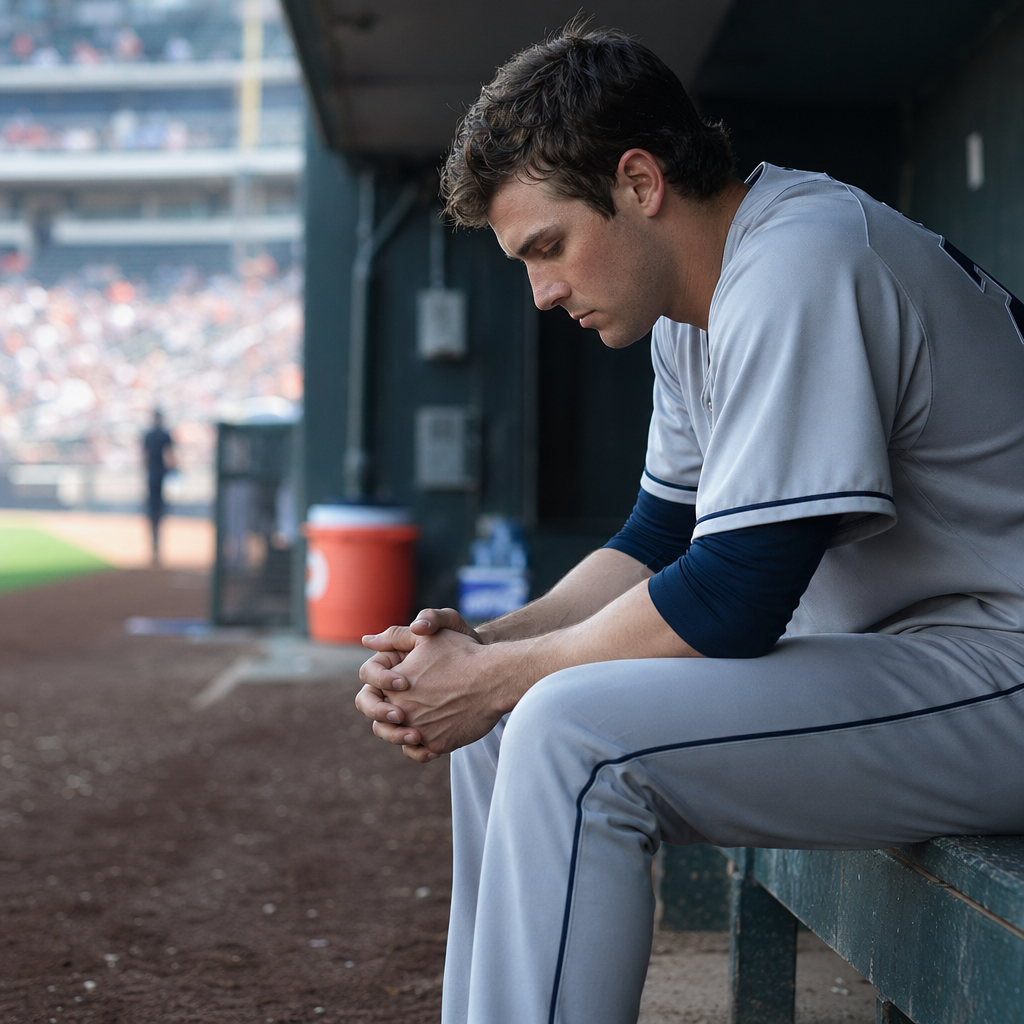
Baseball stories endure because the game is never only physical; every pitch, slump, rivalry, and comeback is also a contest of attention, memory, fear, hope, and identity. In literature and film, the psychological game gives baseball its emotional voltage, turning a box score into a portrait of pressure and making a routine at-bat feel like a moral test. When readers search for the mental aspects in baseball stories, they usually mean several related ideas: performance under pressure, clubhouse dynamics, superstition and ritual, confidence and collapse, the burden of expectation, and the way athletes build meaning around failure. This hub article maps those themes across the broad miscellaneous territory of baseball in literature and film, so you can understand how writers and directors use the sport to explore the mind.
Baseball lends itself especially well to psychological storytelling because its structure isolates the individual within a team setting. A hitter stands alone in the batter’s box, yet the outcome affects an entire dugout and often an entire city. The game also creates long pauses between bursts of action. In those pauses, imagination expands. A pitcher can overthink one sign. A fielder can replay a previous error. A manager can project consequences five innings ahead. I have worked with sports narratives and athlete interviews long enough to see a pattern: baseball creates unusually rich internal monologue because the sport forces participants to sit with anticipation. That is why baseball fiction and baseball films repeatedly return to mind games, not as decoration, but as the engine of drama.
This topic matters because mental framing often determines how audiences interpret what they see. A home run can represent liberation, revenge, acceptance, denial, or pure luck depending on the story’s psychological context. The same is true of iconic baseball narratives. Bernard Malamud’s The Natural turns talent into a meditation on myth, temptation, and damaged ambition. W.P. Kinsella’s Shoeless Joe, adapted into Field of Dreams, treats baseball as memory work and emotional reconciliation. Michael Lewis’s Moneyball and its film adaptation examine cognitive bias as much as roster construction, showing how organizations cling to intuition even when evidence says otherwise. Across this subtopic, the mental aspects in baseball stories connect individual character arcs to larger questions about belief, masculinity, nostalgia, fairness, and resilience.
As a hub for miscellaneous coverage, this article does two jobs. First, it explains the core psychological patterns that recur across baseball storytelling, from novels and memoirs to mainstream films and documentaries. Second, it points toward the kinds of deeper sub-articles that naturally branch from this page: stories about choking and clutch performance, grief and redemption, father-child conflict, team chemistry, superstition, race and social identity, and the psychology of fandom. If you want a practical definition, the psychological game in baseball stories is the use of inner conflict, perception, and emotional stakes to shape the meaning of on-field events. Once you start reading and watching with that lens, the genre opens up dramatically.
Why Baseball Is Built for Psychological Storytelling
Baseball is the most introspective major team sport in narrative form because time behaves differently inside it. There is no clock pressing the action to continue, so suspense often accumulates inside thought rather than motion. Novelists exploit this by stretching a single at-bat across pages of recollection and anxiety. Filmmakers do it through close-ups, delayed cuts, dugout silence, and sound design that amplifies breathing, crowd murmur, or the scrape of spikes. The result is a game that naturally externalizes internal states. In football, a missed assignment is often swallowed by speed. In baseball, an error can sit alone under the lights while everyone watches the player reckon with it.
The sport’s statistical culture deepens that psychology. Baseball stories constantly negotiate the tension between measured performance and felt experience. A player may be batting .300 and still believe he is lost because he failed in a critical moment. Another may be objectively replacement level yet become heroic in the imagination of a small town because he symbolizes endurance. This tension appears in works from Bang the Drum Slowly to Moneyball. Numbers promise certainty, but human beings live through interpretation. That gap gives writers room to explore obsession, denial, overconfidence, and self-knowledge with unusual precision.
Baseball also centers failure in a way that makes psychological nuance unavoidable. Hall of Fame hitters make outs most of the time. Elite pitchers eventually surrender hard contact. Because failure is routine, characters must build mental systems to survive it. Some rely on ritual. Some cultivate detachment. Some spiral into superstition or arrogance. In stories, these coping mechanisms reveal character faster than exposition ever could. A player adjusting batting gloves between every pitch is not just performing habit; he may be asserting control over uncertainty. A manager refusing to discuss a no-hitter is not simply following etiquette; he may be defending a fragile social belief that helps players regulate anxiety.
Common Mental Themes in Baseball Literature and Film
The most common psychological theme is pressure, especially the difference between ordinary pressure and identity pressure. Ordinary pressure is trying to get a hit with runners on base. Identity pressure is believing that one at-bat will prove whether you belong, whether your father was right about you, or whether your entire career has meaning. Great baseball stories convert game situations into existential tests. In The Natural, Roy Hobbs is not merely chasing runs; he is confronting the corruption of his own myth. In For Love of the Game, Billy Chapel’s final outing becomes a sustained exercise in attention, memory, pain management, and emotional closure.
Another recurring theme is memory. Baseball narratives are saturated with recollection because the sport itself invites historical consciousness. Stadiums preserve ghosts, statistics preserve lineages, and family stories preserve unfinished conversations. Field of Dreams remains the clearest example: the game functions as a mechanism for revisiting regret and reimagining intimacy. But the same pattern appears in documentaries about Negro League players, in memoirs by former minor leaguers, and in fiction about small-town teams. Memory in baseball stories is rarely neutral. It edits, idealizes, and distorts, which makes it a powerful tool for showing how characters protect themselves from pain.
A third major theme is belonging. Clubhouses in baseball stories often operate like laboratories of social psychology. Status, role acceptance, hazing, leadership language, silence after losses, and shared routines all shape performance. Films such as Bull Durham understand this intuitively. The comedy works because baseball people manage uncertainty through scripts: clichés, rituals, and institutional habits. Those scripts can stabilize a team, but they can also trap individuals inside roles they have outgrown. That tension is central to miscellaneous baseball storytelling because it touches prospects, veterans, journeymen, managers, broadcasters, fans, and families alike.
| Psychological theme | How it appears in baseball stories | Representative example |
|---|---|---|
| Pressure | Decisive moments become tests of worth, not just skill | The Natural, late-game redemption arcs |
| Memory | Past games and relationships shape present choices | Field of Dreams |
| Bias and perception | Characters misjudge talent, risk, or intention | Moneyball |
| Belonging | Clubhouse roles define confidence and isolation | Bull Durham |
| Failure and resilience | Repeated setbacks force mental adaptation | Baseball memoirs and minor league fiction |
Pressure, Failure, and the Myth of Clutch Performance
No discussion of the mental aspects in baseball stories is complete without pressure and failure. Popular storytelling loves the “clutch” athlete, the player who somehow becomes more himself under extreme stakes. Real performance research is more cautious. Outcomes in high-leverage moments are influenced by skill, sample size, fatigue, matchup quality, and randomness, and year-to-year clutch metrics are not especially stable. Yet stories return to clutch performance because it dramatizes a universal hope: that character can master chaos. Baseball is ideal for this fantasy because one visible duel can stand in for an entire life pattern.
At the same time, strong baseball stories usually respect the opposite truth: pressure can shrink people. The yips, freezing, rushing mechanics, and decision paralysis all appear in baseball writing because they are narratively honest. Rick Ankiel’s well-documented throwing collapse is nonfiction, but it reads like fiction because it reveals how self-consciousness can hijack an elite movement pattern. When a story shows a catcher unable to throw cleanly to second or an infielder booting a routine grounder after hearing the crowd, it is exploring a genuine psychological phenomenon, not just inventing melodrama. The best versions avoid mockery and show how fragile automatic performance can become when attention turns inward.
That is why failure in baseball stories often carries unusual dignity. Since the sport normalizes disappointment, characters are judged less by whether they fail than by how they metabolize failure. Do they blame teammates, retreat into superstition, seek coaching, revise expectations, or develop patience? This is one reason baseball memoirs can be so compelling. A player describing a 2-for-26 slump is rarely only describing bad luck. He is describing sleep disruption, altered self-talk, changes in batting-cage behavior, and the social pressure of reporters asking whether he feels fine. In narrative terms, slumps are laboratories for character revelation.
Ritual, Superstition, and the Search for Control
Baseball has always been hospitable to ritual because the sport offers endless uncertainty paired with repeatable routines. Players wear lucky wristbands, eat the same pregame meal, avoid stepping on foul lines, or follow a fixed bullpen sequence. From a psychological standpoint, ritual can reduce anxiety by narrowing attention onto controllable actions. That does not mean the ritual causes the hit or the strikeout; it means the ritual stabilizes the performer enough to access existing skill. Stories understand this at an intuitive level. A repeated habit becomes a visual and literary shorthand for vulnerability.
Superstition in baseball stories can be comic, tragic, or sacred. In lighter works, it humanizes players by showing how even professionals bargain with randomness. In darker stories, superstition shades into obsession, especially when a player mistakes routine for destiny. The no-hitter taboo is a perfect example. Nobody wants to “jinx” the pitcher, and storytellers use that silence to show collective anxiety. The ritual is irrational on its face, yet completely rational as a social device: it prevents teammates and broadcasters from injecting disruptive attention into a fragile group mood. That blend of nonsense and usefulness is exactly why baseball storytellers keep returning to it.
Ritual also extends beyond players. Fans score games in the same pencil, sit in designated chairs, or replay family habits across generations. In literature and film, these fan rituals matter because they show baseball as a shared mental environment rather than a closed athletic event. A son wearing his late mother’s cap to every opening day is participating in grief work as much as fandom. A retired scout revisiting the same backfield every spring is preserving identity through repetition. Miscellaneous baseball stories often live in these edges, where ritual becomes a bridge between performance and memory.
Identity, Relationships, and the Inner Life Beyond the Diamond
The psychological game expands when baseball stories move beyond the field and ask who players are when performance falls away. Father-child dynamics are especially common because baseball has long been framed as an inherited language. Catch, instruction, criticism, and silence all become emotionally loaded. Field of Dreams is famous for reconciliation, but many baseball narratives are harsher, showing how parental expectations can distort ambition or trap players inside borrowed dreams. This is not sentimental background material. It often explains how a character responds to pressure, authority, and self-doubt.
Romantic relationships add another layer. Long seasons, travel, public scrutiny, and career uncertainty create ideal conditions for stories about emotional asymmetry. One partner lives by schedule and statistics; the other lives with absence and contingency. In films such as For Love of the Game, personal memory intercuts with athletic execution because the mind does not honor clean boundaries between professional and intimate life. A pitcher on the mound may be working through loss, resentment, or acceptance pitch by pitch. When baseball stories do this well, they avoid the false division between “sports plot” and “real life.” The point is that baseball performance is already saturated with personal meaning.
Identity also includes race, class, nationality, and aging. Stories about Negro League history, Latino prospects, Japanese stars navigating American media, or veterans confronting decline all reveal how baseball psychology is shaped by social context. Confidence is never purely individual when stereotypes, language barriers, money pressures, or institutional gatekeeping are present. A rookie afraid to fail because his signing bonus supports an extended family faces a different mental landscape than a celebrated first-round pick. Good baseball storytelling acknowledges those differences directly. That is one reason this miscellaneous hub matters: the mental aspects in baseball stories are broad enough to include culture, not just concentration.
How to Read and Watch Baseball Stories With a Psychological Lens
If you want to get more from baseball literature and film, start by asking a simple question in every key scene: what is the character afraid this moment will mean? That question usually reveals the real stakes faster than the scoreboard does. Then look at how the story represents attention. Does the character narrow focus onto mechanics, drift into memory, seek noise, crave silence, or attach meaning to coincidence? Those choices are rarely accidental. They tell you whether the story sees baseball as a place of mastery, haunting, self-invention, or unresolved conflict.
It also helps to notice which external systems shape the mind. Scouts, analytics departments, coaches, media narratives, families, and fan expectations all influence self-perception. In practical reading terms, that means the psychology of a baseball story is often distributed across institutions, not located only inside one hero. Moneyball works because front-office bias becomes part of the drama. A minor league novel works when bus rides, meal money, and unstable housing affect confidence as much as batting mechanics do. When you read this subtopic broadly, the pattern becomes clear: the mental game in baseball stories is never just positive thinking. It is the interaction between emotion, environment, role, and consequence.
As a hub page, this article should send you in several productive directions. Explore works focused on slumps and recovery if you want insight into failure. Read father-child baseball stories if you care about memory and inherited identity. Watch clubhouse-centered films for group dynamics, or analytical baseball narratives for bias and decision-making. The reward is substantial. Baseball stories become richer when you see that every pitch carries two plots at once: the physical action and the psychological interpretation wrapped around it. Follow those twin plots through the articles linked from this hub, and you will understand why the sport remains one of the deepest narrative laboratories in literature and film today.
Frequently Asked Questions
Why do the mental aspects matter so much in baseball stories?
The mental side matters because baseball naturally dramatizes thought, hesitation, confidence, and doubt in a way few sports can. The game is built around pauses: a pitcher staring in for a sign, a hitter resetting after a foul ball, a fielder waiting through long stretches before a single decisive play. In stories, those pauses create room for memory, fear, ambition, superstition, and self-talk to shape what happens next. That is why a baseball scene can feel emotionally rich even when very little appears to be happening on the surface. A routine pitch can carry the weight of a character’s past failures, a family expectation, a grudge, or the need for redemption.
In literature and film, the psychological game also turns baseball into more than competition. It becomes a lens for identity. Characters often measure themselves by how they respond to pressure: whether they can stay calm in a slump, recover after an error, handle humiliation, or resist the temptation to force a heroic moment. Baseball stories endure because they capture universal mental experiences through a familiar structure of innings, counts, and comebacks. Readers recognize themselves in those struggles. Even if they have never stepped into a batter’s box, they understand anxiety, overthinking, confidence shaken by failure, and the longing to prove something when everyone is watching.
How do baseball stories portray performance under pressure?
Baseball stories portray pressure by narrowing attention to the smallest details while expanding the emotional stakes around them. A full count, two outs, the tying run on base, a hostile crowd, or a playoff setting can instantly transform a simple athletic action into a psychological trial. Writers and filmmakers often show this pressure through inner monologue, slowed pacing, sensory detail, and repetition. The batter may hear the crowd fade out, remember a previous strikeout, replay a coach’s advice, or struggle to quiet a racing mind. The pitcher may become obsessed with missing the zone, overthrowing, or losing control at the worst possible moment. These techniques let audiences feel how pressure distorts time and attention.
Importantly, the best baseball stories do not treat pressure as something only stars experience. Bench players, rookies, aging veterans, and even managers feel it in different forms. For one character, pressure may be about fame and legacy. For another, it may be about job security, family pride, or the fear of becoming the reason the team loses. This broader view gives the genre emotional depth. Performance under pressure is rarely shown as a simple matter of courage. Instead, it is presented as a fragile balancing act between preparation and instinct, confidence and panic, discipline and impulse. That tension is what makes dramatic baseball scenes memorable.
What role do slumps, failure, and recovery play in the psychology of baseball narratives?
Slumps and failure are central because baseball is a sport where even great players fail constantly. That reality makes it ideal for stories about resilience, self-perception, and recovery. A hitter in a slump is not just missing pitches; he may be losing trust in his own timing, changing mechanics out of desperation, reading too much criticism, or carrying each bad at-bat into the next one. A pitcher who gets shelled may begin to doubt every decision, every sign, every release point. In narrative terms, these struggles reveal character more clearly than easy success ever could. Failure exposes habits of thought. Does the player become isolated, angry, obsessive, reckless, or unexpectedly humble? Does he blame others, or confront what is happening internally?
Recovery is equally powerful because baseball stories rarely present it as a clean, inspirational turnaround. More often, recovery comes through incremental mental adjustments: accepting imperfection, simplifying the game, rebuilding routine, trusting teammates, or rediscovering joy instead of chasing control. This is one reason baseball fiction and film feel psychologically honest. They recognize that getting out of a slump is not only technical; it is emotional and mental. The comeback may begin with a single quality at-bat, a conversation in the clubhouse, or a moment when a player stops trying to erase failure and instead learns to carry it without collapsing under it. That arc mirrors real human growth, which is why it resonates so strongly with readers and viewers.
How do clubhouse dynamics and rivalries shape the mental side of baseball stories?
Clubhouse culture is often where the invisible pressures of baseball become visible. A team is not just a collection of talent; it is a network of hierarchies, loyalties, resentments, rituals, and unspoken rules. Baseball stories use the clubhouse to show how confidence is built or damaged by environment. A veteran’s advice can steady a rookie. A manager’s mistrust can deepen a player’s anxiety. Teammates can provide belonging during a losing streak, or they can intensify insecurity through blame, silence, or competition for status. Because the season is long and repetitive, interpersonal dynamics matter enormously. Characters are constantly living with one another’s moods, habits, and judgments, which makes the psychological landscape of the team as important as the action on the field.
Rivalries heighten this further by turning opponents into mental presences. A rival pitcher, hated team, former teammate, or recurring nemesis can occupy a character’s imagination long before the game begins. Rivalries in baseball stories often symbolize larger conflicts involving pride, revenge, class, region, race, or legacy. They sharpen focus, but they can also breed obsession. A player trying too hard to beat one particular opponent may abandon his usual discipline. A team caught up in a feud may lose perspective and start playing emotionally rather than intelligently. This is why rivalry-driven baseball narratives are rarely just about competition. They explore how people define themselves against others, and how that definition can either strengthen resolve or distort judgment.
Why do baseball stories so often connect the game to memory, hope, and personal identity?
Baseball stories return to memory, hope, and identity because the sport naturally invites reflection. Its rhythms are repetitive, seasonal, and deeply tied to personal history. Characters remember who taught them to throw, where they were during a pivotal game, what a stadium smelled like in childhood, or how a single failure changed the way they saw themselves. In storytelling, that makes baseball an ideal stage for exploring how the past continues to shape the present. A player may not simply be facing a pitcher; he may be facing an old injury, a parent’s expectations, a lost opportunity, or the younger version of himself he can no longer recover. The mental aspect of the game is often inseparable from these layers of memory.
Hope is just as important. Every at-bat offers another chance, every season begins with renewal, and every comeback suggests that identity is not fixed. That is why baseball stories frequently become stories about reinvention. A washed-up veteran can find meaning again. A player known for choking can rewrite his narrative. A team carrying years of disappointment can imagine itself differently. Even when a story is realistic about failure, baseball still provides a structure in which hope feels rational rather than naive. That tension between memory and possibility gives the genre much of its emotional power. Baseball becomes a way of asking enduring human questions: Who am I when I fail? Can I change? What do I owe my past, and what can I still become?