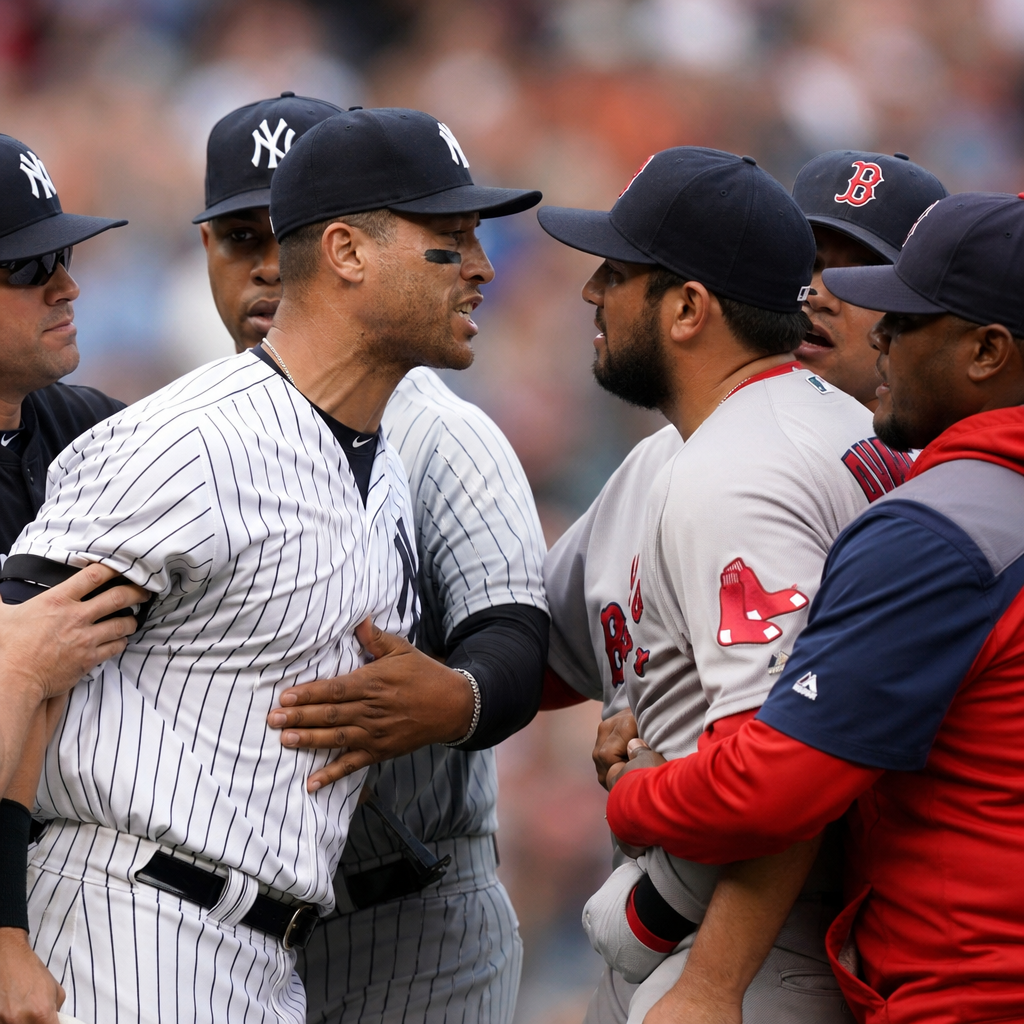
Baseball rivalries have always generated more than wins and losses; they create stories that travel across newspapers, radio booths, documentaries, novels, and films. In baseball media, a rivalry is not simply a competitive relationship between clubs. It is a recurring narrative structure built from geography, class identity, historical grievance, star players, dramatic games, and the way journalists and filmmakers frame conflict for audiences. When people search for team conflicts in baseball media, they usually want to understand why certain matchups feel larger than the standings and why those tensions keep returning in cultural memory.
This matters because baseball has one of the deepest archival traditions in American sports. Box scores, beat columns, highlight reels, oral histories, and feature films preserve rivalry narratives in unusual detail. As a result, baseball media does not just report conflict; it manufactures continuity between eras. A pennant race in 1951, a bench-clearing game in 1973, or a postseason comeback in 2004 can be repackaged for new audiences through streaming documentaries, long-form criticism, podcast series, and classroom syllabi on sports storytelling. I have worked through these archives while mapping baseball culture for editorial projects, and the pattern is consistent: rivalries survive when media keeps supplying context, symbols, and memorable scenes.
As a hub within Baseball in Literature and Film, this article covers the miscellaneous landscape around team conflict rather than focusing on one franchise pair. The goal is to explain how baseball media portrays rivalries, which conflicts dominate coverage, how different formats shape meaning, and where readers should look next. Key terms are useful here. Team conflict refers to sustained tension between clubs, whether competitive, regional, economic, or symbolic. Baseball media includes journalism, broadcast commentary, documentary, fiction, memoir, criticism, and digital fan media. Together, they turn ordinary schedules into dramatic arcs that audiences can recognize instantly.
Why baseball rivalries work so well in media
Baseball is especially suited to rivalry storytelling because the season is long, the sample size is large, and the sport produces repeat encounters that allow tension to accumulate. In football, teams may meet once or twice. In baseball, division rivals can see each other thirteen times or more in a season, creating room for retaliation, familiarity, grudges, and shifting momentum. Media makers use those repeated meetings to build serial drama. A hard slide in April can be referenced in a July broadcast and then framed as the emotional prelude to a September showdown.
The sport also provides unusually rich visual and verbal symbols. Uniforms, ballparks, scorecards, radio signatures, and local newspaper language all help define sides. Broadcasters know this. Vin Scully treated Dodgers-Giants games as episodes in a multigenerational feud, not isolated contests. New York tabloids historically used aggressive back-page framing to sharpen Yankees-Red Sox hostility. Ken Burns’s Baseball gave rivalry history national literary weight by tying individual games to broader American themes such as migration, urban change, labor, and race. That layering is why team conflicts in baseball media can feel intellectually substantial as well as emotionally immediate.
Another reason rivalries endure is that baseball welcomes contradiction. Teams can hate each other and still reflect each other. Wealthy clubs become villains, then disciplined underdogs, then complacent empires. Small-market teams can be romanticized one decade and ignored the next. Media thrives on that instability because it creates fresh angles without discarding familiar identities. A strong baseball rivalry is therefore both fixed and flexible: audiences know the basic script, yet every generation receives a new version shaped by current stars, ownership decisions, and media technologies.
Signature rivalries and how media framed them
The most heavily mediated rivalry remains Yankees versus Red Sox. Its early roots include competition for talent, regional resentment, and the lingering mythos around the sale of Babe Ruth. For decades, newspapers and broadcasters amplified the idea that Boston carried historical burden while New York carried entitlement. By the late 1990s and early 2000s, cable television and sports talk radio intensified every managerial quote, Pedro Martínez brushback, and bullpen collapse. The 2003 American League Championship Series and Boston’s 2004 comeback from a 3-0 deficit became media landmarks because they offered perfect narrative reversals: arrogance humbled, trauma released, history rewritten in prime time.
Dodgers versus Giants works differently. This rivalry traveled from New York to California, carrying urban memory with it. Media treatment often emphasizes continuity across geography, making the feud feel portable and almost mythic. The 1951 pennant race, ending with Bobby Thomson’s “Shot Heard ’Round the World,” is one of baseball’s foundational broadcast moments. Decades later, West Coast versions of the rivalry retained the emotional language of neighborhood competition. Films and documentaries frequently use archival radio calls, subway imagery, and cross-country relocation to show how baseball conflict can preserve identity even when cities change.
Cubs versus Cardinals is often presented as baseball’s most stable Midwestern rivalry: less tabloid-ferocious than Yankees-Red Sox, but deeply rooted in civic contrast and fan tradition. Media coverage leans on Wrigley Field’s day-game charm versus St. Louis’s reputation for disciplined baseball culture. The framing can be sentimental, but underneath it is a serious story about regional belonging, broadcast reach, and intergenerational fandom. Because both clubs have strong radio traditions, announcers play a major role in keeping the conflict intimate and familiar rather than sensational.
| Rivalry | Core media angle | Defining example | Why it endures |
|---|---|---|---|
| Yankees vs Red Sox | Power, grievance, reversal | 2004 ALCS comeback | Historical baggage plus modern saturation coverage |
| Dodgers vs Giants | Migration, continuity, myth | 1951 pennant playoff | Cross-coast history with iconic broadcast moments |
| Cubs vs Cardinals | Regional identity, tradition | Recurring division races | Strong fan inheritance and radio storytelling |
| Mets vs Phillies | Volatility, personality, division pressure | Late-season collapses and surges | Modern star drama and vocal fan cultures |
Other rivalries matter because media ecosystems have diversified. Mets versus Phillies has become highly visible in the social media era, where player quotes, crowd reactions, and short video clips spread instantly. Braves versus Mets has repeatedly generated narrative fuel through division swings and contrasting organizational styles. Even intrastate series such as Rangers-Astros or freeway matchups like Dodgers-Angels can become media-rich when playoff stakes, sign-stealing controversies, or local market competition raise the temperature. A baseball rivalry does not need a century of history to become compelling on screen; it needs recognizable stakes and repeatable scenes.
How literature, film, and documentary shape team conflict
Baseball literature tends to slow rivalry down and explain its moral texture. Novels, memoirs, and essay collections can linger on locker-room tension, inherited hatred, and fan memory in ways game recaps cannot. Roger Kahn’s work on the Dodgers, for example, demonstrated how baseball writing can treat team conflict as social history rather than mere spectacle. In literary criticism and sports studies, rivalry often functions as a lens for discussing masculinity, urban identity, ethnicity, nostalgia, and commercial mythmaking. That is why this subtopic belongs within Baseball in Literature and Film, not only within sports journalism.
Film changes the scale of conflict. Narrative baseball movies often simplify rivalries to sharpen emotional stakes, but the best ones understand that the opponent symbolizes something larger: exclusion, legitimacy, class pressure, or fear of failure. Even films not centered entirely on one feud use rival teams as narrative engines. The Natural turns competitive antagonism into mythic struggle. A League of Their Own frames team competition through institutional barriers and public perception. 42 shows that baseball conflict in media cannot be separated from race and the politics of who gets represented as the hero, the threat, or the exception.
Documentaries usually offer the most complete treatment because they combine archive, interview, and retrospective argument. ESPN’s 30 for 30 model helped normalize rivalry storytelling that moves beyond highlight packages into cultural analysis. A good documentary on Yankees-Red Sox, for instance, can link front-office decisions, newspaper ecosystems, player psychology, and fan ritual in a single structure. It can also correct simplifications. Many famous rivalries are remembered through a few signature moments, but documentary form allows producers to show the quieter infrastructure underneath: travel, labor disputes, scouting pipelines, owner feuds, and media competition.
Media techniques that turn games into conflict narratives
Several techniques appear again and again when baseball media covers team conflict. The first is selective chronology. Journalists do not list every prior meeting; they choose the incidents that support a clean storyline, such as a beanball war, disputed call, or playoff collapse. The second is character typing. Clubs become embodiments of traits: ruthless, cursed, scrappy, corporate, blue-collar, flashy, joyless. Those labels are often reductive, but they are useful shortcuts for headline writers, trailer editors, and broadcasters working live.
A third technique is spatial contrast. Ballparks become characters. Fenway Park signifies intimacy and historical pressure; Yankee Stadium signifies scale and expectation; Dodger Stadium signifies spectacle; Wrigley Field signifies ritual. When a broadcast opens with skyline shots, exterior signage, and crowd chants, it is already setting terms for conflict. In production meetings, crews often discuss which visuals instantly tell viewers what kind of rivalry game this is. That visual shorthand matters because many consumers encounter baseball conflict through clips rather than full games.
Audio is equally important. Signature calls can canonize a rivalry moment within seconds. Russ Hodges’s call of Thomson’s home run still functions as compressed baseball mythology. Local radio remains powerful because announcers speak in the emotional dialect of a fan base. National broadcasts usually widen the frame, emphasizing legacies and historical stakes, while local broadcasts sharpen grievance and memory. Podcasts now add another layer, blending reportage with fan intimacy. In practice, rivalry coverage succeeds when it balances evidence with emotion instead of treating outrage as the whole story.
The cultural stakes behind baseball team conflicts
Baseball rivalries often stand in for larger disputes that audiences recognize immediately, even when coverage stays within sports language. City versus city is the obvious example, but there are deeper patterns: old money versus new money, legacy institutions versus analytics-driven challengers, coastal prestige versus interior pride, and continuity versus reinvention. These binaries can be overstated, yet they help explain why certain matchups attract people who do not follow the sport daily. The rivalry becomes a way to talk about status, belonging, and historical memory.
Race and immigration also shape rivalry narratives, though media treatment has not always been honest about that influence. Conflicts involving teams with heavily Latino rosters, for example, may be framed through coded language about emotion or style. Historical treatments of Black stars often underplayed how hostility from opponents and spectators shaped team identities. Responsible baseball media now does better when it places rivalry inside the social conditions of the period being covered. That approach does not weaken the drama; it makes the drama legible.
Economics matter too. Payroll disparities, television contracts, and ownership behavior routinely animate team conflict. When one club can absorb mistakes through spending and another depends on development, media narratives about fairness and resentment emerge naturally. I have found that readers respond strongly when those structural issues are explained plainly rather than buried beneath cliché. Rivalries feel personal on the field, but they are often powered by institutional asymmetry off it. Ignoring that makes baseball media thinner and less credible.
How to use this hub to explore the miscellaneous subtopic
Because this page is the hub for miscellaneous coverage under Baseball in Literature and Film, it should direct readers toward several adjacent article types. One branch examines specific rivalry histories in depth, such as Yankees-Red Sox, Dodgers-Giants, or Cubs-Cardinals across media eras. Another studies format-specific storytelling, including baseball documentaries, radio calls, stadium literature, and sports page design. A third branch looks at themes that cut across teams: memory, myth, villain construction, fan identity, regional language, and the politics of representation.
Useful companion pieces in this subtopic include analyses of baseball novels that use opponents as moral foils, studies of iconic broadcast calls, comparisons between documentary truth and fictional dramatization, and essays on how digital fandom changes rivalry storytelling. Readers also benefit from articles on archives and methods: how to read beat coverage critically, how to compare newspaper framing across cities, and how streaming platforms have altered the shelf life of baseball conflict narratives. Together, those pieces build a fuller map of how team conflicts move through culture.
The practical value of this hub is simple. If you are researching baseball media, teaching sports literature, programming a film series, or developing content around baseball rivalries, start with the conflicts that generated durable symbols and then trace how each medium reshaped them. Look for repeated scenes, recurring language, and moments when media turned competition into identity. Then follow the links to narrower articles that expand each strand. Baseball rivalries endure because media gives them structure, memory, and meaning. Use this hub as your starting point, and explore the surrounding articles to see how every famous feud became a lasting story.
Frequently Asked Questions
What makes a baseball rivalry so compelling in media beyond the actual games?
A baseball rivalry becomes compelling in media when it evolves into a story that audiences can follow over time, not just a series of box scores. In newspapers, radio broadcasts, documentaries, novels, and films, rivalries work because they give writers and producers a reliable narrative framework: there are heroes, antagonists, grudges, turning points, and emotional stakes that extend far beyond one afternoon at the ballpark. Geography often plays a major role, especially when two teams represent neighboring cities or regions with long-standing cultural tension. Class identity can deepen the conflict even further, particularly when one club is portrayed as polished, wealthy, or dominant while the other is framed as scrappier, overlooked, or more rooted in local identity.
Media also amplifies rivalries by selecting memorable incidents and returning to them repeatedly. A controversial call, a bench-clearing confrontation, a playoff collapse, or a legendary home run can be replayed and reinterpreted for years. Over time, those moments become symbols of the larger conflict. Journalists help define what the rivalry means in a given era, while filmmakers and authors often give it emotional texture by focusing on personalities, fan memory, and historical context. That is why baseball rivalries in media feel larger than sports. They become cultural dramas that connect generations of fans and keep audiences invested even when team rosters change.
How do journalists and broadcasters shape public perception of team conflicts in baseball?
Journalists and broadcasters do much more than report outcomes; they actively shape how fans understand and remember team conflicts. Through word choice, tone, framing, and repetition, media professionals can turn a competitive matchup into a full-scale rivalry with symbolic meaning. If coverage consistently emphasizes revenge, bad blood, postseason heartbreak, or contrasting team identities, audiences begin to see the conflict through that lens. A single phrase coined by a columnist or a dramatic call from a broadcaster can become part of the rivalry’s mythology, especially if it captures the emotional truth fans already feel.
Broadcast media is especially powerful because it combines immediacy with storytelling. Radio announcers and television commentators have the ability to turn unfolding events into shared emotional experiences, often heightening drama in real time. Print and digital journalism then reinforce those moments with analysis, historical comparison, and feature writing that ties the present to the past. A rivalry does not need constant violence or controversy to stay alive; it only needs a steady media narrative that reminds audiences why each meeting matters. In this way, baseball media does not simply document conflict between teams. It organizes that conflict into a story with continuity, meaning, and lasting public impact.
Why do historic baseball rivalries remain relevant in documentaries, books, and films?
Historic baseball rivalries remain relevant because they offer built-in tension, recognizable stakes, and rich emotional material for storytelling. Documentaries, books, and films return to these conflicts because rivalries already contain many of the elements that define great narrative: opposing sides, deeply invested communities, dramatic reversals, and a sense that each chapter is connected to a larger legacy. Even when the original players are gone, the rivalry itself endures as a cultural memory. That continuity allows media creators to tell stories that are both historical and contemporary, appealing to longtime fans while introducing new audiences to iconic conflicts.
These formats also allow for deeper exploration than a standard game recap. A documentary can connect a rivalry to labor issues, race, urban identity, ownership disputes, or shifting media landscapes. A book can trace decades of resentment, highlight forgotten moments, and examine how fan communities passed the rivalry down. A film can dramatize the emotional intensity of conflict through character, atmosphere, and symbolism. In every case, the rivalry becomes a vehicle for discussing more than baseball. It can reveal how sports reflect social change, civic pride, generational identity, and the way people construct legends from repeated competition. That is why historic baseball rivalries continue to attract attention across media formats: they are about memory, meaning, and conflict as much as they are about sport.
What role do star players and dramatic moments play in building baseball rivalry narratives?
Star players and dramatic moments are essential to building rivalry narratives because they give fans and media something concrete to attach to the broader conflict. Teams may represent cities, traditions, and identities, but individual players make those themes personal. A superstar who consistently performs well against a rival can become the face of dominance, while an outspoken veteran, emotional manager, or controversial pitcher can embody hostility and tension. These figures help transform an abstract team conflict into a human story with recognizable protagonists and antagonists. Media coverage often centers on these personalities because audiences respond strongly to faces, quotes, mannerisms, and repeated clashes.
Dramatic moments give the rivalry its defining chapters. Walk-off wins, postseason elimination games, retaliatory hit-by-pitches, disputed calls, and unforgettable errors become narrative anchors that media revisits again and again. These events are important not only because they happened, but because they can be framed as proof of something bigger: resilience, arrogance, revenge, destiny, or collapse. The more often a moment is replayed, quoted, and contextualized, the more central it becomes to the rivalry’s identity. Over time, these stars and flashpoints create an emotional archive that keeps the conflict vivid. Fans may forget ordinary regular-season results, but they remember the players and moments that seemed to define what one team meant to the other.
How should an article about team conflicts in baseball media explain rivalry without oversimplifying it?
An effective article should explain that rivalry in baseball media is not a single cause-and-effect phenomenon. It is usually built from several overlapping factors: geography, history, fan culture, ownership dynamics, playoff encounters, media framing, and the symbolic meaning attached to each club. Rather than describing a rivalry as simple dislike between teams, the article should show how conflicts are constructed and sustained over time. That means discussing how newspapers, broadcasters, documentarians, and novelists have interpreted key moments, and how those interpretations can become just as influential as the games themselves. Rivalries are often less about constant hostility and more about recurring significance.
To avoid oversimplification, the article should also acknowledge change. Rivalries shift from era to era depending on competitive balance, star players, cultural context, and media technology. A conflict that began as a local geographic dispute may later be defined by postseason drama or iconic personalities. Likewise, modern digital media can intensify rivalries by circulating clips, commentary, and fan reactions instantly, adding new layers to old tensions. A strong article will therefore treat baseball rivalry as both an athletic and a media-driven phenomenon. It should help readers understand that team conflicts endure not merely because teams compete, but because stories about that competition are continually created, repeated, and reshaped for new audiences.