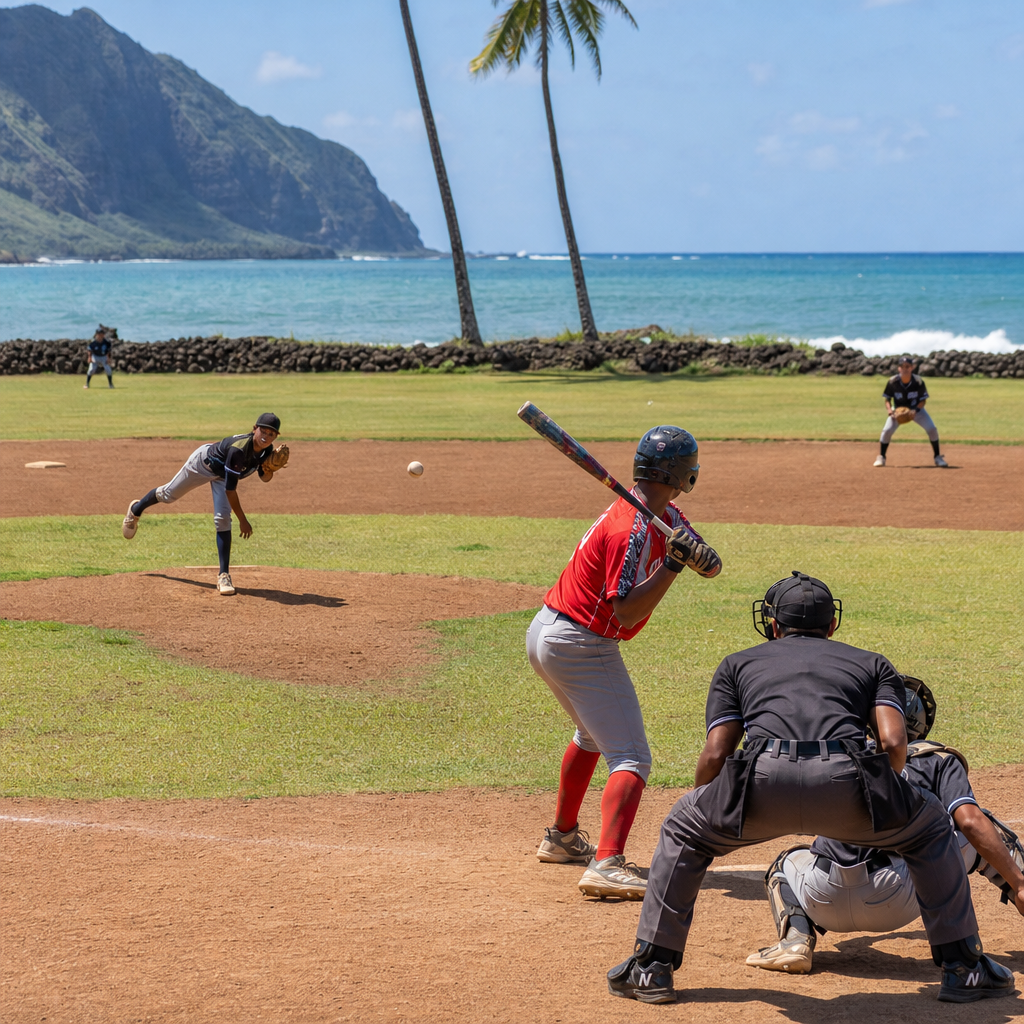
Baseball in the Pacific Islands is a story of adaptation, migration, community pride, and sporting creativity, shaped by geography as much as by the game itself. In this region, “Pacific Islands” includes Melanesia, Micronesia, and Polynesia, covering places such as Guam, the Northern Mariana Islands, American Samoa, Samoa, Palau, the Federated States of Micronesia, the Marshall Islands, Fiji, Tonga, the Cook Islands, French Polynesia, and Hawaiʻi as a cultural bridge within the wider Pacific baseball conversation. “Miscellaneous” matters here because the baseball landscape does not fit one neat pattern: some islands have deep Little League traditions, others rely on school festivals, military influence, diaspora networks, or softball pathways, and many operate with limited fields, small player pools, and expensive travel. I have worked around international baseball development long enough to see that the Pacific requires a different lens from Japan, Korea, or Latin America. Success is often measured less by professional contracts than by continuity: keeping youth programs alive, finding equipment, training coaches, and creating chances to compete beyond home shores. That blend makes Pacific Islands baseball uniquely important within international baseball, because it reveals how the sport survives and evolves far from its richest commercial centers.
How Baseball Reached the Pacific Islands
Baseball spread through the Pacific by several overlapping routes: American administration, Japanese influence before and after the Second World War, missionary schools, military presence, and migration between islands and larger baseball nations. Guam and the Northern Mariana Islands are clear examples. Their modern baseball cultures reflect long-standing ties to the United States, including school sports structures, Little League participation, and regular exposure to American coaching models. Palau also developed baseball through historical Japanese influence and later through regional competition, making it one of the most recognizable baseball nations among smaller Pacific states.
In practice, the game rarely arrived as a pure import. Islanders adapted it to available spaces, weather patterns, and existing sporting habits. In some communities, baseball competed with volleyball, rugby, basketball, or canoeing for attention. In others, softball became the more durable bat-and-ball code because it required less specialized pitching and fit school or community tournament formats. That matters because many Pacific baseball players first learn glove work, hitting mechanics, and field awareness through softball before transitioning to baseball. Across the region, the local version of the sport is shaped by practicality rather than ideology.
Why the Pacific Baseball Model Is Different
The biggest difference is scale. A baseball nation with 200,000 people, spread across multiple islands, cannot build player development the way a country with millions of urban athletes can. Even where talent exists, regular competition is hard to organize. Teams may need flights or ferries simply to play a meaningful series. Equipment costs are higher because almost everything is imported. Climate is another factor. Heavy rain, salt air, and heat wear down fields, balls, nets, and metal structures quickly. I have seen programs spend months securing gear that a mainland club could replace in a week.
Because of those conditions, Pacific baseball rewards flexible organizers. Coaches often serve as groundskeepers, fundraisers, transport coordinators, and national team selectors at the same time. Parents may repair backstops, line fields by hand, and share catching gear across age groups. Talent identification is also less formal. A strong athlete may be noticed at a school carnival, a softball event, or a regional games trial rather than through a private showcase circuit. This grassroots structure can produce resilient players, but it also limits repetition, which is essential for advanced hitting, pitching command, and defensive timing.
Key Pacific Islands and Their Baseball Profiles
Not every island group sits at the same development stage, so this hub page works best when readers understand the range. Guam has one of the region’s strongest baseball identities, supported by youth leagues, school competition, and participation in international qualifiers under WBSC structures. The Northern Mariana Islands have a similar profile, with baseball visible in Saipan and links to U.S. amateur systems. Palau stands out historically because baseball achieved rare national prominence there, helped by Japanese-era roots and sustained community interest.
Elsewhere, the picture is more mixed. American Samoa and Samoa have stronger public associations with American football, rugby, and weight-based sports, yet baseball and softball still appear through schools and local tournaments. The Federated States of Micronesia and the Marshall Islands have seen periodic baseball activity, usually driven by educators, volunteers, or regional events rather than fully mature leagues. Fiji, Tonga, and the Cook Islands are better known for rugby codes, but bat-and-ball participation survives in pockets, often linked to multi-sport federations. French Polynesia and Hawaiʻi contribute another layer: they connect the Pacific to larger baseball pathways through tourism, migration, and collegiate recruitment.
| Island or Territory | Baseball Status | Main Development Driver | Typical Constraint |
|---|---|---|---|
| Guam | Established youth and representative play | School sports and U.S. ties | Travel costs to stronger competition |
| Northern Mariana Islands | Active amateur structure | Community leagues and Little League culture | Small player base |
| Palau | Historically significant baseball nation | Longstanding cultural acceptance | Resource depth |
| American Samoa and Samoa | Intermittent baseball presence | Schools and crossover from softball | Competition from rugby and football |
| Micronesian and Marshallese states | Developing or episodic activity | Volunteer-led programs | Facilities and equipment access |
| Fiji, Tonga, Cook Islands | Niche participation | Multi-sport community events | Limited baseball-specific infrastructure |
Youth Development, Schools, and Little League Influence
Youth baseball in the Pacific Islands succeeds when it is embedded in school calendars and family life. Standalone club systems are difficult to sustain unless there is a dense population center. That is why school partnerships matter so much. Physical education teachers, after-school coordinators, and local federation volunteers often provide the first organized exposure. In Guam and the Northern Mariana Islands, Little League structures have been especially important because they offer rules, age divisions, tournament incentives, and a visible ladder from tee-ball to adolescence. Those frameworks create continuity, which is the hardest thing to build on islands with fluctuating populations.
Little League also gives Pacific communities something invaluable: a shared language of development. Parents understand pitch counts, age-group progression, district tournaments, and all-star selection. Even when resources are modest, that organizational template helps maintain standards. A child who learns proper base running, basic cutoffs, and safe throwing volume at age ten has a much better chance of remaining in baseball through age sixteen. Where no youth framework exists, the game often becomes a one-off event rather than a habit. The practical lesson is simple: in the Pacific, youth structure is not a luxury; it is the foundation for everything else.
The Role of Softball, Diaspora, and Multi-Sport Athletes
One of the most overlooked features of Pacific baseball is how often it depends on neighboring sports. Softball is the clearest example. In several islands, softball is more visible among women, schools, and community tournaments, and it creates a ready-made base of players who understand swings, fly-ball reads, glove angles, and team positioning. For baseball organizers, that overlap is an advantage. I have seen new baseball programs gain traction fastest when they stop treating softball as competition and instead treat it as an allied pathway. Shared facilities, coaching clinics, and equipment purchases reduce costs and strengthen both sports.
Diaspora connections matter just as much. Families moving between Pacific islands, Hawaiʻi, the U.S. mainland, Japan, New Zealand, and Australia carry baseball habits with them. A coach returning from California may introduce better practice plans. A player with relatives in Hawaiʻi may gain access to showcases or college contacts. Even digital communication helps. Video analysis, remote coach education, and social media clips now allow island players to study mechanics that once would have been inaccessible. Because the Pacific athlete is often multi-sport by necessity, baseball also benefits from rugby footwork, volleyball reactions, sprint speed, and the hand-eye coordination developed in cricket-adjacent environments.
Facilities, Coaching, and Competition Challenges
The hardest part of building baseball in the Pacific Islands is not enthusiasm; it is infrastructure. A regulation diamond requires space, drainage, maintenance, fencing, mound care, and safe surfaces. Many islands can provide some of these, but few can provide all consistently. Weather can erase weeks of work. Imported clay, grass equipment, lighting parts, and protective netting are expensive. Where land is scarce, baseball may lose out to sports that fit more easily into rectangular fields or indoor courts. As a result, some programs train on modified diamonds, shared outfields, or school grounds that are good enough for basics but not ideal for advanced competition.
Coaching depth is equally decisive. Technical baseball knowledge is specialized: teaching pitching mechanics, running an infield progression, or structuring age-appropriate workloads requires experience. In larger baseball countries, that expertise exists in layers. In the Pacific, one committed coach may carry an entire district. Governing support from the World Baseball Softball Confederation, Little League, Olympic Solidarity-linked programs, and national sports institutes can help through clinics and certification, but follow-up is critical. A weekend course does not transform a system unless coaches receive repeated practical support. Competition is the final bottleneck. Without frequent games against strong opposition, players plateau, no matter how athletic they are.
Regional Events and Pathways to Higher Levels
Pacific baseball gains visibility through regional tournaments, qualifier events, and occasional international appearances. WBSC Asia and Oceania competition structures are especially important because they provide formal windows for smaller baseball nations to test themselves. The Pacific Games and Micronesian Games have also served as valuable multi-sport stages where baseball or softball can attract national attention, funding justification, and media coverage. Even when tournament results are uneven, participation matters. It gives administrators evidence that their programs are active, gives athletes a reason to train seriously, and gives governments something tangible to support.
The pathway beyond the islands usually runs through education, migration, or military-linked opportunity rather than direct professional scouting. A player from Guam or Saipan may move into U.S. high school, college, or junior college baseball. A prospect with ties to Hawaiʻi may gain access to better competition and recruiting networks. For most Pacific players, that step is essential because local schedules rarely provide enough high-level repetitions. The long-term opportunity is real, but so is the tradeoff: when talented players leave, domestic leagues can weaken. Strong federations try to turn that problem into an asset by inviting diaspora players back for clinics, national team duty, and mentorship.
What This Means for the International Baseball Landscape
Baseball in the Pacific Islands matters because it expands the sport’s map in ways large-market analysis often misses. These communities show that baseball can endure without major league economics, huge stadiums, or dense academy systems. It can survive through schools, village volunteers, family travel fundraising, and regional identity. That does not mean the Pacific model is easy or romantic. It is fragile. Programs can stall when one organizer burns out, one field becomes unusable, or one budget line disappears. But when supported properly, island baseball produces disciplined, adaptable athletes and deeply loyal local baseball cultures.
For readers exploring international baseball, the Pacific miscellaneous hub is best understood as a network of linked stories rather than a single narrative. Guam, Palau, the Northern Mariana Islands, Samoa, American Samoa, Micronesian states, Fiji, Tonga, and neighboring Pacific communities each illustrate a different answer to the same question: how do you make baseball work when distance, scale, and resources are against you? The answer is the unique blend itself. Follow the island-specific pages from this hub, study the youth systems, and pay attention to the crossover with softball and diaspora pathways. That is where Pacific baseball’s future will be built.
Frequently Asked Questions
How did baseball take root across the Pacific Islands?
Baseball spread through the Pacific Islands by way of multiple historical currents rather than a single, uniform path. In some places, the game arrived through American military presence, missionary and educational networks, colonial administration, or trade and migration links. In others, baseball grew through regional tournaments, school programs, and family traditions passed from one generation to the next. That varied origin story matters, because it helps explain why baseball in Guam may look different from baseball in Samoa, Palau, the Northern Mariana Islands, or Hawaiʻi. Each island community absorbed the sport through its own social structures, language traditions, and local priorities.
What made baseball endure was its ability to fit into island life. Communities often embraced the game not just as entertainment, but as a gathering point for villages, schools, churches, and extended families. A baseball field could become a social center, especially in places where shared identity and communal participation are central to daily life. The sport also carried practical appeal: it could be adapted to available space, played informally with limited equipment, and integrated into youth development and school competition.
Over time, baseball in the Pacific Islands became more than an imported game. Local players, coaches, and organizers reshaped it around local conditions, from climate and travel logistics to cultural expectations about teamwork, respect, and representation. That is why the region’s baseball story is best understood as one of adaptation and ownership. The sport may have arrived from elsewhere, but in many island communities it evolved into something distinctly Pacific.
What makes baseball in the Pacific Islands unique compared with baseball in larger countries?
The uniqueness of Pacific Islands baseball begins with geography. Many island communities operate at great distances from one another, and even within the same political territory, travel can be expensive, weather-dependent, and logistically difficult. That affects everything from scheduling games and hosting tournaments to building player pathways and maintaining equipment. In a large continental country, a competitive circuit may be only a bus ride away. In the Pacific, competition can require flights, boats, overnight stays, and significant community fundraising.
Another defining feature is the close relationship between baseball and community identity. In many Pacific Island settings, teams are not simply athletic units; they can represent villages, clans, islands, schools, or diasporic communities. That gives the sport emotional weight. A local game may carry pride far beyond the scoreboard because it reflects family reputation, inter-island connections, and a wider sense of belonging. This social depth often creates a style of baseball culture that feels highly communal, with strong support networks around players.
The game is also marked by creativity and flexibility. Fields may be multipurpose spaces. Equipment may be repaired, shared, or improvised. Coaching may blend formal instruction with informal mentorship from former players, relatives, and community elders. In some places, athletes move between baseball, softball, volleyball, rugby, basketball, and track because island populations are smaller and sporting talent must be spread across several codes. That cross-sport environment can produce adaptable, athletic players with broad physical skills.
Just as important, baseball in the Pacific often sits at the intersection of local tradition and global influence. Players may follow Major League Baseball, regional competitions, and international events while also grounding their approach in island values such as humility, collective responsibility, and respect for community. The result is a version of baseball that is recognizably part of the global game yet shaped by Pacific realities in unmistakable ways.
Which Pacific Islands have the strongest baseball traditions?
Several Pacific communities stand out for their baseball history and visibility, although “strongest” can mean different things depending on whether the focus is participation, international competition, development systems, or cultural impact. Guam has long been a notable baseball center in Micronesia, with structured youth programs, school involvement, and regional competition helping sustain the sport. The Northern Mariana Islands have also maintained an active baseball culture, especially through youth play and tournament participation. Palau has a meaningful baseball presence as well, supported by community enthusiasm and regional ties.
In Polynesia, American Samoa and Samoa are often discussed in relation to the region’s wider sporting identity, even though they are more internationally recognized for other sports. Baseball and softball have had varying levels of local traction, often depending on school support, facility access, and international links. Hawaiʻi occupies a special place as a cultural and athletic bridge within the wider Pacific. Its baseball tradition is more deeply institutionalized than in many smaller island settings, and Hawaiʻi has served as an important connector between Pacific talent, American baseball structures, and transoceanic sporting exchange.
Elsewhere, baseball’s footprint can be more modest or uneven, but that does not make it insignificant. In places such as the Federated States of Micronesia, the Marshall Islands, Fiji, Tonga, the Cook Islands, and French Polynesia, the sport may exist alongside stronger local preferences for rugby, softball, canoeing, volleyball, or other athletic traditions. In these contexts, baseball often grows through dedicated grassroots organizers rather than broad national systems. A smaller player base can still produce deeply committed local cultures and memorable regional rivalries.
So the best answer is that Pacific baseball strength is highly localized. Some islands have sustained formal baseball traditions over decades, while others support the game through schools, community leagues, or occasional international participation. The region should not be judged only by professional output or global headlines. Its baseball richness lies in the many different ways island communities have kept the game alive and meaningful.
How have migration and diaspora shaped baseball in the Pacific Islands?
Migration is one of the most important forces in Pacific Islands baseball. Many island communities have long histories of movement between home islands and larger destinations such as Hawaiʻi, the U.S. mainland, Australia, New Zealand, and other parts of the Pacific. Those migration patterns influence how the sport is learned, coached, funded, and imagined. A player may grow up in Guam, train in Hawaiʻi, study in the mainland United States, and still return home to coach younger athletes or represent island identity in competition. That circulation of people also circulates baseball knowledge.
Diaspora communities often help sustain baseball by creating bridges to better facilities, equipment access, coaching methods, and recruiting networks. Relatives living abroad may send gloves, bats, uniforms, and money for travel. Former players who have studied or competed overseas can bring back new training ideas and organizational experience. These links are especially valuable in island settings where resources are limited and exposure to higher-level competition is difficult to secure regularly.
Migration also shapes the emotional meaning of the game. For many Pacific families, sport is not only about personal achievement; it is also about representing home, honoring family sacrifice, and maintaining cultural connection across distance. Baseball can become a way for diasporic islanders to affirm identity in places far from their ancestral communities. At the same time, athletes who leave for stronger competition may face the tension of pursuing opportunity elsewhere while staying connected to local development back home.
This push and pull between departure and return is central to Pacific baseball. Migration can drain local leagues of elite talent, but it can also expand the region’s baseball horizons. When managed well, diaspora networks become an asset rather than a loss. They help transform baseball from a local pastime into a transnational community project linking islands, families, and generations across the Pacific world.
What challenges and opportunities lie ahead for baseball in the Pacific Islands?
The biggest challenges are structural. Many Pacific Island baseball communities work with limited budgets, aging or multipurpose facilities, small player pools, and high travel costs. Equipment can be expensive to import, and regular competition is harder to sustain when islands are separated by great distances. Weather and climate also matter. Heavy rain, heat, humidity, and storm exposure can affect field maintenance, scheduling, and long-term infrastructure planning. In some places, baseball must also compete with more established sports for attention, funding, and public support.
Another challenge is continuity. Youth enthusiasm may be strong, but keeping players engaged into adolescence and adulthood requires dependable leagues, trained coaches, and clear development pathways. Without those systems, promising athletes may shift to other sports or lose access to organized play. Administrative capacity is equally important. Small federations and volunteer-run programs often carry a heavy burden, from fundraising and tournament planning to coaching education and equipment management.
Despite those hurdles, the opportunities are significant. Baseball in the Pacific Islands benefits from strong community ties, adaptable sporting cultures, and a growing recognition that local identity can be a strength rather than a limitation. Regional collaboration could improve coaching, officiating, and competition schedules. Partnerships with schools, diaspora communities, and international baseball organizations can help expand access to resources and training. Digital communication also makes it easier than ever for island programs to connect with mentors, donors, and scouting networks beyond their immediate geography.
Perhaps the greatest opportunity is to build baseball in ways that reflect Pacific priorities rather than simply copying larger systems. That means valuing community participation, cultural pride, youth inclusion, and sustainable growth. If baseball development in the region remains rooted in local realities, it can continue to thrive as a distinctly Pacific expression of the game: inventive, resilient, and deeply connected to place.