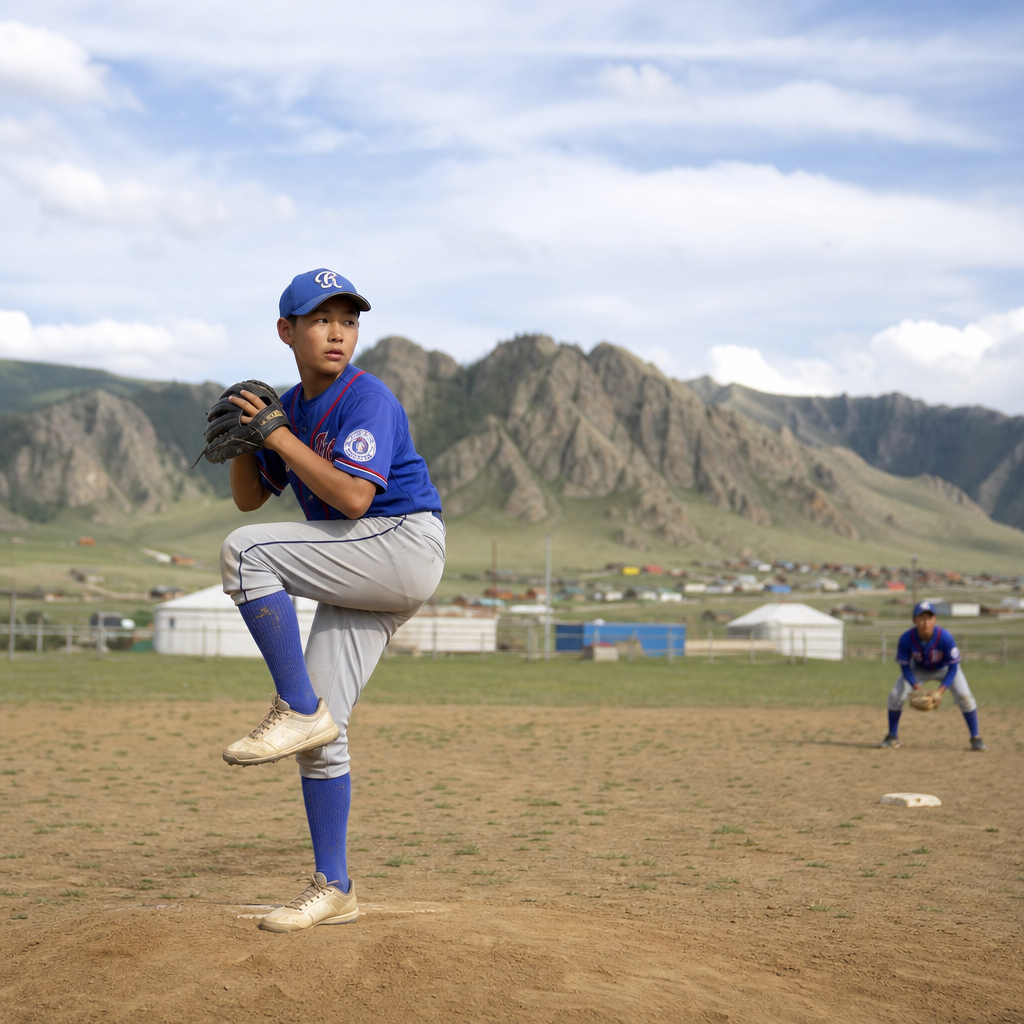
Baseball in Mongolia is a story of cultural adaptation, patient development, and surprising persistence, unfolding far from the sport’s traditional centers yet increasingly relevant within the broader map of international baseball. In this context, “Miscellaneous” does not mean unimportant; it refers to the wide set of connected subjects that do not fit neatly into national team results, league tables, or player biographies, but still determine whether a baseball culture can take root. In Mongolia, those subjects include climate, school access, field construction, equipment supply, coaching pathways, media exposure, federation work, and the practical challenge of teaching a bat-and-ball game in a country better known for wrestling, horse racing, and archery. I have worked on international baseball development projects where these overlooked factors mattered more than headlines, and Mongolia is a textbook case.
To understand baseball in Mongolia, it helps to define the baseline. Mongolia is a sparsely populated country with harsh winters, large travel distances, and a sports identity deeply shaped by nomadic history. Baseball, by contrast, depends on repeated skill practice, standardized equipment, marked fields, and a reliable competition structure. That mismatch makes Mongolia fascinating. When baseball appears there, it is not accidental. It is usually the result of deliberate introductions through schools, diplomatic exchanges, youth programs, or federation-led outreach. The sport’s existence says something important about how games travel globally: not only through television, but through teachers, volunteers, and institutions willing to build from almost nothing.
This matters because Mongolia offers a realistic lens on how emerging baseball nations develop. Unlike countries with large professional pipelines or decades of amateur tradition, Mongolia must solve basic questions first. Where do children first see the game? Who teaches throwing mechanics safely? How do teams train when winter conditions shut down outdoor facilities? What version of the sport is most practical at entry level: baseball, softball, baseball5, or a hybrid school format? These are not side issues. They decide whether participation grows or stalls. As a hub article within International Baseball, this page gathers those miscellaneous but foundational topics into one place, creating a practical overview of baseball in Mongolia from grassroots beginnings to the possibility of more formal stadium-based competition.
How baseball reached Mongolia and why the first steps mattered
Baseball in Mongolia did not emerge from a domestic professional tradition. It arrived through international contact, educational exchange, and organized promotion by people who believed the game could be taught in a new environment. In many developing baseball markets, the first phase is fragile. A few clinics, a donated equipment bag, or one teacher returning from abroad can determine whether the sport survives beyond a single season. Mongolia followed that pattern. Early growth depended less on media hype than on small, repeated acts of introduction: demonstrations in schools, youth practices, federation registration, and occasional support from overseas baseball communities.
In practical terms, early-stage baseball development usually works when organizers simplify the game without distorting it. I have seen this repeatedly in new markets. Coaches begin with basic throwing progressions, soft-toss batting, running bases, and simplified defensive positions before asking players to master full tactical play. That approach is especially important in Mongolia, where many children may come in with no previous exposure to gloves, bats, or diamond positioning. The first win is not a championship. It is creating a positive first experience that makes players want to come back. Countries that skip this stage often lose participants quickly because the learning curve feels too steep.
Mongolia’s importance within the international baseball conversation comes from this developmental honesty. It reveals what baseball looks like before commercial polish arrives. There are no illusions about instant professionalization. Growth depends on fundamentals, volunteer labor, and institutional patience. For anyone following International Baseball, Mongolia is valuable because it shows the real mechanics of expansion: schools before clubs, clinics before leagues, and community trust before spectatorship.
The practical barriers: climate, geography, and infrastructure
If someone asks why baseball is difficult to grow in Mongolia, the short answer is environment. The country’s climate includes long, severe winters that sharply limit outdoor play. Baseball is a repetition sport. Hitters need swings, fielders need ground balls, pitchers need carefully monitored throwing work, and teams need game situations. When weather removes access for months, player development slows unless indoor alternatives exist. That is why infrastructure matters more in Mongolia than in many temperate baseball nations. A modest indoor training hall can have more developmental value than a picturesque outdoor field used only seasonally.
Geography compounds the problem. Mongolia’s population is concentrated in Ulaanbaatar, while vast distances separate smaller communities. In baseball terms, distance raises costs for league play, coaching consistency, umpire development, and equipment distribution. A football match can be organized with minimal gear; baseball cannot. Teams need balls, bats, gloves, bases, catchers’ equipment, field marking supplies, and safe practice space. Even when interest exists, logistics can block participation. I have seen programs lose momentum not because children stopped caring, but because replacement balls and gloves did not arrive on time.
Field design is another overlooked factor. A regulation baseball stadium is expensive, but entry-level baseball does not require one immediately. What matters first is a safe, consistent surface, enough space for a small diamond, basic fencing if possible, and a maintenance plan. Mongolia’s developmental pathway is therefore likely to rely on multi-use grounds and school facilities before purpose-built stadiums become common. That is normal. Japan, South Korea, and Taiwan now have rich baseball infrastructure, but every emerging market begins with adaptable spaces. Mongolia’s challenge is not whether it can build major venues overnight. It is whether it can create enough reliable practice environments to support weekly repetition.
Grassroots development: schools, youth clinics, and entry formats
The strongest route for baseball in Mongolia is grassroots development anchored in schools and youth programs. In new baseball nations, schools provide three advantages at once: a steady participant pool, a structured calendar, and an educational setting where basic technique can be introduced safely. When I have evaluated international programs, the most successful were those that trained physical education teachers, not just elite coaches. That matters in Mongolia because a single federation clinic has limited reach, while teachers can expose hundreds of students to throwing, catching, and batting across an academic year.
Entry formats also matter. Full nine-inning baseball with specialized pitching and advanced rules is not the ideal first step for every beginner environment. Baseball5, tee-ball, and modified school baseball can lower barriers because they reduce equipment demands and speed up engagement. Baseball5 in particular has strategic value for Mongolia. It can be played indoors or on hard surfaces, requires no bat or glove, and introduces core ideas such as force plays, directional hitting, and base running. For a country managing climate and equipment constraints, that format is not a compromise; it is a development tool that can widen the funnel.
Youth clinics work best when they follow a progression rather than a one-off event. Players need repeat contact. A strong model is three phases: introduction, retention, and transition. Introduction means simple, enjoyable sessions. Retention means weekly practice and visible improvement. Transition means moving interested players into more formal baseball or softball teams. Mongolia’s baseball future will depend on whether programs are designed around that sequence instead of isolated promotional days.
| Development area | Why it matters in Mongolia | Most practical approach |
|---|---|---|
| School participation | Provides large numbers of first-time players | Teacher training and short in-school modules |
| Winter training | Outdoor shutdown interrupts repetition | Indoor halls, baseball5, tee work, throwing drills |
| Equipment access | Gloves and balls are expensive and hard to replace | Donations plus centralized federation inventory |
| Competition structure | Players need goals to stay engaged | Youth festivals, school leagues, short tournaments |
| Coach education | Incorrect mechanics can discourage or injure players | Basic certification and repeat mentoring |
Coaching, federation leadership, and the role of international support
No emerging baseball nation develops on enthusiasm alone. It needs leadership, and in Mongolia that means a functioning federation, dependable organizers, and coaches who can teach sound fundamentals. Good coaching is not just about motivation. It is about movement quality, progression design, and injury prevention. Throwing mechanics, in particular, must be introduced carefully. Young athletes who learn to throw with poor sequencing often struggle to progress later. In baseball countries, coaching knowledge is inherited through generations. In Mongolia, much of that knowledge must be transferred deliberately through clinics, manuals, exchange programs, and digital learning.
International support can accelerate that process, but only if it is adapted locally. I have seen imported coaching programs fail because they assumed the same field access, athlete background, and equipment availability found in established baseball nations. Mongolia needs teaching plans that fit actual conditions. That means shorter practices, flexible drills for small spaces, and clear prioritization of transferable skills: throwing, receiving, balance, reaction time, and strike-zone awareness. Support from organizations tied to global baseball and softball governance can be valuable when it provides certification pathways, competition access, and starter equipment rather than one-time publicity.
Federation leadership also shapes legitimacy. Parents, schools, and sponsors are more likely to support baseball when they see formal organization, safeguarding standards, and regular events. A national federation does more than enter teams in tournaments. It creates calendars, registers clubs, trains officials, and acts as the bridge between local participants and international opportunities. In Mongolia, that administrative backbone may be less visible than games themselves, but it is one of the strongest predictors of whether the sport can move from novelty to continuity.
Competition, visibility, and what “from steppes to stadiums” really means
Competition is where participation either hardens into culture or fades into memory. Mongolia does not need a large professional league to make baseball meaningful, but it does need recurring competition at the right levels. Youth tournaments, school championships, mixed development festivals, and national team events all serve different purposes. Youth events create retention. Domestic tournaments provide structure. International appearances create visibility and aspiration. When players can see a ladder upward, even a modest one, training becomes more purposeful.
The phrase “from steppes to stadiums” captures both geography and ambition. Mongolia’s sporting identity is rooted in open land and traditional games, yet modern sport also depends on built environments: courts, halls, diamonds, scoreboards, and spectator areas. Stadiums in this context are not only large arenas. They symbolize permanence. A marked baseball field with dugouts and regular use sends a clear message that the sport belongs. Visibility then expands through social media clips, school demonstrations, local news coverage, and international tournament participation. In emerging baseball nations, one well-run event can do more for public awareness than months of generic promotion.
For readers exploring Miscellaneous topics within International Baseball, Mongolia is a hub case because every small factor connects to the bigger picture. Equipment links to youth retention. Indoor space links to winter survival. Federation planning links to sponsor confidence. Coaching links to safety and skill. Competition links to identity. If you follow global baseball, Mongolia is worth watching precisely because its progress will be measured not only by wins, but by whether the sport becomes repeatable, visible, and locally owned. Track the schools, the clinics, the facilities, and the federation calendar. That is where Mongolia’s baseball future will be decided.
Frequently Asked Questions
How did baseball first take hold in Mongolia, a country more closely associated with wrestling, horse racing, and archery?
Baseball in Mongolia emerged not through a single dramatic breakthrough, but through steady cultural exchange, educational contact, and the efforts of dedicated local organizers who saw value in introducing a globally recognized team sport into a very different athletic landscape. Unlike countries where baseball arrived through military occupation, mass migration, or long-standing commercial ties, Mongolia encountered the game more gradually. Exposure came through international schools, foreign coaches, development programs, embassy-supported initiatives, and regional sports connections, especially with East Asian countries where baseball already had a stronger institutional presence. That slower arrival matters because it shaped baseball’s identity in Mongolia as a learned, adapted sport rather than an inherited one.
The reason baseball could take root at all is that Mongolia already possessed several cultural traits that made the game surprisingly compatible, even if it was unfamiliar. Mongolian sports culture respects discipline, repetition, toughness, and technical skill under harsh conditions. Those values transfer well to baseball, particularly in pitching, defensive work, and player development. At the same time, the country’s strong youth education networks and interest in international engagement created openings for baseball to be introduced as both a sport and a form of global participation. For many early players and coaches, baseball was not just recreation; it was a chance to connect with a wider sporting world.
Still, acceptance was never automatic. Baseball had to compete with deeply rooted national sports, limited resources, and a public that often had little understanding of the rules. That meant growth depended heavily on patient grassroots work: teaching fundamentals, building awareness, organizing clinics, translating concepts into locally understandable terms, and proving that the game could be enjoyable and sustainable. In that sense, the Mongolian baseball story is less about instant popularity and more about persistence. It took hold because a small but committed community kept building it step by step, often with very modest means.
What makes developing baseball in Mongolia especially challenging?
Mongolia presents a unique set of structural and environmental challenges for baseball development, and those challenges go far beyond simply needing more players. Climate is a major factor. Long, severe winters shorten outdoor training seasons and make year-round field use difficult. Baseball is a sport that depends heavily on repetition, regular competition, and consistent access to practice space, so when weather limits field time, development naturally slows. Indoor alternatives can help, but they require facilities, equipment, and funding that are not always available.
Geography also matters. Mongolia is vast, and its population is relatively small and unevenly distributed. That creates logistical problems for league play, coaching networks, and talent identification. In more established baseball countries, players often benefit from dense local competition and frequent games. In Mongolia, travel distances can make even basic scheduling complicated and expensive. A sport grows faster when athletes can play often against varied opponents, and that is simply harder to organize in a country where sports infrastructure is concentrated and transportation costs can be limiting.
Then there is the issue of infrastructure itself. Baseball requires specific equipment and spaces that are not easily substituted at competitive levels. Gloves, bats, helmets, catcher’s gear, balls, pitching areas, fencing, and maintained diamonds all contribute to a functioning baseball environment. In a developing baseball nation, these are not minor details; they are foundational. Without them, coaches spend valuable time improvising rather than advancing players. Even where enthusiasm exists, material shortages can limit what that enthusiasm becomes.
Finally, baseball in Mongolia must compete for attention. Traditional sports carry deep historical meaning and broad social recognition, while globally popular sports such as basketball and football can be easier to understand quickly and cheaper to organize at entry level. Baseball’s rules, pacing, and specialized positions can seem unfamiliar to new audiences. That means the challenge is not only athletic but educational and cultural. Coaches and advocates must teach the game, explain the game, and justify the game all at once. The fact that baseball continues to develop despite these obstacles is one of the clearest signs of its resilience in Mongolia.
Why are “miscellaneous” factors so important to the growth of baseball in Mongolia?
In an emerging baseball nation like Mongolia, the so-called “miscellaneous” factors are often the real engine of progress. These are the elements that do not always appear in standings, tournament summaries, or player profiles, yet they determine whether the sport can build durable roots. They include school involvement, volunteer leadership, access to equipment, translation of coaching materials, public awareness, media visibility, parental support, municipal cooperation, and the simple ability to find safe, usable practice space. In established baseball countries, these systems are often taken for granted. In Mongolia, they are decisive.
For example, a national team result might attract attention, but if schools do not offer consistent youth participation, that attention rarely turns into long-term growth. A promising player can generate excitement, but if there is no coaching pathway behind that player, the example remains isolated. Likewise, a local league may exist on paper, yet without transport support, scheduling stability, umpiring standards, and a small but dependable base of volunteers, the league may struggle to survive. What appears “miscellaneous” from a distance is often what separates a symbolic baseball presence from a functioning baseball culture.
These factors are especially important in Mongolia because the sport is still in the process of social translation. Baseball has to be made legible to communities that may not grow up with it. That means terminology must be explained, value must be demonstrated, and local ownership must be encouraged. A successful baseball program in Mongolia is not only training athletes; it is building understanding among teachers, families, administrators, and local partners. It is showing why this sport deserves time, space, and belief.
So in this context, “miscellaneous” should be read as connective tissue. It includes all the practical and cultural supports that help baseball move from novelty to habit. Those supports may seem secondary compared with games and trophies, but in reality they are often primary. Without them, baseball remains an occasional event. With them, it has a chance to become part of Mongolia’s broader sporting future.
What role do youth programs and schools play in the future of Mongolian baseball?
Youth programs and schools are central to the future of baseball in Mongolia because they provide the most realistic pathway for building continuity. In countries where baseball is still developing, adult participation alone rarely creates a sustainable sporting ecosystem. Growth depends on introducing the game early, teaching fundamentals correctly, and giving young players enough repetition and structure to improve over time. Schools are uniquely suited to this because they already bring together students, schedules, educators, and communities in one place.
For Mongolia, school-based baseball can do more than produce athletes. It can normalize the sport. When children encounter baseball through physical education, after-school clubs, local tournaments, or coached clinics, the game stops being something distant or foreign and starts becoming something familiar. That familiarity is crucial. A sport grows not only because elite players emerge, but because large numbers of people understand the basics, recognize the equipment, know the rules, and see participation as plausible. Schools are where that broad recognition can begin.
Youth programs also help solve one of baseball’s biggest development challenges: the need for progressive skill building. Baseball is difficult to learn well without good instruction and repeated practice. Hitting mechanics, throwing accuracy, base running decisions, fielding technique, and game awareness all require time. A school or youth system can provide age-appropriate entry points, allowing players to develop gradually rather than being asked to grasp the whole sport at once. This is especially valuable in Mongolia, where many players are encountering baseball for the first time and may not have family traditions in the sport to guide them.
Equally important, youth and school programs create future coaches, officials, and supporters. Not every student will become a competitive player, but many can remain connected as volunteers, teachers, organizers, or fans. That wider participation base is essential in an emerging baseball environment. If Mongolia is to move from isolated enthusiasm to durable baseball culture, schools and youth programs will likely be the foundation on which everything else is built.
Can Mongolia realistically become a meaningful part of international baseball?
Yes, but the key is to define “meaningful” in realistic, developmental terms rather than only by comparing Mongolia to the world’s traditional baseball powers. Mongolia does not need to become a global heavyweight overnight to matter in international baseball. A country becomes meaningful when it builds stable participation, improves coaching quality, sustains domestic activity, appears regularly in regional and international competition, and contributes to the sport’s geographic diversity. By that standard, Mongolia already has the potential to matter, precisely because its baseball story expands the map of where the sport can live and grow.
International baseball increasingly values development beyond its historic centers. Federations, regional bodies, and development partners understand that the future of the sport depends not only on strengthening elite nations but also on supporting emerging ones. Mongolia fits into that broader trend. Its progress may be incremental, but incremental progress is how most baseball nations are built. Better youth training, more regular competition, improved facilities, stronger coaching education, and deeper administrative capacity can all raise Mongolia’s level over time. None of those steps are glamorous individually, but together they can transform a peripheral baseball scene into a credible and respected one.
There is also symbolic importance here. When baseball succeeds in a place like Mongolia, it