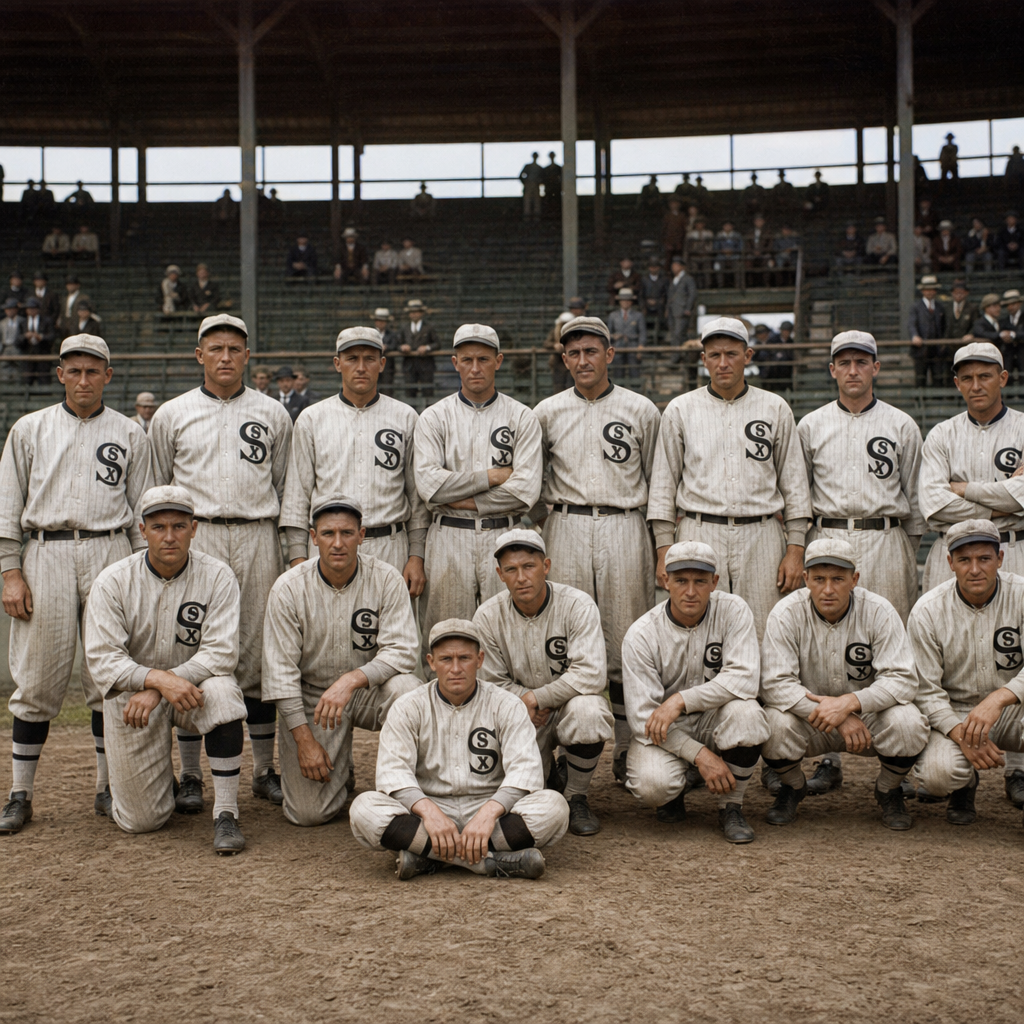
The 1919 Black Sox Scandal remains the defining corruption case in American baseball because it combined championship stakes, organized gambling, weak league oversight, and a lasting crisis of public trust. At its core, the scandal involved members of the Chicago White Sox accused of conspiring with gamblers to throw the 1919 World Series against the Cincinnati Reds. The term “Black Sox” does not refer to race; it became a label for the disgraced players, though its exact origin is debated. As a hub topic within scandals and controversies, this episode also opens the door to broader questions about match fixing, labor resentment, media influence, league governance, and how sports institutions rebuild credibility after betrayal.
Understanding the 1919 Black Sox Scandal requires more than repeating the familiar headline that “eight men out” sold the Series. The useful questions are specific: why were players vulnerable, who organized the fix, how was the plot supposed to work, what evidence emerged, and why did acquittal in court not save the players from banishment? I have worked through contemporary reporting, trial summaries, box scores, and the findings later popularized by historians such as Eliot Asinof, and one lesson stands out: the scandal was not a simple morality play. It grew from the conditions of baseball in the dead-ball and immediate postwar era, especially owner-player tensions, low transparency, and a gambling culture that sat close to the game.
The Chicago White Sox were one of the strongest clubs in baseball. Led by stars including Shoeless Joe Jackson, Eddie Cicotte, and Lefty Williams, they had the talent to win fairly. Yet owner Charles Comiskey had a reputation for frugality, and several players believed they were underpaid relative to their value. That grievance did not excuse corruption, but it helps explain motive. In 1919, Major League Baseball lacked a powerful centralized commissioner. The National Commission, made up of club-connected officials, struggled to impose uniform discipline or to distance the sport from gambling interests. In practical terms, baseball had prestige but fragile governance, a dangerous combination when a championship offered a huge target for fixers.
Another key term is “game fixing,” meaning a deliberate effort to manipulate the result of a contest for financial gain. In the Black Sox case, the mechanism was straightforward: players would intentionally underperform, especially through poorly timed mistakes, while gamblers profited from bets on Cincinnati. That mattered because baseball depends on the assumption that every pitch, swing, and fielding play reflects honest competition. Once spectators suspect that outcomes can be purchased, every error looks suspicious. The scandal therefore mattered far beyond one October series. It reshaped baseball’s power structure, led to the appointment of Commissioner Kenesaw Mountain Landis in 1920, and established one of the harshest integrity precedents in American sports history.
How the fix took shape before the 1919 World Series
The conspiracy developed through overlapping conversations among unhappy players and professional gamblers. First baseman Chick Gandil is usually identified as the key player-organizer. He had connections to gambling circles and approached others about throwing the Series. The names most commonly associated with the plan are Gandil, Cicotte, Swede Risberg, Lefty Williams, Buck Weaver, Fred McMullin, Happy Felsch, and Jackson, though historians continue to debate exactly how fully each man understood the arrangement and when. On the gambling side, figures such as Joseph “Sport” Sullivan and Abe Attell, a former boxing champion linked to Arnold Rothstein’s orbit, appear repeatedly in contemporary accounts. The chain of command was murky, which is typical in betting conspiracies: money, deniability, and rumor move together.
The financial structure was a central problem. Players expected payment for losing, but gamblers did not always deliver on time or in full. Cicotte, one of the team’s best pitchers, was allegedly promised $10,000, an enormous sum in 1919. According to later accounts, he was signaled to begin the fix by hitting the first Cincinnati batter in Game 1. Whether every participant interpreted the same signals the same way remains disputed, but the practical objective was clear: create enough losing plays to swing games without making the fraud too obvious. That is easier in baseball than many sports because individual mistakes can be disguised as ordinary failure: a hanging pitch, a muffed grounder, a poor relay, or passive batting in key spots.
The 1919 World Series itself was a best-of-nine format, used from 1903 through 1921 in several years. Cincinnati won five games to three. Several contests later drew scrutiny because White Sox mistakes clustered at crucial moments. Cicotte lost Game 1 and was hit hard after his opening plunk. Lefty Williams also delivered poor outings. Yet the evidence was never clean in the way modern fans might expect. Jackson hit .375 in the Series and drove in runs, facts long used by defenders who argue he did not play like someone trying to lose. Weaver, likewise, was accused of knowing about the scheme without reporting it, not of poor on-field effort. These distinctions would become vital when the scandal exploded publicly.
What happened in the World Series and why suspicion grew
Suspicion during the Series came from both betting markets and baseball observers. Odds reportedly shifted in unusual ways before Game 1, attracting notice because the White Sox had entered as favorites. In any betting market, sharp movement without an obvious injury explanation is a warning sign, and newspaper men understood that. On the field, Cincinnati played well and deserved credit, especially for timely hitting and steadier execution, but several White Sox lapses seemed too convenient. Cicotte committed a costly throwing error in Game 4. Williams collapsed in a disastrous first inning in Game 8. When those moments were viewed alongside rumors already circulating in gambling circles, they fueled the sense that more than pressure was involved.
The scandal is often misremembered as instantly obvious to the entire public. It was not. Many fans simply saw an upset. Baseball in 1919 was still a sport where low-scoring games, bunting, uneven field conditions, and defensive miscues were common. That context matters. A modern analyst with Statcast data, pitch tracking, and dense video archives would investigate differently. In 1919, observers relied on scorecards, newspaper narratives, and clubhouse gossip. Because the evidence was circumstantial at first, denials held for months. The White Sox still finished with the American League pennant in 1920 and were playing excellent baseball before the case detonated. That delay shows how corruption can survive when oversight is fragmented and proof standards are unclear.
What changed was accumulation. Reports of players talking loosely, disputes over missing payoff money, and the wider anti-gambling push around baseball created pressure for formal inquiry. A grand jury in Chicago investigating gambling in baseball heard testimony in 1920, and admissions followed. Cicotte confessed. Jackson gave a statement. Their confessions, however, later became entangled in claims of coercion, missing transcripts, and legal confusion. This is one reason the Black Sox Scandal still attracts debate: the moral picture is strong, but the documentary trail is imperfect. Historians have to weigh testimony, contradictory recollections, and financial motives rather than rely on a single uncontested record.
The eight accused players and the roles they allegedly played
The phrase “Eight Men Out” fixed the public memory, but the accused men were not identical in conduct. Gandil was widely seen as the ringleader among players. Cicotte and Williams were the pitchers most connected to games believed to be compromised. Risberg and McMullin were often cast as active participants in clubhouse planning. Felsch, an outfielder, was accused of agreeing to help for payment. Jackson’s role remains the most contested because his Series statistics were strong and his literacy limitations may have affected how he handled statements and contracts. Weaver presents a different category entirely: authorities concluded he knew of the fix and failed to report it, a silence Landis later treated as unforgivable.
| Player | Primary role on team | Common historical assessment |
|---|---|---|
| Chick Gandil | First baseman | Principal player organizer of the fix |
| Eddie Cicotte | Starting pitcher | Key participant; confessed involvement |
| Lefty Williams | Starting pitcher | Linked to compromised starts, especially Game 8 |
| Swede Risberg | Shortstop | Active supporter within clubhouse |
| Fred McMullin | Utility infielder | Included after learning of plot and demanding a share |
| Happy Felsch | Center fielder | Accused participant who admitted accepting money |
| Shoeless Joe Jackson | Outfielder | Most debated case; performance conflicted with accusations |
| Buck Weaver | Third baseman | Accused of knowing but not reporting, not playing to lose |
That variation matters because the scandal became a test case for whether sports should punish only proven game manipulation or also punish knowledge without disclosure. Landis chose the broader standard. In 1921, after a jury acquitted the eight players of criminal conspiracy, he banned them all from organized baseball for life. His position was explicit: regardless of the court verdict, any player who threw a game, discussed throwing a game, or sat on knowledge of a fix without informing club officials had no place in baseball. This was governance by absolute deterrence. It sacrificed nuance for a bright line, but it stabilized the sport at a moment when public confidence was collapsing.
For modern readers, that policy can look both understandable and severe. Weaver’s permanent ban remains controversial because many accounts agree he played hard. Jackson’s supporters point to his hitting line, his outfield assists, and the possibility that he sought advice from Comiskey but was brushed aside. Critics answer that accepting money or concealing a conspiracy is enough. The unresolved tension is important because it appears in later sports scandals too: institutions often punish not just the act, but the failure to protect the integrity system. In compliance terms, silence is treated as a form of participation when the stakes are existential.
The investigation, trial, and Landis decision
The legal path from rumor to banishment was messy. In September 1920, as another pennant race was unfolding, a Cook County grand jury began investigating gambling influences in baseball. Cicotte confessed first, describing the agreement to throw the Series. Jackson also testified before the grand jury. Those admissions electrified the press and effectively ended any chance that baseball could contain the matter internally. Yet the later criminal trial in 1921 did not produce convictions. Defense lawyers challenged the reliability of statements, key documents disappeared, and prosecutors struggled to prove conspiracy beyond a reasonable doubt. The jury acquitted all eight players, illustrating a basic truth of sports corruption cases: legal guilt and institutional discipline are separate questions.
Landis, a federal judge chosen as baseball’s first commissioner in 1920, understood that distinction perfectly. Owners hired him because they needed a figure with public authority independent from club politics. His response to the acquittal was immediate and uncompromising. He announced that no player who fixed a game, promised to fix one, or failed to report a fixing discussion would ever play professional baseball again. That statement restored clarity. It told fans, bookmakers, and players that baseball would not wait for criminal courts to defend competitive integrity. The practical impact was enormous. The commissioner’s office became the sport’s central disciplinary power, and gambling became baseball’s clearest red line for generations.
Legacy, myths, and why the Black Sox Scandal still matters
The long-term significance of the Black Sox Scandal is larger than the 1919 World Series outcome. It changed how leagues govern risk. Baseball moved toward centralized authority, stronger investigative practices, and explicit rules against gambling. The case also shaped sports culture through books, documentaries, and the 1988 film Eight Men Out, which introduced the story to audiences far beyond baseball historians. At the same time, myths hardened. One myth is that every accused player performed badly; Jackson clearly did not. Another is that Comiskey’s stinginess alone caused the scandal; labor resentment mattered, but greed, access to gamblers, and weak enforcement mattered more. Corruption usually needs several enabling conditions, not one villain.
The scandal also remains relevant because modern sports still confront integrity threats, now amplified by legal betting markets, digital platforms, and global wagering liquidity. Leagues today use integrity monitoring services, data-sharing agreements, and reporting protocols that did not exist in 1919. Even so, the core lesson has not changed: when athletes, officials, or insiders believe outcomes can be monetized secretly, the entire product is at risk. That is why the Black Sox story belongs at the center of any scandals and controversies hub. It connects to game-fixing in other sports, commissioner power, athlete compensation disputes, media framing, and the permanent challenge of balancing due process with institutional trust. If you want to understand how sports survive scandal, start here, then explore the related controversies that followed in its shadow.
Frequently Asked Questions
What was the 1919 Black Sox Scandal, and why is it so important in baseball history?
The 1919 Black Sox Scandal was a conspiracy in which several members of the Chicago White Sox were accused of agreeing with gamblers to intentionally lose the 1919 World Series to the Cincinnati Reds. The allegations centered on the idea that players, frustrated by low pay and poor treatment from team owner Charles Comiskey, accepted money in exchange for underperforming during baseball’s biggest championship. Although rumors circulated almost immediately after the Series, the scandal fully erupted in 1920, when a broader crackdown on gambling in baseball exposed testimony, confessions, and connections between players and betting figures.
Its importance goes far beyond one fixed championship. The scandal struck at the heart of baseball’s identity as America’s national pastime. Fans were not just upset that a team may have cheated; they were shaken by the possibility that the game itself could be manipulated behind the scenes. At a time when baseball depended heavily on public faith, the idea that the World Series could be influenced by gamblers created a deep crisis of confidence.
The scandal also changed the structure of Major League Baseball. In response, team owners created the office of the Commissioner and gave Judge Kenesaw Mountain Landis sweeping authority to protect the integrity of the sport. His decision to ban eight White Sox players for life, even after they were acquitted in court, sent a blunt message that baseball would prioritize public trust over legal technicalities. For that reason, the Black Sox Scandal remains the defining corruption case in American baseball history: it exposed the dangers of gambling, revealed how weak league oversight had been, and reshaped the sport’s governance for generations.
Who were the “Black Sox,” and what does the name actually mean?
The “Black Sox” were the group of Chicago White Sox players associated with the alleged plot to throw the 1919 World Series. The eight players eventually banned from organized baseball were Eddie Cicotte, Claude “Lefty” Williams, Shoeless Joe Jackson, Buck Weaver, Chick Gandil, Swede Risberg, Fred McMullin, and Happy Felsch. Not every player was accused of playing the same role. Some were described as active organizers, some as participants, and some as men who knew what was happening but did not report it. That distinction has mattered ever since, especially in debates about Shoeless Joe Jackson and Buck Weaver.
The term “Black Sox” does not refer to race. Instead, it became a label for disgraced players linked to the scandal. The exact origin of the nickname is still debated. One common story connects it to complaints about dirty or poorly washed uniforms under owner Charles Comiskey, but historians have never treated that explanation as fully settled. What is clear is that by the early 1920s, “Black Sox” had become shorthand for shame, betrayal, and baseball corruption.
The nickname endured because it captured the moral stain of the event in a way that was easy for the public and the press to remember. Even today, when people hear “Black Sox,” they usually think not just of the eight banned players, but of the broader lesson that talent and success do not protect a sport from ethical collapse. The name has become part of baseball vocabulary, even though its original meaning is more complicated than many assume.
Did the players really throw the World Series, and what evidence supported the accusations?
The historical consensus is that there was a real conspiracy involving players and gamblers, even though not every detail is perfectly documented and not every game action can be neatly explained. Several pieces of evidence strongly supported the accusations. In 1920, during a grand jury investigation, some players gave confessions describing meetings with gamblers, discussions of payment, and plans to influence the Series. Pitcher Eddie Cicotte admitted involvement, and other statements tied additional players to the plot. Reports also pointed to suspicious betting patterns, including unusual money placed on the Reds.
On the field, observers noted costly mistakes and questionable performances that seemed to match rumors of a fix. Cicotte, one of the White Sox’s top pitchers, was accused of signaling the conspiracy’s start by hitting a batter. Lefty Williams also delivered poor outings under suspicious circumstances. That said, the actual Series was not a simple matter of every player obviously trying to lose every play. Some participants may have tried harder in certain games than in others, some may have become nervous when promised payments did not arrive in full, and some may have mixed real competition with corrupt intent. That complexity has fueled debate for more than a century.
A major complication is that key written confessions later disappeared, making the documentary record incomplete. At the criminal trial in 1921, the defense benefited from that confusion, and the eight accused players were acquitted. Even so, acquittal did not erase the broader body of evidence or the public perception that the Series had been compromised. Historians generally conclude that the scandal was real, though they continue to examine the degree of involvement by individual players and the exact mechanics of how the fix unfolded.
Why were the players banned for life if they were found not guilty in court?
This is one of the most important distinctions in the story: criminal acquittal and eligibility to play professional baseball were never the same thing. In 1921, the accused players were found not guilty in a courtroom, but baseball’s leadership believed the sport faced a larger crisis than the legal case alone could resolve. The owners had just installed Judge Kenesaw Mountain Landis as the first Commissioner of Baseball specifically to restore confidence in the game. Landis understood that fans needed a firm public response, not a narrow legal reading of guilt.
After the trial, Landis permanently banned all eight players from organized baseball. He made his reasoning explicit: regardless of whether a jury convicted them, any player who fixed a game, attempted to fix a game, or knew about a fix and failed to report it had no place in the sport. That standard was designed to be stricter than criminal law. Baseball, in Landis’s view, had to police itself aggressively because its survival depended on credibility. If fans believed outcomes could be bought, the sport’s foundation would collapse.
The lifetime bans also reflected the era’s weak earlier oversight. Before the scandal, baseball had no single strong authority capable of dealing decisively with gambling-related corruption. Landis’s action established a new precedent: preserving the integrity of competition came before protecting individual careers. Whether people agree with every ban equally is another question. Buck Weaver, for example, insisted he did not participate in throwing games, but he admitted knowing about the scheme and not reporting it. Shoeless Joe Jackson’s role remains especially controversial. Still, Landis chose a hard line because baseball wanted to prove that even the appearance of compromised competition would carry the harshest consequences.
How did the Black Sox Scandal change baseball, and why does it still matter today?
The scandal transformed baseball institutionally, culturally, and morally. Institutionally, it led directly to stronger centralized authority. The old system, in which club owners and weak governing structures struggled to manage crises, was no longer seen as adequate. The appointment of Commissioner Landis gave baseball a powerful figure who could act independently in the name of the game’s integrity. That model shaped professional sports governance for decades, not just in baseball.
Culturally, the scandal damaged and then redefined the relationship between fans and the sport. Before 1919, many people already knew gambling existed around baseball, but the idea that the World Series itself could be compromised made the problem impossible to dismiss. Fans had to confront a painful question: was what they were watching authentic competition or staged deception? Baseball’s response, especially the lifetime bans, was meant to answer that question by drawing a clear line between the game and gambling influence.
The scandal still matters today because its core issues remain relevant. Sports leagues continue to wrestle with betting, insider influence, player vulnerability, public trust, and the need for transparent governance. As legalized sports gambling has expanded in modern times, the Black Sox story has become newly instructive. It reminds leagues that even rumors of compromised integrity can be deeply damaging, and that the public expects swift, credible safeguards. More than a century later, the Black Sox Scandal endures not only as a dramatic baseball story, but as a case study in how corruption can threaten an entire sport—and how difficult it is to rebuild trust once that damage is done.