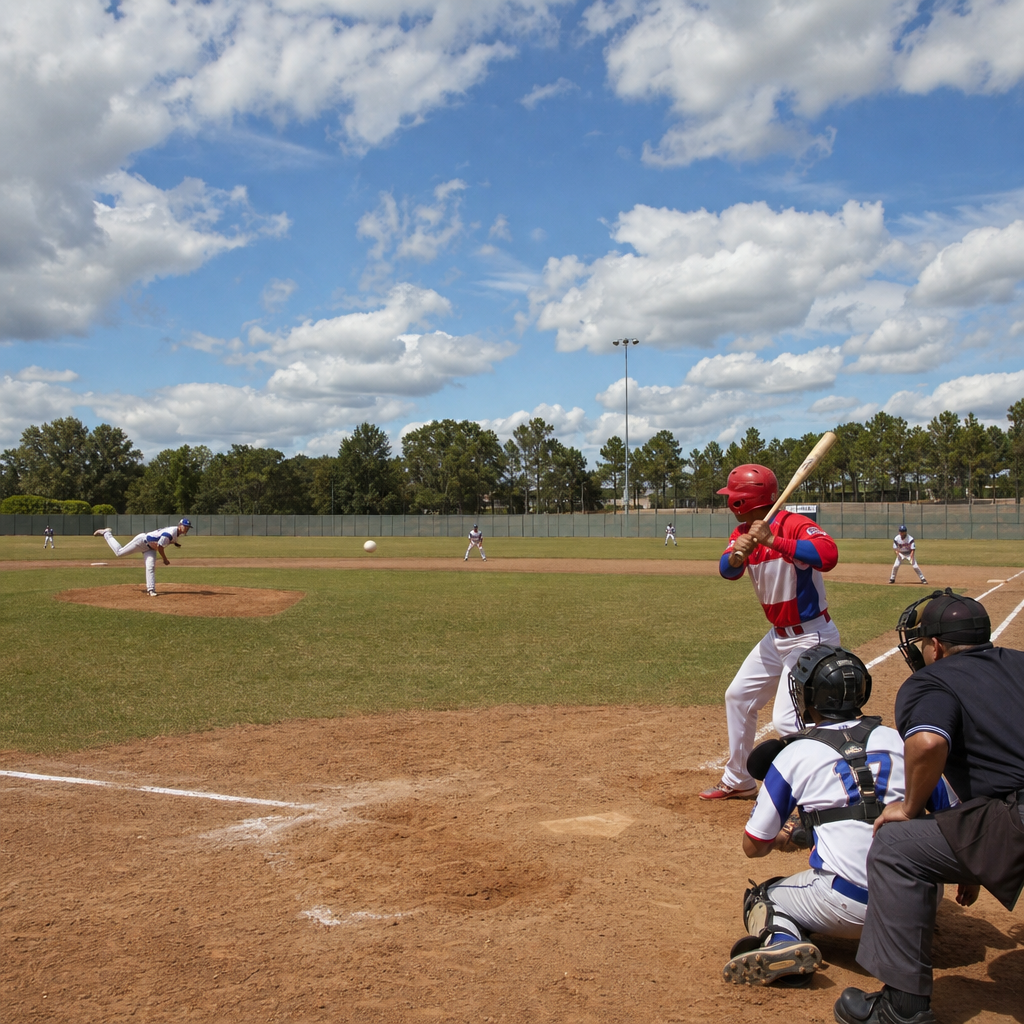
Baseball in Paraguay remains a small but revealing chapter in international baseball, shaped by migration, school sport, regional influence, and the practical challenge of building a diamond game in a football-first country. When discussing the development of baseball in Paraguay, it helps to define the key terms clearly. “Development” means more than a national team appearing at a tournament. It includes youth participation, coaching standards, equipment access, umpire training, field availability, federation governance, and regular competition. “Miscellaneous” in this subtopic matters because Paraguay does not fit the better-known models seen in the Dominican Republic, Japan, or even nearby Venezuela. Its baseball story is fragmented, locally driven, and often documented through tournament records, federation notices, and regional baseball networks rather than mainstream sports coverage.
I have worked with international baseball research long enough to know that countries like Paraguay are often misunderstood. They are described as “new” baseball nations, yet that label hides decades of sporadic activity. In Paraguay, the sport has appeared in schools, expatriate communities, and organized amateur settings, but it has struggled to secure a stable place within the national sports ecosystem. That matters because minor baseball nations are essential to the sport’s global future. They show how baseball spreads outside traditional power centers, what infrastructure is truly necessary, and why governance and continuity often matter more than raw enthusiasm.
For readers exploring international baseball, Paraguay offers a useful hub case. It connects several recurring themes: South American cross-border influence, the role of national federations, the importance of women’s and youth pathways, and the reality that baseball growth depends on patient institution-building. Understanding baseball in Paraguay also helps frame related topics under miscellaneous international baseball coverage, from tournament participation to grassroots constraints. The country has not produced the volume of elite professional talent seen elsewhere, but its baseball community has persisted, adapted, and repeatedly sought regional visibility. That persistence is the core of the story and the reason Paraguay deserves serious attention within any complete guide to international baseball.
Historical Roots and Early Influences
The history of baseball in Paraguay is not marked by one dramatic founding moment. Instead, the sport arrived through layered influences, especially contact with neighboring countries where baseball had stronger organizational roots, along with diplomatic, educational, and expatriate channels. In South America, baseball diffusion often followed trade links, migration, military relationships, and school exchange. Paraguay, being landlocked and culturally dominated by football, did not receive the same sustained baseball exposure as Caribbean-facing nations. That limited early expansion, but it did not prevent the sport from taking hold in small circles.
From the late twentieth century onward, baseball in Paraguay surfaced intermittently through clubs, school initiatives, and federation efforts tied to continental governing bodies. The pattern resembled what I have seen in several emerging federations: a burst of enthusiasm around a tournament cycle, then a lull caused by limited fields, scarce equipment, and a shortage of trained coaches. Because baseball requires specialized space and gear, it is harder to sustain casually than football or futsal. A country can love sport generally and still find baseball difficult to maintain without institutional backing.
Regional events were especially important. South American baseball competition, though overshadowed by football, created incentives for Paraguay to organize teams and seek recognition. Once a country participates internationally, even at a modest level, it usually needs a federation, selection process, basic coaching structure, and some recordkeeping. Those administrative steps become the skeleton of a national baseball system. In Paraguay’s case, progress has often been uneven, but every regional appearance has helped keep the sport visible and given players a reason to remain involved.
Governance, Federation Work, and the Reality of Building Structure
No baseball nation develops without governance, and in Paraguay the federation layer has been decisive. A national baseball or baseball-softball federation typically handles affiliation with continental and global bodies, registration of athletes, scheduling of domestic activity, and coordination of national teams. In larger baseball countries, fans may barely notice this machinery. In Paraguay, it is the machinery. Without it, baseball activity becomes isolated exhibitions rather than a durable sports program.
In practical terms, federation work in Paraguay has meant organizing clinics, identifying available playing spaces, sourcing donated or imported equipment, and maintaining enough administrative legitimacy to enter regional events. That may sound mundane, but it is the difference between a sport existing on paper and existing in daily life. I have seen how one committed federation official can keep a small baseball nation moving forward for years, while one governance breakdown can erase entire age-group cycles. Paraguay’s experience fits that pattern closely.
There are also important limitations. Small federations often rely on volunteers, have thin budgets, and must navigate national Olympic committee systems that prioritize sports with larger domestic audiences. Baseball administrators in Paraguay therefore face a dual task: prove the sport’s local value while also satisfying continental requirements. This includes compliance, reporting, competition planning, and coach development. In emerging baseball nations, credibility matters. Partners are more willing to send equipment, technical support, or tournament invitations when they trust the federation can turn assistance into measurable activity.
One of the most useful ways to understand Paraguay’s baseball structure is to compare the needs of development work directly.
| Development Area | Why It Matters in Paraguay | Typical Constraint | Practical Response |
|---|---|---|---|
| Fields | Baseball needs fixed dimensions and safe surfaces | Few dedicated diamonds | Shared grounds, modified layouts, phased upgrades |
| Equipment | Bats, gloves, helmets, balls, and catcher gear are essential | Import cost and limited local supply | Donation drives and federation-managed distribution |
| Coaching | Skill development depends on technical instruction | Small pool of certified coaches | Clinics with regional instructors |
| Youth Pathways | Long-term growth requires children entering the sport early | Competition from football and school schedules | School outreach and weekend programs |
| Competition | Players improve through regular game repetition | Few clubs and long travel distances | Compact domestic calendars and regional friendlies |
| Visibility | Sponsors and families support sports they can see | Minimal media coverage | Social media, local events, and national team promotion |
Domestic Competition, Player Development, and Grassroots Growth
Domestic competition in Paraguay has historically been limited in scale, but it is still the central engine of baseball development. A country does not need a huge professional league to improve; it needs repeatable player pathways. That means children learning basic throwing mechanics, teenagers seeing a reason to continue, and adults having organized competition that retains experienced players as future coaches or umpires. In Paraguay, where the baseball population is relatively small, every participant matters twice: once as an athlete and again as part of the sport’s next support layer.
Grassroots baseball usually starts with simplified instruction. New players must learn grip, footwork, field positioning, cutoffs, force plays, tagging rules, and pitch recognition. In countries where baseball is culturally embedded, children absorb many of these concepts informally. In Paraguay, coaches often have to teach the game from first principles. That makes coaching quality unusually important. A good introductory coach can create lifelong players; a poor one can make baseball feel confusing and inaccessible within a few sessions.
The equipment barrier is also significant. A beginner football player can start with little more than a ball and open space. Baseball asks for gloves in multiple sizes, balls that wear out quickly, batting helmets, catcher’s gear, bases, and often a pitching mound or at least a safe approximation. For Paraguayan clubs, careful equipment management is therefore part of player development. Shared gloves, rotating catcher sets, and staged training plans are common realities rather than signs of failure.
Where Paraguay has shown resilience is in using small communities efficiently. Emerging baseball countries often grow through concentrated nodes rather than broad national spread. One school, one club, or one district can become a development anchor if it has a reliable coach and a playable field. From there, exhibition games, youth festivals, and regional camps create momentum. This is slow growth, but it is durable growth. The most successful small federations do not chase scale first; they stabilize one functioning baseball environment and then copy it carefully.
International Competition and Paraguay’s Place in South America
International competition has given Paraguayan baseball some of its clearest reference points. Even when results have been modest, tournament participation provides benchmarks that domestic play cannot. Players see the pace of stronger opponents, coaches identify tactical gaps, and administrators learn what standards are expected in areas such as roster management, scoring, field preparation, and medical support. For a developing baseball nation, these lessons are invaluable.
South America presents a steep competitive ladder. Countries such as Venezuela are global baseball powers, while others have deeper amateur traditions, stronger club systems, or longer federation histories than Paraguay. That means Paraguay often enters tournaments as an underdog. Yet underdog status is not developmental failure. In fact, regular exposure to higher-level competition is one of the fastest ways to sharpen a baseball program, provided the defeats are turned into training priorities rather than discouragement.
International events also help with legitimacy at home. When a Paraguayan national team travels, posts results, and appears in regional baseball calendars, families and local institutions can see that the sport has a real pathway beyond casual recreation. This matters for retention. Teenagers are more likely to stay in baseball when they know a national uniform, a South American championship, or an international friendship series is possible. The pathway does not need to be glamorous; it needs to be visible and credible.
Another point often overlooked is that international baseball participation improves technical literacy across the whole federation. Scorekeeping standards, pitch count rules in youth events, anti-doping compliance, eligibility checks, and tournament accreditation all push a small baseball system toward professionalism. Paraguay’s baseball future depends partly on wins and losses, but just as much on mastering these operational details that make repeated participation possible.
Challenges, Opportunities, and the Future of Baseball in Paraguay
The biggest challenge facing baseball in Paraguay is not lack of interest alone; it is competition for attention, space, and resources within a crowded sports culture led overwhelmingly by football. That affects everything from public funding to media exposure to family decisions about where children spend their time. Baseball must therefore offer something distinctive: structured development, international opportunities, and a strong community identity. In my experience, that is exactly how smaller baseball nations survive.
Infrastructure remains the clearest obstacle. Dedicated baseball fields are rare, and field quality shapes both safety and skill acquisition. Infield consistency matters for developing proper defensive footwork. Outfield dimensions affect game realism. Bullpen space matters for pitcher preparation. When facilities are improvised, coaches must adapt, but adaptation has limits. Paraguay’s next stage of baseball growth will depend heavily on securing stable venues that can host youth practices, league play, and coaching education.
At the same time, there are real opportunities. Digital visibility has lowered the barrier to promotion. A federation with disciplined social media, clear event photography, and timely results can now look more established than small sports bodies once could. Partnerships with schools, embassies, foreign coaches, and neighboring baseball programs can also accelerate growth. Softball links may be especially useful because combined administrative structures often help preserve field use, shared equipment pools, and wider participation.
Women’s baseball and girls’ pathways should also be part of any serious growth plan. Small federations cannot afford to ignore half the talent base. Similarly, baseball5, the urban five-on-five discipline backed by global baseball authorities, can serve as an entry point where full-diamond infrastructure is unavailable. It is not a substitute for nine-inning baseball, but it can broaden awareness, introduce rules, and recruit new players into the larger baseball ecosystem.
Baseball in Paraguay is still developing, but the direction is clear. Sustainable progress comes from governance, youth coaching, usable fields, consistent domestic play, and repeated international exposure. For anyone following international baseball, Paraguay is worth watching because it shows how the sport grows when passion must be matched with patience. Explore the related international baseball articles in this hub, follow regional competition, and pay attention to the countries building the game one field, one coach, and one tournament at a time.
Frequently Asked Questions
1. How did baseball first take root in Paraguay?
Baseball in Paraguay developed quietly rather than through a single defining moment. Unlike countries where the sport arrived through long-standing professional leagues, military influence, or a major foreign commercial presence, Paraguay encountered baseball in more fragmented ways. Migration played an important role, as did contact with neighboring countries where baseball had at least some organized visibility. Families, teachers, community organizers, and international residents helped introduce the game in informal settings, often beginning with basic throwing, batting, and catching activities before anything resembling a structured league emerged.
Schools were especially important in this early stage. In a country where football naturally dominates public attention, school sport offered one of the few practical spaces where a less familiar game could be taught consistently. That matters because baseball is not easy to absorb casually. It requires a distinct set of rules, specialized skills, and enough participants to simulate real play. For that reason, even small school-based programs could have an outsized impact. They created the first generation of players who understood positions, innings, and game flow, and they also produced the earliest local coaches and volunteers capable of teaching others.
Regional influence also mattered. Paraguay is not a traditional baseball power, but it sits within a wider Latin American sporting environment where baseball has cultural importance in parts of the region. That influence reached Paraguay through travel, media, personal networks, and occasional cross-border sporting contact. Over time, these connections helped transform baseball from an imported curiosity into a niche sport with a modest but real domestic base. The development was slow, uneven, and highly dependent on committed individuals, but that is precisely what makes Paraguay’s baseball story revealing: it shows how a sport can survive and gradually organize itself even without mass popularity or major commercial backing.
2. What does the “development of baseball” in Paraguay actually mean?
In Paraguay, the development of baseball should be understood as a broad, long-term process rather than a narrow measure of competitive success. It is easy to look at whether a national team has appeared at an international tournament and assume that tells the whole story, but that is only one visible outcome. Real development includes youth participation, regular training environments, coaching quality, umpire education, access to equipment, administrative capacity, and the availability of fields that can support safe and recognizable baseball play. Without those foundations, tournament appearances tend to be isolated moments rather than signs of sustainable progress.
Youth participation is especially important because baseball depends on skill accumulation. Players need time to learn throwing mechanics, hitting technique, defensive positioning, baserunning, and the strategic rhythm of the game. That means a country cannot simply assemble a competitive baseball culture overnight. It needs entry points for children and teenagers, pathways for them to keep playing, and adults who know how to teach the sport properly. Coaching standards therefore become a central part of development. A small baseball community can still grow if coaches are consistent, patient, and technically competent, because good instruction multiplies the value of limited resources.
Field availability is another major factor. Baseball is a space-specific sport. Even at a basic level, players need enough room to practice infield work, fly balls, pitching, and batting safely. In football-first countries, open spaces are usually claimed by the most popular sport, and that creates a structural disadvantage for baseball. Equipment access also shapes development more than many outsiders realize. Gloves, bats, balls, catcher’s gear, bases, and maintenance supplies all cost money, and in small baseball nations these items are often difficult to replace. So when discussing baseball’s development in Paraguay, the real question is not simply “Has the country played baseball?” but “Has it built the conditions that allow baseball to be taught, organized, and repeated from one generation to the next?”
3. Why has baseball remained a small sport in Paraguay compared with football?
Baseball has remained small in Paraguay largely because it operates in a sporting ecosystem overwhelmingly shaped by football. Football is deeply rooted in everyday life, school culture, local identity, media coverage, and community recreation. It requires relatively little specialized equipment, can be played almost anywhere, and is easy for children to imitate informally. Baseball, by contrast, asks for more infrastructure, more technical instruction, and a more specialized learning process. That makes it harder for the sport to spread organically, especially in communities where there is already a powerful and well-supported sporting tradition.
Infrastructure is one of the clearest barriers. Football can function in parks, streets, vacant lots, and schoolyards with minimal adaptation. Baseball is less flexible. A meaningful baseball environment ideally needs a field layout, practice space, safety awareness, and enough equipment for proper drills. Even when people are interested, practical limitations often get in the way. If there is no dedicated diamond, no batting area, no protective gear, and no regular coaching, participation becomes inconsistent. In that sense, baseball’s challenge in Paraguay is not simply cultural preference; it is also logistical reality.
Another reason is visibility. Sports grow when people can watch them, discuss them, and imagine themselves taking part. In Paraguay, baseball does not enjoy the same media presence, historic emotional connection, or public familiarity as football. That means fewer role models, fewer local reference points, and fewer casual opportunities for new fans to learn the game. This creates a cycle: because the sport is small, it receives less attention; because it receives less attention, it stays small. Even so, the fact that baseball has persisted at all is significant. Its continued presence suggests that dedicated communities, educational settings, and regional contacts have provided enough support to keep the sport alive and slowly moving forward despite those structural disadvantages.
4. What role have schools, youth programs, and community organizers played in baseball’s growth in Paraguay?
Schools, youth programs, and community organizers have been central to baseball’s growth in Paraguay because they provide the everyday structure that a niche sport needs in order to survive. In countries where baseball is not already embedded in national culture, the sport usually depends first on institutions that can gather young people regularly and teach them the basics in a repeatable way. Schools are ideal for that. They offer space, scheduling, and an educational setting where unfamiliar sports can be introduced without requiring immediate commercial viability or mass public demand.
Youth programs matter because baseball is developmental in the most literal sense. Children and teenagers need repetition to become comfortable with catching, batting stance, throwing form, timing, and game awareness. A one-time clinic may spark interest, but it does not build a player base. Ongoing youth instruction does. In Paraguay, even modest youth programs can have a long-term impact because they help create the first layer of continuity. They produce players who can eventually become assistant coaches, organizers, scorers, umpires, or advocates for the sport. In a small baseball environment, every participant often ends up wearing multiple hats, and that makes early youth engagement especially valuable.
Community organizers are just as important because they connect limited resources to actual participation. They arrange practices, communicate with families, locate usable spaces, seek donations, maintain equipment, and keep programs alive during periods when formal institutional support may be thin. In many emerging baseball settings, the people doing this work are not operating with large budgets or professional staff. They are often volunteers driven by commitment to the sport and belief in its educational value. Their role goes beyond administration. They translate baseball into local reality. They make it possible for a child in Paraguay to move from curiosity about the sport to sustained involvement. Without these organizers, baseball would likely remain a series of isolated introductions rather than a developing sporting community.
5. What would help baseball in Paraguay develop more strongly in the future?
For baseball to develop more strongly in Paraguay, the most important need is not a single headline event but a stronger foundation across several areas at once. First, consistent youth recruitment is essential. The sport needs children and teenagers entering the game regularly, not just occasional bursts of participation. That means school partnerships, introductory clinics, youth leagues, and clear progression from beginner to more advanced training. A small baseball nation grows by widening its base first. If more young players are exposed to the sport in a structured way, everything else becomes more viable over time.
Second, coaching and officiating development would make a major difference. Good coaches can accelerate learning, reduce frustration, improve safety, and keep players engaged. In a country where baseball competes with more familiar sports, poor instruction can quickly drive beginners away. Umpire training is also critical because organized games need consistency and legitimacy. When players and families see that competitions are run properly, the sport appears more stable and serious. Administrative development matters as well. Reliable scheduling, communication, record-keeping, and event management are not glamorous, but they are essential for turning scattered interest into lasting structure.
Third, better access to facilities and equipment would significantly raise the ceiling for the sport. Paraguay does not necessarily need a large number of elite stadiums to grow baseball, but it does need dependable places to practice and play. Shared-use fields adapted for baseball, protected storage for equipment, batting and throwing areas, and basic field maintenance would all improve the quality of training. Partnerships with international baseball organizations, regional federations, embassies, schools, and local sponsors could help fill these gaps. Just as importantly, the sport needs visibility. Showcasing local players, organizing school exhibitions, using digital media, and connecting Paraguayan baseball to broader regional baseball culture can help more people