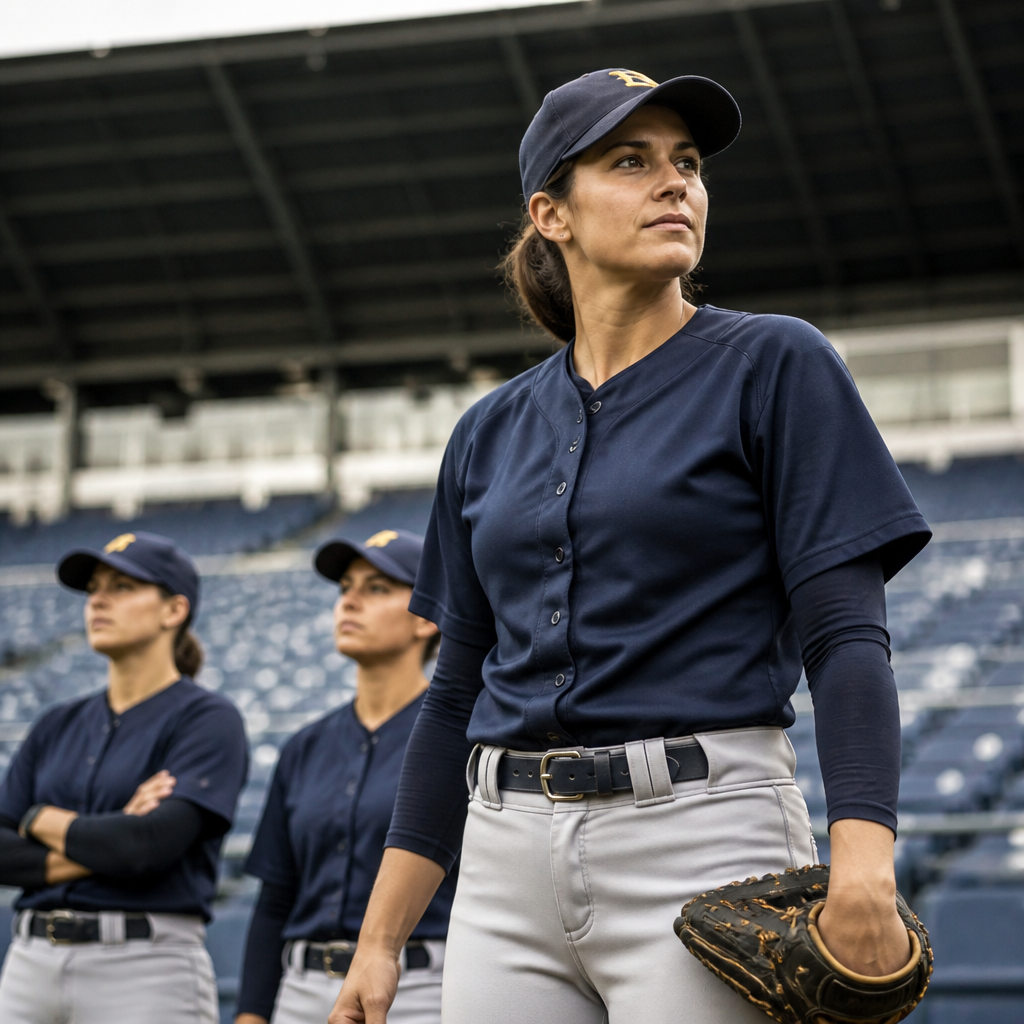
Women in baseball have shaped the sport far beyond the narrow stories most fans hear, and any serious look at the game’s history, culture, and future must account for their roles as players, owners, executives, scouts, broadcasters, umpires, coaches, inventors, advocates, and community builders. The phrase “women in baseball” is often used as if it refers only to a few exceptional players who briefly broke through male barriers, yet in practice it describes a broad, continuous record of participation stretching from nineteenth-century barnstorming clubs to front-office leadership in Major League Baseball and international competition today. When I have worked on baseball history projects and media research, the biggest recurring issue has been omission rather than lack of evidence; women were present, productive, and influential, but official storytelling often treated them as side notes. That gap matters because baseball is more than a professional league. It is a labor system, a civic institution, a media product, a youth development pipeline, and a global cultural export. Understanding where women fit into each layer gives readers a much more accurate view of how the sport actually developed.
This hub article covers the miscellaneous dimensions that tie the wider topic together. It defines key categories, highlights pioneers and innovators, and shows how separate stories connect across eras. Pioneers are women who entered spaces the sport had reserved for men or who built new opportunities where none existed. Innovators are women who changed baseball’s methods, economics, visibility, or access, whether they did so on the field, in an office, or through technology and advocacy. This distinction matters because baseball progress rarely happens in a straight line. One generation may win visibility, another may build institutions, and a later generation may convert those gains into durable careers. Readers searching for women’s baseball history, women baseball players, female baseball executives, or women in Major League Baseball usually want a direct answer to one basic question: did women truly influence the game in lasting ways? The answer is unequivocally yes, and the evidence is extensive.
Early trailblazers who established visibility
Women appeared in organized baseball contexts surprisingly early. By the late nineteenth century, Bloomer Girls teams toured the United States, combining entertainment with legitimate baseball skill. These clubs often faced men’s teams and traveled constantly, proving there was both public curiosity and a base of athletic ability. The “Bloomer” label came from the practical uniform style associated with women reformers, and the teams occupied an uneasy space between serious competition and promotional spectacle. Even so, they created one essential precedent: they made women baseball players visible to paying audiences. Historians also point to players such as Lizzie Murphy, a gifted first baseman who in 1922 became the first woman known to play on a major league exhibition team when she appeared with the Boston Red Sox in a charity game. That appearance did not open the major leagues to women, but it directly challenged the claim that women simply had no place in elite baseball settings.
The best-known wartime breakthrough came with the All-American Girls Professional Baseball League, founded in 1943 under the influence of Philip K. Wrigley and operated during a period when military service threatened men’s professional rosters. The league is often remembered through popular culture, but its baseball significance is deeper than nostalgia. It provided salaries, structured competition, scouting, coaching, and fan followings across Midwestern cities. Players such as Dorothy Kamenshek, Sophie Kurys, Dottie Schroeder, and Toni Stone demonstrated advanced fielding, baserunning, and game intelligence under substantial public scrutiny. The league evolved from a hybrid ruleset toward a game closer to standard baseball, reflecting both athletic development and a desire for legitimacy. Its eventual closure in 1954 revealed a hard truth I have seen across sports history: visibility without permanent institutional support can disappear quickly. Yet the league left a durable archive, inspired future participation, and gave modern advocates concrete proof that professional women’s baseball had already worked in the American market.
Women who changed the game on the field and around it
Some of the most important pioneers were not grouped within a single league. Toni Stone, Mamie “Peanut” Johnson, and Connie Morgan played in the Negro Leagues during the 1950s, entering one of baseball’s most competitive and culturally significant environments. Stone, who played second base for the Indianapolis Clowns, is especially important because her story resists easy symbolism. She was not a token attraction added to a weak roster; she was a skilled player who had to earn acceptance in a physically demanding, intensely masculine clubhouse culture. Johnson, a pitcher for the Clowns, reportedly posted an outstanding record and used command, movement, and competitive poise to succeed against men. Their careers matter because they prove that women’s baseball history cannot be separated from Black baseball history, labor history, and segregation-era sport.
Another landmark figure is Ila Borders, the left-handed pitcher who in the 1990s became the first woman to start a men’s NCAA baseball game and later pitched in independent professional leagues. Borders’ career showed the importance of performance under modern media conditions. Earlier players often fought exclusion in local or semi-documented settings, but Borders competed while national sports media dissected every outing. Her path demonstrated both possibility and limitation: a woman could reach high-level men’s baseball, but the system still treated her as an exception rather than a precedent. In recent years, women have built stronger pipelines through national teams, showcases, and development programs. Baseball stars including Kelsie Whitmore have extended that lineage by playing professionally in partner and independent leagues, while women’s national teams organized under the World Baseball Softball Confederation have created international benchmarks for talent. These cases matter for young players because abstract inspiration is not enough; athletes need visible examples of contemporary women facing professional pitching, travel schedules, roster pressure, and performance metrics.
| Figure | Primary role | Why she matters |
|---|---|---|
| Lizzie Murphy | First baseman | Early proof that a woman could appear with a major league club in exhibition play |
| Toni Stone | Negro Leagues infielder | Broke gender barriers in elite Black professional baseball |
| Mamie Johnson | Negro Leagues pitcher | Showed women could succeed through command and competitive skill, not novelty |
| Ila Borders | Pitcher | Became a modern benchmark for women competing in men’s college and pro baseball |
| Kim Ng | Executive | Redefined leadership possibilities by becoming the first female MLB general manager |
Ownership, front offices, and decision-making power
Women have also influenced baseball through authority over budgets, rosters, hiring, and organizational strategy. One early giant is Effa Manley, co-owner of the Newark Eagles of the Negro National League. Manley was not a ceremonial figure. She handled business operations, promoted games, advocated for player rights, and became one of the most respected executives in Black baseball. Her Hall of Fame induction in 2006 recognized that baseball leadership is not limited to dugouts and diamond performance. She understood ticket sales, local publicity, political relationships, and the social role of a club in its community. In many ways, she anticipated the modern sports executive who must combine operations, branding, and stakeholder management.
In Major League Baseball, Kim Ng’s appointment as general manager of the Miami Marlins in 2020 was a historic turning point because it placed a woman in one of the sport’s clearest lines of competitive authority. Ng had already built an extensive résumé with the Chicago White Sox, New York Yankees, Los Angeles Dodgers, and the Commissioner’s Office, working in arbitration, player personnel, and league administration. Her hiring mattered not simply because of firsts, but because it confirmed that women had long possessed the technical expertise teams claim to value: contract knowledge, scouting literacy, analytics fluency, collective bargaining awareness, and organizational judgment. Other executives, such as Jean Afterman with the Yankees and Raquel Ferreira in baseball operations, have helped normalize women’s presence in senior baseball roles. From experience, this is where cultural change becomes tangible. Once women participate in roster construction, player development planning, and policy decisions, the conversation shifts from symbolic inclusion to operational influence, and that is where institutions genuinely change.
Scouting, coaching, umpiring, and player development
Baseball depends on thousands of evaluators and instructors whose names casual fans rarely know. Women have steadily expanded their impact here, often in roles that shape careers long before a prospect reaches a televised game. In 2015, Justine Siegal became the first woman to coach for an MLB club during instructional league with the Oakland Athletics, after years of baseball instruction and advocacy through Baseball For All. Her significance lies in practical baseball work: running drills, teaching mechanics, communicating adjustments, and earning credibility in environments built around repetition and results. Alyssa Nakken later became the first full-time female coach in MLB when the San Francisco Giants hired her in 2020, and in 2022 she became the first woman to coach on the field during a regular-season major league game. Those moments were newsworthy, but their deeper value is developmental. They expand the idea of who can teach footwork, positioning, baserunning reads, swing decisions, or clubhouse routines.
Women have made comparable advances in scouting and umpiring. Professional scouting requires travel, statistical interpretation, makeup assessment, and the confidence to deliver strong recommendations that can influence million-dollar decisions. Clubs have increasingly brought women into these roles because baseball information is only useful when organizations are willing to gather it from the widest possible talent pool. Umpiring has moved more slowly, but the rise of women in minor league and professional-development assignments demonstrates that rule enforcement, game management, and field presence are learned competencies, not male traits. These gains remain fragile. Representation can be isolated, and progress often depends on a handful of forward-looking executives. Still, the pattern is unmistakable: as training systems become more formalized and performance standards more measurable, exclusion becomes harder to defend.
Media, research, business, and cultural innovation
Not every baseball innovator wears a uniform. Women have changed how the sport is explained, sold, archived, and consumed. Broadcasters, writers, statisticians, photographers, and historians influence what fans learn and what organizations preserve. Suzyn Waldman’s long career in New York radio helped normalize women as authoritative baseball voices in one of the sport’s toughest media markets. Reporters and analysts across local and national outlets have expanded tactical coverage, labor reporting, and historical recovery work, correcting decades of incomplete recordkeeping. This matters because sports memory is shaped by who gets documented. When women researchers recover Negro Leagues data, trace forgotten barnstorming teams, or produce biographies of overlooked players, they are not adding trivia; they are repairing the historical base that future scholarship and media will rely on.
Women have also driven grassroots innovation through nonprofit organizations, tournaments, clinics, and digital communities. Baseball For All, founded by Justine Siegal, is one of the clearest examples, creating pathways for girls to play baseball rather than being steered automatically into softball. That distinction is essential. Softball is a major sport with its own traditions, but it is not a substitute for baseball access. Separate rules, field dimensions, pitching styles, and development structures mean girls denied baseball opportunities lose entry to specific skill pathways and networks. Social media, streaming, and direct-to-consumer publishing have further reduced traditional gatekeeping. I have seen this shift clearly: stories that once depended on a newspaper sports desk can now reach coaches, families, and sponsors directly. As a result, women’s baseball communities share training video, publicize tryouts, compare equipment, and build momentum across countries with much greater speed than in earlier eras.
What this hub connects and why the future is broader than one storyline
This miscellaneous hub exists because women in baseball is not a single storyline about breaking a barrier and being done. It is a network of related subjects that readers often explore separately: professional leagues, Black baseball history, youth participation, front-office careers, broadcasting, international competition, rule access, equipment design, and public memory. A useful hub should connect those threads. If you are researching players, look beyond the wartime league and include Negro Leagues pioneers, collegiate competitors, and current professionals. If you are studying baseball careers, examine general managers, assistant GMs, coaches, scouts, trainers, and communications leaders. If your interest is cultural impact, follow the pathways through film, journalism, museums, archives, and community programs. The central insight is consistent across all of them: women have never been absent from baseball. They have been undercounted, underfunded, and too often forced to justify their presence, but they have been there all along.
The practical takeaway is simple. Treat women in baseball as core baseball history, not a side chapter. Doing that improves historical accuracy, opens clearer development routes for players and professionals, and gives fans a richer understanding of how the game works. The pioneers named here created firsts, but the innovators who followed built systems, opportunities, and evidence that lasting inclusion is both possible and beneficial. For readers using this page as a hub, the next step is to explore each branch in depth: individual biographies, league histories, executive case studies, coaching milestones, and international women’s baseball development. The more closely you study the record, the more obvious the conclusion becomes. Women have not merely participated in baseball; they have strengthened it, challenged it, and helped define what it can become. Keep reading across the broader Women in Baseball topic, and use these connected stories to see the sport more completely.
Frequently Asked Questions
What does the term “women in baseball” really include?
The phrase “women in baseball” is much broader than the small handful of player stories that usually get repeated in popular history. It includes women who played on amateur, barnstorming, segregated, professional, semi-professional, and international teams, but it also includes women who built the game from the dugout, front office, press box, and community level. Women have served as owners, executives, scouts, statisticians, broadcasters, journalists, coaches, trainers, umpires, entrepreneurs, inventors, and advocates, often in eras when their work was minimized or described as unusual rather than essential.
That wider definition matters because baseball has never been shaped only by the people on the field. Talent evaluation, player development, public storytelling, fan engagement, business strategy, rules interpretation, equipment design, and youth access all influence how the sport grows. Women have contributed in each of those areas, sometimes visibly and sometimes behind the scenes. When an article examines women in baseball seriously, it should treat their presence not as a novelty but as a continuous thread in the sport’s development, culture, and future.
Why are women’s contributions to baseball often overlooked in mainstream history?
There are several reasons, and they tend to reinforce one another. First, baseball history has often been told through a narrow lens that prioritizes Major League men’s play above every other form of participation. That framing leaves less room for the stories of women, especially when their contributions happened in unofficial, regional, developmental, or non-playing roles. Second, many women worked in environments where they were not given equal publicity, recordkeeping, or institutional support, which means their achievements were less likely to be preserved in the archives fans encounter today.
There is also a deeper cultural issue: for a long time, women in baseball were treated as exceptions to the rule rather than as part of the rule itself. When someone is framed as a novelty, her story is often told in isolation, detached from the larger network of women who were also contributing. That creates the false impression that progress came from a few rare breakthroughs instead of sustained participation across generations. As more historians, researchers, museums, leagues, and fans revisit the record, a fuller picture is emerging—one that shows women were never absent from baseball, only under-credited.
Who are some of the pioneers and innovators among women in baseball?
There is no single list that can capture everyone, which is part of the point: women’s impact on baseball has been extensive and varied. Some names are widely recognized because they broke visible barriers as players, while others changed the game through ownership, administration, and leadership. Women pioneers include players who challenged assumptions about who belonged on a diamond, executives who shaped the business and direction of clubs and leagues, scouts and baseball operations professionals who influenced talent pipelines, and broadcasters and writers who helped define how the game was understood by the public.
Innovators also include women who transformed baseball culture at the grassroots level. Youth organizers, community leaders, educators, and advocates expanded opportunities for girls to play and for families to see baseball as a more inclusive sport. Others contributed through technology, training methods, data work, event management, and fan outreach. In practical terms, a pioneer is someone who opened a door that had been closed, and an innovator is someone who changed how baseball was practiced, managed, presented, or shared. Many women have done both, often without receiving the same historical attention granted to their male counterparts.
How have women influenced baseball beyond playing the game?
Women have influenced baseball at every level where decisions are made and relationships are built. In front offices, they have helped drive scouting, player development, analytics, operations, marketing, and long-term organizational strategy. In media, women have shaped public understanding of the sport as broadcasters, reporters, editors, historians, and documentary storytellers. In officiating and coaching, they have brought expertise, structure, accountability, and instructional leadership to players and leagues. These roles are not secondary to baseball’s history; they are part of the machinery that keeps the sport evolving.
Just as important is the work women have done in building baseball communities. They have organized local programs, mentored young athletes, advocated for equitable access, preserved historical memory, and challenged outdated assumptions about who baseball is for. That influence reaches far beyond a box score. It affects who gets welcomed into the game, whose talent gets noticed, whose stories get told, and what the future talent pool looks like. In that sense, women have not just participated in baseball—they have helped define its values, reach, and direction.
Why is it important to study the history and future of women in baseball today?
It is important because understanding women in baseball leads to a more accurate understanding of baseball itself. If the story of the sport is told only through a narrow set of familiar names and institutions, then fans, students, and even decision-makers inherit an incomplete picture. Studying women’s roles corrects that distortion. It reveals how innovation often comes from people working outside the spotlight, how exclusion shapes public memory, and how progress in sports is usually the result of long-term effort rather than isolated moments of recognition.
It also matters for the future. Visibility affects opportunity. When girls, young women, and aspiring professionals see that women have long been part of baseball—as players, leaders, analysts, mentors, and builders—they are more likely to imagine a place for themselves in the sport. At the same time, teams, leagues, educators, and fans are better equipped to create pathways that are genuinely inclusive rather than merely symbolic. Studying this history is not only about honoring the past. It is about widening baseball’s future by recognizing the people who have already been helping shape it all along.