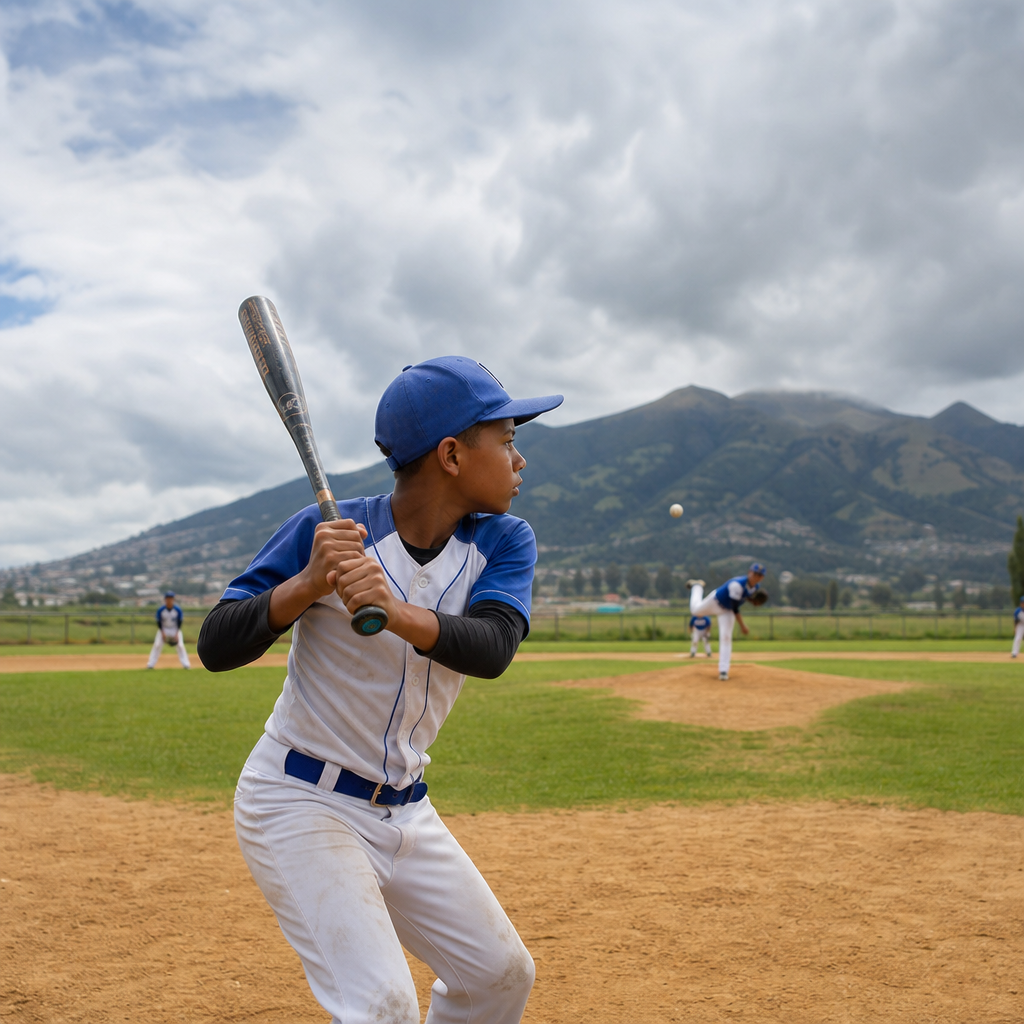
Baseball in Ecuador is a story of persistence, migration, regional identity, and new investment meeting a country better known for soccer, cycling, and Olympic race walking. In practical terms, Ecuadorian baseball sits outside the mainstream sports economy, yet it matters because it reveals how emerging baseball nations grow: through local clubs, school programs, international links, and a handful of players who prove the pathway is real. When I have worked on international baseball development projects, Ecuador has consistently stood out as a market with raw athletic ability, coastal communities with a baseball tradition, and significant room for better structure. For readers exploring international baseball, this miscellaneous hub explains where the game came from in Ecuador, who plays it, what the competitive landscape looks like, what problems still limit progress, and why the next decade could be more important than any previous era. Baseball in Ecuador is not an accident or a novelty. It is an evolving sports ecosystem that deserves serious attention from fans, coaches, federations, scouts, and families looking for opportunities beyond the country’s dominant games.
How baseball took root in Ecuador
Baseball in Ecuador developed mainly along the coast, especially in Guayas province, where maritime trade and contact with other baseball cultures helped introduce the sport. As in several Latin American countries, the game spread through ports, workers, visiting sailors, migrants, and local enthusiasts rather than through a single national campaign. Guayaquil became the most important center. Over time, neighborhood teams, school competitions, and provincial programs gave baseball a foothold, although never the mass participation seen in the Dominican Republic, Venezuela, or Puerto Rico. That distinction matters. Ecuador did not build baseball through a dense professional pipeline; it built it through pockets of commitment.
The governance structure has typically revolved around national and provincial federations, with the Federación Ecuatoriana de Béisbol responsible for national representation and development. In practice, however, the strength of the sport has depended less on central administration and more on whether clubs have fields, coaches, equipment, and access to regular competition. I have seen this pattern repeatedly in developing baseball countries: one committed local leader can sustain a generation of players, while an absent administrator can stall progress for years. Ecuador fits that model. The sport survives where communities treat it as part of local identity, not just an optional extracurricular activity.
Another important factor is regional competition. Ecuadorian teams and players have long needed games against stronger baseball nations to benchmark their level. Without regular exposure to advanced pitching, better defensive organization, and higher game tempo, development plateaus quickly. That is why tournaments in South America and age-group events matter so much. They are not just medal opportunities; they are feedback mechanisms. Ecuadorian baseball improves when its players can measure themselves against Colombia, Brazil, Panama, and Caribbean opposition and then return home with a clearer understanding of the standard required.
The geography of the game and who plays it
If someone asks where baseball matters most in Ecuador, the short answer is the coast, with Guayaquil as the clearest reference point. The sport has had visibility in provinces such as Guayas, Los Ríos, Santa Elena, and El Oro, though activity levels have varied by era and by age group. Coastal climate helps because year-round outdoor training is possible, but geography alone does not create a baseball culture. Access to diamonds, transport, bats, gloves, and organized coaching matters more. In Ecuador, families often carry a disproportionate share of these costs, which can narrow the player base unless local institutions step in.
Most players come through youth clubs, provincial programs, or school-linked environments rather than a broad commercial academy network. That creates both a challenge and an advantage. The challenge is scale: fewer academies mean fewer repetitions, less specialized instruction, and less exposure to scouts. The advantage is that multisport athletes remain common. Ecuadorian baseball players often arrive with backgrounds in soccer, athletics, or other field sports, which can translate into speed, coordination, and arm strength. When coached properly, those traits are valuable. I have often found that emerging baseball countries do not lack athletes; they lack repetition and technical refinement.
Youth participation is therefore the central development issue. Baseball competes directly with soccer for field space, media coverage, and family attention. A parent deciding where to invest time and money usually sees clearer local pathways in soccer. Baseball must answer that with structure, safety, and visible success stories. Girls’ participation is also a growth area. Softball has historically offered more formal opportunities for female athletes in many countries, but baseball’s expansion globally means Ecuador can widen access if it invests in coaching, school engagement, and age-appropriate competitions for both boys and girls.
Competition structure, national teams, and regional benchmarks
Ecuador’s baseball calendar has often been fragmented, but the key competitive layers are straightforward: local club play, provincial championships, national-level events, and international tournaments. The national team is the public face of the sport, especially in South American and Pan American qualifying environments. Results have been mixed, which is expected for a country still building depth. Ecuador has produced competitive stretches at youth level and has remained part of the broader South American conversation, yet it has not consistently broken into the continent’s top tier.
That top tier has generally included stronger baseball systems such as Colombia and Brazil, with Argentina and Peru occasionally shaping the regional picture depending on the event and age category. Against those countries, Ecuador’s margins are usually determined by pitching depth, defensive consistency, and offensive discipline. That is common in emerging programs. A team may have one or two quality arms and several athletic position players, but tournament baseball punishes shallow rosters. Once the first pitchers are used, the talent gap widens. Defensively, a single misplayed ground ball can become a three-run inning when the opponent executes bunts, steals, and situational hitting.
| Development area | What stronger programs usually have | What Ecuador often needs more of |
|---|---|---|
| Youth competition | Year-round leagues across multiple age groups | More games with consistent scheduling |
| Coaching | Certified coaches and specialist instructors | Expanded coach education and retention |
| Facilities | Dedicated diamonds and training spaces | Reliable fields, mounds, cages, and lighting |
| Talent pathway | Clear progression to academies or pro systems | Visible bridges from local clubs to international opportunities |
International benchmarks are useful because they identify what Ecuador must improve first. In my experience, countries in this position gain the fastest returns by focusing on three priorities: strike-throwing pitchers, infield defense, and frequency of games. Strength and conditioning matters, but throwing strikes and making routine plays transform results immediately. A developing baseball nation does not need to copy the Dominican Republic overnight; it needs enough competitive infrastructure that a talented twelve-year-old can still be playing, improving, and visible at sixteen.
Player development, scouting, and professional pathways
The question many readers ask is simple: can Ecuador produce professional baseball players? Yes, but the pathway is narrower than in established baseball countries. Ecuador has seen players sign internationally and others pursue college or semi-professional routes, yet the volume remains small. That scarcity affects perception. When families do not regularly see local players advance, baseball can look uncertain compared with more familiar sports. The solution is not marketing alone. It is pathway design: better data collection, more showcases, stronger video habits, and partnerships with scouts, trainers, and regional tournaments.
Modern scouting is no longer based only on a coach making a phone call. Video clips, verified measurables, event performance, and cross-border networks now shape opportunity. A player in Guayaquil with legitimate bat speed or a projectable arm must be filmed well, listed accurately, and placed in front of evaluators at the right age. Tools such as Blast Motion, Pocket Radar, Rapsodo, and TrackMan are common in advanced environments, but Ecuador does not need universal high-tech adoption to make progress. It does need baseline standards: accurate age records, consistent statistics, proper throwing programs, and coaches who understand how to present prospects responsibly.
College baseball can also be part of the equation. For some Ecuadorian players, especially those with academic strength or access to bilingual education, scholarship routes may be more realistic than immediate professional contracts. That requires guidance on eligibility, video preparation, standardized tests, and communication with coaches abroad. I have seen too many promising players across developing markets miss opportunities because nobody explained the process early enough. In Ecuador, a strong hub approach should connect youth development, national team exposure, coach education, and recruiting support so that talented players are not isolated inside local leagues.
The biggest obstacles holding baseball back
The first obstacle is infrastructure. Baseball needs specialized space: a safe infield, a usable mound, fencing, dugouts, and ideally batting cages. Shared fields can work, but poor surfaces damage both skill development and safety. The second obstacle is continuity. Many programs depend on volunteers and short funding cycles, which leads to bursts of activity followed by stagnation. The third obstacle is visibility. If media coverage is minimal and results are hard to find, sponsors have little incentive to invest and new families struggle to understand the opportunity.
There are also technical issues. Coach education is inconsistent, and that affects throwing mechanics, workload management, hitting development, and game strategy. In baseball, bad habits compound. A young pitcher with poor arm action may perform for a season and then break down. A hitter taught only to slap at the ball may struggle once velocity improves. Emerging countries sometimes underestimate how quickly substandard instruction creates ceilings. The answer is not to import expensive systems blindly, but to build a practical coach pathway using national clinics, online modules, mentorship, and recurring assessment.
Administrative credibility matters too. Federations must schedule reliably, publish information clearly, and handle age verification, selection criteria, and tournament logistics transparently. Trust is not a soft issue; it is an economic one. Parents invest more when they believe rules are fair. Sponsors commit more when events happen on time. International partners engage more when reporting is consistent. Ecuadorian baseball has enough passion to grow, but passion without governance usually leads to uneven progress.
Why the future can be stronger than the past
The case for optimism is real. First, baseball’s global map is broader than it was twenty years ago, which gives Ecuador more models to learn from. Countries once considered peripheral now run better youth tournaments, coaching clinics, and talent identification programs. Second, digital tools lower the barrier to visibility. A player no longer needs to live near a major academy to be noticed, provided the video, metrics, and competition context are credible. Third, national sports systems increasingly recognize that niche sports can deliver scholarships, international representation, and community value even without becoming the country’s number one game.
Ecuador can capitalize by treating baseball as a focused growth sport rather than a mass-market one. That means identifying priority regions, protecting a handful of quality fields, supporting coach development, and creating a calendar families can trust. It also means linking this miscellaneous hub to deeper coverage: youth baseball in Ecuador, softball development, national team history, facilities, coaching standards, and Ecuadorian players abroad. A good hub page does not try to replace those articles; it gives readers the map. For international baseball audiences, the map is clear. Ecuador has a real baseball tradition, a limited but meaningful talent base, and a chance to build smarter than larger countries did in earlier eras.
The main takeaway is straightforward: baseball in Ecuador is neither fully established nor merely aspirational. It is a developing system with authentic roots, identifiable strengths, and fixable weaknesses. For fans, that makes it worth following. For coaches and federations, it makes it worth supporting. For players and parents, it makes informed commitment worthwhile. If you cover, coach, fund, or simply follow international baseball, keep Ecuador on your radar and explore the related articles in this subtopic to understand where the next breakthroughs may come from.
Frequently Asked Questions
Why is baseball important in Ecuador if soccer still dominates the sports landscape?
Baseball matters in Ecuador precisely because it develops outside the country’s traditional sports hierarchy. Soccer commands the broadest audience, deepest media coverage, and strongest commercial infrastructure, while cycling, boxing, and Olympic race walking have also earned national recognition. Baseball, by contrast, grows in a more selective and grassroots way, which makes its progress especially meaningful. It shows how a sport can take root through community effort rather than mass popularity alone. In Ecuador, baseball reflects persistence: clubs continue operating, coaches keep training players, families invest time and money, and local organizers build opportunities even without the financial ecosystem enjoyed by more established sports.
It is also important because it reveals how emerging baseball nations actually develop. Growth rarely begins with packed stadiums or major sponsorships. It usually starts with school programs, regional clubs, youth tournaments, volunteer coaches, and connections to broader baseball networks in Latin America and beyond. Ecuador offers a clear example of that model. The sport’s presence may be modest compared with soccer, but it creates real pathways for athletes, especially in communities where baseball has cultural roots or international ties. When a few players advance to higher levels, they do more than build personal careers; they validate the entire development structure and encourage younger athletes to believe that baseball can be more than a recreational activity.
Baseball in Ecuador also carries social and regional significance. It can express migration patterns, family heritage, and local identity in ways that larger national narratives often overlook. That gives the sport a value that goes beyond wins and losses. It becomes part of a broader story about how Ecuador engages with global sport, how communities preserve and adapt traditions, and how new investment can create opportunities in places previously considered outside the baseball map. So even though baseball is not the country’s dominant sport, it is highly relevant as a case study in long-term athletic development, cultural exchange, and strategic sports growth.
How has baseball managed to survive and grow in Ecuador despite limited mainstream attention?
Baseball in Ecuador has survived because its foundation has never depended entirely on national visibility. Instead, it has grown through smaller but durable structures: local leagues, committed coaches, school-based initiatives, municipal support in certain areas, and families willing to keep the sport alive across generations. That kind of growth can look slow from the outside, but it is often more resilient than a top-down model built only on publicity. In countries where baseball is not the leading sport, survival usually comes from people who treat the game as a long-term community project rather than a short-term commercial opportunity. Ecuador fits that pattern well.
Migration and international links have also played a major role. Baseball knowledge, training methods, and competitive aspirations often move with people. Families with connections to other baseball cultures can influence what sports children play, how clubs are organized, and what standards coaches try to reach. Those links matter because they reduce isolation. They create channels for equipment, instruction, tournament opportunities, and scouting awareness. Even when formal infrastructure is limited, informal international networks can provide momentum. In emerging baseball environments, that exchange is often one of the most important drivers of progress.
Another key factor is the visibility created by a small number of successful players. In developing baseball nations, one prospect signing professionally or one national team performance can reshape local belief. It gives coaches proof that their work has value, helps clubs recruit young athletes, and makes parents more willing to support participation. New investment tends to follow these signals as well. Investors, federations, and development partners are far more likely to commit resources when there is evidence that talent can be identified and advanced. So baseball’s growth in Ecuador has been cumulative: grassroots commitment sustains the sport, international connections strengthen it, and breakthrough players help expand its legitimacy.
What role do local clubs, schools, and youth programs play in Ecuadorian baseball development?
They are the core of the entire system. In a country where baseball sits outside the mainstream sports economy, development does not begin with professional franchises or major media contracts. It begins with access. Local clubs give players a place to train consistently, learn the fundamentals, and compete in an organized environment. They also create continuity, which is critical in player development. A child who starts playing needs more than occasional exposure; they need repetition, coaching, structure, and a sense of progression. Clubs provide that framework, and in emerging baseball nations they often do so while balancing limited budgets, uneven field access, and shortages of equipment.
Schools are equally important because they broaden the base of participation. A school program can introduce baseball to children who would never otherwise encounter it. That matters immensely in Ecuador, where soccer naturally attracts most early athletic attention. If baseball is not visible in schools, it risks remaining too narrow and self-contained. But when schools partner with clubs or federations, the sport gains a recruitment pipeline. Students can try the game in a familiar setting, and talented or enthusiastic players can then move into more structured club environments. This school-to-club relationship is one of the most effective ways to grow baseball in countries where the sport is still building public awareness.
Youth programs also serve a bigger purpose than athlete identification. They create baseball culture. They teach discipline, teamwork, game intelligence, and long-term commitment. For families, they make the sport legible and trustworthy. For communities, they create events, routines, and local pride. And for the national game, they establish depth. A baseball system cannot rely on one gifted age group or a few exceptional individuals. It needs broad participation at younger levels so that talent can be refined over time. In Ecuador, clubs, schools, and youth programs are not supporting pieces around the edges of the sport. They are the main engine that allows baseball to exist, improve, and gradually expand.
What are the biggest challenges facing baseball in Ecuador today?
The most immediate challenge is structural: baseball competes in a sports environment where resources, attention, and facilities are already heavily concentrated in other disciplines. Soccer understandably absorbs much of the national sports conversation, and that affects everything from sponsorship and media exposure to youth participation and public-sector priorities. For baseball, this means that even basic development needs can become difficult. Reliable access to fields, proper maintenance, coaching education, travel funding, equipment, and regular competition all require steady support. Without that support, progress becomes uneven and overly dependent on local heroes or isolated pockets of enthusiasm.
A second challenge is scale. Baseball needs enough players, coaches, and organizers to create a healthy competitive ecosystem. In a developing baseball nation, there is often talent, but not always enough depth across age groups and regions. That can make it difficult to sustain leagues, improve the overall standard of play, or give athletes consistent high-level competition. It also places extra pressure on the most active clubs and development leaders, who may end up carrying more responsibility than the system can reasonably ask of them. When growth relies too heavily on a small number of people or programs, expansion becomes fragile.
There is also the challenge of perception. Families often ask practical questions: Is there a future in this sport? Will my child have opportunities? Is the pathway real? In Ecuador, those questions are especially important because baseball is still proving itself relative to more familiar athletic routes. That is why player success stories, stronger youth systems, and visible institutional support matter so much. They help turn baseball from an interesting alternative into a credible option. The positive side is that these challenges are not unique to Ecuador; they are common in many emerging baseball countries. That means there are tested ways to respond, including better school integration, stronger coaching networks, international partnerships, and targeted investment in youth development.
What would help baseball take the next step in Ecuador over the coming years?
The next step will require coordinated development rather than isolated effort. First, Ecuadorian baseball would benefit from deeper investment in foundational infrastructure: playable fields, dependable practice spaces, equipment access, and coach education. Those may sound basic, but they are often the difference between a sport that merely survives and one that grows. Facilities affect training quality, retention, and the ability to host events. Coaching education affects everything else. Good coaches do not just teach mechanics; they create safe environments, build player confidence, organize developmental stages, and keep young athletes engaged long enough to improve. If investment is limited, starting with coaches and youth facilities is usually the most efficient strategy.
Second, stronger links between schools, clubs, and national development structures would make the player pathway more visible. One of the biggest barriers in nontraditional baseball countries is uncertainty. Young players and their families need to understand how the sport progresses from introduction to competition to advanced opportunity. That pathway does not need to be huge to be effective, but it does need to be clear. If a child starts baseball in school, there should be a nearby club or training center. If that player excels, there should be regional competition, exposure opportunities, and a credible system for moving upward. Visibility of the pathway is often just as important as the pathway itself.
Third, international partnerships can accelerate growth if they are built thoughtfully. Ecuador does not need to imitate a traditional baseball power overnight. It needs sustained relationships that improve local capacity: coaching exchanges, tournament invitations, equipment support, scouting attention, and development planning that respects local realities. Combined with the emergence of a few recognizable players, that kind of support can change the sport’s trajectory. Ultimately, baseball’s next stage in Ecuador will not depend on becoming bigger than soccer