
The history of baseball is as much a chronicle of the sport itself as it is a mirror reflecting pivotal societal issues. Baseball has often both thrived and struggled with the nation’s growing pains, nowhere more poignantly than in the arena of racial equality. One of the most iconic figures in this struggle is Hank Aaron, whose career exemplifies resilience against bigotry and racism.
Born in 1934 in Mobile, Alabama, Henry Louis Aaron would rise from humble beginnings to become a legend in a sport that, for a long time, mirrored the segregated structure of American society. By the time Aaron began playing professionally, Jackie Robinson had already broken the Major League Baseball (MLB) color barrier in 1947. However, the deep-seated racism that permeated the league would rear its ugly head time and again throughout Aaron’s career.
Hank Aaron’s journey was about more than hitting home runs; it was about breaking through barriers and altering prejudiced perspectives. Each milestone he achieved in his career came with its share of racial slurs, hate mail, and threats, pushing him into a new realm of athletes who not only played a sport but also fought for social justice.
The tale of Hank Aaron is not just a baseball story; it is an American story that underscores both triumph and hardships in the face of adversity. As we delve into Hank Aaron’s life, his legendary career, and the obstacles he conquered, we gain invaluable insights into the struggle against racism in baseball and, by extension, in society.
Hank Aaron’s Early Life and Introduction to Baseball
Henry Louis Aaron, often known as “Hammerin’ Hank,” was born in a time of segregation and inequality. Growing up in the racially stratified South, he experienced firsthand the segregation laws and way of life imposed on African Americans. Despite the hardships synonymous with the era in which he was raised, Aaron found solace and purpose in baseball.
Aaron began his baseball career in semi-professional leagues before he was discovered by the Indianapolis Clowns of the Negro American League. The Negro Leagues were flourishing at the time, serving as significant ground for players who were not allowed the opportunity to play in the MLB due to prevailing racial discrimination. Aaron’s talents were undeniable, and it wasn’t long before Major League scouts took notice.
In 1952, he signed with the Boston Braves, which later relocated to Milwaukee. His minor league stint further honed his skills, and he rapidly advanced through the ranks. However, for Aaron, crossing into Major League Baseball, the so-called “big leagues,” also meant stepping into a larger world of racial antagonism.
Within two years, Hank Aaron was playing for the Braves, beginning what would become one of the most storied careers in baseball history. His journey to the majors was not just about baseball prowess; it was also a testament to his stoic perseverance in overcoming racial barriers, a recurring theme throughout his career.
Breaking Records amid Racial Tension
Hank Aaron’s career was rich with successes and record-breaking moments; yet, these achievements were often shadowed by the racism he encountered. As Aaron began to close in on Babe Ruth’s longstanding home run record, the vitriol and hatred from those unwilling to see a black man eclipse a white hero intensified.
When Hank Aaron hit his 714th home run, tying Babe Ruth’s career home run record, he did so amidst a torrent of hostility. Aaron received tens of thousands of letters a day, many of which were filled with racist slurs and threats that left him and his family in constant fear. He described the experience as akin to standing in a garbage can with its lid open.
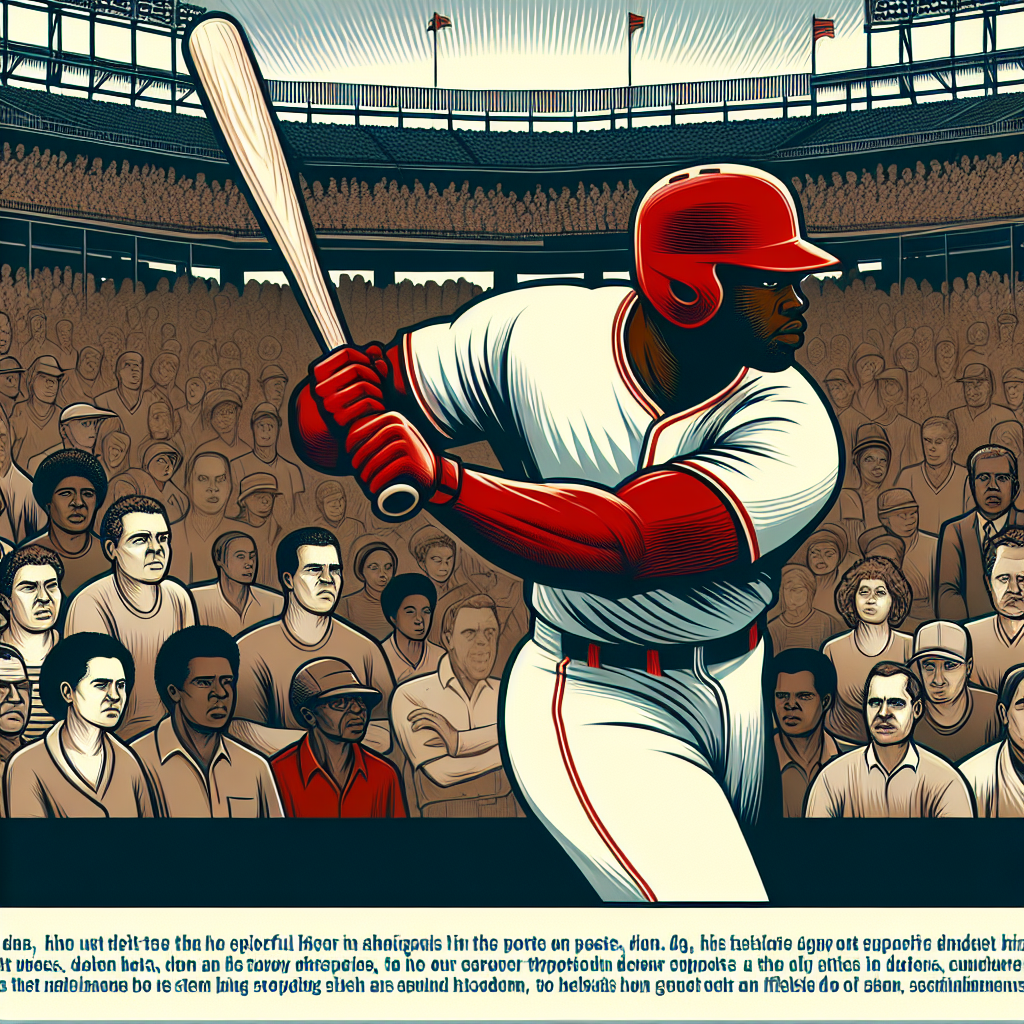
Yet, Aaron’s poise and determination never wavered. On April 8, 1974, Aaron hit his 715th home run, breaking Ruth’s record in front of a national audience. The footage from that night remains iconic—Aaron rounding the bases, amidst cheers, as a triumphant figure stepping over the line of hatred to claim his rightful place in history.
His resilience in the face of racial adversity not only marked a milestone in baseball but also reverberated throughout society, spotlighting the ongoing struggle for civil rights. Aaron’s story highlighted the harsh realities but also the potential for change when individuals rise above discrimination with courage and dignity.
A Role Model and Advocate for Change
Beyond his achievements on the field, Aaron used his platform to become an advocate for racial equality. Recognizing the reach of his influence, he turned his attention towards making a difference for future generations. Throughout his life, he supported efforts to dismantle systemic segregation and improve conditions for African Americans in society and in sports.
His dedication to social causes is reflected in the many contributions he made to organizations committed to enhancing opportunities for young African Americans. Aaron was known to be a relentless supporter of the NAACP and other charitable efforts. His post-career life continually circled back to the theme of equality and how he could utilize his status as a sports icon to make a tangible impact.
The Hank Aaron Chasing the Dream Foundation, co-founded with his wife Billye, speaks volumes of his commitment to education and opportunity. This foundation provided scholarships to financially underprivileged students, emphasizing education as a crucial avenue for racial equality and empowerment.
Aaron’s efforts remind us that while his talent on the baseball field was incredible, his off-field pursuits in challenging racism were equally monumental. It solidifies his role as not just a sports figure, but a beacon of hope and change in the broader tapestry of American history.
Hank Aaron’s Legacy and Its Impact on Modern Baseball
Hank Aaron’s legacy in baseball is profound, continuing to affect the sport long after his retirement. His impact extends beyond the records he set or the awards he won; it lies in the doors he opened for future generations of players of all races.
Today’s Major League Baseball, more diverse and inclusive than ever before, stands on the shoulders of pioneers like Hank Aaron. Where once prejudice and racism often held back talented individuals, leagues now foster environments that celebrate diversity and inclusion. African American players in MLB benefit from the trail Hank Aaron blazed, knowing that his struggle for acceptance paved the way for their opportunities today.
The ever-refreshing reminder of Aaron’s greatness isn’t just his Hall of Fame induction or the lasting memory of his home runs, but in the ongoing commitment MLB shows in celebrating diversity. Furthermore, initiatives founded in his honor continue to promote inclusion and understanding, ensuring that his efforts continue to resonate.
It’s not just about baseball; Hank Aaron’s influence has permeated the cultural consciousness of a nation. He symbolizes resilience, the triumph over racial hatred, and the importance of honoring diversity through all walks of life. His legacy endures, a timeless lesson in determination and the fight for equality.
Conclusion: The Enduring Influence of Hank Aaron’s Legacy
Hank Aaron’s story is a compelling testament to the endurance of the human spirit amidst adversity and prejudice. His name is synonymous with excellence in baseball, but more importantly, with the brave confrontations of racial animosity and social injustice. Aaron endured threats, discrimination, and the heavy burdens of racism, yet continually rose above it all to achieve legendary status.
To understand Hank Aaron’s nurturing of change, we must acknowledge that his journey was not merely a fight against pitchers and catching fly balls but also against the dark specters of racial hatred and inequality. Aaron’s career and his unwavering dignity in the face of oppression make him a model not just for athletes, but for all who face systemic injustice.
His life’s work extends beyond the parameters of the baseball diamond, reaching into the hearts and minds of those striving towards an equitable society. By recognizing his contributions and celebrating his legacy, we open opportunities for further progress in overcoming disparities in the sports world and beyond.
Hank Aaron remains an enduring figure of hope and resilience, showing us how sports can serve as a powerful tool for societal change. His story invites us to continue exploring how we can take the momentum forged by pioneers of the past and convert it into tangible progress for future generations.
Frequently Asked Questions
1. Who was Hank Aaron and why is he significant in the history of baseball?
Hank Aaron, also known as “Hammerin’ Hank,” was one of the most distinguished baseball players in the history of the game. Born in 1934 in Mobile, Alabama, Aaron rose from humble beginnings to become a legendary figure not only in sports but in societal progress. He is most famous for breaking Babe Ruth’s longtime home run record, finishing his career with 755 home runs—a feat that showcased his athletic prowess. However, Aaron’s story is significant for much more than his achievements on the field. Coming up during a time of racial segregation, Aaron faced considerable discrimination and racism. Yet, he remained stoic and resilient, using his platform to challenge barriers and change perceptions within a predominantly white sport. Through Aaron’s journey, we see a reflection of the struggles and gains in the broader fight for racial equality. His endurance and grace under pressure have left an indelible mark on baseball and society, making him not just a sports hero, but a civil rights icon as well.
2. How did Hank Aaron break the racial barriers in baseball during his career?
Hank Aaron’s career spanned from 1954 to 1976, a period during which America was grappling with the civil rights movement and significant societal change. When Aaron began his career, Major League Baseball was still reeling from Jackie Robinson’s integration, and it was not welcoming to black players. Aaron faced intense racism both from within the game and from fans. Despite receiving hate mail and facing discriminatory treatment, he persevered, letting his performances take center stage. Aaron’s dignified approach to handling racial adversity made him an emblem of strength and resilience. He shattered the color line by consistently excelling in a sport that was predominantly dominated by white athletes at the time. His breaking of Babe Ruth’s home run record was a significant moment, symbolizing not just a personal achievement but a societal shift. Hank Aaron’s career and conduct were powerful statements for racial equality, inspiring generations to rise above oppression.
3. What challenges did Hank Aaron face during his pursuit of Babe Ruth’s home run record?
Chasing Babe Ruth’s home run record was no small feat, but for Hank Aaron, it was compounded by the backdrop of racism and hostility. As Aaron neared Ruth’s record, the animosity from those who couldn’t accept a black man surpassing a white icon was palpable. He received thousands of hate letters and death threats, necessitating enhanced security measures, including accompanying bodyguards. The racism directed at him was pervasive and violent, but Aaron remained focused and committed to his goals. The stress of this public scrutiny put a tremendous strain on Aaron and his family. Amidst these challenges, Aaron’s resolve never wavered, and he maintained his dignity and professionalism. On April 8, 1974, amid an electric atmosphere in Atlanta, Aaron hit his 715th home run, surpassing Ruth’s mark. This was not just a personal achievement but a moment of triumph over entrenched racial prejudice, signaling hope and progress for civil rights in America.
4. How did Hank Aaron’s achievements influence society beyond the realm of sports?
Hank Aaron’s influence extended well beyond the baseball diamond, touching on pivotal societal issues, especially in the realm of race relations. His career and the grace with which he handled intense racism inspired countless individuals, showing that success and dignity could overcome hatred. Aaron’s experience highlighted the need for change in America’s social fabric and spurred conversations about racial equality. By living his values of perseverance and humility, Aaron became a role model for many African-American athletes who followed. He broke stereotypes and opened doors for future black players, proving that talent knows no color. Aaron’s courage and success also contributed to the broader civil rights movement, anchoring his legacy not just as a sports figure, but as a social pioneer. His life story continues to motivate those striving for equality, empowering them to challenge unjust systems and prejudice.
5. What legacy did Hank Aaron leave for future generations of baseball players and African-Americans?
Hank Aaron’s legacy is one of triumph over adversity and a testament to the power of resilience. For future generations of baseball players, he set a benchmark not just for athletic excellence but for personal integrity and fortitude. Aaron’s achievements paved the way for greater diversity in baseball, fostering an inclusive environment where players could be judged on their talent alone. For African-Americans, Aaron is a beacon of hope and progress, a symbol of what is possible despite societal constraints. His life story is a reminder that groundbreaking achievements often come with arduous struggles but that perseverance can lead to historic change. Beyond his home runs and records, Hank Aaron’s impact resides in his unwavering commitment to justice, respect, and humility, influencing not just those within the game of baseball, but across all walks of life. His journey continues to inspire future generations to push past barriers and to reach unprecedented heights in their respective fields.